



If you know Pueblo, you probably know ‘The Lanes,’ Blende and Vineland, too. The ‘green-thumb sisters,’ of Pueblo County.
The Lanes begin at 20th Lane and stretch sequentially for miles with farms, ranches and homes on either side. These sister communities are the heart of Pueblo County agriculture.
Each community is home to many of Pueblo’s legacy farming and merchant families; the DeLucas, Mauros, Giordanos and more. They were new immigrants who settled her early last century. Frank DeLuca was one of the first.
He first found work at a zinc smelter around 1905. The smelter, owned by the steel mill, needed immigrant labor. But around 1915, DeLuca opened DeLuca Grocery, a community mainstay until closing in 2007.
The DeLuca brothers, said granddaughter Diana DeLuca Armstrong, also ran a fruit stand, farm and The Silver Moon nightclub. The DeLuca sisters, Concetta, Jennie and Ursala also lived nearby. “It was a village,” said Armstrong DeLuca. “We knew most of the people.”
But as the 20th century moved on, the pattern of the weave was adding new hues and names, including the Gonzales family.
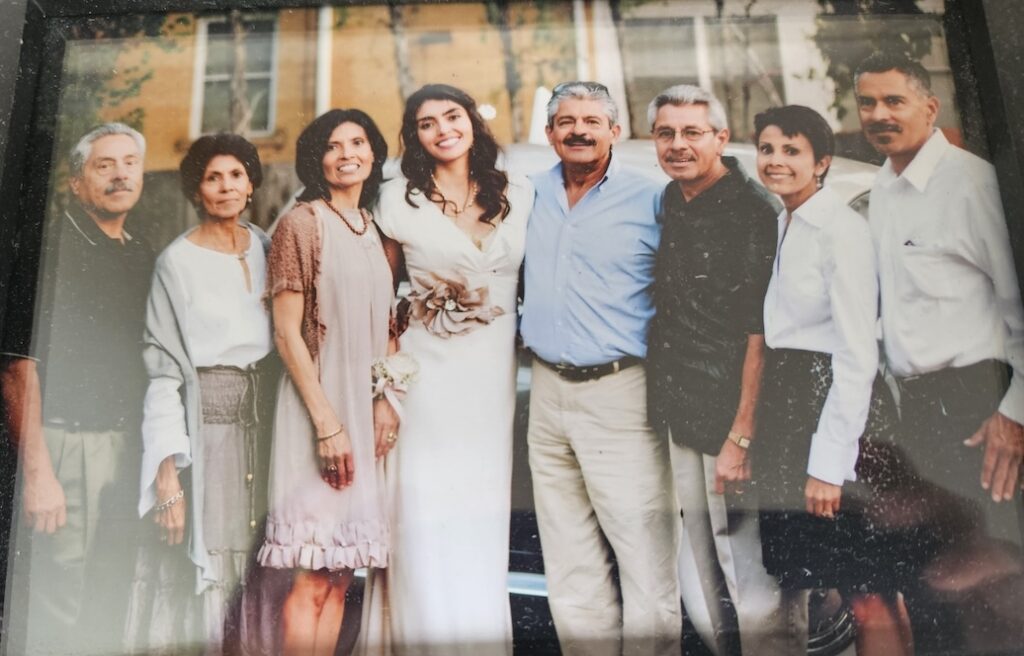
In 1960, Ralph and Angelina Gonzales moved their family from nearby Salt Creek to their ‘forever’ home. Matriarch Angelina, now 96, still lives there.
“We were living in a three-room house,” said Lawrence Gonzales, of their Salt Creek home. Gonzales was one of seven siblings who would soon be calling the new place home.
As Gonzales recalls, moving into a home with four bedrooms, including one he would share with brother, Kenny, was like a ‘Jefferson’ moment. That is, they were ‘moving on up.’
The Gonzales’ settled in and became threads in the fabric of The Lanes. The siblings all attended nearby St. Joseph’s Catholic School and later high school at Roncalli Catholic and Pueblo Catholic High, which would later become Seton High School, the city’s Catholic school for girls.
Because the era was the heartbeat of the ‘Baby Boom,’ there were plenty of kids all around. “You made friends with all nationalities,” he said. “There was a public swimming pool, and I got to meet a lot of people out there. It was a great time…like ‘American Graffiti.’”
Father, Ralph, was a steelworker who moonlighted as a local and well known, in demand regional musician. The Gonzales Trio played everything, rancheras to rock. If you needed a band, you called Ralph, or ‘Blackie,’ as he was known locally. Mother, Angelina, became a Head Start aide and later teacher, a job she held for 32 years.
The Gonzales children all took a musical path, with Lawrence and Kenny performing regularly with their father. Later, the brothers worked with a number of well-known recording artists while also doing time as studio musicians. All attended college with some earning graduate degrees.
Gonzales, now retired from a 30-year career as a state vocational rehabilitation counselor, limits his playing and usually it’s at The Lanes with family.
The Lanes, he said, despite its isolation from the city—or perhaps because of the isolation—made for an almost idyllic childhood.
“There was always plenty to do,” Gonzales said, though it was not always play. His dad would assign the boys jobs. “There were four boys, and he would give us assignments,” including taking care of the lawn and helping with their father’s garden.
While it’s not the same ‘Lanes’ of long ago—a lot of the roads have been paved and widened—it’s still holds on to what made it special.
“I would call it the most peaceful, secure environment,” said sister Patricia Gonzales, who still calls it home. The retired librarian, teacher and school administrator says the place and its people make it the most diverse melting pot around. “Our neighbors on both sides are Italian, Bojons (a uniquely Pueblo term for Slavic ancestry) and Hispanic families.” There were also “the Nippers and Waddells,” both nearby neighbors.
One thing that ties many of ‘The Lanes’ families together is a healthy respect for diversity. While so many families living here crossed an ocean before landing in Pueblo, others crossed a river or a desert. “My grandparents on both sides,” she said, “were from Mexico,” one side from Guanajuato, the other from Zacatecas.
Included in the Gonzales bloodline, she said, is great, great grandmother, Dona Bernarda Mejia Velasquez, a noted curandera, or healer. She is said to have delivered hundreds of babies and, using her healing skills and knowledge of traditional remedies, treated scores of friends, neighbors and strangers. She is featured prominently at El Pueblo Museum in mural form and in the award-winning documentary, ‘The Borderlands.’The Lanes are easy to find. Once off the interstate, just follow Santa Fe Drive south and in minutes, you’re there.



