




Su Teatro has just celebrated its 29th Annual Chicano Music Festival. It is one of the numerous activities over the last 53 years that continues to cement its legacy as an institution with wide-reaching influence in reflecting the Chicano experience in America.
Established in 1971 in Denver as a vehicle for academic protest, cultural expression and a search for justice, Su Teatro found its voice confronting the human tragedy associated with the displacement of the Auraria Latino residents to make way for the campus that houses the University of Colorado Denver, Metropolitan State University of Denver and Community College of Denver. That painful experience was encapsulated in a play, “Corrido Del Barrio,” (1973) that reveals an open wound that has not healed.
Among the speakers at the 1974 “First National Symposium on Chicano Literature and Critical Analysis” at New Mexico Highlands University was the poet Ricardo Sanchez from El Paso, Texas whose poetry reflected on the enduring pain caused by the construction of Interstate 10 that cut his beloved El Segundo Barrio community in half and displaced so many of its residence. The Auraria displacement was worse as it involved all of the community.
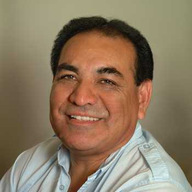
After my arrival at what is now MSU Denver in 1975, I met a number of people that made my life and work on campus easier to navigate. Among them was Anthony J. Garcia who had been with Su Teatro from the beginning, first as a student and later as a leader.
In addition to his work in Su Teatro, Tony taught Chicano theater courses for the Department of Chicano Studies that, at the time, was located in a School that I headed. Our brief conversations in the halls convinced me of his iron-strong commitment not only to his art, but also to the cultural causes that surround and impel so many of us to continue the search for that part of the soul that can clarify our self image.
Tony Garcia’s award wining contribution to the development of Su Teatro as an institution led to his being named the Executive Artistic Director in 1989. In that role, he led a successful fundraising effort that culminated in the raising of 4.5 million dollars and securing the present theater facility in the Santa Fe Arts District.
The Chicano Movement was very successful in exposing the public part of our reality in America. The speeches, the marches, the demonstrations, the blowouts, the cultural celebrations, and the stories of our lives presented in public forums represented a triumph of presence in what had been a forgotten community.
But it is institutions like Su Teatro with their unlimited and creative imagination that have taken on the task of finding the buried mirror of our identity. The dramas, the songs, the actors and their shadows on stage depict a search into the interior and most secret recesses of our being to find the displaced sense of who we are.
In doing so, the stage experience successfully depicts the personal journey of self realization that is so necessary to locating cultural space. In other words, the creative acts portrayed on stage serve to focus our attention on our sense of destiny as well as lead to an ability to find our place in history.
Su Teatro, especially under the leadership of Tony Garcia, has and is providing a powerful and dynamic effort to find the unseen part of the Chicano Movement search. This legacy transforms the personal experience of every Latino into a vision of our history.
The views expressed by David Conde are not necessarily the views of LaVozColorado. Comments and responses may be directed to News@lavozcolorado.com.



