





I recently was interviewed by Nolbert Chavez, a University of Colorado Regent and UCD administrator who is gathering data on displaced Aurarians as part of a study for a doctoral program. The conversation brought vivid memories of an Auraria vibrant community and the Casa Mayan restaurant, one of its center pieces.
My earliest memory was a visit to the restaurant as part of a student excursion led by Mr. Fred Manzanares, our Spanish teacher at Horace Mann Junior High School in North Denver. It was a beautiful evening, and the class had dinner outside in the patio.
That visit propelled me to take a greater interest in the history of Auraria and its competition with the City of Denver for predominance. Although Denver outgrew Auraria in importance, that hamlet across Cherry Creek continued to be an important center of activity.
Many years later, I returned to Denver as a member of the faculty and administration of what is today MSU Denver. Within months of my arrival, we moved to the Auraria campus.
I immediately noticed that the campus planners had preserved 9th Street homes and buildings, although to me, they did not look as I remembered. I found what was the Casa Mayan restaurant at 1020 9th Street Park, but there was no sign that it had been there.
In talking to the Chicano community, I was informed of the devastating nature involved in moving out a whole community to make room for the university campus. I was also told that there were promises made of access to the new facilities by the displaced Aurarians to make up for the loss of their homes.
However, things did not seem to be as the promises would indicate. Out of respect for those losing their community, a minimum connection to their heritage would have been to keep St. Cajetan, the Latino Catholic Church instead of St. Elizabeth Church which was kept open.
In walking through the 9th Street Park homes I noticed that the pictures and other objects that decorated the insides had nothing to do with the Latino families that had lived there. Instead, the artifacts commemorate people that had lived there in the 19th and early 20th Century.
On campus I saw the issue of displaced Aurarians access raised concerning facilities and most of all the gym. It seems as though the Auraria community that were dispersed became strangers in their former homes and community.
Fortunately, and perhaps because of the displacement, the Chicano community seem to adopt the university campus. Their sense of “ownership” was expressed in various ways including an increasingly strong tendency to make university study at Auraria a first choice.
Most of all, Chicano students, faculty and members of the community organized themselves into a strong political force on campus to influence the direction of the institutions. Among the major issues brought to the forefront was awareness around the promises to the displaced Aurarian community.
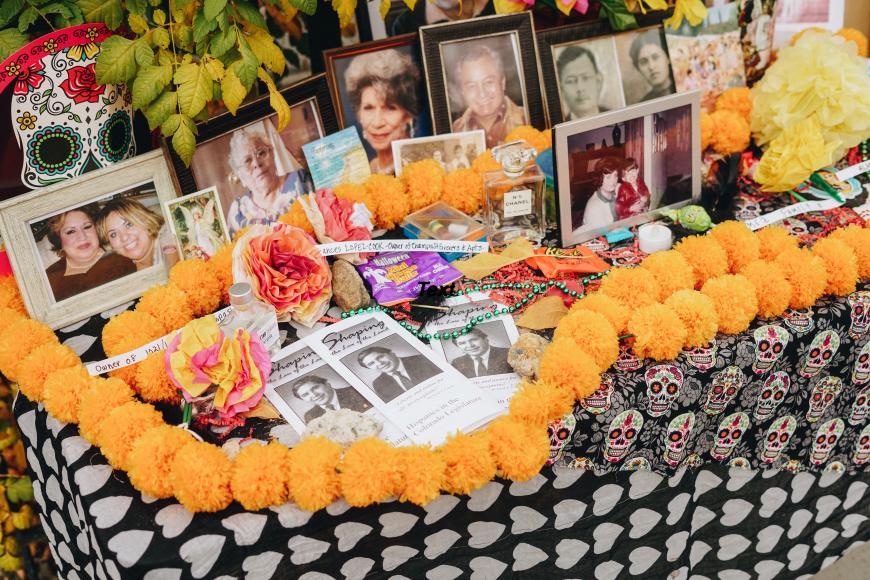
An important and enduring outcome of the effort was a scholarship program for the displaced Aurarian families and their descendants. Also, the community organized a Displaced Aurarians Neighborhood Memory Project that brings people together, documents and collects stories and created a database and map of the Latino Auraria neighborhood between 1955 and 1973.
These things are included in an exhibit called “I Am Auraria” located in the Auraria library. It features photos, oral histories and artifacts that depict the Latino Aurarian community as it was.
The exhibit is free and open to the public. Do not miss the opportunity.
The views expressed by David Conde are not necessarily the views of LaVozColorado. Comments and responses may be directed to News@lavozcolorado.com.



