



Despite the fact that it was the bloodiest conflict of the second half of the 20th century, most Americans alive today were not even born as it was being fought. But in 1969, there were more than 500,000 American military personnel on the ground in Viet Nam.
Names like Saigon, Hanoi, Da Nang, became commonplace in news reports. Others, out of the way hamlets like Chu Lai, Pleiku and Nha Trang while not nearly as familiar also had their own bloody and deadly moments.
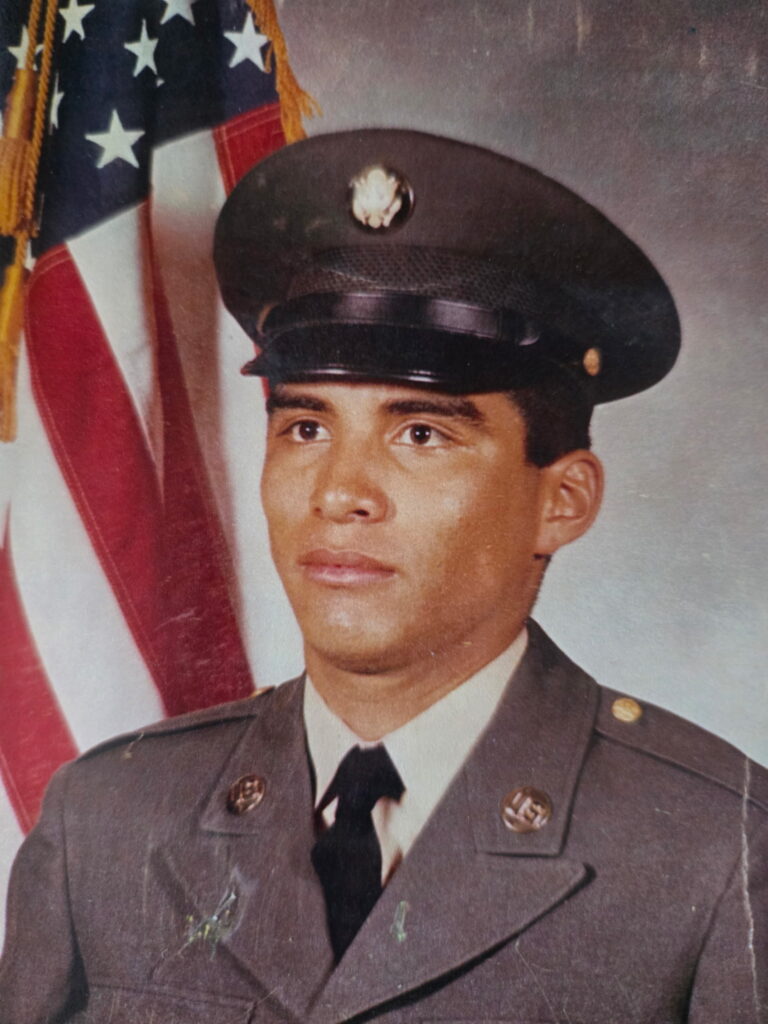
In September 1969, now retired Thornton resident Jerol Arguello was just leaving his teens as he was arriving ‘in country,’ Cam Rhan Bay, Republic of Viet Nam, to be more precise. In-country, was just another way of saying, ‘the war.’
The flight from Fort Lewis, Washington, to Cam Rhan Bay was long, anxiety-riddled, too. On the ground, he caught a couple hours of sleep before flying on to Pleiku, another spot on the map in Viet Nam’s central highlands. It was the same point of reference for soldiers and Marines both coming and going to another and often pointless engagement.
It was there where he got his assignment, “You’re going to Delta Company,” he was told. The words sounded like an alarm ringing in the head telling him that ‘the **** just got real.’
“It was like a movie,” Arguello remembered. “Oh, what did I get myself into,” was all he could think. Flying to join his unit presented another ‘first,’ that he remembers with crystal clarity.
“We couldn’t land,” the chopper pilot announced. Enemy fire! He went in low, nearly to ground level, Arguello remembers. “As soon as I hit, you better jump out,” were the pilot’s next words. “It was like a movie,” he said. But it wasn’t a movie. It was terrifying.” Bullets were flying from every direction. It was a scene that played out often in Viet Nam.
Each day for Arguello was both different and the same. Quiet could quickly descend into chaos. Other times, chaos into quiet. But the sudden baptism by fire quickly armed him with the skills of an experienced soldier. The desire to survive has that quality.
Arguello’s year, 1969, was a bloody one in Viet Nam. American fatalities averaged nearly a thousand a month. Of course, the war was also taking a toll on the Vietnamese.
Viet Nam estimates casualties in the ‘War Against the Americans,’ its official name for the conflict, claimed between two and four million lives—military and civilian—over its decades-long slog. The final American casualty count, 58,220, according to the National Archives.
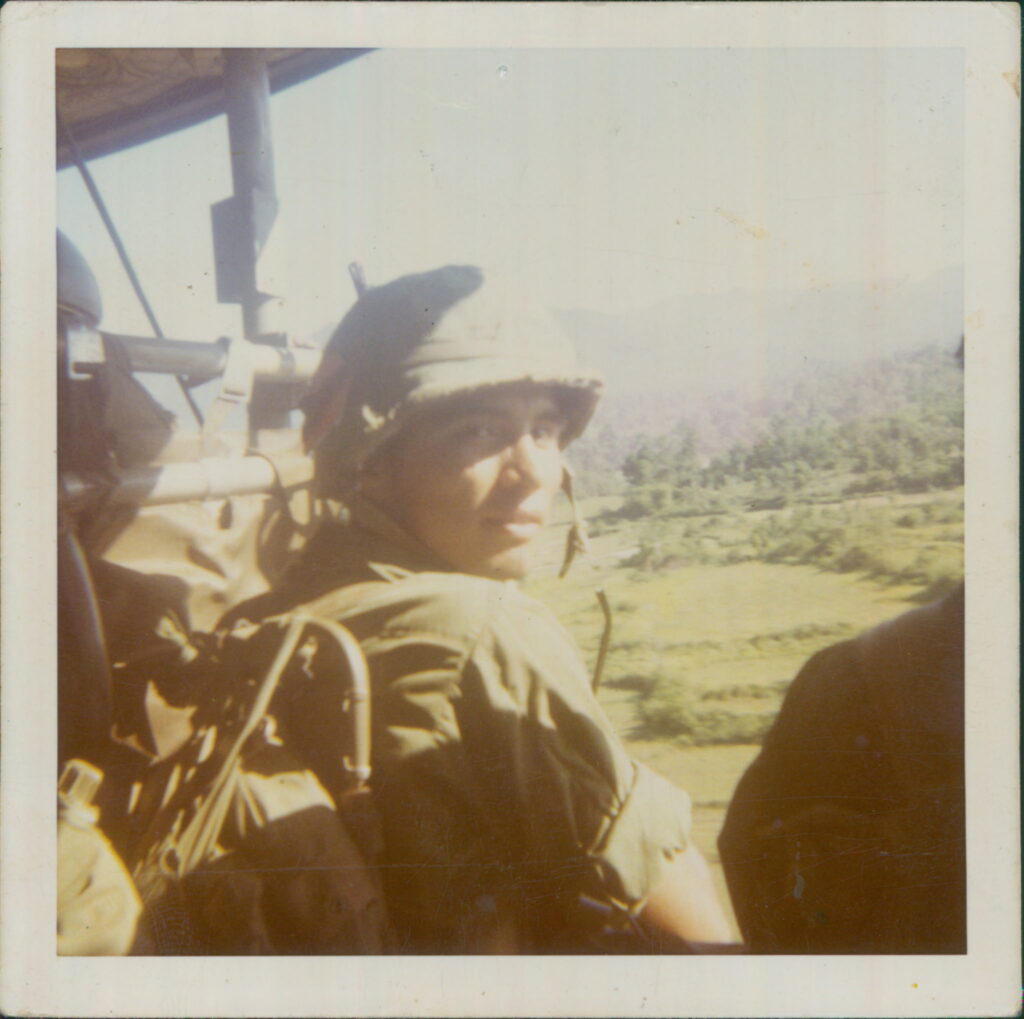
Arguello’s MOS, Military Occupational Skill, was the dreaded 11B, more casually called ‘Eleven Bravo.’ A lot of troops had another ‘B’ word for ‘bravo.’ Whatever you called it, it was infantry. It was life and death.
As many soldiers in infantry did, Arguello often ‘walked point,’ the position given a single soldier tasked with walking yards ahead of the squad to sound the warning of an attack.
While countless U.S. troops smoked pot or used heroin during their Viet Nam tours, Arguello wasn’t among them. Getting high has never been part of his makeup. He attributes it to faith, something he practices to this day.
But however faithful he was, it did not prevent a soldier’s worst nightmare. “I was wounded two times,” he said. The first time, it was a booby trap. He thought he had walked safely around it. But it detonated. “I got hit by shrapnel.” He was airlifted out for treatment. But, in Viet Nam, once recovered, you were sent right back.
Experience comes early when your day to day job is combat, seeing things you could only imagine, doing things you have no choice but to do. “I was a seasoned grunt.” Like countless others, he did what he did in order to survive.
Months into his tour, he accepted the reward everyone in uniform looked forward to. R & R. Rest and Recreation. For Arguello, it was a week in Bangkok a place where you could leave the war behind. Or so he thought.
As soon as he stepped outside the airport, he and others were greeted by anti-war groups. “There were guys trying to talk us into staying, not going back,” he said. Arguello listened but had no intention of staying or crafting a plan to escape a senseless war. “I felt a duty to my country.” He politely told the anti-war folks ‘No.’
Still, he did what countless others did—returned to a war he truly did not understand. The doubt always lingered. “We all questioned whether we should be there or not,” or asked, “What’s the use of fighting for this mountain and then getting out, just leaving it behind?” Decades later, he still wonders why.
Arguello accepts the year he spent in Viet Nam and has made peace with the things he saw, and the things soldiers are asked to do. But he also still thinks about a long ago friend, Jimmy Martinez.
Martinez was a peer. They grew up together in his Wyoming hometown. Martinez was a Marine. Arguello said Martinez was killed in Da Nang, the air base in the north of country, a place often called ‘Dodge City,’ or ‘Rocket City,’ for the frequent aerial attacks. The year was 1968.
It may not have been Arguello’s intention to join the military when the war was exploding and exacting a bloody toll on young men in every state. But, perhaps to hedge his bet, he made what he thought a cursory visit to a military recruiter. The recruiter told him, “You’re already on the list for the draft.”
Sure enough, when he returned to his home in Green River, Wyoming, a letter was waiting for him. ‘Greetings from the President of the United States,’ was the salutation. The same salutation read by an entire era of young boys and men back then.
Arguello is resolute about the experience. From time to time the memory still can block out the light. Not so much though, that he cannot emerge.
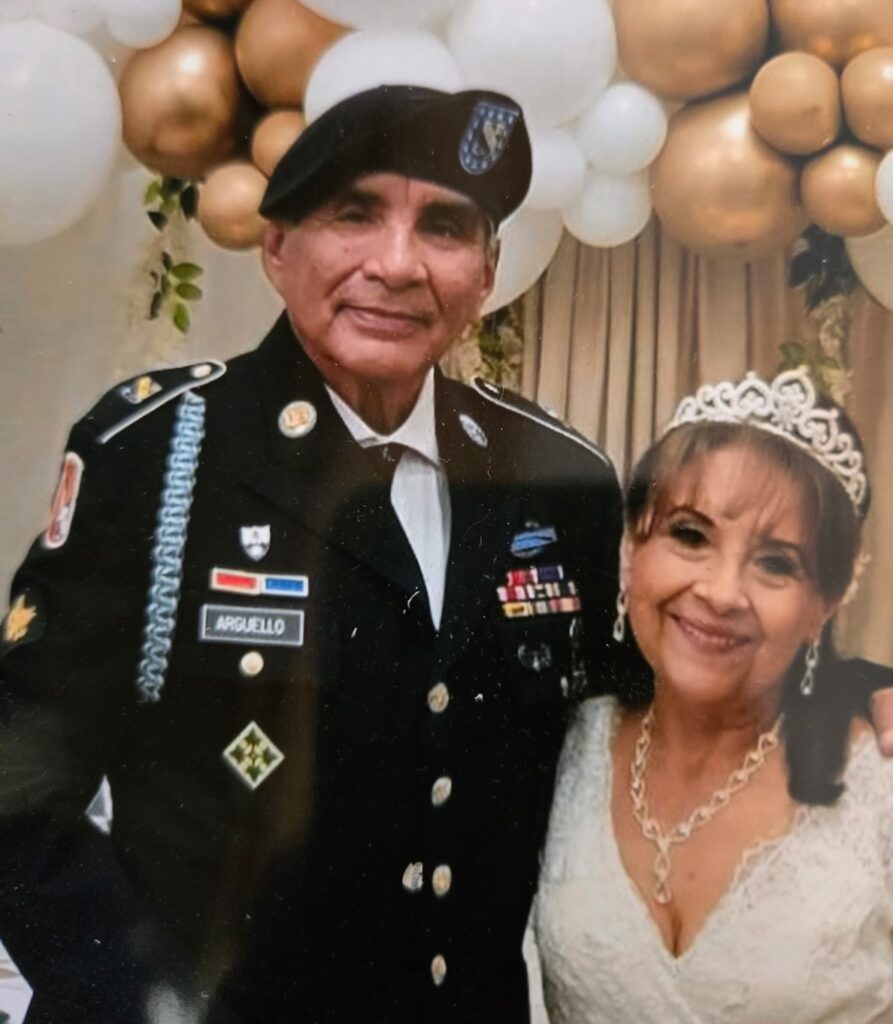
While not as frequent as he might like, Arguello still enjoys the outdoors and hunting. It’s something he has done all his life. He also remains fully spiritually committed. Church with his wife of more than fifty years and his family remains an important element of his life. He says it keeps him spiritually grounded.
For his duty, Arguello has been awarded a full disability from the Army. He is also a recipient of the Bronze Star for heroic or meritorious served in a combat zone. Arguello is also retired from a thirty-plus career with the Department of the Interior.



