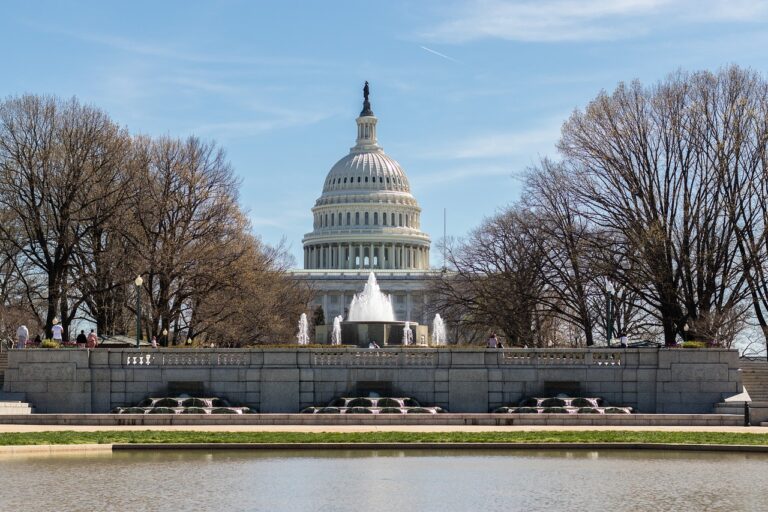
For most of the fall, the nation watched ‘sausage being made.’ That is, it witnessed government dysfunction at the highest levels. Since October 1st, Senate Democrats have refused to sign on to a continuing resolution they deemed morally scandalous for its blueprint they say will rob Americans of healthcare and hurt poor families.
But the shutdown in U.S. history may soon be over after eight Democratic moderates signed on to a weekend deal with Republicans that included the promise to hold a separate vote on legislation extending Obamacare subsidies for a year and one-year funding for SNAP benefits.
Democrats joining Republicans—which did not include Colorado Senators Michael Bennet and John Hickenlooper— said they joined with Republicans in order to get thousands of federal workers back to work and paid and get SNAP recipients the money needed to feed their families.
The weekend negotiations were clearly a victory for Republicans and the President. But exactly when government reopens remains uncertain with the House currently not in session. House members have been away since Sept. 19th. Until they return no vote can be taken.
But while the lights were out, there were millions left stumbling in the dark. Among them were thousands of furloughed workers and others deemed essential and forced to work without pay. They included air traffic controllers, letter carriers, TSA workers, even contracted kitchen and janitorial staff at the Capitol.
The shutdown stopped SNAP benefits, the program once called food stamps. While the courts ordered at least partial SNAP payments, the President fought to hang on to the money and as recently as Sunday ordered full benefits stopped.
But as the final pieces of this legislative war of wills are cobbled together, the pain of the shutdown and the future of healthcare will continue for millions, including thousands across every corner of Colorado.
While this shutdown has many parts, one, in particular, stands out. And it is playing out in Colorado and the rest of the nation. Food banks have become overwhelmed with the victims of this shutdown and its unintended consequences. People, both regulars and many new to food banks, are lining up for basic sustenance in record numbers.
“It’s very emotional,” said Megan Cover, Director of Development at the Pueblo Food Project. “So many people are just trying to feed their children,” perhaps the biggest victims of the SNAP shutdown. But Cover’s just one witness to the challenges brought on by the longest government shutdown in U.S. history.
In the San Luis Valley, one of Colorado’s most impoverished regions, it’s the same thing. People already struggling financially are now, said Annalise Baer, Director of the Valley’s Foodbank Network, treading water.
Baer’s organization assists six counties with fifteen food pantries. “Just providing food delivery to an area this big,” she said, her voice trailing off, “is the biggest challenge.” Add in winter driving conditions where snowplows often hit last, it just grows more daunting.
The Alamosa-based Baer said everyday life can be tough in the Valley. “A lot of folks have transportation issues, (need) money for gas. It just provides an additional challenge…but we try to reach as many corners as we can to meet those needs.”
If clients are struggling, so too are the Valley’s food ‘ports in the storm.’ “We are stretched so thin across all our pantries,” she explained. One reason is a growing number of new clients. “Point blank, “accessing enough food to meet the needs is the biggest challenge,” said the former Bay area native.
While SNAP has been suspended, the government has said it will make partial payments to recipients. But pinpointing when the money will arrive remains uncertain.
As the government announced suspension of SNAP benefits to several hundred thousand Coloradans and an estimated 42 million nationwide, Governor Jared Polis announced the release of up to $10 million to ease the pressure on pantries like Alamosa’s, Pueblo’s and others across the state whose mission is to meet this untimely food insecurity challenge. “We’re providing emergency state support for food banks, extending WIC access, and giving every Coloradan an opportunity to help by donating to FeedingColorado.org/donate,” the Governor said in a news release.
The Governor’s late October announcement, said Baer, came just in time. “Right now, we are trying to figure out how to get extra food,” she said. But until the government reopens and SNAP funds return to normalcy, “we are so limited.”
In Pueblo, the loss of SNAP, Supplemental Nutrition Assistance Program, said Cover, is approximately $8 million. Seeing young families, as well as a growing number of seniors and others line up for help, they may not have needed before, she said, takes one aback.
“You just don’t think about (it).” For a lot of people, people now standing in line for the first time, “there is a stigma about government assistance.” But, she said, for so many it boils down to a simple reality. “People are just trying to feed their children.”
The Denver-based Food Bank of the Rockies, said the organization’s communications officer Joanna Wise, is also seeing an increasing number of those showing up for food assistance. People in newer cars are showing up alongside others in older ones for the drive-by distribution.
Of course, meeting a need that rises and falls but is now rising with increasing energy prices, workers going without paychecks and a Congress that cannot find a way to reopen the government just creates a bigger challenge.
Even in normal times, Denver’s Food Bank of the Rockies, was handing out 85 million pounds of food annually, providing an average of 195,000 meals across a number of sites each day and serving more than 380,000 individuals. Then, exactly 42 days ago, the government shut down.
“We had already been addressing food shortages,” said Cover. Then, she said, an unforeseen ‘perfect storm’ of “wages, inflation, seeing the end of pandemic support programs as well as rising food costs,” seemed to hit all at once. “This is a challenge we haven’t faced before.”
An illustration of this reality, said Cover, was last Friday’s regular food distribution held in the parking lot at Dicks Sporting Goods Park in Commerce City. The normal first of the month food share, she said, sees about “120 cars.” Last week’s effort saw a sharp spike in people showing up. “We saw more than 200 cars.” She attributed the jump to people being “unsure when they’ll get their SNAP benefits.”
While there is talk of Congress finding ways to reopen government, President Trump is demanding it remain closed until Democrats capitulate and sign off on the continuing resolution or CR. He also ordered only partial benefits be paid. Keeping government handcuffed, Cover said, “will continue to build pressure all across the state.”
If anyone would like to ease the burden of these agencies or others, Cover said they will happily accept any contributions. Contributions can be made to: Foodbankoftherockies.org, Pueblofoodproject.org and Lapuentehome.org.




















La “mordida” in Trump world
President Donald Trump has doubled his wealth since he began his campaign for the office he currently holds and his net-worth is reported to be 10 billion dollars. His Forbes rating among the 400 richest has jumped from 379 to 201.
This development offers an insight into the relationship of politics and money as well as brings into question the issue of corruption that may color the reason people run for office. The normal assumption, backed by a lot of experience and some level of information, is that a person runs for political office because of a passion generated by a search for solutions for a community in need and the perceived ability on the part of the politician to address those problems.
Popularity and reelection comes from the achievement of support leading to success. But always lurking in the background is the temptation for self-benefit and corruption.
Most people who have spent significant time in Mexico are acquainted with the term “mordida” that is widely used to describe expediency in solving infractions on the roads and highways of the country as well as getting favorable treatment from government officials. For example, I have a Mexican friend that went to renew his license plates and found that he had several moving violations captured by cameras posted all over the city.
My friend found it cheaper to give the clerk attending him some money in return for erasing the infractions from the computer record. This type of transactions also may occur with traffic stops where negotiations with the police officer offers a way to resolve issues of road violations.
However, the concept of the “mordida” takes even a most serious tone when a politician has access to resources and favors at the regional and national levels. This is among the ills that Mexico is working to overcome and what affects so-called third-world countries.
One of the jokes that circulates in the country that relates to that is about a post-Mexican Revolution President who lost an arm in the conflict and was heard to say that Mexico was lucky that he had only one arm. The figurative intention of the joke was that if he had both, he would be able to grab more money for himself and benefits from the nation than he was currently doing.
In America, the President of the United States is considered the most powerful politician in the world that has the ability to access and gather favors from at home and abroad. Since the Supreme Court told Trump that he can do anything he wants as President and not get prosecuted, he is doing just that.
The Qatar gift to Donald Trump of a 400-million-dollar plane that will eventually be available for his personal use after leaving office is only the most visible example of what he feels he can do. His family, beginning with Jared Kushner’s and his 4.6-billion-dollar investment portfolio gathered from Qatar, Saudi Arabia and the United Arab Emirates, is fully engaged in taking advantage of opportunities for enrichment.
Everyone is in on it. It is the new family business. Our great democratic regime appears to be on a fast downward spiral. The disease of decadence and loss of values is spreading to all parts of the body. Our democratic experiment is facing yet another historical crisis that threatens our very existence as a free nation. Corruption and greed are taking us down a path that we only saw in others.
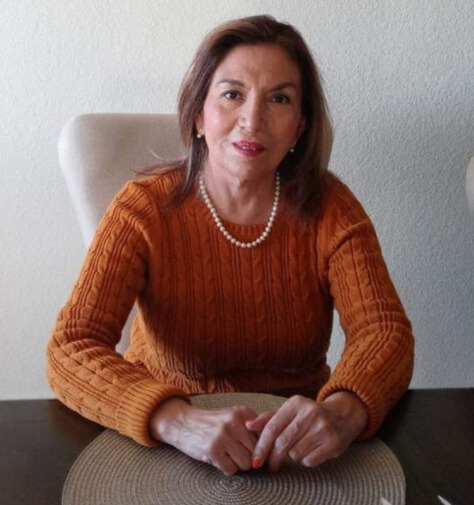
The views expressed by David Conde are not necessarily the views of LaVozColorado. Comments and responses may be directed to News@lavozcolorado.com.