







Home Blog Page 214

Southern Colorado read for a much needed new infrastructure

Not since the National Interstate and Defense Highways Act passed 65 years ago has the country committed such a huge sum of money to upgrade the nation’s infrastructure—its roads, bridges, broadband and utilities. But after what seemed like endless stops and starts and constant wrangling—much of it interparty— President Biden signed into law the $1 trillion measure on November 15th. Colorado’s share of the measure will be approximately $6 billion.

While the majority of the money will go to the state’s most populous centers, southern Colorado’s hub city is looking forward to getting funds to address long overdue infrastructure projects, said Pueblo Mayor Nick Gradisar. “I think it’s fantastic,” said Gradisar. “It’s transformative change for a lot of people.”

Gradisar said the city has been working closely with the state’s two Democratic Senators, Michael Bennet and John Hickenlooper, as the measure was coming together. “We’ve made them aware of our priorities,” he said. Uncertain of when the funds will reach Pueblo, Gradisar said he’s made known where he’d like the first dollars to be spent.

“The Union Avenue Bridge,” he said, “is nearly a hun- dred years old and doesn’t meet the (structural) standards.” Engineers have indicated that rather than put the money toward refurbishing the structure, “it needs to be replaced.” The cost to replace the aging viaduct could be as high as $25 million.

The ‘to do’ list for Pueblo’s aging infrastructure, said Gradisar, is long. But if the city is to move smoothly into the 21st century, investment needs to be made. “One big thing is the freeway,” he said. Improvements to the routing of Interstate 25 have been called for for years. “We’re hoping this bill will have some funds that will make that happen.” State and city engineers have estimated the costs for reconfiguring the north-south arterial at around $200 million.

When Colorado’s money finally does arrive, more than $688 million will be dedicated to water infrastructure improvements and another $432 million for airports. Mayor Gradisar said he already knows exactly where he wants Pueblo’s share spent.

Pueblo, like scores of cities across the country, is already working on replacing those portions of its system that are outdated and unsafe. While Pueblo’s system is nothing like Flint, Michigan’s, where residents there have been forced to drink bottled water for a number of years because of a dangerous lead pipe delivery system, southern Colorado’s hub city has been proactive in addressing the issue and has made significant progress.

“The board of water works,” Gradisar said, “has been eliminating lead pipes for four or five years.” Gradisar was once a member of the city’s water board and has been a strong advocate for upgrading the city’s water delivery system. Coincidentally, Pueblo’s water was voted the among the five ‘best tasting water in the nation’ in a 2018 American Water Works Association poll.

Gradisar, who is Pueblo’s first Mayor since 1911, also wants money spent on the city’s airport. “We want to do some remodeling,” he said. Upgrading the facility would create a more comfortable passenger experience. “The waiting room,” he added, “doesn’t have restrooms.” People need to use the bathroom before getting on their flight, he said.

Air travelers in southeastern Colorado and the San Luis Valley often begin their trips in Pueblo and connect at the bigger airports in Denver and Colorado Springs. Airport improvements would make flying out of Pueblo more comfortable and, somewhere down the road, perhaps even coax other carriers to consider Pueblo as a market, he said.

The infrastructure bill will certainly pay dividends for people driving, flying or taking trains but it will also include money for things like child tax credits and universal preschool. “It will really make a difference in the lives of Pueblo families,” said Gradisar. The bill, said the President at the signing, also means jobs.

The measure that President Biden signed was radically different than the measure President Eisenhower signed in 1956 making possible the interstate highway system. So, too, was the environment. Back then 95 percent of the House of Representatives signed on to the measure. In the Senate there was only one vote against the new law.

This new law was heavily favored by House Democrats with all but six voting for its passage. Thirteen House Republicans also voted for passage. In the Senate, the vote was 69-30. Among Republicans voting in favor was Senate Minority Leader Mitch McConnell. Eighteen Republican colleagues joined him but, in the process, earned the scorn of ex-President Trump who spoke long and loud against it. Interestingly, Trump promised infrastructure for four years but never delivered.

The idea of an interstate highway system was the result of Eisenhower seeing a more efficient way of moving traffic and goods when he saw Germany’s Autobahn. In the event of a national emergency, he wanted to make sure that the military would have unimpeded lanes for critical supplies to get to their destination. One side could be shut down for civilian traffic and one side would be for the military.

The interstate highway system is now 65 years old. In 1956 Congress budgeted $25 billion for its construction. In today’s dollars, that would surpass $500 billion. It’s an investment that has paid off many times over.


Casa Bonita, Denver’s ‘Pink Lady’ is back

0

By: Ernest Gurulé

For millions of Coloradans and tourists alike, an early holiday present! The ‘pink lady’ is back! Casa Bonita, the iconic landmark with the mysteriously tasting food and not-ready-for-primetime visual delights that has stood guard in a Colfax Avenue strip mall for decades, is being resurrected, given new life by a pair of Colorado natives and state icons in their own right.

Trey Parker and Matt Stone, creators of television’s ‘South Park,’ have signed the papers to become the new owners of the infamous and kitschy Casa Bonita. Of course, the new owners won’t open the doors until early next year. First, the landmark must undergo some serious renovations, renovations that thankfully include long begged and pleaded for upgrades to the restaurant’s dining options. (Spoiler alert: It’s the oodfay, folks.)

Like so many other things, COVID put a serious crimp on the Lakewood landmark forcing it to close and enter Chapter 11 bankruptcy. For a time, there was concern that the virus and its impact on Lakewood’s answer to Paris’s Eiffel Tower or India’s Taj Mahal might simply go away. But Parker and Stone, the most unlikely pair, swept in and saved the day.

Coloradans have known the guilty pleasures of ‘La Casa’ since the seventies—cliff divers, Black Bart’s Cave, mariachi players and appetite-strangling food. But Casa Bonita had been largely unknown to the rest of the nation. That changed when the two Coloradans featured it promi- nently in episodes of ‘South Park.’

Since season seven, ‘South Park’s’ creators have regularly made Casa Bonita a key part of storylines in the long-running cartoon. Its first appearance happened in season seven when Cartman tricks Butters into disappearing in order to wrangle an invitation to Kyle’s birthday party at Casa Bonita. (The show’s rabid watchers need no explanation of the characters.) That episode and others featuring the rose-colored landmark accurately recreated the cheesy interior of the romanticized and Mexican-themed restaurant. Cartman’s high dive in that episode was a bonus.

“Pending bankruptcy proceedings with the owner,” said Stone in a sit down interview in August with Governor Jared Polis and his ‘South Park’ co-creator and partner, “this’ll have to happen in a couple of months. We have come to an agreement with the owner, and we bought it.”

At the announcement, even the Governor, no gastronomic expert or culinary snob, had to inquire—diplomatically, politely, deferentially—about the restaurant’s bill of fare. “We all love Casa Bonita,” he said before discreetly adding, “the one area where we’d all love to see an upgrade, I think I speak for everybody who patronizes Casa Bonita, is the food could be a little better. You’ve probably heard that.” And like most every diner who’s imbibed and never asked for seconds at the place, the pair offered no rebuttal.

Stone and Parker, with their own stories as both kids who experienced the place and now with children of their own children, kids who’ve also broken bread, er, tortillas, at the place, made the pledge to address the ‘ghost at the banquet,’ the no-star food quality.

They have not only hired on a new head chef, but a person with the chops to actually make Casa Bonita’s food not only edible but enjoyable. Dana Rodriguez will serve as the joint’s Executive Chef. Rodriguez is no lightweight in upper crust food circles, either.

Rodriguez, a three-time James Beard award nominee, will be reordering the menu and taking the food to places it’s never been before, from afterthought to appetizing.

In an interview with Denver’s 5280 Magazine, Rodriguez pledged to “change nothing and improve everything.” The new exec-chef had been forewarned of the restaurant’s dining legacy. “Obviously,” she told the magazine, “the food wasn’t great, and that’s something we all remember…We’re going to make everything one thousand times better, keeping the same essence. How to bring all my flavors from Mexico, that is the most exciting part to me.”

While Coloradans know Casa Bonita as a state landmark, it may shock and surprise, maybe even disappoint that that the restaurant is more ‘new original’ than the one and only. The gorilla and cliff divers that once were thought of as Colorado’s own, actually had doppelgängers in, of all places, Arkansas and Oklahoma—places better known for squirrel stew and sassafras than sopaipillas.

While Parker and Stone seem like last guess restaurateurs, all that changed over the summer when the pair signed an astronomical $900 million deal with ViacomCBS to take ‘South Park’ all the way to 2027 and create 14 ‘SP’ episodes exclusively for streaming on the Paramount+ streaming app. The money, dizzying by any definition, clinched the decision to buy Casa Bonita said Stone. In an interview with Bloomberg’s Screentime newsletter, he called the enormous windfall “‘expletive-you’ money.’”

Parker and Stone, who have lent their characters to big screens at University of Colorado sports events and Denver Bronco and Nuggets games says their nouveau riches won’t change the way they’ve done business since ‘South Park’ first appeared nearly a quarter a century before.

“We’ve been rich for a long time,” Stone told Bloomberg. “We have nice houses and cars. Even this giant deal won’t change my day-to-day (life).” What it will change, though, is the day-to-day lives of cheesy gorillas, college student cliff divers, work-a-day cooks and families who, despite the knowledge of truly horrible food, still have a place to go.

Blessings and thanks to Latino farmworkers

0

By: David Conde

David Conde, Senior Consultant for International Programs

Thanksgiving includes historical moments and other events that bring people together to give thanks. It begins with the survival story of the pilgrims helped by Indian people in the early 17th Century.

Over the years, there has been so much myth about the holiday that people generally tend to forget that Thanksgiving joins the ranks of celebrations that thank God for a successful harvest. The harvest has a history in which Latinos play a major role.

I am President of the Board of Directors of an organization called East Coast Migrant Head Start Project (ECMHSP), the largest agency of its kind in the United States. We have expanded into the Mid-West with schools in Indiana and Oklahoma and have added staff to serve farmworking fami- lies coming from Texas.

Part of our work before COVID included visiting farm workers in the fields. The last visit was to a strawberry harvesting operation in a Florida field where Latino migrants gathered the fruit, disinfect it and boxed it to be sent directly to the grocery store shelves. I also have had the opportunity to visit migrant worker housing and found time and time again that the living conditions have generally changed little since our family were migrants decades and decades ago. About the only difference that I have seen are the dilapidated trailers homes that serves the same purpose as barns when I was a child.

It is not surprising that every time I pass by the pro- duce department at my local store, I take a second look as thoughts surge within about the farm workers in the fields picking those items for my dinner table. It also makes me feel indebted to the stoop labor of the poorest of the working poor in America.

On the other side of this story are commercials by new age stores that specialize in generic produce and want the public to know the greatness of their product using images of farmers harvesting and bringing the fruits and vegetables to market. I do not see a real farm worker in the pictures, especially a Latino, and wonder why.

Another set of sensational commercials in this vein is about the herbicide Paraquat put out by trial lawyers making claims against the manufacturer because research is indicating that the compound is causing Parkinson’s disease. The image of the most affected, the Latino farm worker, also does not have a place these scenes.

Among the memories of this type of issue includes chopping cotton in central Texas when a Stearman biplane came overhead and sprayed the field and all of us. My thoughts at the time was how cooling and good the spray felt in the middle of a hot day.

At ECMHSP we raise funds to help migrant and seasonal farm worker families navigate emergencies from an inability to work because of illness in the family to law enforce- ment issues faced in traveling from state to state and every thing in between. You can imagine the devastating affect of COVID on a population that must work to survive each day.

In this time of material shortages, migrant and seasonal farm workers continue to work in the fields so that we can have a nice turkey with all the trimmings this holiday. There are no supply chain problems where they are concerned.

Latino farm workers are the people we should have upper most in our minds as we say grace and give thanks for the bounty provided by a wonderful country. They deserve thanks, too.

The views expressed by David Conde are not necessarily the views of la Voz bilingüe. Comments and responses may be directed to news@lavozcolorado.com.

Rita’s still serving up those holiday red and green tamales

Pueblo native Rita Baca has been meeting and greeting customers at the restaurant that bears her name for more than forty years. She has seen babies grow into young people, young people into parents and more than a few parents transform into grandparents. And she and her eponymously-named restaurant just keep on keeping on.

As she prepares for the seasonal holiday rush, its big crowds and the more than one thousand tamales she’ll be whipping up, Baca spent a few minutes on the phone to talk about Rita’s. Being a restaurateur was never part of the plan, she said, at least, part of her plan. She was more than happy being a homemaker.

But one day back into 1978, her husband, Ruben, then a maintenance supervisor, came home and blurted out, ‘I want to quit my job.’ “He wasn’t feeling good,” remembered Baca. Quitting his job while raising a young family might also have made her wonder if he also wasn’t thinking clear.

“I’ll look for another job,” she remembered him saying as she was still trying to process what in the world he was even talking about. It made no sense. Plan ‘B’ he told her was “We go on welfare.” That was silly. He was too hard a worker. Then came the shocker or, as she suspected, his plan all along, “We open a restaurant.”

So, in September 1978, Rita’s Restaurant at 302 North Grand, a modest space with a red brick façade and red metal awning, opened and, except for the pandemic, has fired up the grill Monday through Saturday every day ever since. During the pandemic’s darkest days, “we went to strictly carry-out and delivery,” she said.

“The day we opened,” said Baca in a buttery-soft voice that conceals a blue-steel grit, “was the scariest day of my life.” The plan, if things were going to work, would have her running the kitchen with Ruben greeting and seating, hobnobbing and running the register. “He and I worked together, and we made it work.”

Today, 43 years later, seven a.m. to seven p.m. it’s all still working. Now though, it’s her children and grandchildren who supply much of the muscle that keeps the place humming. Her husband passed away fifteen years ago.

Her holiday tamales will require 800 pounds of masa, the dough that will envelop the filling of pork and red chile. “We make a hundred pounds of masa at a time,” Baca said. “That will last us two to three weeks.” When that runs out, they’ll make another batch. It’s no small task, after all, making a thousand-plus tamales.

And while making masa isn’t exactly rocket science, it’s also not just a matter of combining a bunch of ingredients. No batch is ever made without first repeating a family ritual that includes a Sign of the Cross and silent prayer.

Baca’s recipe for tamales was learned by helping her grandmother who did all her cooking on a wood-burning stove, she said. When the work was done, she remembered “We would have 20-25 dozen for the holidays,” she remembered. The twenty-five dozen tamales would feed “aunts, uncles, friends of my grandfather’s and anyone else,” he would invite. The recipe has stood the test of time.

Baca’s masa still calls for lard, an ingredient that’s largely disappeared from a lot of kitchens. Not Baca’s. “They (tamales) don’t come out the same without lard,” she said. “That’s how I’ve always made them.” Tamales are also the only menu item that uses lard.

The only chile she puts in her tamales—without exception—is New Mexican. “They have the best red chile.” It seems to work. “I have one gentleman who lives in Denver, and he’ll usually order about ten dozen. He’s a good customer.”

Baca has no guess on who originally created the tamale recipe, but her customers, four-plus decades worth, seem to think that she’s the one who perfected it. All she knows is that “it’s very, very tasty.”

The restaurant is pretty much as it was when it opened in 1978. It still has fifteen tables, though not the originals. The menu features the same Baca-family Mexican recipes, including the green chile customers have come to expect. “We make about 30-40 pounds of green chile every day,” she said. But her menu has other things, too.

Rita’s serves up breakfast, burgers, sandwiches and a customer fave, Rita’s grilled cheese that includes fries. As long as she has a say, it’ll stay that way. The plan is not to get rich, she said. It’s to serve good food. “I’m not a material person,” said Baca. “I’ve always asked the good Lord to just let me just pay my bills and for my health to stay good.” It’s a bargain that, so far, remains unbroken.

And while her customers give Rita’s rave reviews, “I think one person gave it ‘five-stars,” she said, there’s no plan to take it in a different direction despite a few inquiries. Baca subscribes to the ‘if it ain’t broke, don’t fix it,’ school of thought.

Still, the soft-spoken matriarch has cut back on her workload and mostly lets her children, grandchildren and employees—six full-time, six part-time—run the place. That gives her time to enjoy another pursuit, genealogy.

“We have tried to start going back on the family tree,” she said explaining her need to scratch this new itch. “We haven’t been able to get much information,” except that one branch of her family “came from Spain,” perhaps through New Mexico, a common portal for scores of southern Colorado families. But right now the holidays and tamales take priority.

If holiday tamales are on your menu, from Denver, the drive to Rita’s is just over 90 minutes. No reservations are necessary and, as so often is said in the Steel City, ‘You’re only a stranger once.’

Lung cancer is #1 leading cause of death for Latinos

0

By: Ernest Gurulé

For the first time in twenty years, tobacco sales have shown an increase, according to the Federal Trade Commission. This is in no small part the result of a reenergized spending spree by tobacco companies to boost sales. Analysts say they also may have also seen the pandemic as entrée to a more profitable bot- tom line. In its latest survey, the FTC reports that domestic tobacco sales rose nearly a billion dollars last year.

While there is no definitive link that COVID and the nation-wide lockdown from the virus was the reason for the jump in tobacco sales, Bloomberg News reported that “bulk purchases” or what the industry calls “pantry loading” may have been a sign that smokers impacted or quarantined during the dark days of COVID spurred this growth out of fear of shortages.

The spike in cigarette sales may have bolstered the bottom line of big tobacco and manufacturers like Camel, Marlboro and other legacy brands, but not happy about things were doctors who for years have been railing against tobacco calling it the major cause of lung cancer in this country and around the world.

The latest information from the American Cancer Society indicated that there were 235,760 new cases of lung cancer diagnosed last year. The number of men versus women diagnosed was fairly close, with 119,100 men and 116,660 women. Nearly 132,000 lung cancer deaths were recorded in 2020, with men dying at a slightly higher rate, just over 7,000 more lung cancer fatalities than women. Still, doctors say that without tobacco, there need not have been 69,000 men dying of the disease last year.

For Latinos, said the ACS, lung cancer is the leading cause of cancer deaths. Lung cancer kills more Latino men than all other forms of cancer and the second-leading cause of cancer deaths among Hispanic women, this despite the fact that Latinos smoke at a rate that is twelve percent lower than their White peers.

Lung cancer diagnoses are generally for older people, a population that has carried the habit longer. The majority of people with lung cancer are aged 65 and up. The AMC says that only a very small percentage of lung cancer falls on those younger than 45. The average age for this diag- nosis is 70.

Sarah Barela, the younger sister of former Denver City Council President Ramona Martinez, was in this age group and also a lung cancer victim. Barela was Martinez only sibling but her death, she said, “strikes a whole family.” “I never smoked,” said Martinez. “I thought it was a waste of time and money.” But her sister, who began as a young teen, had no such reservations about lighting up despite the constant but friendly harangue by both friends and family to quit. For Martinez, the memory of her sister’s unnecessary suffering from the disease remains painful from its earliest moments to its last.

Barela’s diagnosis began one day as she was headed to a doctor’s appointment. Martinez recalled her sister saying later that when she prepared to leave her home she seemed in a fog, a half-step slow and, at first, couldn’t open the garage door. Once on her way, she was disoriented and hit a car. It was a minor accident but still serious enough that her husband insisted on taking her to get checked out. He thought she might have suffered a concussion. It wasn’t. “They found out she had cancer and it had spread to her brain.” Doctors offered options but, very practically, the cancer’s head start made recovery a long shot. Stage IV cancer, Barela’s condition, works that way. “We knew she was in for a long, terrible ordeal.”

Barela had worked a number of years running the family’s travel agency. Her personality, outgoing and friendly, made her a natural for selling the friendly skies or ocean cruises. But a cigarette was never far away. When pushed to quit, she would refuse. It was, said Martinez, just something she liked.

But like others who say the same thing—that they enjoy it—there is another truth. Tobacco’s active ingredient, nicotine, is addictive. It hijacks the brain in the same way far more sinister drugs do, including heroin, say researchers. A smoker becomes dependent and it’s that dependency that, over the long haul, increases the possibility of lung cancer, heart disease and numerous other health issues.

Few days pass without Martinez thinking about her sister and the disease that big tobacco not only continues to aggressively market here but also around the world where its imprint is equally, if not more painful. Lung cancer deaths worldwide are estimated at nearly two mil- lion a year.

After years of declining profits, the rise in tobacco sales may turn out to be an anomaly. What is not is the tobacco industry’s aggressive targeting of younger smokers who it wants to sell not just cigarettes but another product that is every bit as dangerous and addictive.

Vaping is where the industry sees its next genera- tion of smokers. And it is pouring billions into marketing schemes that it hopes will entice them and make them lifelong consumers. “Adolescents don’t think they will get addicted,” said neuroscientist Marina Picciotto in a Yale research paper. “But when they do want to stop, they find it very difficult.” Vaping’s reward remains nicotine, the industry’s, profits. Last year, vaping sales topped $6 billion. But its future looks even brighter. The industry predicts a 27 percent growth by 2028.

Martinez says after living through the suffering her sister endured, she is disgusted with tobacco’s new plan to entrap a young and unsuspecting long term market. The industry sees its sexier and more exotic product as its future. Researchers see it as a Trojan Horse delivery system and one that may seem more benign but is every bit as dangerous. “It does bother me. That stuff gets into your lungs,” said Martinez, before adding, “We have enough diseases without creating more.”

Politics of Conception to birth process

0

By: David Conde

David Conde, Senior Consultant for International Programs

There was a moment of terror for the family in a Michigan cherry orchard as a tractor was about to hook and lift a stack of boxes to take to the truck for shipment. My 2 year old sister and I had fallen asleep next to the boxes and could not be seen as the tractor hooks were set to go under the crates and into our bodies before someone noticed and sounded the alarm.

I remember my father waking me up and carrying my sister to safety. Mom was in the hospital losing a child. A year later my mother left the tomato fields of Ohio to have another baby. That baby at least got a name, Raul, but was born dead.

A year after that, my mother gave birth to my brother Roy in the comfort of our grandparent’s home in Raymondville, Texas. My father had stayed behind in Ohio to work.

There were other episodes of baby birth and death regarding my mother and the family but that sequence in Michigan and Ohio left a deep imprint on my thoughts of life and the womb. They resurfaced during my graduate research on the cycles of life in Jungian analytical psychology as I was trying to understand the feelings that go with the process of birth and rebirth. I went deeper however, when I realized that it was the period of conception to birth that carried the hazards in my experience.

That period was like a journey from the chaos of the unconscious to the black and white reality of our civiliza- tion. The rules for that journey are beyond the ability of any person or institution to understand and much less control.

There is an Argentine novel where the fictional hero takes the same journey but going back rather than going forward like the normal conception process. As the hero travels back, he realizes how separated he had become from himself by previously living as a flat character on the outside and finds wholeness in a realm without structure that is origins before conception.

Attempts to prescribe rules for the journey from conception to birth are empty gestures as there are elementary principles that exist beyond the control of social contracts and existing societies. The only thing that people and institutions end up doing is to regulate its members concerning the unregulatable.

This kind of indirect regulations and prenatal concerns fall heavily on the liberties of womanhood. Curiously enough, it is also a political process designed to maintain gender-based authority in a world as it is today.

At some point in our history when women felt strong enough, “My body, my choice” became the rallying cry and direct political response to that effort. So the battle that is on about gender has little to do with the sperm, the egg and road to an uncertain future. It is about power of men over women and women over men. It is this struggle driving cultures and its institutions.

One way to gauge the seriousness of the concern for the unborn is the lack of care for a child after it is born. This lack of seriousness reveals that the politics around this issue has little to do with it.

My mother never complained about what happened to her as a migrant and as a woman. Her political involvement after we left farm work included advocacy for the welfare of children everywhere.

That is where the political process should be. It is about children and their journey.

The views expressed by David Conde are not necessarily the views of La Voz Bilingüe. Comments and responses may be directed to News@lavozcolorado.com.

Student of the Week – Aaliyah Garcia

0

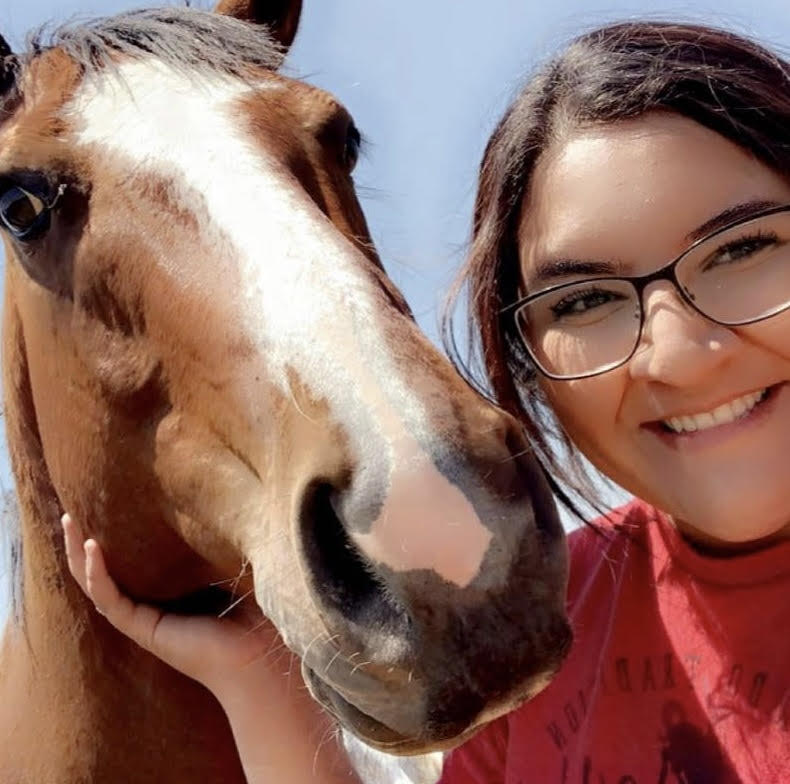
Aaliyah Garcia – Antonito High School

Photo courtesy: Aaliyah Garcia

Profile:
Aaliyah Garcia is a senior at Antonito High

School who currently holds a 3.723 GPA. Garcia has been on the Honor Roll all four years at Antonito High and is part of Future Farmers of America. Garcia volunteers her time with Guadalupe Church and the South Conejos School District by helping Pre-K students.

Favorite Book: Animal Farm – George Orwell

Favorite Movie: 8 Seconds

Favorite Subject: English

Favorite Music: Metal and Country

Future Career: Elementary Teacher

Hero: A lot of people including all of my family.

Favorite Hobby: Equine

Favorite Social Media Follow: Facebook/NFR page

Words to live by: “Tell me who your friends are and I’ll tell you who you are.”

Community Involvement: Garcia volunteers with her church Guadalupe Church by helping organize Bingo and works as an intern where she helps Pre-K students.

Why is Community involvement important? “There are multiple reasons to be involved in supporting your community including being known in the community, having supportive and collaborative relationships.”

If I could improve the world I would…

“I would help others understand the value of hard work, being loyal and dedicated to making communities better.”

College of choice: University of Wyoming and West Texas A&M University.

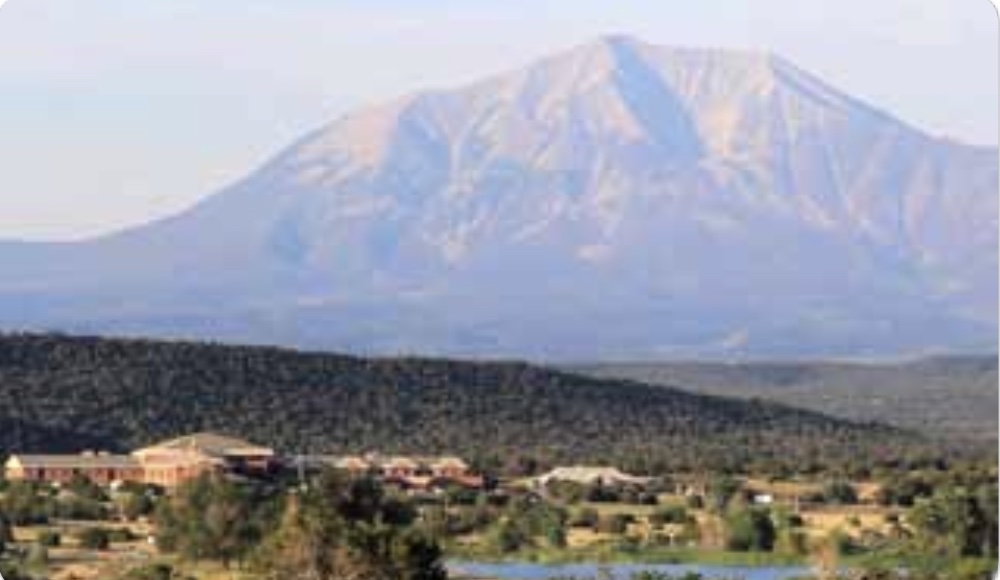
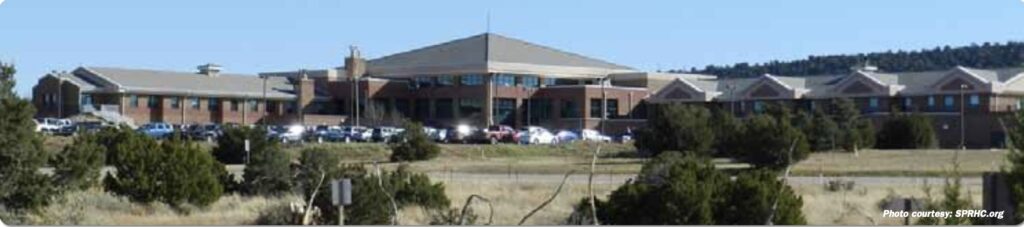
Spanish Peaks Veterans Community Living Center

By: Ernest Gurulé

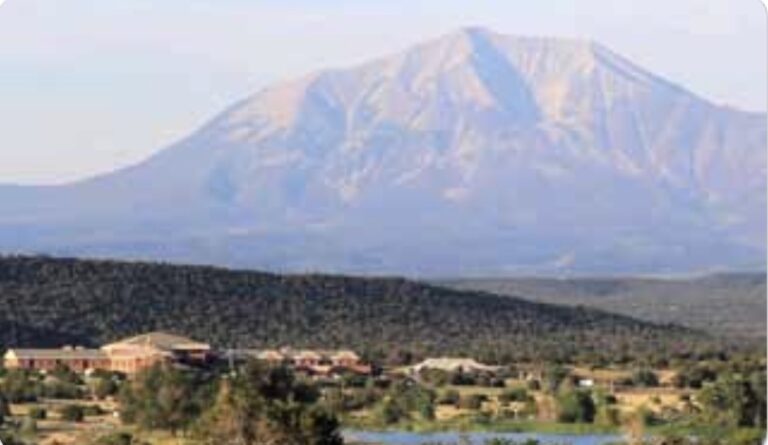
Photo courtesy: SPRHC.ORG

He may not have realized the eternal quality in his words, but General Douglas McArthur, in his farewell address to Congress, just may have uttered an irrefutable truth with just eight timeless words. “Old soldiers never die,” he said. “They just fade away.”

For a generation of ‘old soldiers,’ the last battle is fought daily at Huerfano County’s Spanish Peaks Veterans Community Living Center. “It’s for vets, spouses and Gold Star parents,” said Trapper Collada, Public Information Officer for the facility. Most of the eighty or so residents of the Center are in the throes of dementia or Alzheimer’s Disease. The home is also fully adapted to care for Hospice patients, a number of whom move in and through on an irregular basis. Capacity has declined over the last year and a half as a result of COVID. In normal times, there are nearly 120 full-time residents who come not only from Colorado but also from nearby states. Current occupancy is around 80.

“We are a well kept secret,” said Collada. But a secret, he said, that has been a major benefit to countless long ago veterans with few other options for care. The center’s residents or their families are responsible for payment but the Veterans Administration also pays for a portion of their stay. While many of the residents are living in a fog that has left them with only a biological and not emotional life, there are others who are more than capable and understanding of day to day happenings. “There is a resident council,” said Collada.

One man who is also a resident is a gentleman Collada only identifies as “Bill, who is 98.” Collada said Bill helps organize events and also lends a hand with some of the details that make life a bit easier for his fellow veterans and their families. “He advocates on behalf of the residents.”

While the Walsenburg facility is off the beaten path for many, the pandemic that has ravaged the country had no trouble finding it. “It took a while,” said Collada. “We lost twelve residents,” despite the facility following all the government’s safety guidelines, said Collada. During the darkest days of the pandemic, a lot of the residents and their families were kept apart. Those whose families did visit were separated by now familiar partitions, others simply, for health reasons, had to stay away. N95 masks became normal parts of staff and patient daily wear, said Collada. The virus also took its toll on staff, he said, referring to it as ‘exodus issues.’ “It was the pressures of Covid that exacerbated reasons for (staff) departures.” But the facility was never so short-staffed that it presented an issue for the welfare of the patients. When vac- cines became available early this year, most all of the staff and residents got their shots. “When that went into effect,” said Collada, “we had a 98 or 99 percent compliance.” Still, there were a few staff that, rather than take the shots, simply resigned.

What makes the facility a good option for veterans, some of whom no longer have family, is its access to “facili- ties a lot of senior living facilities do not,” including state of the art hospitals in the county or in nearby Pueblo, a drive of less than an hour to the north, said Collada.

The center does everything it can, he said, to make the stay for veterans and their families as pleasant as possible, including having bilingual members of the staff. “This is a highly Hispanic area,” he said. “This is also reflected in the population of both the staff and the residents.”

A veteran advocates for his fellow Colorado veterans

0

By: Ernest Gurulé

You don’t leave the war behind, you just do because you are no longer there. Pueblo resident Stephen Varela, a U.S. Army combat veteran, knows this as well as anyone. But the war, he said, need not define your future nor cripple your dreams. And for him, it hasn’t.

The 36-year-old California native was barely 20 years old when in 2005 he walked into a recruiter’s office and basically asked for a job, one where there would be plenty of openings and one that not everyone would be seeking. “If you can get me out of here in two weeks, I’ll join,” was his pitch. Fourteen days later, the Salinas kid found himself in Army camouflage and basic training in Fort Jackson, South Carolina. A couple of months later, with basic training behind, it wasn’t long before he was in Fort Riley, Kansas, and with a pretty good idea of what the Army had in mind for him. The Army, after all, also had plenty of job openings in places even more exotic than Kansas.

But before that, there was a quick stop at Fort Benning, Georgia, and jump school. It’s also where he would meet the woman who would later become his wife. “I met her in airborne school,” he said. The woman he would later marry, Kayla, was an Army Reservist, a combat medic and already wearing the parachute medallion of aqualified paratrooper. But unlike him, she had already gone and returned from a first deployment.

Varela’s time in the Army includes two deployments. He was out of country in 2007, 2008, 2009 and 2010. At various times, his job was to ride on the back of an Army truck manning one of the Army’s heaviest and deadliest mobile weapons. Three times he and his team encountered roadside bombs. The blasts concussed him each time. But, he said, in the Army “If you weren’t bleeding, you were CM,” military jargon for ‘continuing the mission.’ The military later deemed his brain injuries permanent and awarded him a full disability pension.

With the Army behind him, Varela, now married, returned not to the Monterrey Bay and Salinas where he grew up, but to Pueblo, where his wife grew up. They started a family and he started school at Colorado State University-Pueblo. While he was there, Varela quickly saw the programs for veterans at the school fell short of providing the needs they required. “There was a lack of representations for veterans,” he said. Working with a fellow veteran, “We wanted to continue peer-to-peer programs” that would help veterans navigate their way more conveniently through their programs. It would be the first step in lending a hand “to our battle buddies.” Returning veterans, especially those with various levels of PTSD, aren’t traditional students and often require non-traditional help.

“Every conflict, every war,” he said, “is unique.” That is why Varela wanted to make things just a little more understandable, a little more stream-lined for the group on non-traditional students like himself and a growing num- ber of others. He wanted to let them be seen and not simply blend into a wall of invisibility as if their experience didn’t happen. He analogizes a veteran’s experience to football. “Everybody loves the quarterback or the running back,” he said. “No one wants to know about the lineman. But the sacrifice is the same and sometimes we forget.” People don’t realize what the contributions (of vets) are,” he said. “A lot of people don’t understand what our sacrifices are…teenagers deploying to a foreign country. It’s kind of unnatural,” he said.

Other steps that he took while in school included the creation of a tutoring center. Eventually the pair started a group called “Student Vets of America,” a program that continues at the southern Colorado school. “Doing that was my first experience with helping and getting involved in public service.”

Concurrent with the veteran-assist work, Varela also completed his undergraduate degree, later earning a graduate degree via a virtual program at the University of Southern California.

Varela’s current job is with the Department of Veterans Affairs. He’s also become involved with AFSCME, American Federation of State, County and Municipal Employees. He and his wife are also raising four children and there are no plans to return to California’s central coast. Pueblo, he said, is home. But there is still a lot of work to do, and he has his sights on doing more.

Varela has already stepped into the political arena. He was an unsuccessful candidate for the Pueblo City Council but now has his sights set on a seat on the Pueblo County Commission.

Vietnam and the returning Veteran

0

By: David Conde

David Conde, Senior Consultant for International Programs

The veterans club I belong to celebrated a tribute to World War II soldiers. This represents part of an effort to bring them forward to be recognized before they are gone.

As it happened, World War II and later Korean War veterans came home to transform a nation. Their return, especially that of the World War II soldiers was celebrated for a job well done.

Not so when it comes to those that served in the Vietnam War. In the 30+ years I have been close to the veteran community, this war is by far the event that has most negatively impacted the lives of the veteran community. Vietnam experiences whether told or not told, nevertheless continue to affect the lives of those that fought and survived them. Among the most important stories are those surrounding the secrecy of soldier travel on the way home after deployment.

Their flights were deliberately scheduled to arrive in the United States in the dead of night so they would not have to face the protesters against the war. Also, as part of their orientation before returning from the conflict, soldiers were asked not to wear their uniforms because it would attract attention of the wrong kind.

The story illustrates that the fight for one’s life in Vietnam was only a prelude to the fight for one’s dignity back home because an ungrateful nation had turned on itself. What was a struggle for survival in the field turned out to also be a humiliation of our returning warriors.

9/11, our second “Pearl Harbor,” changed all of that. Although the drums of the 1991 Gulf War announced a new era of respect for our military, it was the terrorist attack on New York, in the skies over Pennsylvania and the Pentagon that helped to renew and repair America’s personal relation- ship with our fighting men and women.

The theme of “thank you for your service” and all of its trappings arrived with military service in Iraq, Afghanistan and the Middle East. A new patriotic zeal gripped the country and nothing was too good for those fighting in the field.

The irony is that America’s warriors of the 21st Century that the people of our country are so interested in thanking are trained career professionals just doing their job. The voluntary aspect of this work in effect changed the dynamics of service and relationships back home.

However, the ones that really needed the thanks were the drafted grunts that had to fight as an obligation to pride and country. They died by the thousands in the fields of Europe, the Pacific, Korea and Vietnam and deserved our best gratitude no matter the politics of the moment.

History tells us that all received their due with the sig- nificant exception of soldiers that fought in Vietnam. History also tells us that those that could, found a way to opt out of doing their duty.

Graveyards are populated with warriors that did serve and in doing so, made the ultimate sacrifice. Those that went to Vietnam and survived still carry the scars of moments of horror in the battlefield as well as the scars of abuse and rejection once they got home.

The United States is facing military adversaries in many parts of the world and will no doubt have to make many future decisions about war and peace. These decisions must have a demonstrated support of the American people because our soldiers need to know that what they are doing is important to our existence.

The views expressed by David Conde are not necessarily the views of la Voz bilingüe. Comments and responses may be directed to news@lavozcolorado.com.