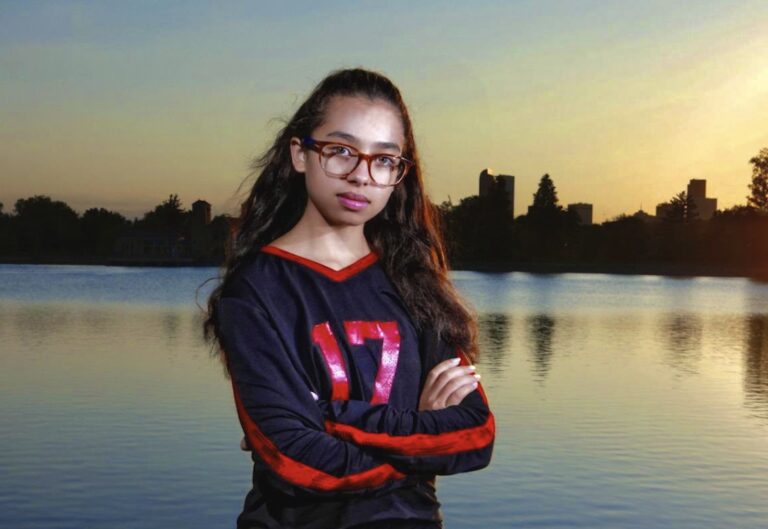
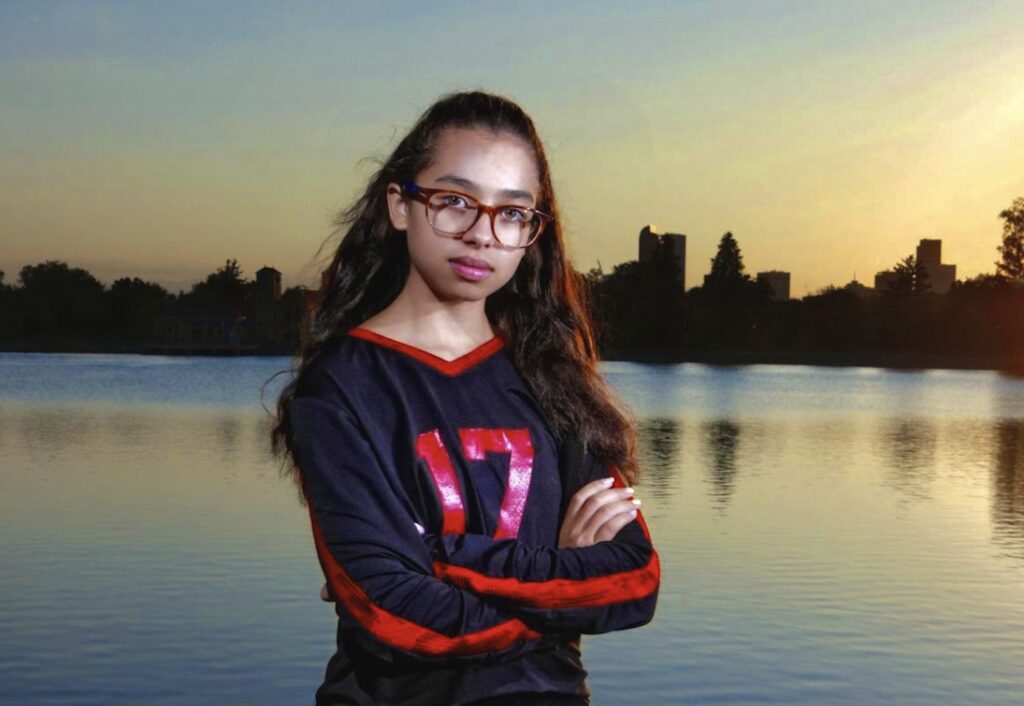
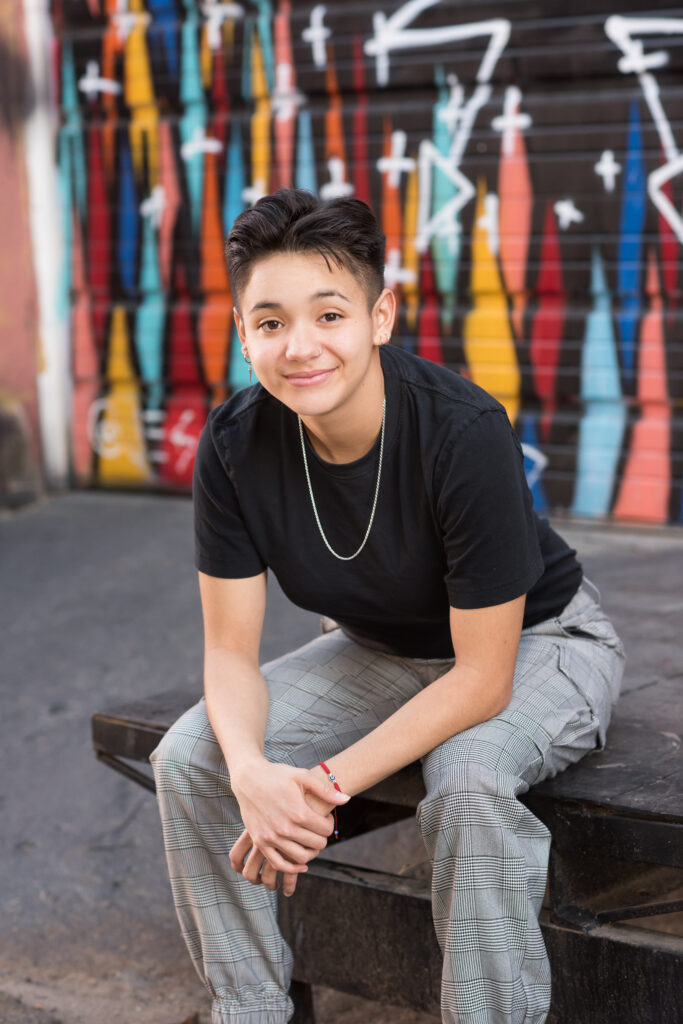
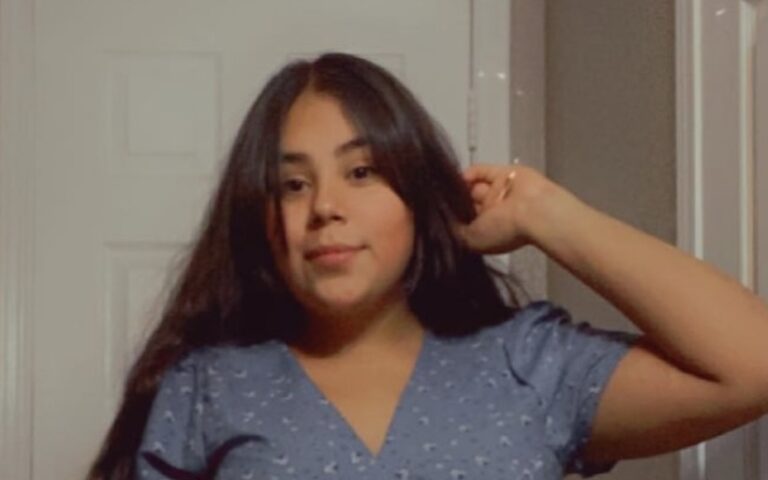
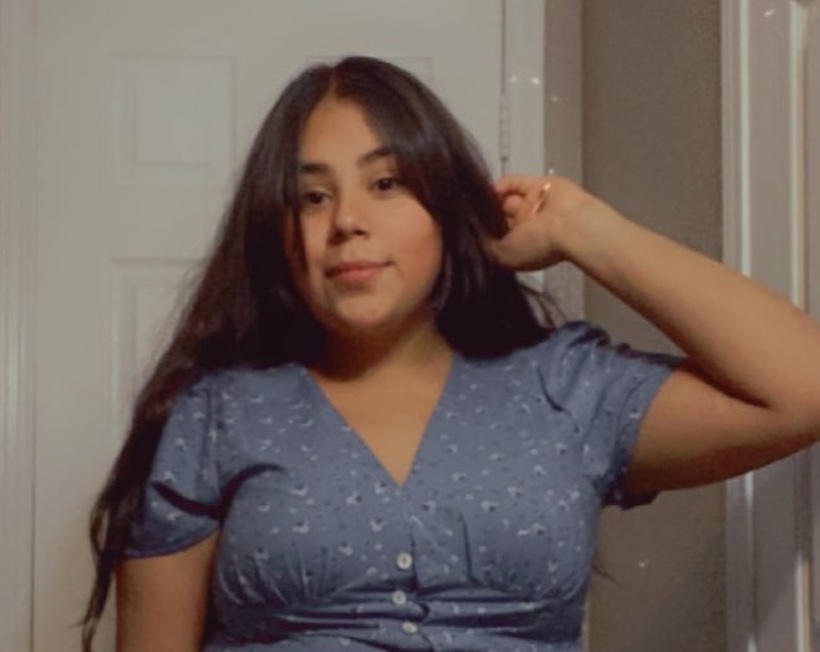
Yoltzi Avalos is a high school senior at Denver Online High School who currently holds a 4.034 (weighted) GPA. Avalos is also the recipient of the Integrated Algebra award, and has received awards for high honors as well as perfect attendance.
Favorite Book: Wonder – by R.J. Palacio
Favorite Movie: Spider-Man Far from Home
Favorite Subject: Math
Favorite Music: Louis Tomlinson and Harry Styles
Future Career: Undecided
Hero: My Family. Mom, dad, sister, and brother
Favortie Hobby: Painting/Drawing
Favorite Social Media Follow: Louis Tomlinson and Harry Styles
Words to live by: “Live life for the moment because everything else is uncertain” – Louis Tomlinson
Community Involvement:
Avalos has helped a retired neighbor out by completing chores around the house when needed.
Why is Community Involvement important? “I believe community involvement is important because it helps you be more compassionate towards the people in your community. It opens your eyes to the way others in your community live their daily life and how you can be helpful to them.”
If I could improve the world I would…
“I would help change the homeless dog situation in Mexico, limit the amount of trash we use in my community and make it easier for immigrant families to afford a lifestyle in America.”
College of choice:
University of Pittsburgh, the University of Colorado at Boulder, and Colorado State University at Fort Collins.
Who doesn’t like a compliment, a comment that often connects someone with a positive trait and is frequently connected to a person’s parents—their eyes, smile, even laughter? It’s the way genetics work. Parents pass certain traits on to their children. But they also pass on are a few other things, traits including predispositions to negative health issues. Diabetes, unfortunately, is one of these things.
Diabetes is a disease that occurs when the pancreas is unable to produce the proper amount of insulin, the hormone that moves glucose or sugar into cells for energy. Diabetes is also a condition growing across America and impacting the country’s Hispanic population at an even higher rate than the general population.
Diabetes is also a condition the Pueblo Community Health Center sees as much of or more often than almost any other health issue. Many of the people it sees are residents of the city’s east side, an area where an older, poorer and higher Latino population resides.
There are two types of diabetes, Type 1 and Type 2, said Lynne Evetts, a certified family nurse practitioner and Director of Quality at the Pueblo Community Health Center. Type 1 or juvenile diabetes is genetic and shows up early in life. Type 2 is a condition caused by poor dietic habits and develops over time. Type 2, said Evetts, can lead to a number of serious health problems including heart disease, stroke, kidney disease, and nerve damage in the limbs that can sometimes lead to obesity and even amputation.
What is alarming about Type 2 diabetes, said Evetts, is the trend it is taking. Her team is seeing it in a grow- ing among adults and now, a number of younger patients. “The youngest child I diagnosed was a 13-year-old boy who weighed 300 pounds,” she said. In seriously obese patients including children, the disease is causing a number of potentially serious other health concerns including higher cholesterol levels and knee and joint pain from carrying too much weight. “It’s especially common on a skeleton that’s still developing,” said Evetts.
Economics and culture are also a couple of factors that play into this common and dangerous health issue. Lower income people, including those who live in food deserts—places where full-service grocery stores don’t exist—tend to buy food they can afford, foods that are often unhealthy and contribute to obesity. Also, many traditional foods can also be high in fat and calories. “We discuss lifestyle,” said Evetts. “We don’t call it diet,” said Evetts. The very word tends to work just the opposite of its intended purpose and can add pressure on patients. “You are not on a diabetic diet…It’s a healthy lifestyle,” she tells them. Evetts says her staff counsels patients to also read labels. “You need to limit carbohydrates, especially unrefined sugars,” she said. A single bowl of sugary cereal can often contain as many carbohydrates as a serving of French fries.
She also tells patients to limit fat intake, “It’s not good for anyone…if it comes out of a package, it’s prob- ably not good for you.” Evetts counsels her patients to use healthier cooking oil—vegetable oil or olive oil—rather than lard. Her rules are simple: eat more fresh fruits and vegetables and watch calorie intake. In addition to becoming more conscious of diet, the veteran health nurse adds one more thing in her conversations with patients: “We all need exercise.” She recommends at least 150 minutes per week (Monday-Friday) for adults and 300 minutes or an hour each day for children.
According to the Centers for Disease Control, rates for Type 2 diabetes among Latinos far outrace—17 percent to 8 percent—that of non-Hispanic Whites. Interestingly, Puerto Ricans are twice as likely to have Type 2 diabetes than someone from a South American background. Among all groups, U.S. adults have a 40 percent chance of developing Type 2 diabetes but rates among Latinos are ten percent higher. Latinos also have higher rates of kidney failure and blind- ness caused by diabetes.
Diabetes so far has no cure but there are things that can control it. Evetts said when she discusses it with patients, she never lectures them. Instead, she tells them, “I can’t care about this more than you, but you have to do the hard part. Let me help you live this the best you can.”
Diabetes is a disease that occurs when your blood glucose, also called blood sugar, is too high. Blood glucose is your main source of energy and comes from the food you eat. Insulin, a hormone made by the pancreas, helps glucose from food get into your cells to be used for energy.
Like a letter carrier who delivers mail in rain, sleet or snow, along with every other imaginable weather condition, 29-year-old Marissa Molina is equally as determined. Only instead of mail, what Molina delivers is the latest information on immigration. Not only that, she’s ready to talk about its contours, challenges and roadblocks whenever or wherever she needs to. It is a subject the young but experienced educator and spokesperson knows intimately. She’s lived it.
At age nine, Molina was brought from Mexico to Colorado by her parents and raised in Glenwood Springs. The subsequent twenty years have been a wild, fascinating and amazing ride. After high school, she headed to Durango and Fort Lewis College where she graduated with honors with degrees in political science and economics. She later taught in Denver public schools. In 2019, Colorado Governor Jared Polis selected Molina to serve on the Board of Trustees at Denver’s Metropolitan State University making her the first DACA recipient to serve on a state board.
After years of not knowing what tomorrow would bring—she was, after all, undocumented—Molina now speaks freely about her journey. In high school and without a Social Security number, college, she thought was out of reach. But a high school counsellor helped shepherd her through the process for admission. The same kindness followed her to Fort Lewis where an admissions officer lent a hand. But before all that, Molina knew she could count on the unwavering support and belief her parents, Carlos and Marisela, had in her.
Today, Molina is the Colorado state director for FWD.us, a bipartisan political organization that works for families and communities trying to navigate a sometimes confusing and complicated U.S. immigration system. She works to alleviate some of the fear of deportation that thousands of young immigrants live with on a daily basis. It is territory she knows well.
“In my role,” said Molina, “I work on policies at the state level to create opportunities in our community, to partner with the undocumented and work on immigration reform.” It can sometimes feel like navigating a minefield where the next step may well include an immigration official nearby and a walk toward a bus whose destination is the southern border.
“For me, it’s really important that we talk about DACA (Deferred Action for Childhood Arrivals) from the perspective of people going to school, but most importantly, it’s talking about freedom and having protection and work authorization.”
Speaking candidly and opening about immigration and immigration rights to those who need to know and understand the landscape is not only the sharing of information but also sharing her own story, said Molina. “For the majority of my life I was told not to talk about my status… it could pose a danger to my family,” said the determined social activist. “I had to overcome the shame that I learned about my own identity.” She first had to learn that there was no shame in being an immigrant.
Molina was lucky. She never had an encounter with immigration or immigration officials. Not everyone like her could say the same. But DACA, President Obama’s 2012 executive order designed to protect undocumented immigrants who came here as minors from deportation, eased Molina’s anxiety as well as the anxiety of several hundred thousands of others just like her. But that comfort level was temporary once ex-President Trump took office. Trump, whose campaign rhetoric clearly explained his position on immigrants and immigration, had designs on rescinding it.
In 2017, then Attorney General Jeff Session ruled DACA illegal and unconstitutional, saying it should be rescinded since it was unlawful from its inception. The Supreme Court ruled against Sessions and the Administration saying Session’s offered no detailed justifications for canceling DACA.
Today, as Molina travels the land and speaks about how DACA “truly changed my life,” also feels great empathy for so many others just like her. “There are a lot of young people who are capable and promising, but they don’t qualify for DACA because of the date” that they arrived in the country.
Molina is hopeful that President Biden and the Democrats can save that part of his $1.85 trillion domestic policy bill that includes protection for millions of immigrant families and somehow, some day, create a permanent path toward citizenship. “We believe this is the year,” she said. “Congress should move.” Not doing so would be “a moral failure.” But Democrats are dealing with stiff headwinds, not only in their own party, but also with Republicans, many of whom have no intention of helping Democrats on this hugely partisan legislation.
While Molina waits on Congress, her parents no longer have to deal with immigration officials. “My mother became a citizen when I was 28…my father when I was 27,” she said. “The last election was their first (voting) election…for them it was really important to honor their own journey.” Because the day was so special, “I came back from the western slope and drove them down to the place where they dropped off their ballot.” They also took a picture. “We documented it.”
David Conde, Senior Consultant for International Programs
It is rare these days not to find a preacher, minister or priest pontificating on the evils of those that are against the status quo. They are among the loudest voices advocating for the supremacy of the past.
The notion of separation of church and state has been clearly forgotten in favor of questionable morality associated with political expediency. The term White Anglo Saxon Protestant (WASP) is no longer a throw away line, but central to an effort to have the church, in whatever form, become an official part of the state.
A close relative attended Sunday church and came away dissatisfied because what was to be a talk of service, compassion and its redemptive qualities became a political statement about how those that inherited the legacy of the religion are being victimized by people that want their power. The belief system included in the agenda of what used to be fringe groups was presented in a way that promoted a tone of exclusivity that made minorities outsiders.
I myself witnessed a church sermon that amounted to a political statement against the present in favor of what used to be. The two events some three years apart got me to thinking about Christianity and the dynamic tension it has experienced over its history between freedom to love God and totalitarian domination in the name of God and his Son.
Most Christian churches express a comprehensive belief in the Old and New Testament. This is reflected in the Bible that includes both and is amplified by the term “Full Gospel.” Although the Old Testament is very different from the New, they both have in common shared histories as state sponsored religions. That characteristic has allowed the use of extreme measures to control people and punish those that do not believe in the same way.
Christ was born to the world as an embodiment of the next chapter of Jewish belief history. The Messiah had a different story to tell about the fulfillment of the law.
St. Paul, a Roman, took those teachings and created the European Christian church that eventually became the official religion of the Roman Empire. This dictatorial institution later sought to silence other Christian voices even in the lands of Christ’s birth in the Middle East. Some would say that the birth of Islam was perhaps connected and a direct result of Christian Authoritarianism.
Spain used the Catholic Church to unite the country using some policies that betrayed Christ’steachings. The Spanish Conquistadores and priests that brought these policies to the Americas created a medieval way of thinking and a world left behind by the Renaissance.
Many of the original European settlers came to America seeking religious freedom. They however, turned around and established an understanding that political activity could only flow through church participation. This tendency to want to establish a state religion was noted by our founding fathers and judged there to be a need to separate the two which was more in line with our democratic principles. I suspect that they were more concerned with religion control- ling the state than vice versa.
The tendency has reared its head again. This time it is attempting to help assure White supremacy and its domi- nance of government.
Just like the corruption and authoritarianism in the waning days of the Roman Empire into the Middle Ages, religion in America is on the path to doing the same in the 21st Century. The only hope for our democracy is an institution called the Constitution.
The views expressed by David Conde are not necessarily the views of La Voz Bilingüe. Comments and responses may be directed to News@lavozcolorado.com.
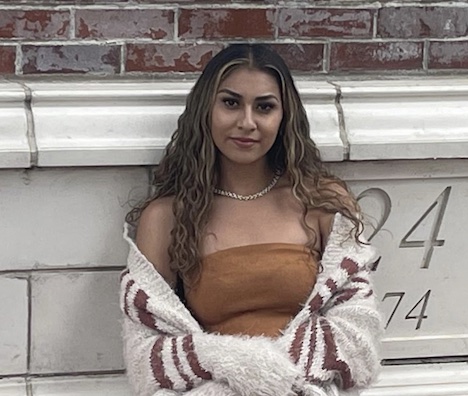
Profile: Isabella ‘Bella’ Perez is a senior at Westminster High School with a commanding GPA of 3.83. Perez is a member of International Bacceralate (IB) a worldwide, nonprofit education program founded to give all students the opportunity to receive an education fit for a globalizing world. Perez is also part of the marching band at WHS and she plays the saxophone and is a drum major.
Favorite Book: Ask the Passengers – A.S. King
Favorite Movie: Nightmare on Elm Street
Favorite Subject: English/Band
Favorite Music: Alternative
Future Career: Psychologist
Hero: My mom, Salina and Martin Luther King, Jr.
Favorite Hobby: Playing basketball
Favorite Social Media Follow: Twitter/Tik Tok
Words to live by: “Whatever you’re going to be, be the best you can.”
Community Involvement: Perez works for Mile High United Way and her job involves volunteer work outside of her job.
Why is Community involvement important? “It is important that we are more than ourselves. It is cool to reach out to the community and see that we are all connected.”
If I could improve the world I would….
“I would work to encourage empathy and understanding of one another.”
College of choice: University of Colorado at Boulder.
Alyson Velasquez is a high school senior at East High School who currently holds a 3.047 GPA. Velasquez is the recipient of the A+ Angels Scholarship and the Biliteracy Seal. Velasquez donates her time by volunteering for Food Bank of the Rockies where she helps distribute donated groceries to families in need.
Favorite Book: Harry Potter & the Sorcerer’s Stone -J.K. Rowling
Favorite Movie: Walkout
Favorite Subject: History
Favorite Music: Mexican Music
Future Career: Law/Forensic/Criminal/Buisness
Hero: Both mom & dad
Favorite Hobby: Outdoor activities
Favorite Social Media Follow: Instagram – Donut Media
Words to live by: “Success is no accident. it is hard work perseverance, learning, studying, sacrifice & most of all, love of what you are doing or learning to do.” – unknown
Community Involvement: Alyson Velasquez donates her time as a volunteer for Food Bank of the Rockies.
Why is Community Involvement important? “Community Involvement is important, because it makes a difference in society. It also helps build character, and teaches social responsibility skills.”
If I could improve the world I would…
“Find a way to help those in poverty. I would love to help people around the world.”
College of choice: New York University, University of California at Los Angeles, the University of Colorado at Boulder, Colorado State University, and the University of Colorado at Colorado Springs.
Hero: “My dad, because we share similar interests.”
Favorite Hobby: Modifying cars.
Favorite Social Media Follow: Instagram – Donut Media
Words to live by: “If one day the speed kills me, don’t cry because I’m smiling.”
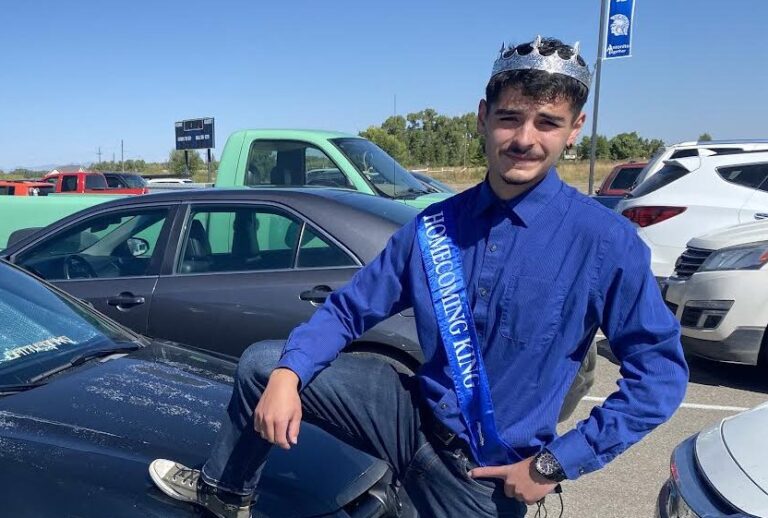
Community Involvement: Dalton Romero is enrolled in an internship through Antonito High School, learning more about auto mechanics as well as continuing his work with Antonito Together.
Why is Community Involvement important? “Community involvement is important to me, because I have an opportunity to learn more about my community and ways to better it.”
If I could improve the world, I would….
Help third world countries by improving living conditions.
College of Choice: WyoTech because I want to work in the automotive industry and enhance their performance.
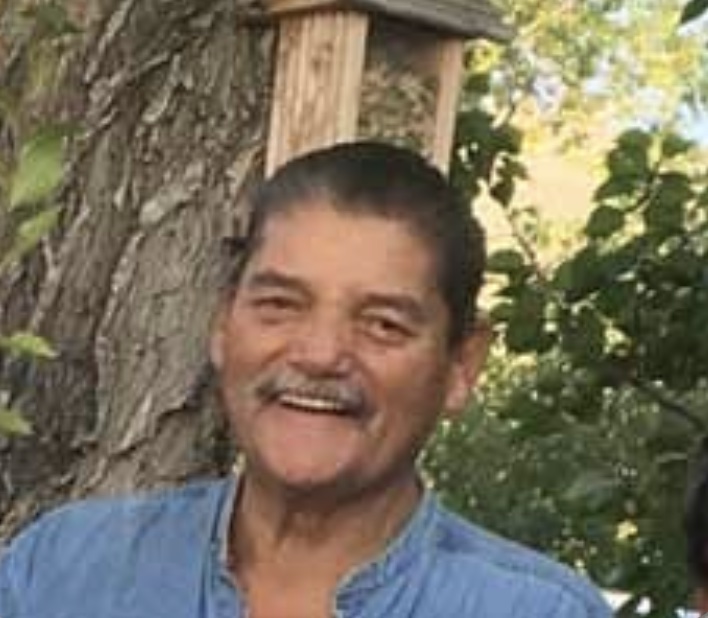
I first met 12-year-old David Rivera, when his family moved to Garcia, CO, then later to his beloved northern New Mexico. He and I sometimes hung out with the same crowd enjoying innocent fun.
Photo courtesy: Rivera Family
If you truly knew David, you knew two things, 1) he had a big heart and 2) he was the biggest scaredy cat ever. He feared the darkness, scary movies, and things that go bump in the night. I recall we faked out a group of friends as we walked home one Saturday evening. I said I had seen horrible witch-like shadows in the old adobe homes and he confirmed it, just so the rest of the group waited for us in that pitch-dark evening so many years ago. Thanks to David, next day, that made-up story was soon all over the town of Costilla because David told it with such fear, conviction and drama, and with much exaggeration to anyone who would listen. Because of this, some people avoided that stretch of road for many months.
This 6-foot plus young man was liked by many, and was a teenager when his brother Henry and I married. David was a happy go lucky kind of guy whose large stat- ure matched his big heart. I will remember many innocent happy times we both experienced in those northern New Mexico days and nights of our youth. I remember his friendship with the Quintana brothers, longtime friend ‘Goober’ (real name Donald) and the late Anthony Archuleta and Dennis Torres.
David joined the U.S. Army after high school and served his time in Germany. When he returned he seemed a bit more serious, more grounded, but still a big scaredy cat. Later, he shared with my mother at the town post office, that he was getting married and that his mother Maria would be gaining a ‘yierna.’ This needs a bit of explanation since the Rivera boys and their sister Carla were not proficient in Spanish. They had been raised in or near Grand Junction and Silverton, CO and Bishop and Stockton, CA where Spanish was barely spoken. Because of this upbringing the Rivera boys learned much Spanglish along the way and often made big-time blunders, in public and at the dinner table. David thought he could convert the son-in-law, Spanish translation yierno to a female version yierna. It was a trait all so endearing and charming about most of the Rivera brothers.
David married Sarah and together they had three girls, Shawna, Alicia and Katrina. The girls adored their dad and cultivated a special relationship with him through thick and thin.
As life dictated the good and the bad, David and Sarah parted ways years later and David lived with his daughters off and on, or alone, and remained friends with Sarah. A few years ago they lost their daughter, Alicia, and David was never the same again. His health faltered further and he rarely visited family.
David was different yet the same as his brothers. Although siblings grow up together, everyone in life has a different personality in spite of the same upbringing. There is many a story told by the Rivera brothers where David was the subject of a prank. There are two that come to mind, where two brothers, who will remain nameless, tied both David and sister Carla in the fruit cellar, back-to-back, sitting on chairs, western movie style. They shut the door and as darkness prevailed, sister Carla tried to calm David. He was in fear of the darkness and promised to serve unspeakable revenge on his two older brothers, who again shall remain nameless. The parents arrived at home and Carla and David were freed. I’m pretty sure David for- got his plot of revenge and loved his brothers anyway, until the next prank.
Another incident involved a gathering of brothers, including another brother, Raymond, who lived in California, but was home for a visit. David was the youngest during this incident and apparently the rest were get- ting annoyed because he wanted to hang out with them. Maria, their mother, forced them to include David. They did, he later undressed and fell asleep on a cot in their room and they picked up the cot and took it outside to the front yard, where he slept the whole night into the morning as neighbors and passerby’s looked on.
Clearly, David was the victim of many a prank by his brothers. While I don’t know the exact details, or all the brothers responsible for those pranks, I do know that they all loved him for his carefree nature and his big heart. Much like his father, ‘Cove’, David loved his family, farm life, Costilla and Amalia. David loved the mountains, the outdoors, horses, reading, poaching, cowboy hats, Levis, leather vests, junk food, hunting, beef jerky, guns, elk meat, fishing and his prankster brothers and sisters.
David died of COVID-19 last week and will be buried in the family cemetery in Costilla, New Mexico. David, may your eternal life reunite you with those you love. Your earthly family, Shawna, Katrina, your grandchildren, your siblings Louise, Patrick, Mashalle, Robert, Steve, Henry, Raymond, Ted, Carla and the rest of us will never forget you. Services pending.
The recent passing of Charlie Watts, drummer for the Rolling Stones touched my heart, triggered memories of my youth and reminded me of something called the British Invasion of the 60’s Since the age of 13 I have loved, enjoyed, and followed the Rolling Stones. Since the first time I saw them on TV, I have been a fan. I have been to many of their concerts, and hope to see them (sadly without Charlie Watts) later this year. Neither band member had rock star good looks. They were even downright homely, but their sound stole my heart at age 13 and they will always be my favorite band. There is only one Mick Jagger and there is only one Honky Tonk Women and Satisfaction.
In the then vacant S.P.M.D.T.U. (Sociedad Proteccion Mutua de Trabajadores Unidos) building the local youth planned ‘record hops.’ We collectively brought our 45s of the 60s played them on a record player and danced from 7-10pm on any given Saturday night. A time of innocence. The music ranged from the latest Beatles hits like ‘She was just 17’ to the Stones’ ‘Satisfaction’ and the Beach Boys Surfin’ USA.’
The nearly irreplaceable and unmatched sound of the 60’s lit a fire in our hearts. Ironically, the unique- ness of a bilingual community of teenagers also listened to the New Mexico sound of Al Hurricane’s ‘Sentimento along with Tiny Morrie’s Lonely Letters and Little Joe y la Familia.
To add to that musical history was the history of the organization that owned the S.P.M.D.T.U. building. If you are Hispanic, the S.P.M.D.T.U should summon historic pride and more than likely ring a bell and trigger childhood memories. This 1900 Hispanic organization is the oldest Hispanic organization, now 121 years old and a chapter still exists in Denver.
Formed in 1900 in Antonito, CO and founded by Celedonio Mondragon, expanded and made their way into most Southern Colorado and Northern Mexico towns. Its purpose was to provide monetary help for widows of mem- bers, a type of life insurance. In those early days, major insurance companies discriminated against Hispanics and insurance coverage was nearly impossible to pur- chase let alone afford.
Who would have thought that the oldest Hispanic organization in the U.S. coupled with the British invasion made immeasurable memories for teenagers in northern New Mexico.
Where else but in the heart of northern New Mexico can the Stones, the Beatles, Al Hurricane and the S.P.M.D.T.U. conjure up memories after all these years.
Norma Rodriguez-Garcia – Abraham Lincoln High School
Photo courtesy: Norma Rodriguez-Garcia
Profile
Norma Rodriguez-Garcia is a High School senior at Abraham Lincoln High School who currently holds a 3.865 (weighted) GPA. Rodriguez-Garcia has been on the honor roll all four years of high school and is a member of the National Honor Society. Rodriguez-Garcia has also received the Seal of Biliteracy and has minored in Spanish at MSU.
Favorite Book: Swimming lessons – Lili Reinhart
Favorite Movie: Fiver Feet Apart
Favorite Subject: Math
Favorite Music: Pop
Future Career: Doctor – Neurosurgeon
Hero: Mom Norma and Dad Roberto
Favorite Hobby: Watch Marvel movies and play tennis
Favorite Social Media Follow: Instagram
Words to live by: “And that’s life, weird, messy, complicated, sad, wonderful, amazing and above all epic.” – Unknown
Community Involvement: Rodriguez-Garcia prides herself by making friends with special education students so that they feel like they are a part of the ALHS community and are less intimidated.
Why is Community Involvement important? “This is important to me because I want to ensure a safe community for all of my peers. Everyone deserves to feel safe in their school.”
If I could improve the world I would…
“I would like to improve the world by increasing access to opportunities for everyone to be successful in life.”
College of choice: Rodriguez-Garcia would like to attend either Colorado State University, the University of Colorado at Denver or Metropolitan State University of Denver.