




Home Blog Page 127

Federal jury convicts Colorado Springs woman for conspiracy to distribute fentanyl

The United States Attorney’s Office for the District of Colorado announces that Marlene McGuire, age 58, of Colorado Springs, was found guilty for her role in a conspiracy to distribute fentanyl resulting in the death of a juvenile. A federal jury in Denver returned guilty verdicts against McGuire on Friday, September 22, 2023, after approximately two-hours of deliberation.

According to the facts established at trial, on January 30, 2022, McGuire sold four pills which contained fentanyl and para-fluorofentanyl to the three juveniles near a fire station in the Security-Widefield area of Colorado Springs. On January 31, 2022, a father of one of the juveniles and his stepmother discovered the juvenile deceased in his bedroom in their home. Police and a deputy coroner found paraphernalia used for smoking fentanyl pills in the juvenile’s room and two blue pills in a baggie in his dresser drawer. After an autopsy, the El Paso County Coroner’s Office determined the juvenile’s cause of death was acute fentanyl and para-fluorofentanyl toxicity. The Drug Enforcement Administration (DEA) Western Laboratory tested the two pills found in the juvenile’s dresser drawer. Both pills contained para- fluorofentanyl. One of the two pills also contained fentanyl, lidocaine, and xylazine.

An investigation by the Federal Bureau of Investigation (FBI) and the Colorado Springs Police Department (CSPD) identified McGuire and a co-defendant as the individuals who sold the blue pills and also revealed that they had been engaged in a conspiracy to sell various controlled substances—including methamphetamine, heroin, cocaine, and blue pills—since at least May 2020. On February 21, 2022, the FBI and CSPD executed a federal search warrant at McGuire’s long-time residence in Colorado Springs. In addition to finding both McGuire and a co-defendant in the residence, law enforcement officers located and seized methamphetamine, heroin, cocaine, and a blue pill which contained fentanyl.

“Fentanyl is a deadly poison that is killing our children,” said U.S. Attorney Cole Finegan. “We are grateful to the Federal Bureau of Investigation and the Colorado Springs Police Department for their work in this investigation, and their collective efforts to keep our communities safe from this deadly epidemic.”

“Fentanyl is a deadly plague consuming our communities. In this case, the defendant was part of a conspiracy that led to the overdose death of a young man,” said FBI Denver Special Agent in Charge Mark Michalek. “The cooperation with our law enforcement partners in Colorado Springs made this result possible. The family of the deceased young man can know that those who supplied the deadly drugs have been held accountable and will no longer be able to provide poison to other juveniles.”

“The Colorado Springs Police Department is grieving with the family of the child who was killed and hopes that the successful prosecution of this case brings some measure of justice,” said Commander Doug Trainer, CSPD Metro Division. “We take the distribution of fentanyl in our com- munity seriously. We are thankful for our federal partners at the FBI and the United States Attorney’s Office who assisted with the investigation and prosecuted this case. We want to reassure our community that we will continue to fight the fentanyl epidemic alongside our federal partners.”

United States District Court Judge Regina M. Rodriguez presided over the week-long jury trial. Sentencing is scheduled for December 6, 2023.

The FBI and the Colorado Springs Police Department conducted the investigation. Assistant United States Attorneys Alyssa Mance and Peter McNeilly handled the prosecution.
Our Government

White House

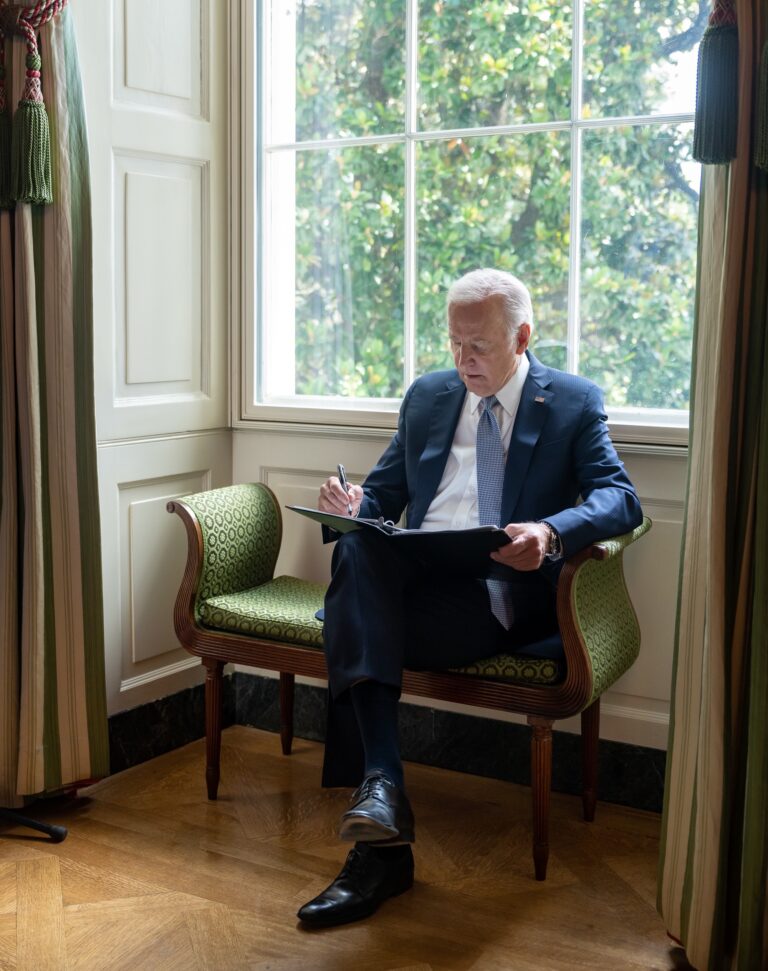
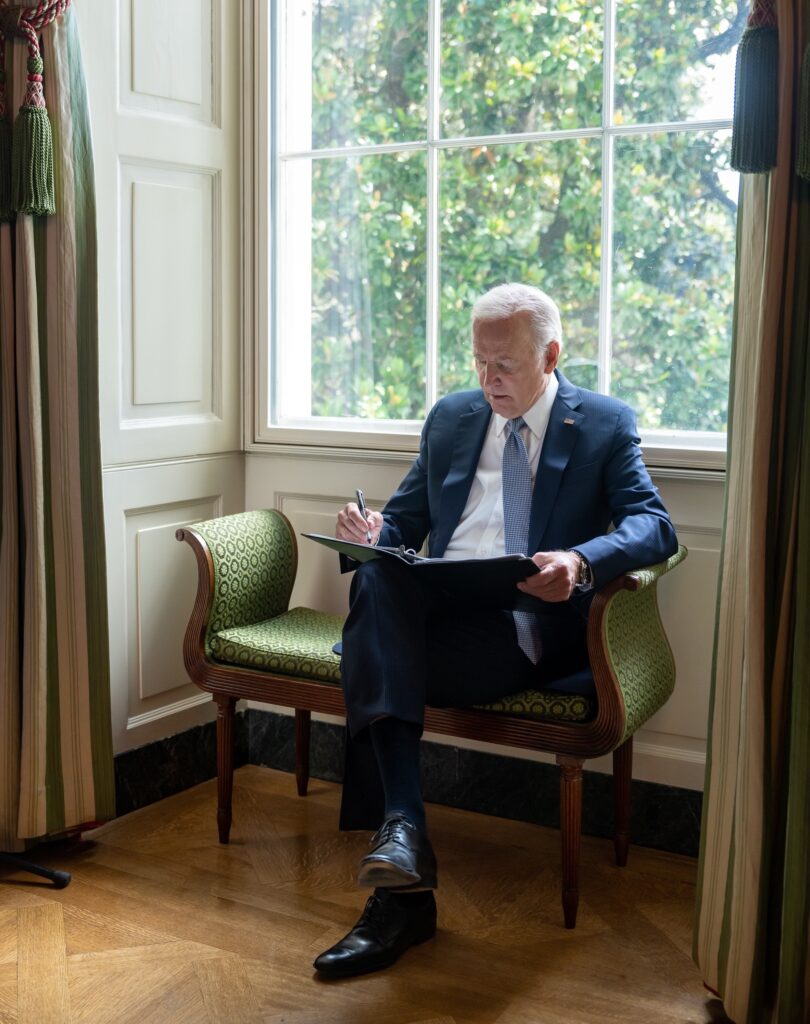
President Biden is announcing the inaugural members of the President’s Advisory Council on African Diaspora Engagement in the United States. The establishment of this Council was a significant commitment announced by Vice President Harris on behalf of the Biden-Harris Administration during the 2022 U.S.-Africa Leaders Summit, aimed at enhancing dialogue between United States officials and the African Diaspora.

Colorado Governor

Governor Polis issued an Executive Order declaring a disaster emergency in Baca, Jefferson, Kiowa, Prowers, and Teller Counties following severe weather and flooding in June 2023. The action enables state and federal agencies to coordinate response and recovery efforts and seek eligibility for federal fund- ing for these counties. This action follows a previous Executive Order issued by the Governor in response to the June 2023 extreme weather and flooding that allocated funding and enabled state and federal agencies to coordinate recovery efforts. The five counties listed in today’s action will now be able to receive funding from Executive Order D 2023 011 to support recovery efforts.

Denver Mayor

Mayor Mike Johnston and the City and County of Denver welcomes the Biden Administration’s decision to grant temporary protected status to Venezuelan migrants. This move provides a pathway to employment for many who have decided to settle in our city as well as a needed workforce opportunity to sup- port our local businesses. Many of these individuals are fleeing violence and instability in their home country. This designation affords them the chance to care for themselves and their families safely and without fear of removal. “I raised this exact issue with Secretary Mayorkas last month and am grateful for their swift action,” said Mayor Mike Johnston.

A Week In Review

0

Africa

Dozens killed in explosion near Benin-Nigeria border

At least 34 people were killed this past weekend because of an explosion at a fuel depot near the Benin- Nigeria border. Officials ordered an assessment of all fuel storage facilities after the explosion to prevent a similar incident from occurring. The explosion took place in a densely populated market, and at least 20 others were injured and taken to a local hospital.

Libyan mayor arrested after flooding

Abdulmenam al-Ghaithi, the mayor of the Libyan city Derna, has been arrested in connection to flooding that killed thousands in eastern Libya earlier this month. The country’s Attorney General said officials were responsible for managing dam facilities. A criminal case against leaders in the area is underway, and al-Ghaithi has also been accused of abusing his power. Recently, residents in Derna burned his house in protest.

Asia

India Moon mission in limbo

India’s Moon lander is having difficulty starting up again after being put into sleep mood at lunar nightfall. Officials acknowledged that the chances of the Moon lander reawakening are slim and may not have survived the frigid temperatures on the Moon. Recently, India made history by becoming the first country to land a spacecraft near the lunar south pole.

Teacher strike in Nepal closes schools

Millions of students in Nepal are missing class because of a huge teachers’ strike. About 110,000 teachers are protesting a bill that would give local governments oversight of schools and ban teachers from joining groups with political affiliations. Last week, large groups of teachers marched toward the parliament building. Both parents and teachers have spoken publicly for classes to resume.

Europe

Italian Mafia boss dies

Messina Denaro, who is thought to be the boss of the Cosa Nostra Mafia, died. He was one of the country’s most wanted men and was on the run for 30 years before being detained earlier this year. At the time of his arrest, Denaro was being treated for cancer and was moved from prison to a hospital last month. Denaro was tried and sentenced to life in jail in 2002 in connection to the 1992 killing of anti-Mafia prosecutors.

Ireland population grows

The Republic of Ireland’s population saw its largest increase since 2008. Figures show that the country’s population grew by almost 98,000 people. Most of the growth came from net migration, but the Republic of Ireland also had 20,000 more births than deaths. The population of Dublin is thought to be approximately 1,501,500 people now.

Latin America

Brazil court rules on indigenous rights

Brazil’s Supreme Court ruled in favor of restoring territory to the Xokleng people, who were previously evicted from the land. The ruling will impact hundreds of indigenous land claims and is expected to have a positive impact for indigenous land rights. The Xokleng are an indigenous group of 2,300 people who live in southern Brazil. They were driven from their land by settlers in the late 19th and 20th centuries.

Mexican police convicted over migrant deaths

Mexican officials have convicted 11 police officers for killing a group of migrants near the U.S. border in 2021. At least 17 people were found dead in a burnt-out vehicle during the incident, but forensic tests found they were shot dead before being set on fire. Previously, officials had said the migrants were killed during a turf war between criminal gangs over control of migrant smuggling routes.

North America

Free at-home COVID testing available again

The United States is offering free at-home COVID-19 testing kits as the country attempts to limit the spread of the virus ahead of the winter. Hospitalizations from COVID-19 cases have increased the past few weeks while a new strain of the virus has been detected in several states. Those who are interested in receiving free at-home COVID-19 tests should go to COVIDtests.gov. Residents can also call 1-800-232-0233 to receive tests.

Hollywood writers set to end strike

Screenwriters are set to end a strike over pay and the use of artificial intelligence in the industry that has lasted nearly five months. Among those who were protesting included writers for TV shows like “Stranger Things” and “The Last of Us.” The Writers Guild of America said it reached a deal with studio bosses that will provide meaningful gains and protections for writers.

President Biden delivers on health care promises

0

From his earliest days in office, President Biden has been focused on the country’s health. Much of his effort, no doubt, was based on the toll COVID-19 had already taken on the country. On inauguration day 2021, the virus had already claimed nearly half a million American lives. The number of documented COVID cases was many times that number.

Photo courtesy: White House Facebook

In just his first ten days in office, the President was busy with healthcare, issuing a full dozen executive orders, memoranda and presidential proclamations all focused on the health of Americans. Since then, he has continued to make headlines on the healthcare front, most recently when he announced an agreement between the government and the pharmaceutical industry to cap the price of insulin at $35 per month.

“Diabetes is an epidemic in the United States,” said Erin Seedorf, Assistant Chair in the Whole Health Division at Metropolitan State University-Denver. Seedorf says that the disease afflicts more than 311,000 Coloradans, many of whom are challenged to afford the President’s pre-cap insulin price. Over the last decade, insulin prices have tripled with some patients having to pay up to $600 for a month’s supply.

While the President has moved on a number of healthcare fronts, including addressing the country’s cancer challenge, diabetes may be as big or bigger a medical issue.

Seedorf calls the disease that prohibits the pancreas from producing little or no insulin and causing a buildup of glucose or sugars in the blood an epidemic and a financial nightmare for millions. “People with diabetes have medical expenses approximately 2-3 times higher than those who do not have diabetes,” she said. Some people, many elderly and on fixed incomes, pay up to $600 for a month’s supply of insulin. In addition to paying for the drug, there can be additional medical expenses—up to a $1 billion—on indirect costs. Diabetes also is known to be a significant factor in a number of health issues, including stroke, heart disease, amputation, blindness and death.

Colorado Senator and former Governor John Hickenlooper took to the Senate floor to applaud the President’s move to lower drug prices. “For years,” he said, “we’ve all been paying much more than those in other countries for the same drugs. But now, Medicare is taking the first step towards ending that stranglehold on life-saving drugs.” Hickenlooper excoriated the pharmaceutical industry for ‘ripping off’ Americans dependent on drugs to stay alive.

Late last month, President Biden also announced a list of ten drugs that will now be subject to negotiations with Medicare. The list includes insulin. Other drugs that the President targeted include those people take for stroke, heart disease, blood clots, cancer and more. While the list reflects the President’s promise to help Americans who routinely skip taking their drugs or ration them in order to stretch their supply, it is also a part of the Democrats’ campaign effort for 2024.

For years, Americans have journeyed to Canada to buy their prescription drugs where prices are dramatically lower than in the U.S. The major reason for this is that Canadian government collaborates directly with pharmaceutical companies to negotiate prices. If a drug is considered too expen- sive for consumers, it is kept off the market.

Interestingly, in Canada the cost for insulin is set at $35 but the cost of syringes, the mechanism for administering the medicine, is not covered.

Canada also limits direct-to-consumer advertising of prescription drugs which also limits the cost of each drug. In Canada, taxes make up any loss in revenue that drug companies might experience. But a poll asking Canadiens if they would prefer paying higher taxes than higher drug prices showed nearly a 90 percent approval for higher taxes.

Last week, the President also announced $240 million for a number of projects as part of his “Cancer Moonshot,” initiative. The initiative, it is hoped, will cut cancer death rates by half over the next 25 years.

While cancer rates have fallen in the U.S. by an astonishing 33 percent since 1991, it remains the second leading cause of death in the United States, trailing only heart disease.

The Centers for Disease Control attributes the decline in cancer rates to the huge reduction in smoking along with early detection and significant advances in treatment.

While the price of insulin along with the President’s list of drugs that will be price-negotiated is welcomed news by millions, it may be a pipedream to ever see a drop in a family of drugs designed to treat a handful of rare medical conditions.

One drug, Zolgensma, used in the treatment of spinal muscular atrophy, a childhood condition that causes muscular erosion and contributes to lung infections and muscle weakness costs $2.1 for a course of treatment. It is the most expensive prescription drug in the United States. Zokinvy is the second most costly at $1,073,000. Zokinvy is used in the treatment of progeria, a condition that causes premature aging. The cost for Zokinvy is for a one-year treatment.

Dr. Lovato, faith, family and surgery

0

Hispanic Heritage Series – Part II of V

Photo courtesy: Dr. Richard Lovato

While practicing in Albuquerque, N.M., Dr. Richard Lovato was once told by an attendant that, ‘You’ve made it once other doctors start requesting your services for themselves and their families.’ If that’s the case, Lovato hit the pinnacle in his field after about 15 years as a surgeon. While the personal requests from other doctors mounted, so did public accolades including recognition by Albuquerque Magazine as surgeon of the year.

Now relocated to Denver, Lovato recently joined the team of physicians at St. Anthony’s Hospital. When considering the move, Lovato was encouraged by the faith-based practice at St. Anthony’s. “My family centers ourselves around faith and our church.” says Lovato, “That’s a big reason why we chose St. Anthony’s.”

Coming to Colorado is a bit of a homecoming for Lovato, having been born and raised in Costilla in the San Luis Valley. He takes pride in his Costilla roots but also notes that he is the only doctor he knows from the region. His road back to Colorado wasn’t easy and faith and family served as Lovato’s platform for success.

At the age of nine, Lovato’s parents were killed in a motorcycle accident and he was left to make life-altering decisions for himself and his little brother – decisions that would determine where they would live and where they would go to school. With family in California, Denver, Pueblo and New Mexico, Lovato had many options – and tough decisions for a young child. He no longer had his loving parents with him, he lost the innocence of childhood, but he credits the demands of being the oldest sibling, the influence of extended family and the Catholic faith for helping him make responsible decisions.

Mature enough to determine that his grandparents had already had their turn raising children, Lovato and his brother went to live with his Uncle Dee. With his extended family’s encouragement, Lovato graduated from Menaul School – a Presbyterian founded school originally designed to prepare Spanish-speaking boys from New Mexico for college. The school certainly fulfilled its mission with Lovato who graduated as valedictorian of his class and earned a scholarship to the University of New Mexico.

Reluctant to become a surgeon after learning of the long hours and knowing he wanted to have a family someday, Lovato nevertheless followed his passion into the field. While a resident at the University of Kentucky, he married and had a daughter. Not surprisingly, his daughter, Erika, followed Lovato’s wife, (a nurse), and Lovato into the health profession.

Not surprisingly, Lovato still keeps faith and family as a central part of his life. He speaks of Erika with unbridled pride and talks about her options going back to medical school to become a doctor or continuing as a nurse like her mother. He also talks lovingly about the younger brother Randy that he helped to raise, the brother who lived with him while he was going to college and the same brother who is now a successful architect in New Mexico.

With friends who are already contemplating retirement, Lovato considers himself in the prime of his career while rebuilding his client base in Denver. His knowledge of the Latino community and his ability to speak Spanish gives him a decided advantage. “Our practice steers monolingual Spanish speakers my way and I love it when I see the happy reaction from my patients when they realize I can speak Spanish,” notes Lovato. As for requests from other doctors for services for themselves and their families,

“It’s just a matter of time and I will be honored to serve,” says Lovato.

Original Story Published 10/14/2015, Writer: James Mejia

CU Buffs take center stage of sports in Colorado

0

For some, college football has been the little brother of the NFL since the start of the professional football. Football fans from coast to coast consider the end of summer and the start of fall the best time of year for sports and while college football has been a staple in America society for over a century, the NFL has lead the way as the most watched sport amongst all sports across the U.S. That is until the Prime effect.

Photo courtesy: CU Football Instagram

Over the weekend the Coach Prime led Colorado Buffaloes hosted their in state rivals, the Colorado State Rams (CSU) for the Rocky Mountain Showdown, for a rivalry game, almost as old as the state itself.

In the week leading up to the game, CSU Rams coach Jay Norvell made a statement on ESPN that seemed to be directed solely at coach Prime. Norvell said, “I don’t care if they hear it in Boulder. I told them, I took my hat off and I took my sunglasses off. I said when I talk to grown-ups, I take my hat off and my glasses off. That’s what my mother taught me. (CU’s) not going to like us no matter what we say or do.”

This became fuel for coach Prime, his staff and the players heading into Saturday night’s primetime game, which drew ESPN’s biggest prime time audience at 9.3 million viewers and 11.1 million peaking viewers becoming the fifth most watched college football game ever.

The Rams were 23.5-point underdogs in Saturday’s matchup however; you would have never guessed it by the half.

The first quarter was one of the most productive first quarter in state history (both local and professional) as both teams managed to score a combined 28 points with two decisive turnovers by both teams. The Rams scored in the second leading the Buffs heading into the half.

In the third the Buffs and Rams held one-another to no additional points but in the fourth the Buffs down 17-28 after a field goal from CU and a touchdown from CSU. Colorado added a 41-yard field goal with 7.33 left. CU’s defense stiffened and was able to get Colorado’s quarterback Shedeur Sanders back on the field for one last march down the field.

Photo courtesy: CU Football Instagram

With less than a minute left to play in regulation, S. Sanders connected with Jimmy Horn Jr. for the touchdown and then found Tight End Michael Harrison in the back of the end zone for the two-point conversion to tie the game. CU and CSU went into overtime tied 28 – 28.

The first overtime score came from a 3-yard touchdown connection from S. Sanders to Michael Harrison again to take a 35-28 lead. CSU answered with an 8-yard pass from Brayden Fowler-Nicolosi to Tory Horton (his top receiver of the day).

The final score came in the 2 Sanders connected with Michael Harrison yet again on an 18-yard pass, followed up by a 2-point conversion. CSU was unable to answer and CU bested CSU in the 2023 Rocky Mountain Showdown 43-35. 

This week the number 19th ranked CU Buffs will take on the number 10 ranked Oregon Ducks on Saturday September 23.

In other sports the Denver Broncos lost at home again to the Washington Commanders dropping to 0 -2. The Broncos will face the Miami Dolphins in Miami this Sunday at 11 a.m.

A new COVID variant’s already here, be prepared

That early morning chill that has brought blankets out of storage is one sign that seasons are changing. Another is postings from local health departments that we’re moving into cold, flu and COVID season. Yes. There’s a new COVID variant on its way, in fact, it’s already here.

While we have learned how deadly a virus can be—the pandemic taught us volumes—public health officials don’t think this new variant will have anywhere near the impact of COVID-19. It brought the nation to its knees, upending American life, everything from education to the economy.

Over a period of two-plus years beginning in 2020, the pandemic killed more than a million Americans and another estimated 15 million worldwide. It also left millions of others with long-term health issues. It’s no time to panic, said Pueblo County’s Alicia Solis, but it would be wise to be paying attention.

“All of the information I have received,” said Solis, Pueblo County’s Program Manager in the office of Communicable Disease and Emergency and Response, “(says)we are in pretty good standing.” The communicable disease specialist, however, stops well short of even hinting we’re in the clear. In fact, Solis suggests going back to best practices of the pandemic.

“Wash your hands regularly, wear masks and disinfect surfaces,” just to be safe, she suggests. Also, when a vaccine becomes available, give serious consideration to getting it.

The Centers for Disease Control recommends the vaccine for everyone six months of age and above.

The Colorado Department of Public Health and Environment recorded slightly more than 63.000 cases of COVID-19 in Pueblo County with 900 deaths. There were 14,502 deaths statewide. Solis said the majority of COVID deaths were “older adults.”

No county escaped the wrath of COVID. Alamosa County, the nerve center of the San Luis Valley, also took the viruses best shot. The county, with a population of just over 16,000 reported 6,080 cases of covid and 69 deaths.

While life has pretty much returned to normal in this country, COVID is still very much an everyday reality. The new virus, christened Eris by the CDC, has accounted for 21 percent of all current U.S. COVID cases as of early September. In all, nine U.S. states have become landing points for the new variant, including Colorado.

Solis, a fifth generation Puebloan., cautions against anyone thinking that the new variant portends anything close to the COVID era. Still, she remembers well feeling a bit uncertain about things when reports began trickling in about a previously unknown virus from China.

“I remember it like it was yesterday,” the public health official said. In late November 2019, she recalled, there were reports about “a new emerging virus.” In short order, she began reading that the still unidentified virus “was getting closer.” Just as world health agencies began counting cases globally—around March—Pueblo got its first case. “What we didn’t know is what direction it would take.” Soon, her city and the whole country would find out.

Currently, the Food and Drug Administration is working with vaccine manufacturers to ensure the new shot meets all safety requirements but there has been no announced date when it will be available to the public.

While health experts are hoping for a release date that beats the arrival of cold and flu season—usually mid-November—its arrival date remains unknown.

One big reason for the concern is that the shot’s effectiveness doesn’t usually take hold for two weeks after inoculation. But working in the public’s favor, say doctors, is that many, if not most Americans, are heading into the cold and flu season with a degree of immunity from previous covid vaccinations.

The county’s efforts at getting citizens vaccinated did not go as well as it would have liked, said Solis. Sites set up for vaccinations had Army and local law enforcement personnel nearby. Their presence, she said, “deterred a lot of people from getting vaccinated…we began giving (shots) in smaller places.” Ultimately, the department would have liked to have reached more people.

When the vaccine for the new variant does become available, Solis said that one element of the plan for getting shots into people’s arms is to create sites in “smaller places,” even going to where people work and “giving them to employees.”

The challenges of mental illness

0
David Conde, Senior Consultant for International Programs

The idea of being called crazy has historically been part of humorous exchanges between people. Much of it comes from the fear of being branded as such or having problems of that kind and trying to hide it.

Throughout my early life I ran into some older (usually old) people that displayed what us kids considered odd behavior. The teasing these people received from the children and some adults was a commonplace response. Another type of usual response was that given to the two soldiers in the field by General George Patton in World War II. Although Patton suffered serious consequences that kept him out of the war until the Normandy invasion, that kind of thinking kept, especially men, from showing this side of their mental state.

At the same time, it was the same state of mind displayed by men returning from war and military service that began to change family attitudes toward the illness. In my family, death of one of our returning warriors visited us as a result of the Iraq invasion.

The transfer of the concern from a mental illness associated with war to a more generalize view of its effects caused mostly by our lifestyle was brought to the limelight by COVID when most had to retreat to their homes and live an isolated existence for three years. The sense of solitude caused by the circumstance exacerbated that trend especially among the new Millennial Generation.

The Millennial generational trend describes a preference to communicate on cell phones, computers, video and other technological facilities rather than person to person or in a group setting face to face. This represents a major change in the style of human interaction.

COVID hid some of that. But now it is out in the open. Many in the labor force prefer to work from home. That preference is part of the new style of communication that tends to also cause mental illness.

Research is indicating that almost 21 percent of adults and 11.5 percent of youth in the country are suffering from mental disorders. This represents almost 53 million people.

Inbedded in the crisis are the 15 percent of adults reporting substance abuse and the 4.8 percent considering suicide. Ninety-three and one half percent of the population has received no treatment.

Similarly, 16 percent of youth amounting to 2.7 million have reported major depression episodes. Of that number, 60 percent have received no treatment.

Of particular interest to Latinos are the 11 percent of multiracial adults that are suffering from mental issues. This is because Latinos are not only multiracial, but also have the fastest growth in interracial and interethnic marriages.

Also creeping into American mental health are cultural identity themes that appear to be caused by major and relatively rapid changes in our demography. The emergence of the new minority majority for example, is not only creating social and political division, but is also causing some confusion about what the image of an American should be.

The Latino community has a lot of experience with the matter. The centuries of carrying an identity pulled apart by a variety of cultural forces has left a mark on its very soul.

Mental illness in the United States is real and covers all of our landscape. The speed of change is a major cause.

The pressures brought by our evolution as a country are part of the baggage that can make us unwell. A lot of that can be treated individually by modern therapies. Lifestyle choices are another matter. That goes to the fabric of who we are.

The views expressed by David Conde are not necessarily the views of la Voz bilingüe. Comments and responses may be directed to News@lavozcolorado.com.

September is Newborn Screening Awareness Month

0

Colorado’s life-saving screenings detect 39 disorders

The Colorado Newborn Blood Spot Screening Program at the Colorado Department of Public Health and Environment’s State Public Health Laboratory is observing Newborn Screening Awareness Month this month by raising awareness about the importance of newborn screening.

The newborn screening program began nearly 60 years ago when it first started screening for phenylketonuria (PKU), an inherited metabolic disorder that increases the levels of a substance called phenylalanine in the blood. There are approximately 63,000 births in Colorado every year, and newborn screening is a set of tests that checks for a variety of conditions. Through newborn screening, the state lab is able to identify more than 700 children every year who are at risk of a metabolic or genetic dis- order. These children are quickly connected to specialized follow-up clinical care, resulting in improved quality of life.

“Newborn screening is critical and one of the most essential programs in the state. There are no clear signs or symptoms present, and each disorder tested has a treatment to improve the child’s health or even save their life,” said Greg Bonn, the newborn screening program manager. “The mission of our program is important to all of us because the work that we do each day helps save the lives of babies throughout Colorado.”

Some of the screened conditions include:

  • Cystic fibrosis.
  • Sickle cell disease.
  • Congenital hypothyroidism.
  • Critical congenital heart disease.

The Colorado Newborn Screening Program is a three-part system consisting of the blood spot screen, which can detect 39 disorders, the hearing screen, and the pulse oximetry screen. The blood spot screen is collected at the hospital and then sent to the state lab. The second screen is collected at the primary care provider office between 8-14 days of age.

The program runs six days a week, including holidays, in order to ensure timely testing, reporting, follow-up, and education of these disorders. For more information, visit Newborn Screening’s webpage or email cdphe_conbs@state.co.us.

Our Government

White House

Statement from President Joe Biden on the Return of American Detainees from Iran: “Five innocent Americans who were imprisoned in Iran are finally coming home. Siamak Namazi, Morad Tahbaz, Emad Sharghi, and two citizens who wish to remain private will soon be reunited with their loved ones—after enduring years of agony, uncertainty, and suffering. I am grateful to our partners at home and abroad for their tireless efforts to help us achieve this outcome, including the Governments of Qatar, Oman, Switzerland, and South Korea. I give special thanks to the Emir of Qatar, Sheikh Tamim bin Hamad, and to the Sultan of Oman, Haitham bin Tariq, both of whom helped facilitate this agreement over many months of difficult and principled American diplomacy.”

Colorado Governor

Governor Polis signed an Executive Order directing state agencies to reduce air pollution from state operations and advance water conservation at state facilities. This executive action builds on the previous success of the Polis administration’s greening government initiatives focused on reducing the state government’s greenhouse gas emissions and protecting water throughout Colorado.

Denver Mayor

Mayor Mike Johnston submitted the city’s 2024 budget proposal to the City Council. His 2024 budget responds to Denverites’ need for a city that is affordable, safe, sustainable, and vibrant for everyone. “Every budget is a moral document, it is an affirmation of our values and a roadmap to deliver a city that lives up to its greatest potential,” said Mayor Johnston in his letter to City Council, city employees, and residents of Denver. “In my first budget as your Mayor, we are positioning our city to respond quickly and decisively to our toughest challenges and take advantage of our greatest opportunities. I deeply believe the challenges we face as a city are solvable, and we will be the ones to solve them.”