





Home Blog Page 129

A lesson of culture and heritage in “I Am Joaquin”

0
David Conde, Senior Consultant for International Programs

We are about to enter Latino Heritage Month that celebrates and offers a view of unique traditions that are the artifacts characterizing honor, pride and courage of a people that are becoming more and more indispensable to America. The annual celebration is coming amidst what the media is calling “culture wars” that describes radicalized political actors that feel the loss of portions of their own heritage.

Heritage and culture tend to be lumped together because they are somewhat related and yet there is a difference.. Heritage is “something that comes or belongs to one by reason of birth…”

Culture “is an umbrella term which encompasses the social behavior…and norms found in human societies, as well as knowledge, beliefs, arts, laws, customs, capabilities, and habits of individuals and groups.” For most of us, when we think of culture we think of “symbols, language, norms, values and artifacts.”

When we put the two together we see the legacy of physical artifacts” like monuments and “intangible attributes of a group or society inherited from the past. Cultural heritage is a concept which offers a bridge between the past and the future with the applications of particular approaches in the present.”

For me, culture is something I cannot deny and still keep my identity as a social being. It is the most important part of how I see myself and how I manage my humanity.

On the other hand, heritage is a matter of choice or revision. As I navigate life, I employ elements of my culture that can help me along the way or choose not to use those things in my past that, I feel, hinder my progress.

In our country, for example, our national heritage includes the notion that a particular group of people have governed the country since its founding because they were the established democratic majority. This century is seeing a demographic and political change that begins to challenges the idea.

A somewhat related and very visible example are the monuments to Confederate leaders in the American Civil War that are being removed which is causing great pain to many, especially in the South. There is also the matter of the names of military bases located mostly in the South that are being changed because, like the monuments, they represent rebellion and insurrection against the United States.

Finally, there is the matter of revising the history of slavery to include “positive outcomes” so that the institution appears more acceptable to the American conception of liberty. These artifacts represent an important cultural heritage conception to a significant number of people that see themselves as part of the political power structure.

The Chicano Movement had to navigate the cultural heritage road, especially when it was dealing with issues that make up identity. Activists learned that one cannot run away from culture or its history although they could emphasize those helpful cultural structures that provide strength for present and future efforts.

A great example is the epic poem I Am Joaquin when it states: “I was both tyrant and slave,” because it embraces cultural history and at the same time seeks to deny contradictions in manifesting the present and the future reality. For people, nations and groups, culture is a bundle of contradictions because it is the basic character of our humanity which carries the opposite nature of our common day and spiritual worlds.

I Am Joaquin provides an excellent lesson in how to approach our cultural heritage. It embraces historical truth as it seeks to transcend its limitations.

The views expressed by David Conde are not necessarily the views of laVozColorado. Comments and responses may be directed to news@lavozcolorado.com.

Saturday work at Union Station to affect multiple commuter rail lines

0

Bus shuttles will provide service for the N Line between impacted stations

On Saturday, Sept. 9, the Regional Transportation District (RTD) will conduct routine maintenance and overhead wire inspections on tracks 2 through 7 at Denver Union Station that will affect commuter rail service on multiple rail lines.

Service to and from Union Station on B and N lines will be interrupted the entire service day on Saturday. Regular service for all lines will resume Sunday, Sept. 10. Service impacts include:

  • A Line: Service on the A Line will run as normal from Union Station to Denver Airport Station; however, there will be delays of approximately five minutes on westbound trains between 38th – Blake and Union Station.
  • B Line: For the duration of the service day on Saturday, the agency’s B Line will NOT include service to and from Union Station. The B Line will run normal service on Track 1 between 41st – Fox and Westminster stations. B Line customers traveling into Union Station from Westminster may connect to the G Line at Pecos Junction or 41st – Fox stations . Customers should expect longer travel times, with northbound transfers taking up to 45 minutes. To minimize delays, riders who normally park at Westminster Station may consider parking at Pecos Junction or 41st•Fox stations and taking the G Line from there.
    • B Line customers traveling from Union Station should board the G Line on Track 8 at Union Station and switch to the B Line at 41st•Fox or Pecos Junction stations. B Line service will run as normal between 41st•Fox Station and Westminster stations
    • The G Line will be operating on track 8 at Union Station, and on Track 2 at 41st•Fox Station
  • G Line: Service on the G Line will run as normal from Union Station to Wheat Ridge•Ward Road Station; however, The G Line will arrive and depart on Union Station Track 8.
  • N Line: For the duration of the service day on Saturday, the agency’s N Line will NOT include ser- vice to and from Union Station. N Line trains will operate normal service between 48th & Brighton – National Western Center Station and Eastlake – 124th Station. RTD is offering bus shuttle service for N Line customers between Union Station and 48th & Brighton – National Western Center Station for the entire service day on Saturday. N Line bus shuttle locations are as follows:
    • Union Station: Gate B18 located in the under- ground bus concourse
    • 48th & Brighton – National Western Center Station:
      • Pickup with service to Union Station – Gate B (on Brighton Boulevard)
      • Dropoff at station – Gate A (on Brighton Boulevard)

Customers should anticipate delays due to the maintenance work and are encouraged to use RTD’s Next Ride web app to plan their trip, view other options and receive Service Alerts.

For additional route and schedule information, call RTD Customer Care at 303.299.6000. Agents are available 6 a.m. – 8 p.m. on weekdays, and 9 a.m.–6 p.m. on weekends and holidays.

RTD recognizes the continued impacts various projects are having on our service and customers. Thank you for your understanding as the agency works to make lives better through connections.
Source: RTD


What’s Happening?

0

Exhibits

Created by Colorado artist Chris Bagley, Space Command is an immersive installation with a whimsical approach to the atomic age. Visitors are invited to probe the boundless mysteries of space by wandering and immersing their senses through sight, sound, and touch as they take in the wonders of “cosmic” debris—both familiar and foreign. The installation repurposes vintage scientific equipment, Mylar, and other space-age materials to create an interactive environment with emanating light, pulsing sound, and rotating objects. Visitors are encouraged to investigate its many layers and experience the optical illusions. In this altered reality, challenge your perceptions of the real and the unknown, spark your imagination, and consider limitless possibilities yet to be explored. Please note: The Space Command installation includes flashing LED lights that may affect photosensitive visitors. Visit https://bit.ly/3Z7yT9B for more information.

Photo courtesy: Denver Museum of Nature and Science

Que Pasa? is compiled by La Voz Staff. To submit an event for consideration please email attractions@lavozcolorado.com with Que Pasa in the subject line by Friday at 5 p.m.

ACHD reports first death of the season from West Nile virus

0

Adams County Health Department (ACHD) officials confirmed the first death from West Nile virus, an adult resident, within the county this year.

West Nile virus is spread to people through the bite of infected mosquitoes. Most infected with the virus do not have symptoms. However, one in five could develop flu-like symptoms, which typically begin two to 14 days after exposure. Serious, potentially deadly neurologic illness occurs in fewer than one in 100 infected people.

Data from mosquito testing throughout Adams County indicates very high numbers of mosquitoes, including the Culex mosquito, which carries West Nile virus and spreads it to people. These high counts are related to the wet spring and early summer in the Denver metropolitan area.

As of Aug. 30, 2023, the Colorado Department of Public Health and Environment (CDPHE) reports 193 human West Nile virus cases and 13 deaths in Colorado.

“In Adams County, 19 West Nile virus cases have been reported since July with most cases reported in August. We expect many more cases will occur in the peak months of September and October. Statewide, there are over seven times as many West Nile virus cases being reported in August as compared to the previous five-year average. We consider the risk of being exposed to West Nile virus to be present anywhere in Adams County,” said Dr. Bernadette Albanese, Medical Officer at Adams County Health Department.

ACHD strongly urges all residents to take measures to safeguard their health by protecting themselves from mosquito bites. People 60 years and older and those with certain medical conditions such as diabetes or kidney disease are at greater risk of serious illness.

ACHD encourages all residents to protect themselves and others by:

  • Trying to limit time spent outdoors during dawn and dusk when Culex mosquitoes are known to bite.
  • Wearing long-sleeved shirts and pants.
  • Covering strollers and baby carriers with mosquito netting.
  • Using an EPA-registered insect repellent, such as DEET, picaridin, or oil of lemon eucalyptus and following the label instructions for use.
  • Using and maintaining screens on windows and doors.
  • Frequently draining standing water from areas around the house, such as bird baths, portable pools, tires, planter saucers, buckets, pet water dishes, and children’s swimming pools. Mosquitoes can lay eggs and grow in standing water.
  • If there is standing water near your home that cannot be drained, such as ponds or ditches, these areas can be treated with larvicide “doughnuts,” which are sold at hardware stores.

Helpful information to address concerns about mosquitoes or standing water around your home can be found on the Adams County website.

For more information on West Nile virus or other health issues, please visit the ACHD website or call 303.220.9200.
Source: Adams County Health Department/ACHD

HCPF awards $29 million

Grants will help integrate physical and behavioral health at 147 locations statewide

The Department of Health Care Policy & Financing (HCPF) has awarded grants to 81 organizations to improve access to integrated primary care, mental health and substance use services. These grants were made possible by the Primary Care and Behavioral Health Statewide Integration Grant Program created by HB22-1302, which focuses on rural and frontier locations to increase the number of communities with access to behavioral health services. The COVID-19 pandemic exacerbated the need for accessible behavioral health services statewide, and the state legislature prioritized funding to increase these services in primary care offices. The grant prioritizes Health First Colorado (Colorado’s Medicaid program) and Child Health Plan Plus (CHP+) members, yet provides funding for practices serving all Coloradans.

From 2023-2026, the 81 grants totalling $29 million will improve, increase, or add integrated behavioral health services at 147 locations throughout Colorado. The program also funds behavioral health providers who want to offer primary care services, so patients can access whole person care where they get their mental health and substance use treatments.

Grantees can use their awarded funds for projects such as:

  • New models of care that help an office build special care teams and connect with psychiatrists and addiction medicine specialists and social programs
  • Advancing telehealth platforms, electronic health records systems, and billing systems
  • Increasing workforce – such as hiring behavioral health providers and training existing providers on effective mental health and substance use programs
  • Creating provider space – such as redesigning rooms to provide individual or group counseling
  • Training, education, and licensing/credentialing for primary care teams

For patients, this means they can get behavioral health counseling, medications, and integrated care support close to home. This also helps address the workforce shortage, improving primary care offices’ ability to serve people with behavioral health needs.

“Coloradans, especially those in rural and underserved areas, need more access to behavioral health care,” said Cristen Bates, Director of HCPF’s Office of Medicaid & CHP Behavioral Health Initiatives & Coverage. “These grants will provide the fuel many organizations need to meaningfully increase the amount and quality of behavioral health care they can provide and in a setting where many patients feel more comfortable – in the office of their family doctor.”

The state received hundreds of applications, showing strong interest from local communities to build access in their region. For more information on the grant recipients, where they are and how they’ll be putting the grant dollars to work, visit hcpf.colorado.gov/integratedcare and watch this webpage for updates on how the grant project evolves.

Our Government

White House

A poet of paradise, Jimmy Buffett was an American music icon who inspired generations to step back and find the joy in life and in one another. His witty, wistful songs celebrate a uniquely American cast of characters and seaside folkways, weaving together an unforgettable musical mix of country, folk, rock, pop, and calypso into something uniquely his own. We had the honor to meet and get to know Jimmy over the years, and he was in life as he was performing on stage – full of goodwill and joy, using his gift to bring people together.

Colorado Governor

Governor Polis Releases Statement on Absurd Potential IRS Decision: “This absurd potential action from the IRS would cost Coloradans money and confuse people, and I call on the Biden administration to reverse course. The IRS is proposing going back on thirty years of not treating TABOR refunds as taxable income. Our administration strongly disagrees with the IRS guidance as it fails to factor in that TABOR refunds are returning sales tax dollars in addition to income tax dollars and fees that our citizens have already paid and therefore are an entirely legitimate tax refund and should not be subject to further state or federal taxation,” said Governor Polis.

Denver Mayor

Mayor Mike Johnston announced the appointment of two Deputy Chief Operating Officers, Gretchen Hollrah and Molly Urbina. Gretchen and Molly will work under Janel Forde, who was recently named Chief Operating Officer for the City and County of Denver. They will coordinate and support departments across the city by facilitating regular and effective cross-department collaboration to deliver on Mayor Johnston’s agenda.

A Week In Review

0

Africa

Africa Climate Summit starts

African leaders gathered in Kenya for the Africa Climate Summit. It is the first of its kind in Africa and will focus on the continent’s approach to climate change. Leaders are working to come up with a common plan to present to other world leaders at the COP 28 United Nations climate summit later this year. African countries suffer some of the worst effects from climate change but are among those who contribute the least to it.

Zimbabwe president to be sworn in

Zimbabwe President Emmerson Mnangagwa will be sworn in for a second term after earning 53 percent of the vote in the country’s presidential election. International observers said that percentage of vote falls short of democratic standers and his rival Nelson Chamisa has called for fresh elections. Mnangagwa’s Zanu-PF party won nearly two-thirds of the parliamentary vote.

Asia

Typhoon rips through Taiwan

At least 40 people were injured because of Typhoon Haikui that swept throughout the island. The storm caused thousands of people to evacuate and is the first to directly hit the island in four years. Winds reached up to 124 miles per hour, but no deaths or major structural damage has been reported. At least 160,000 homes were left without power.

India launches new space mission to study the Sun

Officials in India launched the country’s first observation mission to the Sun shortly after becoming the first to land near the Moon’s south pole. The spacecraft will take four months to travel and will reach 932,000 miles from the Earth or 1 percent of the Earth-Sun distance. The launch was broadcast on national TV and was reportedly successful.

Europe

Ukraine’s defense minister fired

Ukraine Defense Minister Oleksii Reznikov was dismissed from his position after leading the ministry since before Russia’s invasion. Ukraine President Volodymyr Zelensky said it was time for new approaches in the defense ministry. Media in the country have speculated whether Reznikov will become the country’s new ambassador to London. He told media recently that he was exploring other positions with Zelensky.

Road deaths rise in Ireland

Road deaths in Ireland are on the rise, and the country is preparing a new 24-hour national speed enforcement operation. The operation aims to remind drivers of the dangers of speeding and to increase compliance with speed limits. So far, 127 people have been killed on Irish roads this year. People under the age of 25 account for a third of all deaths so far this year.

Latin America

Panama national soccer team player killed

Gilberto Hernández, a player for Panama’s national soccer team, was shot and killed by gunmen who opened fire on a group of people. Seven others were injured in the attack and it is unclear if Hernández was the target of the shooting. He was 26 and made his debut in the Panamanian national side in March against Guatemala.

Three thousand-year-old tomb found in Peru

An ancient tomb in Peru was discovered undisturbed. Researchers dug through six layers of ash to reach the skeleton which was found with two seals and other sacred offerings. The project leader said he believed the tomb belonged to a “leader in his time” and said it was important because he was one of the first priests to begin to control the temples in the country’s northern Andes.

North America

Minnesota prison goes on lockdown because of protests

Inmates in a Minnesota prison refused to return to their cells, causing the prison to go into lockdown. Inmates were unhappy about being kept in their cells on Labor Day weekend, authorities said, and were forced to do so because of understaffing. The protest involved 100 pris- oners and all inmates eventually returned to their cells. Advocates said the inmates protested because of prison conditions like excessive heat, limited access to showers and ice and unclean drinking water.

Proud Boys leader sentenced

Far-right Proud Boys leader Joe Biggs has been sentenced to 17 years in prison for his role in the U.S. Capitol Riot. Biggs was an instigator of the storming and was a former Infowars correspondent. In May, Biggs was convicted of seditious conspiracy, intimidation or threats to prevent officials from discharging their duties and interference with law enforcement during civil disorder. More than 1,100 people have been arrested on charges related to the riot.

West Nile virus has increased in Colorado in recording 11 deaths

0

The rains that have fallen across Colorado this spring and summer have been a blessing for a drought-stricken state. For the first time in several years, agriculture is irrigating with a degree of comfort rather than caution. Reservoir levels are up, and all the benefits of a water-rich season are abundant. But—and there is always a but—all this water is creating a near-record year for West Nile virus, a mosquito-borne virus that has so far been fatal to 11 people in Colorado in 2023.

The bounty of moisture after consecutive years of drought has meant a boom in the mosquito population, and specifically the Culex Mosquito, the insect that carries West Nile virus.

Colorado state health epidemiologist Dr. Rachel Herlihy calls the mosquito explosion this year “unprecedented” and the “highest we’ve seen in years.” Over the last seven years, the highest number of documented West Nile virus cases in the state occurred in 2015 when four cases were recorded. State health is worried that things could get worse since August and September are usually the months when cases spike.

West Nile virus, first discovered in 1937 in the West Nile region of Uganda, can affect humans, birds, horses and other mammals. Its symptoms include fever, muscle weakness, vision loss, convulsions, paralysis, coma and death. There have also been cases in which victims have suffered meningitis or encephalitis.

As of August 22, state health has documented 74 cases of the virus with Larimer and Weld counties recording the highest incidents with 14 and 13 cases respectively. Denver and El Paso counties have each recorded seven cases. The virus has also accounted for 40 hospitalizations.

The current West Nile outbreak has been predominantly clustered along the Front Range with Boulder and Larimer counties recording higher levels than other areas. But it has moved even farther, says the state health department. Pueblo and Weld counties have also been hit and Pueblo is one of the Front Range counties where a single death was attributed to the virus.

But anywhere there is standing water is a potential West Nile breeding ground. An area the size of a bottle cap, state health warns, “can hold enough water for mosquito eggs to survive.”

The virus spreads in an almost circular fashion. The cycle begins when a bird, often hawks or owls or scavengers like crows feeding on dead birds that have been infected after eating sick or dead birds already infected with West Nile contract the virus. Other times a bird can become a host by eating an infected mosquito. A mosquito can also contract West Nile by biting an infected bird.

If a host mosquito bites a human, it doesn’t always follow that West Nile will automatically set in. Health experts say about one in five people are affected. The first sign of the virus is usually a high fever but things can go seriously downhill from there to include—though in rare cases—even paralysis.

Fortunately, only about 1 in 150 people bitten by a carrier mosquito develop a serious or fatal illness. Those most at risk are people aged 60 and older or people with certain medical conditions.

There is currently no vaccine or medications for treating West Nile virus in humans, but there is a vaccine for horses that has worked remarkably well. The equine vaccine, said CDC, has all but eliminated the virus in horses and reduced mortality by 40 percent.

Among humans, it is still a challenging conundrum. Still, there are plenty of things one can do to minimize the risk of contracting it, says the health department.

Because any standing water—even the tiniest accumulation—is a potential mosquito breeding ground, do whatever you need to do to eliminate these collection areas. Mosquitos lay their eggs in old tires, rain barrels, birdbaths, puddles, and just about anywhere water can pool.

There is no need to isolate, says the health department. When outside use a good repellent, ones that contain DEET, picaridin, IR3535, oil of lemon eucalyptus or para-menthanediol products. (Some repellents are clearly marked ‘DEET.’)

Health officials also suggest that you consider wearing long-sleeved shirts and long pants. Also consider spraying the repellent not just on your skin but also on your clothing. Finally, if you have even tiny holes in your screens, repair them and consider limiting time outdoors at dusk and dawn, the period when mosquitos are most active.

When West Nile virus arrived in the United States in 1999, it had only regional impact, only New York and Connecticut. But by 2004, the virus had spread to the West Coast and by 2012, said the CDC, it had found homes in all 48 contiguous states and the District of Columbia. A similar upward trend of West Nile virus has also been recorded in Canada.

Scientists are still puzzled about how West Nile virus, a disease that had been isolated to Africa for more than sixty years came to the United States. One theory is that it got here via airplanes. There is also an argument that migrating birds impacted by climate change may be the cause.

But there are incontrovertible truths about West Nile virus that cannot be ignored, say scientists. Among them are that since West Nile virus first arrived in 1999, there have been more than 51,000 clinical cases reported and more than 2,300 deaths with an estimated 7 million people actually having been infected. Finding answers, however, may be some time in coming as research funds have been cut back over the last several years.

For more information on West Nile virus, visit www.cdc.gov/westnile.

Rachel Garcia named Mexican Cultural Center Executive Director

0
Photo courtesy. Mexican Cultural Center

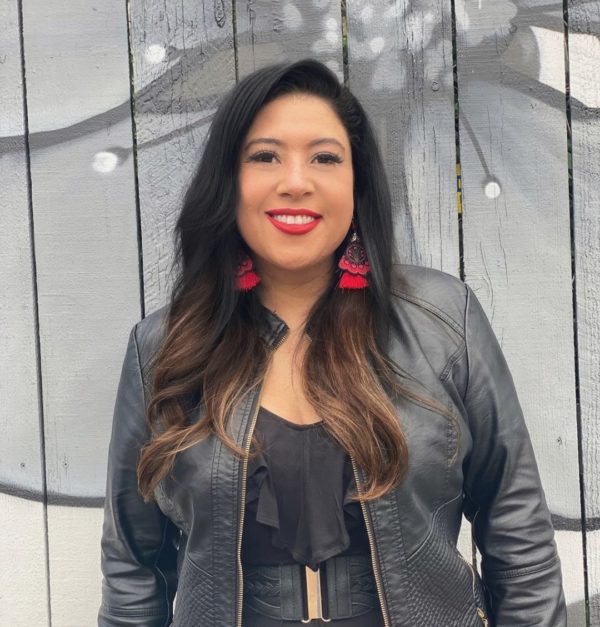
Rachel Garcia is the new Mexican Cultural Center Executive Director and her new role will require her to oversee the implementation of programs, exhibits, and events that showcase Mexico’s traditions and contemporary contributions, according to a release from the Mexican Cultural Center. Since 1992, the Mexican Cultural Center has worked in partnership with cultural, educational and other entities to promote and maintain Mexican culture throughout Colorado.

“I am honored to join the Mexican Cultural Center and contribute to its efforts in celebrating the vibrancy and diversity of Mexican culture and beyond. I look forward to collaborating with the team and engaging the community in meaningful ways that deepen cultural connections and foster mutual understanding and continue the mission of this well-respected institution,” said Garcia in the release.

In the past, Garcia worked in leadership roles in the private sector and in cultural and arts organizations. One of those organizations was Colectiva, a nonprofit organization with a mission to reclaim Latinx culture from appropriation and to ensure Latino, Black, Indigenous and people of color identifying creatives are compensated fairly. Garcia has a passion for fostering understanding and appreciation of Mexican heritage and has expertise in cultural programing, organizational leadership, event planning, community connections/outreach, and more. In the past, she also served as a board member for the Mexican Cultural Center.

Garcia graduated from the University of Colorado at Denver and has a Certificate in Executive Leadership with an emphasis on issues and challenges impacting the Latino community and a Certificate in Inclusive Leadership/ Diversity, Equity, Inclusion and Accessibility.

“Anyone who has ever spent five seconds with Rachel knows that she would make an excellent Executive Director of the Mexican Cultural Center. The Mexican-American community – and Latino communities at large – will directly benefit from Rachel’s enormous talent promoting arts and culture,” said Andrés Carrera, Board Member of the Mexican Cultural Center in the release.

The Mexican Cultural Center offers a variety of programming including “Latin beats,” or cultural sounds of traditional music augmented by the Colorado Symphony’s orchestration, Día del Niño, the day when children are honored in Mexico, and Día de los Muertos, the Mexican tradition that honors loved ones who have passed on. For those celebrations, the Mexican Cultural Center partners with other organizations like the Denver Botanic Gardens, Poudre Library in Fort Collins, Colorado History Museum, the Denver Public Library, and others to bring Mexican culture to the community. All of the Mexican Cultural Center’s programming is offered year-round and at little or no cost to the community.

The Mexican Cultural Center is celebrating 30 years of services this year. To learn more about the Mexican Cultural Center, visit mccdenver.org. To donate to the organization, visit https://coloradogives.org/organization/MexicanCulturalCenter-co.

Broncos roll over the L.A. Rams in final preseason game

0

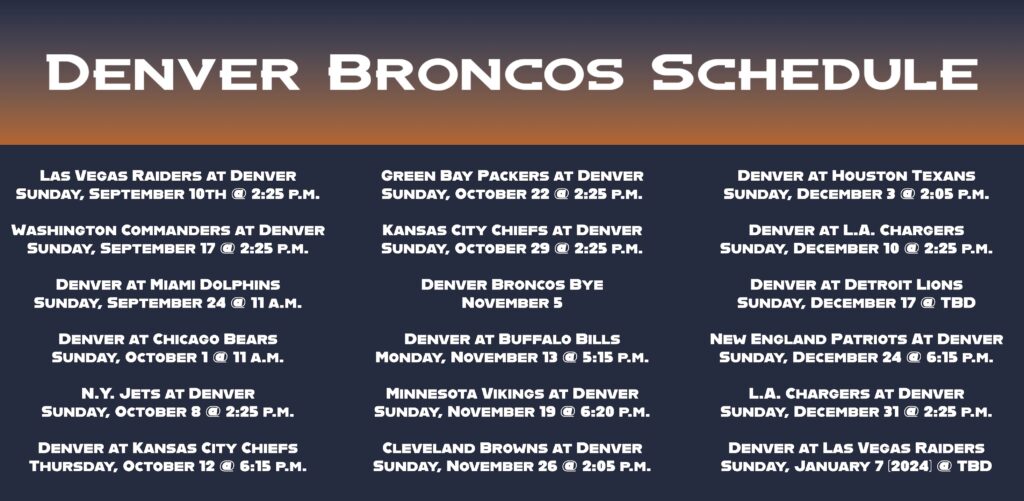
The last preseason game of 2023 is in the books and now begins the task of cutting down the Broncos roster to 53 men.

On Saturday the Denver Broncos hosted the L.A. Rams in their last preseason game before the start of the 2023-24 season. Both teams headed into Saturday’s game winless after the Broncos lost two close games to the San Francisco 49ers and the Arizona Cardinals. The Rams previously lost their first two games to the L.A. Chargers and the Las Vegas Raiders.

Denver Broncos started quarterback Jarrett Stidham who led a roster of players jockeying for a position among the 53-man roster. On Saturday 6 different Broncos scored touchdowns including both Jarrett Stidham and Ben DiNucci (Denver second string quarterback of the game) both threw touchdowns while Stidham went 17 of 28 for 236 yards and DiNucci threw for 11 of 15 for 117 yards.

Running backs Jaleel McLaughlin who has impressed in the preseason scored a touchdown while both Tyler Badie and Tony Jones Jr. also found the endzone. Tight end’s Albert Okwuegbunam (Albert O.) and Josh Hammond scored touchdowns also. Albert O. was the star of Saturday’s game with 7 receptions for 109 yards and his one touchdown. The Broncos shutout the L.A. Rams 41 – 0.

While Albert O. may have been the game’s best player on Saturday, his elevated performance wasn’t enough to secure his spot among the 53 as the Broncos traded him on Tuesday.

Since Sunday, the Broncos have waived, wide receivers Kendal Hinton, J.J. Koski, Nick Williams, and Montrell Washington, as well as defensive back Delonte Hood, and inside linebacker Seth Benson.

In other sports the Colorado Avalanche are less than a month away from the start of the preseason kick off against the Minnesota Wild on September 24th. The Avalanche preseason will feature six games against three teams, the Wild, the Las Vegas Golden Knights and the Dallas Stars.

The Denver Nuggets are just over a month away from kicking off their preseason with the Phoenix Suns. The Nuggets will feature five preseason games against the Suns, the Chicago Bulls and the L.A. Clippers before kicking off the regular season at home against the L.A. Lakers.

The Colorado Rockies are now 32.5 games behind the division leading L.A. Dodgers with the worst record in the National League at 49-82 with a winning percentage of .374. The Rockies have lost all five of their last five games in Tampa Bay, Florida against the Rays, in Baltimore against the Orioles and Monday night’s game at Coors Field against the Atlanta Braves.

The Rockies will wrap up their series with the Braves on Wednesday before hosting the Toronto Blue Jays over the weekend.