





Home Blog Page 142

Trump’s accusations are coming full circle

David Conde, Senior Consultant for International Programs

If we take the time to look back at our life experiences, we will find instances when people we are acquainted with have accused others of terrible things because “they know.” In some cases, the accusers are later found to be guilty of very things they have placed on others.

Such accusations are a way of unburdening guilt and, at the same time, creating an alternate reality for personal and group comfort. Yet, history has a way of taking us to a point of reckoning about the truth of things that confronts lies and deceit.

Many times when we project our weaknesses and sins on others there is little thought given to a possible boomerang effect that will bring them back to our very doorstep. This is what is beginning to happen to former President Trump.

On June 16, 2015 Trump came down the golden escalators at Trump Tower in New York to announce his candidacy for president. Prominent in his remarks was his description of Latino immigrants as rapists and criminals.

Eight years later, a New York jury has found him liable for sexual abuse and awarded his accuser 5 million dollars in damages. So far, he has also been indicted on 71 counts of criminal behavior in 2 different cases, one in New York and the latest one in a Miami, Florida federal court.

His alleged crimes include falsifying business records to cover up hush money to a porn star during his campaign for President, a violation of the Espionage Act that prohibits the retention of national security documents, conspiracy with others to commit a crime, making false statements to investigating authorities, obstruction of a federal investigation, mishandling of official documents and contempt of court in willfully disobeying a court order.

Several grand juries are still deliberating on other serious charges including attempts to “steal” the 2020 presidential election through coercion and violence.

Donald Trump lost his 2020 reelection for President and then decided to find a way to continue for another term or more. One of the efforts to reverse his defeat was to file 65 lawsuits, only to lose them all.

At the same time, he was projecting his own attempts to “steal” the election on several battleground state vote counting mechanisms. A “Stop the Steal” Movement led by his MAGA political base was even organized to promote a different outcome from what the vote totals indicated in these states.

Furthermore, some of the attempts to steal votes to change the 2020 election outcome was led personally by President Trump

Most visible in this regard, was his phone call to the Georgia Secretary of State asking to him find 11,780 votes for the President that, at the time, was 1 more than 11,779 by which he had lost the state.

The most prominent event in the effort to reverse the 2020 election was the January 6, 2021 attack by MAGA activists on the national capitol. This attack, led by Donald Trump constitutes a naked attempt to deny the certification of the vote and keep the President in power through violence and insurrection.

The violence done to this and other institutions is immeasurable and long-term. This all happened because Trump wanted to stay in office even if the people said no.

In these difficult times, it is most important to live our lives as close as we can to the motto, “honor, duty and country.” It is most important that we are accountable to ourselves for these words because the Big Lie is still out there.

The views expressed by David Conde are not necessarily the views of LaVozColorado. Comments and responses may be directed to news@lavozcolorado.com.

DoH leadership travel to Denver for radiological threat exercise

Acting Assistant Secretary Gary Rasicot of the Department of Homeland Security’s (DHS) Countering Weapons of Mass Destruction Office (CWMD) traveled to Denver, Colorado on June 7, 2023, to observe and participate in a tabletop exercise through the Securing the Cities program, designed to assist the Denver Office of Emergency Management, local law enforcement, local emergency response, and local public health officials plan for and respond to a radiological or nuclear threat. The exercise was held as part of Denver’s participation in the DHS CWMD Securing the Cities (STC) program, which provides equipment, training, and expertise to 13 designated urban areas to enhance preventative radiological and nuclear detection and preparedness.

The lead agency for the Denver STC program is the Office of Emergency Management (OEM). Other Denver-area agencies that participated in the 1-day event are the Colorado State Patrol, the Denver Police Department, the Denver Fire Department, Denver Department Public Health and Environment, and the Denver Health Paramedic Division.

STC is a DHS CWMD program to enhance the nation’s ability to detect and prevent terrorist attacks and other high-consequence events using nuclear or other radiological materials in high-risk urban areas. STC launched in Denver in 2020. In support of the STC mission, CWMD provides detection equipment, training, exercise support, operational and technical subject matter expertise, and programmatic support through a cooperative agreement grant process with eligible U.S. regions.

Denver OEM Executive Manager Matthew Mueller underscores the importance of this tabletop exercise, “this training brought together the critical partners needed to ensure the Denver metro area is ready to respond to domestic radiological and nuclear threats. The STC program has really moved the Denver’s radiological and nuclear preparedness capabilities forward.”

The STC Program was launched by DHS as a pilot program to support major metropolitan areas acquire and train their public safety officers in the use of radiological and nuclear detection equipment.

The Countering Weapons of Mass Destruction Act of 2018 expanded the reach and depth of this program to enhance the ability of the United States to detect and prevent terrorist attacks and other high-consequence events utilizing radiological and nuclear materials. CWMD serves as DHS’s focal point for countering weapons of mass destruction efforts. By supporting operational partners across federal, state, local, tribal, and territorial levels, CWMD coordinates DHS efforts to safeguard the United States against chemical, biological, radiological, and nuclear threats.

DHS initiated STC in 2007 as a pilot program to support major metropolitan areas acquire and train their public safety officers in the use of radiological and nuclear detection equipment.

Source: Department of Homeland Security

Our Government

White House

I am pleased to announce that Tom Perez will be serving as Senior Advisor, Assistant to the President, and Director of Intergovernmental Affairs. Tom will build on the tremendous work of Julie Chavez Rodriguez. He brings decades of experience to my team, having served in local, state and federal government. His perspective and relationships as a former county councilman, a top civil rights attorney, and Secretary of Labor will be invaluable as we implement our Invest in America agenda and continue to make our government work for the people and for communities across the country. I’ve known Tom for years and I look forward to working together again.

Colorado Governor

Building upon commitments to create an economy that works for all, Governor Jared Polis highlighted his administration’s implementation of “The Big Blur,” which argues for the need to erase the dividing line between high school, college, and career training and to open the opportunity for all students. In a new case study published by Jobs for the Future, Colorado’s early leadership and potential for further success with The Big Blur are laid out.

Denver Mayor

The City and County of Denver is excited to announce the Denver Nuggets Champions Celebration, to be held on Thursday, June 15, in recognition of the Denver Nuggets’ 2023 NBA Championship. The celebration will include a parade through downtown and a rally at Civic Center Park. Both events are free and open to the public.

A Week In Review

0

Africa

Ghana is Africa’s top gold producer – Thanks to a 32 percent surge in gold production last year, Ghana regained its status as the largest producer of gold in Africa. Officials pointed to an increase in production in both small-scale and large-scale mining for the surge. Experts and Ghana’s government warned that the country could have to import drinking water soon if illegal gold mining in rivers and other bodies of water continues.

Militants target displaced people in DR Congo – At least 40 people were killed by the militia group, Codeco (Cooperative for Development of the Congo) early Monday morning. The group targeted a camp for displaced people in the eastern part of the country. Reports read that militants shot and hacked residents before setting fire to huts. The group claims to defend the interests of Lendu farmers.

Asia

India state prepares for cyclone – Residents living in Gujarat, a western Indian state, are preparing for an extremely severe cyclone that is expected to hit the area on Thursday. Heavy rains and high tides are expected, and residents have been told to avoid visiting beaches. The storm could potentially reach wind speeds of 125 mph, and state government deployed national and state disaster response teams in areas likely to be affected by the storm.

China takes aim at AirDrop and Bluetooth – China’s national internet regulator launched a public consultation on proposals that would restrict the use of mobile file-sharing services like AirDrop and Bluetooth. Anti-government activists typically use AirDrop to organize and share their political opinions. In China, iPhone and other Apple products can only be used for 10 minutes when receiving files from people who are not listed as a contact.

Europe

Former Italian Prime Minister dies – Silvio Berlusconi, the former Prime Minister of Italy, died at a hospital in Milan where he was being treated for a lung infection. He was the longest serving Prime Minister in post-war Italy and faced various sex scandals and corruption cases throughout his career. He was in office from 1994 to 2011, and Italy is planning a national day of mourning this week.

Ukraine claims to liberate village in country – Ukraine officials said it liberated four villages in the south-east of the country. Ukraine President Volodymyr Zelensky confirmed the country has started a counter-offensive attack on Russian troops. Over the weekend, the Ukrainian military claimed Russia troops blew up a dam that caused flooding and mass evacuations. Russia blamed Ukraine for the damaged dam.

Latin America

Deadly earthquake strikes Haiti – Just days after being hit with severe flooding, an earthquake struck the Haitian city of Jérémie, leaving three people dead. Recently, torrential rains displaced more than 13,000 people in the country. Government officials called for international partners to take “urgent measures” to assist the country. The World Food Program is planning to provide hot meals to those who have been displaced.

Crocodile impregnates itself in Costa Rica zoo – For the first time, experts found a case of a crocodile making herself pregnant at a zoo in Costa Rica. The animal’s offspring was 99.9 percent genetically identical to herself. “Virgin births” have been found in species of birds, fish, and other reptiles, but never crocodiles. The crocodile who laid the egg was kept apart from other crocodiles its entire life.

North America

U.S. musician detained in Russia – Michael Travis Leake, an American musician and former paratrooper, was detained in Russia. He is accused of organizing “the sale of drugs to young people,” and denied all charges. In a video from Russian state television, Leake was shown locked in a metal cage. The U.S. State Department said staff attended Leake’s hearing over the weekend.

Unabomber found dead in prison – Ted Kaczynski, known as the Unabomber, was found dead in his prison cell. He killed three people and injured 23 others during a mail-bombing spree between 1978 and 1995. Kaczynski was sentenced to life without parole in 1996 after avoiding law enforcement for nearly 20 years. He spent the past 30 years held at prisons across the United States, including in Colorado.

Immigration the more things change, the more they stay the same

There may be other, better ways to describe the U.S. immigra- tion picture, but there would be no argument in calling it a challenge. Cities along the 1,900-mile-long border—the longest in the world—are at or near the breaking point with new arrivals showing up each day.

Today’s arrivals are no longer predominately men, women and families from Mexico looking for a better life. They now come from Venezuela, Cuba as well as other Central and South American countries. There are also immigrants who’ve made their way from eastern Europe and Asia. Together, this amorphous population has not only presented one of the greatest challenges ever faced at the border but also the biggest influx of immigrants hoping to cross over at a single moment in time.

While there is a trickle getting the golden ticket—checking all immigration boxes correctly—to get in, the vast majority remain at various checkpoints along the border. Refugee camps can be found on either side of the California, Arizona, New Mexico and Texas borders.

While things are certainly less than ideal, some cities are doing better than others. In a National Public Radio interview, El Paso, Texas, Congresswoman Veronica Escobar said her town is managing or, at least, managing better than it has been.

“We are doing well right now,” Escobar told NPR Host Michelle Martin. “The numbers of migrants turning them- selves in to border patrol, those numbers are way down.” By some estimates, there has been as much as a 70% drop in people crossing the border.

But while that might sound like an improvement, the pain along the border has now fanned out across the country, including in Denver. More than 10,000 migrants have come to Denver over the last several months and the weight of the challenge of housing, feeding and caring for them has been, as Mayor Michael Hancock has landed the city “at a breaking point.” Hancock is pleading with Washington for assistance to help address the needs of the new arrivals.

While Denver’s approach has been humane, some state chief executives have used migrants as pawns to underscore the fragility of the border and to score political points. Most recently, it’s alleged that Florida Governor Ron DeSantis chartered a plane for 16 migrants and flew them to Sacramento. He also made headlines last September with a similar stunt, flying 50 Venezuelan immigrants to Martha’s Vineyard, and deplaning them in the dark of night. Texas Governor Greg Abbott has done the same and put hundreds of migrants on buses for northern cities.

Other cities, like Chicago, have also been drop-off points for these families as well as muscular demonstrations of resolve by various state chief executives. Governors playing refugee politics are the governors of South Carolina, South Dakota and Virginia. Governors of South Dakota and Virginia are either running for president or flirting with the idea.

In her NPR interview, Congresswoman Escobar said that she is working with officials as well as various aid organizations to help new arrivals get to where relatives of some of these individuals may be able to get them settled. “We help facilitate movement to other communities. We find out where they want to go, where their sponsors live, and we help them get to those final destinations.”

Still, said El Paso television reporter Heriberto Perez Lara, the situation for many has reached a boiling point. “I’ve seen confrontations between migrants and local authorities due to different ‘raids’ conducted by Mexican and Juarez authorities looking for migrants with no permit to stay in Mexico.” Perhaps the most serious demonstration of anger took place in March when a fire broke out at a government-run migrant camp In Cuidad Juarez, a Mexican city bordering El Paso. At least 38 people died.

Because summer and its accompanying heat have arrived, the flow of migrants may slow. Making the trek from Central and South America or Mexico can be dangerous not only from the heat but from criminals who prey on these

individuals. Also, negotiating Mexico’s Sonoran Desert where daytime temperatures routinely exceed 115 degrees can also be fatal. NPR’s Latinousa.org reported at least 225 deaths of migrants crossing the Sonoran Desert in 2022 and that in the last 20 years, the remains of more than 4,000 men, women and children have been discovered.

Many migrants, including those who’ve come to Denver, say the danger they face getting to the United States is worth the risk because it’s even more dangerous at home where they face drug and gang violence as well as official government corruption.

While the immigration challenge has so far not been met with a solution, the Biden Administration has authored new legislation designed to slow border crossings. The legislation replaces Title 42, a decades-old federal law originally designed to prevent the spread of communicable disease. The Trump administration jump started it using COVID-19 as its reason for allowing immigration authorities to prevent entry to asylum seekers.

With Title 42 lifted, Homeland Security Secretary Alejandro Mayorkas said, “DHS will process individuals encountered at the border pursuant to Title 8, which is the standard procedure we use to place individuals in removal proceedings.”

The new policy may help lessen the burden on border cities and other places that have become way stations for migrants making their way to sponsors in other cities. But the political season has begun. If past is prologue, solving the immigration crisis will play out in promises by candidates for the next 18 months. Real solutions, very likely, will remain elusive.

America’s unpaid workforce who support their loved ones

0

America is growing older, as is the amount of unpaid care provided by caregivers in Colorado.

According to the American Association of Retired Persons (AARP), Colorado is home to around 600,000 caregivers who provide $11.2 billion of unpaid care. The figure was highlighted in AARP’s latest report in the Valuing the Invaluable series Valuing the Invaluable. The report touches on the growing scope and complexity of family caregiving while highlighting actions needed to address challenges of caring for parents, spouses, and other loved ones.

Across the country, the estimated economic value of family caregivers’ unpaid contributions was around $600 billion, based on about 38 million caregivers providing an average of 18 hours of care per week for a total of 36 billion hours of care, the report says. The $600 billion estimate was based off research from 2021 and is up from $470 billion in 2017. The report also reads that the value of unpaid family care vastly exceeds the value of paid home care.

AARP estimates that by 2030, one out of every five people in the United States will be 65 years of age or older.

“Family caregivers play a vital role in Colorado’s health care system, whether they care for someone at home, coordinate home health care, or help care for someone who lives in a nursing home. “We want to make sure all family caregivers have the financial, emotional and social support they need, because the care they provide is invaluable both to those receiving it and to their community,” said AARP Colorado State Director Sara Schueneman in a release.

Being a caregiver is a fulltime job, but oftentimes family caregivers either work full or part time. AARP found that 61 percent of family caregivers work a job, but despite that, working caregivers face financial risks like lost income, reduced career opportunities and savings, and lower Social Security and retirement benefits.

The COVID-19 pandemic caused more hours of care and higher-intensity care by family caregivers as the country has faced direct care workforce shortages. Workforce is expected to grow from 4.6 million in 2019 to 5.9 million in 2028, but retaining workers in the direct care workforce is a challenge. The average turnover rate in the industry is 40 to 70 percent each year.

Black, Hispanic, Asian American, Native Hawaiian and Pacific Islander, and American Indian and Alaska Native family caregivers report distinct care experiences and specific support needs, according to the report. LGBTQ family caregivers also face a distinctive set of challenges in caring for LGBTQ partners, friends, and older family members.

While caregiving is a challenging role, there are resources out there for people who are watching over loved ones. Resources like Colorado 2-1-1, and the Colorado Association of Area Agencies on Aging offer general services to caregivers while resources like the State Health Insurance Program and the State Medicaid Office Health First Colorado provide health resources. If you are a caregiver in search of resources or forms of help, visit http://states.aarp.org/colorado/caregiver-resources.

Nuggets head to Miami tied after game two loss

0

The Nuggets who have leaned heavily on their home record throughout the playoffs seemed complacent in game two letting their guard down and giving up an opportunity to go up 2-0 on the Miami Heat.

On Sunday night the Denver Nuggets hosted the Miami Heat and while the Nuggets shot selection in the first half was questionable the Miami Heat’s was not. Miami lived up to their name with five different players in double-digit figures by the end of the night.

Undrafted guard, Gabe Vincent lead all Miami scorers with 23 points followed by Jimmy Butler and Bam Adebayo. The Nuggets on the other hand had four players in double-digit figures with two-time-MVP Nikola Jokic scoring 41 points. Jamal Murray followed Jokic with 18 points and Aaron Gordon and Bruce Brown combining for a whopping 23 points.

A lot can be said about the Nuggets’ performance or lack thereof, but there’s no doubt that despite losing game two at it was a wakeup call, one that Coach Malone has been pounding into the heads of the team since going down 12 points in the first quarter in game two.

Despite Denver’s struggles in game two with poor shooting and a plethora of turnovers they still managed to bring Sunday’s game down to the wire with a misplaced three by Murray that ended the game.

This week the Nuggets are in Miami for games, three and four which will be played Wednesday night at 6:30 p.m. and Friday night at 6:30 p.m.

While the Nuggets have never been one to use moral victories as a springboard, they have to be somewhat relieved that while up against probably their worst night shooting in the post-season they only lost by three.

Terrible shooting and poor ball management hasn’t been a staple in this team and we expect the Nuggets to perform at a level that will either split the series in Miami or come home with the lead. This trip to the Finals should be a lasting memory, not one fans want to forget.

In other sports the Colorado Rockies are 9.5 games behind the division-leading L.A. Dodgers and are struggling to get to .500. Colorado has only won two of their last seven games but managed to win two in a three-game series with the Kansas City Royals over the weekend.

This week the Rockies are at home to host the San Francisco Giants who have a 5.5 game lead on the Rockies and a 2.5 game lead on the San Diego Padres. The Rockies are currently in the basement of the NL West a spot they’ve been content with not as a team but as an organization.

With the Nuggets in their first finals, the Avalanche winning the Cup last season, the Broncos with a Super Bowl win in 2015 and the Colorado Mammoth in their second straight finals, the Rockies shot at the fall classic back in 2007 seems like such a distant memory that Rockies fans hope to see a shakeup that will bring pride to the boys of summer in Colorado soon.

A cast of thousands in a high-country chapel, Valley fishing

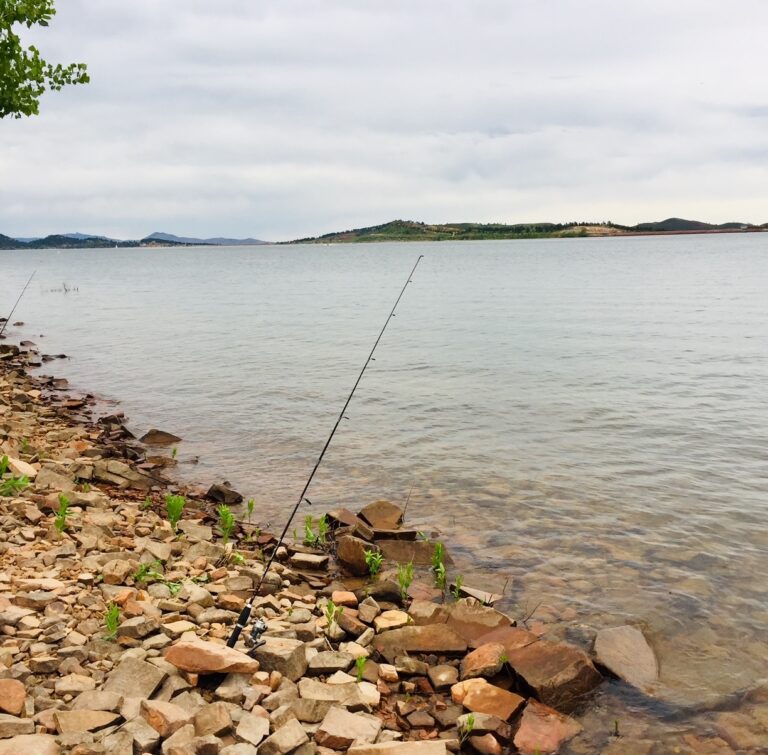
For any angler, man or woman, there is no argument; the worst day fishing beats the best day working. Don’t believe it? In 2021, says the website Statista, 838,000 fishing licenses were sold in Colorado. That is not a misprint! More people bought a license to cast a line in our state than there are people in all of Wyoming!

And while there is certainly no empirical answer, many would argue that you can’t beat southern Colorado for the state’s best fishing. One person who may know is Deacon Aspinwall, an Alamosa city planner and member of Trout Unlimited.

“I think one thing that makes San Luis Valley (fishing) remarkable is the amount of diversity of streams,” said Aspinwall, a long-ago Virginian who moved to Colorado with his family as a young boy, later settling in Alamosa.

“You can find every type of water you could wish for if you’re willing to drive or hike to it.” The choices are boundless, he said. Almost any site you choose in the San Juan or Sangre de Cristo Mountain ranges will take you to a place of pristine beauty. For him, distance is no impediment. Nor is the arctic-like Valley winter. He fishes year-round.

Aspinwall, like thousands of others, favors rivers and streams. He’s a fly fisher. Like the fraternity and growing sorority of fly fishers, he finds a special, “almost spiri- tual connection” to this avocation. “Your mind is clear, and you’re intently focused without distraction.”

Now and then, there are small prices to pay for attending services in these high-country cathedrals,’ said Aspinwall. Anyone who’s spent a day in mountain stream vespers will admit that this special form of contemplation sometimes has a downside. “There’s been times when I’ve been eaten alive and not enjoyed (fishing),” he said. “It happens two or three times a year” when mosquitos see you like the early bird special.

To most anglers, said Aspinwall, the rewards vastly outweigh any downsides, including downsides from nature itself. At higher elevations lighting is a summertime danger. Each year lighting strikes are responsible for a handful of deaths. “I’ve also run across bears a couple of times,” he said. A solitary bear is less of a concern, said Aspinwall, than a bear with cubs. He also once saw a mountain lion.

For Bill Lucero, fly fishing took him from a casual affection of the sport to something approaching an almost “Zen-like” level of serenity. It became a whole new way to recreate. It went from dropping a line into the water and waiting to wading into the water and watching everything.

The new sport was as different as flying a jet compared to riding a bike, time zones away from what his grandmother taught him and his younger brother, Pat, as young boys. That was ‘fishing 101.’ Fly fishing was a different sport altogether.

“I had an acquaintance who invited me to go fly fishing,” he recalled. “We went dry fly fishing,” basically the first step in learning the technique.” Dry fly fishing is the proverbial ‘putting your toe in the water.’ But he was hooked. That experience was “35 or 40 years ago.”

Fly fishing is a war of wits with an unseen foe, a game of patience and focus that begins suddenly. From under the water, your adversary takes the bait and the fight is on. It’s sudden and exciting, a recreation of an age-old contest replete with adrenaline, joy, a test of wits and strength, engaging an adversary that has been there for millennia.

“You get into a zone,” he said. “It’s not so much catching a fish,” as it is the battle, said Lucero. It’s the culmination of preparation and planning.

In retirement, Lucero’s been tying flies—another ele- ment of the sport and a science all unto itself–and fishing as often as he can. A regular partner for a day in the water is his son, with whom he shares his passion and who, he admits, long ago ‘surpassed the master.’ “He’s good enough to be a guide.”

Lucero has fished much of Colorado and has his favorite spots, many in southern Colorado and the Valley. “The Conejos River in the San Luis Valley,” is one. The fishing is good, and “It’s also far enough away that you don’t get a ton of fishers along the river.”

Fly fishing, especially after the movie, “A River Runs Through It,” exploded. It inspired a whole new generation to pick up the sport. Luckily, for dedicated fly fishers, it amounted to no more than a quick dip in the water for many and on to other things, thus maintaining the serenity of the rivers.

For anglers like Lucero and Aspinwall, it’s generally a game of ‘catch-and-release.’ A respect for nature means returning the fish, perhaps to do battle another day. Of course, there are times when an adversary can also be dinner, a dinner of cut-throat, brook, brown or rainbow trout. But Whirling Disease a few years ago, said Aspinwall, reduced rainbow populations “and they haven’t recovered.”

But the reward, both Aspinwll and Lucero agree, is communing with nature; hearing the symphony of the river, the individual instruments played by the wind, birds and insects. Another joy is reading the water, its flow, its depths, its warmth; the dappling of the sun in certain spots, watching where insects settle. It is nature’s full production, a day-long performance with a cast of thousands, certainly many times more.

The cost for fishing varies greatly. A Colorado state fishing license is mandatory for those over 16. Residents 16-65 will pay around $20. Seniors pay a $10 discounted rate. Single-day licenses are $11.

Lake fishing, after the cost of the license, may be the cheapest way to enjoy the sport. Fly fishing, on the other hand, allows you to spend as much or as little as you choose. Entry-level starter kit sells for less than $100. But custom-made rods can sell for $1,000 or more. The reel, waders, vest, hat, repellent and the rest are up to each individual budget.

An overview of Latino immigration

David Conde, Senior Consultant for International Programs

Recently I had the honor to attend graduation exercises of the New America Schools, a charter secondary educational system made up of three high schools in the Denver area. The alternative education system is dedicated to serving students from immigrant connected families that are overlooked or do not relate to traditional high schools and the opportunities they offer for their study and learning.

The speakers at the event, especially the students leaders, chose to offer their stories in English and Spanish. The eager faces of parents and family that filled the auditorium received the words with enthusiasm demonstrating the great value the community places on education as a most significant step in their American journey.

Participating in the event caused me to think about the current immigration issues as well as the fact that this matter has had a strong political side to it since the first European settlers came to the continent. Yet we have managed to accept new people in relatively large numbers because their net value as drivers of progress is one the major secrets of the country’s great success.

The initial wave of immigrants to the American continent came seeking asylum from religious tyranny as Christianity was still undergoing major changes in Europe. To this category was added those represented by the Statue of Liberty that came to work and find economic opportunity and those displaced by the country’s western movement encapsulated in a concept called Manifest Destiny.

I attended the event with a Venezuelan colleague that is also an immigrant. To me and others, he represents what is possible for the immigrant community that values education as he comes to us with a doctorate from a prestigious American university. During the course of the evening, I asked him about his ideas and involvement with the current wave of immigrants coming from his home country. He related a feeling of confusion as to their need because so many of them were doing well in Venezuela before they were forced to seek asylum.

That immediately made me think of the Cuban community and their journey to the United States. The well-to-do were the first to immigrate and find a home in our country. They were welcomed with open arms and a national policy on immigration was implemented just for them. In practical terms, all that refugees escaping from Cuba had to do was to set foot on any part of the United States in order to receive immediate legal status.

The Cuban community went on to become an important part of the wealth generating infrastructure of the American economy. But I still remember the deep anger many in the Chicano Movement felt toward Cubans because immigrating Mexicans with “more cultural and historical rights” to be here, had to wait in line.

Aside from the asylum seekers and those that come to this country to work, there is a significant and growing number of immigrants, especially Mexicans, that are seeking to return to their country of origin. Their relative success in the United States and the new opportunities in Mexico appear to be attracting their return.

Over the centuries, immigration in the North American continent has taken every direction: East to West, West to East, North to South and South to North as it is now. At every turn, immigrants have largely brought fresh energy that revitalized their new homes.

Those were my thoughts as the new graduates received their diplomas. I shared in their joy because it matters.

The views expressed by David Conde are not necessarily the views of La Voz Bilingüe. Comments and responses may be directed to News@lavozcolorado.com.

Update on migrant sheltering and support

The City and County of Denver is providing a weekly update on the ongoing activity to support migrant sheltering:

Arriving migrants are currently being welcomed at the city’s Reception Center between 8 a.m. and 5 p.m., seven days per week. The Reception Center relocated last week to a different city-owned facility and began operations in its new location on Wednesday, May 31.

In May 2023, Denver received over 3800 migrants, with nearly 400 arriving on one day. Since early May, the number of arriving migrants each day has slowed. Currently 915 people are being sheltered. As of Friday, June 5, Denver has sheltered and supported more than 11,100 migrants from the southern border at a cost of more than $17.3 million. The city is currently covering costs by using contingency funds and agency budgets, which is not sustainable in the long-term without impacting city services. The only funding the city has received so far to support migrant sheltering operations is a reimbursement award of $3.5 million from the State of Colorado. The federal government has provided $909,000 to Denver and $250,000 to Colorado.

Call for Assistance and Donations:

The city continues to call on neighboring municipalities and the federal government to assist. Individuals and organizations interested in volunteering or donating should visit Denvergov.org/MigrantSupport for more information on how to help and a full list of organizations accepting donations.

The Newcomers Fund is currently accepting monetary donations from the public. Donations will go directly to the city’s nonprofit partners who are supporting migrants with resource navigation, shelter, and other services. You can also help by volunteering to support the response.