





Home Blog Page 154

SCOTUS ponders the future of federal student debt relief

0

“A billion here, a billion there, and pretty soon you’re talking real money,” is a quote often attributed to the late Illinois Senator Everett Dirksen. Whether he actually said these words or not, they’re superglued to his legacy. They are also reminders of a present-day legislative struggle that has reached all the way to the U.S. Supreme Court. This time, over the issue of college debt forgiveness.

Across the country, it is estimated that the aggregate college loan debt is somewhere around $1.75 trillion. Forbes also fixes the average college loan debt of an estimated 26 million people at around $29,000. It is also estimated that 92 percent of all student debt is federal.

The Supreme Court listened to arguments put forth last month by six Republican dominated states hoping to block President Biden’s student loan forgiveness plan. The Biden plan, announced last summer, would cancel as much as $20,000 in federal student debt. Millions of students struggling with debt will qualify though not those whose income exceeds the President’s plan. Forgiveness eligibility will be based on adjusted gross income. Those owning student of $125,000 may qualify for relief of up to $10,000. Others receiving financial assistance based on income may qualify for as much as $20,000 in forgiveness. It’s estimated that 60 million people have qualified for some level of debt forgiveness.

Also, only federal student loan debt is eligible. Private loans are not included in the plan.

The idea of college debt forgiveness is not unique. Last June, the Department of Education order more than 150 for-profit colleges and vocational schools, including the University of Phoenix and DeVry University, to repay an estimated 200,000 students $6 billion in federal student debt. The order said that borrowers would be fully forgiven and that any payments they made will be refunded. Most of the schools remain in business but some of them have gone dark.

What is bringing the whole matter of repaying federal student loans to the fore is that the suspension of payments caused by the COVID-19 pandemic has expired. They had been put on pause in March 2020 when the economy was upended by the virus and Trump was President. They were frozen based on a 2003 law enacted to make certain that federal student loan borrowers would not be economically impacted in a national emergency. It was one of a number of laws enacted by Congress in the aftermath of 9/11.

Also, one of President Biden’s promises when he was running for the office was to forgive federal student loans. Opponents of the President argue that he is exceeding his authority in using the pandemic as cover to wipe away the massive debt. They call it a giveaway. But others, like Vermont Senator Bernie Sanders, argue that a giveaway in massive tax breaks—as large or larger than federal student debt relief—to giant corporations and the mega-wealthy, things more often attributed to Republicans.

Kerline Eglaus, Metropolitan State University-Denver’s Executive Director of Aid and Scholarship, estimates that approximately 60 percent of students graduating from MSU-D leave with student debt. “The average federal encumbrance per student for the school year 2020-2021 is $7,235,” said Eglaus. Current undergraduate student enrollment at MSU-D is 15,682, and nearly 60 percent are full time.

Federal student debt, unlike, say, a debt on any other purchase, that is not repaid is never ‘wiped off the books.’ Not even bankruptcy clears the loan. “Student debt stays with you forever,” said Eglaus. There, however, are exceptions, such as a disability that prevents you from earning an income. Others, she said, can have their loans forgiven through some type of public service. Examples might be, a medical student who commits to working in an underserved area for a predetermined amount of time. Others with debt may work off their loans by working for a government agency. The commitment may be as long as ten years. In cases like this, the borrower must continue making payments until they have reached the time commitment they have agreed to.

A common complaint by borrowers is that despite being faithful to their obligation, years later they actually owe more than the original amount of money borrowed. “If you’re paying only the interest, paying nothing more than the minimum, it’s a challenge a lot of borrowers face,” said Eglaus. “I advise students to borrow responsibly, focus on financial literacy.”

For now, those holding federal student debt are not making loan payments and won’t have to until a decision from the high court is rendered. The Department of Education says if the decision goes against the Biden Administration repayments will resume 60 days after the court makes its ruling. But even if the President does not prevail with the Supreme Court, the administration may—and likely will—look for other ways to provide relief. The White House may also work to keep frozen loan repayments until it is ready to present its next plan.

How the Supreme Court will rule is one of the biggest guessing games in Washington. Colorado native and Trump nominee, Justice Neil Gorsuch, raised the question of fairness pitting those who have paid their loans against those seeking relief. “Half a trillion dollars is being diverted to one group of favored persons over others,” he said.

Not surprising, the Court’s three liberal members, Justices Brown, Kagan and Sotomayor, seemed to be supportive of the President. Brown questioned the wisdom of the Court even getting involved in something she believes is the purview of the Congress. Kagan was even more strident in her comments about the laws allowing the President to act unilaterally. “Congress could not have made this much more clear.”


Roberto Griego, the voice of New Mexico

0

The spirit of New Mexican music has flown through Roberto Griego’s veins since he was a little boy growing up in Bosque, New Mexico with his grandparents, aunt, and his father.

He remembers his grandmother would tell him to search for a job when he was a teenager. But instead, he would pretend to look around for one all day and focus his time on mastering the guitar. When he was a teenager, Griego played the guitar for seven to eight hours a day.

That dedication to his craft has led to a multi decade long career in music that has included nine full length CDs, multiple performances, and the founding of his own independent label titled “RJG Records.” And Griego’s work hasn’t gone unrecognized.

Photo courtesy: Robert Griego

On November 2022, Griego was inducted into the New Mexico Music Hall of Fame which recognizes the contribu- tions of those who have had a significant impact on the evolution, development, and perpetuation of New Mexico music. And in January of 2023, Griego was recognized as a New Mexico local legend with a New Mexico Senate memorial.

“Had the rare privilege of recognizing Roberto Griego, a South Valley and New Mexico icon, on the floor of the New Mexico State Senate. His beautiful music and history are what weave our New Mexico culture together,” New Mexico State Senator Michael Padilla wrote on Facebook.

Known as the “voice of New Mexico,” Griego’s other accomplishments include being awarded CD of the year, original song of the year, and mariachi song of the year for the song “Payaso” by the New Mexico Hispano Entertainers Association.

LaVozColorado asked about his accomplishments and accolades, Griego responded humbly, saying it’s been fantastic and great to receive the recent attention.

Griego’s most recent CD was released in 2019. Titled “Mi Quierida Hermana,” the album features a touching personal tribute to his only sibling Ermelinda “Ermie” Jaramillo who passed away in 2017. “She and I were very close. And it’s one of the realities of life that you’re going to lose your mom, dad, sister, brother, whoever,” said Griego.

As for now, Griego said he’s been doing some writing. And until he releases music, he has some performances he is looking forward to. “I’ve got a gig coming up over here. One of the biggest cassinos hired me to perform for Cinco de Mayo at the Sandia Casino,” said Griego. My band and I will be performing there at the outdoor amphitheater.”

Additionally, Griego and his band are also performing at the 2023 Costilla-Amalia Reunion on August 5th at the Plaza de Arriba in Costilla. Costilla is celebrating 175 years of settlement. For more information please visit costillareunion.org.

Griego’s music can be found at various independent record stores, and on iTunes where he sells all of his albums he’s ever recorded over his career. Additional information on where to purchase Griego’s music can be found at http://www.robertogriego.com/purchase-music.html.

Avalanche move to number two in the Central Division

0

Since last week, the Colorado Avalanche have won four straight against the Toronto Maple Leafs (2-1), the Ottawa Senators (5-4), the Detroit Red Wings (5-1) and on Monday night the Avs defeated the Chicago Blackhawks 5-0, bringing their winning streak to six games.

Photo courtesy: Colorado Avalanche Facebook

The Avs have moved into second place in the Central Division tied with the Minnesota Wild and to within 1 point of the division leading Dallas Stars. Although they have gained significant ground within the division, Colorado still remains four points behind both the Las Vegas Golden Knights and the L.A. Kings who both are tied for first in the Pacific Division.

This week the Avs are hosting the Pittsburgh Penguins (Wednesday at 6 p.m.), and the Arizona Coyotes (Friday, at 7 p.m.) before heading to Arizona and California to face the Coyotes and the Anaheim Ducks. The Avs are just 13 games from the end of the regular season and are positioning themselves well heading into the post-season.

Monday night’s game at home against the Blackhawks was about as perfect a game as they could have played, outshooting Chicago 32-27 with Colorado goalie recording his fifth shutout as an Avalanche.

In other sports the University of Colorado women’s basketball team (No 6) completed the route of the Duke Blue Devils (No 3) on Monday night in overtime in North Carolina. The women’s Buff basketball team will now be heading to the Sweet 16 an accomplishment they haven’t completed in twenty years. CU will now face the second-seeded Iowa on Friday night in Seattle.

The Denver Broncos have beefed up the offensive line since the start of the free agency and now they are to have been rumored to be shopping their top receivers Courtland Sutton and Jerry Jeudy around the league. The latest reports have the Cleveland Browns pursuing a potential trade with Denver for Jerry Jeudy.

Last week is was revealed that the New England Patriots were interested in Jeudy as well, however; the asking price of a first round was a little too steep.

Since last week the Broncos have re-signed inside linebacker Alex Singleton and former Denver Broncos punter Riley Dixon who spent some time in L.A. with the Rams last season. Dixon has a 45.8-yard gross average during his career.

The Denver Nuggets have finally seemed to pull themselves from a losing rut after defeating the Brooklyn Nets on Sunday. The Nuggets are still atop of the Western Conference but their commanding lead has diminished to 3.5 games after losing four straight.

There are ten games remaining in the regular season with big games against the Milwaukee Bucks this Saturday, and the Philadelphia 76ers on Monday. At the end of next week the Nuggets are on the road in Phoenix to take on the Suns and at home to host the Golden State Warriors on Sunday.

Campaign sends texts to Coloradans to raise awareness of tax credits and free tax support

0

The Colorado Department of Public Health and Environment (CDPHE) announces that the Get Ahead Colorado statewide awareness campaign will send text messages this week to Coloradans to connect them to free tax support and information about the Child Tax Credit (CTC) and Earned Income Tax Credit (EITC). The campaign will deliver two different messages to two priority audiences. The first audience is individuals who are likely eligible for the Earned Income Tax Credit, including those who earn up to $65,000. The second audience is parents and caregivers who earn up to $65,000 and have dependent children under 16 years old. These individuals are likely eligible for the Child Tax Credit. Messages focus on informing Coloradans that they may be eligible for these credits and connecting them to free tax services so they can receive their credits.

The text will read as follows:

Earned Income Tax Credit (individuals earning up to $65,000) – Hi {firstName}, it’s Get Ahead Colorado. The Earned Income Tax Credit can give you a tax refund of up to $6,935. Don’t miss out! File your tax return today, for free, at getaheadcolorado.org

Child Tax Credit (parents or caregivers who earn up to $65,000 and have dependent children under 16) – Do you have kids under the age of 16? Don’t miss out on up to $2,000 per child through the Child Tax Credit. All you need to do is file a simple tax return to get your refund. File your tax return for free at getaheadcolorado.org

For more information about this campaign, visit GetAheadColorado.org or HaciaAdelanteColorado.org.

Source: CDPHE

Denver acquires land for affordable apartments in La Alma-Lincoln Park neighborhood

0

Site of six-story affordable community made possible with American Rescue Plan Act funds

More affordable housing is on the horizon for Denver’s La Alma-Lincoln Park neighborhood thanks to development financing provided by the Department of Housing Stability (HOST).

Denver City Council today approved a $5,557,500 agreement with Shanahan Development, LLC, utilizing American Rescue Plan Act (ARPA) funds to help support acquisition of a 1.5-acre site at 1530 W. 13th Ave. for future affordable housing. The six-story development will provide at least 190 income-restricted rental units for households at a range of income lev- els, including up to 30 or 80 percent of the area median income.

“Denver continues to leverage ARPA funds to make transformational investments that boost our community’s supply of and access to affordable housing,” Mayor Michael B. Hancock said. “We’re proud to make affordable homes possible at this site for hard-working individuals and families for decades to come.”

Approximately 25 percent of the units will be three or four bedroom apartments suitable for families. Shanahan Development, LLC will apply for Low-Income Housing Tax Credit financing, and construction is estimated to be completed in 2026.

There is currently a total of 25,925 income-restricted housing units in Denver. HOST has recently provided financing for 1,701 affordable units that are currently under construction at 33 sites throughout the city. An additional 930 income-restricted units are in the planning stage.

Denver’s plan for recovery includes direct distribution of $308 million in ARPA Local Relief Funds. Denver solic- ited and received feedback from over 12,000 residents, Denver City Council, city agencies, the Mayor’s Stimulus Advisory Committee, and the Mayor’s Economic Recovery Council to inform the use of the city’s first round of ARPA funds. Federal law requires distribution of the funds by 2026.

Source: Denver Housing Stability

What’s Happening?

0

Community

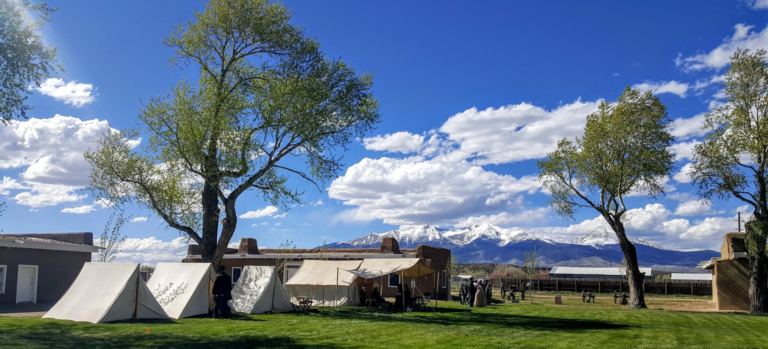
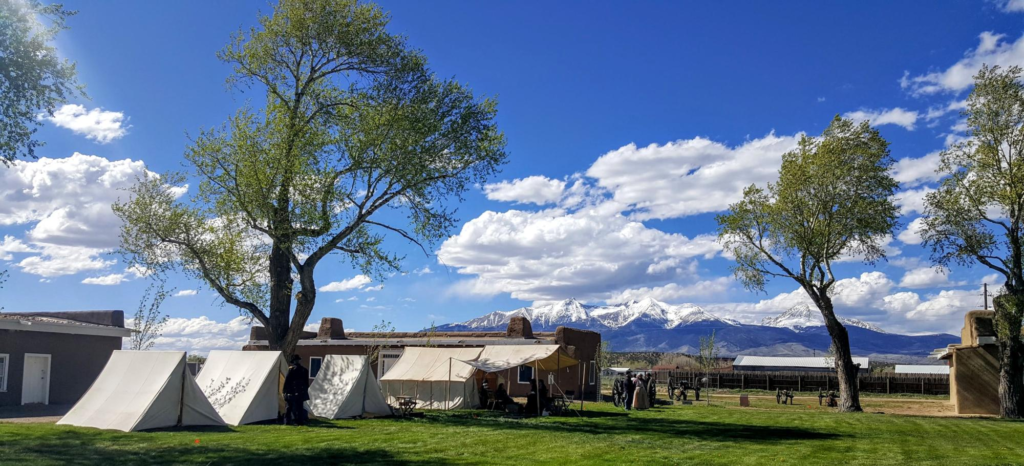
Photo courtesy: History Colorado

Return of the Corn Mothers marks a three-year effort to honor twenty-two new Corn Mothers in 2022. What began in 2007 with a small grant from the Rocky Mountain Women’s Institute and eight local women, has now expanded to include more than seventy women. Join in the rich tradition of honoring Southwest women through this revitalized exhibit. Share in an intergenerational gathering and honor the unsung heroes of the community, and celebrate the induction of 22 women to the Corn Mothers family. Visit https://www.historycolorado.org/exhibit/return-corn-mothers for more information.


Learn the art of Folkloric Dance through this fun and engaging class at the Fort Garland Museum and Cultural Center. This class is free and open to adults and students in grades 6-12. Class will take place every Friday in February and March from 4 – 5 p.m. Visit https://www.historycolorado.org/fort-garland-museum-cultural-center for more information.

Photo courtesy: History Colorado

Photo courtesy: History Colorado

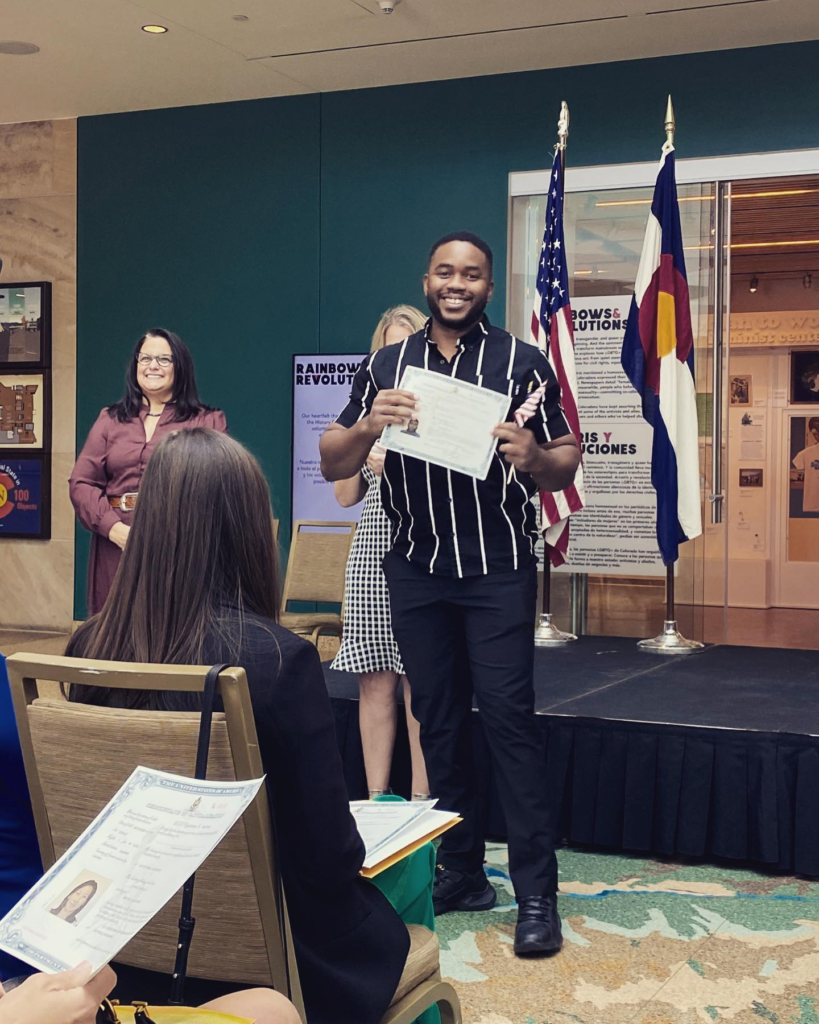
As a community, you’re invited to celebrate and welcome our newest community members in a Naturalization Ceremony. The event is free to the public. For access to the exhibits before or after the ceremony, please visit https://tickets.historycolorado.org/event/daily-admission/tickets.

Naturalization ceremonies are public events that bring communities, schools, and new citizens together in federal courthouses and other community sites like, History Colorado, throughout the year. History Colorado and the U.S. Citizenship and Immigration Services have a partnership to cohost naturalization ceremonies. The next naturalization ceremony will be held at History Colorado, 1200 N Broadway on March 28th from 1 p.m. to 2 p.m.


Performance

The Great Hall Sessions is a live music series that will feature artists booked by Youth On Record, the first entertainment company in the nation specifically designed to advance racial and social equity.

Youth on Record has a mission of providing access to diverse performance and economic opportunities to BIPOC, LGBTQ, Differently-Abled, Women and historically underrepresented artists.

The March & April schedule for the Great Hall Sessions includes:

  • March 22nd: Erin Stereo – known for spinning House music designed to ignite and delight the dance floor.
  • March 29th: Kayla Marque – a local singer/songwriter who draws inspiration from folk, soul, hip-hop, indie rock and R&B.
  • April 5th: Alysia Kraft – an award-winning songwriter from Fort Collins known for her smart, retro-influenced indie pop and rock/Americana performances.
  • April 12th: Jaren Jackson – professional piano, guitar & bass player.
  • April 19th: Tenia Nelson – Denver-based pianist, percussionist, composer, arranger & educator.
  • April 26th: Erin Stereo – Known for spinning House music designed to ignite and delight the dance floor.

Music fans can make additional donations directly to Youth on Record during the Great Hall Sessions each week. Visit https://www.denverunionstation.com/ for more information.


Que Pasa? is compiled by La Voz Staff. To submit an event for consideration please email attractions@lavozcolorado.com with Que Pasa in the subject line by Friday at 5 p.m

Charlotte Vasquez, businesswoman, advocate, mom, grandma

Women In March – Part III of IV

Like a lot of native or even late-to-the-show Puebloans, the folks in Pueblo love their community. Charlotte Vasquez is no different. But what might set her apart from others in her southern Colorado town, is that she puts in a ton of effort to make what she thinks is good, even better. When she’s not hustling to land new business for her bank, spending one-on-one time with its customers or escaping to the serenity of homelife and the company of her children and grandchildren, she’s sitting on local boards or working with others to bring attention to issues affecting the rich, poor, ethnically diverse, young and old in Pueblo.

Vasquez, who started in banking as a teller, is today a senior vice president of business development at Sunflower Bank. Working at this level of finance is a light year removed from her working-class family’s roots. Like so many Puebloans of a certain age, Vasquez comes from a multi- generational steelworker family. Her late father and grand- father both retired from the company that served Pueblo for decades, the CF&I, the Colorado Fuel & Iron Corporation. Jobs there were as blue as blue collar can be. Also, a source of pride for Vasquez. Her father, she says proudly, “was the first Latino foreman” in the mill’s blast furnace.

He was also, she remembered, smart enough to advise her only sibling, a brother, that there were other, better options for him than standing next to a furnace full of molten steel. “I remember my dad taking my brother to work with him,” she said. “He told him, ‘This is not what you want to do.’” Turns out, it was sound advice. Her brother, David, after studying drafting found a career as a project manager and land developer for a real estate firm in Denver.

A southside kid to her core, Vasquez grew up splitting time between home and her grandparent’s Bessemer home. Both places, she said, offered both sanctuary and foundational mooring. “My parents were giving and taught us to help with community and being involved.” They also stressed, giving back. Vasquez has applied those lessons throughout her life and also encouraged her children—she has three grown children—to do the same.

She has worked both professionally and privately to lend a hand in a variety of places and causes in her city. She has been active as both an ambassador for the Latino Chamber of Commerce and a member of its board of directors, helping stage events, even down to the decorating for lunches and dinners. “I make the centerpieces for events,” she said. It’s a skill she picked up from her late mother, a woman whose bailiwick was being “crafty,” said Vasquez.

Vasquez commitments to her city have varied over the years. She has helped raise money for athletic scholarships, an example being the awarding of scholarships to local athletes. Both young men and women selected for the award each received a $500 grant for each of the years they were enrolled in college. Her next effort was working with Pueblo’s United Way, an agency that aids a variety of organizations across the city. But her most focused effort is for the Gil Padilla Golf Tournament. Padilla was her late husband who died from complications in surgery. Her husband died in 2008.

“I just wanted to keep his memory alive,” said Vasquez. Now in its fourteenth year, the tournament, staged at Pueblo’s City Park Golf Course, also known as Elmwood, is one of Colorado’s most unique. “It’s a night tournament,” she explained. Golfers tee off before sunset, play nine holes, pause for dinner, and resume play in the dark. “It’s in September, the weekend of Labor Day…and played with glow sticks, headlamps and glow balls.” Vasquez is quick to point out that the success of the tournament is due in no small part to her employer, Sunflower Bank. “I’m just in awe,” she said, of Sunflower’s involvement, which underwrites portions of the tournament’s costs.

Over the years, including the bumpy start with the wrestling scholarship effort, Vasquez estimates that she has helped raise close to $100,000. “Last year we raised $17,000 and the year before $23,000.” Whatever is raised is gifted to Pueblo’s Boys & Girls Club.

The tournament has exceeded anything Vasquez envisioned when the idea was first imagined. “I just did it so that my son would know what his father did in the community…I also see where the money goes and it’s helping kids. My heart just melts.”

While Vasquez said she also likes to spend time with her children and grandchildren, she also manages to find the time to sit on the board of Health Solutions. Health Solutions website describes itself as “a comprehensive, non-profit community medical and behavioral health treatment provider.” It serves clients in Pueblo, Huerfano and Las Animas counties.

Vasquez says her work with Health Solutions has been more than worth the time commitment it takes. “People don’t see mental health as an illness,” she said. Being on the board, “I’ve been able to look at things differently. I’ve learned so much from that.”

For the holidays, Vasquez helps out with an effort begun by the late city councilman, Ray Aguilera. Aguilera founded the Pueblo Poverty Foundation. One of its seasonal efforts is to provide a holiday gift to people in need across the city. Vasquez helps organize the effort that brings food to families and provides gifts for children each December. Aguilera passed away in May 2021.

Starts with a scholarship, ends with a scholar

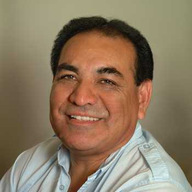
David Conde, Senior Consultant for International Programs

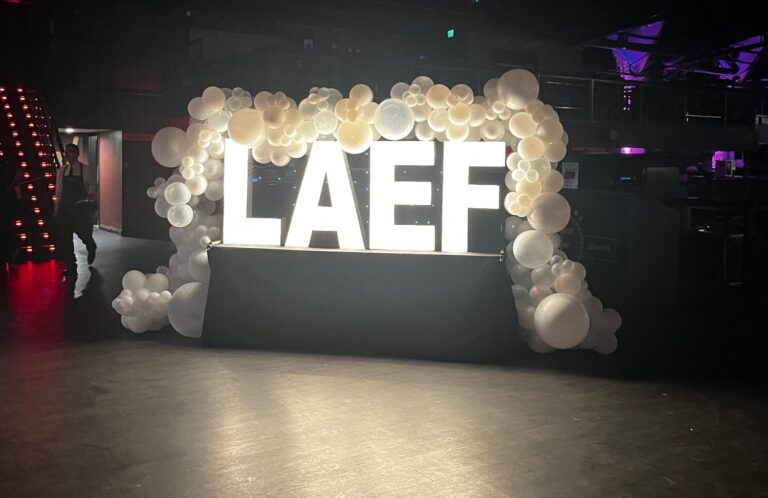
The Latin American Educational Foundation (LAEF) celebrated its annual Gala on Saturday, March 11th. The Gala is the premier Latino event intended to provide support to worthy students.

LAEF, launched in 1949, is celebrating its 74th year of service to our community. Its growth and importance has come a long way since I first began attending its functions in 1975.

I had just arrived from New Mexico to take a position at Metro State that was still located in downtown rented buildings. One day during my first year, a member of the Board came by to invite me to the LAEF annual function.

As it turned out, I was honored with an award that I conserve as one of my prized possessions. The LAEF scholarship prize to students has been one of the hallmarks of a maturing community that has come to understand that the gift of education is priceless.

It is more than just about the monetary support. A healthy scholarship foundation sends a message about who we are and where our values lie regarding the future of our children.

Education is among the strongest elements in our culture. The higher education portion of this gigantic enter- prise continues to form a basic part of our aspirations as a national community.

That is why there are so many scholarship committees in so many non-profit as well as for profit organizations. Although the quantity of scholarships can never be enough, the awards make a powerful statement.

Many that work hard to promote scholarship funds find great satisfaction in the notion that they are making a dif- ference. While this is true, the fact tends to blur the significance of the educational challenge facing each individual recipient.

The drive from being a scholarship recipient to becom- ing a true scholar is one filled with difficulties and feelings of uncertainty even in light of the best educational planning. It is that test that will determine success in college, help make decisions about a program of study leading to a chosen profession or find a way to threat the needle into a deeper path of research that adds to the body of knowledge for a changing world.

Advocates for an intentional selection of a college or university see this as a way of addressing the issue. The tendency here is to go with institutions of higher learning known for a specialty or rigor or prestige.

That is a luxury that most Latinos do not have and can not afford. Besides, the big open secret is that most serious faculty at whatever college or university have done their graduate study at schools around the country with the same rigor and comparable standards.

After a scholarship is awarded, what counts is the indi- vidual journey through the maze of ideas and concepts that come to an exploring mind. This challenge is made more difficult by the fact that 60 percent of learning in American institutions of higher education occurs outside of the classroom.

Since the education journey is an individual one and more than half of learning is achieved outside the classroom, the choice of an institution to attend becomes less significant. For most, it is more important to segment their work beginning with a strong general studies curriculum that can be found at a community college or university close to home followed by engaging a specialty at the four-year institution before making any plans to leave home and study beyond that.

The scholarship offers a beginning. The rest is in the domain of the scholar.

The views expressed by David Conde are not necessarily the views of La Voz Bilingüe. Comments and responses may be directed to News@lavozcolorado.com.

A Week In Review

0

Africa

Thousands may have died from drought in Somalia – According to a new report from the Somali government and the United Nations, about 43,000 people in Somalia may have died because of poor rainy seasons. Half of those who have died are believed to be children under the age of five. The United Nations estimates that it needs $2.6 billion to fund its Somalia drought response plan. The crisis is expected to lead to more deaths in the coming months.

Protests in Kenya over election – Thousands of people in Kenya are protesting after opposition leader Raila Odinga claimed the country’s election was stolen. He’s ran for president five times and accused Kenya’s government of failing to help ease cost of living in the country. Roads to government buildings have been blocked and there were reports of tear gas being fired by police at Odinga’s convoy. South Africa has also recently seen anti-government protests in recent weeks that have called for the country’s president to step down.

Asia

Mobile internet cut in India state – Authorities in Punjab, India have suspended mobile internet across the state as police search for a Sikh separatist leader. Amritpal Singh has called for a separate homeland for Sikhs and is inspired by Jarnail Singh Bhindranwale, a preacher the Indian government accused of leading an armed insurgency in the 1980’s. Singh remains at larger, and police have set up traffic blockades to check vehicles.

Millions of fish dead in Australia – Australia is in the process of a major clean-up effort after millions of fish were found dead in a river in western New South Wales. Police acknowledged that it will not be possible to remove all the dead fish and assured residents that water supply in the area is of high quality. It is believed the fish died from low oxygen levels in the river after a recent heatwave took place.

Europe

United Kingdom assures banks are safe – The United Kingdom’s central bank assured residents that banks are safe after regulators enforced a rescue deal for Credit Suisse. Shares in European banks fell, but experts are not predicting a repeat of the 2008 financial crisis when numerous big banks failed and caused a recession. Recently, six central banks, including the Bank of England, announced they would boost the flow of US dollars through the global financial system in a move to keep cash available.

Putin visits Ukraine – Russia President Vladimir Putin recently visited Mariupol, a Ukrainian port that is under the control of Russian forces. Video footage showed Putin driving a car through streets at night and speaking to people. Putin’s decision to drive around the city was made spontaneously, according to the Kremlin. Last week, the International Criminal Court issued an arrest warrant for Putin over the illegal deportation of Ukrainian children to Russia.

Latin America

Ceasefire between Colombia/drug trafficking cartel suspended – Colombia President Gustavo Petro suspended a ceasefire with the Gulf Clan drug trafficking cartel. He ordered security forces to reactivate military operations against the group. The ceasefire suspension is seen as a blow to Petro’s attempt to end armed conflict. The ceasefire had been in place since December, but Petro accused the Gulf Clan of shooting at police officers, inciting protests from informal gold miners, and more.

Inflation reaches new high in Argentina – For the first time since the early 1990’s, Argentina’s inflation rate rose past 100 percent, meaning consumer goods have more than doubled since last year. The country’s government has tried to decrease prices by capping prices of food and other goods. But food and drink prices rose by 9.8 percent in February compared to January while the price of meat rose by almost 20 percent in a month span.

North America

Wyoming bans abortion pills – Wyoming became the first state to ban abortion pills. The law is expected to be instituted on July 1, and violators face up to six months in jail and a $9,000 fine. Wyoming only had one clinic that provided abortions. In Texas, officials are expected to rule on whether a commonly used abortion pill should be legal as well as in the near future.

Teen kills two officers in Canada – Two police officers in Canada were shot and killed while responding to a family dispute. The suspect in the shooting is a 16-year-old boy who died from a self-inflicted gunshot wound. His mother was also taken to a hospital with life-threatening injuries after being shot. The officers, Travis Jordan and Brett Ryan, were in their 30’s and had worked for Edmonton Police Service.

CDPHE increases transparency with interactive air quality map

0

New tool expands access to information about air pollution sources across Colorado

The state health department’s Air Pollution Control Division has launched a new, interactive online map to search for air quality records. The map provides access to thousands of digital air quality records for stationary sources of air pollution. Stationary sources are any building, structure, or facility that generates air pollution. Records can include permits, exceedance reports, inspec- tion reports, and completed enforcement actions. The visual tool allows users to find a facility on a state map and click on it to view its records. Users can also search by coordinates, addresses, identification numbers, and facility names.

“Increasing transparency and access to air quality information is vital to building trust with local communities and people across Colorado,” said Michael Ogletree, director of the Air Pollution Control Division. “This online mapping tool is a major move forward for connecting people, especially frontline communities overburdened by air pollution, with information they want and need to stay informed. This is just one of the many ways CDPHE is listening and responding to community feedback.”

“The Environmental Justice Action Task Force recommended many best practices for transparency to ensure that disproportionately impacted communities can access information about air quality where they live” said Joel Minor, Environmental Justice Program Manager. “This new tool is a significant step towards breaking down barriers to finding information about air quality in Colorado’s communities that are most impacted by air pollution and other environmental challenges.”

This new mapping tool is possible thanks to the department’s online database launched in October 2020, which currently houses more than 550,000 air quality records. The new map integrates with this existing public database and provides an alternative, visual way to find records.

Read the user guide for tips on accessing information in the map. CDPHE welcomes feedback on how CDPHE can continue to improve the mapping tool over time and make air quality information more accessible. Provide feedback on the records database using the online comment form. CDPHE intends to hold a webinar on the mapping tool in the coming months. CDPHE will share additional information when it’s available.

Learn more by visiting the division’s records website or the division’s website on air emissions from business and industry.