





Home Blog Page 163

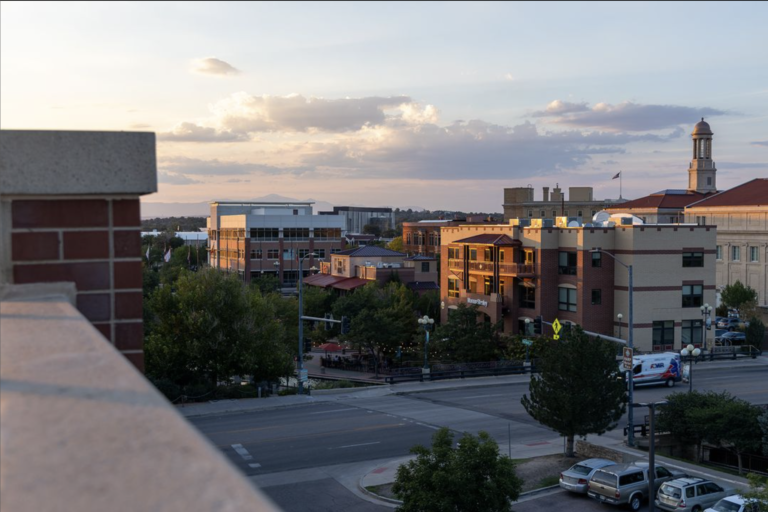
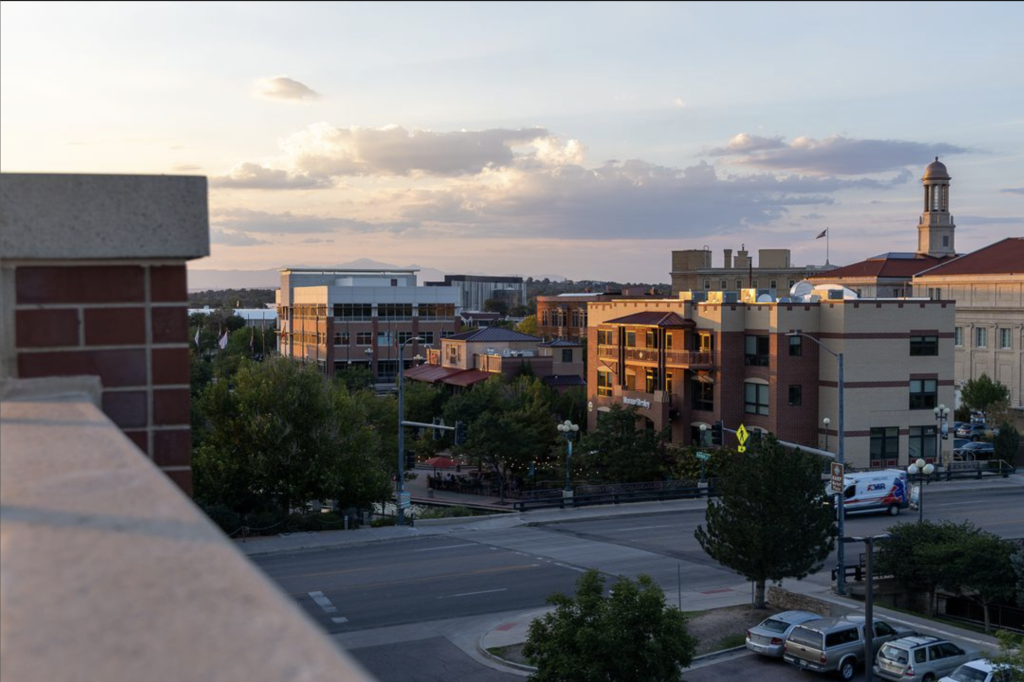
Pueblo’s economy, a good story to tell

If Chicago is the city ‘with big shoulders,’ Pueblo, is just a smaller—significantly smaller—version of the ‘Windy City.’ It is a place that has braved the chilliest economic headwinds but has not simply survived them but moved right on through.

Today, Pueblo, the economic pulse of southern Colorado—an area bigger than a number of U.S. states—has an economy that has diversified from heavy industry to one that could soon boast of being the world leader in the manufacture of blades that harvest clean energy out of thin air. The city is in a final stage negotiations with the South Korean company, CS Wind, on a manufacturing operation.

“We’re in good shape,” said Jeff Shaw, Executive Director of the Pueblo Economic. Shaw, a Pueblo native. The city’s infrastructure is strong, there is a good availability of land, and perhaps as important as anything, the city has plenty of water, he said. Shaw also said that the city also has a strong workforce ready to fill jobs that companies need filled when they make decisions on relocating.

An abundance of workers will soon become available for potential new companies considering Pueblo when the job of destroying a good portion of World War II mustard agent is completed. Pueblo is one of two locations in the United States where the military has stored the war era’s nerve agent. The deadline for the end of this operation is December 2023. The end of the job will also mean the end of what was once known as the Pueblo Army Depot, a location up to the 1980’s that served as one of the region’s largest employers. When the end does come for this deadly weapon, 1,582 workers will be available for new employment opportunities.

Like all cities looking to maintain economic momentum, much is predicated on Washington politicians figuring out a solution to the debt ceiling issue. Shaw said that even though Pueblo does not have a lot of defense employment, “we’re still waiting for Congress to act.” Failing to address the debt ceiling could plunge the country into a deepening reces- sion.

Most of the state’s economic growth has occurred on the Front Range, an area stretching from Fort Collins on the north to Colorado Springs. As a result, Pueblo’s unemployment rate, while not in a danger zone, continues to register higher than Shaw would like. “We’re a little bit higher,” than the state rate, he said. Pueblo’s unemployment rate comes in at 5.4 percent, nearly 1.9 percentage points above the metro area.

In 2020, Pueblo voters overwhelmingly supported a one-half percent city sales tax for economic development. The money, which has raised nearly $10 million dollars, is controlled by the city council and is used by the PEDCO to lure new business to the city. Spending money, as PEDCO does to lure business, is a common practice by municipalities. Money often goes to creating infrastructure, including roads and other incentives.

According to the most recent census, Pueblo’s population is 112,000. The population for the total county was approximately 170,000. Shaw says the size and location of Pueblo makes it ideal for a company looking for both quality of life and a base to conduct business.

“We’re getting a lot of looks from inside Colorado,” said the PEDCO executive. He says its location, with easy access to north-south travel routes, good rail options, square footage availability and “close proximity to Colorado Springs,” where air travel is quickly available are among the city’s best selling points.

“We have a good story to tell,” said Shaw, not the least of which is access to southern Colorado and what he calls a region that may be the state’s best kept secret. Also, when companies are taking a good look at Pueblo, he said, they quickly learn that the challenges of a big city are nowhere to be found in Pueblo, including the daily challenge of highway gridlock. “High traffic in Pueblo is one cycle of a traffic light.”`


Weight-loss coaches share 5 tips for healthy resolutions

0

Despite the annual chatter about New Year’s resolutions, many of us give up by February and only a few stay the course for a whole year.

Photo courtesy: United Health Care

Why is that? Sometimes it’s because we’re not really committed to the goal. Other times, the resolution itself is the issue. It may be too broad or unrealistic, or there might not be a solid plan for achieving it.

Here are some goal-setting ideas from the coaches at Real Appeal, an online weight-loss program available at no additional cost to eligible UnitedHealthcare members and dependents.

They recommend you start by asking yourself:

• What healthy change do I want to focus on most?
• What do I feel confident about achieving?
• What am I ready to start working on now?
• What is most important to me?

Next, think about these five tips:

1. Focus on one goal at a time. Tackling too much at once may lead to inconsistency. Try sticking to one priority until you feel confident adding another. If you’ve decided to record the food you eat and start a daily exercise routine, consider focusing on your food journal first. After you’ve developed a reliable system for tracking meals, begin upping your exercise game.

2. Set realistic and measurable resolutions. Make sure each resolution is attainable and decide exactly how you’ll measure its success. Use specific times and numbers to avoid vagueness. Instead of a resolution to “have a less stressful morning routine,” make it your goal to get out of bed by 6:45 a.m. each day. Instead of pledging to “move more,” resolve to add a brisk, 30-minute walk to your daily routine. Start small, knowing you can always increase your measurable goals.

3. Make your goals enjoyable. Set resolutions you want to accomplish, not ones you think you should reach, and come up with ways to enjoy the time you’ve committed to them. For example, if your measurable goal is to eat five servings of fruits and vegetables every day, consider enrolling in a virtual cooking class that features interesting ways to add produce to dishes.

4. Plan for challenges and how you’ll overcome them. Brainstorm a list of things that could get in the way of accomplishing your goals and come up with solutions ahead of time. Be honest about roadblocks and get creative with solutions. For instance, what will you do if the weather is bad? How can you add purposeful movement around your home or apartment?

5. Stay accountable and get support from people around you. Strong social support may improve your motivation, mental health and behavior. Surround yourself with positive people and advocate for what you need to reach your goal. Consider asking a family member or friend to work with you on a common goal or join a group that will help you stay accountable.

Go deeper: If you decide your resolution will be to lose weight, the Real Appeal coaches suggest these areas of focus:

1. Track your food and drinks. Research has shown people who track their food lose more weight. A food diary may help keep you accountable and reveal things you might not even notice about your eating and drinking habits.

2. Eat quality food. Fill your plates with fresh fruits, vegetables, whole grains and lean proteins, such as turkey and fish. If that will mean big changes to how you currently eat, consider making a series of healthier food and drink swaps over time.

3. Get moving. According to the Centers for Disease Control and Prevention, people who lose weight and keep it off routinely do moderately intense physical activity. The American College of Sports Medicine suggests a minimum of 150 minutes per week of moderately intense activity to maintain weight loss.

For support, consider checking if you’re among the millions of UnitedHealthcare members whose health benefits include year-long access to a Peloton App Membership or a three-month waiver on an All Access Membership at no additional cost, and preferred pricing on equipment.

One last thing: Don’t limit yourself to setting resolutions once a year. Revisit your goals all year to help stay on track and refocus your efforts. Use these tips to set yourself up for success, no matter when you’re looking for ways to live healthier.

For more help from Real Appeal coaches, visit uhc.com.

Source: United Health Care

What’s Happening?

0
Photo courtesy: Museo de las Americas

Museo de las Americas’ traveling exhibit, “Community/ Comunidad” opened at the Montbello Library on December 16th. This exhibit explores daily life in rural villages from Mexico to Perú. Known for their indigenous artwork, beautiful natural landscapes and a fascinating history, these “pueblos mágicos” are rich in legends, symbolism and traditions. This exhibit was possible thanks to a new partnership with Montbello Library. Don’t miss the opportunity to see this Sin Fronteras exhibit on view until January 28th.

Visit https://museo.org/exhibitions/community-comunidad/for more information.


Photo courtesy: Arvada Center for the Arts – Arvadacenter.org

The Arvada Center for the Arts & Humanities brings you the intersection between science and creative experimentation. Explore the ways that fourteen contemporary artists use scientific concepts, datasets, research, and development to inform their creative work. Art + Science portrays both artistic practice and scientific discovery in new ways, broadening the understanding of both as they experience concepts in science through the unique voice of regional artists. This exhibit will run through March 26. Get a free ticket to visit, or just check in with the Box Office when you arrive.

Visit https://arvadacenter.org/events/art-science for more information.


Que Pasa? is compiled by La Voz Staff. To submit an event for consideration please email attractions@lavozcolorado.com with Que Pasa in the subject line by Friday at 5 p.m.

The many yet human sides of war

0
David Conde, Senior Consultant for International Programs

My father was drafted during World War II but did not pass his medical examination. He nevertheless endeavored to follow the war in the news. Since he only had three months of formal education, father worked hard to put letters and sounds together and learned to read newspapers in Spanish. His level of interest was heightened by the fact that there were other members of the family fighting the Germans and Japanese.

The Rio Grande Valley of Texas has many towns and Spanish speaking communities whose kids made the ultimate sacrifice. Father lived the war with the constant wailing of grief in every barrio that saw families mourned the death of their sons.

I remember a moment decades later after I had completed my military service, when I came home with a Master’s Degree from graduate school. I gave my father the great news that I had been invited back for a doctoral degree program. At first he reacted with confusion since he thought that I would go to work after so much study. Then he thought for a moment before saying that he was glad because it meant that I was not going to “el frente” meaning “the front lines.”

The Vietnam War was still going on and father could still hear echoes of mothers and families crying for their World War II dead. It was a sobering moment to learn that he would carry that memory until he passed away.

It is estimated that 80 million military and civilian people died and an untold count of injured around the globe in World War I and II. Added to this was the great number of casualties in two major Asian wars that were Korea and Vietnam.

The four 20th Century wars were fought with draftees. Vietnam was the breaking point for the citizen soldiers that had to fight abroad while a large segment of the American people did not believe in what they were doing.

Before Vietnam, dying for your country was an unquestioned honor. After Vietnam, that honor was tainted by the tone of ungratefulness and disrespect on a large part of a nation that saw little value in the blood sacrifice of our young.

Also, after Vietnam the American military had to reinvent itself in order to leave behind the results of a war that drained so much of its credibility and morale. The advent of an all-volunteer professional military can be tied directly to that time in history.

In the 1990s when my son decided on a military career, I was happy that it was peacetime and that he could developed his leadership craft without the bullets, bombs and death that characterizes war. Then 9/11 came and he found himself in new wars both at home and abroad.

It seems that war is always around the corner trying to attract our attention and interest. The Russian attack on Ukraine is a great example of that possibility lurking in the shadows.

The Russian-Ukraine conflict also represents the completion of a circle that brings us back to my father’s notion of “el frente.” Two armies are engaged in desperate battle along clearly marked lines.

Like in the great wars of the 20th Century, the struggle is between democracy and authoritarianism. The democracies have decided to stand with Ukraine and support its epic struggle against Russian remnants of the old Soviet Union.

This time our military is not actively fighting. Yet, it feels as if we are fighting the same war here at home.

The views expressed by David Conde are not necessarily the views of la Voz bilingüe. Comments and responses may be directed to news@lavozcolorado.com.

From hotel to supportive housing

The Hancock Administration’s strategy of converting hotel rooms into housing for residents experiencing homelessness took another step forward this week thanks to the approval of $9 million for the acquisition of a four-story hotel. The solution to homelessness is housing, and we will continue to pull on every lever available – including these 95 rooms – to create more supportive homes for our unhoused residents. The acquisition adds momentum to other hotel-to-housing projects recently funded by the City and County of Denver. In recent months Denver helped fund one hotel in Globeville and two East Colfax motels that were acquired by housing partners. The hotel conversions support the Department of Housing Stability’s Five-Year Strategic Plan goal of producing 900 supportive housing units across several sites.

CDPHE welcomes feedback on system for public to share concerns about pollution

0

The Colorado Department of Public Health and Environment is seeking feedback on a system, designed to provide Coloradans with a centralized place to share their concerns about environmental pollution.

The complaint system will be available in English and Spanish, but complaints can be submitted in any language. The department’s environmental justice ombudsman oversees the system and focuses on concerns raised by individuals living in communities that carry a heavier burden of pollution. Community members can express their concerns about air and water pollution, illegal dumping, and a wide variety of other environmental and public health issues. Individuals can fill out an online form, or email, mail, or call the ombudsman at 303-549-9988 to voice their concerns.

“We want to hear from Coloradans about their pollution concerns, and we recognize it can sometimes be difficult to know who to contact when those arise,” said Marcus Howell, CDPHE’s environmental justice ombudsman. “I am excited to hear from the community on how we can improve this system to serve them.”

The ombudsperson is independent. Because the ombudsperson receives information about a wide variety of issues, it will help identify community patterns and facilitate systemic solutions. The ombudsperson works with the appropriate environmental and technical staff at CDPHE to find possible solutions.

This is the first prototype of the complaint system. CDPHE is in the process of soliciting public comment on the system through March 24, 2023. Comments can be emailed to cdphe_ej@state.co.us. The system will be fully launched l in mid-April after incorporating feedback from the public and the Environmental Justice Advisory Board.

Visit https://cdphe.colorado.gov/ej-complaints for more information on this new program or how to submit a complaint.

Our Government

White House

President Joseph R. Biden, Jr. made additional disaster assistance available to the State of California by authorizing an increase in the level of Federal funding for emergency protective measures undertaken in the State of California as a result of severe winter storms, flooding, landslides, and mudslides beginning on December 27, 2022, and continuing.

Colorado Governor

Governor Polis and the Colorado Department of Labor and Employment announced that Colorado’s unemployment rate declined in December to 3.3 percent, below the national rate of 3.5 percent. Earlier this week, Governor Polis delivered his State of the State address, where he highlighted the administration’s ongoing work in partnership with the legislature to boost Colorado’s workforce and support the state’s strong economy. In that address, Gov. Polis pointed out that there are currently two available jobs for every unemployed person, with more work to be done to enhance the state’s workforce.

Denver Mayor

Mayor Michael B. Hancock announced Britta Fisher will be stepping down from her role as Denver’s Chief Housing Officer on Wednesday, Feb. 1, following her selection as the next President and Chief Executive Officer for the Colorado Coalition for the Homeless. Fisher joined the City and County of Denver in June 2018 and was selected as the first Executive Director of the newly formed Department of Housing Stability (HOST), created by the Mayor in October 2019.

A Week In Review

0

Africa

South Africa prepares for military exercise with Russia/China – South Africa defended its decision to hold a joint military exercise with Russia and China next month, saying all countries conduct military exercises with “friends worldwide.” The countries plan to hold joint naval drills with Russia and China next month. South Africa said the goal of the drills is to share operational skills and knowledge.

Cameroonian journalist found dead – Martinez Zogo, a director of a privately owned popular radio shows, was found dead after he disappeared in a suspected abduction. Zogo was known for being outspoken and had recently made comments about an alleged embezzlement case involving wealthy businessmen and top officials. Cameroon’s national journalists’ union urged media members to wear black as a sign of mourning.

Asia

Thailand tourism still below prepandemic level – Thailand’s tourist numbers increased by 400,000 in 2022, compared to 2021. But those numbers are much lower than the 39.8 million tourists Thailand saw in 2019. The country’s tourism authority forecasts tourist numbers to double to 25 million this year. Tourist revenue made up more than 10 percent of Thailand’s gross domestic product in 2019.

Inflation reaches new high in Japan – Japan’s core consumer prices for last month rose by 4 percent, compared to a year earlier. The Bank of Japan recently announced it would keep rates near zero, despite the increased cost of goods. Recent data shows inflation was at its highest since 1981 in Japan. However, Japan still has one of the lowest inflation rates in the world.

Europe

Germany to allow tank exports

Germany announced it wouldn’t stand in the way of Poland if the country were to send Leopard 2 tanks to Ukraine. Germany has yet to provide armored vehicles to Ukraine, despite the country calling on the West to provide German-made tanks that it believes will help them defeat Russia. Poland officials said the country would send tanks to Ukraine and would request authorization from Germany.

France proposes raising defense budget – French President Emmanuel Macron is proposing plans that would increase the country’s armed forces budget. Macron made the proposal amid modern threats like Russia’s war in Ukraine. In recent weeks, France has increased its military aid to Ukraine by supplying weapons. It is also planning to send light combat tanks to the country as well.

Latin America

Protesters force Machu Picchu to close – Machu Picchu in Peru is closed indefinitely because of protests against the country’s new president. Peru said it closed the area to protect tourists and citizens. Recent protests forced 418 people to be stuck at Machu Picchu before they were rescued. Protesters in Peru have called for fresh elections after former President Pedro Castillo was jailed for charges of rebellion and conspiracy. Castillo denied the accusations and insisted he is still Peru’s legitimate president.

Brazil army commander fired – After rioting in Brazil’s capital, General Julio Cesar de Arruda has been fired. He had only been in his role since Dec. 30, just before former President Jair Bolsonaro’s tenure ended. Brazil President Luiz Inácio Lula da Silva said he suspects members of the country’s armed forces were colluding with protesters. Earlier this year, thousands of Bolsonaro’s supporters stormed government buildings in Brasília after he questioned the legitimacy of the country’s presidential election.

North America

California gunman kills 10 people – A gunman targeted Monterey Park over the weekend and killed 10 people in a ballroom dance studio. The area is known for its large Asian population, and celebrations for Lunar New Year were occurring at the time of the attack. Police say the gunman was 72 and was found dead with a self-inflicted gunshot wound. The mass shooting is one of the deadliest of its kind in California history. It was the deadliest gun attack since last May when 21 people were killed at a school in Uvalde, Texas.

Jeff Zients set to be White House Chief of Staff – Jeff Zients is expected to be named the next White House chief of staff. He will replace current Chief of Staff Ron Klain who will step down next month. Zients led President Joe Biden’s COVID task force and assisted with November midterm elections. His new role will require him to be responsible for driving the president’s policy agenda and hiring staff.

The National Football League and a history of player injuries

0

His name rings like a pulp fiction gunslinger’s. Stone Johnson. Hardly anyone even knows it any longer. But the name holds real prominence, especially today as replays of Damar Hamlin’s collapse on a football field earlier this month has become a story line in every single NFL game.

Johnson was—by almost any definition—an amazing athlete. In a segregated Dallas, he was a 360-degree high school superstar, described by one of his long-ago teammates as one of the “greatest athletes ever to come through Dallas.”

Later, at Grambling, he played quarterback, defensive back, place kicker and punter. In the spring, he was also a world-class sprinter, good enough to compete in the 1960 Rome Olympics. His 4X100 relay team won gold but was disqualified for a baton pass violation. After the Olympics, he was a promising member of the AFL Kansas City Chiefs. Johnson was Bo Jackson decades before Bo Jackson. His number ‘33’ is retired in Kansas City.

In a meaningless pre-season game, the last day of August 1963 between the Chiefs and the then-New York Titans, Johnson suffered a broken neck on a kickoff return. He died September 8th. But Johnson isn’t the only NFL player to die from injuries on the field or to die from injuries from playing the game.

While Johnson’s story may stand out, in the contemporary history of the NFL, it may not even be all that unique. Howard Glenn, an offensive lineman for the New York Titans, died three years before Johnson, also from a broken neck suffered in a game. Football is a violent sport. Yet there is no more popular game played in the U.S. today. In a recent Ipsos poll, men, women, Democrats, Republicans, independents, all ethnic groups rated football their favorite sport.

“You just love it,” said Brandon Stokley, former NFL wide receiver and current Denver radio sports talk personality. “You love to compete,” Stokley said on a top of the hour break from a recent remote radio broadcast. “You love the camaraderie, the team aspects of it. You can’t find that anywhere else…all of those combined make it such a great sport.”

Stokley is an exception in today’s NFL, playing for five teams over a fifteen-year career, including the Denver Broncos. During his time as a player, he saw hundreds of teammates, including college, come and go, some with career-ending injuries. But to a person, he said, all knew the risks of playing the game.

“You realize a lot of guys aren’t going to make it to the NFL. You might be playing Division One, Division Two or Three, NAIA, JUCO or whatever the case might be, then that’s gonna be it for you. You’re not gonna take another step and so…part of playing football is getting injured.”

Even watching the Monday Night football game where the Buffalo Bills’ Hamlin went down after a hard hit to the chest, Stokley said players accept the risks. “You don’t think you’re gonna die on the football field, you don’t think you’re gonna get paralyzed on the football field. You do realize if you play football, you will get hurt, you will get injured.”

Stokley endured his own share of injuries playing football, including a concussion in a 2013 game while playing for the Baltimore Ravens. The injury ended his season. The three-time Super Bowl player also settled with the New York Giants over an injury issue. But football, despite the risks, is not something he regrets nor has second thoughts about. Football, he said, is like life. “There’s a chance I could get in a wreck…all kind of bad things can happen. You just don’t let your mind go there. You just go out there and play.”

While Stokley remains firmly in the majority in his opinion about football, the MNF injury suffered by Hamlin got an entirely different take from Denver Bronco defensive lineman, DeShawn Williams. “My son is not playing football,” said Williams after watching the Hamlin injury.

But while there may be some dip in the game’s popularity, especially after the Hamlin injury, it likely is only temporary. The game, said newly installed Colorado State University-Pueblo football coach Philip Vigil, is not just running plays. It’s a life-lesson.

“Football teaches teamwork, communication, persistence, and the value of sacrifice,” said Vigil. Players, he said, learn “there is a process to achieve your goals and that you must work every day to attain them.” Like Stokley, Vigil believes that football is a metaphor for life. “To win, everyone must be skilled, committed and do their part.”

There is no doubt that football is violent. The physics bear it out. As an example, a six-foot, 200-pound player can generate as much as 1,600 pounds of tackling force on an opponent. Still, research has proven that a body can take twice that amount of force if the impact is distributed evenly and equipment is worn properly.

But the current NFL playoffs are testament to the inherent violence of the game. Injuries have forced the San Francisco 49’ers to play with a quarterback who was the last player taken in the 2022 NFL draft. Normally, a player like that will never step into an NFL huddle, let alone start the game.

The Miami Dolphins played on Sunday with their third string quarterback. The team’s starting quarterback was deemed unable to play after three earlier concussions, including a particularly graphic head injury suffered earlier this season.

Years ago, violent head injuries were often chalked up to a player ‘getting his bell rung.’ But that has changed. Today’s players thought to have a head injury are immediately checked out on the sidelines by a physician. If protocols are not met, the player cannot return to the game.

Because of concussions that have caused long term brain trauma to retired players, a number of ex-players or their families have donated the player’s brains to Boston University’s Center for the Study of Traumatic Encephalopathy. Among them are Hall of Fame linebacker Junior Seau and former New England Patriot Aaron Hernandez. Both died of suicide.

After hospitalization that included a medically induced coma, Damar Hamlin has so far begun to recover from his on-field heart attack. But Hamlin is not the first player to suffer cardiac arrest in an NFL game.

On October 24th in 1971, during a game between the Detroit Lions and Chicago Bears, 28-year-old Lions’receiver Chuck Hughes suffered what would be a fatal heart attack as he made his way back to the huddle. He died four days later. Hamlin’s survival was greatly enhanced by epic gains in medi- cal care mandated by the NFL that did not exist when the Lions played the Bears a half century earlier.

Stokley said all players know they will be injured playing football. It’s only a matter of when and will they ever play again.

‘What to do in Pueblo when you’re not dead’

While Denver might be locked into a seasonal dip where temperatures can be as depressing as the all too frequent overcast skies, you don’t have to take it if you’re willing to drive a hundred or so miles to the south to Pueblo.

Photo courtesy: City of Pueblo

Because out of staters have created a population boom in the metro area, a lot of newcomers aren’t familiar with southern Colorado and its largest city. But, Donielle Kitzman, whose job for the Greater Pueblo Chamber of Commerce is to tell everyone about her town, encourages everyone to ‘come on down!’ But don’t expect to see billowing clouds of soot belching out of industrial smokestacks that once stained the city’s sky. Those days are over.

Pueblo, once called ‘the Pittsburgh of the West,’ for its steel mill, has undergone a dramatic manufacturing metamorphosis. Instead of steel, the city is going green and clean and may soon be known as the world’s largest maker of blades for the booming wind energy industry. It’s now in negotiations with a South Korean company to finalize the deal.

Today, said Kitzman, “Pueblo has a wealth of museums and cultural exhibits,” for out-of-towners to experience. Interested in aviation? There’s the Pueblo Weisbrod Aircraft Museum. Of course, there’s the Steelworks Museum that traces the history of the city’s once dominant industry. But ‘Wait! There’s more!’

Pueblo also has a Railway Museum located walking distance from the city’s iconic and architecturally dramatic Union Depot. Want to know Pueblo’s history? The El Pueblo History Museum regularly hosts exhibits tracing not only the region’s history but also shows the works of nationally known Latino/Chicano artists. Pueblo also has the Sangre de Cristo Arts and Conference Center which stages Broadway traveling productions as well as exhibits of world class arts.

To get a feel of a long-ago Pueblo, the city also has its share of historic architecture including, perhaps, the crown jewel of southern Colorado, The Rosemount Museum. Built over two years, the home was completed in 1893. Its exterior Pueblo when you’re not dead’ is imported pink Rhyolite volcanic stone. Inside, visitors can tour all three floors of the 37 room, 24,000 square foot home where they can see the opulence of the 19th century, including imported woodwork from around the world and a Tiffany chandelier. There is also a 6,000 square foot carriage house on the grounds that today has been converted into a restaurant. The home was built for the Thatcher family, at one time the wealthiest family in southern Colorado. The Rosemount was the first Pueblo home listed on the National Register of Historic Places.

Because steel was one of the industries that attracted immigrant to this country in the mid to late 19th century, Pueblo became a melting pot for Italians, Poles, Lithuanians, as well as others who simply moved from other states. They joined Mexican Americans already here. As a result, the city is dotted with a variety of restaurants reflecting the cuisine of each group.

Pueblo’s outdoors is also one of the city’s big draws for visitors, said the Chamber’s Kitzman. The city is often called ‘the Banana Belt’ of Colorado for its temperate winter weather and a major selling point for visitors. “When our partners are snowed in,” she said, “we see visitors from over the state.” They come to golf, hit the city’s 35 miles of bike trails, hike, fish the Arkansas or boat on Lake Pueblo.

Pueblo has also cemented itself as a centrally located place for smaller, boutique conventions and routinely hosts veterans groups, police and sheriffs gatherings, hunters and outdoor recreation events. The boom in out-of-towners has been a godsend for the city’s hospitality industry. Hotels for convention visitors have sprouted along I-25, the corridor that bisects the city. But if a visitor wants to go off the beaten path, there is also a nascent bed and breakfast niche blossoming.

Jeff and Cindy Bailey, who decided hospitality would be a good way to earn a living in their retirement, run The Abriendo Inn, a bed and breakfast located near the city’s Mesa Junction. Bailey, a retired teacher in nearby Rye, Colorado, and Cindy, a florist and wedding planner, took a gamble and bought the historic Walters home in 2020 when the pandemic was still raging. “I was skeptical at the time,” he said. “We didn’t know which direction it was going to go. It could get worse, but it could get better.” Lucky for the couple, things turned up.

The home was built in 1906 by Martin Walter who also built the region’s largest brewery. Walters Beer was synonymous with southern Colorado but, like so many regional breweries, went dry and disappeared in 1975. But his Victorian home, opulent for the times, survived.

The retired teacher and his wife have completely redecorated the home while leaving intact its coppered ceilings and courtesan oak hardwood floors. Bailey, who takes no credit for the aesthetics, said his wife scoured estates sales, “in every nook and corner in the area to find just the right pieces. She picked out all the pieces,” for each of the seven suites, he said. “It’s very homelike and comfortable.” The Abriendo Inn is located less than a mile from historic Union Avenue on the street that bears its name.

Bailey said he acts as the official greeter and bellhop for the Inn. “I try and meet the guests as they come through our gates. I help them with their luggage and make sure they can access the Inn properly. He’s also the Inn’s concierge, telling guests places to eat, things to do or history of the place. For guest security, the home is outfitted with smart locks that allow guests to come and go as they please. The couple also offers what they call “a deluxe continental breakfast.” Currently the Inn is offering winter/off-season rates.

For more information, said Bailey, visit theabriendoinn.com.