





Home Blog Page 165

The University of Colorado/Denver celebrates 50 years of education

0

It is time to break out the balloons and confetti for the golden anniversary of one of the best kept secrets in Colorado higher education. The University of Colorado Denver is turning 50 this year. CU Denver, not to be mistaken with its Boulder counterpart, shares the sprawling Auraria campus with two other gems in the state’s higher educational system, Metropolitan State University Denver and Community College of Denver. CU Denver, having set down roots on the site in 1973, is the ‘new kid’ on the Auraria campus.

Photo courtesy: CU Denver Twitter

The CU in the city experiment began quietly enough in 1939 with what was then called the Denver CU Extension at 509 17th Street. One full-time faculty member ran the entire operation. Over the years, a single room and a single instructor have grown exponentially.

In various phases the school expanded to an entire building—the building now known as the Hotel Teatro at 14th and Arapahoe. But in 1977 things really took off when it moved to the Auraria Campus, an entity that has been evolving all on its own.

But it was 1973 when the CU Board of Regents officially renamed the school the University of Colorado at Denver. It has not only grown ever since but has become the school of choice for thousands of students. The University offers 41 bachelor’s degrees, 59 master’s degrees and 14 doctoral degrees. It also has 76 certificate programs offering career enhancements.

Also, in 2022, CU Denver was admitted to the Alliance of Hispanic Serving Universities. To win that designation, a university must serve a full-time undergraduate student population of 25 percent. Like Disney’s Buzz Lightyear, the future for CU Denver rings loud: “To infinity and beyond!”

“CU Denver’s future is tied to the city and its diverse people,” said CU Denver Chancellor Michelle Marks. “For 50 years, we have worked to prepare all students to contribute to Denver’s growing economy and benefit its many communities.” The school’s future, as outlined in its 2030 Strategic Plan, “is to make education work for all…ensuring that all students of all backgrounds get the kind of education and hands-on experiences that will not only lead to their success, but that will also continue to elevate our communities and this city.”

One program that reaped the benefits of CU Denver’s evolution has been the College of Architecture and Planning, said former faculty member, Professor Phil Gallegos. The former Puebloan and Notre Dame graduate, Gallegos began teaching at CU Denver in 1983 with stops in between at the University of Hawaii and University of New Mexico. When he arrived at the school, he said his first impression was one of a program with only scant diversity, either ethnic or gender in both faculty and students. Beyond teaching, Gallegos said he committed to creating an environment of a changing society.

At first, with little rank and certainly far from tenure, he said, “There was not much I could do.” What he did know is that he, as a Latino, couldn’t be the rarity among Latinos with a desire to build and create. As he became more experienced and with the environments he encountered at programs at both Hawaii and New Mexico, he knew he could accelerate change.

Gallegos said he was given the green light to recruit both faculty and students to the program. “I was amazed to see the number of transfer students coming in,” he said. “They were coming in from all over the nation.” New students, he said, were coming from age groups he hadn’t seen in the program, including veterans. They were also coming from cultures previously underrepresented. The department was finally reflecting a 21st century American demographic.

Gallegos said students were graduating and matriculating on to some of the most prestigious graduate programs in the country. University of Texas Austin, University of Chicago, Pratt Institute and Yale, he said, were now recruiting CU Denver.

The CU Denver experiment has morphed into the CU Denver experience for thousands of students over the last half century, especially demographically. The idea of the school being a designated Hispanic Serving University may not even have occurred to anyone fifty years ago. Today, the designation is one of its selling points.

Jennifer Woodruff, CU Denver’s Director of Public Relations & Integrated Media shared a list of efforts that has become a source of pride for the school as it moves to capitalize on the region’s rich history and demographic motherlode. Among these efforts: providing programs, events and workshops that raise awareness about social justice, building community and a sense of belong for all Latinx students, faculty and staff, supporting the mentor- ship and funding for the Society of Hispanic Professional Engineers and working with faculty to support its efforts to increase Latinx Students and the infusion of cultural relevance in the curriculum.

Also, because of the displacement of families when the Auraria campus went from an idea to a reality necessitating relocating, CU Denver continues to provide its Displaced Aurarian Scholarship Program to direct descendants in perpetuity.
Nick Lopez Named LAEF President and CEO

0

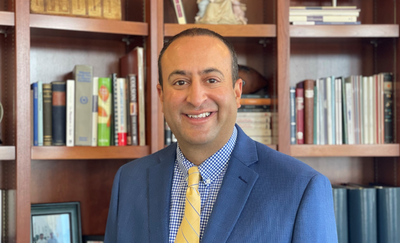
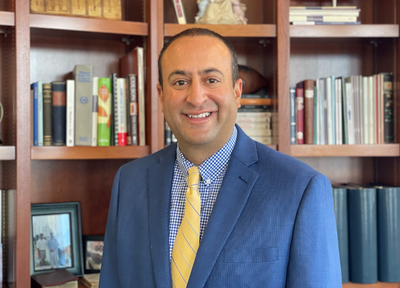
Nick Lopez is the new President and CEO of the Latin American Educational Foundation (LAEF). Lopez replaces Jim Chavez who served as the organization’s executive director for more than 18 years.

Photo courtesy: Volunteers of America Coiorado

Prior to joining LAEF, Lopez served in various human services and nonprofit organizations, including Volunteers of America Colorado where he recently served as the organization’s vice president of advancement and marketing.

LAEF has provided more than $700,000 through 7,000 scholarships to qualifying Hispanic students in Colorado. The organization has existed since 1949 and helps Hispanic enter college by establishing community collaboration efforts and by developing support programs for students who are working toward their college degrees.

“Nick is the right leader at the right time for LAEF,” said LAEF Board President Guillermo Lambarri in an email announcing that Lopez is taking over the organization’s president and CEO role. “Nick’s extensive nonprofit leadership experience, along with his unique set of skills, perspectives, and relationships will help lead LAEF into the future. Building on what we have already accomplished, under his leadership we will hone our strategic direction, grow, develop our organization, strengthen our partnerships, and increase our impact in the community.”

Lopez was recently announced as the National Hispanic Institute’s 2022 Person of the Year. The National Hispanic Institute aims to engage achieving high school and college age youth in community leadership roles that advance quality of life. Past recipients of the National Hispanic Institute’s Person of the Year award include Congresswoman Alexandria Ocasio-Cortez, Harris County Judge Lina Hidalgo, filmmaker Merced Elizondo, and entrepreneur Humberto Saenz.

Lopez earned his Master’s of Science in Public Service Management from DePaul University in Chicago. Throughout his career, Lopez has earned a reputation for giving back to the Hispanic community. He’s accomplished that through his time with the National Hispanic Institute where he served as its Midwest regional director. The organization said in its “NHI Magazine” that Lopez was an intrinsic part of its services and mission to promote higher education and leadership throughout the Hispanic community.

While in high school in the mid 1990’s, Lopez completed the National Hispanic Institute’s Lorenzo De Zavala (LDZ) and Youth Leadership Institute (YLI) programs. The LDZ program is an eight-day leadership experience for young people to learn how to navigate, manage, and create large organizations by taking charge of their own youth government. The YLI program is a free, college empowerment service for high achieving Latino high school juniors. It is designed to give young leaders tools they need to success- fully apply to top universities, have full access to scholar- ship and financial aid opportunities, and set a course for academic and career success.

Because of his involvement with the National Hispanic Institute, Lopez feels that joining LAEF is a full-circle connection.

LAEF is preparing for its annual Gala on March 11 at the Filmore Auditorium where the organization will highlight its scholars and alumni.

‘So you’re telling me, there’s still a chance?’

There are some movie lines that become instant classics. “Here’s looking at you, kid,” or “We’ll always have Paris,” came from, “Casablanca.” But another line seems more than topical and timely as the one-billion dollar-plus Mega Millions lottery jackpot continues to grow. “So, you’re telling me, there’s still a chance,” said Jim Carrey, as one half of the schlub duo in “Dumb and Dumber.”

Yes, for millions of hopeful Americans ready to pony-up their money, there is still a chance that they’ll win the big prize. Regrettably, with odds of winning somewhere north of 300 million to one, it’s microscopically small. Not too different than getting a random call from NASA that you’ve been chosen to pilot the next space mission. Still, as is often said, ‘you can’t win if you don’t play.’ And as the prize rises, people continue to line up hoping and praying that that single ticket lands in their hands.

In grocery stores, convenience stores, truck stops and airports, just about anywhere lottery tickets are sold, people are investing in what they hope is their golden ticket. They’re mashing together number combinations they think, more often, hope, are guaranteed gold.

Really serious lotto players research past winning combinations. They play numbers that have been lucky in the past; they play numbers that haven’t come up recently. Some swear it’s a science. Others play randomly or play their children’s birthdays while most just let the machine do the picking.

In Colorado, lotto has been around for nearly forty years. And while it hasn’t paid off for everyone, the state has done just fine. State lottery spokesperson Meghan Dougherty said, Colorado “is nearing $4 billion in proceeds that have been returned to the state.” By law, lottery proceeds go toward “parks, recreation, open spaces, trails, wildlife and schools,” she said. Every community in the state has something paid for with lottery dollars.

Not unlike nearly everything else, the pandemic had an impact on lottery ticket sales, said Dougherty. “Lottery’s revenue experienced a dip,” she said. But it didn’t last long. No surprise, sales run along the same lines as the economy. When it stalls, so, too, do sales. It’s cyclical and predictable.

While the eyes on the prize are focused on Mega Millions and it’s nine and ten-figure payouts, it’s scratch tickets, said Dougherty, that are the most popular buy. “The Lottery’s Scratch games drive the revenue for the Lottery,” she said. Scratch players are responsible for “more than 60 percent of sales compared to all other categories combined.” Running a close second is Colorado Lotto-plus, outselling even Mega Millions and Powerball.

State lottery officials don’t worry that the two national games, Mega Millions and Powerball, get most of the attention. They welcome the attention. “These giant jackpot runs really help drives sales for the (Colorado) lottery across every category,” Dougherty said. “Other products see higher sales when there is a large national jackpot. It helps us meet our Great Outdoors Colorado cap faster.”

Colorado is the only state in the country where the majority of lottery proceeds are dedicated to outdoor recreation and conservation. Other states use lottery dollars for education or simply put it back into the general fund. In fiscal year 2022, Dougherty said, the state was the winner. “Lottery’s proceeds partners received $180 million.”

When gigantic lottery prizes are won, it may often seem that they’re won everywhere but Colorado. But, said Dougherty, that’s not true. Mega Millions may not have landed here, but a couple of Powerball winners have called Colorado home. Winning Powerball tickets, including two with jackpots of $133 million and $90 million prizes, have been won here. The bigger prize was won in Clinton, the runner-up was sold in Rifle.

As the lottery enters its fourth decade in Colorado, there are still critics who say these games of chance most hurt those who can least afford to gamble. Not so, said Dougherty, calling it “a common misconception.” Proportionally, however, lower income players do spend a higher percentage of their income than higher earners.

While winning the Mega Millions big prize might sound good, there are downsides. Winners of big prizes are often besieged by any number of predators, ranging from scam artists to long-lost relatives or old high school friends looking “for a little help.” And then there’s the taxman.

According to Forbes, the winning Mega Million prize automatically—no surprise—catapults the winner into a higher tax bracket. The winning ticket is accompanied with a quick 24 percent lopped right off the top. That means the $1.1 billion prize suddenly shrinks to something around $570 million. Complaints from winners rarely linger long.

Winners have the option of taking a lump sum or a thirty-year payout. Most opt for the lump sum. On the other hand, the annuity is still pretty good. On $1.1 billion, the annual payout would be just under $40 million a year for the next three decades.

Most ticket buyers know they won’t win. But as the classic movie line goes, ‘there’s still a chance.’ But there’s also another classic line, though no one really knows who said it. ‘I’ve been rich, and I’ve been poor. Being rich is a whole lot better.’

Note: Because the drawing for Mega Millions occurred as LaVozColorado was going to print, we regret not being able to announce a winner if, in fact, last night’s drawing produced one. If, on the chance someone somewhere is now a millionaire many times over as a result of their winning ticket, we congratulate you. If there was no winner, as the saying goes, ‘better luck next time.’

Broncos end dismal season on a high note

0

While the Denver Broncos new ownership had absolutely nothing to do with the hiring of a new general manager, new head coach and staff, they were thrust into the spotlight after the team fell well short of expectations early in the season.

Part owner and CEO Greg Penner decided he’d seen enough when the Broncos were blown-out by the L.A. Rams on Christmas Day when Denver lost 51-14. It was at this time that Penner fired head coach Nathaniel Hackett and filled the position with veteran special teams coach/clock management Jerry Rosberg.

Despite Denver’s lackluster season, the Broncos had a well-rounded two end-of-season games on the road in Kansas City and at home to host the Chargers. Last week when the Broncos faced the Kansas City Chiefs on the road in a game the Broncos kept close where the defense picked off Chiefs quarterback (QB) Patrick Mahomes three times.

Denver fans weren’t happy about the officiating during the game especially when Denver QB Russell Wilson connected with Courtland Sutton in the third quarter, which was called back on a controversial call of offensive pass interference. The Broncos were leading Kansas City 17-14 at the time and the play would have put the Broncos in scoring position at the Chiefs 40-yard line.

This past Sunday the Broncos hosted the L.A. Chargers at home in a game that didn’t mean much to L.A. who had previous to the game, clinched the number 5 seed in the AFC.

To the surprise of Chargers fans, head coach Brandon Staley kept his starters in for Sunday’s matchup against the Broncos. The Broncos won the coin toss and deferred possession giving the Chargers first crack at moving the ball, and moving the ball is just what they did, scoring on a 14-yard pass from Chargers QB Justin Herbert to L.A. receiver Keenan Allen.

The Broncos responded less than eight minutes later with Broncos running back Latavius Murray trotted in from two yards out. The volley continued through the first half with both teams knotted up at 17 apiece at halftime. In the second half the Broncos scored another touchdown with a different running back in Tyler Badie who swung to the out- side for a pass and block that allowed him to diver and reach for his first NFL touchdown. The Broncos defense stiffened up holding L.A. to only three points in the third and added another touchdown in the fourth to hold on to the lead and win for their final game of the season (Denver 31 – L.A. 28).

In other sports the Denver Nuggets are rolling over teams and latest to suffer was an injured L.A. Lakers team who kept it close until the end. The Nuggets have won 8 of their last ten games with losses to the Sacramento Kings back on December 28th and the Minnesota Timberwolves on January 2nd.

The Nuggets have been hot and as a result of their streak and the NBA has them at the top of the power rankings. The reasons for Denver’s success of course is because of the leagues MVP Nikola Jokic who became the first player in NBA history to record 10+ points, 10+ rebounds and 15+ assists in a game while shooting 100 percent from the field. This type of play from the MVP has him in the lead for KIA’s MVP Ladder race for his third MVP.

The Nuggets will host a struggling Phoenix Suns team who has lost 9 of their last ten games including one to the Nuggets back on Christmas Day.

City Council passes legislation that makes Denver workers most protected in U.S.

0

Denver City Council voted 12 – 0 to enact 22-1614, legislation that will ensure Denver workers are paid what they are legally owed. The policy creates an administrative pathway for workers to recover stolen wages by filing a complaint with Denver’s auditor. Wage theft occurs whenever a worker is paid less than what they are owed. It includes minimum wage violations, meal break violations, forcing someone to work “off the clock,” or paying less than the agreed-upon wage.

With its passage, Denver workers became the most protected in the nation because all workers will have both administrative and civil recourse for alleged wage theft. No other municipality provides such broad protection without a limiting factor like type of work performed or type of pay.

The legislation was sponsored by Council members Torres, Sawyer, Gilmore, and CdeBaca and is the result of years of engagement with a labor coalition comprised of IUPAT, Carpenters Local 555, Towards Justice, Colorado Jobs with Justice, LiUNA, SEIU, and the Colorado Building & Construction Trades Council.

“I would like to sincerely thank the important and vital Denver workers and union members who champi- oned legislation to combat wage theft in our city,” said Councilwoman Stacie Gilmore. “Your experiences, persistence and values have supported the creation of a bill that will for the first time in our city’s history comprehensively protect workers from wage theft.”

The policy allows workers to file a complaint directly with the auditor’s office when their wages are stolen. The auditor investigates and orders payment of owed wages, plus interest. There are additional penalties available for willful violations or uncooperative employers.

Councilwoman Amanda Sawyer remarked, “We were shocked to learn what a widespread problem wage theft is in Denver, and across Colorado. It seems like such a simple concept to ensure that our workers are paid for the work they have done,” Sawyer said, “but it is much more complicated than it appears. This legislation has bridged important gaps in worker protections while also finding a good balance for the businesses that benefit from that work.”

“Wage theft constitutes more dollars of theft than any other type of theft (e.g., burglary, larceny, auto theft), with $728 million in legally earned wages being stolen from Colorado workers each year. Those most affected are our low wage, immigrant, and female workers. This ordinance reflects our local commitment to doing everything possible to guarantee workers get paid AND stopping wage theft altogether with meaningful penalties,” said Councilwoman Candi CdeBaca. “We value our workers in this City and hope to prevent and remedy harm done to the hard-working people in our communities.”

While there are criminal and state-level protections against wage theft, this legislation fills an important gap by holding all employers who benefit from stolen wages accountable. Under the new policy, if a worker’s direct employer has disappeared or is insolvent, the auditor may pursue payment from the entity that subcontracted with that direct employer. This policy not only ensures that workers get paid, it also encourages industry self-policing and protects high-road employers from unfair competition.

Denver already has robust administrative protections for minimum wage enforcement–workers with a valid complaint receive their missing wages within an average of 60 days, which is the fastest turnaround time in the nation. This legislation builds on that successful model by giving the auditor a variety of “carrots” and “sticks” to bring employers to the table in a productive way. It was crafted to punish bad actors, not those who make honest mistakes.

The law will go into effect as soon as Mayor Hancock signs it. Then, the auditor’s office will engage the public in a rulemaking process to determine how the policy will work on the ground.

Council President Jamie Torres shared, “When you remember that nearly half of Americans are just one paycheck away from poverty, it becomes clear that we cannot keep families housed if our workers are having their wages stolen. I’m so proud of the work this group has done to give Denver workers the widest protection of any municipality in the United States.”

Source: Councilwoman Jamie Torres Dist. 3

Student of the Week – Ximena Gallegos-Ramos

Ximena Gallegos-Ramos – Denver School of the Arts

Photo courtesy: Ximena Gallegos-Ramos

Profile:

Ximena Gallegos-Ramos is a high school senior at Denver School of the Arts who currently holds a 4.337 GPA. Gallegos-Ramos is an astoundingly talented musician, singer with an impressive vocal range. Gallegos-Ramos academic achievements include National Honor Society, scored a 5 in AP Spanish and AP English Language, Tri-M (Music Honor Society), performed at NY Carnegie Hall, and performed a lead role as Ursula in The Little Mermaid in an All School Musical. Gallegos-Ramos is a member of the film club, Christian club, All School Musical and Denver School of Arts Vocal Department. Gallegos-Ramos is dedicated to her craft and is actively involved in her church, volunteers to help the less fortunate, and participated in all vocal events at Denver School of Arts.

Favorite Book: Autoboyography by Christina Lauren

Favorite Movie: Me Before You

Favorite Subject: Besides Vocal, Math

Favorite Music: Bruno Mars

Future Career: Singer/song writer/producer

Hero: My Dad, Edgar Gallegos

Favorite Hobby: Reading

Favorite Social Media Follow: Tik Tok

Words to live by: “Celebrate every tiny victory.”

Community Involvement: Gallegos-Ramos involved with her parish, Iglesia Amistad Worship Pastor/Leader, sings at every Sunday worship, and helps with community food banks, and provide voice lessons to the youth.

Why is Community involvement important? “Community involvement is important because it gives you the opportunity to be more involved in a group that needs help or that you are a part of. Community involvement helps you grow and understand and value the important things.”

If I could improve the world I would…

“…help young women (minorities in general) get the resources to have a better say, voice, and message.”

College of choice: “Berklee College of Music (accepted).”

The Mexicans are not coming

0
David Conde, Senior Consultant for International Programs

The Russians are Coming, the Russians are Coming is a 1966 award-winning movie about a Soviet submarine grounded off the coast of New England and the dramatic comedy that results. It was made at the height of the Cold War and brings home the concept of the “Red Scare” experienced by our country during the latter half of the 20th Century.

It was followed in 1984 by Red Dawn, a film set in Colorado about the coming of World War III after the disbanding of NATO. In the movie, America is attacked by the Soviet Union, the Warsaw Pact nations and their Latin American allies. Today, distant echoes of the Cold War are still in play as Russia makes war on Ukraine. The echoes include the actors and armaments being supplied by the West and the political rhetoric being voiced particularly against NATO and its leader the United States.

But contrary to the external threat America faced from the Soviet Block in the 20th Century, the new “invasion” being played out on our southern border are by asylum seekers especially from Latin America. However, let us make one thing clear, it is not Mexican immigrants that are clogging up our southern border as many in this country think or would like to believe.

Along with inflation and deficit spending that resulted from the effort to combat the effects of a 3-year COVID Pandemic on our economy, two other issues are frequently mentioned: the southern border and fentanyl. Both appear to be blamed on Mexico as if there was some sinister government sponsorship of drug cartels and Mexican labor coming to the United States.

The opioid crisis was not invented by Mexico, but rather, is a result of the many habits and tastes develop in this country for illicit drugs and having the money to buy them. Just like the taste for liquor during Prohibition and the ability to purchase it created the Mafia we are doing the same with drugs and drug cartels.

Ironically, it was only when the children of well-to-do families became part of the 60+ million drug and alcohol abusers in this country that we began to hear complaints and blame. To be sure, the money that bankrolls the drug cartels and the arms to protect those interests in Mexico and Latin America largely comes from American and European users.

Solving the opioid crisis in America is in large part also a solution to the drug cartel problem. The issue was created and is being created in this country and it needs to be addressed here.

When Donald Trump initiated his campaign for the 2016 election he did it on the backs of Mexican immigrants calling them rapists, criminals and drug traffickers. Although he also referred to immigrants from other places, the impression left Mexicans as the target of hatred. Although immigration from Mexico no longer contributes significantly to the U.S. labor market, the general feeling is that it is Mexicans and not asylum seekers are the ones that are coming in.

This together with related conspiracy theories contributes to this hatred and encourages further division. People just refuse to differentiate between Central Americans, Cubans, Venezuelans, Haitians, Ukrainians, Russians and Mexicans and do so because it seems to be good politics.

The fact is that Mexico is experiencing immigration pressures on both its northern and southern borders and they are more severe than those faced by the United States. It is also true that Mexico is already here with us.

The views expressed by David Conde are not necessarily the views of la Voz bilingüe. Comments and responses may be directed to news@lavozcolorado.com.

Community Forrester Course registration opens soon

Nonprofit trains community leaders to fight climate change

Looking for a rewarding and fun way to act locally on climate issues? Want to work with your community to create a healthy, resilient future? The Park People’s Community Forester program offers people a unique opportunity to combat the impacts of the urban heat island effect by working with communities to plant and care for trees.

Aspiring Community Foresters enroll in a five-part course co-taught by The Park People’s staff and Denver Parks and Recreation’s foresters. Starting with an introduction to Denver’s urban forest and the many benefits of planting trees, Community Foresters then learn tree basics, including planting, pruning, and identification, through classes and hands-on field work. To increase the new Community Foresters’ impact, the course concludes with a session on leading volunteers, managing projects, and engaging communities. As a bonus, participants make new friends who will be working with them on future volunteer projects.

Upon graduation, the newly minted Community Foresters select volunteer activities that are the best fit for them. For some, that could mean wielding a pickaxe and a shovel to plant trees while others might prefer the less physically demanding option of canvassing neighborhoods to encourage residents to apply for low-cost trees available through the Denver Digs Trees program. Many volunteers enjoy leading enthusiastic volunteer planting crews, although those who prefer working on their own might choose checking on the health and progress of recently planted trees. The Park People runs a lean staff, and volunteers, including Community Foresters, show up in multiple ways both in the office and in the field. There are options for every skill set and ability level, and some individuals choose to focus their time in their own neighborhoods while others help in other places where trees are needed. But regardless of the options selected, volunteers help mitigate the envi- ronmental and public health impact of climate change while making communities more vibrant.

“The Park People’s staff includes knowledgeable and experienced urban foresters, but our small size means that Community Foresters get to play a significant role in helping us foster a healthy, resilient future for all,” explains Kim Yuan-Farrell, The Park People’s executive director. “Working together, our staff, Community Foresters, partners, and gen- erous supporters grow the urban forest necessary to lower neighborhood temperatures, reduce energy use, remove air pollutants, store carbon, and beautify our city!”

For anyone interested in registering for the Community Forester Course:

Image courtesy: TheParkPeople.org
  • Visit TheParkPeople.org or call 303-722-6262 for more details and to receive a notice when registration opens
  • The course is held on one Saturday morning per month from February through July
  • The course fee is $65 per workshop, but those who commit to volunteering for at least 10 hours during their first year as Community Foresters can pay only $25. Need-based scholarships are available for those facing financial hardship.Provided that they attend at least the Trees 101 session this year, participants unable to attend all five sessions in 2023 can finish the course in 2024

Our Government

White House

Sunday evening while in Mexico City, Mexico for the 10th North American Leaders’ Summit, President Joseph R. Biden, Jr., declared that an emergency exists in the State of California and ordered Federal assistance to supplement State, tribal, and local response efforts due to the emergency conditions resulting from successive and severe winter storms, flooding, and mudslides beginning on January 8, 2023, and continuing.

Colorado Governor

The Polis administration announced the next step in implementing the Universal Preschool (UPK) Colorado program, with enrollment opening on January 17th for families to register their kids for preschool this fall. Colorado’s Universal Preschool provider registration is off to a strong start with more than 29,000 seats available across the state. Over 850 providers have signed up to participate in the state-funded high-quality, voluntary mixed delivery preschool program available to every Colorado child in the year before they are eligible to enter kindergarten.

Denver Mayor

The City and County of Denver is providing this daily update on the ongoing activity to support migrant sheltering. As of 2:30 p.m. on Monday, January 9:

• Number of Migrants that Arrived Overnight: 73
• Total Number of Migrants Served by the City since Dec. 9: approximately 4,017
• Number of Migrants Sheltered in City Emergency Shelters: 560
• Number of Migrants Sheltered in Partner Emergency Shelters: 582

A Week In Review

0

Africa

Dozens abducted at Nigerian train station – Security forces in Nigeria have launched a search-and-rescue operation after 32 people were abducted at a train station. Reports suggest gunmen armed with AK-47s shot in the air before seizing those who were kidnapped. Gunmen targeting communities for political reasons have been on the rise in the country. Nigeria’s presidential election is next month.

Somalia discovers oil – Somalia’s ministry of energy and mineral resources said in a statement that oil has been discovered in the country. Officials launched an investigation after a black liquid spilled from a water well drilling site. It is the first time oil has been discovered n the area. In recent weeks, the Somali federal government warned Genel Energy against oil exploration in the country without authorization.

Asia

Millions of people infected with COVID in Chinese province – About 90 percent of people in Henan, China recently tested positive for COVID-19. Henan is China’s third largest province. The rise in cases was revealed at a press conference, where officials said 88.5 million people in the province are infected with the virus. Chinese health officials recently said they would not include Pfizer’s antiviral COVID medicine in basic medical insurance schemes.

Cold weather causes problems in India – A severe cold wave in northern India has delayed more than a hundred flights and dozens of trains. Schools in India’s capital Delhi were asked to extend winter holidays and cancel classes because of the weather. Residents have been asked to avoid or limit outdoor activities until the weather improves. Weather conditions in the country are expected to improve this week.

Europe

Ukraine denies Russia attack killed hundreds – Ukraine disputed a Russian claim that the country killed more than 600 Ukrainian forces in a missile strike. Russia did not provide proof of its claim but did say the attack was made in retaliation for a Ukraine attack on a Russian base that killed dozens of Russian soldiers. There is no visual evidence that the Russia attack caused mass deaths.

Man arrested over suspected chemical attack in Germany – German authorities arrested a 32-year-old man for allegedly plotting an “Islamist-motivated” attack. The man was planning to use cyanide and ricin in an attack, according to German police. No poison was found when authorities raided the man’s house, but police did seize electronic devices. Germany has been targeted by Islamist attackers in recent years.

Latin America

Nearly 1,200 supporters of former Brazilian president arrested – Authorities in Brazil arrested 1,200 supporters of far-right former President Jair Bolsonaro after government buildings were stormed by protesters over the weekend. Bolsonaro lost the presidential election in October and has made unproven claims about fraud in voting systems. He denied encouraging his supporters to storm government buildings. United States President Joe Biden condemned the riots.

El Chapo’s son arrested – Mexican authorities arrested 32-year-old Ovidio Guzmán-López who is alleged to be a leader of his father’s former cartel. His father, Joaquín “El Chapo” Guzmán, is currently serving life in prison after being found guilty of drug trafficking and money laundering. Authorities say at least 29 people were killed during the operation that captured Guzmán-López.

North America

Biden visits U.S.-Mexico border – United States President Joe Biden visited the U.S.-Mexico border in Texas. His trip included visits to a migrant center in El Paso and a tour of a section of the border wall. Biden recently announced tougher measures to expand nationalities of those who can be sent back to Mexico. Migrant crossings have increased dramatically in recent months.

Six-year-old child shoots teacher in Virgina – Abby Zwerner, a teacher at a Virgina elementary school, is now in stable condition after a six-year-old child shot her. The child is in police custody, but it is unclear how the gun in the attack was obtained. Police said the incident occurred after an “altercation” and added that the attack did not appear to be accidental.