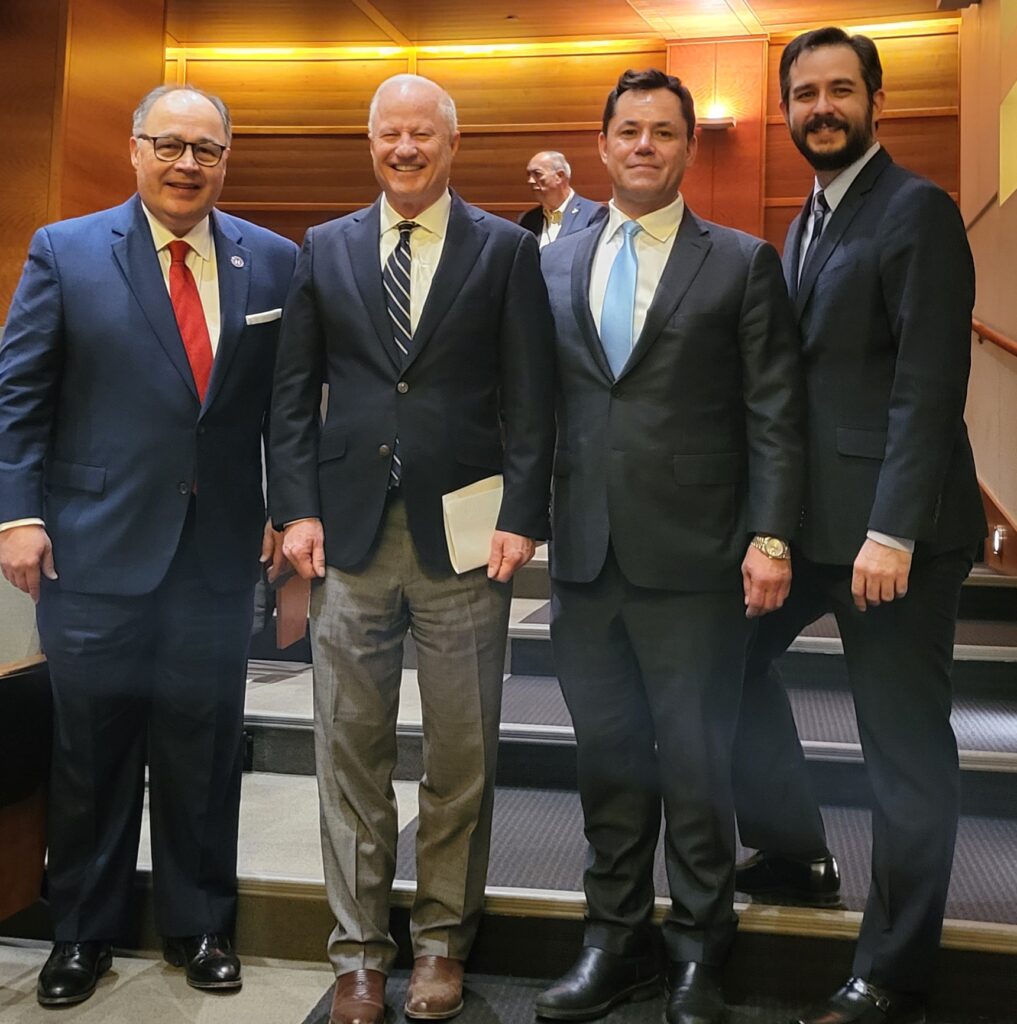
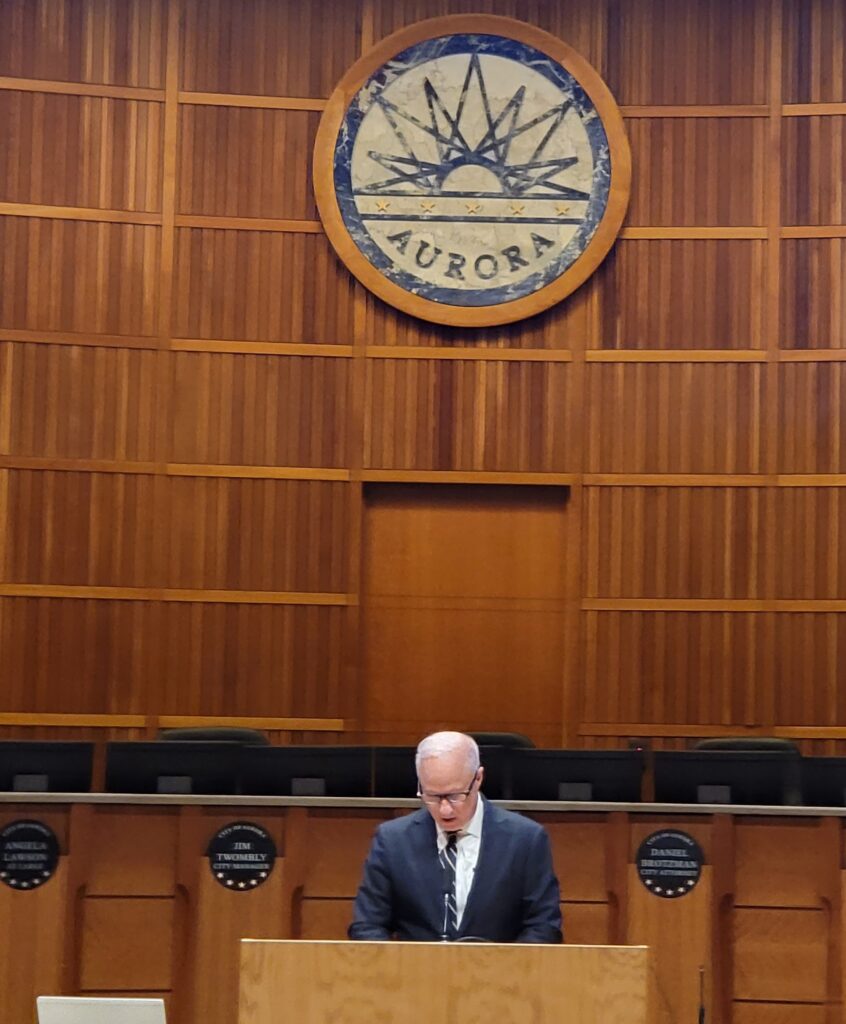
NAHP celebrated 40 years in the business. Founded in 1982, NAHP represents hundreds of Hispanic (Bilingual and Spanish only publications) throughout the country. The NAHP Convention was held in Denver November 16 – 19, hosted by the City of Aurora and attended by many members and colleagues. La Voz Bilingue soon to be LaVozColorado won the GOLD award for Outstanding Bilingual Publication in 2022.
David Conde, Senior Consultant for International Programs
I have heard people wonder about the fact that the Republican Party that has been tagged as racists in some circles is supporting a Black candidate for the United States Senate in the Georgia Runoff. I find it more intriguing that the two African American candidates that are running come from two different historical constructs.
Ralph Warnock comes from the confines of Martin Luther King Jr. Ebenezer Baptist Church, a major symbol of the Civil Rights Movement and Herschel Walker was one of the greatest stars in college and professional football. One (Warnock) represents an effort to separate from life under the shadow of White America and the other (Walker) doing just the opposite.
Racism and antisemitism in America have two different points of departure. Racism has been an undertone of life in this country that has emerged as a powerful force because of the fear on the part of a White superstructure, becoming a minority. The United States is in a century of change that predicts a greater participation of what used to be minorities. This change is creating fear among many that see themselves as part of the ruling class.
Donald Trump, the leader of the Republican Party has even gone as far as to call for suspension or even abolishing Constitutional rule in order to regain the presidency and maintain power for himself and his racial following. In their minds, majority rule is only good when it is represented by them.
Antisemitism goes back to the time of Moses and before. The Jewish community was persecuted from the very beginning because of their faith in the One God. Their belief system was a major difference with their contempo- raries and led to a history of war and suffering. The Old Testament is full of stories of a religion that functioned as the structure for life and law for its people.
They lost their independence many times and suffered because, even in captivity, their faith stayed strong. The Roman Empire, for example, had the Jewish community on a short leash because of their beliefs and rebellious nature.
Antisemitic feeling came in waves as Jews were targeted as part of historical events such as the Crusades that saw Christians fight to take and hold the Holy Land. Their plight eventually came to a head during the Hitler era and the Holocaust where so many millions died at the hands of Nazis. As a Child, I was taught to honor the Jews because they were the people Chosen first by God. Perhaps there is resentment and discontent on the part of many because of this. One of the Chosen, Jesus Christ, came to create a new covenant with the Jewish community and was refused. Perhaps there is unspoken dissatisfaction with the fact that Christianity was a second-hand gift to the gentiles.
In any case, it is the White racists that march to the phrase “We will not be replaced,” that can speak to both Jews that will not go away and people of color that are emerging in our national leadership. America is changing in this regard and it is creating turmoil.
In this time of great turbulence for our country, it is important to make sure of our priorities. The danger to our democracy is very real and that has to be our number one issue.
Racism and antisemitism can only be addressed in the context of the freedom that has blessed our history. We have been there before and we will endeavor to persevere.
The views expressed by David Conde are not necessarily the views of la Voz bilingüe. Comments and responses may be directed to news@lavozcolorado.com.
With the arrival of winter, many of us are excited about the holidays, gathering with friends and family, and snow. On the flip side, it means we’re using more electricity to keep our homes warm and bright as the weather turns colder and the days get shorter.
Did you know energy usage is the largest portion of your energy bill and temperature is one of the biggest factors to affect increased usage? There are several behavior changes homeowners can make to improve their home’s energy efficiency this winter, creating energy savings and providing peace of mind.
Using less energy to save on monthly electricity bills doesn’t have to be hard or expensive. Here are five energy conservation tips from Black Hills Energy that are completely free — and in fact will help manage monthly energy bills this winter:
Lower your thermostat: Set the thermostat to 68°F while you’re awake — or at least for eight hours a day — and even lower while you sleep, if you can manage. According to the Department of Energy, this can save as much as 10 percent a year on heating and cooling costs. If your home will be empty during the day, simply turn the thermostat down when you leave and turn it up when you return. If you do work from home, throw on a sweater or sweatshirt to stay warm while the thermostat is turned down a bit.
Declutter around the furnace: Sometimes, when our furnace hasn’t run in a few months, we inadvertently store things around it. As furnace usage heats up in the winter — quite literally! — it’s important the areas around the furnace are cleared, especially of flammable items like cardboard boxes, wood or cleaning solvents. Clutter around the furnace restricts air flow, which makes the furnace work harder, can result in damage to the furnace and can pose a safety risk to the home. Bonus tip? Make sure nothing is blocking air vents to create uninterrupted airflow from the furnace through to rooms, making your heating system as efficient as possible.
Make your curtains work smarter: Creating privacy isn’t the only functional use for curtains! Use them to leverage the natural heat of the sun to warm your house during the day by opening curtains and blinds on all south-facing windows. This allows you to turn down the thermostat — and turn off the lights, for extra energy savings! Then, close your drapes or blinds at night, to help insulate your home from any energy leaking from windows.
Air dry dishes: The heated drying cycle, which usually takes about 30 minutes, is the inefficient part of the dishwashing machine, as the air blast- ing through the dishwasher to remove moisture requires energy to heat it up. Air drying dishes gets the same results, so try cracking the dishwasher open after the rinse cycle to let the heat already pumping through your house dry the dishes. Many new dishwashers have an air dry option, which doesn’t use heated air, reducing energy use by at least 15 percent according to some estimates.
Turn down your water heater: According to the U.S. Department of Energy, water heaters only need to be set at 120°F, as opposed to the 140°F many manufacturers set them at. When set at the higher temperature, residents can waste anywhere from $36 to $61 per year in standby heat loss, or heat lost from the water heater into surrounding areas. Combined with lower water temperatures used when washing clothes, showering and dishwash- ing, customers could save over $400 by turning down the water heater. An additional benefit of turning down the water heater? It slows mineral buildup and corrosion in the heater and pipes.
It’s not every day companies encourage customers to buy less of what they sell, but that’s exactly what Black Hills Energy is doing. With tips like the above, and more available at blackhillsenergy.com/teamready, we’re committed to partnering with our customers to help them use less energy through conservation and energy efficiency projects, so they can better manage their bills or choose options, like budget billing, to help manage energy costs. Plus, Black Hills Energy has rebates available for programmable ther- mostats or furnace upgrades for customers who are able to invest a little to make their home more energy efficient this winter.
Customers who want to smooth out their energy bills by paying the same amount every month can enroll in Budget Billing, a free payment plan that averages the amount owed each month. This budget option supports customers looking to avoid the seasonal increases in bills that result during extreme weather by averaging out their usage over a 12-month period. Customers who need help paying their bills can get more information on Colorado energy assistance programs from Energy Outreach Colorado at https://www.energyoutreach.org/or by phone at 1.866.HEAT.HELP (1.866.432.8435).
Eric Ramirez-Naranjo is a high school senior at Denver East High School who currently holds a 4.353 GPA. In addition to being a full-time translator for his parents, and his dad’s business, Ramirez- Naranjo makes school and school activities a priority. Academic achievements include: Principals Honor Roll for 3 years, awarded the Seal of Biliteracy in Spanish, Seal of Diversity, Equity, and Inclusion candidate, qualified 3 years for State Champs under Business Communications category (FBLA). Ramirez-Naranjo belongs to Future Business Leaders of America (FBLA), President, Queer Student Alliance (QSA), President, Latino Students United (LSU), Media Manager, A Queer Endeavor–Research–Documentary and student researcher for Doing Intersectional Research Together (DIRT).
Favorite Book: Aristotle and Dante Discover the Secrets of the Universe – Benjamin Alire Sáenz
Favorite Movie: Paris is Burning
Favorite Subject: Business Communications
Favorite Music: Reggaeton, Bad Bunny
Future Career: International Business – Marketing Manager
Hero: Sisters, Myra Ramirez, Brenda Duran
Favorite Hobby: Helping my mom make mole in our molcajete.
Favorite Social Media Follow: Bretman Rock
Words to live by: “If you wanted it, you would go for it.” – EricRamirez-Naranjo
Community Involvement: LGBTQ+ Research, Politics Resources; Ramirez-Naranjo volunteers for A Queer Endeavor and Doing Intersectional Research Together (Both with University of Colorado – Boulder)
Why is Community involvement important? “Community involvement is important because it is an opportunity to create change and to be a part of that change. It’s a gateway of communication for those who connect with you, look like you, or identify with you. It helps bring awareness to issues such as LGBTQ+ harassment, violence, and discrimination in school systems that may be swept under the rug.”
If I could improve the world I would…
“Gay It Forward – helping current and future queer generations have greater support and resources.”
College of choice: “New York University, University of Colorado – Boulder
President Joe Biden appointed the following individuals to serve in key regional leadership roles at the United States Department of Agriculture (USDA): Ginger Sykes Torres, USDA State Executive Director, Farm Service Agency, Arizona William Bunce, USDA State Executive Director, Farm Service Agency, Wyoming Maximiliano J. Trujillo, USDA State Director, Rural Development, Puerto Rico. These regional appointees will be critical to the President’s efforts to rebuild communities most impacted by the pandemic, the economic recovery, and climate change.
Colorado Governor
The Polis-Primavera administration and the Colorado Department of Health Care Policy & Financing (Department) submitted Colorado’s proposal to the U.S. Food and Drug Administration (FDA) to import prescription drugs from Canada. The submission is the first step in requesting federal approval to operate Colorado’s Canadian Drug Importation Program, which aims to save Colorado consumers and employers an average of 65 percent on imported medications. The Department’s recent analysis shows that importation could result in $53 to $88 million in savings annually, depending on market adoption.
Denver Mayor
Mayor Hancock, Governor Polis, Federal Highway Administration Acting Administrator Stephanie Pollack and community partners this week celebrated the opening of a brand new park in Elyria-Swansea. The completion of the park, which is Colorado’s first ever highway cover park, represents one of the final touches on the Central 70 project and provides much-needed community green space – all while reconnecting the Elyria-Swansea neighborhoods.
Pro-democracy protesters jailed in Chad – More than 260 pro-democracy protesters have been handed jail terms in Chad after being arrested in October. Defense lawyers boycotted the court proceedings, saying the trial itself wasn’t legal. Around 50 people died in October during nationwide pro-democracy protests, according to Chad officials. Rights groups said at least 100 people were killed by Chad security.
World’s largest telescope under construction – Construction on the world’s largest radio telescope began on Monday and is expected to be completed in 2028. The Square Kilometre Array will split across South Africa and Australia and will address questions in astrophysics. The telescope will work to trace the full history of hydrogen and will be built in areas already used for radio astronomy.
Asia
Last known Tasmanian tiger remains found – The remains of the last known Tasmanian tiger were found in the cupboard of an Australian museum. The remains were lost for 85 years after the animal died in captivity at a zoo in 1936. The tiger’s body was given to a local museum that lost track of the remains. The remains were preserved but not properly catalogued.
Indonesia volcano causes mass evacuations – Mount Semeru volcano erupted on Sunday in Indonesia, causing nearly 2,000 people to evacuate. Volcan ash mixed with rain fell on nearby villages and a bridge being rebuilt was badly damaged, but no injuries were reported. After the eruption, Japan issued a tsunami warning for southern islands, but meteorologists said they did not notice any tidal changes. Mount Semeru last erupted in 2021 and killed at least 50 people.
Europe
Eighth wave of Russian missiles target Ukraine – For the eight time in eight weeks, Russia fired missiles across Ukraine. The attack left some residents without water while previous attacks hit the country’s energy grid, leaving millions without power. Western leaders condemned the attacks was left without power after the recent attacks. the Kyiv area was left without power after the recent attacks.
Dead seals found along Russian coast – Around 2,500 seals were found dead on the Caspian Sea coast in southern Russia. There is no sign that the animals died because of violence, and it is believed they died two weeks before their bodies were discovered. Experts collected samples from the seals and plan to test the samples to determine what caused their deaths. Caspian seals are endangered on the International Union for Conservation of Nature red list.
Latin America
El Salvador targets gangs in crackdown – El Salvador deployed around 10,000 troops around the city of Soyapango as part of a crackdown on gangs. Roads leading to the city were blocked, and troops are searching houses of potential gang members. So far, 12 people have been arrested. The city is known as a hub for gang activity and is one of the country’s largest cities. Homicide rates have been high in El Salvador. In March, there were 62 murders in a single day in the country.
Peace talks progressing between Colombia/rebels – Colombia President Gustavo Petro said peace talks between the country’s government and the leftwing National Liberation Army rebel group reached a first point of agreement. The two sides have been in conflict for nearly 60 years. Both sides agreed that indigenous people displaced by the conflict should be able to return to their lands in the Western Antioquia province. No ceasefire has been reached in the peace talks yet.
North America
Ticketmaster sued over Taylor Swift ticket sales – A lawsuit filed by 26 Taylor Swift fans against Ticketmaster accuses the company of fraud, price-fixing and anti-trust violations. Last month, the sale of Swift tour tickets on Ticketmaster was plagued with issues. Ticketmaster admitted that bot attacks and unprecedented demand caused its website to crash repeatedly. The lawsuit is seeking $2,500 for each violation which could amount to millions of dollars.
Alex Jones files for bankruptcy
Conspiracy theorist Alex Jones filed for personal bankruptcy after being ordered to pay nearly $1.5 billion for falsely claiming that the 2012 Sandy Hook school shooting was a hoax. The filing temporarily halts proceedings in the case. It could also delay further payments while the case goes through bankruptcy courts. Jones will appear in a third defamation trial over the Sandy Hook shooting later this year.
The story played out like a Hallmark movie that missed the mark. But depending on how it was viewed, it didn’t miss the mark by a little, it missed it by a fill-in-the-blank distance—somewhere in between a mile and a month. The DPS decision to close ten elementary and middle schools, then five, then two, last week was reduced to none. No DPS schools will be clos- ing but as is said in the advertising world, watch this space.
The original decision to close ten schools was based on both underutilization of the facilities—low enrollments—and fiscal challenges. The original list, said Denver Public Schools, included those with fewer than 215 students or larger schools with student bodies of less than 275. There was also red ink to consider said the district. Keeping the schools open would exacerbate a projected $23.5 million budget deficit.
When DPS first announced its plan in late October, Superintendent Alex Marrero said the closures would “right- size” the school district and more thoughtfully address personnel issues, staffing. It didn’t take long for community members, DPS school board members and others to react. While Marrero received some support, there was also a chorus of objections from others.
Former President and CEO of the DPS Foundation Veronica Figoli stood firmly with the superintendent and his decision on school closures. “We knew it was going to happen,” she said. Figoli said she understood the emotional reaction by parents and community members. But the reality of changing demographics, declining enrollments and budgetary realities gave Marrero few options. “As hard as it is,” she said, “leadership has to have the courage to look at a parent in the eye and say, ‘We cannot continue to do this.’”
The twin shadows of practicality and fiscal reality were echoed by Marrero. “As explained during the November 3 Board of Education meeting,” he said, “DPS allocates $7.5 million annually to subsidize small school. Five million of those dollars support the 10 small schools included in the recommendation. This means we take $5 million each year from other DPS schools, students and programs to subsidize these small schools.”
But community reaction was loud and could not be ignored. Parents did not want their children to have to change schools, citing everything from simple disruption to the emotional toll it might have on the young minds.
Milo Marquez, a member of the Latino Education Coalition, said DPS’s decision was done with little dialogue with those who would be most impacted. “Throughout this two-year process, the district remained committed to engaging with impacted school communities—not only to gather feedback, but also to share information on how unification efforts will benefit all students.” But it, said Marquez, didn’t live up to its word.
While DPS, parents and various voices in the com- munity were wrestling with this announcement, Jefferson County—the state’s second largest school district—was making a firm decision to close 16 elementary schools effective at school year’s end. One, more than any other variable, made its decision irrevocable: declining enrollment. It was also costing too much to keep open schools serving too few students. Student affected will be integrated into other nearby schools or parents of these students will make other decisions on their children’s’ education.
The announced Jeffco closures will be phased in over the next two years. All tolled, the closures will affect approxi- mately 2,400 children and slightly more than 400 staff. Despite a population boom over the last twenty years that, at one time, had nearly 100,000 students enrolled, current figures show only 69,000 students taking classes.
The weeks long tug-of-war over school closings between DPS and the school board, said one community member, demonstrated a “dysfunctional” relationship between the two bodies. Rosemary Rodriguez, a former school board member and Denver City Council president said much of the public acrimony might have been avoided with better communication between the two sides. “The rollout of these recommendations has to be done very carefully,” she said.
Denver’s and Jefferson County’s reality of changing demographics and declining enrollment is not unique in the metro area. In 2018, Aurora closed eight schools and in 2021 announced it was closing two more. And while there has been no recent announcement that it may do the same in the future with other schools, the city—which is now actually larger than the city of Cincinnati—may add more schools to those now shuttered for daily classes if current trends continue.
Aurora is one city with two distinct populations. On one side, the west side, is where more of its lower income population resides, including pockets of immigrant neighborhoods. Its school populations are static or slightly declining. The east side of the town, where incomes are significantly higher, is showing a dynamic growth curve where new communities and schools are popping up.
The patterns ongoing across the metro area and causing the state’s largest school districts to step back and reconsider the ways of spending money does not appear to be just today’s reality. It may simply be a precursor to what lies ahead.
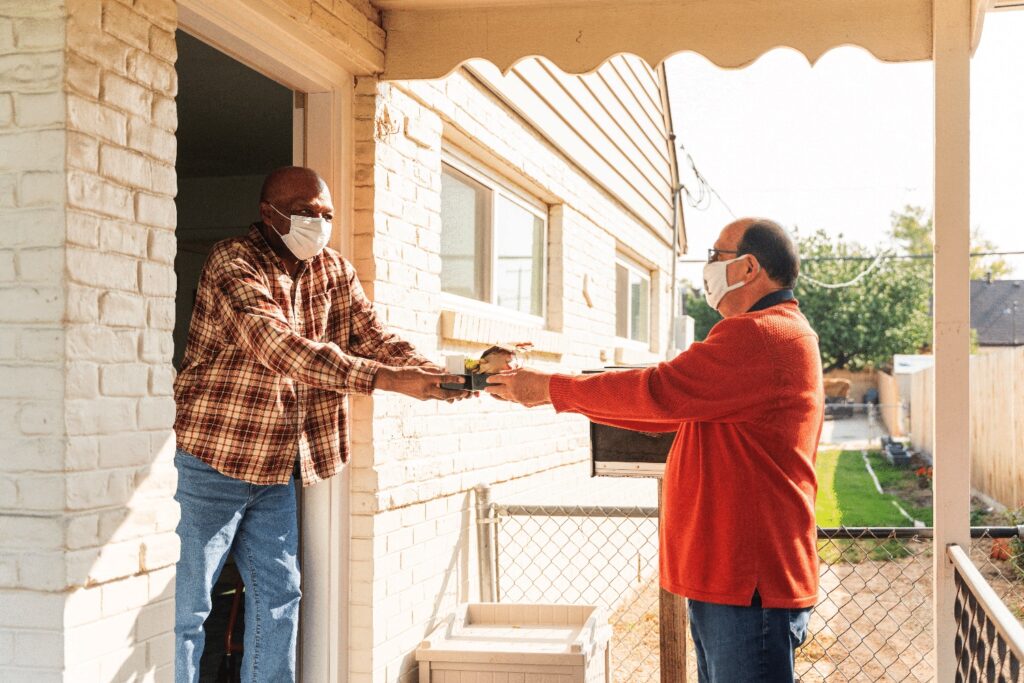
It is easy to overlook the little things in life — like not being socially isolated, being able to drive to a grocery store or other necessary places like doctor appointments, having the ability to be mobile and take care of your driveway when it snows, and other day to day tasks.
Photo courtesy: Volunteers of America
Around 13.8 million older adults, or 28 percent of older adults, in the United States live alone, according to a report by the Administration for Community Living’s Administration on Aging of the U.S. Department of Health and Human Services. People who are alone due to an unexpected event like a death, separation from family or friends, loss of mobility, lack of transportation, and retirement are at risk of social isolation and loneliness, according to the National Institutes of Health.
Social isolation and loneliness are linked to higher risks for physical and mental conditions such as high blood pressure, heart disease, obesity, a weakened immune system, anxiety, depression, cognitive decline, Alzheimer’s disease, and death, the National Institutes of Health says.
Nobody likes to be lonely, especially around this time of year as the calendar turns and the holidays approach. Thankfully, La Voz has plenty of ideas this holiday season to make a difference in an older adult’s life. Consider helping vulnerable older adults around their house, with food, and more this holiday season with these ideas from our staff.
Volunteer for Meals on Wheels
Many home-bound seniors rely on Volunteers of America’s Meals on Wheels Program which serves Adams, Arapahoe, Clear Creek, Denver, Douglas, Gilpin, Jefferson and Larimer counties. The program utilizes volunteers to deliver meals to home-bound people. Meals include an entrée and accompaniments like vegetables, fruits, breads and milk.
The City of Denver’s Agency of Human Rights and Community Partnerships offers its Snow Angels program to assist residents in Denver in need of assistance shoveling their sidewalks during the winter.
This program is specifically for Denver City and County residents and is volunteer driven. If you live in Denver, you can work with your local registered neighborhood organization to get involved with the program and other city-wide initiatives. You can reach the program by contacting 720-913-SNOW (7669) or by emailing snowangels@denvergov.org.
Volunteer at a senior living community
If you enjoy spending time with older adults, you may want to consider volunteering at a senior living community. For example, Golden West, a senior living community in Boulder, offers volunteer opportunities for people in Boulder. Volunteers are matched with jobs based on their skills and interests and are mostly required to contribute one to three hours of volunteering per week. Those who are interested in volunteering at Golden West can learn more at https://www. gwboulder.org/volunteer-at-golden-west-senior-living/.
If you are interested in volunteering at a senior living community, we suggest exploring opportunities at a community nearest to you.
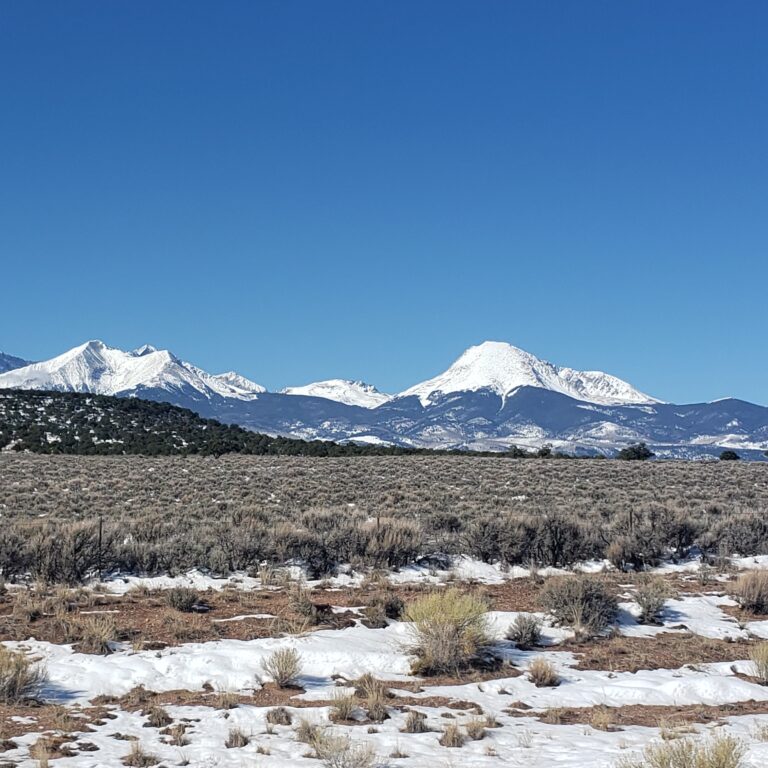
Time and tradition are on a collision course in, of all places, Colorado’s San Luis Valley. But if the families of the Valley have a say in the matter, traditions that have been a cherished part of life there for nearly two centuries, will last, at least for a while longer.
Photo courtesy: townofsanluis.org
As the Christmas season draws close, Valley resident Dana Maestas said locals—young and old—will begin looking forward to one of the Valley’s oldest religious traditions, Mis Christmas. It’s a religious ritual that began here decades before Colorado gained statehood. “Mis Christmas,” said Maestas, “usually starts nine nights before Christmas ending on Christmas Eve.”
While each Valley resident has their own individual ways of observing the holiday, there are several collective traditions that have been part of Valley life going back well before Colorado even gained statehood. Holiday customs, a blending of religious and fraternal observances, include Mis Christmas and La Posada.
While it has dimmed somewhat in recent years, Mis Christmas originally involved a collection of friends and relatives making stops in each of the villages that skirt the town of San Luis. They would do this for the nine nights preceding Christmas. Each of the villages had a luminaria, “a small bonfire,” Maestas called it, where people would sit around and tell stories or simply have conversations. Paths would also be adorned with farolitos, small paper bags filled with sand and a lighted candle.
While she could not say with certainty, Maestas guessed that the nine night ritual in the Valley might have a tangential connection to what the Jews of New Mexico did in celebrating the eight nights of Hanukkah.
La Posada, a long and cherished staple of the holidays in South and Central America and Mexico, came here as the migration north from Mexico and, later, southern Colorado began. The tradition goes back to the late 16th Century and originally began as a means of better telling the story of Joseph and Mary as they made their trek in search of lodging and the birth of Jesus. Now, as it was then, the procession includes song and prayer. It will, once again, be replayed in the Valley.
Another Valley tradition, said Maestas, whose family has been a part of these customs for generations, takes place on Christmas morning when “The older kids would dress as abuelitos (old men) wearing scary masks and take young kids to each home” where they would offer oremos or prayers. “The people there would invite them in and give them treats,” today, usually popcorn balls or apples. Sadly, said Maestas, “they don’t do it as much now.”
The newest holiday touch is the San Luis Manito Christmas, said Maestas. Begun five years ago, it’s the town’s Christmas for younger children. Main Street is decorated with farolitos, and everyone is invited to stay for the Christmas tree lighting. The city council also provides small toys, gift bags and everyone is served hot chocolate. This year, residents will be asked to fill out a survey that will help determine what a future community center will be like. The week’s activities are topped off by a Saturday night Christmas dinner and dance at the Cultural Center. Admission is free.
The timeline for these religious and cultural customs, said the Valley resident, began with the early 19th century arrival of Gregoria Martin and those few families who made the journey north from New Mexico. Martin settled in the village of San Francisco, one of the ten tiny com- munities in the shadow of San Luis. Others planted roots in the villages of San Acacio, San Isidro, Los Vallejos, San Pablo, San Pedro, Garcia and Chama. They made up the foundation of Colorado’s earliest farmers and ranchers. Of course, the lands were also occupied by indigenous people who had arrived centuries earlier.
The diminution of the religious customs celebrated in the Valley is the same one facing the rest of the nation. Very simply, fewer and fewer people are participating in church and religion in general. “I spoke to a friend who now lives in Lone Tree,” said Maestas, “who said ‘I don’t go to church very often.’” It’s a reality that people once raised in the church, have slowly been moving away or eschewing it altogether.
A 2021 Gallup Poll said that the plunge has been precipitous. Between 1953 and 1967, 98 percent of those polled said they believed in God. Last year, Gallup said that only 81 percent professed a belief in God. Also contribut- ing to the dilution in participation in these customs is the simple fact that younger people, including those in the Valley, are leaving for college or for better career opportu- nities. There is also one other thing, said Maestas.
There was a time when each of the villages had its own church—usually Catholic. That no longer is the case. Today one Catholic church serves the Valley, and it is in the town of San Luis. Another variable in this equation is leadership. Not all priests, especially recently, said Maestas, have had the same enthusiasm for the customs as their predecessors. Not every priest, she said, is a Father Pat.
Father Pat was a long-serving San Luis priest and ardent supporter of Christmas religious traditions. He was foundational in the lives of many Valley residents but was reassigned several years ago.
Still, despite the challenges of a new century, Maestas said she believes the traditions of the Valley are important.
“They are just part of the culture and who you are…it’s like language. You have to keep them alive.”