





Home Blog Page 176

Triple threat of virus may bring back ‘winter of discontent’

0

There are dark and foreboding storm clouds gathering. The weather they are bringing, in this case a triple threat of virus, has already landed in a number of states and it may only be a matter of time before they settle across Colorado.

The storm is a cauldron of viruses that has already created health emergencies that have hop- scotched across the country. This trifecta is COVID, influenza and what doctors are calling RSV. RSV is a virus that mimics symptoms of both cold and flu and, in some cases, can be deadly especially in infants and older people. The Centers for Disease Control says no one is immune.

“It’s too early to see,” said Sarah Joseph, Public Information Officer of the Pueblo Department of Public Health and Environment. “We are watching for a perfect storm for RSV, covid and flu that could result in a surge on local hospitals.” But because departments like Joseph’s and others around the state don’t routinely receive information on doctor or emergency room visits but only on hospitalizations no hard numbers are available. But the numbers they are receiving in regions already impacted by these microscopic agents show the state and country may be in for yet another winter of discontent.

The CDC reports that positivity rates for one or more of the viruses are as high as 10 percent and that as much as 75 percent of the country’s 40,000 pediatric beds are currently full. While there has been no official proclama- tion that these viruses have landed on our state, the Colorado Department of Public Health and Environment “is monitoring an increase in hospitalizations and outbreaks for Respiratory Syncytial Virus.” The department’s news release said, “cases are occurring earlier than usual in the respiratory illness season.”

Health officials say bed capacity across the country averages 70 percent. In Arizona, Idaho and Utah, states to the west of Colorado, and midwestern states like Minnesota, Missouri, Nebraska, North Dakota and Oklahoma it is even higher with all reporting 80 percent capacity. In Delaware Maine, Rhode Island, Tennessee and Texas, capacity has reached 90 percent.

While not everyone will contract one or more of these bugs, vaccinations will certainly help avoid them, say health experts. Everyone, as the trends are showing right now, is a potential target.

State health also says the virus “spreads by inhaling or having contact with virus-containing droplets (typically through the mouth, nose, or eyes) produced by a person with RSV infection when talking, coughing, and sneezing.” Most people contracting RSV will experience nothing more than cold symptoms. But infants can experience serious health issues that include fever, loss of appetite and dif- ficulty breathing.”

This latest viral threat comes on the heels of the worst pandemic in more than a century. COVID-19 killed more than a million Americans. In Colorado, more than 13,600 deaths were attributed to the virus, but more than 1.6 million cases were officially counted. Fortunately, health officials are not expecting anywhere near CCOVID’s numbers despite the looming possibility of a serious winter health season. The numbers, so far, bear this out. That, however, is no reason, they say, to drop your guard.

“Hospital reports indicate that the increase in RSV cases is putting a strain on the pediatric hospital system,” said state health. All agencies are coordinating across all hospitals “to protect hospital capacity.” In the metro area, state health has county 292 RSV-associated hospitalizations across the five-county region, which it says is “more than double the number from the same timeframe in 2021.”

The best advice for minimizing one’s chances of becoming infected is the same advice as when COVID was ravaging the state and nation: increase handwashing, disinfect surfaces and areas and vaccination. Unfortunately, said Pueblo’s Joseph, while getting a flu shot is sound advice, it still takes approximately two weeks for it to gain traction against infection. Also, for the present, there is no vaccine for RSV.

The good news is that getting a flu shot or catching up with the available COVID shots will lower your risk of being admitted to a hospital with severe symptoms. Also, a 2018 CDC-supported study said that a flu shot for adults reduced the risk of being admitted to an ICU with the flu by 82 percent.

State health recommends the best way to prevent illness from one or more of these viruses is to be vigilant and practice good basic health routines: Stay home when you’re sick; encourage children to cover their nose and mouth with a tissue or upper arm when coughing or sneezing; keep surfaces clean; avoid sharing cups and eating utensils and touching your face with unwashed hands; if your child shows early signs of respiratory distress, consider taking them to their primary care physician for evaluation.

We are in the first days of November and the coldest months lie ahead. That means we’re at the starting point of what could be a long winter health wise and with little to no idea of when the peak of virus season will occur. But some modeling is already predicting that there will be some spikes before year’s end. Other research also predicts that a new wave may follow in the early months of 2023.

Health officials says the best defense against becoming a target of any respiratory virus is caution and common sense. COVID, after all, is still claiming an estimated 350 lives each week. Doctors say masks, ubiquitous during COVID, are still a good idea. Keep them handy, especially in crowded areas.
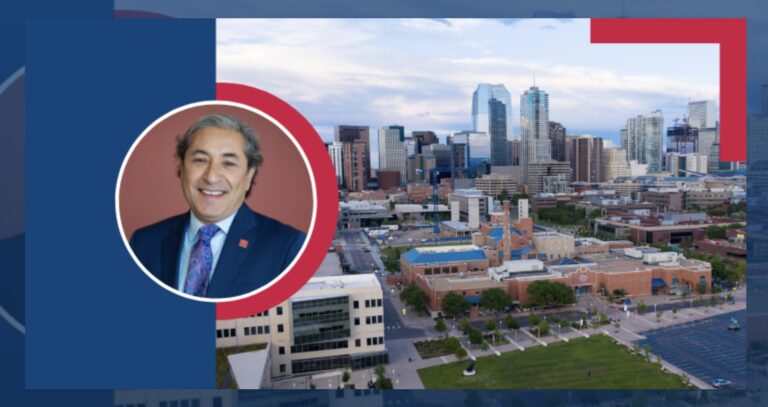
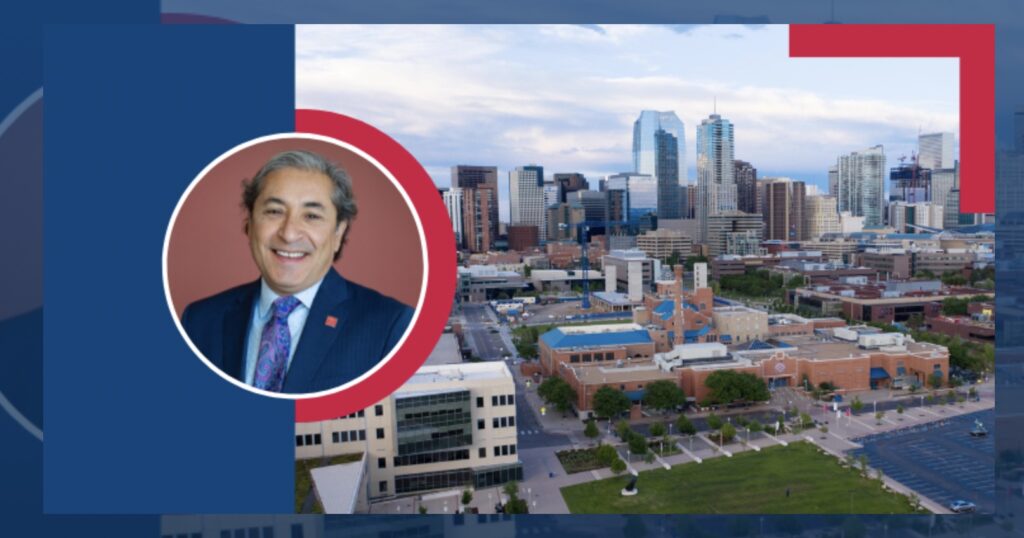
James Mejía named Chief Strategy officer at MSU of Denver

James Mejía, who has worked with leaders like former Denver Mayors John Hickenlooper and Wellington Webb, is set to take on another role in Denver — this time at Metropolitan State University of Denver.

Photo courtesy: MSU Denver

The university announced that Mejía will be its new Chief Strategy Officer — a role that will see him coordinate implementation of its strategic plan and support university leadership in assessing programs, partnerships and projects by guiding strategic, inclusive and data-informed decision-making processes.

Mejía worked in Webb’s Cabinet as a Manager of the City’s Department of Parks and Recreation, Deputy Director of the Mayor’s Office of Economic Development and International Trade, and Executive Director for the Agency for Human Rights and Community Relations. He was also president and COO of the Hispanic Chamber of Commerce and finished third in the 2011 Denver mayoral election — Denver’s closest mayoral race in history.

Mejía made history for the Denver Public Schools Board of Education when he became the first Latino elected citywide to serve a four-year role as at-large member for the board. In 2009, he was also named Community Leader of the Year by 9News and the Denver Chamber Leadership Foundation.

Through the German Marshall Fund, Mejía was named an American Marshall Memorial Fellow and was invited multiple times to participate in the International Career Advancement Program at the Aspen Institute.

Mejía graduated from East High School in Denver and attended the University of Notre Dame where he earned a bachelor’s degree in business administration. Following his time at Notre Dame, Mejía earned a master’s degree in business administration from Arizona State University where he was also a member of the Beta Gamma Sigma National Honor Society. At Princeton University, he earned a master’s degree in public policy where he studied policy issues at the municipal, state and federal levels.

Other ventures of Mejía include time serving as the founding president and CEO of the Denver Preschool Program and project manager for the $425 million bond project to build the Denver Justice Center.

Outside of Metropolitan State University of Denver, Mejía is the founder and CEO of Mejía & Associates. Mejía is the ninth of 13 children, and his parents, David and Ophelia Mejía, were educators. He has three daughters and enjoys ice hockey and tennis.

In a news story published in Metropolitan State University of Denver’s “Early Bird” newsletter, Mejía said he is excited to work with the university to implement its strategic plan.

One of the strategic-plan pillars that especially reso- nates with me is the first: Student Access, Service and Achievement. I think of this goal as central to the framework of why we are all at MSU Denver. To “attract, prepare and graduate students equipped to succeed in the 21st century” is critical in creating a University atmosphere where students, faculty and staff want to be — an atmosphere that helps create the best place in the state to study and work,” Mejía said in the newsletter story.

For a few years Mejia served as the top journalist for La Voz providing front page stories about major community issues. La Voz Publisher, Pauline Rivera adds, “Mejia is a brilliant individual whose experience and professionalism is a great addition to MSU.”

Futuristic possibilities at Transportation Technology Center

Photo courtesy: Ruben Pena

Just northeast of Pueblo on the sprawling, windswept plains of southeastern Colorado sits a facility that may well portend the future of ground transportation in America, along with a few other things. Amazingly, outside of the city, it may well be one of the best kept secrets in the state or, for that matter, the nation. The facility is the U.S. government’s Transportation Technology Center operated by the Federal Railroad Administration and this year it turns fifty years old.

For the past half century, the facility, now operated by ENSCO, a Virginia-based company that works in rail technology, avionics, national security and aerospace, has played an enormous role in the evolution of freight and passenger train safety and technology, said facility director Ruben Peña. A very practical and now everyday example of what began at the Pueblo testing site is something that is used every day by east coast commuters, the high-speed Acela train that transports passengers from Washington to New York City. The country’s only high-speed ground transportation people mover, which can reach speeds of 150 mph, was fine-tuned on the TTC’s 52 miles of track.

The facility’s mission began with relatively modest goals. Along with testing then futuristic rail concepts, it also did other things, including running tests that included staging collisions between trains and automobiles, testing the safety glass on trains and setting speed records for concept trains. One such concept train topped 255 miles per hour at the facility, still an American record. But despite this accomplishment, the government felt that the center was being underutilized and for a time considered closing it. Instead, its mission expanded.

Its latest operator, ENSCO, was awarded the $571 million dollar contract from the Department of Transportation in March 2021. The contract runs through 2041.

The facility which spans more than 50 square miles and, astonishingly, is larger in area than the entire city of Pueblo. It is habitat to grab bag of high desert wildlife. Prong-horn antelope, mule deer and bobcats are regular parts of the landscape. The cranes, dozers and locomotives seem not to bother their four-legged neighbors whose reaction is more often a lingering stare than a jump-start and sprint. So abundant in pronghorn is the region, which incidentally is the world’s second fastest land animal, it is often called ‘Antelope Alley.’

The plan for TTC, said Venezuelan expat Peña, is to fine tune the mission, test and, ideally, introduce new methods of locomotion across the country. “Right now, we’re working with companies that are advancing technology at a fast rate,” he said. Already certain car models come with extras that may soon also become standard on mega-ton rail vehicles.

“In less than five years,” he predicted, “vehicles will be talking to the (crossing) lights.” Technology will be built into cars and trucks that “will tell the car to stop until the train goes by.” It won’t eliminate all rail crossing collisions but may lead to a significant reduction in this still not uncommon accident.

Also, one day not too far into the future, Peña says technology tested and developed at the transportation testing center will usher the way for autonomous trains, trains with no human engineers. He also discussed “intramodal transportation,” a system where a variety of modes of transportation are employed to move people and freight. One possibility, he said, is “a train will take an 18-wheeler, load it onto a train where the driver can sleep comfortably, and goods and services will be moved.”

One intriguing project at the center, said Peña, is a “hydrogen-fueled train,” a train that that would become the new standard in a move toward a more environmentally friendly mode. Unlike its predecessors, the train would be powered by hydrogen. There would be zero emissions and the only thing emitted as exhaust would be steam and condensed water. “Emerging technology,” is how Peña describes it.

The 52-year-old Peña left Venezuela as a teenager with the dream of becoming a professional baseball player. His preferred positions were second base and pitcher, one, he said, who “threw a lot of junk,” a baseball term for a variety of moving pitches. But the pitch college mentors made to him and the one he took seriously made him drop the idea of starring on the diamond to one of shining in the classroom. Peña went on to earn a couple of engineering degrees that have allowed him to work in his adopted discipline in several U.S. states and a couple of foreign countries.

Today, Peña works with Pueblo Community College and CSU-Pueblo recruiting students for internships at the TCC and perhaps, later, engineering careers on these great sweeping plains. Along with recruiting young minds from Pueblo’s two colleges, he also points to the nearby and soon to be skeleton-staffed Pueblo Depot Activity, formerly known as the Pueblo Army Depot, for new blood at TCC. Beyond building a TCC workforce for the future, he also wants to make sure that the center’s rank and file, everyone from carpenters to engineers, is as diverse as possible. TCC, he said, is in a hiring mode and may triple its employee headcount.

Perhaps, one day, Peña says a train designed to handle traffic from Denver to the ski resorts or one to move passengers from Fort Collins to Pueblo will be developed by the teams at TCC. It’s not out of the question. But he wonders what it will take to retool the thinking that has handcuffed Americans to their cars. “Everybody here drives a two-thousand-pound car to move a 180-pound person,” he joked. It’s cheap and convenient to drive, he said. Until people “require it…there will be no request.”

To learn more about the Transportation Technology Center, go to Transportation Technology Center, Inc. (ttci.tech).

CDPHE to launch newly designed, easier to navigate COVID-19 data dashboard

0

New dashboard will display data trends weekly

On Wednesday, November 2, the Colorado Department of Public Health and Environment will update its COVID-19 data dashboard, transitioning the data visualizations from daily to weekly, streamlining the design, and adding new features. The overhauled landing page is easier to read and navigate, and the transition to weekly updates (on Wednesdays) is aligned with Centers for Disease Control and Prevention changing COVID-19 line level and aggregate case and death data reporting cadence from daily to weekly and more than 35 other states’ data visualizations.

“The new landing page for the COVID-19 data dashboard increases the accessibility of the data and helps Coloradans better understand the current risk factors in their local communities,” said Rachel Herlihy, state epidemiologist. “At this point in the response, interpreting data for a seven-day period is more stable for the state’s decision-making process than reacting to day-to-day fluctuations that may not be indicative of larger trends.”

CDPHE will implement updates to the data dashboard Wednesday, November 2, which includes the following changes to the website:

  • The dashboard will have a redesigned look, making it clearer and easier to navigate.
  • The data visualizations will update on a weekly cadence instead of daily. New data will be posted on Wednesdays at 4 p.m., using data from the preceding week (calculated as Sunday – Saturday).
  • A new “archive” section of the website will house the original dashboard including visualizations that are no longer updated. Visualizations that will be archived because they are outdated or no longer provide meaningful detail in the context of weekly updates are listed below.
    • A new vaccine data button on the sidebar will allow users to navigate directly to the vaccine data dashboard from the main data landing page.
    • New vaccine breakthrough data visualizations for people who are 50 or older who received sec- ond boosters will compare rates of hospitalization among people who received two boosters, a single booster, were vaccinated but did not receive a booster, and those who were not vaccinated. Data are displayed over time, and by age, gender, race and ethnicity.

CDPHE’s epidemiologists and data analysts recommend looking at weekly data for the most accurate representation of COVID-19 in Colorado communities. At this time, CDPHE will continue to post daily COVID-19 data files on Colorado’s Open Data Portal every weekday. This maintains the current posting schedule for data files, continues daily data transparency, and ensures minimal disruption for more advanced data consumers. Daily data published in the Open Data Portal is a snapshot of data from the day it was published. These files are not updated after they are uploaded to the data portal.

CDPHE’s epidemiologists continue to monitor trends in COVID-19 cases, hospitalizations, deaths, and variants. In addition to presenting a more accurate picture of COVID-19 in Colorado, presenting weekly visualizations of CDPHE data will allow for more time for epidemiologists and data manag- ers to review the data, detect unexpected data issues, and correct them before the data is presented on the dashboard. Data updates for other similar pathogens, like influenza, occur weekly.

Colorado’s Roadmap Forward, released in February of this year, outlined steps to maintain a level of preparedness and agility that will keep Coloradans safe and healthy while normalizing COVID-19 care in traditional medical settings. Colorado is in a different place than it was in March of 2020 thanks to the actions of Coloradans. The safe and effective vaccine is widely available for everyone aged 6 months and older, highly effective COVID-19 treatments work to prevent serious outcomes, and health care providers are much better versed in caring for those with COVID-19.

Continue to stay up to date by visiting covid19.colorado.gov.

Source: CDPHE

Broncos break four-game losing streak across the pond

0

On early Sunday morning, the Denver Broncos fan base was rolling out of bed much earlier than many normally would just to catch kickoff of their beloved team who was once again on primetime television across ‘the pond,’ in London.

The Denver Broncos who had lost their previous four games was matched up against a team with nearly identical circumstances. The Jacksonville Jaguars (Jags) also were on a four-game losing streak after getting wins over the Los Angeles Chargers and the Indianapolis Colts in decisive wins.

Both teams went into Sunday’s primetime game with a sense of urgency, one that could have placed jobs on the chopping block. Sunday’s game kicked off at 7:30 a.m. MST, 1:30 p.m. in the U.K.

The Jags deferred and placed the ball into Russell Wilson’s hands early. Denver would go three-and-out and punt the ball to the Jags. The Jags moved the ball to their own 41 before Denver’s D stiffened up forcing a punt. On the ensuing possession Wilson threw a deep pass intended for Courtland Sutton

that was intercepted by Tyson Campbell. The Jags took advantage of the turnover and good field possession scoring the first touchdown of the game.

The Broncos continued to have difficulty moving the ball in the first quarter and at the top of the second they were on the verge of going down 14 – 0 with the Jags threatening at the Denver 1 yard line. Jags quarterback Trevor Lawrence rolled out to his right and slung the ball from the five-yard line right into the awaiting hands of Denver safety Justin Simmons.

The Broncos weren’t able to do anything with the turnover, however; they were able to score on a reverse to Jerry Jeudy before the half. Denver went into halftime down 10-7.

The Broncos added another touchdown in the third on a one yard Melvin Gordon carry that put the Broncos up 14 – 10. In the fourth quarter the Jags took the lead again on a 1-yard touchdown from Travis Etienne (17-14).

Russell Wilson and the Broncos got the ball back with 3:54 to play. Wilson’s first ball was a 47-yard strike to K.J. Hamler that put the Broncos immediately within field goal range. Two plays later Wilson scrambled 10 yards for a first down at the Jacksonville 28. With two minutes to play the Broncos gained sixteen more yards to set up a Latavius Murray touchdown from the two-yard-line.

The Broncos beat the Jags 21-17.

In other sports the Colorado Avalanche lost to the New York Islanders and New Jersey Devils over the weekend after defeating the New York Rangers last Tuesday. Colorado is at home to host the Columbus Blue Jackets this Saturday at noon.

The Denver Nuggets beat the Utah Jazz and the Los Angeles Lakers at home last week before dropping one to the Lakers in L.A. over the weekend. The Nuggets are in Oklahoma to face the Thunder on Thursday at 6 p.m.

At the wire: The Denver Broncos traded outside linebacker Bradley Chubb and a fourth round pick in 2025 to the Miami Dolphins for a first-round pick in 2023, at 2024 fourth round pick and Dolphins runningback Chase Edmonds.

Republicans will cut Social Security and Medicare

Before you vote in the midterms, you should know that if Republicans take control of the House, they are planning to cut Medicare and Social Security.

I am retired and enjoy the benefits of these programs, having paid into Social Security my whole working life. Medicare is quite cost-effective, vastly more efficient than private health insurance. Social Security and Medicare have allowed great numbers of older Americans to live happy, dignified lives. Without these programs, we would have a huge increase in poverty and early death in our country.

Four Republicans hoping to become chair of the House Budget Committee are talking openly about cutting these programs if they regain a majority in the House of Representatives. They plan to hold the federal debt ceiling hostage, risking great damage to our fragile economy, in order to help their rich friends avoid taxes.

In the “Protecting and Preserving Social Security Act”, Democrats have proposed a way to make Social Security solvent far into the future. Social Security is funded by payroll taxes which are capped at $147,000 annual income. This act would remove that cap, requiring the super-wealthy to pay their fair share.

If you are young, you should know that Social Security and Medicare can be there for you, but you have to protect them NOW.

Vote for the party that wants our whole society to thrive, not the one that wants to funnel more money to the rich at the expense of the rest of us.

Vote Democratic!

Colorado Resident, Adele Riffe

CDPHE Updates Class-to-Clinic Locator

Online tool lists more than 2,200 schools and closest COVID-19 omicron vaccine providers

The Colorado Department of Public Health and Environment updated its Class-to-Clinic locator, which allows parents and guardians to easily find the COVID-19 vaccine providers — including those that offer omicron vaccines — closest to their child’s school. Nearly 2,300 K-12 schools are listed. The online tool shows the three closest vaccine providers to each school with omicron doses for children aged 5 years and older. The new locator is an update of a version released last school year.

In August of this year, CDPHE also released the Care-to-Clinic locator, which allows parents and guardians to quickly identify the under-5 vaccine providers closest to their child’s daycare, Head Start, YMCA, or other child care center. The locator lists nearly 3,500 licensed Colorado child care services with the three closest providers.

“It is important for families to have convenient access to the omicron vaccine right now — especially as more people gather indoors during the colder weather and upcoming holidays,” said Heather Roth, immunization branch chief, Division of Disease Control and Public Health Response. “The Class-to-Clinic locator will assist families by allowing them to quickly locate and schedule a COVID-19 vaccine visit for their children that fits into their busy routines.”

To find your child’s school, visit the locator on our website. Then, simply press “Ctrl” and “F” on your keyboard and type the name of your child’s school in your browser’s search bar. Scroll to the right in the locator to view the three closest vaccine providers and you will find their phone, address and a link to their website to make scheduling an appointment easy and convenient. A direct link to the locator spreadsheet is also available for those using a mobile device.

Vaccines are the safest, most effective way to slow the spread of COVID-19 and its variants and to help avoid the worst outcomes (severe illness, hospitalization, and death) among those who do become infected. Anyone aged 5 years and older who has completed a COVID-19 primary vaccine series can get an omicron dose, including people who have received any number of original booster doses. People should get their omicron dose at least two months after their most recent dose — either their completed primary series or third (booster) dose.

Coloradans can find omicron doses at health care providers and community vaccine clinics throughout the state. No ID, insurance, or proof of medical history is required. All doses of the vaccine are free. As a reminder, it takes two weeks for COVID-19 vaccines to be fully effective so Thursday, November 10th is the last day to get a vaccine in order to be fully protected by Thanksgiving.

Continue to stay up to date by visiting covid19.colorado.gov.

Google Fiber coming to Lakewood

Lakewood will become the first city in Colorado to receive Google Fiber’s fiber-to-the-building network, expanding the competitive market for high-speed broadband service for the city’s residents and companies. Lakewood joins a select group of cities nationwide where Google Fiber has deployed its 100 percent fiber optic internet service.

As the pandemic demonstrated with the shift to more virtual work, school and commerce, high-speed internet service is vital to how the world functions today, and Lakewood has been working to bring providers to the city to expand options and ensure competitive pricing for the community. Google Fiber service is capable of delivering gigabit and even multi-gigabit speeds.

“Everyone needs to be connected today whether it’s for school or work, and I think adding Google Fiber in Lakewood is a great step in the right direction,” said Mayor Adam Paul. “Internet connectivity is as important as having water and electricity, and we need to ensure we have robust systems in place to serve our residents and our businesses.”

The city’s agreement with Google Fiber stems from a 2019 vote in which Lakewood residents authorized the city to explore options to improve the city’s broadband offerings.

“Everyone deserves access to fast, reliable internet, and Google Fiber is working to connect folks in Lakewood to work, school and each other by providing great internet and customer service,” said Google’s Southwest Region General Manager Sasha Petrovic. “We are looking forward to serving the people of Lakewood and plan to offer service as broadly as possible throughout the community.”

Google Fiber will begin construction of the new fiber optic network in the city’s rights of way and easements in 2023, with service available as segments of the network are completed.

The city has a resource center at Lakewood.org for residents to learn more from answers to frequently asked questions, including contact information for the company. This center will be updated as more information becomes available.

Election deniers are out to get you

0
David Conde, Senior Consultant for International Programs

My granddaughter is a freshman at the Colorado School of Mines. It is well-known that in the initial year, there is a general effort at Mines to make it hard for students that are not serious about their studies or come to the institution for the wrong reason.

That is a way of maintaining student quality and integrity in the learning process. It is also a way to increase the value of the degree.

I remember even a harsher and more deliberate effort to do this during the Vietnam War. In those days, being successful in college studies could be a way of avoiding the draft.

As a graduate student I taught required basic language classes that were generally over-enrolled and needed to be reduced in size. Because of this, we were told to be up front with our students and tell the males that not doing well in the course could lead to a tour in Vietnam.

Needless to say, that strategy was very effective as classes got much smaller by the end of the first week. This type of “quality control” was controversial as it was questioned by activists in the anti-Vietnam War movement.

Having been a volunteer in the military and a recent veteran at the time, I had mixed feelings about drafting people for war even if I saw value in protecting the integrity of the classes. My assessment at the time contrasts drastically with what election deniers are now doing as they dis- honestly challenge the voting process and then use it to get themselves elected.

I am reminded of the 2016 campaign where Donald Trump proclaimed that the election was rigged unless he won. That kind of dark transparency was accompanied by a somewhat hidden strategy of having Russian intelligence help him win.

The 2020 campaign saw Trump attack the voting system again. This time it was the vote by mail that he targeted as illegitimate unless, of course, he won.

He lost. In doing so, he unleashed the big lie about the election being rigged because he lost.

The election denial movement has gone so far as to become part of the Republican Party platform. The irony is that election deniers, beginning with the former President, are campaigning for offices even though they have expressed the feeling that the system is corrupt. Why would they do this? Apparently, it is all a matter of projection, a practice of accusing other people of something that they themselves are doing.

By the end of 2021, 19 states, mostly controlled by the Republican Party, had enacted voting restrictions. This together with evidence that 2020 election deniers are running for state and local offices that are responsible for coordinating the voting process and vote counting present a danger to our democracy.

This is all being done in the name of rigging outcomes in favor of election deniers. So, the issue here is not the major defects in voting they argue exist, but the notion that if they can scare enough people away from voting booths and boxes they will have the numbers to control the country.

The attack on the voting institution is part of a larger strategy designed to maintain political control even though the ability to have the votes to do so is going away. It is about making democracy work only for them.

Let us confront the challenge and vote to make sure that democracy works for all of us. That is the basic mandate of November 8th.

The views expressed by David Conde are not necessarily the views of la Voz bilingüe. Comments and responses may be directed to news@lavozcolorado.com.

Our Government

White House

A proclamation on National Lung Cancer Awareness Month: During National Lung Cancer Awareness Month, we are inspired by the courage and fight of the millions of patients, survivors, caregivers, doctors, researchers, and advocates battling this terrible disease — the leading cause of cancer deaths in the United States. For the loved ones we have lost and all those we can save, we recommit to investing in cutting-edge screening, prevention, and treatments, making them more affordable and effective, and uniting this country in our movement to end cancer as we know it.

Colorado Governor

Governor Polis appointed Rachel J. Olguin-Fresquez to fill a vacancy on the 5th Judicial District Court. The vacancy is created by the retirement of the Honorable Russell H. Granger and will be effective November 1, 2022. The Governor also appointed Jeremy L. Chaffin to fill a vacancy on the 21st Judicial District Court. The vacancy is created by the resignation of the Honorable Lance Timbreza and is effective immediately.

Denver Mayor

Mayor Michael B. Hancock, DEN and United Airlines will celebrate the completion of the final two areas of the Gate Expansion Program, Concourse A-West and Concourse B-East. The new gates in both areas are leased by United Airlines and will give United 90 total gates at DEN. Six of the 12 new gates on A-West have the ability to accommodate international flights. United began operating out of B-East last week and will begin utilizing A-West this coming weekend.