






Home Blog Page 25

Two flu strains coming to Pueblo County

When it comes to public health, Pueblo County does it right. Not fancy, not quirky. Just right. And to do that, the county’s department of public health and environment says it’s prepared for a ‘never-late-to-the-party’ flu bug that it knows is coming. But it also knows that the heft of the coming virus is uncertain.

This season, Pueblo County Health and Environment Public Information Officer, Trysten Garcia says his agency is readying itself for the inevitable. “The current influenza vaccine covers two strains,” said Garcia. He identifies them as H1N1 and H3N2. 

To gauge the severity of America’s flu season, doctors usually look to the south Pacific and, more specifically, Australia, for indications of what they can expect. Based on data from Australia’s Bureau of Statistics, the agency that tracks public health, it could be a rough flu season here. 

The ABS says that early 2025 data show a spike from the previous flu season. “Coming into autumn, we’ve actually got increased levels of influenza activity in Australia, which sort of correlates with increased activity in the Northern Hemisphere as well,” said University of Melbourne’s Professor Patrick Reading. Patrick, who studies microbiology and Immunology and also works with the World Health Organization, (WHO) toldnews.com.au that both flu strains landed heavily through early 2025. “We’ve actually been tracking at increased numbers, thousands of increased numbers of lab-confirmed influenza,” he said. 

Of the two strains identified, the H3N2 strain is more problematic, said the immunologist. “It’s the one that needs updating the most to keep up with the mutations that occur in the virus as it circulates around the world.” 

But the two strains are not the only ones Australia, and the rest of the world are tracking. COVID-19 remains present as do RSV, norovirus and various strains of avian influenza.

Because there has been a number of stops and starts with vaccines from the Department of Health and Human Services—eligibility, costs, availability—Garcia says Pueblo’s health agency, is proceeding based on federal guidelines.

While the federal government has stumbled in providing clarity on vaccines, the state and the Governor have created guidance for the season’s immunization that go beyond the flu. “The Governor has created a public health order that allows anyone to get the COVID vaccine if they wish.” 

Colorado has set-in-place guidelines for mandatory vaccines for students attending public schools and for young children in state licensed childcare facilities. Among the vaccines required in state public schools are MMR, DTap, Chicken pox, Hepatitis Band others. The full list is available at immunizecolorado.org.

But while it has set guidelines, the state also offers parents the right to opt out from immunization by following state rules, rules for medical or religious exemptions. Garcia says Pueblo County Health will follow the guidelines set by the state.

The state’s policy for opting out instructs parents “to submit a signed statement of personal or religious exemption annually.” Opting out for medical reasons mandates a similar explanation signed by a “licensed healthcare provider.” 

“The priority for the Pueblo Department of Public Health and Environment will always be to promote and protect the health of Pueblo County,” he said. “Vaccines are a safe and effective way to prevent serious illness during respiratory illness season.”


2025 Toyota Land Cruiser, still king of the road

In the world of top-rated vehicles that carry the name, BMW, Mercedes Benz, Cadillac, Lexus, vehicles that top the auto industry, in the world of top performing SUV’s, enter the well-known 2025 Toyota Land Cruiser, as it struts its stuff and beats its competitors, hands down.

Photo courtesy: Toyota

The 2025 Toyota Land Cruiser is a top-rated vehicle that is high on performance, looks, safety and convenience. 

The 2025 Toyota Land Cruiser has a FORCE MAX 2.4L turbo engine, 6-speed automatic transmission, full time 4WD with electronically controlled locking rear and center differential, multi-terrain select and crawl control with downhill assist control.

For your safety and convenience, the 2025 Toyota Land Cruiser is equipped with Toyota Safety Sense 3.0 with pre-collision, Star Safety System, blind spot monitor (BSM) with rear cross traffic alert (RCTA), Connected Services Capable 4G Network dependent, and more.

The 2025 Toyota Land Cruiser’s exterior is equipped with Toyota Heritage Grille, triple beam LED headlights, switchable LED fog lights, Smart Key System on front and passenger doors, power open/close liftgate, pop-up rear windows, running boards, roof rails, and much more.

The 2025 Toyota Land Cruiser’s interior is equipped with multi terrain monitor, heated and ventilated front seats, power driver seat, 12.3” Toyota Audio Multimedia w/10-speakers, and so much more.

Known for its high-end performance, durability and look, the 2025 Toyota Land Cruiser continues its King of the Road status, especially on Colorado highways. 

This gem of a vehicle registered 23-MPG between city and highway driving.  Visit your nearest Toyota dealership for your chance to test drive one. It’s likely you could be driving one home.

Auraria Latino Heritage remembered and preserved

David Conde, Senior Consultant for International Programs

I recently was interviewed by Nolbert Chavez, a University of Colorado Regent and UCD administrator who is gathering data on displaced Aurarians as part of a study for a doctoral program. The conversation brought vivid memories of an Auraria vibrant community and the Casa Mayan restaurant, one of its center pieces.

My earliest memory was a visit to the restaurant as part of a student excursion led by Mr. Fred Manzanares, our Spanish teacher at Horace Mann Junior High School in North Denver. It was a beautiful evening, and the class had dinner outside in the patio. 

That visit propelled me to take a greater interest in the history of Auraria and its competition with the City of Denver for predominance. Although Denver outgrew Auraria in importance, that hamlet across Cherry Creek continued to be an important center of activity.

Many years later, I returned to Denver as a member of the faculty and administration of what is today MSU Denver. Within months of my arrival, we moved to the Auraria campus.

Photo courtesy: History Colorado

I immediately noticed that the campus planners had preserved 9th Street homes and buildings, although to me, they did not look as I remembered. I found what was the Casa Mayan restaurant at 1020 9th Street Park, but there was no sign that it had been there.

In talking to the Chicano community, I was informed of the devastating nature involved in moving out a whole community to make room for the university campus. I was also told that there were promises made of access to the new facilities by the displaced Aurarians to make up for the loss of their homes.

However, things did not seem to be as the promises would indicate. Out of respect for those losing their community, a minimum connection to their heritage would have been to keep St. Cajetan, the Latino Catholic Church instead of St. Elizabeth Church which was kept open.

In walking through the 9th Street Park homes I noticed that the pictures and other objects that decorated the insides had nothing to do with the Latino families that had lived there. Instead, the artifacts commemorate people that had lived there in the 19th and early 20th Century.

On campus I saw the issue of displaced Aurarians access raised concerning facilities and most of all the gym. It seems as though the Auraria community that were dispersed became strangers in their former homes and community.

Fortunately, and perhaps because of the displacement, the Chicano community seem to adopt the university campus. Their sense of “ownership” was expressed in various ways including an increasingly strong tendency to make university study at Auraria a first choice.

Most of all, Chicano students, faculty and members of the community organized themselves into a strong political force on campus to influence the direction of the institutions. Among the major issues brought to the forefront was awareness around the promises to the displaced Aurarian community.

An important and enduring outcome of the effort was a scholarship program for the displaced Aurarian families and their descendants. Also, the community organized a Displaced Aurarians Neighborhood Memory Project that brings people together, documents and collects stories and created a database and map of the Latino Auraria neighborhood between 1955 and 1973.

These things are included in an exhibit called “I Am Auraria” located in the Auraria library. It features photos, oral histories and artifacts that depict the Latino Aurarian community as it was.

The exhibit is free and open to the public. Do not miss the opportunity.

RTD releases report outlining capital, operating costs needed to complete FasTracks program

With approximately 75 percent of FasTracks completed, the agency estimates $1.6 billion is needed to complete four remaining corridors by 2034

The Regional Transportation District (RTD) has released a draft of its comprehensive 2025 Finishing FasTracks Report, outlining the $1.6 billion capital and operating costs needed to complete the 2004 voter-approved transit expansion program, as well as the revenue and ridership projections for the four unfinished corridors. The draft report also examines the challenges that are impacting the project’s full completion, highlights potential new funding sources, and points to statewide collaboration focused on intercity passenger rail. 

Legislation passed earlier this year required RTD to compile a report demonstrating how the agency will complete the four unfinished rail corridors by 2034. Senate Bill 25-161, titled “Transit Reform,” also outlines engagement strategies the agency must do before submitting the final 2025 Finishing FasTracks Report to the Governor of Colorado and General Assembly on Dec. 1.  

“RTD recognizes that this report is the first step in bringing the 20-year-old FasTracks plan to fruition,” said Debra A. Johnson, RTD’s General Manager and CEO. “The agency welcomes the opportunity to build upon the current momentum of joint rail service planning by working with the Governor’s Office, Colorado General Assembly, and other stakeholders across the Denver metro area to advance discussions about how best to optimize the sustainable expansion of public transport in the region.” 

 The recently released draft report provides a common set of facts outlining what is needed to complete the program. The original FasTracks budget was $4.7 billion in 2004 and, to date, RTD has expended more than $5.5 billion on the program. Significant challenges exist related to completing the Northwest, North Metro, Southwest, and Central corridors, including very low growth in sales and use tax revenues that started during the Great Recession, escalating construction costs, increases in raw materials costs, and supply chain and labor market challenges.    

RTD estimates $145 million would be available for FasTracks completion from the FasTracks Internal Savings Account by 2030, based on the agency’s proposed 2026-2030 Five-Year Financial Forecast. This projection is a best-case scenario under the condition that a larger share of statewide funds would also be allocated towards the program. Were the four remaining FasTracks corridors scaled back to include only the Northwest Rail Peak Service and North Metro corridor – excluding the Southwest and Central extensions – the total projected construction costs would be closer to $1 billion. Bringing the two corridors to fruition would also substantially exceed the projected $441 million available in funding. It also excludes the resources needed to operate and maintain services once constructed, as well as asset renewal.  

State funding from programs authorized by Senate Bill 21-260, Senate Bill 24-230, and Senate Bill 24-184 could potentially contribute toward a limited completion of FasTracks projects. These additional revenue sources could potentially fund up to $296 million towards FasTracks projects between 2026 and 2034. Additionally, ongoing funding would still be required for operation and maintenance of the rail corridors, as well as asset renewal. 

Since 2004, RTD has completed approximately 75 percent of the FasTracks projects, including 25 miles of light rail track, 53 miles of commuter rail track, and the implementation of bus rapid transit service, the Flatiron Flyer, along US 36. Establishing Denver Union Station in downtown Denver as an intermodal transit hub in 2014, with commuter rail and light rail platforms and an underground bus concourse, were also part of the FasTracks program.   

Community and stakeholders are invited to review the draft report, learn more about the FasTracks projects, and provide feedback by visiting www.rtd-denver.com/FasTracks. The webpage has overview information about each remaining corridor, the eight completed FasTracks corridors, maps, and cost projections to complete the project. Customers, community, and stakeholders are encouraged to provide feedback about the draft report via RTD’s FasTracks webpage through Nov. 14. 

Source: RTD/Regional Transportation District

CDPHE along with nonprofit, help nourish families recovering from domestic violence

The Colorado Department of Public Health and Environment has partnered with Advocates Against Domestic Assault, a domestic violence shelter serving Southern Colorado for over 40 years, to raise awareness of the Colorado Food Program, a resource available to shelters that provide nutritious meals to children and older adults. 

Advocates Against Domestic Assault has participated in the Colorado Food Program for nearly 20 years to ensure that families, especially those with children, have consistent access to balanced, healthy meals. This partnership plays an important role in the shelter’s mission to help survivors regain a sense of control and dignity while rebuilding safe and stable lives.

“The Colorado Food Program has been vital to the work we do,” said Charlene Tortorice, executive director of Advocates Against Domestic Assault. “Not only does the program help us better afford food for the families we serve, it allows us to empower parents – especially mothers – to prepare meals, learn about nutrition, and pass those skills on to their children. Through this partnership, we also introduce kids to fruits and vegetables they may never have tasted before. It’s one more way we help them discover what safety, health, and hope can look like.”

Under the Colorado Food Program, shelters like Advocates Against Domestic Assault receive federal reimbursement for the meals they serve to children under 18, allowing them to stretch limited resources and provide high-quality, nutritious food. Meals served through the Colorado Food Program meet U.S. Department of Agriculture guidelines and help ensure that children in emergency situations get the nourishment they need to thrive. 

“Shelters are doing heroic work, and the Colorado Food Program is here to support them,” said Naomi Steenson, Colorado Food Program director. “We invite others operating emergency shelters in the state to consider applying. ”Emergency shelters serving children and families may be eligible to participate in the Colorado Food Program. To learn more, visit cdphe.colorado.gov/COFoodProgram.

Our Government

White House

President Donald J. Trump signed an Executive Order saving TikTok from a ban while protecting America’s national security.  TikTok’s U.S. application would be operated by a new joint-venture company based in the United States, as proposed and outlined in divestiture framework agreement. The proposed divestiture resolves the national security concerns by removing TikTok from China’s control, in the U.S.

Colorado Governor

Governor Polis Highlights Looming Expiration of Federal Health Care Tax Credits. Governor Polis gathered small business owners, insurance experts, and health care leaders to highlight the urgency for Congress to renew the Enhanced Premium Tax Credits which, if Congress fails to renew by September 30th, will cause devastating premium hikes across the board for all Americans.

Denver Mayor

Mayor Mike Johnston announced that Suma Nallapati’s role has been expanded from Chief Information Officer (CIO) to Chief AI and Information Officer (CAIO) for the City and County of Denver. “Denver is positioning itself as the nation’s most forward-thinking AI city,” said Mayor Mike Johnston.

A Week In Review

0

Africa 

Fire burns through popular southern Africa tourist attraction 

Helicopters and soldiers are being sent to battle a fire at Etosha National Park, a popular tourist attraction known for its large salt pan. The fire is believed to have broken out at a charcoal production site outside the park’s borders. Etosha National Park is also home to critically endangered black rhinos. 

Dozens of buffaloes drown in Namibia 

At least 80 buffaloes in Namibia were killed after they trampled over each other and drowned in a river. The animals were being chased by lions when they fell from a deep cliff into the river. Officials said that the meat from the carcasses will be distributed to communities in the area. 

Asia 

Hundreds of students sick from free school lunches in Indonesia 

At least 1,000 children became ill after eating free school lunches in Indonesia. Recently, 800 other students also fell ill from the food in West Java and Central Sulawesi provinces. The meals are part of President Prabowo Subianto’s multi-billion-dollar nutritious meals program. 

Deadly typhoon sweeps through Vietnam 

A deadly typhoon has swept through Vietnam, killing at least 11 people and damaging or destroying hundreds of homes. Authorities are still searching for dozens of missing people, including 17 fishermen who were on their boats at the time of the typhoon. Climate change has made typhoons stronger and more frequent. 

Europe 

King Charles set to meet Pope Leo 

King Charles III and Queen Camilla are set to meet Pope Leo XIV at the Vatican in October. The two were scheduled to travel to the Vatican earlier this year but had to cancel plans because of the poor health of Pope Francis. The purpose of the meeting is to emphasize friendly relations between the Catholic Church and the Church of England. 

Slovakia changes constitution, now recognizes only two sexes

Officials in Slovakia have approved a change to the country’s constitution, ensuring that the law recognizes only male and female sexes. The legal change also restricts adoptions to married heterosexual couples and prohibits surrogate pregnancies. Amnesty International said the change will have consequences for LGBTQ people. 

Latin America 

Bolsonaro son charged with coercion 

Eduardo Bolsonaro, the son of former President Jair Bolsonaro, has been charged with coercion. Bolsonaro, who is also a congressman, allegedly acted to subject the interest of the republic to personal and family agendas. He called the allegations absurd in a social media post.  

Deadly clash in Ecuador jail 

At least 13 inmates and one prison guard were killed during clashes between rival gangs in an Ecuador jail. An unknown number of prisoners escaped during the incident as well. Police eventually regained control of the prison after deploying 200 police and soldiers. 

North America 

Bad Bunny to perform at Super Bowl 

Bad Bunny, whose real name is Benito Antonio Martinez Ocasio, will headline the 2026 Super Bowl half-time show. The Puerto Rican pop star has won three Grammys and 12 Latin Grammys. The 2026 Super Bowl takes place at Levi’s Stadium in Santa Clara, California. 

Oregon sues Trump administration 

The state of Oregon is suing the Trump Administration after President Donald Trump announced plans to deploy the National Guard to Portland. Oregon is arguing that the deployment of the National Guard is unlawful. Trump said the National Guard will protect ICE Facilities “under siege from attack by Antifa, and other domestic terrorists.” 

Latinos Portraits, an Alberto Ferreras collection

0

Try and imagine a period of a dozen years. As you do, you realize just how long or ephemeral it seems. That is the nature of time. For some it’s an eternity, for others a freeze frame of a long ago past, a moment preserved in memory.

Now imagine the dozen years that are encapsulated in the period 1929-1941, the length of The Great Depression. And while ‘depression’ is what it was called because of what it did to the economy, it also may be the perfect word for what it did to America’s psyche. The country was beaten down. Who could blame it?

Young Spanish-American potato picker, Rio Grande County, Colorado. Photo Courtesy: Library of Congress

At the height of the Depression, it is estimated that national unemployment hovered at nearly 25 percent, spiking higher in some places. One in four Americans was out of work, but not out of hope. The sun would rise again. Just when, however, was the big mystery.

Reflecting this glimmer of hope and fate are thousands of photographs now housed in the Library of Congress. They are of the men, women and children who endured the era.  New York author and filmmaker Alberto Ferreras has compiled a small and, perhaps, hidden sampling to share with the world.

His undertaking, a fifteen-minute video time capsule, was both an accident and epiphany. “I stumbled on this collection when I had the time,” he said. It was during the pandemic when personal time for millions was in abundance. “The photographs are beautiful,” he said before pausing and sighing, “but some of those people (who were photographed) probably never saw those images.” 

The massive collection of frozen in time reality was the work of photographers sent across the country by the government, not entirely to record the bleak reality of the moment but, very pragmatically, to put people to work. While they were, in fact, artists, like thousands of other WPA hires, they were simply, and more accurately, employees. 

The Works Progress Administration was one the New Deal’s efforts to provide jobs and incomes for workers of all stripes. An estimated 8.5 million people were hired to build everything from roads to schools to public buildings. Also, to preserve the moment.

In the deep South, writers were dispatched to seek out of luck farmers for their stories, while others sat with the earliest versions of tape recorders, to memorialize other narratives, including those of Black men and women that only a few generations earlier were considered property. They were former slaves. Across a sprawling America, few communities were omitted. 

City Hall in Aguilar, Colorado, was a WPA project. In Pueblo, it was a golf course and zoo. Imagination seemed to run a wild gamut of ideas and projects. 

A Spanish-American girl, Questa, New Mexico. Photo courtesy: Library of Congress

So eclectic was the WPA undertaking that it included a spectrum that on one end was Colorado’s iconic Red Rocks amphitheater, on the other Diego Rivera’s Rockefeller Plaza murals. 

Ferreras collection is a sample size of the people, their hopes, dreams and, so often, their despair. “I chose what I did,” said Ferreras, to feature images of people too often afterthoughts of the era: Latinos. They are the dangling threads in the tattered cloak of the Depression. He calls his project, “American Latinos: 1935-1945.”  

Photographers Dorthea Lange, Russell Lee, Jack Delano and others, unknown at the time, are today considered the gold standard of their craft. Their images can easily be thought of as opposite sides of a coin; one side pain, the other, the tiniest glimmer of hope.

Lange’s most famous image, and possibly the era’s most iconic, is that of Florence Owens Thompson. It is a stark, shades of gray image of a young mother flanked by two small children, their young heads buried behind her shoulders. The image is often called ‘Migrant Madonna’ or ‘Madonna of the Depression.’ 

The photographers roamed the country and in Taos County, New Mexico, where a WPA school still stands, is the captured image of a young girl in her classroom, a sanctuary from a world still too complex for her to comprehend.

While scores of photographs recorded the despair of the Depression, Ferreras said, there are also images reflecting an indomitable buoyancy of the men, women and families enjoying themselves at events like the Taos Fiestas. “I think people would be surprised,” he said.

The collection from which Ferreras chose the images that would be included in his project, he said, reframed his own perceptions of the era. For the first time, it reflected for him a true collective of the American Depression.

While some of the communities explored by the WPA photographers are long gone, there remains ghostly reminders that they once pulsed with activity and were home to Latinos. “Every town and landmark has a Spanish name,” Ferreras said.

But beyond farm workers and their families, perhaps the low-hanging fruit for the WPA photographers, Ferreras’ Latino Portraits 1935-1945 is a moving and emotional tribute to often marginalized, the invisible victims of a darkness few and more likely none had any role in creating.

‘Latino Portraits’ is also a tapestry whose borders defy geography. As testament, Ferreras said, “There are photographs of Puerto Rican soldiers” whose stories are sadly rendered vague. Because of language differences—an inability to truly connect artist with subject—a deeper story line has been lost. “The photographers do not always understand the language,” and cutlines are all that remain to offer context.

Ferreras, a Spaniard by way of Venezuela, plans showings wherever there is interest. One early stop took place earlier this fall at Alamosa’s Adams State University. He chose the school because it lands on the same path taken by long ago visual historians whose job was to record an era. Instead, they ended up capturing a thousand lives each now frozen as a moment in time.

More information on Ferreras and ‘Latino Portraits,’ can be viewed at www.alberto-ferreras.com.

Another heartbreaker: Broncos fall on last-second field goal…again

0

For the second straight week, the Denver Broncos walked off the field with their hearts in their throats and another loss sealed by a kicker’s right leg. This time it was Los Angeles Chargers Cameron Dicker drilling a 43-yard field goal as time expired, handing Denver a 23-20 defeat inside SoFi Stadium.

The script felt all too familiar. Denver had battled, clawed, even led late in the fourth quarter. They made the right plays in the right moments — only to watch the game slip away in the final seconds. Fans back home in Colorado must be wondering how much heartbreak one team can stomach in consecutive Sundays.

Strong Moments, Wasted Chances

The Broncos actually found rhythm early in the second half.  J.K. Dobbins ripped through the Los Angeles Chargers’ front for a 19-yard touchdown run that gave Denver a 14-10 edge. The defense followed with a forced fumble on special teams, and Will Lutz’s 42-yard field goal stretched the lead to 17-10. Momentum appeared orange and blue.

Denver Broncos against the Los Angeles Chargers at SoFi Stadium in Inglewood, California on September 21, 2025. Photo by Gabriel Christus / Denver Broncos

But just as quickly, Denver squandered it. The Chargers strung together a 14-play drive that bled more than six minutes off the clock and ended in a chip-shot field goal. Later, a Justin Herbert-to-Keenan Allen connection from 20 yards tied it at 20 with under three minutes left.

Bo Nix, making just his second start in a pressure-packed AFC West road game, showed poise but little production late. He finished 14 of 25 for 153 yards, highlighted by a brilliant 52-yard strike to Courtland Sutton before halftime. That touchdown cut the deficit to 10-7 and offered a glimpse of what Nix’s arm can be. Still, too many drives stalled — Denver managed just nine first downs to L.A.’s 29, a staggering disparity.

Defense Did Its Job — Mostly

Coordinator Vance Joseph’s defense was hardly perfect, but they gave Denver a chance. They sacked Herbert five times, intercepted him once, and forced a pair of fumbles. The front seven was disruptive, but the Chargers dominated time of possession, holding the ball for more than 36 minutes. Eventually, that wear showed in the fourth quarter as Herbert methodically moved the ball into range for Dicker’s dagger.

A Painful Pattern

This loss will sting because it mirrored last week’s collapse: a late lead erased by a field goal as time ran out. It’s the kind of defeat that can weigh on a young quarterback and a first-year coaching staff. Nix didn’t look rattled, but he also didn’t deliver the game-clinching drive. Instead, Denver punted with under two minutes left, setting the stage for L.A.’s final march.

The Broncos now sit at 1-2, both losses by three points, both decided at the horn. In a division with Patrick Mahomes and Justin Herbert, narrow margins separate relevance from irrelevance.

For Denver fans, the frustration isn’t just the loss. It’s the déjà vu. Another week, another valiant effort undone in the final moments. Unless this team learns how to finish, heartbreak will remain the theme of 2025.

NEWSED: Serving Denver’s community

0

Hispanic Heritage Series – Part II of V

From the Publisher:  NEWSED a decades-long nonprofit has been serving Denver’s underserved population. Their successful workshops, affordable housing, cultural celebrations and acknowledgement of advocacy groups are a testament to their incredible success.

NEWSED’s primary focus has been to solve long-term economic problems in disadvantaged communities by securing and coordinating resources for neighborhood revitalization. Throughout its over 50+year history NEWSED’s programs and initiative have met the needs of the community.

Housed on Santa Fe Drive, the nonprofit originally led by community advocate and leader, Veronica Barela, (retired) is now led by Andrea Barela and a team of a well-trained staff who continue their vision of enriching the lives of Denver’s underserved communities.

NEWSED has provided affordable housing, financial and literacy education via workshops, celebrated culture via their annual Cinco de Mayo cultural celebration, honored Denver’s advocates and more. 

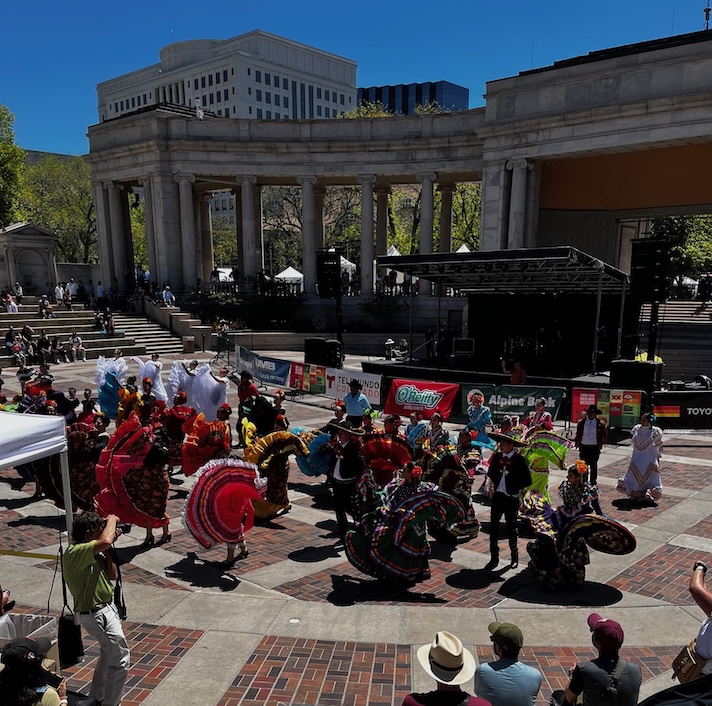
Cinco de Mayo, an annual celebration of culture is celebrated at the downtown Civic Center Plaza via committed sponsors, diverse food vendors, cultural events, various musical entertainment on several stages, family events and more celebrating with their ongoing 400+ weekend attendees. The Cinco de Mayo celebration is also a fundraiser for the financial support of so many community programs throughout the year.

Through its financial and literacy classes/workshops NEWSED has educated the Denver community with important life events, like the purchase of a new home or the upstart of a new business. NEWSED continues to provide small business workshops for those starting out their new business endeavors.  

NEWSED offers revamped financial literacy classes. In today’s economy, managing your money wisely is more important than ever. Rising costs, unexpected expenses, and financial uncertainty can make it challenging to stay on track. These classes are designed to give you the knowledge and tools to make informed financial decisions and set yourself up for success.

Whether you’re looking to improve your credit, build savings, reduce debt, or create a realistic budget, NEWSED’s expert-led sessions provide step-by-step guidance tailored to your financial situation. By strengthening your financial foundation, you’ll gain the confidence to navigate challenges, plan for the future, and take advantage of new opportunities.

NEWSED is also an organization that celebrates advocacy and civil rights via the many individuals, nonprofits and corporations who advocate tirelessly on behalf of Denver’s communities. 

On Thursday, October 9, 2025, NEWSED will host its 34th Annual Civil Rights Awards – a powerful evening that uplifts courageous leadership and celebrates those advancing the fight for equity. NEWSED recognizes voices that challenge injustice and strengthen our community, reminding us that civil rights work is ongoing and deeply local. Join NEWSED at ReelWorks in Denver.