






Home Blog Page 40

It’s War, as President engages Elmo, Ernie and PBS

Yo, Ernie! Take a walk. And while you’re at it, take your pal Bert and the whole diverse Sesame Street bunch. Who needs a Ken Burns and all of his documentaries? NOVA? Same thing. Frontline? You want to broadcast “left wing” programming, forget federal funding. At least, that is what President Trump believes of public TV and radio.

On May 2nd, Trump signed an executive order defunding NPR and PBS. He and the White House defended the move by saying that NPR had ignored Hunter Biden stories and had also avoided assigning blame on China for the COVID virus.

In targeting PBS, the White House said it also was too left leaning. As an example, it cited a Valentine’s Day story on “queer animals” and featured stories embracing a teenager’s transgender journey. 

Both NPR and PBS have long been targets of conservatives. But now they not only have a compliant president who sees political gain in standing with them but an unfiltered megaphone-wielding firebrand in Congresswoman Marjorie Taylor Greene.

“They can hate us on their own dime, not the American people’s hard-earned tax dollars,” Greene said in her attack on the broadcasters.

Three Colorado radio stations, including KCPR in Centennial, Ignacio’s KUTE and Aspen Public Radio, have joined an NPR lawsuit to stop the administration’s planned funding cuts.

“It’s a real threat,” said Gilbert Bailon, executive editor of Chicago Public Radio’s WBEZ, of the latest effort to cut funding from the two broadcast entities. “The difference this time is that he (Trump) has Congress in agreement.” 

Bailon is perhaps the highest-ranking Latino in American journalism. His career has included serving as executive editor of both The Dallas Morning News and St. Louis Post-Dispatch before transitioning into public radio. He is also past president of the National Association of Hispanic Journalists and headed the Missouri paper when it received the National Press Foundation’s Benjamin C. Bradlee Editor of the Year award for coverage of the Ferguson, Missouri, fatal shooting of Michael Brown. 

Bailon said the anti-journalism fever is fueled by the right’s desire to connect the media with stories that are topical. “If you do a story on immigration or gays or the trans movement,” he said, “you’re involved in their lifestyle. It’s the belief that that is all we’re doing.” In fact, Bailon said, doing these stories is just doing the job, a job that goes well beyond stories the right might consider salacious.

“If you listen to NPR, most of it (our coverage) is local news with no cultural bent. It’s what happened at city hall…vibrancy of local communities,” Bailon said. What the right does, especially the loudest voices, he suggested, is “cherry pick.” 

NPR, in Chicago and other markets, said Bailon is basic news gathering, journalism. “We try and provide context. That is what I would tell them.” Good journalism, he said, “is not a culture war…but some people are in their own bubble.” 

But executive orders in and of themselves are not binding. A president has no authority to defund NPR or PBS. Funding or defunding is the role of Congress. Executive orders are merely direction or suggestion by a president on what Congress should do. 

Both NPR and PBS have filed suit aiming to block any cutoff of federal funds. At stake is more than $1.1 billion the two broadcast entities receive annually in government funding. But should Congress act on Trump’s executive order, said KUNC’s Sean McKee, it would be crippling but not paralyzing. 

“At KUNC,” McKee said, “we receive a small portion of our funding from the Corporation for Public Broadcasting…approximately 6-8 percent of our total revenue,” which is in line with the money CPB doles out to its 300-plus broadcast entities. The vast majority of budget comes from “listener support, local underwriting and sponsorships, grants and community partnerships.” 

The KUNC CEO/Chief Operations Officer also bristled at the suggestion that NPR and his Greeley-based station are ‘left leaning.’ “Our goal is to inform, engage, and provide the public…with the tools needed to make informed decisions.” KUNC, he said, recently reported on “Democratic efforts to conduct secret ballots.” The station, he said, will continue to remain balanced in its reporting.

Bailon said it’s just too easy for Trump, Taylor-Greene and the right to paint NPR or PBS as ‘the liberal media.’ In fact, the label is absolutely false. “Our role is serving the public,” he said. As an example, WBEZ printed and shared on-line a voter’s guide in Spanish and English. “We are in the business of verified information. We fact check.” 

While Trump and his supporters fall back on liberal bias in seeking to cut funds, others see a pattern that belie his words. As proof, they site his campaign to whitewash U.S. history of America’s centuries of slavery, his stated desire to abolish the 14th Amendment which guarantees citizenship to anyone born in the country, his orders to erase the contributions of African-Americans, Latinos and other minorities to the country and wiping away any DEI, diversity, equity, and inclusion, and efforts in federal government.

Trump has also attacked the work of the Smithsonian Museum, the planned American Women’s History Museum and the National Museum of African American History and Culture. Each is accused of offering “improper ideology.” The term, said The Hill, a conservative Washington D.C., paper, is “not defined,” but is code for “anything Trump doesn’t like.” 

But Trump’s campaign, said veteran journalist and past president of the Society of Professional Journalists, Rebecca Aguilar, is a muscular effort to dilute the truth. “He fears truth,” she said. “The only way he can stop the truth from reaching the public, including his MAGA supporters, is to take away the money.” 

The Dallas resident who regularly hop-scotches the country speaking on journalism and the First Amendment said she hopes “Americans step forward and donate to these two media platforms to show the president cannot control us.”


The Colorado Rockies reach 10 wins since Opening Day in April

0

It only took the Colorado Rockies two months to reach 10 wins after defeating the Miami Marlins on Monday in Miami. The Rockies have already set a league record for worst 50 game start in MBL history with a whopping winning percentage of .167 with 50 losses. 

Colorado is 6-22 at home and 4-28 on the road an eye-opening stat for Rockies fans. Colorado has fallen 26 games behind the division-leading Dodgers and are 18.5 games behind the fourth place Arizona Diamondbacks. The closest team to Colorado’s terrible start is the Chicago White Sox who have 18 wins and 42 losses. 

Colorado wraps up a three-game series with the Marlins this week before returning home to host the New York Mets this Friday at 6:40 p.m. The Rockies will then host the San Francisco Giants starting next Wednesday at 6:40 p.m.

In other sports the Colorado Rapids have had a significant break since their loss to the Portland Timbers at the end of May. Their next match will be against the Austin FC at Dicks Sporting Goods Park on Saturday, June 7, at 7:30 p.m. then on to Orlando to face Orlando City on Saturday June 14, at 7:30 p.m.

The NLL season wrapped up on May 24 with the Buffalo Bandits defeating the Saskatchewan Rush in the NLL Finals. The Colorado Mammoth ended the season with 8 wins and 10 losses. 

The Denver Broncos are in the middle of their second week of OTA’s with mandatory mini-camp starting next week on June 10th through the 12th before taking a small break and returning to training camp in late July.

Discounted housing available for DPS teachers and paraprofessionals

0

Denver Public Schools Foundation (DPS Foundation) announces the expansion of its innovative housing initiative for educators, made possible through its partnership with Grand Peaks. Building on the success of the initial offering of 10 units at the Skyline at Highlands apartment complex, Grand Peaks is now providing an additional 10 units at a steep discount to meet the overwhelming demand from Denver Public Schools (DPS) teachers and paraprofessionals.

This unique initiative offers DPS classroom teachers and paraprofessionals access to high-quality, discounted housing in the brand-new Sorella Apartments community, located in Denver’s Loretto Heights neighborhood. Offered at a 50 percent discount for 12 months, monthly rents can start as low as $876, depending on the unit selected.

“The strong response we’ve continued to see from DPS educators shows just how critical affordable housing solutions are to support the teachers and staff who shape the future of our students,” said Sara Hazel, President and CEO, DPS Foundation. “We are deeply grateful to Grand Peaks for their ongoing partnership and commitment to expanding this opportunity to even more Denver educators, helping ensure that more educators can live in the community where they work.”

The ten new discounted units are available to current DPS classroom teachers and paraprofessionals who meet the 80 percent Area Median Income (AMI) restriction. The available units are studio and one-bedroom units. The Sorella Apartments offers residents amenities such as a 24/7 fitness center, a resort-style pool, multiple outdoor kitchens, fire pits, and a stylish rooftop lounge with private patio space.

“Creating housing opportunities that make a real difference is part of our mission at Grand Peaks,” said Nick Simpson, Co-CEO of Grand Peaks. “We’re proud to expand our partnership with the DPS Foundation and help provide accessible, high-quality housing that allows educators to live closer to the communities they serve.”

Interested educators who complete the interest form will be entered into a random drawing managed by the DPS Foundation. Winners will be notified prior to June 6, 2025, and will move in starting July 1, 2025. More than 80 educators have already signed up for the discounted housing, underscoring the ongoing and urgent need for affordable housing solutions for Denver’s public-school workforce.

About Denver Public Schools Foundation 

Committed to realizing every student’s potential, Denver Public Schools Foundation removes barriers, provides support, and unlocks opportunities in the classroom and beyond. DPS Foundation helps ensure that investments in our public schools are directed in the most effective, impactful and lasting way. Denver Public Schools Foundation believes when all students have the opportunity to develop their talents and become engaged and contributing members of our community, our society thrives. Learn more at dpsfoundation.org.

About Grand Peaks

Based in Denver, Colorado, Grand Peaks Properties, Inc. (“Grand Peaks”) is a fully integrated real estate investment firm built on a foundation of over 70 years of multifamily investment and management. Founded in 2003, Grand Peaks leverages the Simpson family history in multifamily housing to build a community for our residents, team members and investors. Consisting of two vertically integrated enterprises: Grand Peaks Properties, Inc. and Grand Peaks Property Management, Inc, Grand Peaks is dedicated to delivering superior housing solutions through thoughtful development, strategic acquisitions, renovations and comprehensive property and asset management services. Grand Peaks currently oversees a portfolio exceeding 10,000 units spanning across 10 prominent markets in the United States. To learn more, visit www.GrandPeaks.com

Health warning regarding Runyon Lake and other Colorado bodies of water 

More than fifty years ago, author Rachel Carson warned in her epic, “Silent Spring,” about the dangers of pesticides. Farming was producing at then record levels and much of this boom was attributed to the use of pesticides and their ability to kill off insects that would normally have consumed larger shares of a harvest. 

While pesticides remain essential in agriculture, the government has taken a far more serious role in regulating them, banning some and reducing volumes of others that might be considered carcinogenic or harmful to health in other ways.

But another chemically based threat has recently been identified in the U.S. and a number of other places, including Pueblo.

Plastics, or more specifically the chemical agents that create the ubiquitous material essential in so many things in our daily lives, are now a growing threat. 

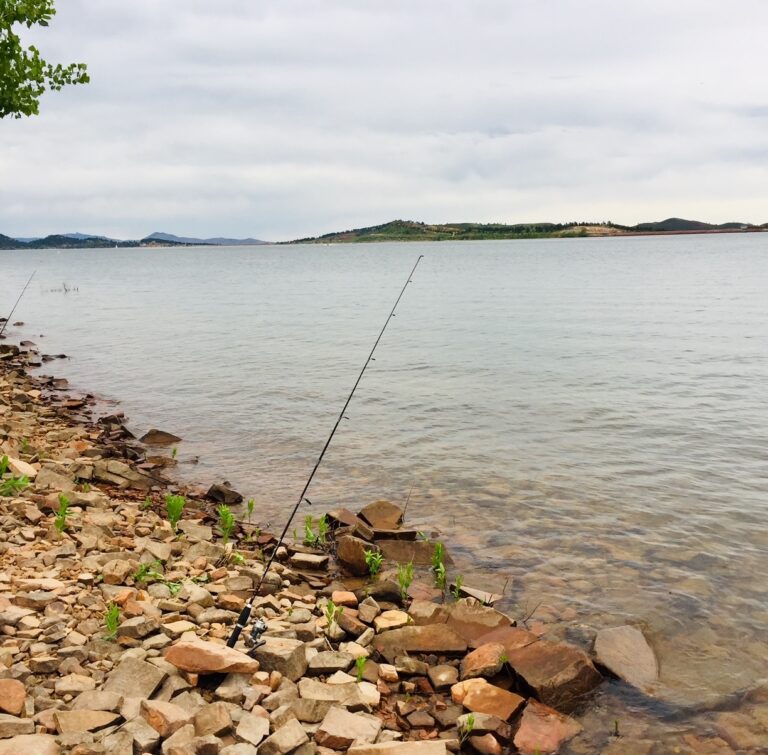
In Pueblo’s Runyon Lake, state health officials are warning fishers to limit their consumption of rainbow trout to no more than two per month. That amount should be even less for children under age six to no more than six servings per year. A single serving is conserved to be approximately 8 ounces, about the size of palm.

Elevated amounts of a chemical essential in the manufacture of plastic items identified as perfluoro octane sulfonate (PFAS)have been detected in rainbow trout in the lake. 

The Colorado Department of Public Health and Environment said consumption of rainbow trout registering dangerous levels of PFAS pose a risk of cancer. Other risks from eating this fish include higher cholesterol levels, liver issues and immune system effects. The chemicals sited by state health is also dangerous in pregnancies.

CDPHE began studying this danger in 2020, sampling fish taken from six lakes spread across the state. In  2023 it discovered levels high enough to issue warnings for fish caught in Pueblo Runyon Lake, Weld County’s Barr Lake and Chatfield Reservoir. 

Because millions of tons of plastic are produced each year—it is cheaper than using glass, metal and ceramics and it can be formed into so many shapes—it has become essentially impossible to dispose of completely. Only 5 percent of all plastic is recycled and reused. Much of it, which is almost impossible to detect, has made its way into the food chain where it has become a serious health concern. 

Chemicals in the manufacture of plastics can find their way into the food chain. Studies have found traces of plastics in cow milk, beef, pork and chicken. Once ingested, studies have shown that these chemicals can mimic human hormones and increase the risk of infertility, birth deformities and cancer.

The state health warning is not a statewide warning and restricted to only three bodies of water. But the warning for Pueblo, Weld County and Chatfield Reservoir should be taken seriously. Once dangerous chemicals have been detected neither cleaning nor cooking, said state health, “removes these substances.” 

Also, state health’s Nicole Rowan said the warning should not inhibit anyone’s enjoyment of fishing. “Fishing,” she said, “is one of the best ways to enjoy Colorado’s natural beauty and spend time with loved ones.” The warning, she added, is simply an advisory to help people make informed decisions about what kinds of fish to eat and where to catch them.

Taco President and circle of circumstance

David Conde, Senior Consultant for International Programs

The word is going around that President Trump is very indecisive when it comes to tariffs. His timidity has led to a new nickname TACO that is the acronym for “Trump Always Chickens Out.”

 I am not worried about the nickname. I am worried however, about how the acronym that spells out a foundational word in Latino heritage can damage its meaning.

That is to say that President Trump’s tariff policies in action have created another victim. This time it is the taco, a cultural icon of the Latino community. 

Over the last few years, I have developed the habit of every time I land in Mexico City, going immediately to a favorite eatery and ordering a half dozen tacos. There is nothing more immediately delicious after a day of travel than two longaniza, two suadero and two al pastor tacos with onion and cilantro.

Soft tacos have always been a mainstay of Mexican street food and other popular places. Not so in the beginning here in the United States.The taco is a product of a corn culture. The American diet tends toward wheat, flour and bread.

It can be said to a point that the history of the taco in this country got caught in the transition between the Mexican and American cultures. I remember our tacos in Texas and on the migrant stream that were made with flour tortillas and some even had meat and gravy.

Those flour tortilla tacos is what I took to school and ate out of the bag rather than put them on the table because of the embarrassment of having them seen by other students. They were a symbol of poverty of the Latino underclass.

I was in college when I began to hear about the “California taco” with its hard corn shell that began to spread across the country as a fast food. To me, it was a strange phenomenon because just the name took me back to a world associated with a difficult life.

Later, I did take my turn eating the Taco Bell brand of food with its ground beef base and added it as a choice when I wanted a change from the other fast foods. Yet, I knew that the generally bland taste of the food was not really Mexican.

The corn taco has reached its zenith in America with the cuisine brought by Mexican immigrants. The soft taco delicacy is in great demand especially by those from all races and ethnicities that demand authenticity and know what a good taco should taste like. 

Studies are showing that among the favorite foods served in the 50 largest cities in the United States Mexican food is ranked number 1. One of the best dishes is tacos de carne asada.

The legacy of the Mexican taco is being besmirched by its association with the failings of an anti-immigrant President whose favorite food comes from McDonalds. I wish there was another way to express those failings rather than using the term taco President.

The Mexican taco is derived from an ancient heritage associated with dozens of native corn varieties in the country. It came to the United States as a humble distortion of the real thing. 

However, in America the taco has won back its authenticity and achieved a popularity second to none. Its legacy as an American food has to be cherished and respected.

Associating the President and his failings with the taco is an affront on several levels. Most are obvious to everyone.

Los Seis . . .a tragic memory in time . . .May, 1974

0

A car exploded at Chautauqua Park in Boulder 51 years ago today, killing three young activists—Neva Romero, Una Jaakola, and Reyes Martinez. Two days later, as the city and Chicano community were still reeling, another car exploded, killing Heriberto Teran, Francisco Dougherty, and United Mexican American Students leader Freddy Granado. The explosions came at the peak of a months-long protest by the Chicano Movement against discriminatory practices at University of Colorado. Together, these six are remembered as Los Seis de Boulder. 

In the following investigation, authorities concluded that the activists had unintentionally caused the explosions while in possession of car bombs, but many within the Chicano Movement believe federal agents were responsible for their deaths. While there is no documented hard evidence to resolve this tension around the tragedies of Los Seis, the historical record shows a clear pattern of targeted surveillance, harassment, and violence against activists in the Chicano Movement throughout the state and the country.

This story, which we detail in a Lost Highways podcast episode from last year, is still very important to Colorado Chicanos. Many in the community knew Los Seis personally. They marched, protested, and organized with them, and since their deaths, have worked hard to preserve their story. And whatever the cause, the shocking timing and manner of their deaths changed El Movimiento forever. However difficult it is to tell this story, however complicated and controversial it might be, we can’t afford to forget these moments in our history. 

—Devin Flores, Managing Editor of the Colorado Encyclopedia

Free summer meals available for all Colorado youth ages 18 and younger

The Colorado Department of Education today announced that 635 summer meal sites are open statewide to provide meals free of charge to all youth ages 18 and younger. Parents, families, and community members can visit www.kidsfoodfinder.org to find a nearby meal site. 

The Summer Meals Program is funded by the U.S. Department of Agriculture and administered by the Colorado Department of Education’s School Nutrition Unit in partnership with community-based program sponsors. Last year, program sponsors provided more than 1.9 million meals to Colorado youth. 

“Many Colorado children rely on their schools for access to food, and our Summer Meals Program provides a critical resource for children and families during the summer months. We are grateful to our 83 community partners for stepping up to serve them,  said Colorado Education Commissioner Susana Córdova

Meals are provided free of charge to any youth aged 18 and younger; no registration, identification, or proof of income or enrollment is required to access summer meals. 

CDE is working with 82 community organizations that have applied to operate 635 meal sites across the state. In rural areas, some sites allow children to take meals home and others are even offering home delivery options to reach more children.

Any school, nonprofit, government agency, camp, university, or community- or faith-based organization can serve as a summer meals provider, and it’s not too late to get involved. New meal sites are welcome to join the program by partnering with an existing provider anytime throughout the summer. All meals served meet USDA nutrition guidelines.

Finding a meal site is easy—just visit www.kidsfoodfinder.org.

Summer meals are free, healthy, and available to all kids and teens. No sign-up. No ID. Just food.

About the Summer Meals Program: 

  • Meals are free to all kids and teens 18 years and younger. In rural locations, some meals may be taken home to eat.
  • Parents do not need to apply to the program for their children to get free summer meals.
  • Organizations that can administer the Summer Meals Program include schools, non-profit organizations, government entities, camps, universities, and community and faith-based organizations.
  • Parents and youth can find summer meal sites by visiting www.kidsfoodfinder.org.
  • Meals served follow USDA nutrition guidelines. 

About the Summer Electronic Benefit Transfer Program:

  • Summer EBT provides $120 per eligible school-aged child to buy groceries.
  • Funds to purchase groceries are placed on EBT cards.
  • The program is led by the Colorado Department of Human Services with support from CDE. 

To learn more about Summer EBT, visit ealshttps://cdhs.colorado.gov/summer-ebt

CDE invites school and district leaders to join 2025-26 learning cohorts

0

The Colorado Department of Education today announced the launch of registration for its 2025-26 school year professional learning cohorts. These year-long learning cohorts provide opportunities for district leaders, school leaders, and educators from across the state to learn about and share best practices in improving student outcomes on such subjects as chronic absenteeism, helping connect rural leadership and special education support.

“We’re pleased to launch these new learning cohorts, recognizing that some of the best ideas in education come from educators learning and working together,” said Colorado Education Commissioner Susana Córdova. “As author David Weinberger put it: ‘The smartest person in the room is the room.’ These cohorts are designed to draw on that collective insight and support educators in making meaningful progress for students across Colorado.”

In the 2024-25 school year, more than 350 leaders from 78 school districts, BOCES, and charter schools participated in 60 learning cohort sessions on chronic absenteeism, community schools, special education, student behavior, rural leadership, and new arrival support. 

The department’s cohorts for the 2025-26 school year are designed for school, district, and BOCES leaders. The year-long sessions will focus on bilingual leadership, chronic absenteeism, elementary English language arts leadership, nontraditional teachers, and rural leadership partnerships.

“It was a very worthwhile and excellent experience,” said Kenny Davis, principal of Washington Elementary School from Lamar School District RE-2, who participated in the rural leadership and special education cohorts last year. “Honestly, this is the best training experience I have had in a long time.”

The 2025-26 cohorts will begin meeting in September, and cohort applications are on the CDE website. The department anticipates having limited seats for each of the five cohorts, and the deadline to apply is Aug. 30.

Our Government

White House

Trump administration asked the Supreme Court to allow it to move forward with a broad “reduction in force” plan for federal agencies that was previously blocked by a federal judge.  A ruling for “reduction in force” to move forward will affect 22 government departments and agencies.

Colorado Governor

Governor Polis released the following statement condemning today’s attack in Boulder.  “My thoughts go out to the people who have been injured by this heinous and targeted act on the Jewish community. Hate is unacceptable in our Colorado for all, and I condemn this act of terror. The suspect should be prosecuted to the fullest extent of the law,” said Governor Jared Polis.  Governor Polis continues to monitor the situation. 

Denver Mayor

Denver joined dozens of counties, cities, and other plaintiffs in a second lawsuit against the Trump Administration for its unlawful and unconstitutional threats to withhold grant funding for transportation programs and priorities. “I will continue fighting for Denverites to ensure they receive the services they pay for and are entitled to receive as taxpayers.” said Mayor Mike Johnston.

A Week In Review

0

Africa 

Hundreds killed by flooding in Nigeria

Officials in Nigeria said that at least  200 people were killed when floods hit Mokwa, a town in the country. Authorities believe the death toll could rise to 700 as another 500 people are still missing. The flooding is believed to have been the worst the area has seen in over 60 years.

Kenya software developer detained 

Rose Njeri, a software developer in Kenya, was detained last Friday. She had developed a tool to help people oppose Kenya’s government’s annual finance bill. Njeri had electronic devices seized from her house, and police have yet to comment on detaining her. Many people in Kenya fear that the finance bill will lead to a higher cost of living. 

Asia 

Indian man with dozens of snakes arrested at airport

Officials in India have arrested a man who was attempting to smuggle dozens of rare reptiles, including venomous snakes. The man was returning from Thailand, and the reptiles were seized under wildlife protection laws. Officials have yet to release the man’s name, and it is unclear where the reptiles came from. 

China accuses U.S. of violating tariffs truce

China’s Ministry of Commerce accused the United States of severely violating a trade truce and added that the country will take strong measures. China said U.S. violations included stopping sales of computer chip design software to Chinese companies, canceling visas for Chinese students, and other alleged violations. The two countries reached a trade truce at the beginning of the year. 

Europe 

Ukraine completes largest long-range attack

Ukraine President Volodymyr Zelensky said the country completed its biggest long-range attack of the war with Russia. Zelensky said Ukraine used 117 drones and hit 34 percent of Russia’s strategic cruise missile carriers. Russia confirmed there was attack and called it a “terrorist act.” The two countries are scheduled for another round of peace talks this week. 

Poland elects new president    

Right-wing historian Karol Nawrocki is set to become Poland’s new president after winning 50.9 percent of the votes. He defeated Warsaw’s liberal mayor Rafal Trzaskowski. Nawrocki is expected to use his power of veto to block Polish Prime Minister Donald Tusk’s pro-EU program. 

Latin America 

Five musicians murdered by cartel in Mexico

At least nine alleged members of the Gulf Cartel were arrested on suspicion of the murders of five musicians. The musicians, a group known as Grupo Fugitivo, disappeared in the Mexican city of Reynosa. They were kidnapped while traveling to a private event toward the end of last month. Officials found nine firearms when arresting the suspects. 

Migrants bodies wash ashore on Caribbean island

Officials discovered the bodies of 11 people who were believed to have been migrants inside a boat. The boat washed onto the shores of the Caribbean island of Canouan. Passports were found at the scene, leading officials to believe the migrants were from Mali, a land-locked country in western Africa. Officials have yet to identify the bodies of those on board. 

North America 

Act of terror in Boulder leaves eight people injured

The FBI is investigating an attack in Boulder that injured eight people as a “targeted act of violence.” Witnesses said a suspect threw an incendiary device into a group of people peacefully raising awareness for Israeli hostages in Gaza. The suspect was identified as Mohamed Sabry Soliman. All of the victims were taken to hospitals with burns and other injuries. 

Canada fires force thousands to evacuate

Around 17,000 people have been forced to evacuate the Canadian province of Manitoba because of fast-moving wildfires. There are more than 188 fires burning across Canada and into parts of the United States. This past weekend, smokes from the fires left millions of Americans under air quality alerts. Climate change is making weather conditions needed for wildfires to spread more likely.