





Home Blog Page 44

The vacation road less traveled

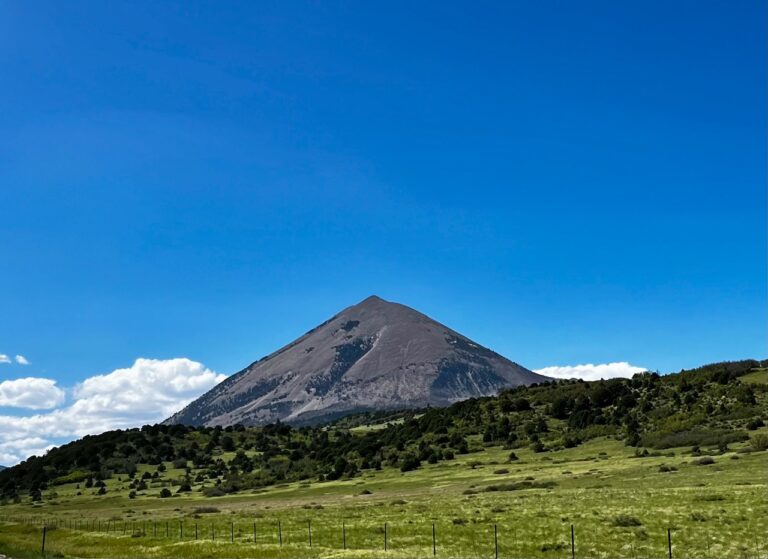
Image courtesy: LaVozColorado

If a visit to Albuquerque is in your plans and you want to get there ‘quickly’, jump on one of the 54 weekly flights out of Denver International Airport. But, as you may have guessed, quickly does not necessarily mean quick. 

You’ll need to calculate the time it takes getting to DIA. From the southern suburbs, say, Douglas County, add as much as an hour. Budget in TSA’s mandated airport arrival time, gate time and hope everything’s on time. Clock’s still ticking. 

On board, add taxi time, flight time—70-80 minutes—deplaning and luggage retrieval. That’s four hours, maybe more. Next time, consider ‘the road less traveled.’ 

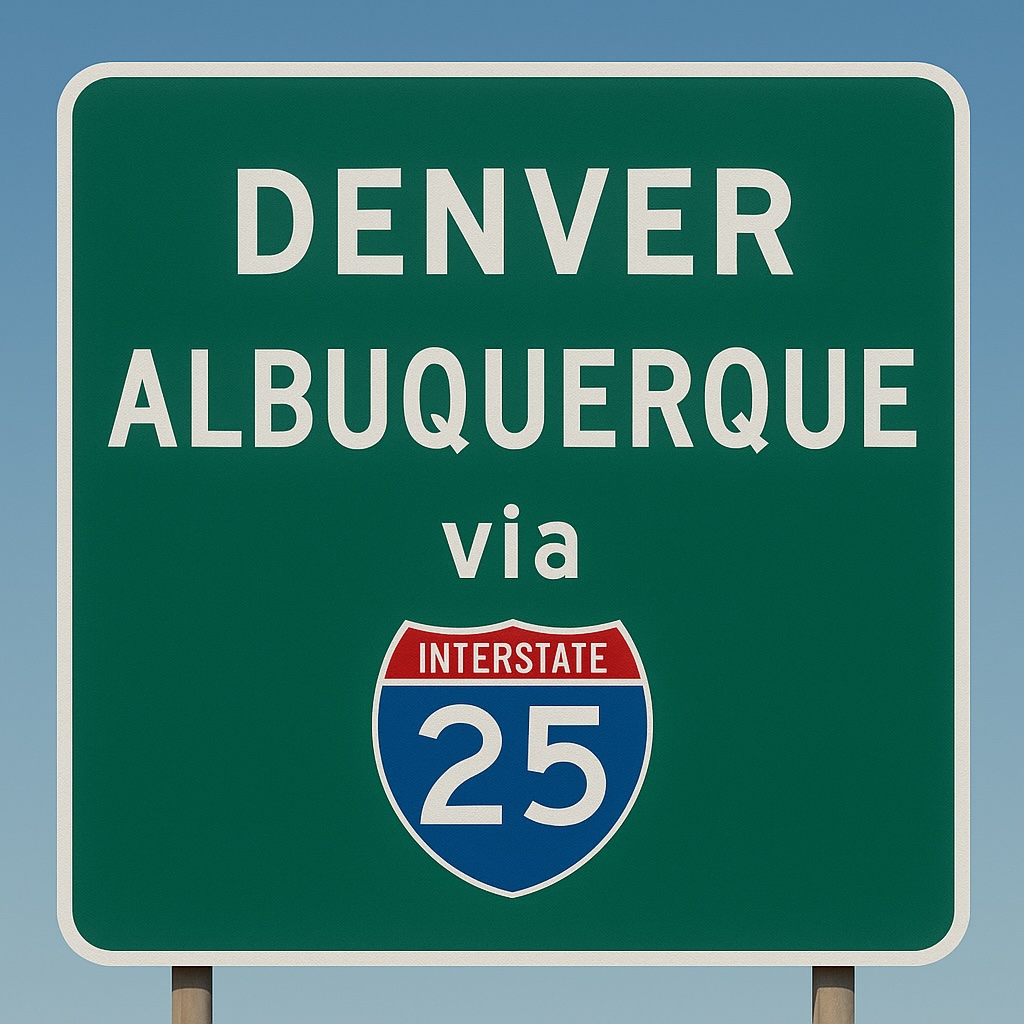
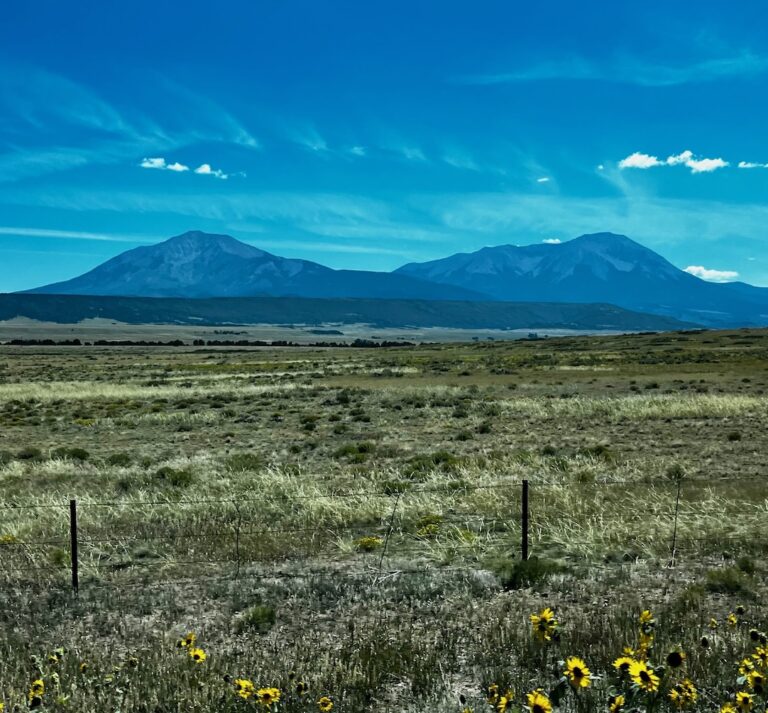
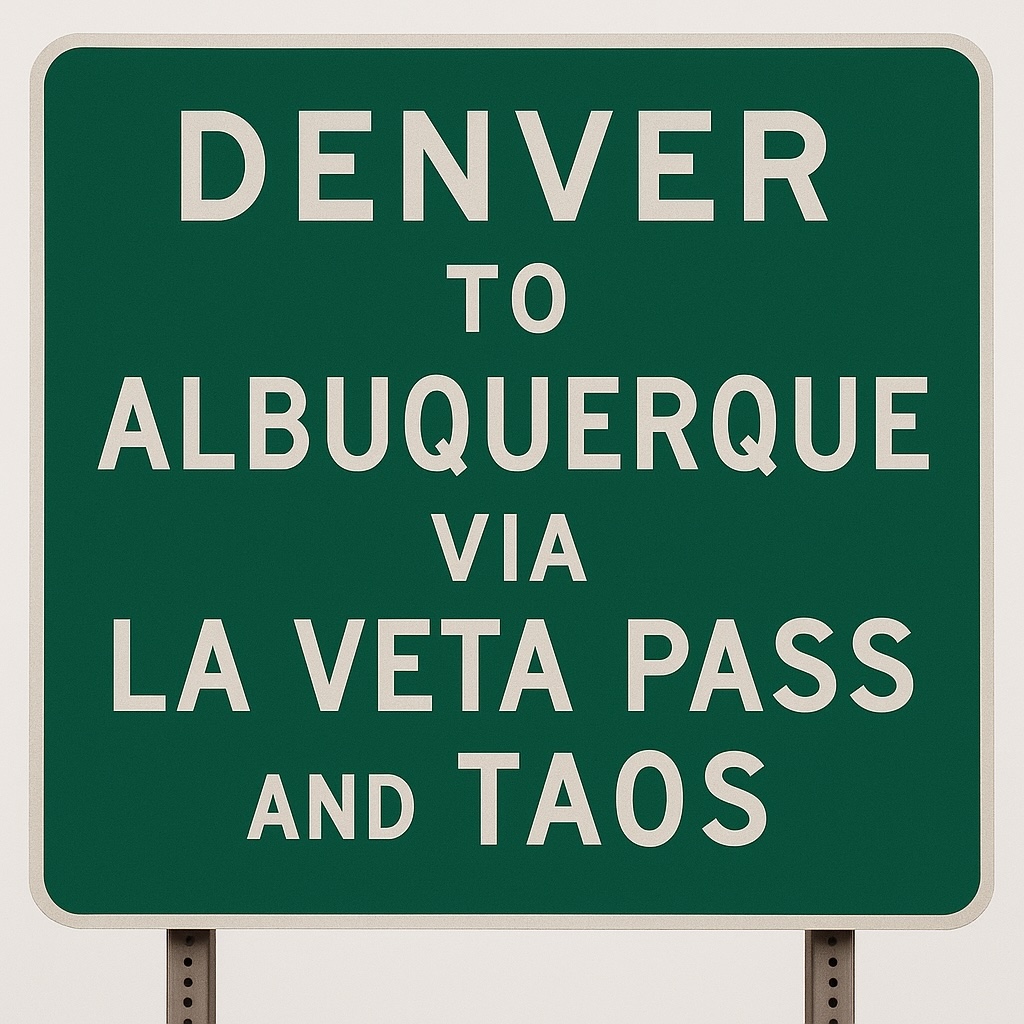
Interstate 25—the road ‘most traveled’—from Denver takes you south to Walsenburg where you leave the interstate. From there, head west on U.S. 160. You’ll navigate a winding, elevating La Veta Pass with its incredible scenic wonders and, a few miles later, hit Fort Garland, amazing vistas and history. Make sure you visit the local history museum.

The museum tells Fort Garland’s history from 1858 on. It includes how it was included in the Treaty of Guadalupe Hidalgo, the fight for the land, the tribes who once lived here and the Buffalo soldiers who once defended it. It’s a quick but fascinating stop. 

Next, just fifteen miles south on state highway 159, is San Luis, Colorado’s oldest town. Though just populated by some 600-plus residents, it has the bloodlines of the state’s earliest, non-native settlers, the Spaniards who trekked here from New Mexico in the mid-19th century.

While resident and world famous artist Huberto Maestas’ Stations of the Cross is the town’s most visited site, its history, said San Luis Town Manager, Teddy Leinbach, is every bit as fascinating. “You can really feel history (here),” said Leinbach. “You can see it in the architecture and hear it in the dialect,” a dialect spoken by long ago Spanish settlers. “You feel the influence of the 1800’s.” 

Surrounding San Luis are satellite villages—Chama, San Francisco, San Pablo and Garcia, the oldest of them all. “There’s still so much pride in these little communities,” Leinbach said. Each still has its own stores and churches. “Driving around here is just incredible.” But everyone, he said, has a hand in San Luis’s Fiesta de Santiago de Santana, the summer’s big celebration held the last weekend of July.

Twenty minutes you arrive in the small village of Costilla where the beautiful Rio Costilla Park in Amalia is known for its fishing, hunting, hiking and camping. Costilla and Amalia celebrated 175 years of settlement in 2023, attracting thousands of past and present residents.

Another twenty miles down the road on Highway 522 you arrive in Questa, home of the Questa Highschool Wildcats and the Veterans Flag Memorial highlighted with hundreds of American flags in view every Memorial Day.

An half hour south is Taos. Over the years, Taos, nestled comfortably in the shadow of the Sangre de Cristo mountains, is a town whose recorded history goes back to 1615 and has become a destination stop both for its art and history. 

While Taos’ recorded history spans four centuries, Native Americans have occupied the region for more than a thousand years. Today, Taos Pueblo, connected to the town’s northern border, draws thousands of visitors each year. 

Taos is often written about in an almost mystical way. Stories about its high country beauty abound. That, coupled with its history, said Taos native and current resident Jacob Herrera make it special. Not to be outdone, a few miles from the Taos Pueblo sits Taos Mountain Casino for gaming entertainment.

Also, along the way a few wineries provide some of the finest wines available. (Please don’t drink and drive).

“It is unique,” said Herrera, general manager at the Taos County Club. From anywhere on the property, which includes the contrasting blue of the Taos mountains and the seasonal come to life sage brush of the high desert, the views are spectacular. There is also one of the top and most challenging golf courses in the state. That’s just for starters.

“You see the elk that come down in the winter,” he said. You hear them bugling and see “coyotes, fox, weasels, quail, and roadrunners.” In the late winter you can also see migrating cranes. In summer, pelicans drop by for a visit.

In town, said Herrera, there are excellent restaurants offering world-class dining as well as family joints with signature New Mexico fare. ‘Christmas, (both) or Red or green,’ is a question asked with each order of a Mexican dish. (You’ll figure it out.)

In Taos, you’ll also find the Kit Carson House and Museum. There, you can see and learn the history of one of the West’s most famous scouts, traders and soldiers.

Not far away is Rancho de Taos. It’s a must-see for taking a peek into the past. Its 21 buildings, which include San Francisco de Assisi Mission Church, echo a time long ago in both awe and fascination. 

The architecture of Taos is a blurry look into a rich and colorful past. All by itself, the Plaza reflects a heritage of the West that combines Native American, Spanish and Mexican cultures.

Off the beaten path, but still nearby, are things that have their own charm and fascination. There is El Santuario de Chimayo, a special and spiritual stop revered by Catholics. It’s a 50-mile side trip from Taos.

While Taos is the nerve center of this stretch of northern New Mexico, Herrera said the Rio Grande River is special to locals, including himself. “I do love stopping at the Rio, getting my feet wet,” and just taking in the soft melody of silence.

On the way to Santa Fe, the last stop before Albuquerque, Herrera said you’ll pass through Espanola (the low-rider capital of the world as featured in 60 Minutes this year) and Mesilla,  There are several casino stops like Ohkay Casino, Santa Clarin Casino, Cities of Gold, Buffalo Thunder along the way for those inclined. But, in the end, said Herrera, to him, everything begins and ends in Taos. “It’s the best thing about New Mexico.”
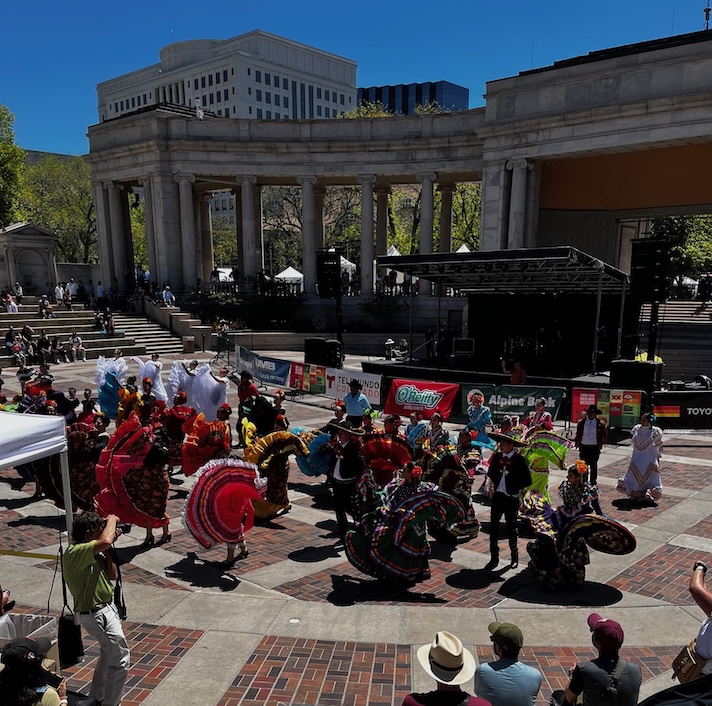
In the wake of Cinco de Mayo Festival

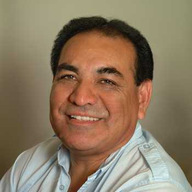
David Conde, Senior Consultant for International Programs

Ever since primary school in Mumford, Texas, Sterling, Henderson and Denver, Colorado, I found myself having to defend my dream of someday achieving a college education as well learning to fly a plane. At the time, I felt somewhat justifiably ridiculed by those around me that many times saw the impossible condition of utter poverty and desolation around my loved ones and myself.

There was a part of me that agreed with them and sought to clarify and steer my thoughts and plans in a different direction. There was another part of me however, that looked for signs of progress in the small victories along my journey.

Out of the depths of this improbability came glimpses of opportunities that I tried to make real in my life and work. So it was that one bright May morning on the eve of graduation from college, I soloed in a Cessna 150. 

The question then became, what do I do now? Where do I go from here?

That is the question that the Latino community has been facing since the proven success of Cinco de Mayo and the beginning of the 21st Century. What do we do now and where do we go from here?

Fifty-three years ago this past January, a journey began to make Cinco de Mayo a truly Chicano commemoration in Pueblo, Colorado. We felt at the time that if could rally a regional and even national community to the relevance of the Mexican Battle of Cinco de Mayo, 1862 to the Chicano struggle for notice in an American landscape, we could significantly advance the place of primarily the Mexican American community in the Southwest.

The week of activities carried out by a coalition of 108 organizations in southern Colorado proved to be only the beginning of nationwide Chicano awareness of Cinco de Mayo and its story as a rallying cry for justice and identity. Since then and for a combination of reasons, Cinco de Mayo has become a popular national celebration enjoyed by many Americans in many cities and towns across the country.

That success raises the question about what happened with the notions that Cinco de Mayo advanced. Although much of the meaning of the Chicano Cinco de Mayo is being lost as the celebration crosses all ethnic and racial lines, it nevertheless call the question as to the future for which it advocated.

What do we do now? Where do we go from here?

This question hit me when I achieved what I might have thought was impossible. When that happened, it sent me into a serious sort of depression.  

As it turned out, my life goals were too low. I had to go into a time of deep reflection and even thought of giving up academic life for something else.

We may have noticed that the 21st Century, especially since 9/11, the Latino community has been largely quiet and somewhat mute. The only significant Latino noise has come from the Cuban community that is jockeying to represent the Latino voice in America. 

But Mexicans and Mexican descendants that form over 60 percent of Latinos in America appear to be busy doing other things like building its human capital and economic infrastructure to take leadership of a country that is rushing into decadence and second-rate status. That is the sacred task of a community that has fought and continues to struggle in its journey from the margins.

State health department shares resources for Air Quality Awareness Week

The Colorado Department of Public Health and Environment is celebrating Air Quality Awareness Week, which runs from Monday, May 5 through Friday, May 9. The goal of the nationwide initiative is to share information about the importance of clean air, our ongoing efforts to address air pollution, and resources to stay engaged.  

“Air Quality Awareness Week is the perfect time for Coloradans to dive into the tools and information we’ve built to help everyone stay informed,” said Michael Ogletree, senior director of state air quality programs at CDPHE. “This year, we launched two powerful new tools to shine a light on air pollution data—making it easier than ever to track inspections and see where permit applications may be coming. We want all Coloradans to explore these resources, join our public meetings, and be part of the conversation about cleaner, healthier air in our state.”

The division is committed to providing Coloradans with the tools and knowledge they need to monitor and protect air quality in their communities. Through technology, innovation, and community collaboration, we can continue leading the way in reducing pollution levels and ensure a healthier air for all. 

Here’s tools to stay informed and get involved: 

  • Sign up for air quality alerts to receive notifications to help you plan your day. People with asthma, children, and seniors are especially vulnerable to poor air quality.
  • Use the division’s data access tools to learn more about air pollution in Colorado. Online resources include:
    • The new environmental justice summary dashboard shows air pollution sources by zip code that may soon submit a permit application.
    • The new inspections data visualization tool shows air quality inspections at facilities.
    • The interactive records map provides access to thousands of public records for stationary sources of air pollution.
    • The data visualization tool makes trends and information on key air pollutants more accessible to the public.
  • Learn about the department’s advanced mobile monitoring technology to measure air toxics in communities and air pollution near oil and gas operations. 
  • Subscribe to our email updates for ongoing information about air quality trends and tips on how to protect yourself.
  • Get involved in public participation opportunities to share your feedback about the state’s actions to address air quality.
  • Follow the department’s social media accounts for new, tips, and updates.
    • Twitter: @CDPHE.
    • Instagram: @cdphe. 
    • Facebook: Colorado Department of Public Health and Environment. 

Our Government

White House

President Trump signed an Executive Order establishing the Religious Liberty Commission during the National Day of Prayer event.  President Trump designated the following individuals to serve on the committee:  LT Governor of Texas Dan Patrick, Dr. Ben Carson, Ryan T. Anderson, Bishop Robert Barron, Carrie Prejean Boller, Cardinal Timothy Dolan, Pastor Franklin Graham, Allyson Ho, Dr. Phil McGraw, Eric Metaxas, Kelly Shackelford, Rabbi Meir Soloveichik, and Pastor Paula White.

Colorado Governor

Governor Polis signed the following bills into law: HB25-1075 Regulate Speech-Language Pathology Assistants and SB25-191 Cardiac Emergency Plans for School Sports bills.  The laws expand access to speech pathology services for all Coloradans and increase safety in Colorado school sports with proper guidelines for using life-saving devices.  

Denver Mayor

Mayor Mike Johnston released quarterly progress on Denver’s 2025 citywide goals.  Highlights include reduced shootings by 16%, including a 65% drop in firearm homicides and 56% in homicides; connecting 1000 people to shelter and approximately 500 people to permanent housing; installed 600 clean energy systems and invested $3 million to support programing that connects students to jobs. Quarterly reports and updates available at denvergov.org.

A Week In Review

0

Africa

Shoe thrown at Kenyan president

Officials in Kenya are investigating an incident in which a shoe was thrown at President William Ruto during a rally. Kenyan media reported that three people were arrested in connection to the incident. The shoe hit Ruto’s left arm while he was speaking. He has faced protests from Kenyans over the cost of living and increased taxes since he took office in 2022. 

Former Tunisia prime minister jailed

Former Tunisia Prime Minister Ali Laarayedh has been sentenced to 34 years in prison on terrorism charges. He is a prominent opponent of President Kais Saied and was charged with setting up a terrorist cell and helping Tunisians travel to join Islamist fighters in Iraq and Syria. Laarayedh has denied any wrongdoing and said the charges were politically motivated. 

Asia

Ten killed on China tourist boats 

Strong winds in China caused four tourist boats to capsize, leaving 10 people dead and 70 others injured. Earlier this year, a similar incident occurred when 11 people were killed in another boating accident. Chinese President Xi Jinping stressed the importance of strengthening safety measures. 

Dead snake found in Indian school meal

Reports in India show that at least 100 children fell ill from eating a school lunch with a dead snake in the food. The incident occurred in the Bihar state, and the cook allegedly still served the lunch despite removing the dead animal from it, according to the National Human Rights Commission. It is unknown what kind of snake was found in the food. 

Europe

Millions of dollars of heroin seized in Dublin

Officials in Dublin arrested two men who were carrying around $3.22 million worth of heroin. Police arrested the men in the Coolock area. The men, who are in their 30s and 40s, were carrying more than 21kg of the drug. They appeared in a Dublin court earlier this week. 

Woman dies in Greece while carrying bomb

An unnamed 38-year-old woman died in Greece after a bomb exploded in her hands. The woman was carrying the bomb outside a bank, and it is believed that she may have been planning to plant it next to a cash machine. She was taken to a hospital with severe hand injuries and later died. 

Latin America 

Millions attend free Lady Gaga concert in Brazil

At least two million people attended a free Lady Gaga concert in Brazil. The event was paid for by the city of Rio de Janeiro in an effort to revitalize the area’s economy. The show is expected to bring up to $100 million for the economy. Lady Gaga last performed in Brazil in 2012. 

Mexican mayor arrested

Police in Jalisco, Mexico have arrested Jose Murguia Santiago, the mayor of Teuchitlán. He is suspected of colluding with the New Generation Jalisco Cartel. Police were recently investigating a nearby cartel training site before arresting Santiago. He denied all charges and said he has nothing to hide. 

North America 

Trump considers reopening of Alcatraz

President Donald Trump posted on his Truth Social site that he is directing the government to reopen and expand the notorious Alcatraz prison. The prison is located on an island near San Francisco’s Golden Gate Bridge and was originally closed in 1963. It currently operates as a tourist site. The Federal Bureau of Prison said Alcaraz was originally closed because it was too expensive to operate. 

Man sentenced to 53 years for stabbing Palestinian American child

A judge in Illinois has sentenced a landlord to 53 years in prison for stabbing and killing Wadee Alfayoumi, a six-year-old Palestinian American. Joseph Czuba was convicted for the murder earlier this year and the wounding of Alfayoumi’s mother, Hanan Shaheen. The family was living in Czuba’s home in Plainfield, located around 40 miles from Chicago

A day with Mayor Mike Johnston

0

Entering Denver Mayor Mike Johnston’s third floor city hall office, one of the first things you notice is its remarkable lack of clutter. Of course, it has all the personal kitsch you would expect, but it seems to be the office of a real ‘Point A to Point B’ kind of guy, a guy who likes to get things done…in his own way.

It might be easy to label the 51-year-old Johnston, not Johnson, a liberal. But that would be too easy. More accurately, he’s simply a guy who cares about people; wants for them things that will make their lives better, empower them, provide opportunity. And it all begins with education.

Photo courtesy: Jose Salas, Mayor’s Office, City & County of Denver

“I’m a fourth-generation teacher,” he explains. His mother and grandmother were teachers, a grandfather was a school principal. “Education was always my first love.”

While his Yale undergraduate and law degrees might have been a golden ticket to wealth, that was not a life’s goal. “Even when I went to law school,” he said, “I was pretty certain that I wanted to not practice traditional law, but I wanted to figure out how you could use the law as a tool for social change.” With law degree in hand, he became not a lawyer, but a school principal. In Mississippi.

He would, as promised, return to Colorado and, once again, become a school principal. But beyond the administrative side of the job, he also saw challenges others might have seen but, somehow, never addressed. The job, to him, was not just graduating students, but figuring out how to get them to the next rung, especially non-traditional and immigrant kids.

Perhaps Johnston’s crowning achievement as a school principal was in Thornton. “It became the first public high school in Colorado history where a hundred percent of our seniors all graduated, and a hundred percent all got into four-year colleges.”

He also marshalled legislation that allowed undocumented students—for the first time—to pay in-state tuition at state colleges. Johnston’s fingerprints are also on a number of legislative efforts, including the READ Act, aimed at creating better literacy outcomes for all Colorado students.

In 2009, he won election to the state senate. Combining his two loves, education and public service, Johnston made education his bailiwick in the state legislature. Bills with his name included principal-teacher accountability and the nexus to student academic performance.

The legislature, where winning and losing is as predictable as the tides, was training ground for other runs for public office. Johnston has run unsuccessfully for both Governor and U.S. Senate. But, like all smart politicians, the long game paid off for Johnston.

Photo courtesy: Jose Salas, Mayor’s Office, City & County of Denver

He was elected Denver Mayor in 2023 just as the country was exiting the darkest days of the pandemic. What awaited the new mayor was the one-two punch of anti-immigrant fever and an accompanying near tidal wave of new arrivals. Denver was not alone. Other big cities were also targeted by opportunistic politicians eager to make a point.

“We did not ask for this problem; we did not choose it. We just had a governor of Texas who started sending us ten or eleven buses a day and, in that moment,” he said, “it’s not a question of whether you agree or disagree with border policy, it’s a question of what you do with 200 women and children on the street corner in Denver in ten degree weather.” Playing Texas-style politics was not an option.

Johnston said he relied on members of his Hispanic Advisory Council on the immigration issue to figure out solutions. Beyond immigration, he said he also budgets time to meet with them about other concerns, including jobs and business across the city. The group includes long time Denver political leader, Ramona Martinez, Nita Gonzalez and Joelle Martinez, CEO of the Latino Leaders Institute.

Denver’s immigrant challenge occurred as he was trying to solve the same homeless conundrum confronting city chief executives across the country. Homeless encampments in parks and sidewalks were growing by the day, sometimes the hour. On that issue, Johnston’s not ready to declare victory but confidently says there’s been significant progress.

“We have closed all of our shelters in hotels. We went from five thousand people we were supporting each night to, now, zero. We’ve dropped our budget below five million (dollars) from what it was once ninety million,” Johnston said. “We provided services by doing what they wanted, which was connecting them to jobs.”

But said the Mayor, mental illness and substance abuse, chronic issues among the homeless, are not just a Denver problem but an American one. “There’s always more services that you want to provide than you have the resources to provide.” Budgets, which are finite, will always be a challenge, he said.

While Johnston deals with the nuts and bolts of the city’s most pressing needs, his attention is also fixed on, arguably, the city and region’s biggest fixation, the Broncos and their future in Denver.

Ever since the Bowlen family sold the team in 2022 to the Walton and Penner families, rumors about moving the Broncos and building a new stadium have run amok. Johnston has heard them, too.

“I have spent a lot of time with the Penners and the Waltons,” Johnston said, acknowledging the scuttlebutt, but feels confident about the team’s future in Denver. “I have been incredibly impressed. They really care about the city, they care about the community, care about the team, they want to win, and I think they want to leave a lasting impact on the community that’s bigger than just football.” He also promised he would make keeping the Broncos right where they are a “top priority,” while ensuring taxpayers are not taken advantage of.

The Broncos and sports, in general, are important to Johnston. He plays in a co-ed soccer league each week. But, also important, is escaping his official duties to be a husband and father.

He and his wife, Courtney, an assistant Denver District Attorney, have three teenaged children. Being home for dinner with family, he said, is an everyday or nearly everyday priority. Spending time with his kids, taking them to soccer, helping with homework or attending school events, is too. Saturdays, he said, “are date night,” with his wife.

On how he sees his own legacy, Johnston is both modest and hopeful, but always with Denver at the heart of his wish. “We want to make Denver the definitive capitol of ‘the new West…  the premier city in the American West where you both, can find great jobs, you can have a great quality of life, you can have diverse cultures that all combine together…it’ll be vibrant, and it’ll be safe.”

East L.A. Chicano chases the American Idol dream

The recent season of the popular singing talent search now in its 23rd season, American Idol included many talented singers one of which included a self-proclaimed East L.A. Chicano named MKY (Mikey).

Photo courtesy: Mikey Jimenez Facebook

Michael ‘MKY’ Jimenz a handsome 25-year-old young man born within a musically talented family performing and boasting a Smokey Robinson type voice. MKY also sang a first-ever performed Spanish song on America Idol, a unique rendition of Miguel’s Sabor a Mi, which wowed the audience, supporters, the American Idol judges (Lionel Richie, Carrie Underwood and Luke Brian) and more. MKY also performed Smokey Robinson’s top hit of yesteryear, Ooo Baby, Baby during his audition.

Born and raised in L.A., MKY’s birth name is Michael ‘MKY’ Jimenez. MKY comes from a long line of talented singers, like his father Nez Jimenez who was part of an L.A. band in the 1960’s. MKY begin singing at an early age and members of his family dating back to his grandfather, also named Michael, have been chasing a musical career among other famed artists.   

As the great look, bilingual voice and charm of MKY returned each week and advanced to the next level, MKY, family and supporters held the highest of expectations for the first Chicano American Idol. 

High on great looks, talent and charm, MKY seemed a shoo-in to the top spot as his parents, other family and friends returned each week anticipating their reigning Idol in the midst of American Idol confetti.

Leading to the finale, MKY did not even make it to the top 20.  MKY, an audience pleaser drew incredible support, but unfortunately, MKY didn’t garnish enough of America’s votes, to push him through the next level, instead eliminating his chance as the next American Idol. 

His unique voice and weekly advancement contradicted the outcome his hopes and dreams seemed to evaporate on the American Idol stage. 

MKY later delivered an optimistic message of hopefulness and gratefulness to his supporters.

Congratulations to Idol’s finale contestant Thunderstorm Artis, (Christian genre) named American Idol. Many strong talented performers have passed through the American Idol stage, names like Carrie Underwood, Kelly Clarkson, Jennifer Hudson and more. This American Idol venue has provided a launching pad for the careers of many. Not everyone can be an American Idol winner, but it can be a steppingstone for future fame.

As fate would have it, East L.A.’s Chicano singing wonder, MKY, has signed a contact with Big Loud Records/Mercury.

The Denver Broncos 2025 Draft was a success

0

The Denver Broncos kicked off their draft on Thursday drafting a cornerback in the first round. Texas standout cornerback, Jahday Barron was drafted at number 20 overall by the Broncos, giving Denver a dynamic tandem along side last season’s Defensive Player of the Year Patrick Surtain II. 

In the second round Denver picked up the University of Florida’s running back RJ Harvey after Denver traded with the Panthers and the Lions for five picks for a total of six in return. 

In the third round the Denver Broncos drafted Illinois wide-out Pat Bryant adding to Denver’s receiving corps. The Broncos also picked up LSU’s defensive end Sai’vion Jones. 

In the fourth round the Broncos added depth to their roster by drafting Alabama’s outside linebacker Que Robinson a fifth-year senior. In the sixth the Broncos added a much-needed punter from Florida named, Jeremy Crawshaw. In the seventh the Broncos filled their remaining need by drafting Utah tight end Caleb Lohner. 

The Broncos draft picks received mixed reviews with many critics saying that the Broncos drafted players at higher predictions than they should have. The season is the final gauge where Denver’s success will reflect in the Draft and fans are excited to see how far this young team can get next season.

In other sports the Denver Nuggets are tied up with the L.A. Clippers 2 games to 2 with their win over L.A. in L.A. on Monday night. Game five is set to return to Denver (results of game not available at the time of this writing), while games 6 and seven are scheduled for Thursday, and game seven on Saturday. 

The Colorado Avalanche have fallen behind a game in their series with the Dallas Stars on Monday night. Colorado had tied up the series 2-2 after shutting out the stars 4-0 on Saturday night in Denver. The Stars returned the favor by beating Colorado 6-2 at home. Game six is at Ball Arena this Thursday. 

The Colorado Rockies continue their slide losing to the Cincinnati Reds and the Atlanta Braves bringing their record to an embarrassing 4-24 with a 16 percent winning percentage.

Denver to Albuquerque vacation guide

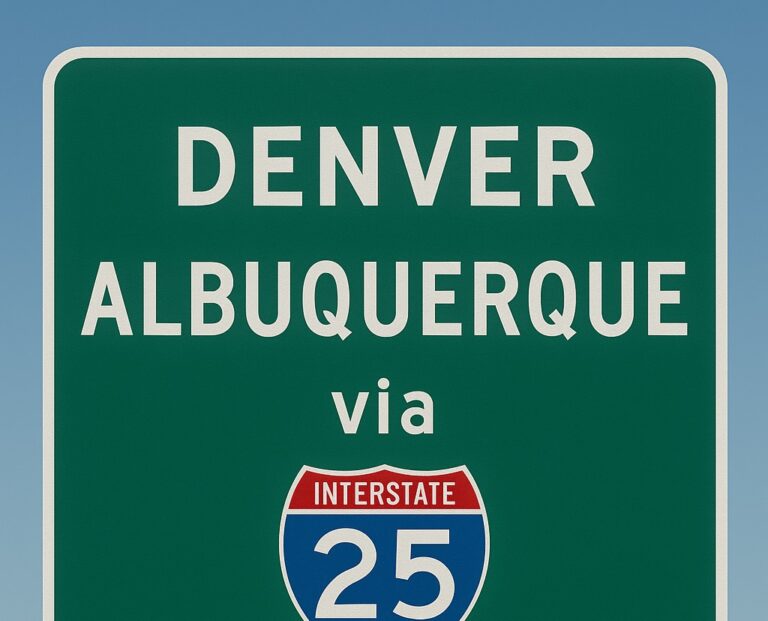
It is a trip that may not have the same catchy beat as the classic “Route 66,” performed by countless artists, but Interstate 25 from Denver to Albuquerque has as many—maybe more—interesting stops “along the way.”

The drive from Denver to New Mexico’s biggest city is, give or take, 444 miles. At 75 miles per hour, it’s a six-hour drive. That’s non-stop. But, because Mother Nature and pure curiosity make the calls, bank on something closer to a seven, maybe eight; maybe more. Let’s explore.

On a clear day, the drive includes a great western view of the state’s Front Range, straight-to-the-sky mountains bathed in hues of blues. As Denver’s southern suburbs disappear, you’re in Castle Rock, home of the ever popular outlet shops. You can stop on the return trip. Now, on to ‘the Springs.’

On the open road, with Pikes Peak looming large, the views just get better. You can detour for pictures, but let’s forge ahead.

Some days you might see Air Force Academy pilot candidates doing touch-and-goes. You’ll certainly see Falcon Stadium and the Academy’s iconic spired chapel.

Next up, Colorado Springs and forty or so minutes later, Pueblo, home of ‘the best chili’ in the country, the River Walk and coming this Fall, the country’s first dedicated Leonardo da Vinci Museum.

Just south of Pueblo is the Wet Mountain range and Greenhorn Mountain its most prominent peak. The next stop is Walsenburg, one of Colorado’s oldest towns.

Originally, La Plaza de los Leones, Walsenburg was settled in 1859. Coal, abundant in the region, fueled the town’s early growth; immigrants providing the muscle.

Twenty-four miles south of Walsenburg is County Road 44, the turnoff for the Ludlow Massacre Memorial. The stark and simple monument honors the April 20th, 1914, victims of the massacre. They were mostly immigrant women and small children slain by the National Guard and strikebreakers hired by the Rockefeller family. Historians have called Ludlow “the culminating act of perhaps the most violent struggle between corporate power and laboring men in American history.”

Minutes later, it’s Trinidad, another of the state’s earliest settlements. “We’re more than a gas stop,” says Pat Howlett, President of the town’s Chamber of Commerce. Howlett almost swoons describing his adopted town. “Our buildings are grand,” he says of the majesty of the town’s golden age architecture. They deserve to be on postcards, Howletts says, hiding not a sliver of pride.

The late Denver icon and architectural conservationist Dana Crawford, Howlett said, saw in Trinidad what others might not have. Crawford loved Trinidad and, Howlett said, bought the home once reserved for the president of the town’s college. It was her part-time residence.

Besides being “one of the most walkable towns in Colorado,” Howlett says it’s also “the state’s best kept secret.” It has two state parks nearby, beautiful mountains and a Native American, Spanish and Mexican history to complement its U.S. history.

Just across the state line you hit Raton, Spanish for ‘mouse.’ The town, population 5,000 (plus or minus), is home to retired public defender and Los Angeles expatriate David Patton. He likes Raton with some reservation. “You don’t have the traffic or anonymity…I thought it would be warmer.” His wife, from nearby Cimarron, is a fourth-generation rancher. Overall, he says, “I’m comfortable.”

Las Vegas—no! The New Mexico ‘Vegas,’ is Raton’s ‘big city.’ Think of ‘Raton’ as the moon; Las Vegas, the ‘Earth.’ It has the amenities missing in Raton, including movie theaters. But it also has the historic Castaneda Hotel, the Dwan Light Sanctuary on the campus of the United World Center Campus, a prismatic art installation, The People’s History of El Norte, a muralistic history of the land and more. It’s worth the trip.

Another hour away is Santa Fe, the historic capitol city of ‘the land of enchantment.’ It was established in 1610 and is the country’s oldest working capitol. Santa Fe, population 90,000, is the state’s tourism magnet, boasting arts, including the world famous Santa Fe Opera, food and history. Santa Fe, it’s a must-stop, must-see point of interest.

We wind up the trip some 60 or so miles south and in Albuquerque. One of the boom towns of the West, Albuquerque, is full of fascinating diversions including the world famous Sandia Peak Tramway. Located on the edge of the city, the country’s longest aerial tram and third longest in the world, takes visitors on a two and a half mile trip to the top of Sandia Peak. Acrophobics, take note.

Also, among scores of diversions in Albuquerque are the Albuquerque Isotopes, formerly the Dukes. The team carries the namesake of Homer Simpson’s hometown team, the Springfield Isotopes. Also, the city is the fictional home of Saul of ‘Better Call Saul,’ television fame and actor Brian Cranston’s “Breaking Bad.”

New Mexico bonus: Drive another 200 miles south you visit the world famous Zuhl Museum in Las Cruces. “Part Art, Part History,” is what the ‘best darned geology museum’ in the West calls itself.

“I believe that the Zuhl is one of the coolest places you can see,” which includes the largest collection of petrified wood in the country, said New Mexico State University geology student, jagger Gissing in describing the state’s most sophisticated ‘rock garden.’ It’s a rock hounds’ dream.

Latinos and Trump’s $5,000 Bonus Per Baby Push

David Conde, Senior Consultant for International Programs

According to statistical experts, it takes 2.1 births per family to replace and maintain a stable population from generation to generation. In the United States, that replacement fertility rate is 1.62. 

There is talk at the highest level about awarding $5,000 per baby and other incentives to get America to produce more children. Given the seriousness of the problem, the $5,000 concept appears more as a symbolic gesture to encourage a cultural change in a population that has for decades been moving away from a focus on having children. 

Yet, given the divisiveness in the moment we are living, there is intrigue whenever we talk about artificially fostering growth in this important area rather than leaving the matter to natural selection. I am thinking of the great loss of population and future growth as a result of our  current attempt to deport millions of workers that typify the core of the work force for the country. 

I am thinking of the Constitutional right to citizenship to all children born in America and how it is being challenged by the same people that are advocating for the idea. I am thinking about the hunting of Latino immigrants for deportation purposes while, at the same time, encouraging South African minority Whites to immigrate and see the United States as their ultimate safe haven. 

I had occasion to see a segment of a CNN news show that covered the $5,000 per baby initiative. Part of that segment included a family that was doing its part by having lots of babies.

The discussion revealed several disturbing details, including the notion that the $5,000 should not go to all mothers. The implication was that the money should go only to families from low birthrate communities and those expected to bringing up a child in the right way. 

For me the result was a feeling that there would be exclusivity in the specifics of the encouragement. It would exclude Latinos because, although there has been some decrease since 2007, Latino women have the highest birthrate in the country at 65.7 per thousand and produce over 25% of the children in America. 

Statistical reports show that White women are having babies at the rate of 51 per thousand, bare 50% of the newborn and are trending down. Indications are that the Latino community’s share of infants will continue to grow to a majority later in the century. 

I believe that is, in part, one of the reasons for the urgency to deport as many Latino immigrants as possible. The fact that our leadership recognizes the need for a population increase while, at the same time, seeks to reduce the number of people and growth possibilities through deportation, is the demographic paradox of our time. 

On the one hand, we seek to incentivize the having of children. On the other, we seek to get rid of our mostly Latino working immigrants.

Over the years, I have seen largely young Latino immigrants, documented and undocumented, at work in the hospitality industry, the farm fields of the east coast and the Midwest, in the construction industry including the rebuilding of the City of New Orleans after Hurricane Katrina in 2005, and start successful new business among other endeavors. Their documented role as the backbone of our work force that enriches the country economically and culturally has had no ceiling. 

Latino leadership in producing babies for population stabilization is undeniable. However, they may not qualify for the 5,000 bonus more because of their color.