






Home Blog Page 48

A Week In Review

0

Africa

Heavy rain kills dozens in Democratic Republic of Congo

Raining and flooding left at least 33 people dead in the Democratic Republic of Congo. Footage showed some residents trying to flee the flooding by wading, swimming, or paddling in homemade canoes. Flooding in the country is common, particularly near the Congo River which recently reached its highest level in 60 years. 

Mali remembers musician Amadou Bagayoko

Over the weekend, thousands of people in Mali gathered for the funeral of Amadou Bagayoko. He was one of the most successful African musical acts of the 2000s alongside his wife Mariam Doumbia. Together, the two performed as Amadou & Mariam and achieved global flame with their music. Bagayoko’s family said he had “been ill for a while.” 

Asia

North Korea holds international marathon

For the first time in six years, North Korea welcomed around 200 foreign runners to the country for the Pyongyang International Marathon. North Korea hasn’t hosted the marathon since 2019. The marathon occurred over the weekend and took participants past landmarks across North Korea, including the Kim Il Sung Stadium and the Mirae Future Scientists’ Street.  

Bollywood actor passes

Manoj Kumar, a Bollywood actor and director, has passed away at the age of 87. Kumar was known for his patriotic films that explored themes such as love of the motherland, farmer struggles, and more. During his career, Kumar received several awards, including the Dadasaheb Phalke Award, India’s highest cinematic honor. 

Europe

Three bodies found in German village

Officials are searching for a suspect in connection to three bodies that were discovered in a German residential building. According to local reports, the suspect fled when officers arrived at the scene and is on the run. Police said the victims were all related and warned residents to stay at home and not to pick up hitchhikers. 

Slovakia planning to kill hundreds of bears

Lawmakers in Slovakia approved a plan to shoot around 350 brown bears after a man was recently mauled to death. Officials said the plan is part of an effort to protect residents after recent attacks. Many conversationists condemned the plans, saying the decision to shoot the bears is in violation of international obligations and could be illegal. 

Latin America 

Brazil set to host Prince William’s Earthshot Prize

Brazil will be home to the Prince of Wales’ Eartshot Prize, a global environmental award that gives cash prizes to five winners judged to offer the best solutions to climate challenges. The event will take place in November, along with days of events for nominees, investors and environmental leaders. Brazil is also set to host the COP30 UN climate change conference this year. 

Former Nobel Peace Prize winner’s visa revoked

Oscar Arias, former president of Costa Rica and winner of the Nobel Peace Prize, said his U.S. visa was revoked. Arias recently criticized President Donald Trump, comparing his behavior to a Roman emperor. Arias was awarded the Nobel Peace Prize for his role in brokering an end to conflicts in Central America. He said he was given no explanation why his visa was revoked.  

North America 

Texas child dies of measles

Officials in Texas confirmed a second child has died from measles. The child was not vaccinated and had no underlying health conditions. U.S. Health Secretary Robert F Kennedy Jr. visited Texas over the weekend in the wake of the death. Texas has reported more than 480 cases of measles so far this year. Measles is associated with complications like pneumonia, brain swelling and death. 

Ovechkin breaks Gretzky’s NHL goal record

Washington Capitals’ Alexander Ovechkin is now the highest all-time scorer in the National Hockey League after he scored his 895th career goal over the weekend. He broke Wayne Gretzky’s all-time record that he has held since 1994. Ovechkin scored the record-breaking goal against the New York Islanders on Sunday.

Extraordinary Latinas

0

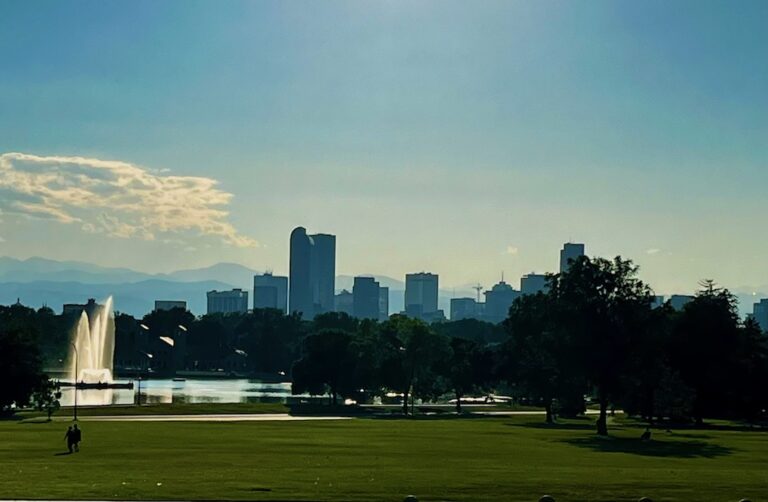
Once again, the month of March came in like a lamb, but exited like a lion or, more accurately, a lioness. No longer is March—or any month—the metaphorical province of the king of the jungle. It is now women on the ascent, including scores of Denver and Colorado Latinas, who are helping shape our future.

One, among many of the burgeoning number of amazing Latinas, is Amanda Pauline Sandoval, current sitting president of the Denver City Council. Sandoval thoughtfully insisted that her middle name be mentioned for this story as homage to her  father, the late Paul Sandoval, a decades-long force in Denver politics.  

While Sandoval credits her father for teaching her the art of politics with his “ability to bring people to the table,” she speaks as reverentially of her mother, Mary Helen Sandoval, who “taught us to stand up for people who had no voice.” 

Just growing up as the daughter of a political legend, Sandoval also benefitted from learning the retail side of politics from former councilwoman,, Judy Montero, one of a number of Latinas who’ve steered Denver and Colorado politics from one century into another.

While working at her family’s north Denver La Casita restaurant, she encountered Montero  who was dining at the time. Montero mentioned to her that she was looking for an aide.

“She asked if I knew someone who would be a council aide,” recalled Sandoval. She applied and got the job. “That’s when I really fell in love with the people connection with local government.”

Sandoval is now a link the chain of Denver’s accomplished Latina pols. Her name now sits alongside those of other city hall icons including Debbie Ortega, Ramona Martinez, Rosemary Rodriguez, Serena Gonzales-Gutierrez and Flor Alvidrez.

Sandoval also pays homage to Denver Latinas who serve in the state legislature like Julie Gonzales and the Bell Policy Center, a think tank where Angela Cobiẚn works on local and state policy issues.

Also on the political front, Colorado may soon have its own State Attorney General. Veteran politician Crisanta Duran announced her official entry into the statewide race in late February. If elected, Duran, the first Latina to serve as Speaker of the Colorado House of Representatives, would also become the first Latina to serve as Colorado’s chief law enforcement officer.

There are Latina legal giants, too. Christine Arguello is Colorado’s first federal judge. Regina Rodriguez also sits on the federal bench. Monica M. Marquez is the state’s first Supreme Court Chief Justice. Judge Terry Fox is a state Court of Appeals jurist. They are all ‘firsts’, but others will certainly follow.

There are Latina legal giants, too. Christine Arguello is Colorado’s first federal judge, Regina Rodriguez also sits on the federal bench. Monica M. Marquez is the state’s first Supreme Court Chief Justice. Judge Terry Fox is a state Court of Appeals jurist. They are all ‘firsts’, but others will certainly follow.

But politics and courts are just two arenas where Latinas are a growing force. Denver’s Elaine Torres has carved out a niche in both state government, once working for iconic Colorado Governor Roy Romer and now as a television executive. 

Torres, who grew up in Colorado Springs as the daughter of a city cop and homemaker mother, is Director of Community & Strategic Partnerships at Denver’s KCNC. In her role, she helps shape the station’s image, not simply in the metro area but the entire region.

Torres’ job requires a mastery over an eclectic array of responsibilities including helping shape the station’s strategic initiatives and community partnerships, managing special events, sponsorships, charitable giving, employee volunteering and more.

“I work across the station,” she said, connecting with sales, creative services and production. Outside the station, Torres works in partnerships with the Denver Art Museum, Boys & Girls Clubs of Metro Denver, Denver Rescue Mission, Xcel Energy, “among many others.” Torres tenure at Channel 4 is “24+ years,” she said.

Of course, other names that have been forces in Denver media are Cindy Pena, the first Latina to serve as a general manager/station manager in Denver at two network affiliates, and Channel 4’s Anna Alejo. Alejo worked first as the station’s multi-time award winning education reporter and now is Executive Producer of Community Impact.

Alejo also served as Chief Communications Officer for Denver Public Schools. She also was a board member for World Denver, an organization that, in conjunction with the State Department, brings international visitors to the country and Denver each year.

A north star in Denver and Colorado education is Denver native Susana Cordova. Cordova was named Colorado Commissioner of Education in 2023. The job is responsible for the public school education of nearly 900,000 K-12 students across 178 school districts. It’s a role she began in 2023. 

Cordova is no stranger to the challenge of leadership nor the job of inspiring young minds. The University of Denver alum began her journey in education as a bi-lingual classroom educator in DPS and rising all the way to Superintendent, a job she took on in 2018. Cordova left Denver for a two-year stint to serve as the second in command of the Dallas, Texas school system. 

While Alejo once told the story of public school education in Denver and Colorado and Cordova lead the state’s largest school system as DPS superintendent and leads as Education Commissioner, they are bookended by names likely unknown but equally impactful in education.

Esther Lubin, a name intimately known across Denver’s Latino landscape for her undiluted charm and kindness and soft and nurturing touch, is a retired DPS educator who shaped the minds of thousands of first, second and third grade children over decades. To friends and associates, Lubin is the gold standard of pure kindness and commitment to young minds.

LaVozColorado’s Pauline Rivera also holds a unique position among our city and region’s amazing Latinas. Rivera, who has a background in media having worked for Denver’s Channel 7, is publisher of Colorado’s oldest and largest bilingual newspaper. Rivera has received a number of state and national honors, including Publisher of the Year by the National Association of Hispanic Publications and, more recently, was inducted into the Colorado Press Club Hall of Fame Class of 2024. 

Since 1987, March, a 31-day slice of the year, has been celebrated across the nation as Women’s History Month. It is now fast-fading as we move into April and beyond. But the mark Denver and Colorado Latinas have made is historic and now and forever sewn into the fabric of the Centennial State.

Remembering Cesar Chavez

0

LaVozColorado Staff

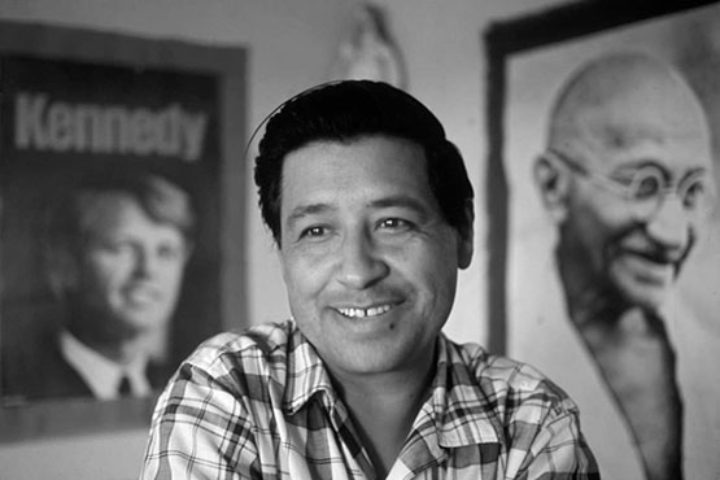
When we think of civil right leaders, names like Martin Luther King Jr., Harriet Tubman, Rosas Parks and Malcom X may come to mind, and rightfully so. However, Chicano activists can sometimes get lost in the fold – but not in Denver.

Photo courtesy: Cesar Chavez Foundation

March 25 marked Cesar Chavez Day, a day to observe the legacy of the civil rights and labor movement activist.

Chavez dedicated his life to working toward improving working conditions and wages for farm workers. He was born in Arizona in 1927, and him and his family worked on fields as migrant farm workers during the Great Depression. Chavez learned of unions as the 1930s began to unravel, and in 1962 he started the National Farm Workers Association. 

Chavez, joined the Community Service Organization, a group that worked to gather Latino voters to address things like immigration and police brutality. When the group made it clear that it wouldn’t start a farm workers union, Chavez left and started the National Farm Workers Association.

According to the Smithsonian, over 17 million people in the country supported farm workers by refusing to purchase grapes – something Chavez’s union advocated for.

California pushed to make life better for farm workers by forming unions to work for better wages and conditions.

“When poor people get involved in a long conflict, such as a strike or a civil rights drive, and the pressure increases each day, there is a deep need for spiritual advice. Without it, we see families crumble, leadership weaken, and hard workers grow tired,” said Chavez.

“Society is made up of groups, and as long as the smaller groups do not have the same rights and the same protection as others – I don’t care whether you call it capitalism or communism – it is not going to work. Somehow, the guys in power have to be reached by counterpower, or through a change in their hearts and minds, or change will not come,” 

His dedication and constant work on behalf of farm workers everywhere is remembered and honored.  The State of Colorado offices were closed on Monday, March 31st honoring Chavez’ birthday.

University of Denver men’s hockey team advances to Frozen Four

0

Over the weekend the University of Denver (3) men’s hockey team knocked off number 1 Boston College 3-1 to secure their spot in the Frozen Four. Boston College was physical from the start, crashing the net early and outshooting DU 11 to 5 before Denver’s first goal with less than 2:00 to play in the first period.  

By the second period, Boston’s aggression was smothered by an early goal from DU Forward, James Reeder. About six minutes later the Pioneers scored another goal; however, the goal was called off after it was determined they were offsides.  

With less than a minute left in the second period Boston College finally got on the board after Boston’s Forward Teddy Stiga broke away on a straight shot to the goal cutting Denver’s lead to one. 

DU goalie Matt Davis was phenomenal in Sunday’s matchup deflecting 35 of 36 shots on goal. Despite being outshot 36-25 the Pioneers fended off a 6 on 5 in the final two minutes of the game after Boston College pulled their goalie. The Denver Pioneers took advantage of the empty net and scored their third goal of the night punching their ticket to the Frozen Four. 

The Pioneers will face the Western Michigan Broncos after Western Michigan defeated UMass 2-1 on Sunday. Penn. State will face Boston University on Wednesday, April 10th. This is the 18th time that the DU Pioneers have made it to the Frozen Four winning 10 championships. 

In other sports the Colorado Avalanche have lost two straight at home after shutting out the L.A. Kings 4-0 last Thursday. On Saturday the Avs hosted the St. Louis Blues who beat Colorado 2-1. On Monday the Avs hosted the Calgary Flames and was leading the Flames 2-0 heading into the third with a power play to kick off the period. The Flames tied things up to send the game into overtime where they beat the Avs 3-2. 

This week the Avs are on the road in Chicago to face the Blackhawks (Wednesday, April 2 @ 7:30 p.m.), in Columbus Ohio to face the Blue Jackets (Thur., April 3, @5:30 p.m.) and in St Louis to face the St. Louis Blues (Sat., April 5, @ 5 p.m.).

The Denver Nuggets are at home this week to host the Minnesota Timberwolves (results of the game not available at the time of this writing) and will host the San Antonio Spurs on Wednesday at 7 p.m. 

On Friday the Nuggets will be in California to face the Golden State Warriors before returning home on Sunday to host the Indiana Pacers. 

The Denver Broncos added a quarterback to their roster after signing Sam Ehlinger of the Indianapolis Colts on Monday. Ehlinger was drafted in the 2021 draft in the sixth round. 

Pueblo awaits a much needed grocery store

A trip to the grocery store is usually a matter of jumping in the car and taking a quick drive. Easy, peezy, right? Not so for many of Pueblo’s eastside residents. They’ve been without an easy to get to grocery store now going on ten years! They’ve been living in a food desert. But there’s a forecast for a big rain to end the drought. A little history, first. 

The Safeway store that had been an eastside fixture for decades shut down in 2016. It didn’t shutter because of a lack of customers.

It closed because of too many of the wrong kind of customers. Boosters. Shoplifters. Thieves. The store was bleeding from theft.

Since then, said Pueblo City Councilman Joe Latino, area residents, along with those living just beyond the eastside, have had to drive across the city to buy their food. Many are elderly and don’t have ready access to transportation. Bad weather also complicates the matter.

“It just breaks my heart,” said Latino, a Pueblo native who worked away from the city but several years ago found his way back home again. “I get teary-eyed just thinking about it.” 

Latino, a retired teacher, coach and administrator in metro Denver and New Mexico for years before returning to Pueblo, said plans are being formulated to plant the store deep on the Eastside where what remains of Spann Elementary School now sits. The school that educated generations of Puebloans was destroyed in a 2023 fire thought started by homeless people who’d  squatted in the building.

Seed money for the undertaking comes from a $150,000 grant to Rocky Mountain SER under the Healthy Food Financing Initiative from the Department of Agriculture. Efforts are also underway to identify additional grants that bring the grocery store dream closer to reality.

While Pueblo’s Eastside is not unique across Colorado as a food desert, it does underscore what is sometimes a communal indifference to a problem nearly as serious as a power outage, said RMSER consultant Monique Marez. 

“When a neighborhood loses power,” Marez told The Pueblo Chieftain, “we don’t just say, ‘Okay, they just don’t have power anymore.’ We figure out how to get them back on the grid. Access to food is just as critical.” 

But living without access to the kind of grocery store other communities may take for granted also presents other challenges. Food desert residents often have to grocery shop at convenience or all-purpose discount stores that often dot low income neighborhoods. They also end up paying higher prices, getting nearly expired canned goods, poorer quality cuts of meat or less than fresh produce. Not having access to a decent grocery store and quality food options also presents potential health issues, for both ends of the age spectrum.

While Eastside residents may be buoyed by the idea that they’re finally going to break out of their fresh food exile, it won’t happen overnight or even this year. Latino guesses it may not happen for as much as two years. 

An early concept of what is hoped will come to fruition is a nearly 3,500-square-foot grocery store complemented by a 900-square-foot commissary kitchen abutted by a community space. A multi-purpose athletic facility is also part of the early stage blueprint. 

A sharing of ideas for the proposed project will be held at Pueblo’s Rocky Mountain SER Empowerment Center, 330 Lake Avenue on April 5th. A community meeting has been scheduled for April 15th at 5:30 p.m. at El Centro del Quinto Sol at 609 E. 6th Street to share ideas with East Side residents.

Latino has expressed confidence that something good will come from this undertaking. Eastside residents, he said, “deserve the very best.” The former educator believes Puebloans will come together on the plan, as they have, he said, for all of the city’s history. “Pueblo is the home of heroes. Nothing else needs be said.”

Negative trade imbalances were part of American leadership

David Conde, Senior Consultant for International Programs

The ashes of World War I was fertile soil for the rise of major world authoritarian powers. The three that most come to mind are Germany, the Soviet Union and Japan. 

Although the League of Nations organization and limitations on naval construction were instruments in trying to make World War I “the war to end all wars,” it did not stop these regimes from seeking international dominance.  It did not help that the Great Depression of the 1930s brought the world to the brink of disaster.

The economic conditions in the world along with the quest for political power led to the hostilities that triggered World War II. Once at war, the American industrial base and military superiority showed its colors to the point that the United States was left as the leader of the free world and the caretaker of those nations aspiring to a democratic way of life.

With the collaboration of its allies, America as a superpower, set about supporting the development of democracies and among other things, used trade relationships to further that goal. Negative trade imbalances, including tariffs by countries with weaker industries, were allowed in order that those countries could prosper and buy more goods from the U.S.

Also, since we were in competition with Communism and the Soviet block, it was understood that trade to create wealth in developing countries could best assure the building of democracies. America as a world leader could do no less.

After the recovery from the devastation of World War II, economic prosperity created by our partnerships and the fall of the Soviet Union, the notion of fair trade was introduced along with the building of trade blocks designed to add strength to regions like those of Europe and North America.

The trade landscape has been further changed by the emerging economic power of China and its projection as the near future number 1 economy in the world. That growing military and economic force is being met by a blanket set of tariffs not only on China, but all friends and foes alike. 

The North American Free Trade Agreement (NAFTA) signed in 1992 by the United States, Mexico and Canada and replaced by the United States, Mexico and Canada Agreement (USMCA) signed in 2020 appear to be overridden by a 25 percent  tariff on all Mexican and Canadian goods beginning April 2nd. The tariff move by President Trump has already sent Canada scurrying to find alternative markets for its products.

In the case of Mexico, there seems to be an undercurrent of confidence that there will be options available to the leadership. Among them is China.

Unlike the United States and Canada, Mexico has no political enemies and can deal with international economic realities in ways that make the most sense. Since it is an agricultural, manufacturing and industrial power closely tied to the United States, one would think that U.S. tariffs will be greatly felt.

That is true. However, that concern is combined with a feeling that the United States stands to lose more than Mexico on this matter.

President Trump is pressing his subordinates to get even more aggressive with tariffs as a way of transforming the economy. That strategy comes at the cost of a major change in the world order where the United States is no longer the global leader and allies are no longer in an interdependent relationship.

This also represents another push toward the decline of the West. And authoritarian China is in a position to take over.

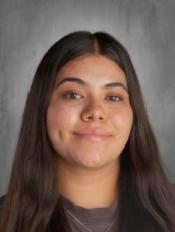
Student of the Week – Vivian Bustillos-Portillo

Vivian Bustillos-Portillo – Abraham Lincoln High School

Photo courtesy: Vivian Bustillos-Portillo

Profile

Vivian Bustillos-Portillo is a senior at Abraham Lincoln High School who currently holds a 3.2 GPA while working at a childcare center and at her family’s restaurant business. Bustillos-Portillo’s academic achievements include National Honor Society, National Spanish Honor Society, and sports achievement awards. Bustillos-Portillo’s is on the soccer team and belongs to the Latinx Student Alliance.

Favorite Book: Pedro Paramo by Juan Rulfo

Favorite Movie: In Time

Favorite Subject:  Art/Ceramics

Favorite Music: Mexican music genra/Rap

Future Career: Interior Designer

Hero: My uncle, David Bustillos

Favorite Hobby: Reading

Favorite Social Media Follow: Instagram

Words to live by: “Nothing is impossible, the only limit is death.”  – unknown

Community Involvement: Bustillos-Portillo volunteers through her school and the Latinx Student Alliance.

Why is Community involvement important? Bustillos-Portillo says that “Community participation is important because a united, responsible, respectful and, above all. empathetic community makes a big difference in our daily lives.”

If I could improve the world I would…

…. I would Improve everyone’s rights, quality of life, and health care.

College of choice: Bustillos-Portillo has been accepted to Colorado State University-Fort Collins.

The 2025 Acura TLX a winning combination of performance and comfort

LaVozColorado Staff

In the land of classic performers in automobiles, stands the 2025 Acura TLX.  Its high performing engine has 355hp 3.0 liter direct injection, Turbo 6-cylinder. It is equipped with 10-speed automatic transmission, SH-AWD System, Paddle shifters, electric power steering, immobilizer theft-deferred system and more. Its attractive look and power on the highway is a popular combination for the everyday consumer.

Photo courtesy: Acura

For your safety and convenience, the 2025 Acura TLX is equipped with driver/front passenger airbags and side bags, side curtain and knee airbags with rollover sensor, vehicle stability assist (VSA) anti-lock braking system (ABS), electronic brake distribution (EBD), electric parking brake, tire pressure monitoring system, LED Daytime running lights, LATCH System for child seats and more. Its many safety features keeps the driver safe.

The 2025 Acura TLX interior is equipped with driver recognition memory system, heated front seats, high resolution center display, WFI hotspot, push button ignition, push button shifter, and much more. Its many interior features allows ultimate convenience and comfort for the driver and its passengers.

The 2025 Acura TLX interior is equipped with a power moonroof with tilt feature, LED tail lights, keyless access system with Smart entry, remote engine start and more.

The 2025 Acura TLX registered 21-mpg between city and highway driving. Take a few minutes of your day and drive down to the Acura dealership and test drive the 2025 Acura TLX. You may just take one home!

RTD will provide temporary alternative downtown service

E Line will reroute to serve Downtown Loop; bus shuttles will replace all W Line trains east of Decatur • Federal Station

The Regional Transportation District (RTD) will perform necessary maintenance that will impact light rail service on the E and W lines traveling to and from Denver Union Station Tuesday, April 8, through Thursday, April 10.

During the three-day period, crews will replace overhead electrical wires at the Ball Arena•Elitch Gardens Station. Regular service on the E and W lines will resume on Friday, April 11.

E and W Line trains will not operate on their regular routes during the planned maintenance.

  • E Line service will not operate between Denver Union Station and the 10th • Osage Station.
  • E Line trains will reroute north of the 10th •  Osage Station to serve the Downtown Loop.
  • The Free MallRide connects Union Station to the Downtown Loop.
  • W Line trains will operate on a regular schedule between Jefferson County Government Center • Golden and Decatur • Federal stations.
  • Bus shuttle service will replace W Line trains between Union Station and the Decatur • Federal Station during the temporary disruption.

Boarding for bus shuttles will take place at the following gates:

  • Union Station – Gate B22 (underground bus concourse)
  • Ball Arena • Elitch Gardens Station:
  • To Union Station: south side of Auraria Parkway at 9th Street
  • To Decatur • Federal Station: north side of Auraria Parkway at 9th Street
  • Empower Field at Mile High Station and Auraria West Station:
  • tTo Union Station: east side of 5th Street at Larimer Street
  • To Decatur·Federal: west side of 5th Street at Larimer Street 
  • Decatur • Federal Station – Gate A

Customers whose trips are impacted by the temporary rail disruption are encouraged to use RTD’s Next Ride web app to view adapted schedules, plan a trip using alternate bus routes, and to see bus and train locations in real time. Customers are also encouraged to sign up for Service Alerts for specific route information.

Photo courtesy: RTD Facebook

Our Government

White House

The Supreme Court is set to hear Medina v. Planned Parenthood South Atlantic, with the White House seeking to deny use of Medicaid at Planned Parenthood. The Trump Administration has announced it would freeze $35 million in Title X family planning funding for Planned Parenthood and other organizations. 

Colorado Governor

The Sundance Institute named Boulder, Colorado as the new host of the Sundance Film Festival starting in 2027. “I’m beyond excited to welcome the Sundance Film Festival to Colorado starting in 2027.Now, with the addition of the iconic Sundance Film Festival, we can expect even more jobs, a huge benefit for our small businesses including stores and restaurants, and to help the festival achieve even greater success. Thank you to the Sundance Film Festival and all of the partners,” said Governor Jared Polis.

Denver Mayor

Mayor Mike Johnston welcomed the Sundance Film Festival to its new, permanent home in Colorado.“I am absolutely thrilled to welcome the Sundance Film Festival to Colorado as this cements our state’s place as one of the country’s great art capitals,” said Mayor Johnston.