






Home Blog Page 53

RTD names seasoned transit leader for new position of Deputy CEO

Angel Peña brings years of public and private sector experience enhancing transit infrastructure and community engagement
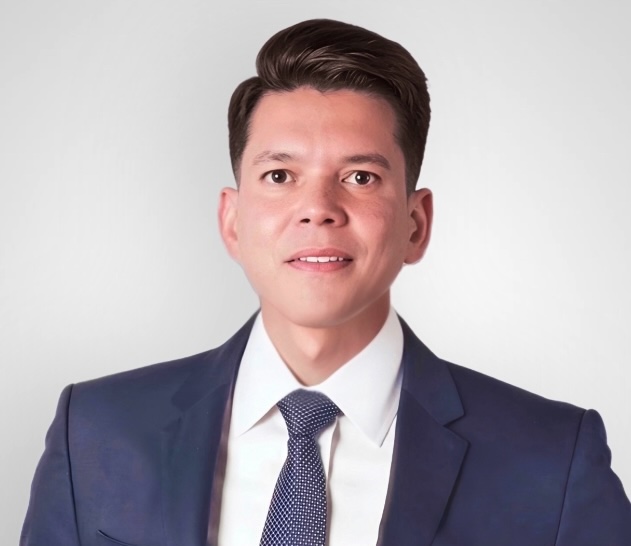
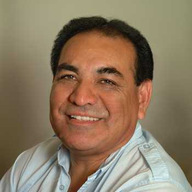
Photo courtesy: Regional Transportation District/RTD

The Regional Transportation District (RTD) has named Angel Peña as the agency’s inaugural Deputy Chief Executive Officer. Peña was selected following a national executive search and brings nearly 25 years of experience in both the public and private sectors. In the role, Peña will be tasked with advancing the agency’s vision for an operationally safe, reliable, and customer-focused transit system. He will lead the day-to-day operations and management of multiple RTD departments and divisions, including Capital Programs, Safety and Environmental Compliance, Civil Rights, Contracting and Procurement and Planning.

“Angel’s extensive background in transforming transit infrastructure, enhancing operational performance, and rebuilding public trust has prepared him well for this pivotal leadership role at RTD,” said Debra A. Johnson, General Manager and CEO. “I am excited to have him join our team of talented and passionate public transit professionals, where he can leverage his talents, expertise, and industry background to help address RTD’s current challenges and prepare the agency for the future.” 

Peña, a bilingual customer experience and results-driven transit executive, has made significant contributions in the public and private sectors. His leadership has been instrumental in managing teams and infrastructure projects at some of the nation’s largest transit systems. Peña held senior leadership roles at the Massachusetts Bay Transportation Authority (MBTA), Washington Metropolitan Area Transit Authority (WMATA), and the District Department of Transportation (DDOT) in Washington, D.C. His private-sector leadership experience includes serving as Vice President, Rail and Transit Leader for the Texas/Mountain Region at STV, Inc. In his role at STV, Inc., he collaborated with transit agencies across the region, leveraging his public sector insights to help improve service delivery, project execution, and long-term infrastructure planning.

“I am honored to join RTD and work alongside a dedicated team of professionals who are committed to serving the Denver metro region,” said Peña. “I recognize the challenges that may exist and see numerous opportunities for enhancing the services provided to customers, whom I look forward to meeting when I ride on the system. I am joining RTD during a pivotal time when the agency is focused on initiatives aimed at improving reliability, maintaining assets, and ensuring customers are satisfied with bus and rail services. Through extensive two-way dialogue and customer engagement, we will ensure the transit system reflects the values and aspirations of the communities we serve.”

Peña holds a Master of Science in Engineering Management from The Catholic University of America in Washington, D.C. and a Bachelor of Science in Industrial Engineering from Universidad Yacambú in Venezuela. He is a graduate of the prestigious Leadership American Public Transportation Association (APTA) Class of 2017 and was recognized in Mass Transit Magazine’s “Top 40 Under 40” for his contributions to the industry.

Peña will start in the role of RTD’s Deputy Chief Executive Officer on March 17.

Student of the Week – David Torres Palma

David Torres Palma – Denver East High School

Photo courtesy: David Torres Palma

Profile

David Torres Palma is a high school senior at East High School who currently holds a 3.46 GPA. Palma’s academic achievements include Honor Roll, Denver School United Nations Certificate, and Certificate in Coaches Mentoring.  Palma is involved in sports, is active in the Cross-country team and competes in 200- and 300-meter track events. Palma volunteers weekly for the West High School Community Food Bank and collaborates food box service delivery.

Favorite Book: The Little Prince – Antoine de Saint-Exupéry

Favorite Movie: A Whisker Away

Favorite Subject:  History

Favorite Music: Austin Farwell

Future Career: Architect

Hero: My mother, Heidy Palma, because she is the only one who has been there for us.

Favorite Hobby: Running, music and photography.

Words to live by: “he who is not fit to serve is not fit to live”. — unknown

Community Involvement: Palma volunteers for the West High School Community Food Bank.

Why is Community involvement important? Palma says, “Serving the community is important to me because it strengthens the work of helping the community.  Helping others is important.”

If I could improve the world I would…

“…. I would create a world without evil so that all human and living beings can live in peace.”

College of choice: Palma has been accepted at Colorado State University –Fort Collins.

The ironic connection of migration and skin color

0
David Conde, Senior Consultant for International Programs

The anti-immigrant fervor of the moment led by a new political leadership and the plans to deport millions of the undocumented from the United States is part of a chaotic drive to substantially change the ethnic and racial face of the country. This is also consistent with President Trump’s recent Executive Order to cut U.S. aid to South Africa and at the same time, provide for resettlement in America of White Afrikaners, as refugees.

Evidently, Trump was outraged by a South Africa land reform law that seeks to “redress land inequalities that stem from South Africa’s history of white supremacy.” This correction goes all the way back to 1950 when the Afrikaner National Party seized 85 percent of the land and even today, these people who make up only 7.3 percent of the population, own three quarters of the land.

The racial and ethnic tinge of selective of immigrant and refugee enforcement is somewhat ironic when it is related to the larger context concerning human evolution. The truth is that all of our ancestors, regardless of current racial make-up, came from Africa, were Black and had the wide nose we associate today with many of the darker people in the world.

Many of our attitudes on race and human features belies the point that in the beginning we were all the same. It has only been in the last fifty thousand years that our color and features have gradually changed to the variations we see today.

Another irony is that the very thing that changed the way we look is migration. Migration is the mother word to immigration, the current politicized term we use to describes the process by which people come into our country. 

Beginning some 70 thousand to 100 thousand years ago, the departure from Africa to colder regions of the world and with less sunlight began to affect the features of these immigrants. In Africa, dark skin has been very necessary because in that tropical climate, it provides the best defense against ultra violet radiation (UVR).

People did not need as much of that color protection in areas with less sunshine and UVR. The nose, another prominent feature in humans, also changed according to the climate. 

The adaptation to warm and moist climates included a wider nose. As the ancient immigrants traveled to colder and drier climates they adapted by developing a more narrow nose.

Over time, Africa, the cradle of the first great civilizations, was left behind just like other ancient cultures in America, Asia and elsewhere. 

As such, they were further victimized by conquest and colonization that denigrated their status to the point that they have become the targets of perverse power brokers seeking to claim superiority because of color and features.

Today, the immigrant is most associated with the Latino population in America. In some sectors of that community, it is also creating confusion and identity issues. 

We are seeing many in the Latino community, including former undocumented immigrants and their families, turn their backs on the new arrivals and intimate that this new people are less than those that came before. Many may know that this also happens when home languages are abandoned and world views change drastically.

Anti-immigrant initiatives that also offer openness to White immigration amounts to a sinister contradiction. However, it does confirm the struggle by those in power to maintain a majority as an overriding concern.

Current immigration policies are like telling people to go back to where they came from. Does this mean Africa?

Get Ahead Colorado helps families claim valuable tax credits

Tax season is here, and many Colorado families could get thousands of dollars back on their taxes—but only if they claim the credits they qualify for!

The new Colorado Family Affordability Tax Credit could mean up to $3,200 per child for families with young kids. Plus, other tax credits like the Earned Income Tax Credit and Child Tax Credit can add even more money back into your pocket.

The Get Ahead Colorado and Hacia Adelante Colorado campaigns, run by the Colorado Department of Public Health and Environment, make it easy to claim these benefits. Families can access free tax filing help and a new tax credit calculator that instantly estimates how much they could get.

“We want every family to know about these credits and how easy it is to claim them,” said Isabel Dickson, Economic Mobility Program Manager at CDPHE. “Even if you don’t normally file taxes, you could still get money back—just by filing. Tax credits have been proven to reduce child poverty while improving health and educational outcomes. When Coloradans have the financial resources to meet their basic needs, individuals, parents, and children can thrive.” 

How families can get free tax help:

  • File online for free.
  • Get virtual help from IRS-certified tax experts.
  • Visit an in-person tax assistance site near you.

This year, Get Ahead Colorado, in partnership with Gary Community Ventures and MyFriendBen, has introduced a tax credit calculator that estimates the federal and state tax credits families may be eligible to receive. “With just a few clicks, eligible families can uncover significant financial support that could make a real difference in their lives,” Dickson said.

Key Tax Credits for 2024

  • New Colorado Family Affordability Tax Credit: Up to $3,200 per child aged five or younger and $2,400 per child aged 6 to 16.
  • Federal and State Earned Income Tax Credit: Up to $7,830 depending on the number of children and income, with a 38 percent state match.
  • Federal and State Child Tax Credit: Up to $2,000 per child under 17 for the federal credit and up to $1,200 for the state Child Tax Credit. 

Visit GetAheadColorado.org or HaciaAdelanteColorado.org to explore these resources and claim your tax credits today.

Our Government

White House

President Donald J. Trump signed a memorandum to defend American companies and innovators from overseas extortion. This Administration will consider responsive actions like tariffs to combat the digital service taxes (DSTs), fines, practices, and policies that foreign governments levy on American companies.

Colorado Governor

At the 2025 Winter Meeting of the National Governors Association (NGA), Governors approved federal priorities to advocate to the 119th Congress and the administration. The priorities were developed by three bipartisan, Governor-led task forces who meet regularly to discuss issues and policies that impact states, territories and commonwealths. The federal priorities are backed by a resolution that was unanimously voted on at today’s business session to serve as a roadmap for NGA’s advocacy efforts at the federal level. “As Governors, we are always looking for new ideas that can help us deliver better results,” said NGA Chair Colorado Governor Jared Polis.

Denver Mayor

The former Park Hill Golf Course is on a path to becoming one of Denver’s largest parks. The site will be open to the public within the next few months and resemble open space to start. However, Parks & Recreation is already collecting feedback and is launching full steam ahead to make this park one of the city’s crown jewels.

A Week In Review

0

Africa 

Kenya welcomes rare antelopes

The United States has transferred 17 rare mountain bongos to Kenya. The animals are a rare type of antelope and were at risk due to habitat loss, poaching, disease, and illegal activities. The mountain bongos will now live in a wildlife sanctuary near Mount Kenya. 

Sudan army halts paramilitary hold on state

The Sudanese army said it has stopped a two-year siege imposed by the paramilitary group Rapid Support Forces on the state capital of el-Obeid. The army and the paramilitary group have been at war for nearly two years, causing tens of thousands of people to die and millions forced from their homes. El-Obeid is seen as a strategic area that connects the capital Khartoum to Darfur. 

Asia 

New Zealand minister resigns 

Andrew Bayly, New Zealand’s commerce minister, has resigned from his position. He recently said he “placed a hand” on a staff member’s upper arm and described his behavior as “overbearing.” Bayly will remain as a member of parliament. He is the first minister to resign under Prime Minister Christopher Luxon’s administration. 

Elephants killed in train wreck 

At least six elephants were killed when a passenger train derailed, striking a heard of the animals. The incident occurred near a wildlife reserve in central Sri Lanka. No passengers were injured, and two injured elephants are being treated. There are around 7,000 wild elephants in Sri Lanka.

Europe 

Knife attack leaves one dead in France

One person was killed while five police officers were injured in a knife attack in France. A suspect was arrested at the scene, and officials have opened a terrorist inquiry. The attack occurred near a busy market in Mulhouse, an area close to the borders with Germany and Switzerland. 

Pope remains in critical condition 

The Vatican announced that Pope Francis remains in critical condition with respiratory and kidney problems. A Monday statement from the Vatican said Pope Francis is resting while other outlets have reported that he is in good humor and eating normally. Pope Francis has been in a hospital for more than a week. 

Latin America 

Former Brazil president charged 

Brazil’s top prosecutor has charged former Brazil President Jair Bolsonaro of leading an attempted coup. Bolsonaro is accused of aiming to prevent current President Luiz Inacio Lula da Silva from taking office. He is also accused of planning to poison Lula. Bolsonaro denied any wrongdoing.

Dozens dead in Bolivian bus crash 

At least 30 people were killed in a bus crash on a mountain road in Bolivia. Around 14 people were injured, including four children. Bolivia is known to have dangerous roads, especially in mountainous areas. Road accidents kill around 1,400 people each year in Bolivia. 

North America 

Measles cases on the rise

Officials in Texas reported 90 diagnosed cases of measles the past month. Meanwhile in New Mexico, health officials said nine people have become sick in Lea County. Measles is contagious and can be deadly, especially for pregnant women and young children. 

Former Proud Boys leader arrested 

Enrique Tarrio, the former leader of the far-right Proud Boys, was arrested outside the U.S. Capitol. He was recently pardoned by President Donald Trump for his role in the January 6 riot. Tarrio is accused of striking a phone and a woman’s arm after holding a news conference last week.

Colorado’s Black History Month celebrations

0

At a time when the new Presidential administration is rolling at high speed to scrub ethnic and gender references from government websites and departments, Colorado is holding down the fort. It continues to honor the contributions of Black Coloradans for Black History Month.

And there is no better example than what state and city museums up and down the Front Range are doing to mark February’s annual celebration. From Boulder to Denver to Pueblo, Black History is on tap.

Since being inaugurated on January 20th, President Trump has made it clear that he’s no fan of diversity, equity and inclusion. Calling DEI “illegal and immoral discrimination,” Trump has issued a directive ordering “the termination of all discriminatory programs, including DEI.”

Almost everything with even a hint of diversity, equity and inclusion is in the crosshairs of the new administration. Ironically, he did not include this year’s  commemoration of Black History Month. Instead, he issued a proclamation offering praise and “tremendous gratitude to Black Americans for all they have done.

At the same time, however, he ordered the Department of Defense to cancel Hispanic Heritage Month, National Disability Employment Awareness Month, Pride Month and Women’s History Month.

While it was originally called Negro History Week and celebrated the second week of February to coincide with the birthdays of President Lincoln and abolitionist Frederick Douglas, Black History month gradually grew into what it is today. In 1976, President Gerald Ford officially recognized the month along with its current name.

At History Colorado, Black History Month is being marked with a third floor exhibit that illuminates various Black Denverites and their contributions to the city and state. The exhibit will run through the year.

A major wing of the exhibit highlights Denver’s Owl Club, an African American social organization founded in 1941 by a small group of railroad pullmen, waiters and businessmen and dedicated to celebrating the contributions of African 

Americans, honoring civil rights advocacy and confronting racial stereotypes of African Americans.

The exhibit also features small vignettes of African Americans who have had an impact on Denver from the earliest part of the 20th century to today. The wall of fame features Omar Blair, the first African American to serve on the Denver School Board, Elvin Caldwell, an undertaker by trade but major mover and shaker on the latter 20th century Denver City Counciland Ernestine McClain Smith. Smith was the daughter of Denver’s first Black dentist, Dr. Thomas Ernest McClain. McClain Smith, a dancer and dance teacher, was also an ardent advocate for civil and human rights.

There is also a space for Condoleezza Rice who attended the University of Denver where she earned a Ph. D. Rice also served as Secretary of State for President George W. Bush

Rice, now on the faculty at Stanford University, remains connected to Denver as a minority owner of the Denver Broncos.

Black History Month is blended into every month at Denver’s Black American West Museum. The museum, located at 3091 California Street, tells the often hidden or even obscure stories of amazing African Americans who have played a role in Denver’s past and present. 

It tells visitors the stories of America’s first Black female millionaire, Madam C. J. Walker who made her fortune making and selling hair and beauty products specifically for Black women,

Hattie McDaniel, the first African American to win an Oscar for her role in “Gone with the Wind,” and Joseph D.D. Rivers, who founded the state’s and Denver’s first African American newspaper. 

The Colorado Statesman, later the Denver Star, took the daring move to condemn the racist D.W. Griffith movie, ‘Birth of a Nation,’ for its caricatured depiction of African Americans who, in the movie, were portrayed by White actors in blackface. The paper called on its readership and everyone to boycott the movie.

The Museum of Boulder in conjunction with the Carnegie Library for Local History is offering visitors what it calls “a comprehensive, but not complete, look at the African American experience in Colorado.” The exhibit runs through September. 

“The Black history exhibit has been in development for two years,” said museum Communications Coordinator Savannah Snowdy. “The main objective is to amplify the Black perspective in the Boulder community and state of Colorado and preserve and share Colorado’s Black history.” 

The museum, said Snowdy, will also be screening the documentary “This is Not Who We Are,” on February 20th from 6:00 p.m. to 8:00 p.m. Katrina Miller who created the film will be at the screening to meet and answer questions about the production. She will also return on February 27th for a live recording, a “humanizing recording,” the theme of which will be ‘The Evolution of Black Culture in Boulder County.

Pueblo will also be honoring the contributions of African Americans who have left a legacy in the state. The El Pueblo Museum will screen “Buffalo Soldiers Fighting on Two Fronts,” on February 21st. Admission is free. The museum is located at 301 North Union.

NBA All-Star wraps up, 4 Nations wrap up this week

0

Some of the nation quietly watched the NBA All-Star game over the weekend, which also rolled out a new format that some of the players weren’t in agreement with. 

The Master of Ceremonies was none other than comedian Kevin Hart, who on several occasions echoed the displeasure Shaquille O’Neal and Charles Barkley have been saying for years on Inside the NBA on TNT, “3-point shooting is ruining the game of basketball.”

While critics have shown their displeasure with how the game is being played today compared to how it was played in the 80’s, 90’s and even the early 2000’s, the viewership has been on steady decline, while attendance has seen an uptick mostly due to the NBA’s social media presence.  Some note that the decline is impart due to the switch to games being featured on streaming apps. 

Viewership is slightly up this season from last season but still lower than the previous 20 season before the 2024-25 season. 

Sunday’s game had its fair share of entertaining moments but the writing is on the wall, and fans are just not tuning in to games anymore, including the All-Star weekend. 

The other sports league who’s seen a decline in viewership also changed their format to their ‘All-Star,’ week in the NHL. The new format has changed the name to 4 Nations Face-Off, which features teams from Canada, the United States, Finland and Sweden, who all play in round-robin format followed by the top two teams in the Final. 

This year, the Canadians and the United States will face-off in the Final game after a contentious game late last week that included three fights in the first nine seconds. Many believe the fights were a result of a hale of boos that rained down during the U.S. National Anthem at Bell Centre in Montreal. 

This week the Canadians and Americans will face-off on Thursday night at TD Garden in Boston where fans will likely reciprocate the gesture, which would make for an interesting matchup for the Final. 

While the boos have nothing to do with the game itself but Canadians showing their displeasure for the series of events that have taken place across the political arena in recent weeks. 

Thursday nights game is scheduled for Thursday night at 7 p.m. MST.

Pueblo celebrates Black Americans contributions

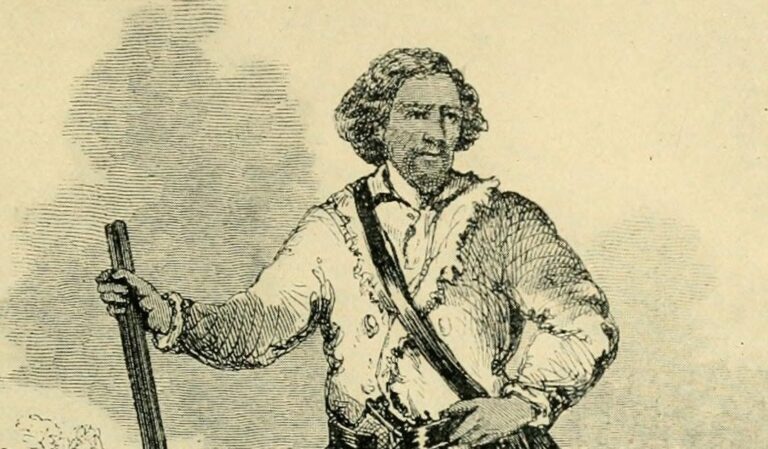
Some of Colorado’s best kept secrets are held in the El Pueblo History Museum. If you haven’t made the hundred or so mile trip to Pueblo, you might want to put it on your list of ‘things to do.’ Once there, you’ll find that southern Colorado’s economic and cultural hub was founded by one of the early West’s most iconic but mostly unknown, African Americans. 

Photo courtesy: Library of Congress

James Beckworth, along with a few other pioneering men and women, led a life of adventure. It was a life that began as a slave, but once emancipated, an odyssey that included the life of a rugged frontiersman, trapper, military scout and even an Indian chief. Though, while he interacted with a number of tribes, the title may certainly have been ceremonial.

He moved with ease among the various Native American tribes, including the Crow as he navigated across the years and the West. He arrived in Pueblo in 1842, and Fort Pueblo was both named and born.

“Some would say that he exaggerated his feats,” said Dianne Archuleta, Director of History at the El Pueblo. He certainly may have. History, after all, is riddled with mystery. But Beckworth, also spelled Beckwourth, has his name on California’s Beckworth Pass and various passages in history books place him at various moments and locations in the 19th century West. By all accounts, said Archuleta, “He went on to help westward expansion.” 

While Pueblo’s African American population has historically been meager, the museum nonetheless pays homage to not only persons like the iconic Beckworth, it also honors African American contributions to the region and state. 

Black History Month at the El Pueblo, located at 301 N. Union Avenue, will also host a screening of “Buffalo Soldiers Fighting on Two Fronts,” on February 21st. Dru Holley, who directed and produced the film, will be part of the evening to answer questions from the audience following the film. Archuleta said there will be no cost of admission. 

The Buffalo Soldiers were African American soldiers who served mainly across the early West. In all, there were six all-Black cavalry and infantry regiments created by an act of Congress. Lore has it that they got their name, Buffalo Soldiers, from Native Americans who thought the darkness and texture of their hair was similar to the buffalo that roamed the plains.

Another theory is that it was the ferocity with which they fought—like buffalo—that earned them the name. Whichever it was, the name now belongs to history. 

Archuleta said the museum will wind up February and Black History Month with the NAACP’s ‘Sound of Freedom’ concert. Scheduled for February 27th. The performance will feature students from Pueblo’s Corwin International Magnet School. 

But while Black History Month is celebrated each February—for now—Black history, said Ami Bajah Onyejekwe, is every day. Onyejekwe, a native of Nigeria, and now faculty coordinator of the Colorado State University-Pueblo School of Nursing, says students in the program receive hands-on diversity training.

“We try and reflect different backgrounds,” she said. Students train on “mannequins that portray real complexions,” with skin tones that reflect the spectrum of patients they may one day encounter. “The goal,” said the African born Onyejekwe, “is to expose students to diverse backgrounds, how to do assessments.” Students learn that nursing is not a ‘one-size-fits-all’ experience. Students, she said, learn how to “treat and relate” to each person.

Being non-native to the U.S., Onyejekwe says she appreciates the country’s celebration of Black History. “It and all history are really important,” she said. As a relative newcomer but one whose forefathers may have been brought here centuries ago, the Pueblo educator knows the critical role played by African Americans in the American story. “It’s important we showcase” the things they did. “Knowledge is good. It’s key and helps understanding.”

Colorado Parks and Wildlife acquires new land

0

Hunters and anglers will have 120 acres in Park County to explore after Colorado Parks and Wildlife acquired the site. 

The area, located about six miles southeast of Jefferson and abutted by Michigan Creek and County Road 77, is set to become Michigan Creek State Wildlife Area and will be managed by Colorado Parks and Wildlife. According to a release from Colorado Gov. Jared Polis’s office, the land contributes to critical wildlife habitat continuity with neighboring Bureau of Land Management and National Forest Service Lands in Park Co. 

“Protecting our iconic great outdoors for future generations to enjoy is one of my administration’s top priorities. Colorado is home to some of the best outdoor recreation in the nation, and I am thrilled to continue our state’s legacy to preserve land and protect our great outdoors. This new State Wildlife Area protects our natural resources while offering Colorado hunters and anglers more recreational opportunities,” said Polis in the release. 

The journey toward Colorado Parks and Wildlife acquiring the Michigan Creek State Wildlife Area began in 2023 when a private landowner approached Western Rivers Conservancy to donate the land toward conservation efforts. Following that, Western Rivers Conservancy placed a conservation easement on the property toward the end of 2024 and held title to the land until conveying it as a donation to Colorado Parks and Wildlife. 

The Michigan Creek is a tributary of the South Platte River and Tarryall Creek and is home to a naturally-reproducing population of brook and brown trout. The area also offers increased hunting access to deer and elk in Game Management Unit 50. 

“The donation of Michigan Creek State Wildlife Area is a win for conservation,” said Mark Lamb, Area Wildlife Manager for Colorado Parks and Wildlife, in the release. “We are grateful for partners like Western Rivers Conservancy and Colorado Open Lands in the continued effort to preserve habitat and increase public lands for hunting and fishing. We will work to try to have Michigan Creek SWA open to the public by the end of the year.”

The Michigan Creek State Wildlife Area is the second land acquisition in Park County between Colorado Parks and Wildlife and Western Rivers Conservancy. Last year, the two entities acquired the Collard Ranch State Wildlife Area, a piece of land that totals 1,980 acres of scenic habitat conserved. 

Funding for the Michigan Creek State Wildlife Area came from the Park County Land and Water Trust Fund. 

“Conserving such a scenic and healthy stretch of Michigan Creek in an area so many Coloradans treasure is something to celebrate,” said Allen Law, Western Rivers Conservancy Interior West Project Manager, in the release. “Western Rivers Conservancy is thrilled we could expand our efforts in the South Platte Basin to help fish and wildlife thrive and to create better access to South Park’s rivers and open spaces.”