






Home Blog Page 56

CDPHE to send reminder texts and emails about MMR vaccine

0

Stay up-to-date on routine vaccines to keep Colorado communities safe and healthy

The Colorado Department of Public Health and Environment will send text message and email notifications to parents and guardians of nearly 63,000 children aged 4-6 years whose records in the Colorado Immunization Information System show their child/children may be overdue for a measles, mumps, and rubella (MMR) vaccine. 

“Measles is highly contagious and can cause very serious health complications,” said Dr. Rachel Herlihy, state epidemiologist, CDPHE. “With measles cases on the rise both globally and in the United States, it is crucial to ensure our Colorado communities are protected through vaccination.”

In 2024, there were 284 measles cases across 32 states in the U.S., nearly five times the 59 measles cases reported in 2023.

The text messages will come from 45778 and read: 

From CDPHE: According to our records, your child/children (4-6 yrs) may be overdue for their measles, mumps, and rubella (MMR) vaccine. Measles is a serious disease that spreads easily, hanging in the air for up to 2 hrs. The MMR vaccine is the best way to protect your child from measles. It greatly reduces their chance of getting measles, which can cause serious and long-lasting health problems. Contact a vaccine provider today: https://cdphe.colorado.gov/find-no-cost-vaccine-provider.

You can exempt your child/children from school-required vaccines. More info: https://cdphe.colorado.gov/vaccine-exemptions

STOP=Exclude from future reminders

Emails will come from cdphe.vaccine.registry@state.co.us and read:

Dear parent(s) and/or guardian(s),

According to state public health records, your child/children aged 4 through 6 years may be overdue for their measles, mumps and rubella (MMR) vaccine. 

Measles is not just a rash. It’s a disease that can lead to respiratory failure, brain swelling, and even death. Measles spreads easily. It can hang around in the air for up to two hours and stays on surfaces, too. If one person has it, nine out of 10 unvaccinated people around them will get measles.

The MMR vaccine is the best way to protect your child from measles. It greatly reduces their chance of getting measles. With the rise of measles cases across the United States, now is the time to make sure your child is protected. 

The MMR vaccine is easy to get. You can find it at doctor’s offices, community health centers, pharmacies, public health clinics, and some schools. Contact a health care provider or your local public health agency to make an appointment and learn more about which additional vaccine(s) might be recommended. 

If your child/children are already up to date with their MMR vaccine, let us know by filling out this Google form. Be sure to attach a copy of their vaccine record. We are standing by to update their vaccination record in our Colorado Immunization Information System and will notify you by email when it has been updated.

You can exempt your child/children from school-required vaccines. For more information, visit 
cdphe.colorado.gov/vaccine-exemptions.

You can access the immunization record for yourself or your child from the online Colorado Immunization Information System self-serve portal. For more information, including step-by-step directions on how to use the portal, visit https://cdphe.colorado.gov/immunization/for-the-public/get-a-copy-of-your-records.

Most health insurance plans, including Medicaid and CHP+, cover the cost of routine childhood vaccines, so you don’t have to pay anything at providers that accept your health plan. Even if you don’t have any health insurance, you can get recommended vaccines for free at one of nearly 600 vaccine providers statewide.

Our Government

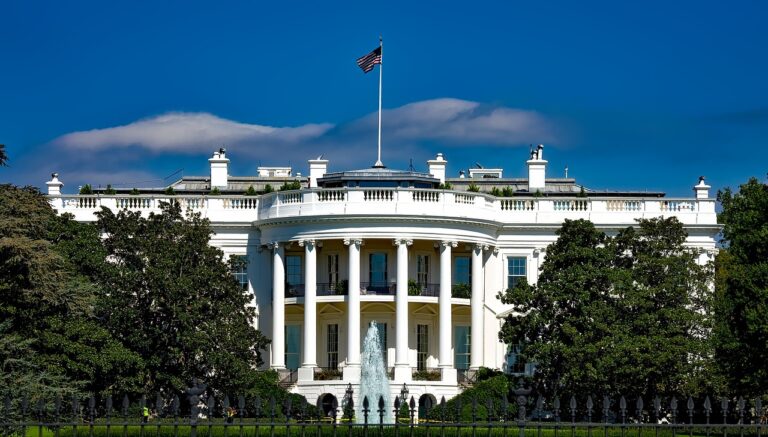
White House

Expanding Migrant Operations Center at Naval Station Guantanamo Bay to Full Capacity: “I hereby direct the Secretary of Defense and the Secretary of Homeland Security to take all appropriate actions to expand the Migrant Operations Center at Naval Station Guantanamo Bay to full capacity to provide additional detention space for high-priority criminal aliens unlawfully present in the United States, and to address attendant immigration enforcement needs identified by the Department of Defense and the Department of Homeland Security.”

Colorado Governor

Governor Polis released the following statement on the multi-state lawsuit filed against President Trump’s funding freeze and the court’s decision to issue a temporary restraining order to halt the freeze.“This is an important step in protecting critical federal funding that supports Colorado’s people, businesses and communities across the state. We are committed to delivering real results and improving affordability and quality of life for the people we serve, and this chaotic federal freeze would have devastating impacts.”

Denver Mayor

Mayor Mike Johnston announced new citywide goals for 2025 to guide Denver’s work and solve the city’s toughest challenges. After making significant progress on the city’s shared goals in 2024, Mayor Johnston’s 2025 goals push to continue making progress on key initiatives like reducing homelessness, driving down housing costs, and increasing public safety, while increasing focus on additional priorities like climate resiliency and making Denver the best place in America to raise a family.  “Amidst the feeling of chaos and unpredictability in our federal government right now, our message to Denverites is clear: we’re focused on delivering the best services for our residents, and we’re not slowing down,” said Mayor Mike Johnston.

A Week In Review

0

Africa

Ghana soccer fan killed

Francis Yaw Frimpong, known as Pooley, was stabbed to death during a soccer match in Ghana. He was killed by an unidentified man during the game after an argument, according to officials. Violence at soccer matches is a common issue in Ghana. Over 20 years ago, a riot left 120 people dead in the capital of Accra. 

DR Congo fighting continues

At least 700 people have been killed during fighting in the eastern part of Republic of Congo. Recently, M23 rebels who are backed by Rwanda captured the capital of the North Kivu province. While this conflict dates back to the 1990s, violence has ramped up in recent weeks. 

Asia

Shein back in India

The Chinese fast fashion app Shein is now available in India again five years after it was banned. The company reached a deal to sell products manufactured and sourced in India on the app. India had previously banned Shein and other Chinese apps like TikTok because of data security concerns. 

Australia flooding forces evacuations

Flooding in Australian isolated communities in Queensland has forced thousands of people to evacuate. The flooding also killed a man and cut power to homes. Parts of the region has already experienced nearly 4.2 ft of rain since Saturday. Rescue efforts have been stalled because of flood damage to parts of the Bruce Highway. 

Europe

Berlin protests against far-right

Thousands of people gathered in Berlin to demonstrate against the far-right Alternative for Germany party. Recently, some parties voted alongside Alternative for Germany over a non-binding resolution on immigration. Germany is scheduled to hold its national elections in three weeks. 

Four killed in Ukraine from Russia strike

Officials in Ukraine said four people were killed and dozens injured when Russia bombed a boarding school in Ukrainian-occupied Russia. The school was holding civilians who were sheltering and preparing to evacuate. Russia blamed Ukraine for the bombing saying the country carried out a targeted missile strike. 

Latin America 

Thousands of endangered frogs travel from Chile

Endangered male frogs traveled 7,000 miles by boat, plane, and car to the London Zoo from a remote island off Chile. The Southern Darwin frogs were taken as part of an urgent mission to rescue the species. Once they arrived to the zoo, the male frogs gave birth to 33 offspring. 

Brazil World War II era ship discovered

Officials in Brazil have located a troop transport ship which was sunk by Nazi Germany more than 80 years ago. Brazil’s navy confirmed the discovery by using sonar imagery. The ship was originally used to transport supplies, sailors and soldiers along the Brazilian coast. 

North America 

Trump delaying Mexico tariffs

Mexico President Claudia Sheinbaum said U.S. President Donald Trump is delaying tariffs on imports from the country for a month. Trump recently said he will impose a 25 percent import tax on goods from Mexico. He also plans to impose taxes on goods from Canada and China. Trump warned he would “definitely” impose trade tariffs on the EU but said a deal could be worked out with the UK. 

USAID set to close

Elon Musk announced that United States Agency for International Development (USAID) employees were told to stay-home at the start of the week. Musk said the Trump administration is planning on closing the agency. Over the weekend, the USAID’s website stopped working. CBS reported that hundreds of USAID employees were locked out of their email as well.

Trump’s first week in office

0

Wow! You don’t often see a serious news story begin with that kind of exclamation. But after the new President’s first days on the job, ‘wow’ is perhaps the safest word beyond a simple expletive to describe the first week on the job for the country’s new Chief Executive. 

But keeping true to his word, Donald Trump made his return to the Oval Office known in anything but a subtle way. He took direct aim at the Constitution, the nation’s health care, immigration policy and  official designations for gender. He also ordered everything from JFK’s assassination to secret information on UFOs declassified. And that’s only a sliver of his signings. 

While it may take only a short time for the ripples of his executive orders to take hold, two stood out. One was his order to scrub the Constitution of the 14th Amendment which grants citizenship to children born here—including Native American children. They are now targets. The other, an immediate mass deportation of undocumented immigrants. 

“My first reaction,” said Colorado Attorney General Phil Weiser, “it’s really sad…and wrong!” Weiser, along with 20 fellow state attorneys general immediately vowed to both fight the order and protect the Constitution.  

“I don’t know what is motivating him,” Weiser wondered. His actions are “at odds with the Constitution.” “The way the system works, people are treated fairly under the law.” 

In justifying his assault on the 14th Amendment, Trump repeated his assertion that the U.S. is the only nation that grants immediate citizenship to children born in the country. The truth is that as many as 30 nations, including Canada and Mexico, grant birthright citizenship.

Trump’s edict on deportations—which grants extraordinary new powers to immigration officials—was almost immediately acted on by border czar, Tom Homan. The ex cop ordered immediate  roundups in Boston and Newark with more to come.

Detained immigrants, which mistakenly included an American citizen, were flown out of the country on U.S. military aircraft. Ironically, Mexico denied the use of its airspace to either flight forcing the giant C-17 cargo planes to reroute.

Colombia joined Mexico in banning the flight and (at press time) a trade war remains a possibility. 

At the Inaugural Prayer Service, a traditional stop for a new president, Mariann Budde, the Episcopal Bishop of Washington, using Jesus’ own words, pleaded with Trump to “have mercy upon the people in our country who are scared now.” 

Budde’s sermon emphasized biblical admonitions to treat immigrants, LGBQT and marginalized groups with kindness and respect. Trump, who sat glumly in the front row as the cleric made her plea, later demanded an apology for a “boring and uninspiring” service and for injecting politics into the service. He also demanded an apology from the “so called Bishop.”

While Trump stopped short of keeping his once half-joking promise of being a dictator “but only on day one,” his litany of executive orders certainly pleased his supporters. 

His promises followed the glide path of Project 2025, the far-right manifesto of his campaign. Other signed promises to his base included deploying U.S. military to the southern border; continuation of wall construction; taking legal action against sanctuary cities and cutting off federal dollars; pursuing the death penalty for undocumented immigrants convicted of capital crimes; expanding guidelines for immigration officials to enter schools and churches. 

The last item—expanding guidelines for entering schools and churches—received almost immediate backlash from various Denver metro area school districts. One north metro school principal counselled staff to ‘lock your doors and not open them’ if immigration officials demanded entry.

But as shocking as any of his first-week edicts were, his blanket pardons and commutations of as many as 1,600 January 6th Capitol rioters, including scores who assaulted Capitol police stood out.

Despite many pleading guilty to their crimes, Trump ignored the evidence of their actions and freed every single one within hours of taking his oath of office.

Trump also took aim at a regular campaign whipping boy, DEI, Diversity, Equity and Inclusion. His first week’s assault on what he has regularly called the ‘deep state’ also included laying off all staff working in the Office of DEI. He also voided a 60-year-old Civil Rights-era anti-discrimination rule. 

Trump’s ‘to do’ list, said Metropolitan State University-Denver political scientist Rob Preuhs, is a clarion call to his voters. “He wants to maintain enthusiasm with his base” and buttress support for his agenda in Congress, Preuhs suggested.

While Trump’s assault on the Constitution may end up going nowhere—a federal judge has already blocked it—Preuhs said Trump is not stopping. He compared Trump’s effort to the 1882 Chinese Exclusion Act. The act was a federal law that prohibited Chinese laborers from entering the country and prevented Chinese immigrants from becoming citizens. The law remained in effect until 1943.

Trump also signed executive orders to withdraw from the World Health Organization (WHO). And like so many of his actions, withdrawing from NATO.

Another action, this time a blow to research, was Trump’s ordered curtailing of the National Institutes of Health travel, grant reviews and research budget, including cancer research. “This kind of disruption,” opioid addiction researcher Jane Liebschultz told the medical journal Science, “could have long ripple effects.” The freeze will also impact cancer research. 

Trump’s march through the bureaucracy is only a few days old. He has yet to seat his entire cabinet, including the heads of the FBI and National Intelligence, which could mean more weeks of even more shocking and unprecedented glass breaking.

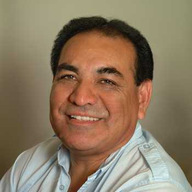
Joshua Trinidad: Crafting a global legacy with his trumpet

0
Photo courtesy: Joshua Trinidad

Growing up in the Brighton area, Joshua Trinidad had access to a wealth of teachers and mentors who helped mold him into the successful trumpet player, composer and producer he is today. 

Trinidad first joined his school band at age seven while attending South Elementary School. It was Michelle Jefferies, whom Trinidad described as a “legendary elementary school teacher,” who encouraged him to join the band — and the rest is history. 

Trinidad’s original choice of instrument was a saxophone, but he didn’t know how to a make a sound with it. So instead, he picked up a trumpet and never put it down. 

As he grew older, Trinidad continued to build his musical skills at Brighton High School, he found further support through Ted Worth, his band teacher. Worth would arrive to school early and opened practice rooms for Trinidad, pouring himself into his success. 

Those early stages in Trinidad’s life and career helped grow him into the successful trumpet player he is today. Trinidad utilizes multiple styles of music, including jazz, ambient, rock, electronic and low-fi, and some elements from hip hop. 

He describes his music as patient, often starting slow as it builds up — though sometimes it doesn’t.

“It just exists the way it is. It’s something I never thought I’d create when I was a little boy,” said Trinidad. “I didn’t even know about this type of music. Luckily, just going to school for music and meeting awesome people in my life has led me to discover this style of music.” 

Trinidad’s talent has taken him to places like Europe and Central Asia. When asked about his proudest accomplishment throughout his career, Trinidad pointed to music he’s created with Indian ambient producer Riatsu aka Shadaab Kadri. Together, the two released the album “Lithium.” 

The record focused on the experiences of the two artists as they navigated the onset of COVID-19 pandemic. 

“To be able to collaborate with musicians from India and put together a cool project with someone who has experienced similar restrictions on the other side of the world was unique,” said Trinidad. “The musical aspect was interesting and the social and cultural experience that was shared.” 

Trinidad, who is an indigenous, Chicano American, said his number one piece of advice for aspiring musicians is to make the music they want to make and to not listen to what others say about it. He also said it’s important to stay true to yourself in the process and the things you like to make. 

Trinidad has a show coming up on March 1 at 9:30 p.m. at Dazzle @ The Arts Complex. Tickets can be found at dazzledenver.com. 

For more information about Trinidad and his music, visit joshuatrinidad.com.

Chiefs and Eagles face off in Super Bowl LIX

0

This weekend NFL fans got to see four teams battle it out for a spot on the biggest sports stage in the United States, Super Bowl LIX. Sunday’s first game featured the Philadelphia Eagles and the visiting Washington Commanders and from the start, it was clear that the rookie-led Commanders might be out of their league trailing the Eagles 27-15 at the half. 

Washington was only able to add 8 more points in the second half as Philadelphia’s dominance continued adding 28 more points to the board defeating the Commanders 55-23. 

Sunday’s second game didn’t have a dominant team other than the refs some fans might say. The Kansas City Chiefs hosted the Buffalo Bills at Arrowhead Sunday afternoon and jumped out to a 7-0 early lead. Buffalo added a field goal to the board and took the lead in the second with a 6-yard touchdown run from James Cook. 

The Chiefs and Bills traded scoring drives and by the half the Chiefs led the Bills 21-16 with the Bills scoring on a 34-yard pass just before the half. 

Buffalo was the only team to score in the third quarter on a 1-yard touchdown from James Cook where they failed on a two-point conversion after an offsides call against Kansas City. 

After stopping the Chiefs early in the fourth, the Bills were able to move the ball to midfield after success on a fourth-down call that extended their drive. On the ensuing drive, the Chiefs held the Bills on three downs leaving them with another fourth and one situation. Bills quarterback, Josh Allen kept the ball and with the help of his fullback were able to push the ball just across the first down maker; however, the sideline refs disagreed with the spot of the ball and the final call was made that Allen did not reach the first down marker. The Bills rightfully challenged the play and the call was upheld.

The Chiefs now with great field possession started their drive from midfield and ended up scoring to take a 29-22 lead. The Chiefs outlasted the Bills 32-29 and will face the Eagles in Super Bowl LIX.

In other sports the Colorado Avalanche made a huge move, trading their top scorer Mikko Rantanen to the Carolina Hurricanes. Colorado faced the Boston Bruins the following night and Mikko’s absence was apparent in Colorado’s 3-1 loss in Boston Saturday night.

The Avs defeated the New York Rangers with just seconds left in regulation in Sunday night’s game in New York. The Avs remain in New York this week to face the Islanders before heading back to Ball Arena to host the St. Louis Blues and the Philadelphia Flyers.

The Minnesota Timberwolves thumped the Denver Nuggets on Saturday night in Minnesota with Anthony Edwards scoring 34 points. The Timberwolves bench outscored the Nuggets bench 42-25. 

The Nuggets are on the road this week in Chicago, New York and Philadelphia to face the Bulls, Knicks and 76ers.

Trump’s Executive Orders hit hard in Pueblo

The first week of the country’s new administration, said Colorado State University-Pueblo professor Eddie Lucero, may one day be an entire study in political science.

What Lucero is talking about is how the new President wasted no time in assembling a massive stack of executive orders on everything from erasing the 14th Amendment of the U.S. Constitution, which grants citizenship to anyone born or naturalized in the United States and provides equal protection under the law, to one narrowly defining gender. 

But it is Donald Trump’s enthusiasm for abolishing the citizenship of millions of Americans—including those not yet born—that has garnered much of the attention.  

Without a 14th Amendment, millions of undocumented immigrants now in the country, along with their children born here, Trump’s executive order would threaten their U.S. citizenship. While their citizenship is safe for now, the matter may linger in the courts for years.  

Lucero said by signing this executive order, Trump has “brought politics into the classroom.” The Los Angeles transplant said recently a student, “from a marginalized group,” recently came to his office worried about the new presidency. “She was concerned,” he said, “about what it would mean for her” and how it would affect her future. Lucero said he understands the apprehension.

His own parents, he said, immigrated from Mexico to California before he was born. Many who have repeated this long pattern of immigration, Lucero said are so concerned about Trump’s plan that a lot of them, he said, are now “sending their kids to school with their passports” to show proof of citizenship in case immigration officials show up.

But Trump’s executive order goes well beyond new immigrants. The wording in his decree for ending the 14th Amendment also includes removing citizenship from Native Americans, a group often referred to as ‘the original Americans.’

A narrowly defined section of the executive order states that because Native Americans are subject to the laws of their nationor tribe and are not “subject to the jurisdiction” of the United States, that, Trump believes, renders their claim to citizenship moot.

Trump’s desire to erase the 14th Amendment was essentially ridiculed by a Seattle federal judge who blocked it. “I’ve been on the bench for over four decades,” he said. “This is a blatantly unconstitutional order. Where were the lawyers when this decision was being made?”

Lucero says the ruling striking down Trump’s threat should stand for now. But it is quite likely that the administration will pursue the matter all the way to the Supreme Court despite the unambiguous and emphatic words of Federal Judge John C. Coughenour. 

Trump almost immediately reacted to the ruling and the judge, saying there are “no surprises with that judge.” Coughenour was appointed to the federal bench by Ronald Reagan.

Lucero said Trump’s executive orders along with subsequent actions that included dismantling of the government’s DEI office, gender ruling and the 1965 Civil Rights Act requiring equal opportunity for minorities and women is a ‘dog whistle’ to his base affirming his positions.

“I think the research show that Latinos are viewed as ‘other,’” that is, not real Americans. “It’s something we have to deal with as a society. But we have been here from the very beginning.” 

Lucero said political science classes have already spent a lot of time discussing what he calls a “chaotic” first Trump administration. This time, he predicts, “we’re going to see more fascinating stories.” And that, he said, is a good thing.

“At the end of the day,” said Lucero, “as a political science professor, I always do my best to present the facts to the students and let them decide (the issues) for themselves.”

Mexico and the Chicano Movement

0
David Conde, Senior Consultant for International Programs

There is a Mexican television channel (11) that appears dedicated to the cultural issues and traditions of the Mexican people. It deals with the things that constitute their world view through music, food, sports, dance, work, issues of everyday life, as well as advances the economic and political attitudes of the day.

Channel 11 is also the station that every morning telecasts the press conferences of the Mexican President from the Presidential Palace. This began with the presidency of Andres Manuel Lopez Obrador and now continues with President Claudia Sheinbaum Pardo.

If you have a Latino package in your cable or internet television subscription, chances are that Channel 11 may be available for your viewing. We can see the daily updates personally made by the President and her colleagues of the day depending on the subjects to be covered between 6 and 9 am in Colorado. 

Beginning with Lopez Obrador in 2018, the telecasts appear to reflect a Mexican search for an identity more compatible with their history.

In the beginning there seemed to be a historical focus on the Mexican Revolution and its role in setting the political priorities for modern Mexico, and a socioeconomic emphasis on the poor especially the very young and very old.

President Sheinbaum has brought more clarity to the search by deliberately adding pre-Columbian Civilizations to the national agenda that promotes the recognition of origins. In a sense, the Mexican focus mimics the intellectual search for origins advanced by the Chicano Movement.

Although the most popular operative metaphor was Aztlan, Rodolfo ‘Corky’ Gonzales’ epic poem “I Am Joaquin” for example, took us down the pre-Columbian route naming the great figures of that pantheon. The descendants of those important civilizations continue to live in the different regions of the country.

Another Mexican take on the Chicano Movement is a renewed interest in the story of Luis and Daniel Valdez’ Teatro Campesino that relates the political experience of the Mexican poor in the California fields. In 1965 Teatro Campesino took its place on the grape strike line led by Cesar Chavez and the United Farmworkers Union. 

The Luis Valdez inspired plays called “Actos” marked the beginning of a rich production of work that included “Virgen del Tepeyac” in the 70s, “Zoot Suit” the play in 1977 presented on Broadway, followed by the epic movie of the same name, “La Bamba,” the Ritchie Valens story in 1987, “The Cisco Kid” and a melodrama on Tiburcio Vasquez in 1993-94 and many others that continue the beautiful trajectory of el Teatro Campesino into its next generation. The plight of the Mexican poor in the United States as well as their success is capturing the imagination of the Mexican cultural stream.

Mexico is about to enter a period of greater difficulty with the United States and its politics on trade and immigration. It is ironic that now that the country is the industrial base of North America and generally no longer exports labor to the U.S. it is a target on both issues.

Octavio Paz, the Mexican intellectual figure in the 20th Century, always thought that his country walked the path of the lost because the European conquest and colonial experience left its identity in question. That thought forms the essence of his most important book, The Labyrinth of Solitude (1950).

In taking in important elements of Chicano history, the Mexican Renaissance recognizes the hard work it is to find yourself as an individual, as a community and as a country. However, it is a task worth doing.

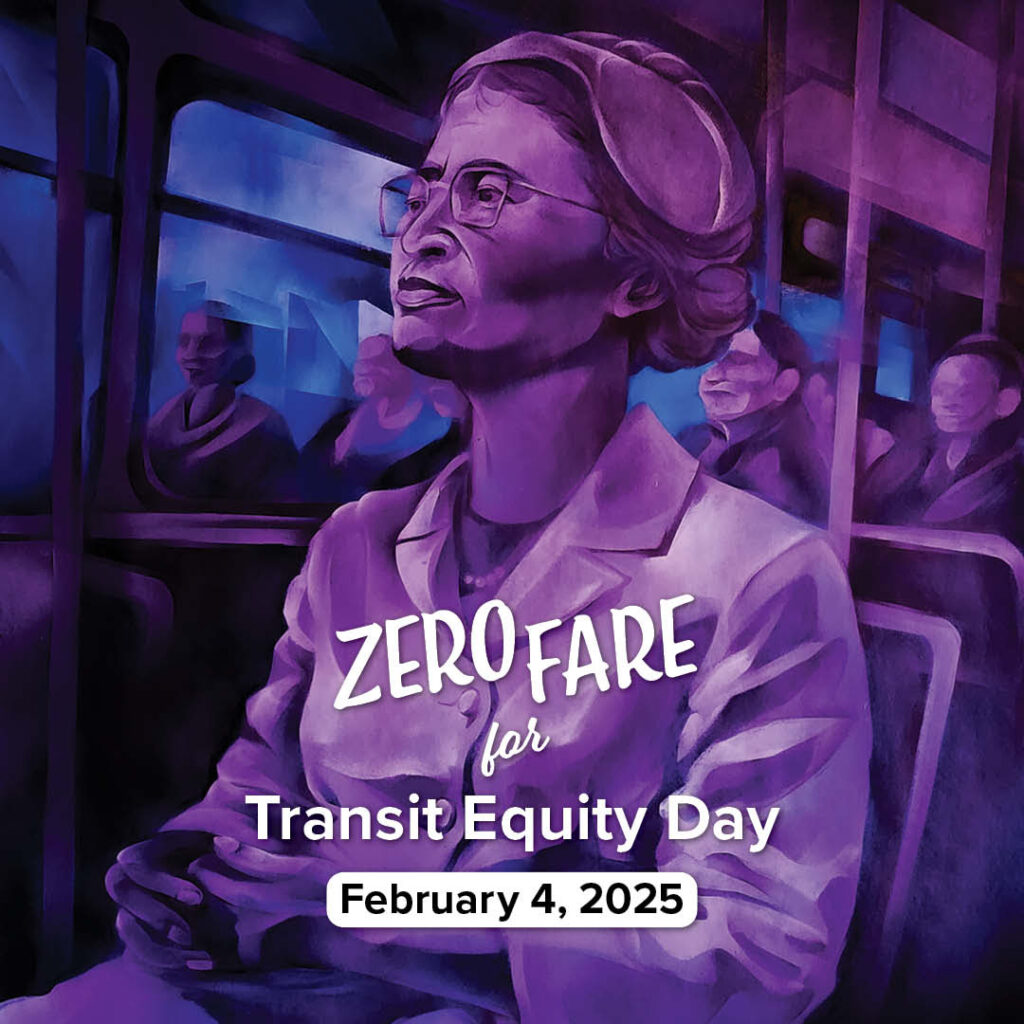
RTD to offer Zero Far for Transit Equity Day on Feb. 4

Image courtesy: RTD

Customers can ride RTD services at no cost to commemorate Rosa Parks’ contributions to transit equity

The Regional Transportation District (RTD) will offer Zero Fare for Transit Equity Day on Feb. 4 – a day that observes the contributions of civil rights leader Rosa Parks. By refusing to give up her seat and move to the back of a segregated bus on Dec. 1, 1955, in Montgomery, Alabama, Parks helped galvanize the Civil Rights Movement and launch transit equity. Her action spurred the Montgomery Bus Boycott, a peaceful protest that challenged racial segregation for Black Americans in public spaces, including on transit.  

“Equitable access to public transportation is a civil right afforded to all,” said General Manager and CEO Debra A. Johnson. “RTD’s services are more than a means to connect customers to work, school, healthcare and social destinations – they are the great societal equalizer, providing individuals with access to opportunities for their betterment of their lives. The agency exists to serve others, and the introduction of Zero Fare for Transit Equity Day reinforces its commitment to advance equity in every aspect of its work.” 

RTD’s Board of Directors authorized the implementation of this zero-fare day in 2025 – and on each Transit Equity Day thereafter – at its Dec. 3, 2024, meeting. 

Transit Equity Day is observed on Parks’ birthday, Feb. 4, and was first celebrated nationally by the U.S. Department of Transportation in 2021. The day recognizes that equal access to public transportation is a civil right and a means for individuals to connect to employment, educational, healthcare and social opportunities. The U.S. Supreme Court ruled that segregation on buses was unconstitutional on Nov. 13, 1956, which ended the Montgomery Bus Boycott on Dec. 20, 1956.  

RTD encourages customers to ride bus and rail services at no cost on Transit Equity Day in recognition of the progress made in transit equity, the Civil Rights Movement and as part of its mission to make lives better through connections.

DIA welcomes new permanent public art collection

Denver-based multidisciplinary artist Thomas “Detour” Evans’ sculpture now on view in Concourse B

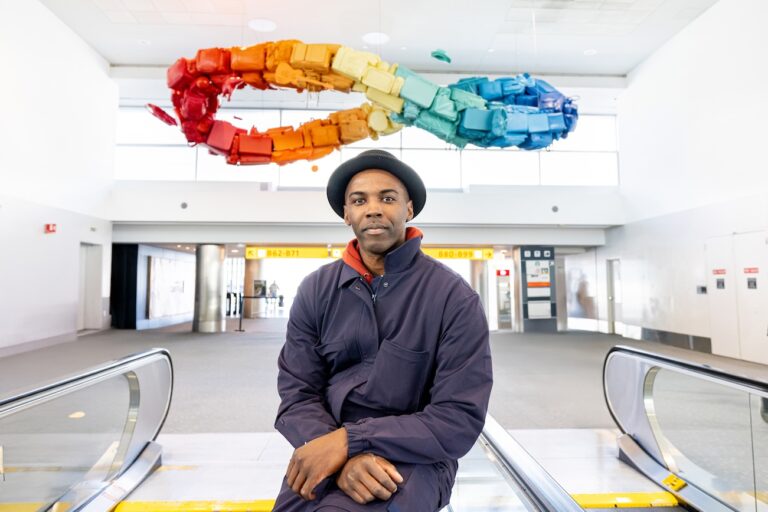
Photo courtesy:Denver International Airport

Denver International Airport (DEN) today welcomed the newest work in its permanent public art collection, Denver-based artist Thomas “Detour” Evans’ sculpture It’s Not What You Take, It’s What You Bring Back to the Concourse B expansion area.

“DEN’s participation in the City’s 1 percent for Public Art program is a point of pride for the airport. Many of the works in our permanent collection loom large in the memories and imaginations of our millions of annual visitors. Thomas Evans’ work, It’s Not What You Take, It’s What You Bring Back, will soon become an iconic fixture of the world’s sixth busiest airport, welcoming or bidding farewell to our passengers,” DEN CEO Phil Washington said. “I am so pleased to welcome Evans’ unique and vibrant sculpture to DEN.”

It’s Not What You Take, It’s What You Bring Back was inspired by the idea that life is always in perpetual motion and it’s our luggage that carries the items we hold dear. It was selected by a panel of community representatives, arts and culture professionals, and civic leaders in 2022.

“I was super ecstatic to be selected to be a part of the process of adding art to such a vibrant place where millions of travelers pass through during their journey in life,” Detour said. 

The artwork, located on Concourse B East, near gate B60, is 26 feet long x 12 feet wide x 8 feet high and is suspended from the concourse ceiling. Evans put a call out to the public for personal luggage that had a story behind it. 183 donated bags were incorporated into the final design, including from Cleo Parker Robinson, Ed Dwight, a flight attendant of 33 years, three DEN employees, as well as the Denver’s five professional sports teams. Visit DEN’s arts page in February to learn more about the backstories of the donated bags and their donors.

The City’s 1 percent for Public Art Ordinance directs that 1 percent of any capital improvement project over $1 million undertaken by the city be set aside for the inclusion of art. At DEN, funds are set aside and then site-specific large-scale public art opportunities across the campus are identified. For this specific project, funding was designated by DEN’s Gate Expansion Program’s construction budget. No taxpayer dollars are used for any artwork at DEN. Learn more about the Gate Expansion Program here.

Additional images are attached. A time-lapse video of the installation can be found here.

About DEN’s Art Program: The mission of DEN Arts is to engage, educate and entertain the public audience. Both the public artworks and rotating exhibitions aim to connect a local and global audience to the environment and culture of the vibrant City of Denver and the unique State of Colorado. For more information, visit  www.flydenver.com/art.

Source: Denver International Airport/DEN