






Home Blog Page 59

Denver and partners celebrate new senior supportive housing community

New development offers housing plus services for older adults experiencing homelessness

Mayor Mike Johnston, Denver’s Department of Housing Stability (HOST), partners from St. Francis Center, and community members celebrated the grand opening of St. Francis Apartments West, a 60-unit supportive housing community for older adults, age 55+, exiting homelessness.

“Today marks another step in creating a Denver that is affordable to all,” said Mayor Mike Johnston. “I’m grateful to the many partners who brought this project to life and who care so deeply about ensuring our seniors have a home that is safe, warm, and inviting.”

Located at 221 Federal Blvd. in the Barnum neighborhood, St. Francis Apartments West will offer one- and two-bedroom units plus onsite support services, such as case management, mental health counseling, and substance abuse treatment. All units will be affordable to persons exiting homelessness, with 30 units restricted to 30 percent or below of the area median income (AMI) and 29 units restricted to 50 percent AMI or below.

“This marks a significant step forward in our mission to address solutions to homelessness and provide affordable housing options for older individuals within the Denver community,” said Nancy Burke, CEO of St. Francis Center. “We are grateful to the City of Denver and our other partners for their support of this important project.”

The new community also has several fully accessible units for tenants with disabilities, as well as units that meet hearing and vision-impairment accessibility. The building is elevator serviced and all indoor and outdoor amenities have accessible features for people with disabilities, to ensure all tenants can enjoy the common and outdoor spaces.

HOST provided $5,050,000 toward the project, including $2,700,000 for construction costs, $1 million in land acquisition financing (that has since been repaid), and $1,350,000 toward supportive services over the next 15 years. Other public finance partners include the Colorado Department of Local Affairs and the Colorado Housing and Finance Authority.

St. Francis Apartments West adds affordable units that are critically needed in Denver. A total of 1,471 affordable units that have received city financing are currently under construction/preservation at 23 sites throughout Denver. An additional 1,060 income-restricted units are in the planning stage. Learn more about this inventory at the Denver Affordable Housing Dashboard.  
Our Government

White House

Statement by Vice President Harris on the Executive Order on Advancing U.S. Leadership in Artificial Intelligence Infrastructure: “While representing the United States at the first-ever Global Summit on AI Safety in London, I laid out a vision for the future of artificial intelligence (AI) — a future where AI is used to advance the public interest. In order for that vision to be realized, it is imperative that the United States remain the global leader on AI. The Executive Order announced today will ensure the United States has the infrastructure — including large-scale data centers and clean power facilities — necessary to maintain America’s competitive advantage and safeguard our national security interests.”

Colorado Governor

Governor Polis made community visits across Commerce City, Aurora and Denver. The Governor visited the South Platte Crossing apartments in Commerce City. These apartments included 60 units and are located near bus and transit, providing easy transportation access for tenants. The units are available to households earning up to 30 percent of Area Median Income (AMI) to those earning up to 80 percent AMI. The project received funding from the Department of Local Affairs and the Office of Economic Development and International Trade.

Denver Mayor

Denver Mayor Mike Johnston today released a new report detailing the outcomes of Denver’s ambitious 2024 goals. The report highlights Denver’s work to deliver a vibrant, affordable, and safe city for all. “In 2024, we turned bold goals into significant progress for our city,” said Mayor Mike Johnston. “We delivered the largest one-year reduction in street homelessness in recorded history, achieved a sharp drop in shootings, and ignited a new era of downtown revitalization – all laying the groundwork for an even brighter future for our city. Thanks to the incredible work of our city teams and community partners, our momentum is strong as we continue to work towards a vibrant, affordable, and safe Denver for all.”

A Week In Review

0

Africa

Sudan Army captures key city from rebels

The Sudan Army said it has captured a key city in the country that was being held by rebel forces. The capture was seen as a key victory in the country’s war against rebels. Footage showed crowds in the country celebrating the capture of Wad Madani. 

Woman kidnapped in Niger

Officials in Niger are searching for an Australian woman that was taken by unknown assailants. The kidnapping took place around 559 miles outside the capital city of Niamey. The woman, Eva Gretzmacher, is in her mid-70’s and has lived in Niger for nearly 20 years. 

Asia

Buddhist monk jailed

Galagodaatte Gnanasara, leader of a Sinhalese Buddhist nationalist group, was sentenced to nine months in prison. He was found guilty of insulting Islam and inciting religious hatred. The ruling occurred in Sri Lanka, an area of the world that rarely convicts Buddhist monks. 

Man found with crocodile skull

Officials in India arrested a Canadian man for carrying a crocodile skull in his luggage at an airport. The baby crocodile skull was wrapped in cloth and weighed nearly two pounds. The man had allegedly bought the skull from Thailand, according to an Indian newspaper. Possessing crocodile skull violates India’s wildlife protection law and its Customs Act. 

Europe

Dozens injured in train accident

At least 60 people were injured at Strasbourg’s central station when two trains collided. Video footage showed smoke rising from one train and alarms sounding. No fatalities have been confirmed, and prosecutors said the collision was not deliberate. It is unknown what caused the incident. 

Prisoner escape custody in Ireland 

Officials in Ireland are searching for a prisoner who escaped custody on Saturday while being escorted to a hospital. The man, who was getting medical attention, remains at large as of Sunday. Police are investigating the circumstances of the escape, and the man’s name was not released. 

Latin America 

Brazil president undergoes surgery

Brazil President Luiz Inacio Lula da Silva was operated on last week as part of a treatment to another surgery head to drain a bleed from his brain. The procedure was considered a “compliment” to his previous surgery. Lula is 79 and remains in the hospital’s intensive care unit. 

Venezuela president sworn in 

Venezuela President Nicolas Maduro was sworn in for his third presidential term. He was sworn in last Friday in the National Assembly by National Assembly leader Jorge Rodriguez. Maduro was declared winner of the country’s presidential election on July 28. However, Venezuela’s opposition published voting tallies claiming Edmundo Gonzalez won the vote.

North America 

California prison inmates fight wildfires

The California Department of Corrections and Rehabilitation deployed nearly 1,000 incarcerated men and women to fight wildfires in southern California. At least 10,000 structures have been destroyed and 37,000 acres burned in California. The incarcerated firefighters have been working around the clock, according to the California Department of Corrections and Rehabilitation. 

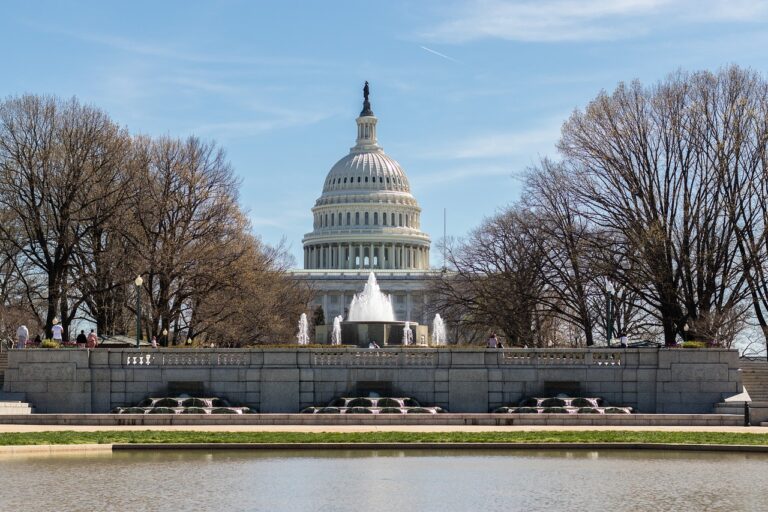
Man arrested at U.S.Capitol

Police arrested a man armed with a machete and three knives at the U.S. Capitol. The weapons were discovered at the entrance to the building’s visitor center. The man has not been named as of Sunday and was arrested on multiple charges of carrying a dangerous weapon.

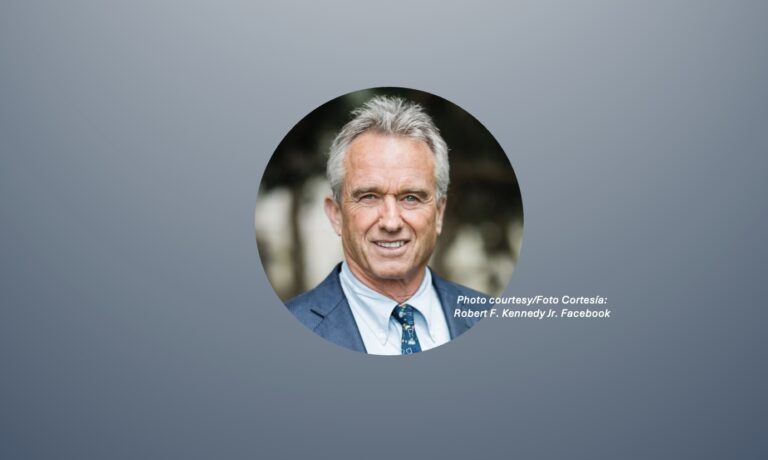
RFK’s view on vaccines could affect children’s health

0

With a new President soon to be inaugurated and a new cabinet ready for confirmation, there is more than a hint of trepidation about who will ultimately make up Donald Trump’s team. And the spotlight shines brightest on Trump’s choice for Secretary of Health and Human Services, Robert F. Kennedy, Jr.

It is Kennedy’s track record as an anti-vaccination voice that troubles so many of the nation’s most respected medical experts, including former director of the National Institution of Allergy and Infectious Disease, Dr. Anthony Fauci. Fauci also spearheaded the country’s battle against COVID-19. But Fauci is certainly not alone.

Over the years, Kennedy has crisscrossed the country sharing his theory and beliefs that vaccinations—including the polio vaccine— are linked to autism, a condition related to brain development. His beliefs are based on a long-debunked study first reported in the British medical journal The Lancet linking the MMR vaccine to autism.

Kennedy’s vaccine reticence has resulted in a crisis of confidence among many parents, many of whom are today opting out of vaccinating their children. It’s a troubling trend for Dr. Josh Williams, a pediatrician at Denver Health and Hospitals.

“Historically,” said Williams, “there have been cycles in vaccine confidence,” citing the smallpox vaccine as one example. “There were a lot of people hesitant when it first came out.” To overcome people’s concern about long-term health issues, he said, “our job is to work with families on what is misinformation and what is accurate…to reassure them.”

As he awaits confirmation hearings, Kennedy has backtracked on one specific vaccine, the polio vaccine. “I’m all for the polio vaccine,” he told reporters as he made the rounds speaking with senators whose vote will either confirm or kill his nomination. 

But in interviews in which he’s shared his views over the years, he has essentially condemned the polio vaccine as a death delivery system at worst, a life altering choice at best. The vaccine, he has said, “killed many, many, many, many, many, many more people than polio ever did.” 

In a single year in the 1950’s, the polio virus infected more than 58,000 mostly young people across the country, 3,200 of whom died. Many were left paralyzed or permanently disabled. Some hospital wards were cleared of traditional bedding and replaced with iron lungs; bulky steel contraptions used to assist polio victims to breathe. The virus had paralyzed their lungs from doing their job.

During the era, young children wearing bulky metal braces and others in wheelchairs were common sights, most victims of the virus that changed life in America. 

The polio scare caused fairs to be cancelled and movie theaters and public swimming pools to close out of fear that they could be breeding grounds for the virus. It wasn’t until 1955 when Dr. Jonas Salk and his team introduced the polio vaccine that the country returned to a degree of normalcy. 

The polio virus was approved on April 12, 1955. It was administered to the first patient at the Mayo Clinic the very next day. It remains one of the 20th Century’s most renowned medical accomplishments. The vaccine has since been administered around the world saving millions of lives in the process.

For baby boomers, the memory of polio remains as the most profound medical scare of their childhood. But it’s not just ‘boomers’ who share the memory, albeit vicariously. It’s also not just casual conversations with colleagues about the virus that stand as stark reminders of the disease or others unknown that may one day haunt the future.

“I would point to my own grandmother,” Williams said. “She gave me the vaccine cards of my father…they knew they (children) could contract polio; they knew it was possible.” 

President-elect Trump has tried to reassure the public that he’s heard the concerns about his HHS-designee and his earlier attacks on vaccines. Trump calls himself a “big believer in vaccines,” but adds that everything needs to be looked at. 

But it is Kennedy’s words, most especially his belief that vaccines have “killed many, many, many, many, many more people than polio ever did,” that provide less than full confidence to public health officials that he won’t carry through on his vaccine fears.  

Dr. Williams, who said he was not speaking about Kennedy’s views or politics and only as a medical expert, said that at Denver Health, “DHH is aware of these concerns.” 

Williams regularly counsels parents of young children about vaccine safety. “I think there is always going to be another worry for vaccine experts to look at,” equating it to the whack-a-mole game. “The real work is to improve vaccine confidence.” He says the best way he’s found to do this is through sit down visits with families and to tell them, “I care about them.”

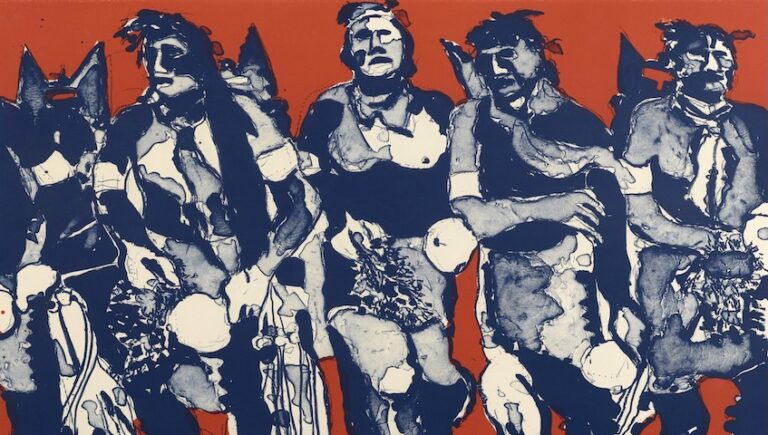
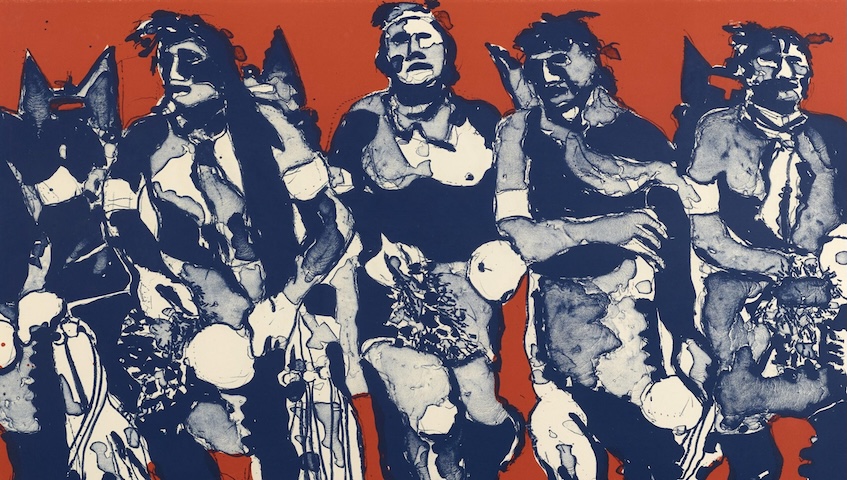
Denver Art Museum launches new indigenous art exhibit

0

Coloradans will have the chance to learn about Indigenous peoples’ resilience, diversity and creativity have sustained them, thanks to a new exhibit at the Denver Art Museum. 

On view through 2025, the “SUSTAINED! The Persistent Genius of Indigenous Art” exhibit investigates the ways Native people have been sustained by beauty, connections, and spirituality. The exhibit traces those themes through fashion, family, ancestors, and the reasons people gather, like games, ceremonies and dance. 

Photo courtesy: Denver Art Museum

Among the objects at “SUSTAINED! The Persistent Genius of Indigenous Art” include a dress by fashion designer Orlando Dugi, a pair of Jaatłoh4Ye’iitsoh or Earrings for the Gods by Eric Paul Riege, paintings, and more. 

The exhibit was designed in conjunction with a panel of seven Indigenous community members who worked with the museum to create an exhibition that would be meaningful to themselves and their communities. 

“Indigenous people have thrived regardless of the tumult and hardships they have faced throughout history and SUSTAINED! is our museum’s celebration of their resilience and strength, uplifting Native arts and cultures as living and flourishing, which is a priority for our museum and community,” said Christoph Heinrich, Frederick and Jan Mayer Director of the Denver Art Museum in a release. “We look forward to presenting this compelling and boundary-pushing exhibition and welcoming our community to enjoy it and experience it throughout the year.”

The Denver Art Museum’s Native Arts Department has spent decades building its Indigenous Arts of North America Collection. In 2023, the museum acquired 156 art pieces by Indigenous artists from North America. The Denver Art Museum is one of the first art museums in the country to collect Indigenous artworks from North America. 

In total, the Denver Art Museum’s Indigenous Arts Collection includes more than 18,000 works. The museum dedicates more than 20,000 square feet of gallery space in its Lanny and Sharon Martin Building to its Indigenous Arts Collection. 

The Denver Art Museum is open daily from 10 a.m. to 5 p.m. and 10 a.m. to 8 p.m. on Tuesdays. For more information about ticket prices and to plan your visit, go to denverartmuseum.org. 

“The (Denver Art Museum) owes our reputation as a leader in the collection and display of Native Arts to the creativity of the original inhabitants of today’s United States and Canada. Our collections are the result of the hard work and dedication of ancestors that kept Native traditions, stories, and artistry alive for future generations,” said Dakota Hoska, Associate Curator of Native Arts in the release. “Our past and future rest on the skills of artists who learned from family members and embraced innovation, creating contemporary works at every moment in time. Our efforts are supported by Indigenous community members who during the last 100 years served as educators, advisors, liaisons, and council members for the museum. Our destinies are deeply and appreciatively intertwined.”

The playoff drought is finally over in Denver

0

On a cold Sunday afternoon, the Denver Broncos hosted the Super Bowl champs in the Kansas City Chiefs. Their task was simple; win and you are a shoe in the playoffs. 

Fortunately for the Broncos, the Chiefs decided to rest most of their starters so the Broncos would have to wait on a redemption game against Patrick Mahomes. A few weeks ago, the Broncos were in Kansas City to face the Chiefs in a game that the Broncos outplayed the Chiefs and on the last play of the game the Broncos lined up to take the lead on a potential walk-off field-goal that ended up getting blocked. 

Despite Denver having to wait to play Patrick Mahomes the Broncos came out with a purpose on Sunday and that purpose was to accomplish one thing, secure the seventh seed in the playoffs. 

Denver Broncos quarterback Bo Nix (10) scrambles during the Broncos’ Week 18 game against the Kansas City Chiefs at Empower Field at Mile High in Denver, Colorado on January 5, 2025. Photo by Gabriel Christus / Denver Broncos

Bo Nix was phenomenal in the first half, going 18 of 19 for 215 yards and three touchdowns (TD) with one 47 yard TD. The Broncos led 24-0 at the half and could have added another if not for a holding penalty. 

The second half started with a Kansas City possession that only produced 10 yards of offense. By the end of the third quarter, the Broncos added another Marvin Mims touchdown, which gave them a 31-0 lead. 

The Broncos added a rushing touchdown by running back Audric Estime to defeat a mostly second string Kansas City Chiefs team. 

With Sunday’s win, the Broncos locked up the last AFC spot in the post season, sending the Cincinnati Bengals packing and giving Denver their first post-season appearance since their Super Bowl almost ten years ago. 

The Broncos will now head to Buffalo New York to face ex-Bronco, Von Miller and MVP league candidate Josh Allen. Sunday’s game is scheduled for 11 a.m. with a good chance of snow.

Bo Nix has been a breath of fresh air in the City of Denver, brining a screeching halt to Denver’s quarterback carousel and becoming the new face of the franchise next to the leading candidate for Defensive Player of the Year (DPOY), Pat Surtain, II. 

Surtain, II had a phenomenal season and is considered to be the premiere cornerback in the league. Surtain, II was matched up with some of the league’s best wide receivers where he blanketed most allowing little to no yards, consistently all season. 

When asked about his nomination for DPOY, Surtain II told reporters last week, “It’s pretty special for sure,” adding, “Just the work I put in, obviously it was a goal I had in mind, but that’s not my main goal. My main goal is to continue to be the best version of myself to help this team win. Get to that next step, which is playoffs and hopefully get to that Super Bowl run. 

The Broncos are currently 8.5-point underdogs going into Sunday’s game, a point differential that is similar to their game with the Bills last season when they defeated the Bills at home 24-22.

Pueblo, state of the economy

It shouldn’t be, but it is. Pueblo, southern Colorado’s economic heartbeat, is too often seen as a satellite city. Sitting a hundred miles or so away from the state capital, it is regularly viewed in this light by so many unfamiliar with its history and potential. But Pueblo, everyone should know, is a city that doesn’t know the meaning of fail.

So, while the state’s Front Range cities may be doing fine, Pueblo—once again—is showing its economic mettle and ‘can do’ attitude.

As 2024 ended, the city told everyone listening to pay attention. If you’re ready to set down roots and grow your business, consider Pueblo a place with untapped and unlimited opportunity.

While everything is not fine, restaurants come and go, some businesses shutter, Pueblo is weathering a temporary cold snap, not unlike every American town. It has its ups and downs. But, said Jeff Shaw, CEO of the Pueblo Economic Development Corporation, “We have a lot of positives.”

The city, he said, has what companies considering moving or expanding need, including water, infrastructure, cost of living, plenty of land and incentives. It also has a university and good workforce.  

Colorado’s New Year began with a statewide unemployment rate of 4.3 percent which is more than a point and a half lower than Pueblo’s 5.9 percent. But Pueblo’s job trend is not different than the one impacting a number of southern Colorado communities where unemployment is also running higher. As an example, Huerfano County, Pueblo’s southern neighbor, has the state’s highest unemployment at 7.1 percent.

But Pueblo is buoyed by two large manufacturing operations, Evraz Rocky Mountain Steel Mill and CS Wind, one of the world’s largest manufacturers of wind turbine towers. Both are now in hiring mode. 

Pueblo did take a job hit in 2024 with the shuttering of operations at the Pueblo Chemical Depot. The depot was the federal agency charged with the destruction of mustard agent, popularly referred to as mustard gas, a chemical weapon now outlawed by international treaty. When the final stockpile of the chemical agent was eliminated, so too were approximately 250 jobs at the 23,000-acre facility.

But former Colorado Governor and Denver Mayor and current U.S. Senator John Hickenlooper promised in a 2023 letter announcing the operation’s closure that the job at the depot won’t be fully completed until the government keeps its promise to restore the land back to its natural and healthy state and ready for redevelopment.

Pueblo, Hickenlooper said, “is the place to do business and raise a family, all with superb access to Colorado’s beautiful landscapes.” But before that, the city’s mayor said there’s some work to be done. 

First term Pueblo Mayor Heather Graham acknowledged that 2024 left the city with a bitter taste—a sales tax dip—but points to a number of positives that body well for 2025 and beyond. 

“Pueblo saw new growth in 2024 with single-family and multi-family residential unit building permits,” Graham said. In fact, growth in this area actually spiked, climbing from 173 in 2023 to 431 last year, “an increase of 249 percent.”  

The drop off in sales tax forced the city to trim some services. But, again, Graham said the city is already looking to make up the shortfall with new revenue streams. 

While sale tax revenues were down, the city was creative in using federal grants, said the mayor. Pueblo broke ground on three new fire stations, the last of which will be fully operational in 2026. Federal dollars also greenlit expansion of the city’s Riverwalk.

While the last year ended on a down tick for Pueblo, said Shaw, “2025 has the potential to be a very strong year.” The next twelve months, he said, have the “potential to be a very strong year” with the city in negotiations with companies on “some very large projects.” 

But Shaw cautioned, Pueblo, not unlike every other city is subject to the same negative variables that “are out of our control,” including inflation, the cost of money, supply chains and worldwide political events.”  

Major political parties in crisis

David Conde, Senior Consultant for International Programs

In 2016 Donald Trump took the Republican Party to the realm of a populist and nativist base oriented toward the preservation and indeed resurrection of racist keys as a new foundation of political power. The conventional opinion at the time was that it was a temporary aberration on a political path in our evolving trajectory that characterizes an effort for more and wider participation in our democratic experiment.

When as President, Trump moved to solidify the prominence of the richest 1 percent through tax-cut laws during his term that made them even more powerful, it set into motion a coalition of American oligarchs and at least one third of America that feels racially aggrieved. The combination of MAGA and a much more active and invested oligarch community resulted in the political comeback enjoyed by President-elect Trump in 2024.

In a sense, the Republican Party returned to its roots as an anti-immigrant “know nothing” organization that preceded the presence of Abraham Lincoln and the change in political fortunes that set it as a measure of the highest example of racial justice and principled bravery in the face of the violent forces of slavery. The coalition of oligarchs and common folks afraid of losing their identity is reminiscent of post-colonial republics characterized by strongmen and their tendencies toward political dictatorships.

The Democratic Party is equally in trouble as its Conservative and Centrist voices that are part of its broad coalition are being drowned out by a Progressive left that uses a civil rights agenda to justify government intrusion in the everyday lives of people and at the same time, describes itself as guardians of the middle class. This perspective is somewhat confusing and requires thoughtful review.

It is in fact an oxymoron to put together the notions of a middle class and deep government involvement in social issues based on economic concerns because becoming part of the middle class amounts to the achievement of the American Dream. In other words, the more economically fit a family becomes the less need there is for government involvement to achieve its goals.

The foundation of the Democratic Party’s agenda expressed in its political campaigns is to build programs for the middle class as if the middle class, more than others, needs the boost to become self-sufficient. I suspect that the Democratic Party is committed to the middle class because it makes political sense as a base for successful elections.

MORENA, the ruling party in Mexico, provides another example of government intrusion that is a logical outcome in a country where 54 percent of the population is considered poor. The flurry of government activities in behalf the poor is what keeps the ruling party in power.

In the United States, only 11 percent of the population forms part of a category designated as poor. Government intrusion in behalf of the group is noble and the right thing to do.

However, doing well by the poor will not get a politician elected. At the same time, an agenda that does many of the same things for the middle class may be misplaced.

It seems to me that both the Republican and Democratic Parties have a lot of work to do in restructuring their agendas especially given the appearance of the new millennial majority that is fast coming to leadership. The message that we give to the world about our vibrant democracy is beginning to ring hollow. 

Political philosophies have to make sense to voting constituencies. Getting back to responsible governing agendas is a must. `

Donor Alliance recognizes Eaglecrest High School & teacher

0

Transplantation Science Program Reaches Over 20,000 Students, Advancing Education on Donation

In its continued dedication to saving and healing lives through organ and tissue donation for transplantation, Donor Alliance today presented the prestigious 2024 Community of Excellence Award to Eaglecrest High School in Aurora and its dedicated teacher, Niki Kigerl. The award, given annually, honors an individual or organization in Colorado or Wyoming that excels in inspiring and educating others about the importance of organ and tissue donation. Last year, Kigerl stood out for her unwavering commitment to the cause, motivating countless students to learn about the life-saving impact of organ and tissue donation, including the significance of the heart on a driver license. For more than a decade, Kigerl has impacted nearly 20,000 students through Donor Alliance’s Transplantation Science Program, which offers 6th through 12th graders an engaging, hands-on curriculum about the science behind organ and tissue donation.

“This is a remarkable achievement for Niki Kigerl, Cherry Creek Schools, and Donor Alliance,” said Jennifer Prinz, President and CEO of Donor Alliance. “It is through initiatives like this—educating young people about the profound, lifesaving impact of organ and tissue donation—that we build public trust and inspire more people to check the box and register. With nearly 1,300 Coloradans currently waiting for a lifesaving organ transplant and tens of thousands more needing a tissue transplant, this kind of education is vital to saving and healing lives.”

Beyond teaching the science of organ and tissue donation, Kigerl connects her students to the mission on a deeply personal level—her son was born with a rare liver disease and will one day need a transplant. Through her work, she’s inspired countless young people to understand the life-saving power of donation and what it means to get the little heart on their driver license. One person can save up to eight lives through organ donation and save and heal up to 75 more through tissue donation.

“If even one student or family member has had the education and made an informed decision regarding organ and tissue donation, I would be honored to be connected to their story,” said Kigerl. “I appreciate all Donor Alliance does for our Eaglecrest High School community. I’m honored they come out to speak to our freshmen about this important and heroic gift of life.”

“Niki Kigerl has been dedicated to the Eaglecrest community for three decades, this is evidence of the impact she’s had on a daily basis,” said Gwen Vigil-Hansen, Principal of Eaglecrest High School.

Donor Alliance’s Transplantation Science Program is a free curriculum that offers students across Colorado and most of Wyoming the chance to learn about the organ donation process, get the facts around organ and tissue donation, explore plastinated organs and tissues from the human body, gain an understanding of the organ allocation process, and much more.

Source: Donor Alliance

Radon causes lung cancer: test your home

0

CDPHE offers free test kits as well as low-income mitigation assistance

Gov. Jared Polis has proclaimed January 2025 National Radon Action Month and encourages Coloradans to reduce their risk of radon-induced lung cancer. The Colorado Department of Public Health & Environment strongly urges Colorado residents to test their homes for radon using a free radon test kit (https://cdphe.colorado.gov/hm/radon).

Facts and statistics:

  • In Colorado, nearly half of homes have radon levels above the EPA action level, and more than 500 lung cancer deaths in the state each year are attributed to radon. 
  • Living in a home with Colorado’s average radon level is like having 200 chest X-rays a year.
  • Colorado ranks 45th among all states for the percent of radon test results that are above the EPA action level.

Radon is a naturally-occurring radioactive gas with no color, odor, or taste. Radon can easily enter homes and other buildings through small openings like cracks in foundations, openings around pumps and drains, and crawl spaces.

Children can be especially susceptible to the harmful effects of radon due to their higher respiratory rate and relative proximity to the ground. Even pets can be susceptible to negative health effects from radon exposure.

The best way to protect against radon is to perform a simple test of your home. CDPHE encourages all Colorado homeowners to test regardless of neighbors’ radon levels because radon levels can vary from home to home. Homeowners who already have radon mitigation systems should retest their homes every two years to make sure the system is working properly.  Be sure to keep doors and windows closed during the duration of the test.

Any home can be affected by elevated levels of radon. If your home has high levels of radon, it’s important to take action to reduce your risk. Radon mitigation systems can reduce radon levels in any home. For those who cannot afford a mitigation system, Colorado offers a Low Income Radon Mitigation Assistance program to homeowners who qualify through a simple application process.

Source: Dept. of Public Health and Environment