






Home Blog Page 64

USDA is Accepting Applications for the 2025 USDA E. Kika De La Garza Fellowship Program

The U.S. Department of Agriculture (USDA) Office of Partnerships and Public Engagement (OPPE) is accepting applications for the 2025 USDA E. Kika De La Garza Fellowship Program. These fellowships introduce faculty and staff from Hispanic-Serving Institutions and Hispanic-Serving School Districts to the vast array of USDA resources available to them. The fellowships take place during the summer of 2025, and applications are due by March 6, 2025.

“This fellowship was designed to introduce faculty and staff from Hispanic-Serving Institutions to the many USDA programs and resources available to them and their students,” said Dr. Lisa Ramirez, director of USDA’s Office of Partnerships and Public Engagement. “More than 400 fellows have participated in the E. Kika De La Garza Fellowship Program, bringing back the knowledge they’ve acquired to share with their institutions and communities.”

The USDA E. Kika De La Garza Fellowship Program offers faculty and staff the opportunity to work collaboratively with USDA to gain insight and understanding of the federal government. Fellows receive access to long-term collaboration opportunities with USDA agencies, and then share what they have learned with students and colleagues at their home institutions and in their communities.

Education fellowships are for faculty and staff at Hispanic-Serving Institutions (HSIs). High School Fellowships are for secondary education superintendents, principals, agricultural and/or district level teachers working at Hispanic-Serving School Districts (HSSDs). Participants attend a one-week program in Washington, D.C. (July 7-11, 2025).

Science fellowships are for science faculty at Hispanic-Serving Institutions. Science fellows not only attend the one-week program in Washington, D.C. (July 7-11, 2025), but also spend an additional week collaborating with leading scientists at a USDA research facility (July 14-18, 2025).

Eligible applicants are faculty or staff at an HSI or HSSD. HSIs are accredited colleges and universities with at least 25 percent Hispanic student enrollment. Currently, there are more than 600 HSIs in 28 states, the District of Columbia and Puerto Rico serving more than 3 million students.

For more information or to apply, visit USDA’s Hispanic-Serving Institutions National Program web page (www.usda.gov/partnerships/hispanic-serving-institutions?utm_medium=email&utm_source=govdelivery).

USDA touches the lives of all Americans each day in so many positive ways. Under the Biden-Harris Administration, USDA is transforming America’s food system with a greater focus on more resilient local and regional food production, promoting competition and fairer markets for all producers, ensuring access to safe, healthy and nutritious food in all communities, building new markets and streams of income for farmers and producers using climate-smart food and forestry practices, making historic investments in infrastructure and clean energy capabilities in rural America, and committing to equity across the Department by removing systemic barriers and building a workforce more representative of America. To learn more, visit www.usda.gov.

USDA is an equal opportunity provider, employer, and lender.

Source: United States Department of Agriculture
DIA’s Waste Diversion Pilot Program is cleaning up

0

More than 69 tons of waste have been composted or recycled since June

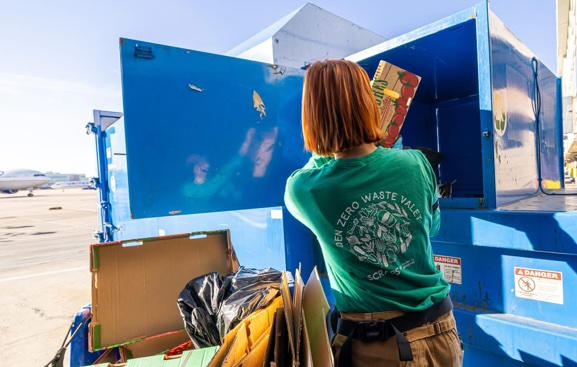
Denver International Airport’s (DEN) “Zero Waste Valet” program has diverted 69.2 tons of material from the landfill into compost and recycling in its first six months of operation. The pilot program, which launched in June, 2024, has achieved an average waste diversion rate of 71% – or the rate at which trash is kept out of the landfill – three times higher than the airport’s facility-wide diversion rate.

The program, which is the first-of-its-kind at DEN, is managed by Scraps, the longest-running Front Range compost company that boasts more than seven years of experience in specialized waste diversion efforts. The program started with three concessions on Concourse B, the busiest concourse at DEN, with the highest passenger traffic and the most concession locations. The initiative has gradually expanded to 19 concessions currently participating.

“We are very pleased with the results Zero Waste Valet has achieved in the first six months that it’s been operating,” DEN CEO Phil Washington said. “By ensuring waste is properly managed in critical areas like concessions, we are making significant and meaningful strides toward reducing landfilled waste and carbon emissions, while demonstrating our commitment to becoming the greenest airport in the world.”

A $495,000 Front Range Waste Diversion Grant provided by the Colorado Department of Public Health and Environment helped fund the pilot. The Front Range Waste Diversion Program was replaced by the Colorado Circular Communities Enterprise in May, 2024.

The Zero Waste Valet team provides back-of-house composting and recycling support in the form of training, educational signage and equipment to efficiently move material, periodic waste audits and scales to ensure all waste is weighed. The team also collects trash, compost, mixed recycling and separated glass from every participating kitchen – a true “valet” service that also reduces concession staff’s workloads.

Photo courtesy: Denver International Airport -DEN Facebook

“We’re thrilled to be able to help turn DEN’s zero-waste vision into reality,” Scraps Founder and CEO Christi Turner said. “This program is a tremendous opportunity for Scraps to put our proven zero-waste methodology to the test, and to partner with the DEN team to develop innovative new protocols to overcome the unique hurdles to waste diversion in our city’s busy, massive, 365-days-a-year airport.”

Though most concessions were already recycling cardboard, the program has helped everyone maximize their diversion by introducing mixed recycling and composting. Some concessions have seen an increase in the amount of waste being diverted from the landfill by up to four or five times their rate prior to the program beginning. After only three months, the Zero Waste Valet was collecting more compost than any other waste stream by weight, including trash. Today, trash is the smallest waste stream the team collects.

DEN plans for all concessions in Concourse B to participate by Q2 of 2025, with the long-term goal of extending to the other two concourses.

Our Government

White House

President Joseph R. Biden, Jr. declared that a major disaster exists in the State of West Virginia and ordered Federal assistance to supplement state and local recovery efforts in the areas affected by Post-Tropical Storm Helene from September 25 to September 28, 2024.

Colorado Governor

Governor Polis and the Colorado Outdoor Recreation Industry Office (OREC) of the Colorado Office of Economic Development and International Trade (OEDIT) announced the largest infrastructure project to receive funding through the Colorado State Outdoor Recreation grant (COSORG). Panadero Ski Corporation received $250,000 to support operational expenses related to Cuchara Mountain Park, a small ski area in Huerfano County which closed in 2000 and will reopen for the 2024-2025 ski season on Dec. 14.

Denver Mayor

Mayor Mike Johnston, Denver’s Department of Housing Stability (HOST), partners from Mile High Development and Brinshore Development, and community members celebrated today the grand opening of Northfield Flats, a 129-unit affordable rental community located adjacent to the Northfield shopping center in the Central Park neighborhood.

A Week In Review

0

Africa 

Dozens of miners rescued 

Officials in South Africa have rescued more than 150 illegal miners from an abandoned mine. Most of those who were rescued said they were forced against their will to search for gold. Authorities arrested the miners and said three bodies were recovered on the first day of the rescue operation. 

Opposition wins Ghana president election 

Former President John Mahama is set to become the next president of Ghana after winning the country’s presidential election. Ghana is facing its worst economic crisis in a generation, causing the cost of basic goods to rise. The country is also struggling to repay its debts. As of Sunday, no official results have been declared despite Mahama’s opponent conceding defeat. 

Asia 

South Korea president to remain in office 

Officials in South Korea failed to impeach President Yoon Suk Yeol, who attempted to declare martial law. His declaration was overturned by parliament and caused large, nationwide protests. A bill to censure him fell five votes short of the 200 needed to pass. 

Japanese actress found dead 

Miho Nakayama, who was known for starring in the 1995 film “Love Letter,” has passed away at the age of 54. She was found dead in her bathtub in her Tokyo home. It is unknown what the cause of her death is. Nakayama was one of Japan’s most popular teen idols and also found success as a singer. 

Europe 

Ukraine gives update on death toll from war 

Ukraine President Volodymyr Zelensky said that around 43,000 Ukrainian soldiers have been killed since Russia invaded the country. Another 370,000 Ukrainian soldiers have also been injured. Zelensky also declared that 198,000 Russian soldiers have been killed while another 550,000 have been wounded. 

Explosion in Netherlands kills five 

An explosion in the Netherlands has killed at least five people and injured four others. The blast caused several homes in the area to collapse, and it is unknown how many people are missing. Police are still investigating the cause of the blast but noted that a car drove away at a high speed after the incident. 

Latin America 

Missing woman spotted in Mexico 

Hannah Kobayashi, a 30-year-old woman from Hawaii who was reported missing, was discovered crossing on foot into Mexico. Officials said she appears to be safe and described her as a “voluntarily missing person.” Before going missing, Kobayashi sent messages to her families about her money and identity being stolen. 

Gang jailed for attempting to smuggle cocaine 

Three men have been jailed after trying to smuggle cocaine in a cargo of bananas from Colombia in 2021. The men, Petko Zhutev, Ghergii Diko and Bruno Kuci, pleaded guilty to smuggling. The cocaine had a street value of more than $211 million. 

North America 

TikTok set to be banned in 2025 

A federal appeals court upheld a law which would ban social media platform TikTok in the United States if it isn’t sold. The country is accusing the platform’s owners of having links to China. President-elect Donald Trump said he would not allow a ban on TikTok prior to the November elections. 

Slippers from Wizard of Oz sell 

Ruby red slippers from the movie, “The Wizard of Oz,” have been sold for $28 million at an auction. The slippers are one of four pairs remaining from the film. Another pair resides at the Smithsonian’s National Museum of American History. 

Trump plans to hike tariffs and remove the undocumented

0

Just as the holiday season was beginning, the newly elected president, announced plans for his first day back in the Oval Office. 

“On January 20th, as one of my many first Executive Orders,” said Donald Trump, “I will sign all necessary documents to charge Mexico and Canada a 25 percent tariff on ALL (sic) products coming into the United States, and its ridiculous Open Borders.” Reaction to his bold and bombastic edict was mostly negative, especially from leaders of his two announced targets. 

In short order, Trump’s startling pronouncement aimed directly north and south were openly challenged for not only their lack of wisdom and reason but for their potential to lead to economic chaos.

Rather than issue bold and, perhaps, even self-defeating economic pronouncements, Mexican President Claudia Sheinbaum instead suggested, why not begin first with adult-like discussions between all parties involved. “What is needed,” Sheinbaum stated firmly, “is cooperation and mutual understanding to tackle these significant challenges.” Her Canadian counterpart also reacted pragmatically. 

In a hastily constructed trip to Mar a Lago for a face-to-face visit with Trump, Canadian Prime Minister Justin Trudeau diplomatically suggested that dialogue, not poorly thought out, dictums, might be better first steps in bilateral relations.

“We’re going to work together,” said Trudeau. “Ultimately it is through lots of real constructive conversations with President Trump that I am going to have, that will keep us moving forward on the right track for all Canadians.”

Over dinner at the garish Mar a Lago and in private conversations, Trudeau and Trump, along with advisors, discussed the ramifications of arbitrary add-ons that will ripple across the economies of both nations.

Scheinbaum and Trump held their own private conversations on the matter on Thanksgiving Day and also found a way to lower the temperature, at least for the present. Trump immediately declared victory. But an Associated Press story on their chat characterized things a bit differently. “Sheinbaum,” the AP story said, “suggested Mexico was already doing its part and had no interest in closing its borders.” 

While Canada and Mexico were specifically named in Trump’s pre-holiday pronouncement, China, without being named, is also in the crosshairs for the same estimated 25 percent tariff hikes. Trump has long and loudly been critical of China’s trade policies and has a history of aiming his barbs at the world’s second largest economy with impunity.

If by January 20th, the day he begins his second term, Trump keeps his vow to tariff these countries’ products, Americans can expect to pay more for these Mexican imports: computers, car parts and accessories, machinery, steel and food that crosses out southern border, everything from avocados to zucchini. Canadian imports, including, cars, crude oil, gasoline, aluminum and wood will all be more costly. 

While Trump was swept into office with promises of lowering inflation—an inflation that had been on a two-year downswing—experts say there would instead be a sudden negative spike. Importers, as they always have, would simply pass on their new and higher costs, directory to consumers. 

Adding the threatened Trump tariffs, Trudeau pointed out, would also torch the North American trade pact that Trump’s first administration negotiated with our two neighbors. 

The National Retail Federation estimated Americans would spend as much as $24 billion more on clothes; $13 billion more for furniture; $11 billion more on appliances. In all, it’s estimated American spending clout would shrink by as much as $78 billion. 

Another way to see how Trump’s plan would impact came from a Center for American Progress Action Fund study. New tariffs, it said, would amount to a $1,500 tax increase and that would be based on only a 10 percent tariff.

Of course, in making his preemptory threat, Trump tied it to the flow of immigration and drugs, especially fentanyl, crossing the southern border. But in addition to the tariffs and a shutdown of the border, Trump has also named a new border czar who seems almost enthusiastic about his new job, including using the U.S. military to find, arrest and deport, presumably, millions of undocumented, including children who may be U.S. citizens. 

While millions of undocumented immigrants have been in the country—many for decades—and built lives, not broken laws and worked in agriculture, construction, health care and scores of other industries, Homan said it makes no difference. But a number of U.S. mayors, including Denver Mayor Mike Johnston, say they will not roll over on Trump’s plan nor Homan’s desire to execute it even at the threat of losing federal funding, including health care funding. 

“We are gonna continue to be a welcoming, open, big-hearted city that’s gonna stand by our values,” Johnson has proclaimed. “We’re not going to sell out those values to anyone. We’re not going to be bullied.” 

Since Trump’s dinner with Trudeau and his conversations with Mexico’s Sheinbaum, his economic fever and desire to act out seem to have broken. But with his well-documented penchant for nocturnal policy proposals, including his 25 percent tariff on our top three trading partners, the next 47 days—days until the inauguration—hold open the possibility for anything.

Unique Gifts for the Holidays

0

Unique Gifts for the Holidays Part II of IV

LaVozColorado Staff

In the midst of the holiday season, we are moved to be more generous, more caring and more understanding of others’ needs. Perhaps it is the feeling of community, of giving and the warmth of the season. This holiday season and perhaps the rest of the year, please consider doing one or some of the following:

Photo courtesy: denverunionstation.com
  • Provide a meal to an elderly neighbor or your grandma/grandpa
  • Shovel someone’s sidewalk or driveway
  • Bake a cake for a friend
  • Wash your spouse’s car
  • Fill up someone’s gas tank
  • Call a friend you have not connected with for some time
  • Give a compliment to a store clerk
  • Give a gift card to your mailman
  • Volunteer at a nursing home
  • Drop off a box of groceries to a family in need
  • Take your spouse out to lunch or dinner at a mall 
    restaurant
  • Sing Christmas carols with your kids
  • Write a letter to someone you love
  • Smile more this holiday season
  • Indulge in a hot bubble bath
  • Compliment your spouse
  • Praise your children, grandchildren
  • Bake treats for your co-workers
  • Start a gift/toy collection for a family in need
  • Call your parents if you are lucky to have them
  • Play with your pet
  • Pray for our nation/world
  • Send a care package to a soldier
  • Don’t drink/text and drive
  • Bake cookies with those you love
  • Count your blessings
  • Listen to holiday music
  • Take care of yourself
  • Watch ‘Planes, Trains, and Automobiles’
  • Watch ‘A Christmas Story’
  • Drink hot chocolate
  • Compliment an employee
  • Compliment your employer
  • Take your spouse to a movie
  • Record favorite songs for a loved one
  • Buy flowers for a friend
  • Clean a elderly person’s home
  • Pay someone’s utility bill
  • Buy a book for a book lover
  • Pay it back at a fast-food restaurant
  • Attend Midnight Mass, even if you’re not Catholic
  • Read a story to your children/grandchildren
  • Bring a box of chocolates to the office
  • Education matters, give to a scholarship program
  • Always Buy Colorado
  • Donate to a needly family 
  • Donate to your favorite nonprofit via Colorado Gives
  • Keep reading LaVozColorado

As we prepare for the celebration of the birth of Christ, remain in that giving frame of mind and help those who need a helping hand. The warmth that gesture brings to your heart, is your reward.

The best of the season from LaVozColorado!

Broncos outlast a gritty Browns squad

0

The Denver Broncos weren’t suppose to be in the position they’re in at this juncture of the season. They were suppose to be a team in the rebuilding phase led by an over-aged rookie who’s a, “check-down-merchant.” 

Yet, as of this week, the Denver Broncos are 8-5 (were projected to win 5 games this season) and their ‘check-down-merchant of a quarterback is leading all quarterback rookies in yards, and touchdowns. Bo Nix may not have had his best game on Monday night on the national stage, but he did just enough to win the game and had tons of help from his defense. 

While Nix may not have had his best game on Monday night, Cleveland Browns quarterback Jameis Winston likely had the best game of his career, which to many was the most Jameis Winston game ever played. 

During the Broncos’ Week 13 game against the Cleveland Browns at Empower Field at Mile High in Denver, Colorado on December 2, 2024. Photo by Gabriel Christus / Denver Broncos

Winston was 34 of 58 for 497 yards, four touchdowns and three interceptions. One might say that he threw for seven touchdowns in Monday night’s game when two of his passes were intercepted and returned for touchdowns. The Browns relied heavily on Winston’s arm as they struggle to get the running game going with both Nick Chubb and Jerome Ford. 

Winston’s biggest target was ex-Broncos receiver, Jerry Jeudy who also had a career game with 9 receptions for 235 yards and one touchdown. Jeudy antagonized Denver fans after nearly every completion he grabbed which resulted in a reign of boos from the stands.

Jeudy’s demeanor changed after making a tackle on Denver linebacker Cody Barton who returned an end zone interception from Winston to the Brown’s 45-yard line. This being the final nail in the coffin to probably the best Monday night game of the 2024 season puts the Broncos in prime position for their post-season run. 

Next week the Broncos will take full advantage of a much needed bye week where players on injury, like Riley Moss who was replaced by former Pittsburgh Steelers cornerback, Levi Wallace in Monday nights game, can get an extra week of rest for Denver’s game against the Indianapolis Colts on December 15th. Moss was having a phenomenal rookie season before his knee injury in Denver’s game against the Raiders last week. 

Moss’s value was on full display in Monday’s game when his replacement, Wallace continued to get torched by former Bronco Jerry Jeudy. 

In other sports, the CU Buffs men’s football team put on a show for Senior’s Day at Folsom Field in Boulder Saturday afternoon. CU clobbered the Oklahoma State University Cowboys 52-0 in their last game of the season. CU missed the college playoffs mostly in part to their loss to Kansas last week but are bowl eligible and will likely head to the Alamo Bowl in San Antonio or the Holiday Bowl in San Diego. 

The ‘Masa Marathon’ at Pueblo’s El Nopal Restaurant has begun

Here’s a little known fact about tamales: they are one of the world’s oldest dishes—dating back an estimated 10,000 years. But their taste, connoisseurs swear, make them as good today as the gift of the gods they were thought to be some 400-500 generations ago.

Yes, the simple tamale, masa, meat, wrapped in a husk and cooked to perfection, was once a staple for soldiers and traders in pre-Columbia times. Tamales could easily be packed for long distance traveling and serving as both the perfect snack and as a complete meal. 

Now, pushing 10,000, give or take a few years, tamales are still a ‘go-to’ snack or even entrée, served everywhere from buffet lines at fancy soirees to even the most upscale Mexican restaurants. They’re also that one food that brings Latino friends and families together to collectively prepare as dinner table ‘musts’ as well as holiday gifts.

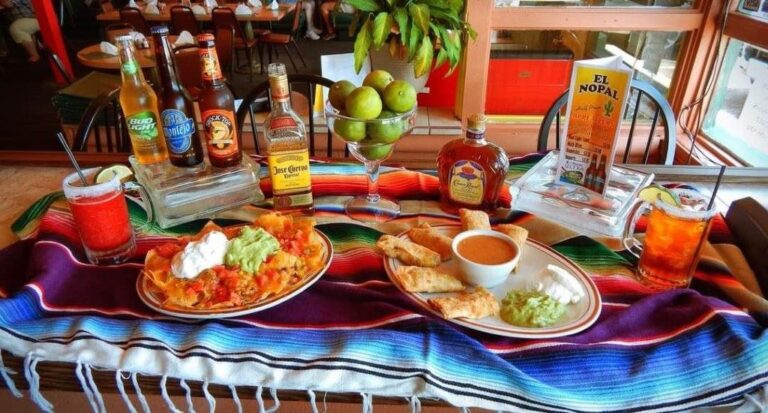
Photo courtesy: El Nopal Restaurant – Pueblo

Now, as it approaches 70 years in business, in the same shadow of the once vibrant steel mill, Pueblo’s El Nopal Restaurant is just beginning its holiday tamale tradition, a tradition begun by Torres matriarch, the late Rose Torres. 

“Most of the stuff we do,” said owner and grandson, George Torres, “is traditional.” El Nopal’s recipes remain frozen in time and are reflections of those his grandmother brought here from Guanajuato, Mexico, as a 14-year-old girl. Others are recipes she perfected as her own family grew.

Of course, staying in business for 70 years forces certain changes, Torres concedes. In addition to the pork tamales hand fashioned by his grandmother, “we will also do a vegetarian style or add cheese…we also do chicken.” El Nopal also does a seasonal, special tamale. It’s absent meat of any kind. “Instead of using salt, pork and meat, we use sugar, cinnamon, buttermilk, raisins and nuts.” “It’s my favorite.” 

While the mill crowd no longer exists, along with a small handful of small eateries that also once served hungry workers, generational customers and the other regulars keep El Nopal a popular Evans Avenue landing spot. 

This time of year, Torres said, customers not only come in to get their favorite Mexican meal, but they’ll also pick up the holiday tamales that are being cranked out by the dozens—and in this case, it is an almost unimaginable number of dozens. 

It’s tamale season all across Pueblo, a city whose population is nearly 50 percent Hispanic. Over the next two weeks, Torres estimates almost matter of factly, “we’ll make around 800 dozen tamales.” (I’ll save you the math. It’s approximately 9,600 tamales!) Best of all, said Torres, “By the end of December, we’re lucky if we have a dozen left.”

Torres said the tamales El Nopal makes are different than those found in other restaurants in Pueblo. “We still cook our own corn to make our masa,” he said. It’s the way they’ve done it here from the beginning. 

To meet demand, Torres said he usually hires the same extra workers he’s hired over the years. When they’ve made a shift’s work of tamales, “We flash freeze them,” to make certain when they’re reheated, they retain the right taste.   

El Nopal was up and running when Torres was born. But being in and around it, and being especially close to his grandmother, he says he also inherited its soul from her. “Today, I have even greater respect for her,” especially knowing that she was barely a teen when she arrived all alone. 

Over the years, Torres learned how his grandmother’s inventiveness led to an El Nopal staple, its green chili. While its taste may reflect it as a ‘labor of love,’ and that’s a nice thought, he said its origins were more a matter of necessity than anything else.

Because his grandmother had 14 children, he said, she had to make each meal go as far as it could. To stretch a recipe like green chili, Torres said, “she would add a roux to it.” As time went on, that single touch, she learned, gave her chili its own, unique allure. That epiphany and innovation is found in the green chili served today at El Nopal. 

Closing El Nopal for special holidays is also a tradition. Also, when dining with family for Thanksgiving or Christmas, there are no tamales or other Mexican food items on the table. “It’s turkey, ham and stuffing,” Torres said. But the time away from the restaurant and the food and smells he’s around when he’s working there, he admits, makes him “crave it.” 

The holiday’s over. It’s time for Torres to once again open the door at El Nopal and invite in the regulars. Like another place, El Nopal is a place ‘where everyone knows your name.’

The Latino political map is Changing

0
David Conde, Senior Consultant for International Programs

On November 4, 1952, I watched my father as he was glued to the car radio listening to the results of the presidential election. The irony was that he did not vote at that time but was interested in the outcome.

We had migrated to Sterling, Colorado from Central Texas to work on a farm that spring. When we came, we brought our party affiliation with us as our extended family as well as ourselves were Democrats because that is what most Texans were. 

The only people we knew in that State that were Republican were the Black folks who still revered Mr. Lincoln, the iconic Civil War President. The Democratic Party at that time was, in part, a holdover from slave-holding and racial segregation in the South.

Some of that changed with the implementation of the President Nixon led “Southern Strategy” during the 1972 mid-term elections that saw southern Conservative Democrats become Republicans and the more Liberal community remain Democratic. It was then that much of the Black community felt they had lost their political home as Republicans and became Democrats.

The civil rights movements of the late 50s, 60s and 70s did little to change party membership, but did question their value in the face of poverty and discrimination. After that period, much of the political efforts by Chicanos and then Latinos were concentrated on local and state leadership. 

These were the times of important standard bearers like Ruben Valdez, Sal Carpio, Polly Baca, Richard Castro, Federico Pena and Ken Salazar who captured the imagination of a community that was deep into a transformative experience of its own that began to change its political outlook.

One of the major challenges the Latino community faced was a cultural disconnect with its roots due to loss of language, sense of history and most of all, identity and place in America. The Chicano Movement did a lot to ameliorate that condition and yet it was not enough.

However, the immigrant waves, especially from Mexico, in the last third of the 20th Century carried with them the language, a notion of geographical history and most of all, a sense of healthy identity shared by their children in school, work and public life.

This proved to be a boon to the Latino community as it set about consolidating the relatively new world view while its new arrivals established themselves in their adopted country. The transformative work has lasted decades and has left less time for political involvement.

Although Latinos have not been as involved as they could be in the national political landscape, their new generation has begun to activate away from the traditional party allegiances practiced in the past. What had been the high point of 82% support for Jimmy Carter and the Democratic Party in 1976 has slowly dwindled every presidential election to 56% for the Democratic Al Gore against 44% for George W. Bush and now 42% for Donald Trump against Kamala Harris.

Also, there is evidence to show that the Latino community is increasing its engagement in the national political process. The 2020 election saw for the first time that more than half of the eligible voters (52.5%) voted. 

It is common to say that Latinos make up a very diverse community. It is true that they manifest every color, every race, every walk of life and many nationalities. 

The increasing engagement is beginning to show that no one political party can count on unequivocal support from the community. This is diversity at its best. 

Polis proclaims Dec. 2-6 Wastewater Utility Week

Proclamation recognizes utilities’ contributions to monitoring system and public health

Governor Polis declared Dec. 2-6, 2024 Colorado Wastewater Utility Appreciation Week to recognize the efforts of wastewater utilities whose participation continues to help the Colorado Department of Public Health and Environment monitor trends in infectious disease pathogens in wastewater.

Earlier this year, the CDPHE’s wastewater surveillance program transitioned from a larger sampling model, to a smaller, more efficient model to prioritize new targets. There are two types of utilities involved in the program — sentinel surveillance sites that submit samples twice weekly and represent more than half of Colorado’s population, and emergency surveillance sites that submit samples if the system is activated and a rapid public health response is needed.

“This declaration stands as a testament to the invaluable contribution all involved utilities have made to our wastewater surveillance network. The data generated from the samples provided by these utilities enhances our understanding of the disease burden throughout Colorado, allowing for identification of emerging pathogens and new strains of viruses. We are grateful for their partnership and dedication to public health,” said Dr. Rachel Herlihy, Colorado State Epidemiologist. 

The program began in August 2020, when wastewater utilities began providing samples to a Colorado State University lab to help monitor COVID-19 transmission. The testing transitioned to the CDPHE laboratory in July 2021. Currently, the CDPHE lab tests for COVID-19, influenza, RSV, and enterovirus D68 in wastewater. 

When used with other public health data, wastewater data allows local public health partners to respond effectively to disease trends and empowers communities throughout Colorado to make informed decisions based on local data. Wastewater surveillance data allows public health officials to identify the presence of a virus in a community even when people are asymptomatic or may not get tested. 

In addition to this important work, wastewater utilities provide a critical service to Coloradans by treating our wastewater and protecting our waterways. 

To learn more about the wastewater surveillance program, visit the program’s webpage.

Photo courtesy: cdphe.colorado.gov