






Home Blog Page 70

Do Milton and Helene confirm climate change?

0

For most Coloradans, it is almost impossible to imagine what people in a handful of southeastern states, including Florida, Tennessee, Georgia and North Carolina, experienced at the hands of Hurricanes Helene and Milton.

The two record-breaking storms ripped across hundreds of miles deconstructing roads, buildings, even entire towns and leaving in their wake a dystopian landscape.

Hurricane Helene, the first of the two seasonal storms to hit land, grew in intensity at an almost surreal pace. As it was building, scientists say, its winds, initially clocked between 60-70 miles per hour, nearly tripled in magnitude. At its most intense, Helene’s winds were estimated at or even above 180 mph.

Milton, the mainland’s next uninvited visitor, landed two weeks later. It also arrived with a similar fury. Scientists estimated that its windspeeds grew by nearly 100 mph in a single 24-hour period, building to approximately 175 mph. Both Helene and Milton were among the strongest hurricanes ever recorded by the U.S. Weather Service.

Damage estimates for both storms are still being calculated. But when final figures are determined, they will total billions and quite possibly, record billions.

“It’s a reality we have to address,” said meteorologist Erin Roberson, who teaches meteorology at Metropolitan State University-Denver. “I really think we’ll be seeing lot more of these intense storms.” Milton, said the National Weather Service, was the second most powerful hurricane to hit the U.S. since Hurricane Rita in 2005.

It has become accepted fact, endorsed by no less authority than the National Oceanic and Atmospheric Administration, that hurricanes form over warming sea surfaces. Ocean waters are warming, as much as 1.25 F higher than they rose from 1982-2011.

While that increase may not seem like much, this seemingly miniscule rise has already decimated ocean reefs, scorched marine food sources and melted glaciers at a record pace. Of course, hurricanes are far easier to visualize.

Hurricanes absorb this heat and convert it to kinetic energy, energy so named due to its motion. A hotter ocean allows tropical storms and typhoons—Indian Ocean storms—to grow in intensity.

As far back as 1987, an MIT-based scientist suggested that wind speeds in storms like Helene and Milton and those yet to come can be expected to increase by as much as 5 percent for every increase of 1.8°F or more in ocean temperatures.

But warming oceans and hurricanes along with other violent storms are not the only by-products of climate change. And it is not only coastal areas where climate change will be felt, said Roberson. Warming ocean temperatures will impact what she calls atmospheric rivers, a corridor of atmospheric moisture.

“Even in Colorado, especially in winter,” Roberson predicted, “what we could see is more intensity” in our storms. “When you have the Rockies, you have more uplift,” causing more moisture or snow to fall on the west of the mountains than on the east.

Roberson, who also once worked for the National Weather Service, joins a growing number of scientists who see greenhouse gases as the major contributor to rising ocean temperatures. The correlation between more carbon dioxide in the air—caused by the continual reli- ance on fossil fuels—and changing weather patterns has been well known for decades. “We knew something was happening in the eighties and certainly in the nineties,” Roberson said. “We have also known it would impact our climate.”

As recently as June, the United Nations issued a white paper on worldwide climate change. According to Copernicus, The European Union’s climate monitoring service, the planet has endured “12 consecutive months of unprecedented heat.”

Weather patterns, from sub-freezing winter cold to scorching summer temperatures, are already taking a toll on essential workers. Agricultural workers, many or even mostly immigrants, are among the most susceptible to these potentially fatal temperatures.

A number of farm workers stretching across every band of the country have already become statistics and victims of steadily rising seasonal temperatures. Scientific American said that as many as 2,000 workers die annually from extreme heat and an estimated 170,000 workers suffer heat-related injuries and illnesses each year.

The same heat that fuels tropical storms is also responsible for both record blizzards and prolonged drought. It is drought that forces ranchers to thin their herds, often selling well below market value, because of rising feed prices and dwindling water sources. A full connection of the dots, say scientists, forms a perilous image.

“I think this is a reality we all have to address,” Roberson said. “I think we’ll be seeing a lot more of these intense storms, a lot more drought, impact on agriculture, impacts on food systems and impacts on poverty.” It’s not just physical science, she said, “but social sustainability. If we do not start to address it more seriously, we could begin to see deterioration in people’s lives.”

But despite the signs that portent a looming darkness, there are still millions who doubt the legitimacy of climate change and simply chalk it up to simple bromides like ‘the weather’s always changing.’

Roberson says she holds no animosity toward climate change detractors. “They are not ignorant,” and should not be bullied into accepting the science of weather. It may be as simple, she said, as them being victims of a system that makes them believe politicians and unvetted internet source instead of people who actually study hard data, verifiable science.

Claudia Moran’s journey to Museo de las Americas

0

Hispanic Heritage series – Part V of V

Claudia Moran’s journey to becoming executive director of Museo de las Americas began in Mexico City where her passion for archeology and art was nurtured.

Photo courtesy: Museo.org

Moran was born and raised in Guadalajara, Mexico and earned a Bachelor’s in Archaeology from Escuela Nacional de Antropologia e Historia in Mexico City. In Mexico, she participated in various archaeological projects sponsored by Mexican and American universities.

Moran’s path eventually led her to Denver, where she and her high school sweetheart, Carlos Gonzalez, settled. Finding herself in a new country, Moran sought to create a sense of belonging and community.

“That is when I was introduced by a couple of friends, some from Mexico, some Chicano, to (Museo de las Americas),” said Moran.

“The sense of community and the connection with the different groups that were not only Latino, Chicano, Hispanic, Mexican American, all these conversations gave me a sense of my purpose. I wanted to contribute to all the different communities, and I started moving from (working) visitor services to education and programming,” she added. “That sense of community and educational programming with the children got me engaged, interested, and passionate about museums. That’s how I started my career.”

Moran’s career with Museo de las Americas has stretched for longer than 15 years where she has helped lead the Museo’s mission of providing Latino arts and culture exhibitions and programming for local and regional communities while inspiring and educating people of all ages and backgrounds.

Today, Museo de las Americas has over 4,000 items and objects in its collection, including Ancient American, Spanish colonial, fine art, pottery, textiles, contemporary art, and more. Thanks to its large collection, the Museo has art objects that represent every country in South and Central America, Mesoamerica, the Caribbean, and the Southwest United States, including Denver.

The Museo focuses on protecting, preserving, and sharing Latin American history and culture while representing Latino art and artists.

“The exhibits and programs we offer are around to help us understand cultural pride, and give a sense of identity for younger generations who haven’t gone back to their countries of origin and to create a wider perspective of what it means to be a Latino now,” said Moran.

When asked about Hispanic Heritage Month, Moran said she sees the time as a celebration that brings awareness to the contributions Latinos, Chicanos, and Hispanics have brought to the United States.

Museo de las Americas is located at 861 Santa Fe Drive in Denver. It is open Tuesday through Friday from 12 p.m. to 6 p.m. and Saturday and Sundays from 12 p.m. to 5 p.m. To reach the Museo, call 303-571-4401 or visit museo.org.

Broncos win on Thursday night in New Orleans

0

The Denver Broncos traveled to New Orleans to face Coach Sean Payton’s old team the Saints. The Saints won their first two games against the Carolina Panthers and the Cowboys defeating them by a combined score of 91-29. Since then, the Saints have lost five straight including their loss on Thursday night at home against the Broncos.

One of the reasons behind New Orleans problems is the loss of Derek Carr who was traded to the Saints in the offseason from the Las Vegas Raiders. Carr has been sidelined with an oblique injury, including the game against the Broncos. Denver took advantage of a heavily injured Saints and defeated New Orleans 33-10 to advance to 4-3 sitting behind the AFC West second place Los Angeles Chargers.

The Broncos have an opportunity to move to 5-3 with a win over the Carolina Panthers on Sunday at Empower Field at Mile High at 2:25 p.m. The Panthers are coming off a embarrassing 40-7 loss to the Washington Commanders on Sunday in Washington. The Panthers only have one win this season over the Las Vegas Raiders back in September.

Denver experienced a slow start against the Saints, an issue that will clearly need to be addressed in order to have a shot at the post-season.

In other sports the Colorado Avalanche finally got their first win last Friday, five games into the season after defeating the Anaheim Ducks 4-3 in overtime. Colorado traveled to San Jose on Sunday to face the Sharks where Colorado dominated and walked away with a 4-1 win.

This week the Avs are in Seattle and Utah to face the Kraken and the Utah Hockey Club before returning home to host the Ottawa Senators this Sunday at Ball Arena. Colorado is near the bottom of the Central Division, however; the sea- son is young and Colorado has plenty of games to get to the top of the division.

The Denver Nuggets are at home this Thursday (8 p.m. MST) to host the Oklahoma City Thunder to kick off their regular season. The Nuggets ended the preseason in Minnesota last week with a win over the Timberwolves 132-126.

The Colorado Buffs were in Arizona over the weekend to face the Wildcats. Colorado jumped out to a 28-7 lead at the half and added two field goals in the second half to defeat the Wildcats 34-7. Colorado is now 5-2 and in sixth place in the Big 12 behind Cincinnati, Texas Tech, (AP No. 16) Kansas State, (AP No. 10) Iowa State, and (AP No. 11) Brigham Young University (BYU).

Next Saturday, the Buffs are at home to host the Cincinnati Bearcats, who beat Arizona State on Saturday 24-14. The Bearcats are also 5-2 one spot ahead of Colorado in the Big 12 rankings and on a two game winning streak. Colorado already has a better record thus far than last seasons’ record.

Fall and Halloween celebrations in Pueblo

If the drive doesn’t scare you off—it is the Halloween season, after all—and you’re looking for a seasonal getaway, you can’t do better than a trip to Pueblo or more specifically the outskirts of Pueblo and the Saint Charles Mesa.

The mesa is something of a suburb of the city, a rich agricultural mecca where Pueblo’s famous chile along with carrots, corn and countless other crops are grown. Ooops! Don’t want to forget pumpkins.

With the growing season now in the rear-view mirror and the fields growing fallow, it’s time to celebrate the fruit and spirit of the season.

Spread across a few zip codes on or near Pueblo’s Highway 50, locals and out-of-towners can visit any number of corn mazes and pumpkin patches, each with its own allure and personality.

“This is our fourteenth year,” for Katrina Chamber’s family’s Harvest Days celebration of the season. Harvest Days, like the pumpkins her family grows, said Chambers, “started out pretty small.” Pumpkins were planted by hand. But like the pumpkins seeds they were planting, an idea sprouted up. Why, thought the family, not turn the patch into a little fall fun.

A $15 admission allows visitors to roam the land, try out one or both of the corn mazes and pick out the perfect pumpkin. If they choose, they can also take a hayride, visit the corn mazes and let their children visit the petting zoo and feed the various farm animals. Chambers says young children are given alfalfa pellets to hand feed the goats and bunnies. She calls it a “fun farm experience.”

Chambers‘ Harvest Days Pumpkin Patch and Corn Maze are located at 33111 E. Highway 50. Nearby are the DiTomaso Farms, The Great Pumpkin Patch operated by the Panteleo family and the Milberger Farm Pumpkin Patch.

At the DiTomaso Farm, $7 will not get you a “grocery store sized” pumpkin, which its owner compares to a regulation basketball, but something so much bigger. The DiTomaso pumpkins are located at 37137 Highway 50.

Musso Farms, located at 35779 Hillside Road, invites visitors to take in free horse-drawn wagon rides and $8 pumpkins. It is open onweekends from 11 a.m. to 4 p.m. At Musso Farms, owner Carl Musso, Jr., said that if the weather cooperates it may stay open through the final weekend of October. Roasting Pueblo chile will also be available.

The Great Pueblo Pumpkin Patch operated by the Pantaleo family is located at 39651 South Road remains one of the traditional Fall season escapes. It’s open Fridays, Saturdays and Sundays through month’s end. There visitors can enjoy a “giant” corn maze, hay rides, pony rides, a cow train, petting zoo, food, and evening bonfires. And, of course, pumpkins. Admission is $3 per person.

While things may look easy, putting together a pumpkin patch and all that goes with it for this seasonal event, said Chambers, involves a lot of work. “It takes all year to grow pumpkins,” and putting together a ‘visitor-friendly’ corn maze, is also labor intensive. And then, there’s Mother Nature who, this year, caused a bit of anxiety but, in the end, came through.

“The pumpkins,” Chambers said, “did really great this year.” The weather cooperated, she said, despite “grasshoppers, a little too much heat and too little rain.” In the end, everything turned out fine.

A visit to The Great Harvest also means “a huge variety of pumpkins.” Chambers says there will be yel- low ones, traditional orange, a few blue(ish) ones and a variety that might look like they have a skin condition. It’s actually just another strain of this fall fruit. And, yes, pumpkins are a fruit.

Chambers said, with a degree of reassurance, navigating the corn mazes will not be as difficult as so many are. Also, her homage to Halloween won’t be spooky. “We don’t have anything scary. It’s just a Fall celebration.”

While Harvest Days along with Pueblo’s other seasonal Fall celebrations go through the end of the month, the last day doesn’t mean it’s over. Actually, it’s just the beginning—the beginning of preparations for each of the various farm’s 2025 versions.

Foundation and blame of the drug culture

0
David Conde, Senior Consultant for International Programs

The Pachuco has been an enduring icon from the American Southwest. His dress, the Zoot suit imported from Black culture with its “high-waisted, wide-legged, tied-cuffed pegged trousers, and a long coat with wide lapels and wide padded shoulders” was the symbol of rebellion that invited abuse in the downtown streets of our cities.

The Pachuco attraction comes from a historical character that personified an outsider, neither Mexican nor American, with its own language and exaggerated way of life. Part of the Pachuco personality was tied to the use of marijuana as a continued expression of differentiation.

Pachuco delinquency included deliberate exposure to violence especially by authorities. This was their way of taking responsibility for a human condition of their own making.

In our day and age, taking responsibility for the purchase and use of drugs of all kinds appears to be seen as making one look like a bad person in a world that is supposedly good. That does not jive with the notion on the part of many that the nature of a fast-moving and complicated environment full of enemies forces a search for relief in drugs.

In other words, according to this notion, it is not the purchaser and user that is blamed, rather, it is a condition created by someone else. It is the cartel, the drug trafficker, the drug vendor.

Politicians run with this because it is easier to blame others than face our shortcomings. We have seen it in other circumstances like blaming the upstart women that are becoming our leaders, the voices of minorities that are getting louder, the immigrants that come to work and the lower echelons of society.

Donald Trump who was elected in 2016 began his campaign doing just that. According to him, voiceless immigrants from Mexico were contaminating the United States with drugs and other things.

It is true that Mexican cartels are supplying Americans with drugs of every kind because the customers and consumers demand it and have lots of money to pay for them. However, the cartels would not exist if people stopped the illegal abuse or change the laws so they can do their powder or pills in comfort.

It was Al Capone who said, “When I sell liquor, it’s bootlegging. When my patrons serve it in a silver tray on Lakeshore Drive it’s hospitality.”

Perhaps we can consider working to either change the laws or get the rich, middle-class and poor drug consumers and addicts off drug dependency. Perhaps we need to go more forcefully against the causes of drug use.

In Mexico, the government has decided that drug trafficking is America’s problem. They have also decided to attack the lack of economic opportunities that have driven their youth to the cartels.

To do this, the government is requiring corporations to pay their taxes, something that many had found a way to avoid. They are using part of that revenue to offer scholarships for attendance at every level of the educational system, including universities.

The drug culture is, in large part, an American invention. Therefore, it is for our country to find a way out of this dilemma. We experienced this type of situation during Prohibition and its accompanying era of corruption. Illicit drugs and drug trafficking is creating a similar period of scapegoating, blaming others, political gamesmanship and corruption.

To begin to solve the drug problem in this country, we should stop blaming others, whether it is people or countries. We should take a moment and look in the mirror.

Student of the Week – Destanaya Quintana

Destanaya Quintana – Antonito High School

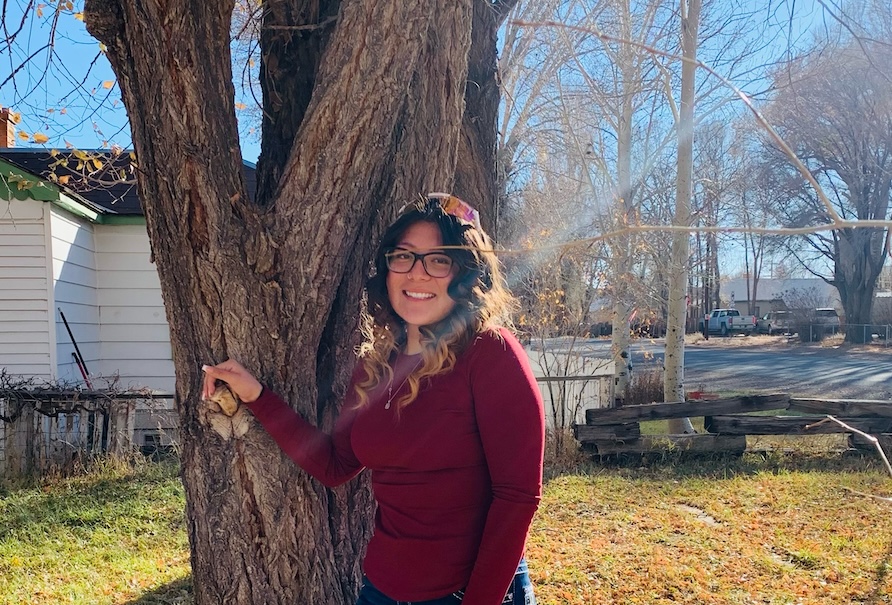
Photo courtesy: Destanaya Quintana

Profile:  Destanaya Quintana is a high school senior at Antonito High School who currently holds a 3.1 GPA while being involved in sports. Quintana’s academic achievements include English Honor Roll. Quintana is a strong athlete and is active in Volleyball, Basketball, and Cross country.  Quintana has lettered in Volleyball and Basketball, received Basketball Defensive Player of the Year, and the Namaste Award. Quintana plans to stay in the San Luis Valley after High School and hopes to attend Trinidad State College. 

Favorite Movie:  Remember the Titans

Favorite Subject:  English

Favorite Music:  Likes all music.

Future Career: Sports Physical Therapist

Hero: My parents, Frank and Carmen Montoya.

Favorite Hobby:  Spending time with family.

Words to live by: “Don’t let what other people think, decide who you are.” – Dennis Rodman

Community Involvement:  Quintana volunteers for the school Community Town Cleanup and for Kindergarten assisting students during first and sixth period.

Why is Community Involvement important?  Quintana says, “community involvement is important because it shows you care.”

If I could improve the world I would…

“…. stop school bullying.”

College of choice: Trinidad State College

Denver City Council approves Ball Arena rezoning and development plan

Affordable Housing, Public Park, and Community Benefits included

Denver City Council approved a monumental plan for development on the parking lots of Ball Arena in the Auraria Neighborhood of Council District 3. Council held four (4) public hearings and voted on six (6) separate bills related to the property.

The property is over 50 acres and is positioned to build an estimated 6,000 homes, of which 18 percent must be affordable and of those, 20 percent will be two-bedrooms and 15 percent will be three-bedrooms. The development must include a 3-acre signature park that will be transferred to Denver Parks and Recreation after it is built to ensure it is a publicly accessible community park. The Development agreement additionally includes commitments to local jobs to build and permanent jobs once it is constructed.

Photo courtesy: KSE Arena Development

Of particular importance, last week, a community committee made up of stakeholders and surrounding neighborhood representatives signed an historic Community Benefits Agreement (CBA) with Kroenke Sports Entertainment (KSE) that includes a number of agreements that are mirrored in the City’s Development Agreement (DA) in affordable housing, workforce and open space. But the CBA goes far beyond what the city included in their Development Agreement; commitments that speak to the precise advocacy only a community group can do. Community agreements include a $16 million dollar Community Investment Fund that includes supporting Indigenous and Displaced Aurarian students on Auraria Campus, youth programming and internships, tenant eviction assistance, down payment assistance, funding for art and commitments for local artists, as well as connectivity into Sun Valley, Lower Downtown and La Alma/Lincoln Park neighborhoods.

Many headlines will be about the agreement that City Council approved to extend the Arena Agreement for the Denver Nuggets and Colorado Avalanche until 2050, which is a critical piece for Denver fans and our local and regional economy. However, as Council members who represent residents and neighborhoods, it is the agreements that will impact how a new community is built and who will benefit from its development that is our highest priority.

Councilwoman Jamie Torres, who represents District 3 said, “This development along with its sister-development, River Mile, are in an area that was once the gathering place of tribes for millennia, it also tragically flooded in 1965, which led to the displacement of a largely Mexican-American neighborhood. There are many course corrections in bringing back homes and development to this hallowed ground. These developments will have to mitigate flood risk along their section of the South Platte River and build a new safe and reflective corner of the Auraria Neighborhood.”

Council President Amanda P. Sandoval said, “I am deeply proud to have worked alongside Councilwoman Torres, and our communities on the Ball Arena rezoning. This transformative project embodies Denver’s commitment to equitable growth, creating affordable housing, local jobs, and a community park that will serve generations to come. It’s more than just development—it’s a reflection of our values and dedica- tion to ensuring that our neighborhoods thrive for the future while honoring the history and people of this land.”

We are honored to have played our role in ensuring development is responsible and responsive to a wide variety of resident and stakeholder interests. Our work is not just about zoning, it is about the next seven generations and improving outcomes that will outlive us long into the future.

SOURCE: COUNCIL WOMAN JAMIE TORRES’ OFFICE

Local politicians welcome $47 million for safety improvements in Larimer, Boulder Counties

Colorado U.S. Senators Michael Bennet and John Hickenlooper alongside U.S. House Assistant Minority Leader Joe Neguse welcomed more than $47 million from the U.S. Department of Transportation (DOT) for safety improvements along U.S. Highway 287 in Larimer and Boulder counties.

“U.S. 287 helps connect communities across Northern Colorado, and historic funding from the Bipartisan Infrastructure Law will improve roadway safety while meeting the needs of Colorado’s growing population. I’m pleased to see Colorado continue to benefit from the most significant investment in America’s roads, bridges, and essential infrastructure since President Eisenhower built the interstate highway system,” said Bennet.

“Wildlife crossings save lives by dramatically reducing traffic collisions with animals,” said Hickenlooper. “Infrastructure updates like these are exactly why we passed the infrastructure bill.”

“The US 287 corridor is one of Colorado’s main north-south routes, serving as a gateway to Boulder, Longmont, Loveland, and Fort Collins. I’m proud to have helped secure $47 million in federal funding from the Bipartisan Infrastructure Law for the improvement and redevelopment of this major roadway, which will help connect countless communities and improve roadway safety,” said Neguse.

This funding will help the Colorado Department of Transportation (CDOT) construct wildlife crossings and intersection improvements, add passing lanes and centerline rumble strips, widen shoulders, and install median barriers along U.S. 287.

In September, the lawmakers sent a letter to DOT Secretary Pete Buttigieg supporting funding for wildlife crossing and roadway safety improvements along U.S. 287. In 2021, Bennet and Senate colleagues called on Congressional leaders to prioritize natural infrastructure restoration, resilience, and reclamation in the Bipartisan Infrastructure Law.

Our Government

White House

Statement from President Joe Biden on New Action to Significantly Expand Contraception Coverage Under the Affordable Care Act: “Today, my Administration is taking a major step to expand contraception coverage under the Affordable Care Act. This new action would help ensure that millions of women with private health insurance can access the no-cost contraception they need. Vice President Harris and I have worked tirelessly to protect and build on the Affordable Care Act.

Colorado Governor

Governor Jared Polis Colorado Department of Revenue announced today that taxpayers impacted by hurricanes Helene and Milton now have until May 1, 2025, to file various individual and business tax returns and make tax payments. This decision mirrors the IRS decision to provide similar relief at the federal level.“We want to ensure that Coloradans impacted by these terrible storms, who are part time Alabama, Florida, Georgia, North Carolina and South Carolina, and parts of Tennessee and Virginia residents or who have property or business there, have the support and relief they need during this challenging time,” said Governor Polis.

Denver Mayor

Mayor Mike Johnston responded to requests from Denver City Council for additions to the city’s 2025 budget. “As we navigate one of the tightest budgets of the last decade and a significant drop in federal funding, I’m committed to working together to deliver a balanced budget that protects the vital city services residents deserve,” said Mayor Mike Johnston.

A Week In Review

0

Africa

Mozambique opposition lawyer killed

Elvino Dias, a lawyer for recent presidential candidate Venancio Mondlane, was shot and killed. Local reports say Dias and another official from Mondlane’s political party were shot and killed in their car. Votes in Mozambique are still being counted, and the country is set to have a new president after President Filipe Nyusi stepped down.

Kenya deputy president removed from position

Kenyan senators voted to remove Deputy President Rigathi Gachagua from office. He failed to testify at his impeachment trial because he was in a hospital suffering from chest pains. Gachagua is facing charges related to corruption and money-laundering.

Asia

Pakistan polio cases on the rise

Officials in Pakistan have confirmed 39 polio cases among children. Health workers are set to launch a nationwide vaccination campaign for children under the age of five. In neighboring Afghanistan, there have been at least 18 confirmed polio cases. Only Pakistan and Afghanistan still have polio as an endemic disease.

North Korea sending troops to Ukraine

South Korea’s spy agency reported that North Korea is sending troops to fight with Russia in Ukraine. Recent reports sug- gest 1,500 North Korean troops have already arrived in Russia. The final number could be closer to 12,000, South Korean media reported, and there is evidence North Korea is suppling Russia with ammunition.

Europe

Baby dies crossing English Channel

French authorities confirmed that a baby died when a boat crossing the English Channel sank. The boat was carrying migrants and dozens of people survived the sinking. The child victim was believed to be of Iraqi-Kurdish nationality and had been on the boat with his parents and two other children. This year has been the deadliest on record for migrant crossings of the English Channel.

Latin America

Cuba without power

Last week, Cuba’s main energy plant failed, causing 10 million people to be without power. The power outage comes as Category 1 Hurricane Oscar approaches. Without power, many Cubans have had no air conditioning and food is beginning to rot. As the hurricane approaches, officials are concerned the storm can damage Cuba’s energy distribution infrastructure.

One Direction star dies in Argentina

Liam Payne, a former star of the band One Direction, died in Argentina after falling from the third floor of a hotel. Police found alcohol and medication in his hotel room. One Direction was a highly successful band, and Payne had solo success after the band announced in 2015 that it was going on hiatus.

North America

Olympic snowboarder accused of running cartel

Ryan Wedding, a Canadian snowboarder who competed in the Olympic Games, is wanted for allegedly running a drug cartel. The cartel allegedly committed murder and trafficked Colombian cocaine from Mexico to the United States and Canada. Wedding is accused of ordering the murders of three people. He competed in the 2022 Salt Lake City Winter Olympic Games.

Musk to give away $1 million a day in Pennsylvania

Elon Musk said he will give away $1 million a day to a registered voter in Pennsylvania. The winner will be randomly chosen from voters who sign a pro-constitution petition. Musk set up the campaign group AmericaPAC to support Republican nominee Donald Trump. So far, Musk has donated $75 million to AmericaPAC.