





Note from the Publisher:
How does a legacy initiated decades ago, get trampled on and erased in 48 hours?
Cesar Chavez was a man who worked alongside his right-hand Dolores Huerta and the United Farm Worker. They improved the lives of farm workers everywhere. Their ongoing fight was for justice, higher wages, better living/working conditions, and more. Yet, another side has come to the surface that depicts a troubled man who allegedly abused his power to achieve his sexual needs/encounters with the young and often powerless.
As the law dictates everyone is innocent until proven guilty. Cesar Chavez died decades ago, but his right-hand Huerta has stepped forward to clear the air and correct history. Her unyielding presence and loyalty to the UFW stood steadfast and strong, until she says she could no longer remain silent, and at the expense of Chavez.
Many people ask, why now? Why didn’t she/they speak up years ago? He isn’t here to defend himself. This we know, history tells us that women may or may not speak up about sexual abuse, but often, the abuser past and present remain mostly unaccountable for their abuse/actions. As an example, sixty plus years later, the handling of the Epstein Files is a clear example of selective justice among the rich and powerful.
The downfall of Cesar Chavez will remain a sad day for farmers everywhere and for those who supported his UFW cause, and its work should continue without him. However, as a society we cannot ignore an abuse of power that affects women and young girls.
Where do we begin? Cẻsar, we hardly knew ye? Hero to Zero and Beyond? Feet of Clay? The ‘Man behind the Mask? There are so many ways to label the alleged horrid revelations of Latino icon Cẻsar Chẚvez.
For years there had been whispers about this now benighted 20thCentury everyman, including stories of alleged racism directed at undocumented Mexican farm workers, referring to them as the now universally condemned appellation, ‘wetbacks.’
The meteor strike that hit just days ago detailing Chẚvez’ alleged indiscriminate sexual abuse, including rape, of young girls and staff females was simply too hard, impossible to navigate in Denver, in Colorado and across an American landscape that had revered the man.
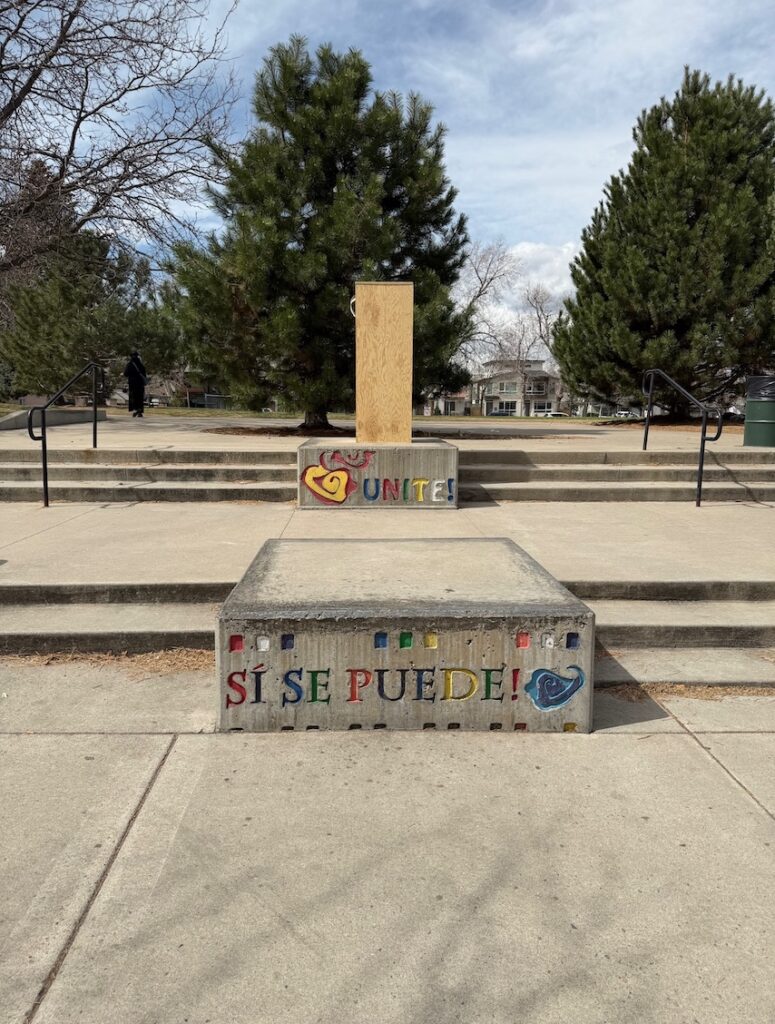
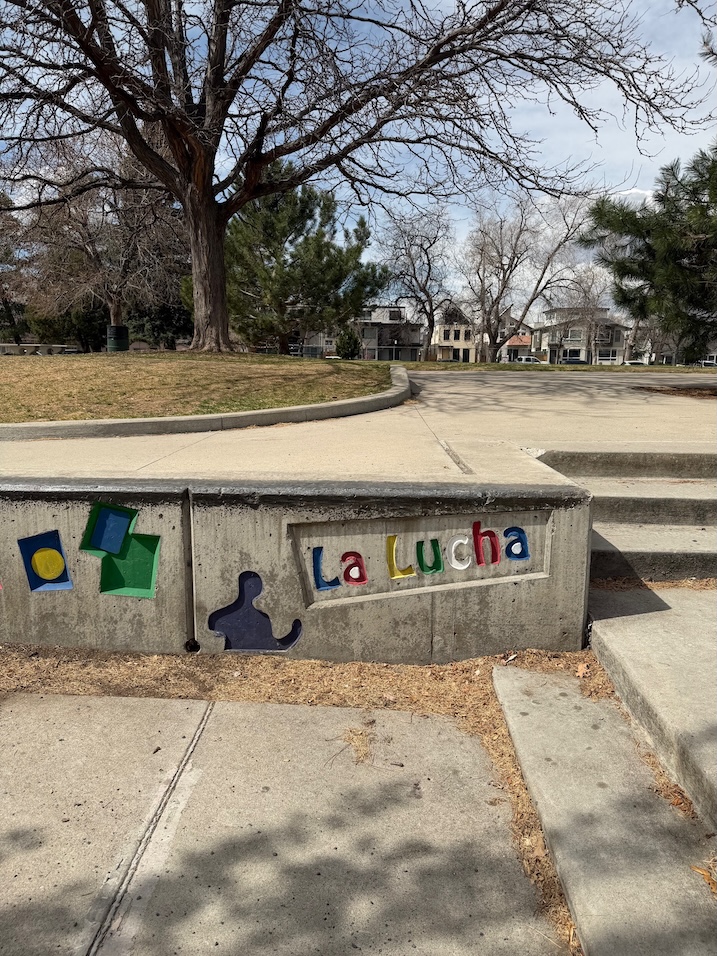
In Denver, the immediacy of addressing these accusations was conducted with lightning speed. A news conference featuring Denver Mayor Mike Johnson, City Council President Amanda Sandoval and others, including council emerita Ramona Martinez, was convened at 41st and Tennyson on the steps of what only hours before had been Cẻsar Chẚvez Park.
On that fateful day, a wall sign bearing the Chẚvez name had been boarded up, plywood concealing the name that only hours before had been revered was now spray-painted, symbolizing a conveyed utter disgust. For now, the city announced, the park would bear the name “Si Se Puede,” ‘Yes We Can,’ homage to the movement Chẚvez once led and one ironically coined by one of his alleged victims.
“I feel like a lot of people in the Latino community,” Sandoval shared in a later phone interview. “Disappointed, confused, heartbreaking and grieving,” were the emotions roiling inside her, she said. The phrase “Sí, se puede,” will remain on a temporary basis, Sandoval said. “We need to have more conversation…a moment to mourn.”
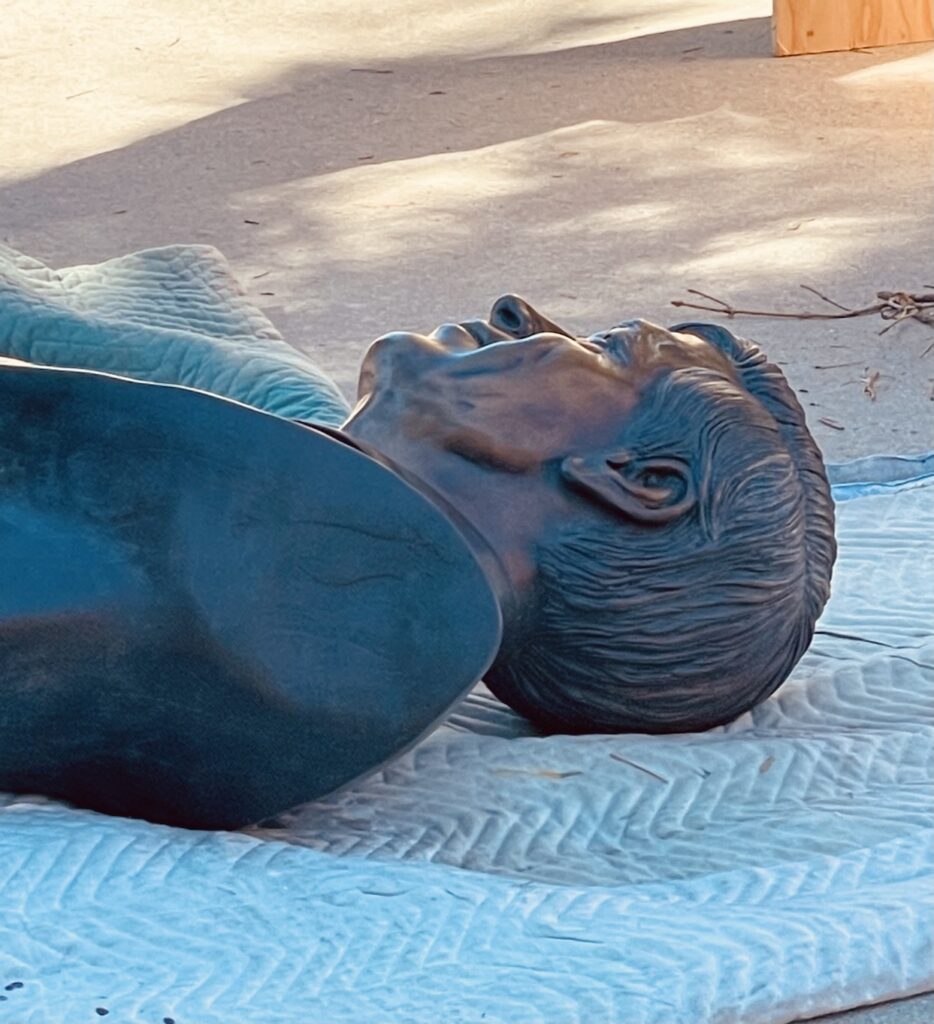
No timeline has been set for a permanent renaming. But already the Chẚvez bust has been removed from the obelisk that once held it. Now hand drawn signs ‘renaming’ it ‘Dolores Huerta Park’ adorn the makeshift cardboard siding signifying an end of an era. Huerta, once considered Chávez’ number two in the United Farm Workers movement, had released a statement claiming sexual abuse and rape, back in the 60s.
“I went there to observe,” said Denver resident and one-time Chẚvez admirer Carla Mestas who sat quietlyat the park’s entry. Early on Mestas said Chẚvez was a bigger than life family hero. “I had learned of his leadership, his care, his sacrifices for people…that’s the part I’m grappling with the most.”
For countless others, most especially Huerta, the struggle has stretched decades. As a young woman, Huerta marched with Chẚvez and served as one of the most prominent voices of the farm workers movement. The New York Times investigation and Huerta’s statement told a different story.
The New York Times 5-year-old investigation included 60 different interviews and discovered that many of his victims were minors—Huerta confirmed her accusations. “As a young mother in the 1960s, I experienced two separate sexual encounters with César,” she said.
Huerta, now 95, said she maintained her silence because she admired Chẚvez as “the leader of the movement I had already devoted years of my life to.” Both sexual encounters, she said, resulted in pregnancies. Both children, daughters, were given to other families.
“I met Cẻsar as a child,” said Dallas writer and first Latina president of the Society of Professional Journalists, Rebecca Aguilar. “My father was a migrant rights activist” who hosted Chẚvez on a visit to Aguilar’s hometown of Toledo, Ohio. “I interviewed him again when I was a reporter in Phoenix.” “It’s so disappointing,” she said, “that Chẚvez had two personalities.” But she also felt heartbreak for Huerta. “I can’t imagine what she had to accept to keep going…I think the whole situation is sad.”
San Antonio-based journalist, now retired San Antonio Express News editorial writer Elaine Ayala, said it was no secret that Chẚvez was a “flawed” leader. “But the New York Times investigation puts Chẚvez in new categories—that of rapist and pedophile. It’s so difficult to say that, but it’s true.”
Ayala added, “I’m angry that so many people knew of Chẚvez crimes, and his anti-immigrant stances, for example, and perpetuated his mythology.” Worse, and perhaps unspoken, said the longtime journalist, is the heartbreak of so many and brought on by the sordid side of this icon “who looked to Chẚvez and expected so much more. They deserved better.”
While not exactly ‘closing the book’ on a legacy, cities and states across the country are left to decide how to address the man once elevated to a near saint-like status.
The future of Milwaukee’s South Cesar E. Chẚvez Drive is all but decided. Its annual Chẚvez Day celebration has been cancelled. In Minnesota, a bill to repeal Cẻsar Chẚvez Day has been drafted by state representative Maria Perez-Vega. “The pain and trauma survivors carry is a weight that can’t be erased by erasing signs…but it’s a step forward,” she said.
California Governor Gavin Newsom announced his support for renaming Cẻsar Chẚvez Day as Farmworkers Day following the allegations of Chẚvez history of abuse. In Texas and Arizona, annual celebrations of Chẚvez birthday have been cancelled at the request of the Cẻsar Chẚvez Foundation.
Hours after Denver leadership had gone from the park that once honored the Chẚvez legacy, Mestas returned. As she recorded her thoughts in her journal she reminisced about long implanted memories. “I had been there so many times. I had taken my own children to celebrate a ‘quote-unquote’ great man.” In the end, for her, it was a story with the same sad, yet predictable postscript.
Cẻsar Chẚvez modeled a contemporary Icarus, the mythological character who had been warned that his wax wings would melt if he flew too close to the sun. According to his accusers, Chávez showed horrible judgment and even worse behavior. In the end, said Mestas, “He was just a man.”