




Home Blog Page 138

SCOTUS vote to kill Affirmative Action may haunt for years

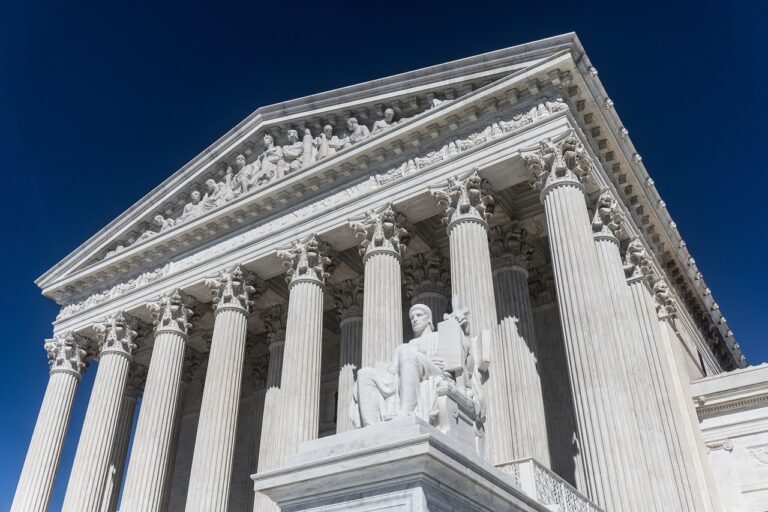
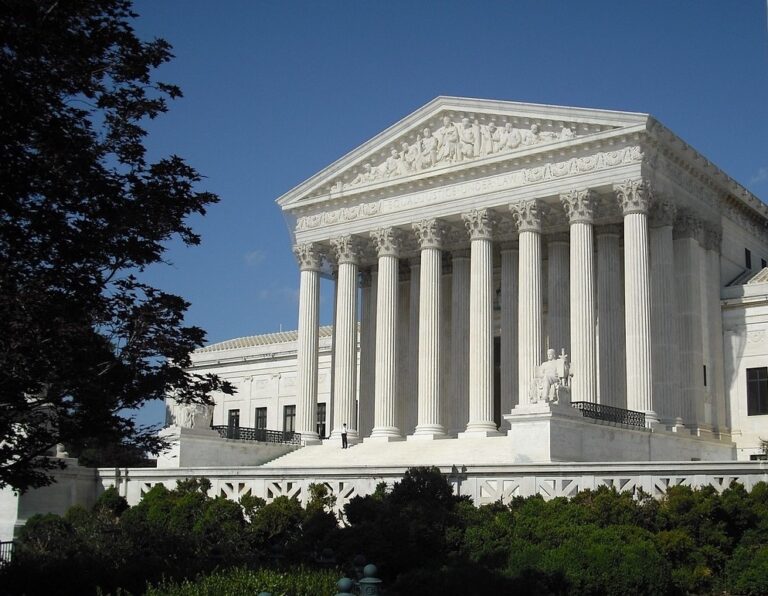
For decades, conservatives have railed against Affirmative Action, a program that included the consideration of race in employment and college admissions. Last Thursday, conservatives got their wish when the U.S. Supreme Court voted to end the long-standing program. The vote in ending the policy was both a strong affirmation against Affirmative Action by the Court’s majority and an equally passionate condemnation by dissenting justices.

Chief Justice John Roberts opinion stated that a “student must be treated based on his or her experiences as an individual—not on the basis of race.” He continued, “Many universities have for too long done just the opposite. And in doing so, they have concluded, wrongly, that the touchstone of an individual’s identity is not challenges bested, skills built, or lessons learned but the color of their skin. Our constitutional history does not tolerate that choice.” Roberts’ opinion will not have an effect on military academies, including Colorado’s Air Force Academy, that have long benefitted from the policy in preparing future leadership of the military.

Affirmative Action was born in the 1960s in the wake of the passage of the Civil Rights Act and applies to guidelines or policies that ensure equal opportunity and prevent discrimination based on a variety of characteristics, including race, sex, gender, religion, national origin and disability. Its first applications were enacted to address racial discrimination.

While the ruling addressed only the policy at two schools, Harvard and the University of North Carolina, the ripples of the high court’s decision will resonate across the country. In Colorado, only two schools, the University of Colorado and Colorado College, will be immediately affected by the vote.

The Harvard case alleged the university’s admission policies penalized Asian American students and that it failed to employ race-neutral practices. The North Carolina case asked whether the university could reject the use of non-race-based practices without showing that they would compromise UNC’s academic standards or negatively impact the benefits gained from campus diversity.

“I was home in front of the computer already preparing for the emails and outreach (of the ruling),” said Metropolitan State University Vice President of Diversity and Inclusion, Dr. Michael Benitez. The questions he will no doubt get, he predicted, are “how is it (the ruling) going to impact on society writ large and what’s the connection between this decision and other areas of law.”

MSU-Denver will not be affected by the SCOTUS decision because the university admits any student who wishes to attend as long as they have a high school diploma or GED certificate. Benitez said that university leadership had been discussing the possibility of the high court’s decision and will over the next several weeks. For now, he said, the biggest issue is “how are we staying in solidarity” with students.

CSU-Pueblo President Dr. Timothy Mottet declared that, while the school is also an open enrollment institution, there will be no change in its current policies. “Colorado State University-Pueblo will continue to consider all applicants for admission as we value and foster diversity in our students, faculty and staff…regardless of the ties of legal interpretation.” CSU-Pueblo, said Mottet, “looks forward to welcoming you.”

The decision to end Affirmative Action fulfills ex-President Trump’s promise to conservatives on two key issues they have long fought to end, the other being last year’s overturning of Roe v Wade, the right to legal abortion.

Ironically, because Affirmative Action also includes provisions that apply to gender, the biggest beneficiaries of the program are White women. Since its adoption, women, heretofore, absent in countless high level and powerful positions—from heading up Big Three car manufacturers to prominent positions in the hierarchy of professional sports—have become familiar presences in the fabric of business, industry, entertainment and places that once were exclusively male.

A USA Today report citing a Labor Department report in 1995 said that since the 1960s, Affirmative Action “has helped 5 million members of minority groups and 6 million women move up in the workplace.” Those numbers have dramatically increased since then.

Dissenting Justices Sonia Sotomayor and Ketanji Brown Jackson have both hailed Affirmative Action as a key component for the success they have had in their careers. In her 69-page dissent, Sotomayor said the majority opinion “rolls back decades of precedent and momentous progress” and “cements a superficial rule of colorblindness as a constitutional principle in an endemically segregated society.”

Justice Brown Jackson, a Harvard Law School graduate, lashed out at the ruling and, at the same time targeted her SCOTUS African American colleague, Clarence Thomas, a long vocal opponent of Affirmative Action. Jackson said the Thomas dissent asks Americans to ignore “the elephant in the room—the face-linked disparities that continue to impede achievement of our great nation’s full potential.”

Thomas’s’ undergraduate and Yale Law School credentials, he has acknowledged, were the result of Affirmative Action. But the conservative Thomas has drifted far from early career praise of the policy.

In 1983, as head of the Equal Employment Opportunity Commission, Thomas said that Affirmative Action laws were of “paramount importance” to him. “But for them,” he said, “God only knows where I would be today.” But, today, he says the program, which has benefitted thousands of men and women, gives the impression that minority students in elite universities are thought to be “dumb” and should not be in select institutions were it not for Affirmative Action.

The NAACP excoriated Thomas, not only for last week’s vote, but for his long-standing opposition to a program that helped elevate him to the position he holds today. “It is an unfortunate day for America that this court would decide that diversity has no value. The worst thing about affirma- tive action (sic) is it created Clarence Thomas,” said the civil rights institution.

Beside Roberts and Thomas, the Court majority included Justices Alito, Coney Barrett, Gorsuch, Kavanaugh. Joining Brown Jackson and Sotomayor was Justice Elena Kagan.


Denver Art Museum to open lowrider and skateboard exhibit

0

Lowrider and skateboard culture in Denver and the American southwest is coming to the Denver Art Museum in July.

The “Desert Rider: Dreaming in Motion” exhibition will focus on the diverse ways that artists who identify as Indigenous and Latino express identity pride and community by transforming vehicles associated with the American West, the museum said in a release announcing the exhibit. On Sunday July 9, the Denver Art Museum will launch the exhibit by offering an all-day free admission event.

On the July 9 free admission event, the Denver Art Museum will also host “Lowrider Show and Shine,” a family-friendly event that will feature lowriders, local vendors, food, music and more. Tickets can be reserved in advance at www.denverartmuseum.org/en/calendar/communityfree-day-july-2023 or at the front desk upon entry.

The “Desert Rider: Dreaming in Motion” exhibit was originally organized by the Phoenix Art Museum and created and curated by Gilbert Vicario — the former curator of contemporary art at the Phoenix Art Museum. The exhibit at the Denver Art Museum was curated by Victoria I. Lyall and Jan and Frederick Mayer Curator of Arts of the Ancient Americas. For the Denver exhibit, art from Colorado artists representing their communities in Colorado and the American Southwest was added to “Desert Rider: Dreaming in Motion.”

“We are grateful for this fruitful collaboration with our colleagues at Phoenix Art Museum, highlighting the inventive and energetic Southwest. We hope visitors will feel joy and inspiration as they experience this powerful presentation, which has been expanded to engage Colorado artists and showcase their work,” said Frederick and Jan Mayer Director of the Denver Art Museum Christoph Heinrich.

Photo courtesy: Carlos Santistevan

The exhibit features large-scale installations, prints, and sculptures from artists like Margarita Cabrera, Nanibah Chacon, Liz Cohen, and many others. Colorado artists like Juan Fuentes, Tony Ortega, Carlos Santistevan, Daniel Salazar, and Carlos Frésquez are also featured artists.

The “Desert Rider: Dreaming in Motion” exhibit starts by centering the lowrider section on Denver artists, according to the museum. One of the pieces in the exhibit includes a commission by photographer Juan Fuentes that celebrates Denver’s history of cruising. Other pieces include a large-scale car sculpture, created by Justin Favela, that celebrates its owner’s identity as queer Chicanx artists. The sculpture is made of materials associated with a piñata and celebrates queer icons while honoring victims from the recent shooting at Colorado Springs’ Club Q.

Outside of the installations, the museum will offer hands-on activities to all ages including “skating” with miniature finger skateboards in a scaled-down skatepark. Visitors will also have the opportunity to create miniature paper lowriders that can be posed and “driven” around a model of significant lowrider spots in Denver.

The “Desert Rider: Dreaming in Motion” exhibit will be available from July 9 to Sept. 24 in the Hamilton Building’s Anschutz Gallery.

“The themes and ideas explored in Desert Rider are universal, but uniquely presented through the viewpoints and experiences of Latinx and Indigenous artists, communities deeply connected to and impacted by the region’s complicated past and their experiences,” said Victoria I.

Both Nuggets and Avalanche lose key players to free agency

0

The Denver Nuggets lost a key piece to their bench and one of the biggest contributing factors to their success throughout their run to the Championship this past postseason. On Friday, Bruce Brown accepted a two-year, $45 million contract from the Indiana Pacers.

Brown’s contract with the Pacers is a nod to his outstanding play in the playoffs, a component to Denver’s success both in the regular season and the postseason. Brown’s previous five years in the league netted him $15 million, a figure he will now eclipse in just his first season with the Pacers.

Brown quickly became a fan favorite in Denver and was praised by teammates and coaches during the cham- pionship celebration parade in Denver last month. Brown even asked fans if they wanted him to return which was met with a resounding yes from the 750,000+ fans that day.

While Brown departure wasn’t a huge surprise, it does leave a fairly large gap to fill for the Denver Nuggets. Since Friday’s announcement of Brown’s departure, the Nuggets resigned Reggie Jackson a player who will likely see more playing time as a result of Brown’s signing with the Pacers.

Additionally the Nuggets lost Jeff Green, who agreed to a one-year deal with the Houston Rockets worth $6 million. While the loss of ‘Uncle Jeff,’ who was another fan favor- ite the Nuggets managed to hold on to veteran DeAndre Jordan, although the details of his contract are still unclear.

Although the Nuggets added 10-year vet Justin Holiday on Sunday, to a one-year deal, Denver will now have to rely heavily on a plethora of young players to step up in order for Denver to make a run at a second championship next season.

The Colorado Avalanche too have lost some key pieces to their championship roster, after defenceman Erik Johnson signed a one-year deal with the Buffalo Sabres. Additionally the Avs lost J.T. Compher to a five-year deal with the Detroit Red Wings worth $25.5 million. Forwards Matt Nieto and Lars Eller both signed two-year deals with the Pittsburgh Penguins.

Avalanche center, Evan Rodrigues is headed to Florida but Colorado managed to keep Jack Johnson, Bo Byram, Andrew Cogliano and Justus Annunen. Byram signed a two-year contract, while Cogliano and Johnson signed one-year contracts.

In other sports the Colorado Rockies continue to fall in the National League West with no bottom in sight. The Rockies lost two games to one in their series with the Detroit Tigers this week losing Sunday afternoon, 14-9 in front of the home crowd at Coors Field.

The Rockies are in Houston this week to face the Astros who are four games out of the top of the American League West Texas Rangers. This weekend the Rockies head to San Francisco to face the Giants in a three-game series.

Final cleanup at Pueblo Chemical Depot

The end of an era for one of the world’s most dangerous weapons of war came just days ago at the Pueblo Chemical Depot. At a June 22nd news conference, workers at the Pueblo operation completed the mission of eliminating the last of 730,000 rounds of hydrolysate, more commonly known as mustard gas, a chemical with a long and sordid history.

Photo courtesy: Department of Defense

The Pueblo Chemical Depot, formerly known as the Pueblo Army Depot, had been the nation’s storage site for the chemical agent since the early 1940s. The agent had stood, guarded and undisturbed, until 2015 when the operation to destroy it began. The “main plant operations with the Pueblo Chemical Agent Destruction began Sept. 7, 2016,” said spokesperson Sandra Romero. To date, “We have destroyed 2,611 tons of mustard agent.”

The history of chemical weapons in warfare goes back to the late 19th Century, though the power to kill or severely injure using them was already widely known. As a result, these weapons were banned at the 1899 Hague Convention. The ban, however, had little effect and in World War 1, the German army deployed them aiming tons of chlorine gas—an estimated 5,700 cylinders—at British troops. It would be the first significant use of chemicals in warfare but not the last.

A British officer described the real time horror he witnessed as his troops advanced through the fog of chlorine gas. He said he saw a cloud of chlorine settle on the battlefield. Without gas masks and only cloth to cover mouths and noses, the gas was inhaled. “You immediately began to choke,” he wrote. The weapon, so contrary to the rules of war, was just the start. The next move belonged to the British who began work on their own version of chemical weapons.

They developed their own arsenal, first phosgene—an agent six times more deadly than chlorine—and then mustard gas. (The term ‘mustard’ was adopted because of the color of the gas in the air and because it was said to smell of mustard.)

The legacy of mustard gas is tragic. If inhaled, it killed within days by filling the lungs with fluid causing suffocation. It also blistered and burned the skin on contact. It could also cause blindness. First generation gas masks often let the agent seep in where it would be inhaled. One of its victims was a young Adolph Hitler who was made temporarily blind by the gas.

At a ceremonial news conference announcing ‘mission accomplished,’ PCD Plant Manager Kim Jackson acknowledged the workers. “I saw firsthand the innovative thinking, exceptional teamwork and out- standing work ethic from employees,” said Jackson. “It’s a testament to them that we are in a position to showcase to the world Colorado’s eradication of the munitions stockpile.”

“We have fulfilled Colorado’s commitment to the nation and international community,” said mission’s supervisor, Walton Levi said at the news conference. With the work of destroying this deadly stockpile now over, the mission of the Pueblo Chemical Depot is not. Next, decommissioning and decontaminating the equipment used in this operation begins. It is estimated that the next phase of this undertaking will be complete in 2025.

When the mission is complete, said Romero, “We expect to keep most of our 1,500 employees,” but layoffs for an estimated 50 workers will begin “in the next couple of weeks.”

Despite the U.S. supply of this deadly agent now gone, it is still part of the weapons of war in other parts of the world and in other conflicts. Saddam Hussein is said to have used it to kill as many as 5,000 of his own people in 1988. CNN reported that it may have also been used in the Gulf War against U.S. troops.

When the Gulf War ended, the U.N. sanctioned Iraq for its use while adopting the Chemical Weapons Convention treaty prohibiting the use of all chemical weapons. The treaty did not contain the signatures of several countries including Egypt, North Korea and Iraq.

Death of race in higher education admissions

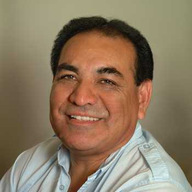
David Conde, Senior Consultant for International Programs

I began my college study while in the military in Europe. For me it was a full day of work at the office, followed by 3 hours a night, 4 nights a week at the University of Maryland Extension campus in Wiesbaden, Germany.

I noticed that the classes were attended by mostly older White students with me being the only 17 year old and the only Latino. It was in the History and Political Science courses that I was exposed to racist comments, especially about African Americans, from the other students in class discussions.

There was a time that I witnessed an argument between our professor on leave from Harvard and what appeared to be the more extremists students about the issue of race. It began to open my eyes as to the question of race relations in our country.

Previous to that, I relied on my upbringing and the view that being discriminated against was normal and the will of God. The class discussions sent me on a 5-year journey to find out for myself where I stood as a minority in America.

I began reading the U.S. Constitution as it was written before its Amendments and discovered that our founders did not include race or the institution of slavery in the language of the document. Rather, “the Constitution refers to slaves using three different formulations: ‘Other Persons’ (Article I, Section 2, Clause 1), ‘such persons as any state now existing shall think proper to admit’ (Article I, Section 9, Clause 1), and a ‘person held to service or labor in one state, under the laws thereof’ (Article IV, Section 2, Clause 3).

The covert language in the Constitution helped to set the tone for the 236 year history of race and ethnic disparities in the United States. With the exception of the Civil War period, the process of the growth of the country from east to west lend little opportunity to challenge the status quo.

It was not until the return of the soldiers from World II that civil rights movements began in earnest. That effort led to major changes in institutions, among them colleges and universities, as they were provided with increased funding by the federal government along with diversity requirements.

The 21st Century ushered in major changes in our demography and the political landscape of the country. This in turn has caused fear on the part of the ruling class and their supporters that their traditional power was being eroded by a combination of a new generational majority and minorities reaching demographic thresholds that commands significance.

Those in the power structure that saw this coming began crafting court challenges designed to diminish the progress of minorities.

Going after higher education is a serious matter because there is a strong correlation between low income and the students coming from these communities. For many families, education and socio-economic progress are the only avenues to the American Dream. Closing the doors to, especially the best and most selective universities, diminishes this opportunity.

More importantly, the action by the Supreme Court represent only the beginning of a long list of attacks on the relationship between growing minorities and American institutions. The struggle is far from over in higher education as other restrictions on admission, educational finance and academic support are coming.

The experience with racism that began in a university classroom abroad eventually led to a period of terrible anger. Much of the energy generated by these feelings was brought home to the Chicano Movement.

The views expressed by David Conde are not necessarily the views of LaVozColorado. Comments and responses may be directed to news@lavozcolorado.com.

Three tips to help men make health a priority this summer

0

Summer is a great time to focus on fitness, especially for men. While for some men their health may be a secondary concern, the summer months offer an opportune time to help raise awareness of the health challenges men face and encourage them to take action to improve their well-being.

For instance, compared to women, men may experience some health conditions at higher rates, including heart disease, high blood pressure and high cholesterol. By highlighting this fact and encouraging men to take an active role in their well-being, it may be possible to help address these health issues earlier and avoid complications that may diminish quality of life.

Here are three tips men can consider that may help improve their well-being this summer and throughout the year.

Stay active and enjoy the summer weather. Getting active may be a great way to prioritize your physical health and mental well-being, and you may have fun while doing it. Federal guidelines recommend men ages 18 to 64 get 150 minutes of moderate-intensity activity, 75 minutes of vigorous activity or a combination of both per week, along with strength training. For men 65 and over, it’s good to add in balance activities that may help reduce the risk of falls. To help make physical activity as fun as possible this summer, consider golfing, kayaking, tennis, swimming or hiking to get moving and spend time with family and friends. Along with the physical benefits, an active lifestyle may have positive impacts on your mental well-being too.

Know when to take it easy. Taking time to destress may be a beneficial part of any healthy lifestyle, whether it’s a backyard barbecue, a staycation or working on a hobby. Taking time to rest and recover may support physical and mental well-being. Importantly, research shows that men may be less likely to get care for mental health concerns, so it’s important to look for signs that you or someone you love may need support. Potential indicators of depression may include irritable or angry moods, unexplained aches and pains, self-criticism and bad or dangerous behavior. Additionally, some men may be more inclined to push themselves during physical activities. Whether you’re engaging in a friendly pickleball match or training for an upcoming endurance race, like a 10K, listen to your body and take it slow if you need to.

Don’t forget about preventive care. In a recent survey, 50 percent of men said annual wellness visits are part of their regular care routine. In fact, men across all ages may be less likely to engage with a primary care physician compared to women, with this gap most pronounced among men in their 20’s and 30’s. Preventive care is an important addition to any wellness routine, even if you feel healthy, and may help detect potential health issues earlier. Men should be on the lookout for a variety of health issues that tend to increase in frequency as they age, including kidney stones, gout and certain cancers. If getting to the doctor is a challenge due to a packed schedule or other issues, consider a virtual visit, which may be a good option for both primary and urgent care. Virtual visits can help manage chronic conditions like high blood pressure and diabetes as well as common acute issues such as fever or rash, making it possible to get medical support from the comfort of home or on the go.

As we celebrate summer and the important role men play in our families and our communities, considering these tips may be a good way for men of all ages to make health a priority this year.

Source: Dr. Amit Anwindekar, Medical Director, UnitedHealthcare Global

What’s Happening?

0

Exhibits

Engage with art, experience onsite activities, and explore the exhibitions on view all while enjoying free general admission! This day is part of our Free Days at the DAM program. Tickets may be reserved in advance or at the front desk upon entry. Review our safety guidelines and visit tips ahead of your trip. Visit www.denverartmuseum.org/en/free-days-dam for more information.

Photo courtesy: Denver Art Museum

Free days in 2023 include:

Tuesday, July 11
Sunday, July 30
Tuesday, August 8
Saturday, September 9
Tuesday, September 12
Tuesday, October 10
Saturday, November 4
Tuesday, November 14
Tuesday, December 12


Que Pasa? is compiled by La Voz Staff. To submit an event for consideration please email attractions@lavozcolorado.com with Que Pasa in the subject line by Friday at 5 p.m.

In Memoriam: Fernie Baca, Ph.D.

0

A long-time Denver community leader, Dr. Fernie Baca, passed away on May 17 after a recurrence of cancer. Dr. Baca was born on June 30, 1939, on a farm close to LaSalle where the family worked hoeing sugar beets and doing other farm labor. When she was five years old, the family moved to Greeley. She attended the University of Northern Colorado where she earned a B.A. in Secondary Education, and the University of Colorado in Boulder, earning an M.A. and a Ph.D. in Guidance & Counseling.

An influential educator, Dr. Baca retired with emeritus status from the University of Colorado at Denver where she was Associate Vice Chancellor for Research/Creative Activities, Executive Director of the International Training Academy, and a tenured professor in the School of Education. She also served as Dean of the UCD Graduate School where she had the distinction of being the first Hispanic Dean of a graduate school at a major university in the U.S.

In 2012, Dr. Baca was recognized as “Distinguished Alumna of the Year” by the University of Northern Colorado (UNC). Additional recognition received included the Women’s Bank Award for outstanding contribution to education and preservation of the Hispanic culture and the Woman of Distinction Award from the Girl Scouts of Colorado.

After her retirement, the Dr. Fernie Baca Scholarship Fund at UCD was established to increase educator effectiveness in supporting the academic learning of English-language learners. Dr. Baca is survived by her sisters and former State Sen. Polly Baca of Denver and Bettie Baca and her brother-in-law, Alex Rodriguez of Herndon, Virginia.

Reimagining Public Safety in Denver Public Schools

0

These recommendations present a comprehensive and transformative vision for the future. We offer recommendations based on the insights and expertise of various community organizations, incorporating research and best practices while uplifting the ideas and initiatives that are already making a positive impact in the lives of our youth.

Following the recent/past school shootings in Denver Public Schools (DPS) and the subsequent creation of the “DPS Safety Plan 2.0” by Superintendent Dr. Alex Marrero, while well-meaning it firmly misses the mark for true safety and wellbeing for all DPS students and staff. The Task Force to Reimagine Policing and Public Safety, has reviewed the DPS safety plan and firmly says “No to DPS Safety Plan 2.0!” However, as a body of community members, students, parents and policing professionals we fully understand the psychology that went into creating such a plan that further lends itself to less “safe” and continued traumatizing behavior to our children and staff while missing valuable opportunities to embrace peer informed safety by staff and students alike.

Reintroducing Resources Officers permanently on the surface provides a false sense of “security and safety.” This decision which was unilaterally done by the Superintendent neglected the role of the duly elected DPS Board of Education, students and parents, highlights the need for a “Reimagining of School Policing, Safety and Awareness” in DPS. Taking a survey after a highly traumatizing event led to bad data on which this plan was created. All surveys prior to the East high tragedy and the subsequent evaluations resulted in a reduction of ticketing and summons for black and brown students into the judicial system and less stressful learning environment.

Upon reviewing Superintendent Dr. Alex Marrero’s DPS safety plan, the Denver Task Force to Reimagine Policing and Public Safety created a special sub-committee consisting of youth, educators, and safety experts in school safety whose sole purpose was to develop recommendations for DPS that embody a “Community-centered approach” to school safety, while also outlining how it should be prioritized. The Recommendations presented in the report offer crucial perspectives on creating “safe” environments for all students including our mentally challenged, special education children, black and brown students and any other youth who have traditionally been the beneficiaries of archaic policing policies in DPS that equate to cycle of racism, neglect and abuse found in DPS by the nationally recognized DPS commissioned “Bailey Report” on DPS schools. In the Task Force Subcommittee recommendations, we present a comprehensive and transformative vision for the future. We offer recommendations based on the insights and expertise of various community organizations, incorporating research and best practices while uplifting the ideas and initiatives that are already making a positive impact in the lives of our youth. We are reminded that safety is fostered in equitable systems by taking the time to develop balanced relationships, continuously creating belonging, and making meaningful changes that support the most marginalized.

Please go to Denver www.denvertaskforce.org to read our full Reimagined DPS school safety recommendations to DPS for inclusive meaningful safe schools for everyone.

Our Government

White House

Statement from President Joe Biden on National Wildland Firefighter Day: “On National Wildland Firefighter Day, I join Americans across the country in expressing deep gratitude for our wildland firefighters and support personnel who heroically protect our communities and natural resources from wildfires. National Wildland Firefighter Day takes place during the Week of Remembrance that is held annually from June 30 to July 6 which serves as a moment for the entire Nation to reinforce our commitment to wildland firefighter safety, as we remember those who made the ultimate sacrifice.”

Colorado Governor

Governor Polis: Misguided U.S. Supreme Court Ruling Attacks Freedom: “Sadly, the U.S. Supreme Court decided in favor of discrimination and against student loan relief today. These misguided rulings come one day after the Supreme Court overturned decades of precedent and potentially stifled future educational opportunities. We are committed to building a Colorado for all where the powerful few do not control the freedoms of all Coloradans. Unfortunately, Americans have seen the Supreme Court become increasingly obsessed with taking away freedoms. In Colorado we always seek to protect freedom and end discrimination,” said Colorado Governor Jared Polis. “These rulings run counter to Colorado values and we will continue to fight against bigotry and discrimination in all their ugly forms.”

Denver Mayor

Denver’s Department Housing Stability (HOST) announces the completion of its 2022 Annual Report, detailing progress toward accomplishment of its five-year goals and funding expenditures for the year. “Providing rent and stabilization assistance, resolving episodes of homelessness, and building more affordability are essential to making Denver truly a home for all,” Mayor Michael B. Hancock said. “Our 2022 successes, including bold new policies and investments, lay the groundwork for further momentum in creating a healthy, housed and connected Denver.”