





Home Blog Page 139

A Week In Review

0

Africa

BMW to export cars from South Africa – German carmaker BMW is planning to export its electric vehicles from South Africa to other countries. Currently, South Africa manufacturers other international vehicles for other carmakers like Toyota and Ford. BMW is planning on producing vehicles at the company’s Rosslyn plant thanks to an investment of around $225 million, the carmaker said.

Night bus travel ban lifted in Tanzania – For the first time since the 1990s, people who live in Tanzania will be able to travel on buses at night. The ban was originally imposed because of a rise in road accidents and hijacking of buses, according to government officials. Now, the country is planning on working on a procedure to be followed by owners and drivers of buses for nighttime travel. Growth in the transport sector is expected to rise.

Asia

Cambodia threatens Facebook ban – Cambodia leader Hun Sen threatened to block Facebook in the country after the social media platform recommended he be suspended for six months. Earlier this year, he posted a video on Facebook calling for violence against his political opponents. The video was viewed 600,000 times. Hun Sen called for Cambodians to use other social media channels like TikTok and Telegram.

Pakistan to receive bailout funds – Pakistan reached a deal with the International Monetary Fund that will bring in more than $3 billion of funding to the country. The country is facing its worst economic crisis since it became an independent country in 1947. Estimates show that Pakistan needs more than $16 billion to recover from flooding that took place in 2022. For years, the country has struggled to stabilize its economy.

Europe

Protests ensue after policeman shoots teen in France – Nights of unrest ensued in France after a French policeman shot and killed a teenager during a traffic stop near Paris. The victim, Nahel M, was shot at point-blank range and was 17 years old. At least 667 people were arrested dur- ing one night of protests. France deployed 40,000 police officers across the country in response to the protests. The officer was charged with homicide and is currently in custody.

Man caught carving names at Rome’s ancient Colosseum – An unnamed man is facing a large fine or jail time up to five years, if charged and convicted, after he was filmed carving names into a wall at Rome’s ancient Colosseum. Italian police said the man was a tourist who lives in the UK. Italian Culture Minister Gennaro Sangiuliano said the act was offensive to everyone in the world who appreciates the value of archaeology, monu- ments and history. The Colosseum is nearly 2,000 years old and is Italy’s most popular tourist site.

Latin America

Thirteen dead after shooting in Honduras Choloma, a Honduras town, is under curfew after 13 people were shot and killed at a birthday party. The curfew will run for 15 days. Officials said the measure was put in place in response to “the brutal and ruthless terrorist attack by hired killers trained and directed by drug lords.” Honduras is offering a $33,000 reward for help identifying and capturing those responsible for the shooting.

Bolsonaro trial begins – Former Brazil President Jair Bolsonaro’s trial has started in Brasilia. He is accused of abusing his power and spreading false information about Brazil’s electoral system during last year’s presidential election. Judges have the power to ban him from running for office for eight years. Bolsonaro spent the past three months in Florida for a self-imposed exile and has not said if he plans to run for president in 2026.

North America

Madonna discharged from hospital – Singer Madonna was discharged from a hospital and is feeling better after staying in intensive care because of a serious bacterial infection. She was preparing to begin a seven-month world tour before falling ill. Doctors said her condition became extremely serious and required treatment in intensive care. Various pop stars, actors/actresses, and others publicly sent good wishes to Madonna.

Police officer found not guilty over Parkland school shooting response – Scot Peterson, a former sheriff’s deputy, was found not guilty after staying outside when a gunman opened fire at a Florida high school in 2018. He was facing 11 charges, includ- ing felony child neglect, culpable negligence and perjury. Peterson is believed to be the first officer in America charged with failing to respond to a school shooting. In 2018, a gunman killed 19 children, two teachers and injured 17 others at Marjory Stonemason Douglas High School.

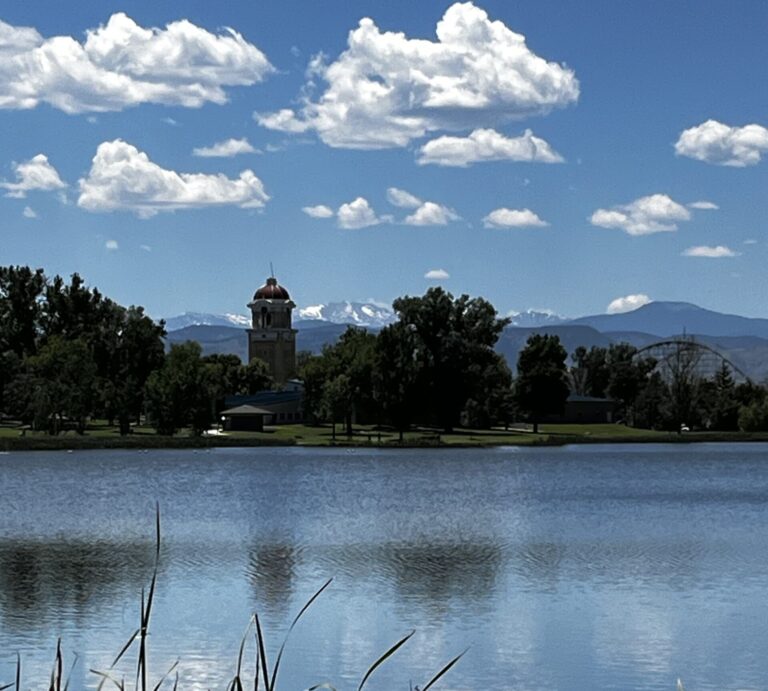
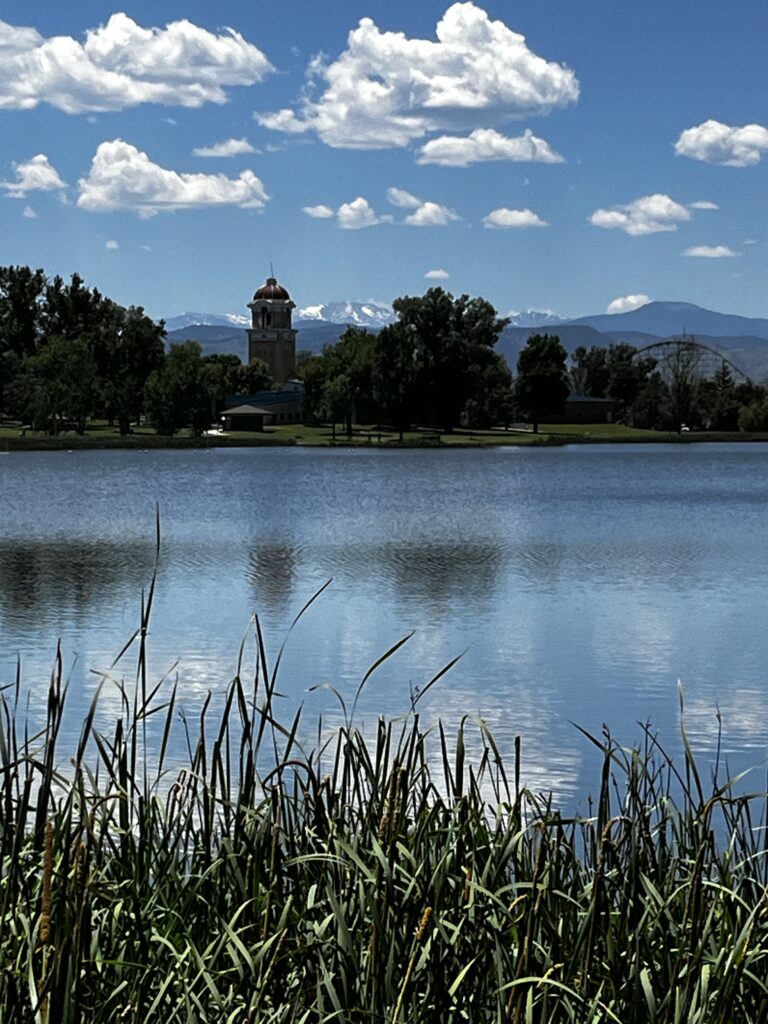
Summertime in Berkeley Lake Park

Photo courtesy: Diana Russell

July 3, 2023 – Berkeley Lake Park – Denver, Colorado

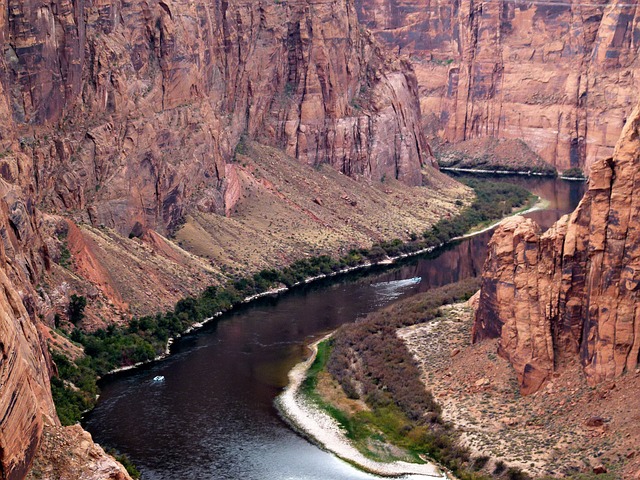
The Colorado River is life for much of the Southwest

0

The Colorado River is life. The nation’s fifth largest river is a 1,450-mile serpentine life giver to parts of seven U.S. states and two Mexican states. It originates in the high country of Colorado and drains into the Gulf of Mexico. But before it disappears into the Gulf, it provides nourishment, recreation, comfort and security to one of the fastest growing regions of the country.

While the river has been a blessing for generations and provided a bounty for so many—an estimated forty million people–it has also become one of the symbols of climate change. The river’s flow has, over a period of years, gone from an abundance to a trickle, a condition it was in only very recently. But last winter’s bonanza of snowfall and runoff has replenished it for now.

To ensure that an enduring drought does not leave the river on life-support, three states agreed in May to hold back on the amount of water they take from it. Arizona, California and Nevada have committed to taking less water from the river—an unprecedented move—to ensure it doesn’t fall so low that it would threaten water supplies for booming populations in Las Vegas, Phoenix and Tucson. Also, by reducing their water use, the agreement provides protection to each state’s agriculture.

In exchange for giving up what they would normally be taken from the river, the federal government will pay the states irrigation districts an estimated $1.2 billion. The money will go to cities and Native American tribes in the three states. The states have also signed on to taking less water beyond the terms of the agreement to protect the long-term health of the river.

The plan, said Kathryn Sorensen, Director of Research at Arizona State University’s Kyl Center for Water Policy, protects agriculture which is essential for meeting the nation’s food supply each winter. “Agriculture uses 70-80 percent of (Arizona’s) Colorado River water,” she said. “The farmers in western Arizona and Indian tribes have senior water rights…I don’t think they’re going anywhere.”

Two prime sources of water for the West are Lake Powell in Arizona and Lake Mead in Nevada. The latter, which supplies water to 25 million people, had recently dropped to its lowest point since it was officially dedicated in 1935. It was last at its highest levels in 1999 but a historic drought had brought it to a new low of 1,040 feet. Without last winter’s near record snowfall, scientists predicted it could drop as low as 900 feet, a level scientists call ‘dead pool’ and a point too low to allow water to flow past the dam.

While forecasting weather cycles has become more accurate, it is not entirely predictable. Still, the recent drought lingering over the southwest is relatively mild compared to what scientists call The Great Drought, one that began in 1276 and lasted through 1299. The lack of moisture affected a swath of land stretching from Oregon to California and east all the way to Texas. It caused entire civilizations to completely abandon their lands.

No one expects a repeat of that weather anomaly, but neither is there consensus about the river’s long-term health. “Some people have ‘the glass is half full,’” mindset, said Professor Tom Cech, and “feel things are fixable.” Cech is Founding Director of the One World, One Water Center, a Metropolitan State University-Denver/Denver Botanic Gardens collaboration. Others who have studied droughts, said Cech, “may be more skeptical.” And then there is that group that thinks “things can be engineered’ to fix problems…but doesn’t take into account societal val- ues which may far outweigh the benefits of an engineered solution.”

Cech thinks the agreement between the three states and the federal government to reduce their water intake from the river is a good first step but will not solve a peren- nial problem. “If you pay people not to farm, that’s one way to cut back. But these people need to make a living.”

Las Vegas, a city whose well being is absolutely dependent on the Colorado River, is in a population explosion. The 1980 census recorded its population at 164,000. Today it is nearly 642,000. Phoenix, another southwestern boomtown dependent on the Colorado River, tripled in size during the same period, growing from 1.5 million to 4.7 million today.

To reduce water consumption, a number of cities have legislated landscaping ordinances that prohibit lawns and non-native flora, including trees. Nevada only recently passed a statewide ban on grass lawns while mandating their removal where they now exist. The law says that the only turf that can remain must have a functional purpose, like playing fields or grass in cemeteries. But for the next four years—the law does not take effect until 2027—the desert city will remain essentially the same.

When Nevada’s new water conservation policy takes effect, it is estimated that 4,000 acres of grass will be gone resulting in a savings of close to 10 billion gallons of water each year.

Nevada’s law on turf for aesthetic reasons comes decades after cities like Tucson enacted prohibitions on ‘greening the desert.’ But currently there is no move in Colorado, another high desert state, to follow suit, said Cech, who also serves on the Fort Collins city council. “There’s politics,” he said. “Hard and fast edicts don’t play well in a lot of places.”

One hope Cech has for bending the curve on water usage lies with a constituency that is still years away from casting its first vote. “There needs to be a way to work with college students, younger kids about the water in Colorado.” If they can learn the finite quality of water, he said, it may “change their views related to the environment.”

Taos Colcha Exhibit brings history, culture and imagination, alive

Origins of the art form are uncertain. One theory links colcha to the Far East and a form of Chinese silk embroidery. That could explain its genesis. But another and far more practical explanation of its roots is as close, geographically, to Mexico, or that part of Mexico that we know today as New Mexico.

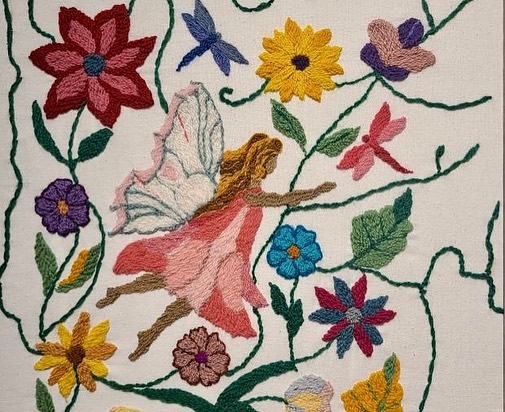
Photo courtesy: Taos Colcha Exhibit

Colcha is a unique type of embroidery that dates back to the early 18th century in what is now New Mexico and the Spanish Colonial period. It also appeared during the same period in what today is the San Luis Valley.

The word colcha refers to tightly embroidered coverlets or bed coverings. Today colcha simply means a type of stitch for not only bed covers but small pillows, cushions, shawls or anything that creative, artistic stitching can be adorned with.

“Colcha is beautiful because it involves the area and history,” said Connie Fernandez, who is part of a Taos, New Mexico, group of women who meet monthly. While some of what is created by members of this group is amazing, Fernandez, said by any number of names, including bokhara couching, convent, Deerfield and figure stitch.

Some of the oldest examples of colcha, said the Taos resident, is linked to the sheep that Spanish settlers brought to the region. Churro is the breed that provided the wool for the delicate colcha artwork. It would be carded and dyed with a variety of native plants to provide the hues for the purples, greens, yellows and browns that are featured in so many of the pieces.

From its earliest days in the region to today, the women—it is mostly women—who create this intricate artwork are limited only by imagination. The yarn is magically mated with the fabric to create religious themes, landscapes, old Taos, San Luis or the many towns and villages that many of the dordadoras or embroiderers come from.

“I’m in awe of some of my contemporaries,” said Fernandez. When they gather, usually monthly at the Taos Hacienda, their time is divided between visiting, sharing new ideas for future works or learning something new about this generational art form. “We teach each other,” said Fernandez. “We encourage,

inspire, share ideas and have fun…it is not something like a class you have to attend. We help each other with the main purpose—besides preserving a cultural tradition—to put on exhibits and demonstrations.”

Working with her hands, said Fernandez, sewing, knitting and embroidery, has been a part of her life since her earliest years in her home state of Connecticut. “Both of my grandmothers loved needle work and my fraternal grandmother would embroider,” she said. Her fraternal grandmother, she remembered, “worked in a sewing factory, sewing handkerchiefs.” Her own mother, however, “did not like sewing—not even a button.”

Colcha, said Fernandez, does not require a major investment for those who might want to learn this art form. Almost any fabric store will have a basic embroidery kit, she said, that will get you started.

The upcoming “Colcha Embroidery: Traditional & Contemporary” Exhibit will be held at La Hacienda de Los Martinez in Taos from July 1 to July 31, 2023.

Rockies win series despite worse loss in club history

0

The Colorado Rockies have been taking a lot of heat this season, mostly due to the recent championship win the Denver Nuggets brought home earlier this month. The Nuggets took 47 years to finally bring home the Larry O’Brien trophy but they have now joined the elite group of professional teams in the City of Denver to win a championship.

In 2007 a Troy Tulowitzki-led Colorado Rockies stunned Major League baseball by accomplishing the most impressive run in club history, when they made it to the World Series with the Boston Red Sox only to get swept four games to none. Since then the Rockies have put together some mediocre teams with some homegrown players that instantly became hometown favorites. Unfortunately those homegrown heroes always seem to follow Tulowitzki’s path by leaving Coors Field for greener pastors.

This season hasn’t been much better for the Rockies sitting in last place in the National League West, a whopping 16.5 games behind the division leading Arizona Diamondbacks. Over the weekend the Rockies pitching faced two of the leagues juggernauts in Shohei Ohtani and Mike Trout. Game one went to Rockies after scoring four runs in the eighth after trailing 4-3 in the seventh.

Game two was when the wheels fell off for Colorado as the Rockies bullpen gave up 13 runs in the third inning plus and additional 8 in the fourth. Colorado’s loss of 25-1 marked their biggest loss in club history and immediately became the butt of jokes across the MLB universe.

Colorado saved face by defeating the Angels 4-3 in game three to at least take the series after their previously embarrassing performance. Despite Colorado’s dismal performance in game two, fans came out in droves for game three a sure sign of things to remain the same.

The Rockies are hosting the NL West third place L.A. Dodgers this week at Coors Field. The Dodgers are currently 13 games ahead of the Rockies and Colorado has a chance to cut into that lead.

While Colorado struggles to remain competitive the fans remain loyal even while the team sets records for most runs given up in a game. So until fans start to show disdain for the continued submediocre play from this ball-club, things will continue as planned for Dick Monfort and family.

In other sports, the Denver Nuggets practically stole Julian Strawther, the Gonzaga star guard after he fell to number 29, right into the lap of the Nuggets. The Nuggets second and third picks were guard, Jalen Pickett from Penn State (32nd pick), and Clemson forward Hunter Tyson.

The Colorado Rapids are looking forward to July after a tie with San Jose in early June and a loss to Orlando City (0-2) along with the postponement of their match with the St. Louis City SC last weekend. Colorado will face the L.A. Galaxy who is one point ahead of the Rapids who are in last place in the Western Conference.

In Memoriam: Ellen Alires Trujillo

0

Editor’s Note:
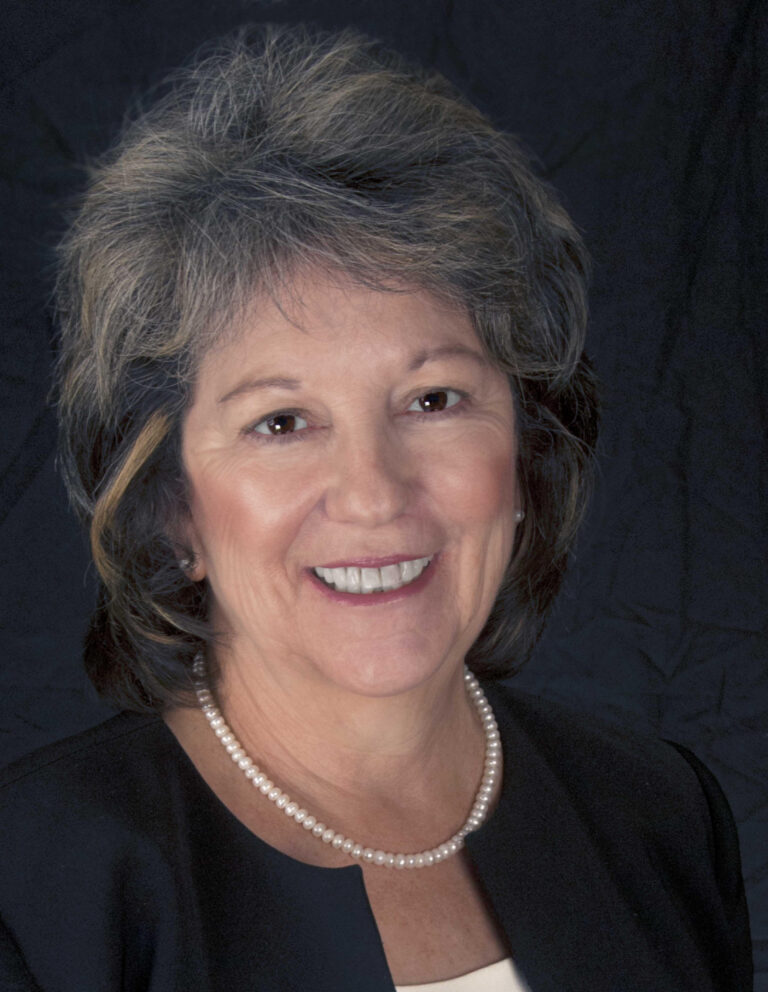
I came to know Ellen Alires Trujillo many years ago and was impressed and moved by her character. An attorney by profession, Ellen and I shared conversations on many occasions and those conversations taught me that she was a woman of integrity, kindness and compassion. Her characteristics were easily matched by her legal knowledge, her love of community and for the love of her life, Lorenzo. I will never forget you, Ellen Alires-Trujillo. You made everyone you encountered a better person, for knowing you.

Photo courtesy: Trujillo Family

Ellen G. Alires-Trujillo passed away on June 17, 2023, in the warmth of her husband’s arms at home in bed. She lived a valiant life at every moment in time. Her passion for social justice led her to use her law degree as an attorney at Colorado Legal Services for over 30 years. She received her BA degree from the University of Colorado at Boulder in 1979 and her J.D. from the University of Denver, Law School in 1988. Her work with Colorado Legal Services was given to working in the Housing Rights and Homelessness Prevention Unit, the Family and Children’s Unit and the Health/Elder Law Units. Ellen provided representation to the elderly and younger disabled populations with various Medicaid, Social Security and other Public benefit program issues. She provided leadership and was instrumental in the development of Colorado’s first Medical Legal Partnership where she represented families and children at Children’s Hospital Colorado in Aurora.

She mentored students of all ages and law students and practicing attorneys. She was actively engaged in political causes and served on several boards and advisory committees in law, education, political and cultural organizations.

She believed that many of our children suffer from self-esteem and identity issues. The only history we were ever taught was negative. It is so important that our children are taught and know their history and the contributions made by those who came before them. Children must have a reason to dream, and the only way is to see that anything is possible. They need to know that despite what has been presented, there is more to the story. They need to know that we are not a drain on society but in fact have been contributors in this society in a variety of ways. They also need assurance they are as smart as anyone else and can achieve if willing to work for it.

Ellen suffered from ALS/Lou Gehrig’s Disease, a neurological disabling disease that left her without use of her hands and legs and with no voice. She suffered unforgiving pain without complaining in the care of her husband at home. She had a loving group of comadres who helped her every step of her sorrowful journey. Ellen continued to mentor in her circle and to participate in her various student scholarship groups even though she could barely whisper. She did not stop. Only death would stop her undaunting spirit of giving and caring for others. She is a champion who will be missed because of the deep footprints in the sand that she has left. She was a true corn mother warrior.

Please consider making a contribution in Ellen’s name to one of these charities:

Alires Trujillo Scholarship of the Colorado Hispanic Bar Association https://chba.net/donate/donate-to-the-chba-foundation/. (Please note that this is for the Alires-Trujillo Scholarship of the CHBA) or Rocky Mountain ALS Association – ALS.org  or Compasionate Care ALS https://ccals.org/donate/ or Colorado Legal Services https://www.legalaidfoundation.org/get-involved/make-a-donation-start/.

Colorado’s Forward Together campaign awards youth-focused nonprofits

0

The Colorado Department of Public Health and Environment has awarded $67,550 through its Forward Together campaign to 18 nonprofit organizations across the state dedicated to enhancing the well-being of Colorado’s youth and encouraging positive relationships within their communities.

Research shows that connection is an important factor in protecting youth from numerous health challenges, including poor mental health and negative behaviors related to substance use, sexual health and violence. According to the Healthy Kids Colorado Survey conducted by CDPHE, youth who have a parent/guardian or other trusted adult they can talk with are less likely to use marijuana, vape or experience feelings of depression.

The grant recipients and their initiatives are:

  • Asian Girls Ignite (Denver) will produce events that address the lack of safe spaces of belonging and representation for Asian American and Pacific Islander girls in grades 6-12.
  • Birdseed Collective (Denver) will engage Globeville youth with a structural art project and a competition at the Globeville Center or Alto Gallery.
  • Colorado Young Leaders (Denver) will engage almost 250 youth, their families, and nonprofit partners in youth-led projects addressing high-priority issues, including teen mental health, climate change, animal welfare, healthy relationships, and connecting youth with veterans.
  • The Hive DGO (Durango) provides a space for youth and community members to develop and discover their true selves by providing passion-based exploration through creative expression, mentorship and leadership opportunities. The grant will help fund facility costs and mentor staff.
  • Inside Out Youth Services (Colorado Springs) will serve LGBTQ+ youth by launching a youth-run calendar that promotes connection opportunities in the community with an emphasis on inclusive, sober spaces.
  • The Road Called STRATE (Aurora) will provide an opportunity for young men of color who have been affected by the justice system to go on a camping trip in the Colorado mountains with adult mentors.
  • The Queens Legacy Foundation (Fort Collins) will fund its Black Leaders and Community Council youth for restoring, painting and designing the “Bus Shop” school bus to deliver food and services and transport youth to school or for weekend outings.
  • Rural Communities Resource Center (Yuma) will empower the organization’s youth group for Latina high school girls to plan youth events in their community.
  • Montezuma Youth Alliance (Mancos) will support youth in designing, researching, buying equipment, marketing, recording, editing and releasing a podcast.

The following organizations are receiving smaller promotional grants to fund partnerships with Forward Together that will allow them to share campaign information and resources within their communities:

• Elevate Youth (Teller County)
• Friends for Youth (Littleton)
• Full Circle of Lake County (Leadville)
• Gunnison Hinsdale Youth Services (Gunnison)
• The Matthew’s House (Fort Collins)
• Muslim Youth for Positive Impact (Broomfield)
• Queen Shipp (Denver)
• Riverside Educational Center (Mesa County)
• Spirit of the Sun (Denver)
• Studio Colombia (Denver)

Forward Together selected the grantees through a state-wide search that invited 100 nonprofit organizations across Colorado to apply. Since 2021, Forward Together has awarded $276,700 in grants to 40 nonprofit organizations throughout the state.

About Forward Together: Working in partnership with Colorado teens, parents and community groups, Forward Together provides actionable information and resources to help adults better connect with youth and to help teens develop healthy relationships with their peers. Learn more at forwardtogetherco.com.

Source: Colorado Department of Public Health and Environment

City Council approves Historic Cultural District designation of La Raza Park

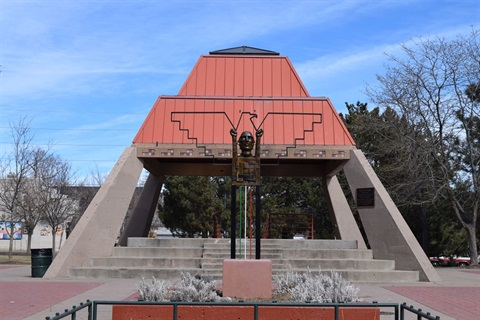
Denver City Council voted unanimously Monday night to approve the designation of La Raza Park as a Historic Cultural District. The landmark application was led by District 1 Councilwoman Amanda P. Sandoval, acknowledging the community’s desire to recognize the cultural significance of the park. Recently renamed to La Raza Park in 2020, it will be Denver’s third Historic Cultural District. The designation comes at the recommendation of a first-of-its-kind Latino/Chicano Historical Context Study led by the city’s Landmark Preservation division.

Photo courtesy: City of Denver

Within La Raza Park, located in the heart of the Sunnyside neighborhood, are distinct features such as Denver’s only Kiosko, the Plaza de la Raza, “El Viaje” or The Journey mural found within the Kiosko’s ceiling, designed and painted by Denver artist David Ocelotl Garcia, and “La Raza Unida” sculpture by the world-renowned artist Emanuel Martinez. La Raza Park has deep cultural ties in the Northside and was a vital part of the Chicano Movement in Denver. It serves as home to many community activi- ties including Dia De Los Muertos, Xupantla (the Summer Solstice), La Raza Park Day, quinceañeras, and family picnics.

The historic designation of La Raza Park will ensure that the vast history and culture of the park will forever be preserved and acknowledged. As stated in the application, “La Raza Park has been the beating heart of generations of Denverites… The significance of the park transcends its physical characteristics and has truly come to represent the Northside and Denver’s wider Latino/Chicano communities.

“It’s been such an honor to lead the La Raza Park Historic Cultural District. Working with community, Landmark Preservation, and Parks & Recreation staff on this application has been one of the highlights of my career. Given this is only the third Cultural District designation in Denver, it clearly identifies the need to work with our BIPOC communities on more of these designations. I’d like to thank every community member who shared their story, wrote letters of support, and showed up to give public testimony, you were the foundation of this application. I’d also like to acknowledge those who came before us and fought for our Chicano rights, they have helped guide me through the park name change and this Historic Cultural designation. ¡Que Viva La Raza!” Said, Councilwoman Sandoval.

“A republic if you can keep it”

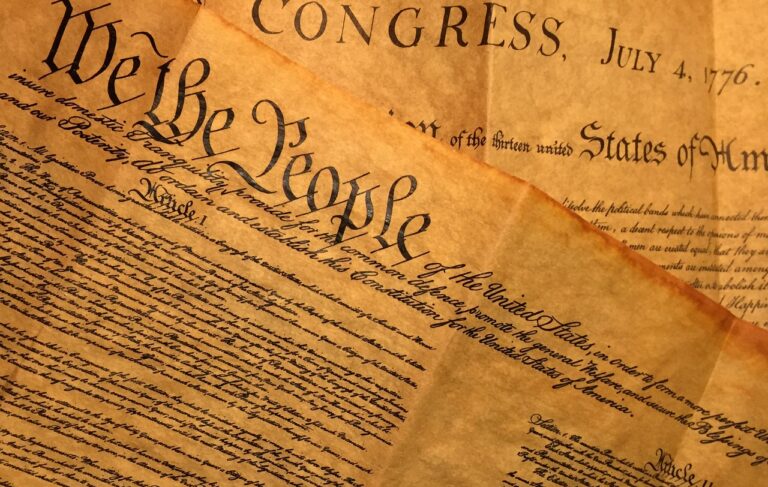
“A republic if you can keep it” are the famous words spoken by Benjamin Franklin toward the end of the Constitutional Convention and after being asked about what had been accomplished.

David Conde, Senior Consultant for International Programs

The Constitution is a piece of paper with a “bundle of compromises,” written down by our founders, that provides the institutional guarantee for our independence, our democratic experiment and the freedom to be the best that we can be within the law.

The Declaration of Independence adopted on 4th of July, 1776 also is a piece of paper that expresses the ideals of a free people embarking on an epic journey to greatness. Both institutional documents have been tested in their own way over time first by the British and then by our internal differences.

As we get ready to celebrate Independence Day 2023, it is important to consider the challenges to our freedom done mostly at our own hand. The American Revolution itself was a fight against British hegemony and not necessarily their ideas on democracy as they were already evolving into a citizen-based democratic political system.

The help of France in achieving independence also enlightened the path for that country to experiment with democracy themselves beginning a decade later. The French people came to understand the difficulty of creating and maintaining a democratic form of government as they went through four republics before Charles de Gaulle helped to establish the current one (the fifth) in 1958.

American independence as a united country was threatened by political differences so serious that they led 11 southern states to leave the union and make the 4 year civil war the bloodiest in our history.

Providence, however, appeared to work in favor of the Union in two key battles that took place around the 4th of July and that eventually determined the outcome of the war.

The first was the Battle of Gettysburg, July 1-3, 1863 that saw not only the “high water mark of the rebellion,” but also a turning point defeat of the Confederate Army.

The Union victory also “stopped Confederate momentum in the Eastern Theater and probably killed any chances of Europe intervening.”

The second was the battle and siege of Vicksburg, Mississippi that ended with the Confederate surrender of the city on July 4, 1863 to Union General Ulysses S. Grant. The Federal victory completed the takeover of the Mississippi River and split the Confederacy in two.

The two victories came at a time when President Lincoln was still frustrated with the command of the Army of the Potomac and the overall direction of the war. It is the Vicksburg moment that confirmed President Lincoln’s thought that he had finally found in General Grant, the military leader he had sought for so long.

One of the genius of the democratic political system is that it allows for people to petition the government by various means, including organizing, campaigning and street demonstrations. The American Civil War taught us that our political system is not designed to deal with mass armed rebellion without military intervention and bloodshed.

Yet the Constitution appears to allow for the possession of tools that can generate an armed insurrection. Our current political division is descending to a level, like the Civil War period, that can invite that kind of activity.

Our independence is about more than just having a separate country called the United States of America in a continent called North America. It is about our distinct heritage, the freedom to grow and reinvent ourselves generation by generation.

The views expressed by David Conde are not necessarily the views of LaVozColorado. Comments and responses may be directed to News@lavozcolorado.com.

Our Government

White House

The Department of Commerce announced funding for each state, territory and the District of Columbia for high-speed internet infrastructure deployment through the Broadband Equity Access and Deployment (BEAD) program—a $42.45 billion grant program created in the Bipartisan Infrastructure Law and administered by the Department of Commerce. This announcement—the largest internet funding announcement in history—kicks off the three-week Administration-wide Investing in America tour, where President Biden, Vice President Harris, First Lady Jill Biden, Cabinet members, and Senior Administration Officials will fan out across the country to highlight investments, jobs, and projects made possible by President Biden’s economic agenda.

Colorado Governor

Governor Polis welcomed bipartisan governors from Western states to Colorado for the start of the Western Governors’ Association (WGA) annual meeting held this year in Boulder. As WGA Chair, Governor Polis will highlight the bold and innovative progress of his Chair Initiative, The Heat Beneath Our Feet, in expanding geothermal energy research and exploration across the West. Governor Polis’s term as WGA Chair concludes at the end of the gathering. “I am proud to welcome my fellow governors to Colorado as we come together to learn from one another and find common sense, practical solutions to the challenges our states face,” said Gov. Polis.”

Denver Mayor

The Department of Economic Development & Opportunity has signed a $15 million contract with the New Community Transformation Fund-Denver. This partnership, supported by our Herman Malone Fund, will expand access to venture capital for diverse-owned Denver startups and early-stage companies. In 2022, Mayor Hancock created the Herman Malone Fund, the city’s first equity-focused business investment tool designed to level the playing field for minority-and women-owned small businesses to create an economy that works for everyone. The Malone Fund is a special revenue fund which utilizes one percent retail marijuana sales tax revenue and focuses on providing capital and technical assistance to under-resourced businesses.