





Home Blog Page 168

State issues report on its statewide tour to discuss climate change

0

Health Department leads Colorado agencies in gathering feedback to enhance local and state coordination to reduce pollution and invest in energy infrastructure

In collaboration with several state agencies, the Colorado Department of Public Health and Environment’s Air Pollution Control Division has published a report following its statewide climate change listening tour. During sessions, Colorado residents shared their experiences with climate change and discussed opportunities for state and local collaboration. The state completed the tour to make sure everyone has a seat at the table and their ideas are heard. The state included their feedback in Colorado’s plans to further address climate change.

“Whether it’s actions by the governor in partnership with the legislature or through all our agencies, the state has already been working hard to implement measures to manage the critical issue of climate change, but we know there’s more we can do,” said Trisha Oeth, director of environmental health and protection at CDPHE. “We held these listening sessions to meet people where they are at, in their communities, and we’re turning that feedback into action. We heard directly from underrepresented and historically disproportionately impacted communities.”

“Governor Polis is focused on transitioning to 100% renewable energy by 2040 and we are well on our way so it’s important that we hear from residents about their experiences and concerns to ensure that the renewable energy economy works for all Coloradans,” said Colorado Energy Office Executive Director Will Toor. “This listening tour provided valuable insight to help us develop an energy economy that is not only cleaner, but also prioritizes equity and justice for Colorado’s disproportionately impacted communities.”

Between April and June of 2022, state staff held two virtual and seven in-person sessions in Greeley, Aurora, Montrose, Durango, Pueblo, Trinidad, and Lamar. The Air Pollution Control Division led the project, with involvement from the department’s Environmental Justice Program and other state agencies. Those include the Colorado Energy Office, Department of Transportation, Department of Agriculture, Department of Natural Resources, and the Public Utilities Commission. A local non-profit organization facilitated the workshops and prepared the report published today. To reach a wider audience, staff offered Spanish interpretation during all sessions and provided written materials in both English and Spanish. About 120 Coloradans in total participated.

During the workshops, participants prioritized issue areas most important to their particular community. They discussed prioritizing policies in several sectors, including energy, public health, housing, agriculture, water, and transportation. Participants also discussed strategies to address climate change. Across Colorado, the following main strategies emerged:

• Education and outreach. Participants saw opportunities for a greater emphasis on education about the impacts of climate change. Participants also saw opportunities for more outreach on local, state, and federal incentives and programs to invest in solutions that reduce pollution and reduce energy costs.

• Environmental justice. Many community members wanted to see continued attention to communities historically overburdened by air pollution. This aligns with state law and the federal government’s Justice40 Initiative.

• Holistic and tailored solutions. Participants wanted to see solutions that further bridge local priorities with state programs, recognizing the differing needs between communities across Colorado.

The state has already begun taking action on recommendations from the climate change listening sessions. For example, the state incorporated community input in its priority action plan. It is available in both English and Spanish. The state will continue to update the priority action plan and make adjustments as needed. Feedback from these listening sessions will also help inform the update to the Greenhouse Gas Roadmap. The state will offer more opportunities to get involved in developing the new roadmap and other plans to address climate change.

For a more detailed summary of the tour and a complete breakdown of each workshop, see the full report on the Air Pollution Control Division’s website. It is available in both English and Spanish.

Source: Colorado Office of Communications

Public input sought by Colorado Public Utilities Commission

The PUC is seeking public input on Atmos Energy Corporation’s request to increase rates charged to all customers.

Last Aug. 5, Atmos requested approval from the PUC to increase its annual revenues by approximately $7.7 million through higher rates. The primary drivers of the proposed rate increase are $33.4 million of utility system investments not recovered through Atmos’ System Safety and Integrity Rider (SSIR); higher operation and maintenance expenses (such as wages and benefits), which have increased annually by $2.9 million; and an estimated $750,000 in rate case expenses.

Atmos also requests to extend the SSIR for five additional years through 2028. The SSIR presently provides Atmos approximately $56.75 million in annual revenue. The SSIR is designed to allow Atmos to more timely recover its costs of replacing aging pipeline infrastructure rather than having to file rate cases each year to do so.

If left unchanged by the PUC, the rates proposed in August would be:

• 8-9 percent increase for residential customers
• 0.5-0.9 percent increase for small commercial and commercial customers
• 0.5 percent increase for irrigation customers; and 
• 2.1 percent increase for transportation

If extended, the SSIR could further increase residential customers’ bills by up to 2.5 percent per year.

Higher rates, if approved by the PUC, are presently scheduled to go into effect on May 13, 2023.

The PUC has scheduled a public comment hearing on the rate increase proposed by Atmos on:

• January 3, 2023, from 11:30 to 1:30 p.m.

To register to comment during the public hearing, please click here: registration.

For more information on the proceeding, please visit: Proceeding No. 22AL-0348G.

In addition, members of the public can submit written comments:

1. By clicking on the “FILE A COMMENT OR COMPLAINT” link on the Commission’s website at https://puc.colorado.gov/

2. Through the Commission’s E-Filing System at https://www.dora.state.co.us/pls/efi/EFI.homepage

3. By emailing dora_puc_website@state.co.us; or,

4. By mailing comments to Colorado Public Utilities Commission, 1560 Broadway, Suite 250, Denver, CO 80202. Members of the public can also call 303.869.3490 to leave oral comments (English and Spanish options).

The PUC strives to accommodate all members of the public at its hearings and meetings by providing services for foreign language users and persons with disabilities upon receipt of a reasonable accommodation request. Requests for such accommodations should be made at least one week prior to the event by completing the Language Access Form. Requests can also be made directly by contacting Holly Bise at 303.894.2024 or by emailing holly.bise@stateco.us.

Image courtesy: doi.colorado.gov

America, still ‘the shining city on the hill’

0
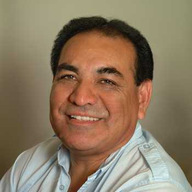
David Conde, Senior Consultant for International Programs

2022 was a very challenging year for everyone. The most difficulty faced by families was an inflationary wave that appears to be decreasing but nevertheless felt deeply especially at the grocery store.

Inflation to this degree has not happened for decades. The last time I felt it like this was during the Jimmy Carter administration.

I remember purchasing a condominium just before prices began to spiral. The effect of that climb was to make my mortgage less expensive since I was paying with inflated money.

Things like this happen because of what we decide to do with out lives as individuals and as a society. For example, seeing the reality of COVID 19 devastating our economic system, we made the choice of pumping trillions of dollars into individual and institutional hands in order to spend and maintain market viability.

At the same time, we created the ingredients for inflation. In hindsight, it would have been more prudent to have responded to the COVID 19 devastation by authorizing the needed infrastructure financing earlier rather than later and make better use of the allocated resources.

In a sense, the more significant problems are created by people in the public sector or in our private lives. Because these are people issues, they tend not to have a permanent solutions.

In other words, most people problems cannot be solved, only managed. That is the view we should have going forward in order not to be disappointed with the “answers” we create.

2023 promises more of the same challenges we have experienced in the past with others added here and there. Of most immediate concern is the health and welfare of our youngest and oldest members of the community.

We should look to maintain and enhance Social Security and Medicare for our elderly as well as medical benefits for our veterans as we seem to be constantly sending soldiers to war around the world.

Our children should also be a priority, especially in the area of healthcare and the improvement of early childhood and K-12 educational systems that is very much broken.

Second, there is a need to take more seriously and do everything we can to save our climate. The pre-Christmas storm that affected the whole country ought to be an immediate reminder that things are going to get worse and that we should be prepared to turn things around as soon as possible.

Third, the mid-term elections have again demonstrated that a significant portion of the Republican Party has largely gone rogue and it is affecting our political system and most of all, our democracy. We need to work to diminish the power of extremism in both political parties so that common sense approaches to problem solving and problem management can be effective.

Fourth, we should make it clear to ourselves that the United States is the global leader and we need to exercise that leadership for the good of the world rather than retrench and isolate especially when were are needed the most.

Ukraine is a perfect example of that responsibility. Under the previous administration we diminished the unity of NATO and had to rely on exhaustive intelligence and diplomacy to reunite the alliance in the face of Russian aggression.

Ukraine has become an international symbol of the challenge to conserve democracy threatened by tyranny.

Finally, we should again come to terms with the notion that America is the “shinning city on a hill.” It is essential to continue as the beacon of democracy.

Happy New Year.

The views expressed by David Conde are not necessarily the views of la Voz bilingüe. Comments and responses may be directed to News@lavozcolorado.com.

Our Government

White House

President Joseph R. Biden, Jr. declared that an emergency exists in the State of New York and ordered Federal assistance to supplement State and local response efforts due to the emergency conditions resulting from a severe winter storm beginning on December 23, 2022, and continuing.

Colorado Governor

Governor Polis visited warming centers and shelters providing critical support to people in Colorado during the extreme cold weather this week. The Polis administration acted swiftly and thoroughly to prepare for the extreme weather, keep people safe, and save lives, and the state has provided around the clock support to local governments and municipalities. Governor Polis expressed his appreciation to the hard-working volunteers, staff, and National Guard service members supporting the warming centers and shelters, and delivered gifts to children at the sites to ensure they had a small gift to open this holiday season.

Denver Mayor

Denver continues to manage a reception center and two congregate emergency shelters for migrants and asylum-seekers arriving in the city. Denver is also preparing a limited-service overflow site to meet temporary needs for shelter, should demand exceed capacity on any given night. Medical and non-medical volunteers are needed to help staff Denver’s emergency migrant shelters. All volunteers must pass a background check to be eligible. For more information or to apply, visit Denvergov.org/OEM.

A Week In Review

0

Africa

Al-Shabaab militants release hostages – The militant group Al-Shabaab released fourteen Iranian fishermen who were held hostage for years. The hostages were flown back to Iran and were welcomed back in a ceremony at an airport. The group was freed after negotiations with government officials, tribal chiefs, and Somali elders, according to an Iranian news agency.

Ethiopia targets hyenas – Ethiopia is planning to track down deadly hyenas because of a spike in hyena attacks on humans in the country’s capital of Addis Ababa. Over the past two years, eight people have been killed in the city by the animals, including children and older adults. The expansion of housing and logging has led to the increase in attacks.

Asia

North Korean drone reaches across border – South Korean military officials announced that five North Korea drones flew over the two countries’ shared border. In the past, North Korean drones have crossed the border. Tensions on the Korean peninsula have increased recently. North Korea has conducted a record number of missile tests this year. South Korea said the drones vio- lated its airspace.

China stages military incursion – At least 71 Chinese air force planes entered Taiwan’s air defense identification zone. It is one of China’s biggest incursions so far around seas and skies near Taiwan. China sees Taiwan as a breakaway province that it will eventually reunite, despite Taiwan being self-ruled. The two countries have seen ten- sions increase in recent months. China said it flew its air force planes in response to “provocation” from the United States and Taiwan.

Europe

Pub shooting leaves one dead in England – Police are searching for a gunman who is accused of fatally shooting a woman at a pub on Christmas Eve. Numerous others were also injured in the incident, according to local police. The pub was described as busy at the time of the incident and full of young people. Police described the incident as “despicable” and “heartbreaking.”

Pope says world suffering a “famine of peace” – During his annual Christmas day message at the Vatican, Pope Francis called for an end to the “senseless war” in Ukraine. He said the world is suffering from a “famine of peace” and also discussed other conflicts and humanitarian crises in the Middle East, Myanmar, Haiti, and the Sahel region of Africa. The Pope’s message marked his 10th Christmas Day address since he assumed the position.

Latin America

Bombing plot stopped at inauguration in Brazil – Police in Brazil arrested a man who was planning to detonate an explosive device ahead of the inauguration of President-elect Luiz Inácio Lula da Silva. The suspect said he planned the bombing with other supports of Brazil President Jair Bolsonaro. The device was planted in a fuel truck near an airport, but it didn’t go off.

Argentina torturer sentenced to jail – Mario Sandoval, a former policeman in Argentina, was sentenced to 15 years in prison for his role at one of the country’s most notorious torture centers. He was found guilty of abducting and torturing a student named Hernán Abriata, who disappeared in the 1970’s and is presumed dead. Sandoval fled Argentina after the military rule and was working as a professor at a university in France before being extradited in 2019.

North America

Decline in Canadian polar bears – Canada’s polar bear population dropped by 27 percent in five years, according to a government report. Around 618 animals lived in the western Hudson Bay area last year. That number is down from the 842 animals who lived in the area in 2016. By 2050, scientists believe the length of the season when there is no ice could push polar bears to starvation.

Native Americans in South Dakota snowed in – Native American tribal leaders are asking for vital supplies needed for snowed-in communities at the Pine Ridge Indian Reservation. The area is buried in more than 30 inches of snow, and winds have stacked snow drifts 12 feet high. The state is planning to deploy the National Guard. An attorney for the reservation told the Darsha Dodge Rapid City Journal that she’s seen some residents burning clothes in their wood stove because they couldn’t access wood.

Regis University names Salvador Aceves as first Latino president

0

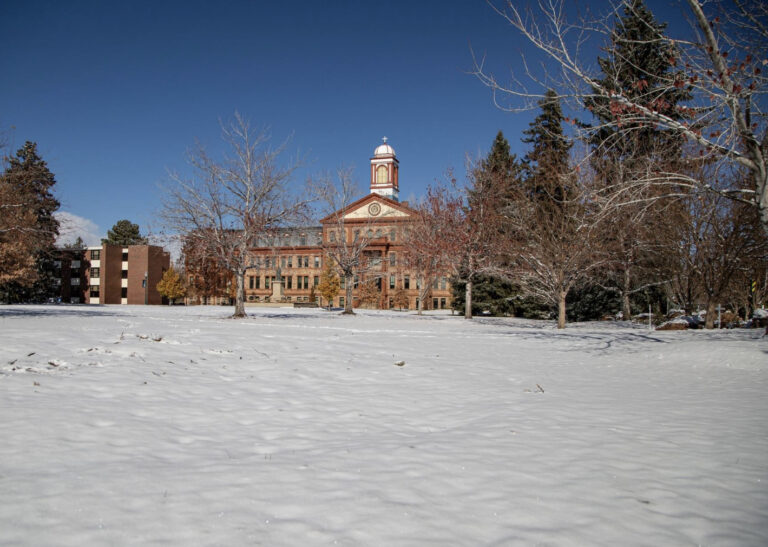
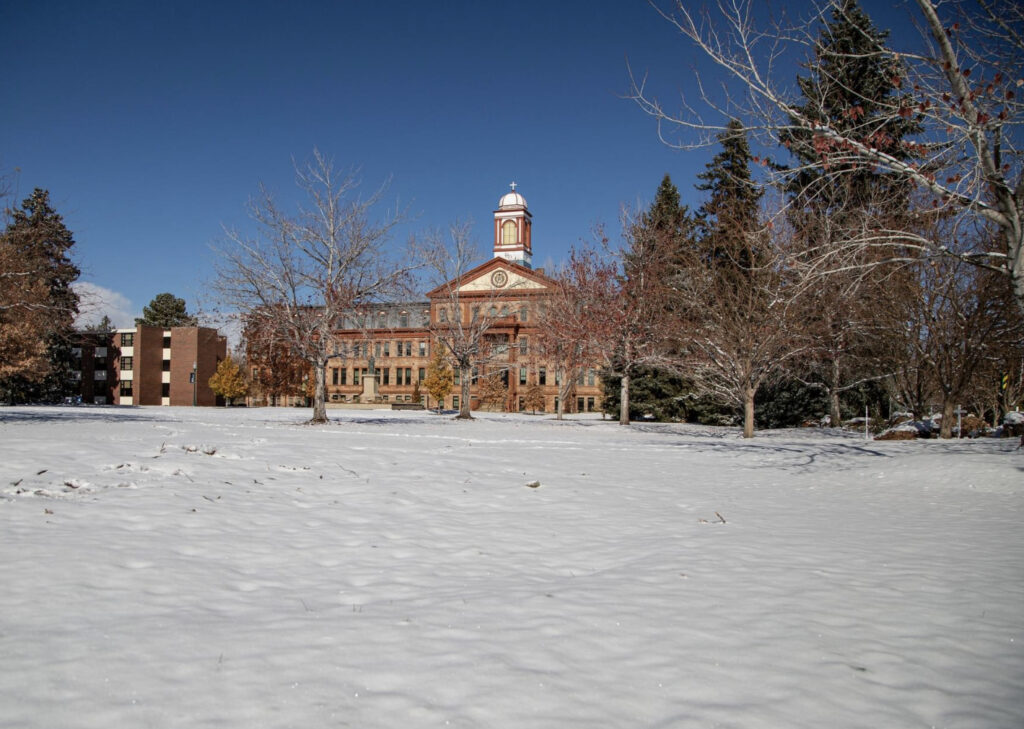
Tucked away in a tiny corner of northwest Denver, Regis University might just be an afterthought to a lot of people who call the metro area home. Worse, there might be people who aren’t even aware of this jewel in the crown of Colorado higher education. But, said incoming Regis President Salvador Aceves, the University’s job isn’t to have the biggest tailgate parties or best football team—it has neither—but simply to continue turning out 21st century scholars and leaders.

Photo courtesy: Regis University Facebook

Aceves, who will officially assume the presidency of this historic university on January 1st, has no plans to radically alter the school’s formula for success. But that doesn’t mean he doesn’t want to make a good school even better.

Already known for its business, nursing, and pharmacy schools as well as its world class on-line education programs, Aceves wants to elevate the Regis University profile to a whole new level. Of course, among American colleges, the Jesuit system is already an established gold standard with such institutions as Creighton, Loyola of Chicago, Boston College, Holy Cross and the University of San Francisco to name just a few.

The Denver school has also produced its share of famous graduates, among them current Colorado Lieutenant Governor Diana Primavera, Congresswoman-elect Dr. Yadira Caraveo, the late Colorado Governor Steve McNichols, Richard Cabela, founder of the eponymous outdoor sporting and recreational supply store, Cabela’s, political pundit Campbell Brown and Saturday Night Live alum and movie star Bill Murray.

Regis University, both the latest and the permanent name of the university, was named for Saint John Francis Regis, a 17th century Jesuit priest. Its Colorado roots were planted in 1884 as Sacred Heart College, the progeny of Las Vegas College. Its original Colorado location was in Morrison. Sacred Heart and Las Vegas College would merge in 1921 and become known as Regis College. It became Regis University in 1991

Regis University, said Aceves, has long been known as a school for underrepresented students. Over its history, he said, the school has been known “as a destination for Irish, Italian, and Eastern European immigrants…over the years, many looked to Regis College to educate their children.” Building upon this rich legacy, Aceves said the school, because of its growing

Latino student population, may soon be designated as a Hispanic Serving Institution. An HSI institution is a school that has at least 25 percent full-time students who are Hispanic. As of 2020-21, Regis has a full-time Hispanic enrollment of 28.2 percent. As an HSI, Regis would be eligible for grants to provide opportunities for Latino students.

The Jesuits have a long, rich and sometimes controversial history in the church though today’s rank and file Jesuits are considerably more conventional than many in centuries past.

Today’s Jesuits are often identified with education and social commitment. Pope Francis, the current head of the Catholic Church, is the first Jesuit pope.

Though an academic and not a priest, Aceves aligns well with the Jesuit philosophy. He comes from parents who left Mexico in the fifties and made San Francisco their home. After arriving, his mother worked first in a Planters Peanuts warehouse but later taught elementary school. His father worked in factories, including one that manufactured whiskey.

Over the course of his career, Aceves has worked in the classroom and in administration. His specialty is accounting and finance. Prior to his appointment as Regis president, he served as the school’s Senior Vice President and Chief Financial Officer. He has held the position since 2014.

Though the work of a university president demands a clear-eyed focus on the mission of the school, there is also an element of legacy associated with the job. “What I am most interested in,” said Aceves, “is honoring the legacy of Regis and ensuring that it continues to be a force for good in the community.”

Just as the Jesuits whose guiding philosophy is to give aid and comfort to those most in need, Aceves is committed to be “sensitive to those living at the margins and do that in a way that helps us reimagine the role higher education plays in our society.”

While Regis is a Catholic university and many of its students identify as Catholic, things are changing on campus and across the country as they relate to matters of faith. Polls taken over the recent past show that a growing number of Americans no longer identify as members of an organized religion. Despite this trend, Aceves sees no change in the way students are educated at Regis.

“Regis welcomes people of Catholic and all faiths. We want to become an institution that really helps people understand spirituality at a personal level.” “I truly believe that there is a place for a high-quality Jesuit Catholic education…it will keep us relevant and impactful.”

When he is away from his official duties, Aceves enjoys something that has stayed with him from childhood when his parents always had the radio on and playing music. “I am very much wedded to music,” he said.

“It’s something that has been part of my life from a very early age.” He calls music an extension of the beauty of humanity. The California native says his favorite artists come from the golden age of soloists, including Frank Sinatra. As a nod to the culture in his family’s home, he is also a long time and forever fan of Mexican music.

Aceves is married to a person he first met when they were fifth grade students in San Francisco. “We formed a deep friendship that turned into marriage.” He and his wife, Carol, reside in Denver.

Give the gift of music this holiday season

0

Unique Gifts for the Holidays (PART V)

Photo courtesy: Davinciarts.org

It’s amazing what learning how to play a piano can do for a child’s well-being.

Research studies have shown that children who took piano classes during preschool developmental years outpaced other children who participated in activities like playing the violin, computer classes, learning foreign languages, and sports. Preschools typically show greater short-term and life-long brain functioning when taking piano lessons.

The Royal Conservatory of Music — a music school based in Toronto, Canada —found that musically trained children are better able to distinguish subtle details of speech which leads to improved reading, better comprehension, and a greater ability to interpret what other people are saying. One study from the school showed a rapid transfer of cognitive benefits in young children after only 20 days of music training.

“The strength of this effect in almost all of the children was remarkable,” said Dr. Sylvain Moreno in the school’s “The Benefits of Music Education” study. Moreno works for the Rotman Research Institute.

Thankfully, there are plenty of options across the metro area for places that offer piano lessons to young children. For example, the DaVinci Center for Musical Arts in Broomfield offers music lessons to beginners through advanced ages 3-adult, lessons in piano, voice, violin, viola, guitar, mandolin, ukulele, drums and piano playtime for children ages 3-5 years old.
As La Voz continues its Unique

Gifts series leading up to the holidays, our staff is recommending that you give the unique gift of music this holiday season. Here are some things to know about DaVinci Center for Musical Arts. 

Piano Playtime

DaVinci Center for Musical Arts offers 30-minute piano classes to students ages two and a half years old to five years old.

Known as Piano Playtime, the school aims to unleash creative potential in each student through kindness, hard work and appreciation. Piano Playtime is a month-to-month commitment and uses the Whole Music Approach which develops musicians who can play by ear, improvise freely and later compose and read music.

More information about the program can be found at https://davinciarts.org/lessons/piano-playtime/.

Music Lessons

Children and adults can learn many different instruments through DaVinci Center for Musical Arts’ music lessons. Residents can learn how to play the guitar, piano, mandolin, violin, and ukulele. The school also offers voice lessons for those who love to sing.

The school says its teachers are world renowned musicians and composers who have a deep love and respect for students and their individual learning styles. You can learn more about lessons through DaVinci Center for Musical Arts by calling 720-838-8685 or by visiting https://davinciarts.org/lessons/.

Tuition rates

DaVinci Center for Musical Arts’ website reads that its tuition rates are competitive and reflect the value of musical education.

Private lessons range from $70 per lesson to $210 a month for four 45 minute private lessons. The school also offers private lessons to children ages five to eight and paired lessons for two children together. Pian Playtime costs $80 for four 30 minute classes each month.

More information can be found about DaVinci Center for Musical Arts at davinciarts.org or by calling 720-466-5119.

Argentina wraps up Cinderella story with Messi leading the way

0

At the start of the World Cup tournament Brazil was favored heavily to win the Cup with France and England following behind and although Argentina was also favored early to be a contender, not many thought they’d be one of the last teams standing.

Photo courtesy:Lionel Messi Instagram/Leomessi

Early on Portugal and Brazil were the only domination teams with wins over Switzerland and South Korea. Both of those teams lost in the quarterfinals to Croatia and Morocco, who both lost in the Semi-finals to Argentina and France.

Both Argentina won their matches against Australia and Poland in the Round of 16. Argentina and France defeated the Netherlands and England in the quarterfinals, before their wins over Croatia and Morocco in the semis.

The stage was finally set at Lusail Stadium in Qatar after over a month of posturing, and two of the Worlds top teams were ready to give fans one of the most exciting World Cup matches in decades. Lionel Messi scored the first goal on a penalty shot. Argentina’s second goal came at 35:22 from Angel Di Maria giving Argentina the early 2-0 lead.

France scored their first goal on a penalty shot by Kylian Mbappé. At 80:58 France scored the equalizer on a goal by Mbappé. Argentina’s third goal came from Messi at 107:55 to give Argentina the lead again. France once again tied up the game on a penalty kick taken by Mbappé.

The game went to a shootout with France up first. Kingsley Coman’s kick was blocked by Argentinian goalkeeper Emiliano Martinez. Argentina’s Gonzalo Montiel snuck his kick past France’s goalkeeper Hugo Lloris for the win.

With all the critics offering their opinions about who the best football player is in the World (with most siding with Cristiano Ronaldo) Lionel Messi put those questions to rest as he added the World Cup trophy to his mantel.

In other sports the Denver Broncos finally broke their five game losing streak with a win over the Arizona Cardinals on Sunday. The Broncos jumped out to a 3-0 lead in the first quarter, however; the Cardinals answered back with two field goals of their own to gain the lead heading into the half.

The Cardinals added another field goal in the third quarter to take a 9-3 lead over the Broncos. The Broncos added a touchdown when quarterback Brett Rypien found Eric Tomlinson heading to the corner of the endzone giving Denver a 10-9 lead.

In the fourth quarter the Broncos found some consistency and added two more touchdowns to take a 24-9 lead over Arizona. The Cardinals added a touchdown with 6:04 to play but missed the two-point conversion, essentially ending their attempt to keep up with Denver’s offensive prowess.

The Denver Nuggets have won four of their last five games with their only loss coming from the Lakers in L.A. last Friday. On Sunday the Nuggets defeated the Charlotte Hornets 119 – 115 in a game where Nikola Jokic accomplished one of, if not his best game of his career recording 40 points, 10 assists and 27 rebounds. Kentavious Caldwell- Pope added 20 more points while Aaron Gordon added 19, with 10 rebounds.

Los Dias, a unique tradition lives on

Photo courtesy: 2019 Costilla-Amalia Reunion

Sidelined far too long with the pandemic, farmer/ rancher and owner of Mountain Range Supply and Transport Bernie Torres says it’s time to get the band back together again. He’s already burned the phone lines all across New Mexico’s Taos County letting his long-time musician friends know that the holiday tradition Los Dias is back on again.

Los Dias, not to be confused with Los Dias de los Muertos, is a New Mexico and southern Colorado tradition celebrated during the holidays. It’s a custom where musicians go house to house playing music and singing songs for friends and neighbors in celebration of the New Year.

Torres is conductor, soloist, lead guitarist and lyricist, though he modestly says everyone in the makeshift band could easily hold one or more of these titles. It’s the informality of the tradition that makes it special. It’s a holiday band of brothers, sisters, friends and family making music and sharing goodwill.

“We celebrate, go out serenading in Amalia, Costilla and Questa,” three stops Torres said that have been mainstays for as long as he can remember. In pre-Covid days ‘performances’ would begin late at night or early in the morning, depending on where your home found itself on the Los Dias itinerary.

Those who’d be sung to would be safe and warm in their homes when the musicians came calling, the first stop beginning at midnight. The last stop could happen as much as nine hours later. But each would include a drink, a snack and plenty of camaraderie. “Vino de Capulin—chokecherry wine,” Torres said, is nearly always served. Also, musicians could expect empanadas, biscochitos and pie.

The core musicians who form the meandering troupe, said Torres, are all old hands at the tradition.

On New Years’ Eve, Torres will be accompanied by neighbors and friends, Danny Quintana, Nick Baca and Dean Swift. Of course, there are others, too. Those whose names Torres didn’t mention often join the group as it

moves along. No one’s ever certain who’ll show up. There’s an air of ‘ragtagedness’ that’s part of the tradition. No hard and fast rule on how big or small a Los Dias performance can be.

It’s also important to note, said Torres, that the tradition has changed with the times and today welcomes women, as many, in fact, as would like to join. The musical troupe is a family, figuratively and literally. Swift’s daughter recently joined the band. Same with Torres’ own son, now one of the group’s vocalists. It doesn’t stop there. “My wife com- poses versos (verses),” he said. He also said that his group—informally, the Torres Group—won’t be the only musicians making the rounds. On holiday nights, the hills of northern New Mexico are truly ‘alive with the sound of music.’

Torres isn’t exactly sure when Los Dias began, just that it’s been around for a very long time. As best as he can figure and depending on the veracity of those who’ve told its story, “It started all the way back to the days when Amalia began.”

That would be, he estimated, “in the 1840’s.” But its roots, he believes, go back centuries to Spain.

What makes the songs performed for Los Dias so unique is that nearly each one performed is, well, unique—an original. How original? Torres tailors songs specifically for the people the group is performing for. Some songs are rehearsed, others are often made up on the spot. The 76-year-old Los Dias veterano says modestly that he has the gift for not only spinning a song out of midair but spontaneously doing it in rhyme. (He performed one during our interview rhyming Gurule’!)

The songs, originals and staples like ‘Las Maῆanitas,’ are cheerful, melodic and meaningful. Those serenaded smile and laugh as they’re performed. But there is also an element of love and affection woven into each. “One year,” he said, “Billy Trujillo asked us to sing to his wife who was terminally ill with cancer. That was the first house we went to. When we saw the joy we brought to her, how she responded, it gave us a boost.”

Over the years, Los Dias has had its stops and starts. Families move away, musicians take breaks, sometimes life interferes. That was the case, Torres remembers, back in 1963 when Los Dias was on life support. But timing is everything. “I got together with Leo Martinez, Gasper Romero, Val Vigil and Jimmy Lovato,” he said. They all bought in. The tradition was revived.

Other times it’s those unplanned events that, as is said, throw wrenches into the works. That was the case with Covid. It put Los Dias on a two-year hiatus. Thankfully, said Torres, those things are rare but also realities. Life happens just as it did years ago when a move to Wyoming even took Torres out of the picture. But he’s back and so, too, is the band.

Amalia, Cerro, Costilla and a few other places, get ready. Instruments are dusted off, tuned and new versos are ready to be sung. The band is back together. The tradition lives. It’s time to strike up the band!

CU Denver 2022 graduation celebrates 50th Anniversary

0

CU Denver welcomed graduates and their families to the Colorado Convention Center this past Saturday, December 17 to celebrate their academic achievements. This fall’s class ushered in a new era by graduating just before the university celebrates its 50th anniversary on January 11. They serve as a bridge from the first 50 years to the next half-century.

Photo courtesy: University of Colorado at Denver

More than 1,300 students graduated from CU Denver between summer and fall 2022 with more than 700 students earning bachelor’s degrees, close to 600 students earning master’s degrees, and 29 graduating with a PhD/ED. They came from throughout Colorado as well as 30 states across the country and 11 nations around the world. Roughly 44 percent of undergraduate graduates are first-generation students.

Attending CU Denver is life-changing, both for the students and their families.

“These remarkable graduates will go on to be the leaders in their communities across Denver, Colorado, and the country,” said CU Denver Chancellor Michelle Marks. “For 50 years, CU Denver has produced change-makers, innovators, policymakers, entrepreneurs, and so much more. And now, this final class of those first incredible 50 years will help usher in a new era of excellence for our university as they join the 110,000 CU Denver alumni who continue to have a profound impact on the social, economic, and political landscape of our world.”

Two such graduates are James Dolores, a bilingual teacher earning a Master of the Arts in Teaching, and Dania Maaliki, who plans to continue to medical school now that she is receiving a Bachelor of Science in Biology along with a Psychology minor and Biochemistry certificate.

CU Denver appealed to Dolores because of its prime location in the heart of downtown Denver with a diverse student body and a strong LGBTQ+ community. He is a proud first-generation college graduate with both a bachelor’s and master’s degree.

Dolores is in his first year as a bilingual teacher at North High School in Denver where they are implementing the first Spanish language arts program.

As president of the Bilingual Education Students Organization at CU Denver for several years, he urges students to “Never lose your identity and be proud to use your native language no matter where you are.”

For Maaliki, being a Lynx runs deep for this Denver family. Her two older sisters graduated from CU Denver, and her younger brother is a current student. Her parents, immigrants from Palestine and Lebanon, are no strangers to the Auraria campus either, as they met while attending the neighboring Metropolitan State University of Denver.

While she was in middle school, Maaliki decided she wanted to go into medicine because of her family’s focus on community care.

“The Middle East is very communal; you take care of each other,” Maaliki said. “Growing up around that, it left a good mark in my mind…I have always wanted to take care of my community and people that are underserved.”

She knows not all immigrants have the opportunity to attend college and so she wants to continue the legacy of her parents.

About the University of Colorado Denver

The University of Colorado Denver is the state’s premier public urban research university and equity-serving institution. Globally connected and locally invested, CU Denver partners with future-focused learners and communities to design accessible, relevant, transformative educational experiences for every stage of life and career. Across seven schools and colleges in the heart of downtown Denver, our leading faculty inspires and works alongside students to solve complex challenges through boundary-breaking innovation and impactful research, and creative work. As part of the state’s largest university system, CU Denver is a major contributor to the Colorado economy, with 2,000 employees and an annual economic impact of $800 million. For more information, visit ucdenver.edu.