





Home Blog Page 184

Servicios de la Raza celebrates 50 years of community outreach

0

By: Ernest Gurulé

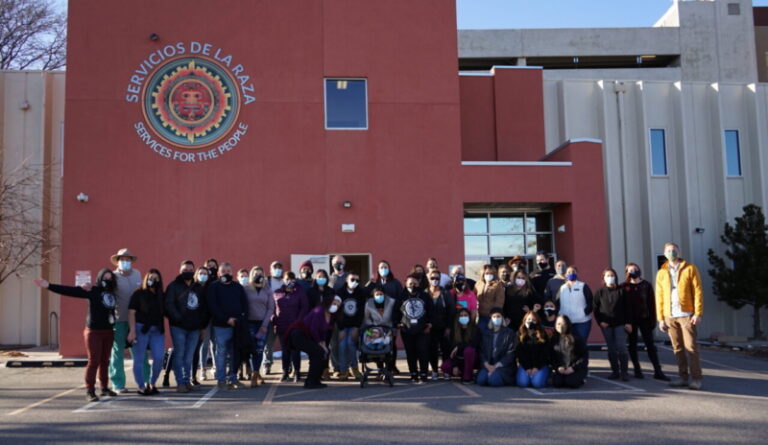
Do not let the name fool you. To the untrained eye, the uninformed, the bound and determined monolinguists, the name might seem uninviting and simply for Latinos, or purely mysterious. But to thousands of others, Servicios de la Raza is a lifeline that has served Denver for a half a century.

Photo courtesy: Servicios de la Raza

Servicios de la Raza, literally translated as ‘services for the people,’ began as an obscure way station for those seeking help with mental health concerns. Its mission today still includes mental health but has expanded to include an entire panoply of public health issues.

“Our first mission was to provide an advocate for the Spanish speaking community,” said Servicios President and CEO Rudy Gonzales. In 1972, there weren’t a lot of places in Denver where Spanish speaking families could go with a high degree of confidence that they would see a health care person who could fully understand and appreciate their needs. “We were responsive to it,” said Gonzales.

The Gonzales family, the patriarch of which, Rudolfo ‘Corky’ Gonzales, one of Denver’s most iconic citizens, has long been connected to the city’s Latino community. It was the elder Gonzales who saw a need to address the healthcare void that left so many Latinos with inadequate healthcare options.

Today Servicios provides Denver’s multi-ethnic com- munity with services that extend far beyond mental health. On any given day, those walking through its doors can be anyone seeking help or information vital to quality of life. It could be a recently released man or woman needing help reentering a world that they’ve been apart from; a family in need of basic sustenance—food and clothing; someone with questions about HIV or STI. Servicios provides an option for many lacking an understanding of a healthcare landscape that is often not easily navigable.

While the Gonzales patriarch has a well-documented history that extends far beyond Denver and Colorado, his son and the man who now runs Servicios is quick to give his late mother, Geraldine, an equal amount of credit. “Dad instilled discipline and duty to serve others,” he said. But it was his mother’s “compassion and love” that became the foundation for the work he and Servicios do today. “Treat everybody with dignity and respect,” was his mother’s basic lesson. Together they also imparted a “fighting spirit.”

During the pandemic Servicios provided thousands of COVID-19 vaccinations. It reconfigured its parking lot at its 3131 W. 14th Ave. in Denver into an al fresco waiting room. Instead of cars filling the lined parking spots, there were chairs. Servicios employees and vetted volunteers helped take essential health information as visitors waited on their shots. It also provided vaccinations at its 200 S. Sheridan facility and has a mobile unit for its health care offerings elsewhere.

“We’re going to be in Adams County every Thursday,” Gonzales said. Earlier this month, Servicios offered vaccina- tions in Grand Junction. For those still seeking COVID shots, Servicios is still offering them each week. For information on availability call 303.458.5851.

What has been a boon for Servicios’ effort in expanding its mission is the addition of a fully equipped mobile health unit. “We have testing equipment for A1C and cholesterol testing,” said Gonzales. A1C is a test measuring blood sugar and routinely used to determine an individual’s risk of dia- betes. At each of the mobile unit’s stops, he said, “we have 30-50 screenings a day.” The mobile clinic, he said, will also be providing mammograms later this year.

While Servicios provides as many services as it can, it does not delve into the more pervasive health issues plagu- ing Latinos. But Dr. Ricardo Gonzalez Fisher, a public health expert but not licensed to practice medicine in the U.S., who works with Servicios, regularly counsels individuals who may be displaying symptoms indicating heart disease and others leading causes of morbidity.

“What we do is screen,” said Gonzalez, no relation to the Servicios CEO. “We try and give education, we talk about their (test) results, what are their risks and try to talk about a plan on reducing their risk…we also try to be culturally responsive.” Individuals, he said, are also referred to agencies that are better suited to deal with the most seri- ous health concerns and far more able to treat uninsured patients. Gonzalez said those who fall into this group is alarming. “Seventy-eight percent of those we screen are uninsured.”
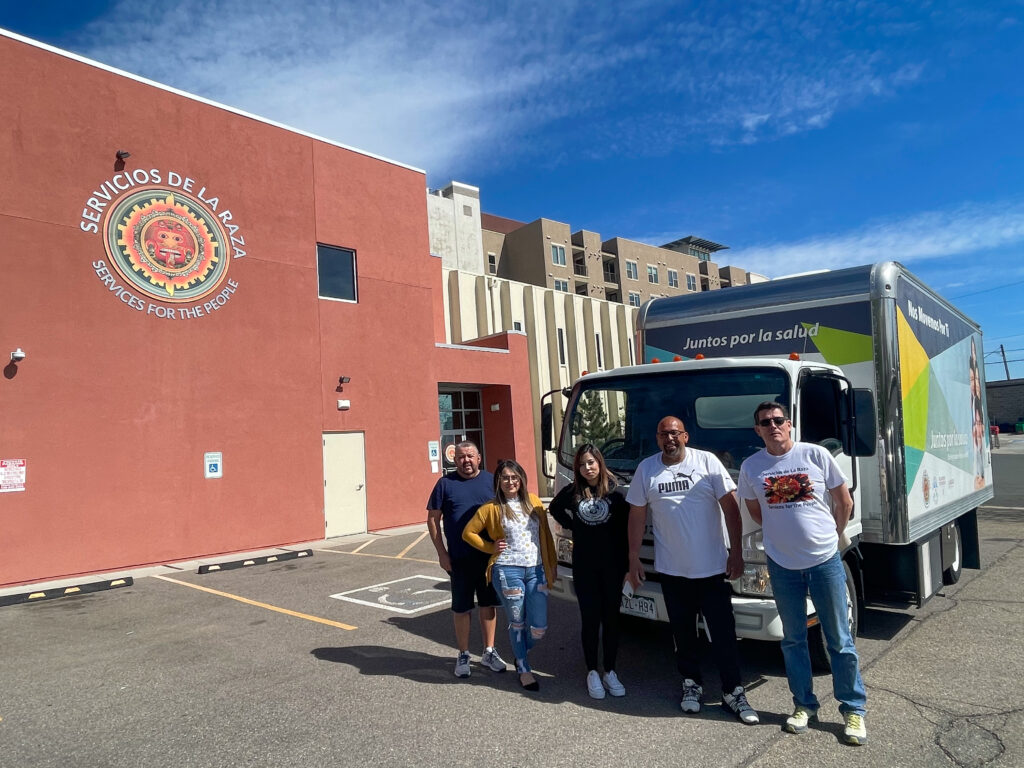
Photo courtesy: Servicios de la Raza

Despite being unable to address some of the more serious health issues in the Latino community, those visiting Servicios with indications of any of these health concerns, are provided information and, when available, literature to better understand their concerns.

The leading cause of death among Latino males continues to be heart disease with cancer, stroke, diabetes and liver disease all ranking in the top ten. According to the Centers for Disease Control, for Latino males, ages 45-64, cancer is the leading cause of death. It is followed closely by heart disease. Cancer and heart disease are also the leading causes of death for Latino males in the 65-84 age category.

Among Hispanic females, the leading causes of death are cancer, heart disease, stroke and Alzheimer’s disease. In the age group 45-64, nearly 37 percent of all deaths among Hispanic women is cancer. The CDC says cancer has a nearly three times higher morbidity rate than heart disease.

For more information on Servicios de la Raza and the services it offers, visit its website: serviciosdelaraza.org

Servicios de la Raza extends their services to Pueblo

0

By: Ernest Gurulé

Colorado has long been known as one of the healthiest states in the nation. Life expectancy in the state is 78.3 years. But, as we’re reminded of each day, no one gets out of here alive. And, in that case, Colorado does not escape the same health issues that plague the rest of the country.

In a normal year, heart disease would top the list of causes of death. Of course, since early 2020 and the pandemic that arrived with it, there have been far less things falling into what is considered normal. For the past two years, Covid-19 has led the state in deaths for both men and women.

In 2021, COVID killed 2,761 Coloradans followed by heart disease, lung disease, stroke and Alzheimer’s. Also included in the state’s leading causes of death by the Centers for Disease Control were hypertension, diabetes and suicide.

Since last April, Pueblo has had the benefit of a half-century old Denver mainstay in public health. That’s when Servicios de la Raza opened a satellite office on Pueblo’s lower eastside. An added plus is that services are provided at no cost, a boon since many of its anticipated customer base will be uninsured. “It will all be free to the community, and we are really excited to start building up that space in Pueblo and offer those services to the community,” Danielle Nachowitz, Servicios communications director, told the Pueblo Chieftain.

Like its counterpart in Denver, the Pueblo operation will screen for mental health issues, reentry for men and women recently released from prison, drug dependency and more. The site will also be visited on a regular basis by Servicios Mobile Health Unit.

Pueblo’s Servicios de la Raza will be regularly visited by the mobile unit where community members can go for basic screening issues. Servicios will also welcome new visitors for special events each year, like Prostate Awareness Week and Breast Cancer Awareness Month which is celebrated each October. Breast cancer is the leading cause of cancer deaths among Latinas and the second leading cause of cancer death among all women. Also, on scheduled days each month, visitors will be seen by health care specialist, Dr. Ricardo Gonzalez Fisher, who, along with staff, will offer screenings for diabetes and cholesterol. Those who show concerning results will be referred to local health agencies.

While Dr. Gonzalez is a certified surgeon in Mexico he is only licensed as a health specialist in the United States. As such, he can only counsel and refer patients who show signs of more serious health issues.

“We have definitely had a warm welcome in Pueblo,” said Ana Vizoso, Servicios Vice President of Health and Wellness. The satellite operation has especially been a gift to Pueblo’s Spanish speaking and immigrant population, added Vizoso.

While the Servicios Pueblo branch at 805 West 4th St. will provide a wide variety of services, said Vizoso, “I would say in Pueblo our focus has been more mental health services.” But it also has a number of other planned events, including one that took place as Pueblo’s schools resumed just weeks ago.

Servicios treated a number of Pueblo families to a ‘back-to-school’ event in which families in this predominately lower income community were given school supplies for their young children. “We really heard the need from community members,” she said.

An important focus of Servicios in Pueblo will be providing information to customers—in both English and Spanish- –on how to get medical benefits, treatment for drug addiction and help them learn how to access virtual assistance for their own case management.

Servicios expansion into Pueblo, southern Colorado’s largest city, was made possible through grants from the Governor’s office as well as other health care providers.

U.S. Secret Service returns $286m in fraudulently obtained funds

0

The U.S. Secret Service returned approximately $286 million in fraudulently obtained Economic Injury Disaster Loans (EIDL) to the Small Business Administration (SBA). These recovered funds were generated by fraudulently submitted EIDL loan applications using fabricated or stolen employment and personal information.

“The Secret Service is dedicated to safeguarding the integrity of the nation’s financial systems against fraud and holding those responsible to account for their criminal activity,” said Assistant Director David Smith. “By aiding in the return of nearly $2.3 billion in stolen funds over the last 30 months, our workforce has demonstrated a clear and firm commitment to the vitality of American businesses across the country.”

“Through intentional collaborations like this, OIG will continue to ensure that taxpayer dollars obtained through fraudulent means will be returned to taxpayers and fraudsters involved face justice,” said SBA Office of Inspector General (OIG) Inspector General Hannibal “Mike” Ware. “OIG is focused on rooting out bad actors in these vital SBA programs. I want to thank the U.S. Secret Service and our many partners in law enforcement for their tireless dedication and focused commitment to seeing justice served.”

Initiated by the Secret Service Orlando, Florida, Field Office, the investigation revealed that the conspirators utilized third-party payment system Green Dot Bank (GDB), issuer of Green Dot debit cards, to conceal and move their criminal proceeds. Working with GDB, the Secret Service was able to identify over 15,000 accounts used in the conspiracy and seize the $286 million contained in these fraudulent accounts.

After having identified the suspected fraudulent accounts with GDB, the Secret Service approached the United States Attorney’s Office for the District of Colorado. The District of Colorado has venue for all Economic Injury Disaster Loans issued by the Small Business Administration based on its Finance Center being located in Colorado. The U.S. Attorney’s Office then obtained the seizure warrant with the District Court that led to the seizure of over 15,000 accounts with $286 million from Green Dot Bank.

“Working closely with our Central and North Florida Cyber Fraud Task Forces, this investigation enabled the recovery of a significant amount of critical federal relief,” said Assistant Special Agent in Charge Roy Dotson, the lead investigator for the Secret Service.

“We applaud the hard work and dedication of the Secret Service and the U.S. Attorney’s Offices for the District of Colorado and Middle District of Florida,” said Department of Justice Director for COVID-19 Fraud Enforcement Kevin Chambers. “This is an important step in returning stolen funds to the American people. This forfeiture effort and those to come are a direct and necessary response to the unprecedented size and scope of pandemic relief fraud. The Department of Justice is grateful for our partnership with the Secret Service and all of our law enforcement partners working to recover stolen pandemic relief funds”.

Since 2020, the Secret Service has seized over $1.4 billion in fraudulently obtained funds and assisted in returning approximately $2.3 billion to state unemployment insurance programs. The Secret Service has additionally initiated more than 3,850 pandemic related fraud investigations and investigative inquiries.

Source: United States Department of Justice

COVID continues as number one Latino health issue

0

By: David Conde

David Conde, Senior Consultant for
international Programs

I am president of the board of directors of the largest migrant and seasonal Head Start organization in the country that offers services on 48 campuses and 10 states in the East and Midwest.

When the COVID-19 pandemic hit the country we had to find a way to continue operating because we knew that the mostly Latino parents would still be in the fields harvesting food for our dinner table.

We took a brief three week hiatus to reorganize and put our well developed IT unit to work engaging remote learning segments of our curriculum while we restructured protocols for classroom safety. It was a titanic chore to be the first and perhaps, the only ones in the country to open and continue to bring the children to school for learning.

As we witnessed parents and other farm workers in the fields harvesting in the middle of a virus epidemic we not only came away with increased respect for them but also decided that we had to find ways to support them and keep our campuses open for their children. As with farm workers, there are other sectors of the economy from first responders to construction workers that had to continue to work in relatively close contact with others because it was their job and they had to take care of their families.

In addition, the Latino community is full of stories of COVID spread because families continue to be together because it is their custom to do so. I know this first hand as it seemed that every time members of our group went to visit relatives in South Texas, someone always came home infected.

For these reasons, 52 percent of the Latino community had a relative or friend hospitalized or died from COVID. It did not help that 19 percent of the Latino society is uninsured and access to vaccines has been very limited.

Because COVID-19 is not going away, it has been announced that a booster with the latest variant protections is becoming available on an annual basis. It is recommended that when people go to take their yearly flu shot they should also take the virus booster.

There is also a prediction that, in the future, the flu shot and the COVID booster will be combined into one injection. That is good news for those that have taken advantage of the protection offered at every turn.

But the COVID vaccine story is one of diminishing returns when it comes to participation. According to research statistics, what was a Latino 75 percent rate of involvement in initial vaccination, activity has fallen drastically in regards to the booster program.

The fact that a vaccinated person can still get sick and the information surrounding that reality can be confusing is discouraging to many people. While a strong majority of adults in the country (59 percent) feel that the worst is yet to come, an even stronger majority of Latinos (70 percent) feel the same way.

There are very few choices for Latinos other than to confront the COVID crisis head on as for many, their liveli- hood is out there where the danger of contracting the virus is most acute because less than a 5th can work from home. The need to work in the middle of that danger is not helped by the fact that 27.2 percent of the population is in poverty and 16.2 percent suffers food insecurity.

Latinos need to find a better solution to this pandemic. This is important because other viruses lurk out there.

The views expressed by David Conde are not necessarily the views of la Voz bilingüe. Comments and responses may be directed to news@lavozcolorado.com.

Latino health in recent years

0

By: Joseph Rios

Throughout the past couple of years, the COVID-19 pandemic once again showcased health disparities and inequities that face Latinos.

Healthy People 2020, which was launched by the Department of Health and Human Services with the goal of achieving health equity, defines health and health care disparities as differences in health and health care between groups that stem from broader inequalities.

According to a 2021 study by the University of Southern California on a large and diverse group of Medicaid enrollees, Latino patients had higher odds of a positive COVID-19 test, and higher odds of hospitalization and death from the virus than white patients.

Since the pandemic began, COVID-19 has become one of the three leading causes of death in Latinos. According to the Centers for disease Control and Prevention (CDC), Latinos represented 24.9 percent of cases and 17.2 percent of deaths.

Outside of COVID-19, other health concerns impact Latinos at a higher rate than other groups.
For example, Latinos are nearly 50 percent more likely to die from diabetes or liver disease than whites. Health factors like hypertension and obesity are also two factors that commonly plague Latinos. Heart disease and cancer are leading cause of death of among Latinos and represent 2 out of 5 deaths. That rate is nearly identical to studies of whites.

Cancers like prostate and breast cancer are the most common forms of the disease among Latinos. The American Cancer Study estimates that in 2021, around 23,800 Latino men and 22,700 Latina women died of cancer.

Outside of physical health, mental health is also a concern for Latinos. The CDC found that adult Latinos are the group most affected by pandemic-related stress. The agency also found that around 40 percent of Latinos struggle with depression, compared to 25 percent among non-Hispanic white citizens. Suicide thoughts are prevalent among 23 percent of Latinos, compared to 5 percent among African Americans and 5 percent among whites. Common mental health conditions that impact Latinos include schizophrenia, generalized anxiety disorder, depression, post-traumatic stress disorder, and bipolar disorder.

To stay healthy, it’s important to talk to your doctor or other healthcare professional about which cancer screen- ings to get and how often you should get them, the CDC says. The agency also recommends making an effort to follow proven health tips like quitting smoking, staying on medication to control blood pressure and cholesterol and maintaining a healthy weight by taking at least one 10-min- ute walk, three times a day, five days a week. Latinos are also encouraged to learn about diabetes and how to prevent type 2 diabetes and to eat a healthy diet that is low in salt, low in total fat, saturated fat, and cholesterol, and rich in fruits and vegetables.

Wilson and broncos fail test in Seattle

0

By: Brandon Rivera

Game one for the Broncos was a test to gauge their readiness for one of the toughest divisions in NFL his- tory. That test was on primetime, Monday Night Football in front of thousands of Seahawks fans at Lumen Field, where boos rang down on their previous quarterback Russell Wilson once he took the field.

Monday night’s game was a continuation of follies from games that took place over the weekend. Turnovers were Denver’s biggest issue. Two fumbles at the one-yard line were two of the Broncos most glairing issues with both running backs, Melvin Gordon and Javonte Williams coughing up the ball at crucial moments in the game.

Photo courtesy: Russell Wilson Facebook

The two combined for a total of 103 yards on the ground on 19 attempts averaging 5.5 yards a carry. Russell Wilson maintained a passer rating above 100 with 29 completions on 42 attempts for 340 yards and one touchdown. However, Wilson’s return to Seattle was spoiled by Seahawks quarterback Geno Smith who completed 23 passes on 28 attempts for 195 yards and two touchdowns.

Denver’s bread and butter defense stood up most of the game but also gave up too many third downs for first downs, while Seattle dominated the time of possession.

While Monday’s game seemed like a must win for the Broncos, the atmosphere and crowd at Lumen field were obvious factors in Denver’s loss.

The last drive of the game started with 4:02 to play and for some Denver fans they felt like they had a chance. It took Wilson and the Broncos two minutes to move the ball 16 yards against Seattle’s stingy defense.

With two minutes to play and the Broncos having all three timeouts remaining it looked as if a win was almost inevitable. Wilson threw a quick pass to Javonte Williams on third down for 9 yards with almost a whole minute to play. Neither Wilson nor the sideline opted for a timeout until the clocked clicked down to 20 seconds remaining.

To everyone’s surprise, including Brandon McManus, coach Hackett opted for a field goal instead of a chance at getting the first down. This drew the ire of fans as McManus lined up for a 64-yard field goal with drifted wide left.

While game one was a loss for the Broncos, the experience they gained in one of the NFL’s most hostile environments is one that can take with them on the road this season.

The Broncos are back at home next Sunday to host the Houston Texans at 2:25 p.m.

In other sports the Colorado Rockies won two games to on in their series with the Arizona Diamondbacks over the weekend. This week they are in Chicago to face both the White Sox and the Cubs for five games.

Republican Party is working to destroy our democracy

0

I am registered as an Unaffiliated voter. For most of my life, I have observed the tug of war between the two parties. Each side took a different approach, but the parties used to work together on problems such as growing our economy and fighting authoritarianism.

This is no longer true. Those who say, “Both parties are the same” are just not paying attention. The current Republican Party is no longer a party with ideas, it’s a personality cult. In order to preserve their power, the Republican Party is intent on destroying our democracy.

Republicans have mastered intentional hypocrisy, accusing others of exactly what they themselves are doing. Using the lie that the last election was stolen, they are busy setting up a system to steal the 2024 election. 54 Republican election deniers have won primaries for positions that have a role in the election certifi- cation process (governor, attorney general, secretary of state, senate and house members). They plan to replace their state’s electors legit- imately chosen by the voters with a set of electors of their choosing.

If they succeed, our democracy is dead. The November election is the most important in our history.

Those of us who value democracy must get involved, whether we are Unaffiliated, Democrats, or true conservative Republicans. We far outnumber those who are trying to take our liberty.

What can we do? Volunteer for a Democratic candidate. Donate. At the very least, register and vote! 

Philip Riffe

Pueblo Mall site to provide updated COVID-19 Vaccines

The Pueblo Mall vaccine site will begin providing updated Pfizer and Moderna COVID-19 vaccines to target omicron subvariants. The announcement follows the approval by the Centers for Disease Control and Prevention for both the updated Pfizer and the Moderna vaccines.

Anyone aged 12 years and older who has completed a primary series of COVID-19 vaccines should receive an omicron dose. A primary series usually means two doses of Pfizer, Moderna, or Novavax, or one dose of Johnson & Johnson. People who are immunocompromised may receive up to three doses in their primary series. Additionally, anyone who has previously received a third, fourth, or fifth dose — also known as booster doses — should receive an omicron dose. People should get their omicron dose at least two months after their most recent dose of the COVID-19 vaccine and can wait three months after a recent COVID-19 infection. Learn more about omicron vaccine doses at covid19.colorado.gov/vaccine.

Additionally, the Pueblo Mall site will continue to offer primary COVID-19 vaccine doses for any person ages 6 months or older.

Appointments are encouraged, but sign-up is available on site at the Pueblo Mall vaccine site. Information about COVID-19 vaccine in Pueblo County is available at pueblohealth.org/vaccine.

City of Aurora Parks to host master plan open houses

Following two months of community input regarding Our Parks, Our Places: A Plan for Aurora’s Parks, Recreation and Open Space, the city of Aurora’s Parks, Recreation and Open Space Department and Sasaki Associates are hosting two public open houses about the project.

Open houses will be hosted from 4 to 7 p.m. Tuesday, Sept. 20, at Central Recreation Center, 18150 E. Vassar Place, and from 2 to 5:30 p.m. Thursday, Sept. 22, at Moorhead Recreation Center, 2390 Havana St. The planning process is organized around the five key themes of equitable access, community connections, health and safety, operational efficiencies and sustainable growth. To create an inclusive environment, there will be opportunities to provide feedback both in person and virtually.

The open houses will include multiple stations discussing topics such as public feedback received to date, how Aurora’s park system compares to those of other cities, existing environmental conditions and overall access to the system.

Key information will be available in Amharic, English, Korean, Mandarin, Spanish and Vietnamese, and interpretation services will be provided at the open houses. Childcare will be available for children 3 years old and older. There will also be food trucks on-site and food truck vouchers for participants.

Additionally, residents will be able to share their opinion through a new online survey launching Sept. 20. Comments and questions can be shared any time on the project website, EngageAurora.org/AuroraParks, or by email to PROSMasterPlan@AuroraGov.org.

Sign-up at EngageAurora.org/AuroraParks to stay updated on project news, opportunities to provide input and fun community events happening throughout the summer and fall.

Our Government

White House

Executive Order on the Inflation Reduction Act of 2022: “By the authority vested in me as President by the Constitution and the laws of the United States of America, and in order to effectively implement the historic energy and infrastructure provisions in Public Law 117-169, referred to as the Inflation Reduction Act of 2022 , and to accelerate United States global leadership in clean energy innovation, manufacturing, and deployment in a way that cuts consumer energy costs, creates well-paying union jobs and sustainable and equitable economic opportunity, advances environmental justice, and addresses the climate crisis.”

Colorado Governor

Governor Polis and the Colorado Department of Transportation announced Colorado as the recipient of a $100,000,000 Nationally Significant Multimodal Freight and Highway Projects grant program (INFRA) award. This federal program offers competi- tive grant opportunities for projects that improve safety, increase efficiency, and offer an opportunity to generate economic growth. The Funding will go towards I-70’s Floyd Hill Project which will expand reliability and safety and improve aspects of Colorado’s I-70’s Mountain Corridor.

Denver Mayor

City Council has approved the Hancock Administration proposal to provide financial relief for Denver families struggling with food insecurity resulting from the pandemic and recent rising costs. $1M in interest from the city’s American Rescue Plan Act (ARPA) funding will be used to provide grocery store gift cards and support food box distribution events for families in need. “Rising costs for everything from groceries to gas are straining family budgets everywhere. Inflation is impacting all of us,” Mayor Michael B. Hancock said.