




Home Blog Page 206

The ‘Big Lie’ and the free press

David Conde, Senior Consultant for International Programs

Toward the end of the 2016 campaign for president, Donald Trump said that the election was rigged or the election was rigged if he did not win. This view actually turned out to be a projection of his own campaign efforts to “rig” the election with the help of Russian security services that may have interfered enough in the toss-up states to help him win in the electoral college.

Trump went on to say the same thing during the 2020 campaign. This time he lost by millions of votes and a 306 to 232 electoral college score.

He then projected his loss onto his opponent and gave birth to the ‘Big Lie’ that said that the election was stolen from him. Most of the Republican Party bought into his lie and supported it to the point of causing its followers to create a violent insurrection designed to revoke the certifica- tion of Joe Biden as the duly elected President of the United States.

To this day, at least one third of the voters in the country believe the lie and are encouraged to act on it by extreme right wing activists and pundits including the powerful FOX television news network that has, until very recently at least, made it its business to be the unofficial voice of the former President and his followers.

The media in the United States, with the exception of FOX and other outlets that agree with it, stepped in to investigate, find out and report the Big Lie as just that. This give and take on the part of reporters and commentators of every kind together with the courts has served to clarify the truth of the vote.

The process of clarification has gone a long way in defending the democratic institutions that guarantee the foundation of our liberty. What happens however, when the press and its activities are stopped and its voice silenced by government control of the media and publishes only its side of the story?

That is what is being done by the Russian press that accompanies the invasion of Ukraine. It started with President Putin inventing the Big Lie that accuses Ukraine of being led by Nazis that seek to do Russia harm. When you mention Nazis in that part of the world you are playing

on the fears caused by the German invasion of World War II. Putin’s projection of that fear reflects his own desire for an excuse to invade and dominate Ukraine as part of building a new empire.

This time there is no free press to tell the truth to the Russian people. President Putin has made sure that the only media telling the story belongs to the state.

In the case of the United States, the free press has survived Trump’s attempt to denigrate it to the point of allowing him to stay in power. The institution held fast against the criminal behavior that is now the subject of much litigation and many tell-all stories and books.

There are lessons to be learned in looking and compar- ing a tyrant and a tyrant wanna-be in their relations with the press. The best lesson however, has to do with the essential role the press plays in keeping freedom alive.

In the case of America, it also validates the genius of insisting on having the Bill of Rights beginning with the First Amendment to the Constitution. In the case of Russia, Putin’s denial of a free press could lead to World War III.

The views expressed by David Conde are not necessarily the views of la Voz bilingüe. Comments and responses may be directed to news@lavozcolorado.com.

From Congressman Perlmutter to citizen Perlmutter

0

By: Ernest Gurulé

Colorado Democratic Congressman Ed Perlmutter’s career and party allegiance were sealed long before he was born. The eight-term congressman’s grandfather—his mom’s father— was the Chief Justice of the Illinois Supreme Court, also a staunch Republican determined to main- tain the family’s good name and standing in the grand old party. But a family vacation to Colorado ended up having—at least for his grandfather—some very unpleasant and unintended consequences.
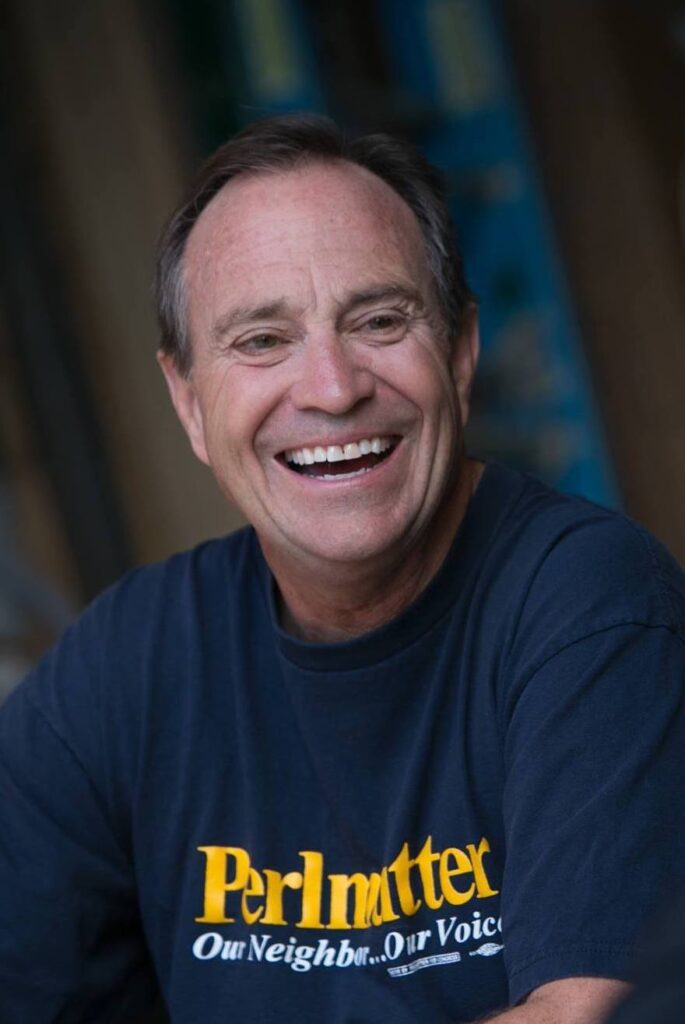
Photo courtesy: Ed Perlmutter Facebook

The vacation, said Perlmutter, was enough for his mother to “fall in love with Colorado” and she began making plans to move here when she came of age. “You come to Colorado, you’re gonna become a damn Democrat,” was the last travel warning the old man gave. His mother followed through, enrolled at the University of Colorado and just as her father had warned, though not immediately, became a Democrat.

Her political evolution was hastened along by falling in love and later marrying the editor of the “Silver and Gold,” the university student newspaper. “He was a pretty liberal character,” said Perlmutter, and the die was cast for Perlmutter and the whole family. Since then, they’ve lived and voted blue.

A year spent at Colorado College before finishing up his undergraduate degree and law school at CU, set Perlmutter on track for life as a practicing attorney and life in the public arena as an elected official. He won his first election to the state legislature in 1995 where he served until 2003. He won a seat in Congress in 2006 and has been reelected seven more times. And, said Perlmutter, that’s enough. His days in public office end when his current term expires.

“We’ve been building a good bench,” he said in a recent weekend interview with La Voz Bilingüe. “At some point you’ve got to let the bench rise. That was always the deal.” When he leaves office, the plan is to return to Colorado and Jefferson County, a place he’s called home for his entire life.

Announcing his decision ten months early, said Perlmutter, was the best way to ensure his staff, one he calls “the best staff in America,” gets an off-ramp, ‘congresspeak’ for time to catch on with another member of Congress or find something else.

Leaving the political arena and his beloved 7th Congressional District is done with both satisfaction and a degree of melancholy. Politics, like sports, is the proverbial long game. You win some and, at the same time, you know you’re going to lose, and regularly. And in a divided and polarized Congress as is the nation’s reality today, good or bad legislation is at the mercy of immovable party loyalist and ever present special interests.

Ever the optimist, Perlmutter takes a degree of sat- isfaction with even pyrrhic victories, wins or near wins that often come with huge costs and, oftentimes, even bigger blemishes. Even in the 2021 impeachment of former President Trump, Perlmutter finds a ray of light. “Seven (Republican) senators voted to convict,” he said with a ray of hope in his voice. The final vote, 57-43, fell well short of the two-thirds majority required to convict.

While he cheers congressional collegiality, he nonetheless laments the all too automatic knee jerk partisanship. But when the two sides work together good things, he said, can happen. Perlmutter cites the new Veterans Hospital in Aurora as a prime example. “We all worked together,” he said. “I worked with (former Colorado) Senator Allard…we got it moving.” There were snafus, including cost overruns, “but perseverance got it done.” He calls the VA health cen- ter, which serves veterans across a multi-state region, “the best in America.”

A two-year congressional term might make it difficult to deliver big promises, but Perlmutter says it’s still enough time to accomplish big things. Among his proudest accomplishments are maintaining funding for the Orion Project. Orion is the spacecraft that may one day take astronauts to Mars. Additional funding not only saved jobs for Colorado’s Lockheed workers but added to the workforce.

Perlmutter also helped infuse Golden’s Solar Energy Research Institute (SERI) with both a bigger budget and larger workforce. The same for the U.S. Geological Survey located on the School of Mines campus and Jefferson County’s Federal Center. A number of structures at the Federal Center were “dilapidated” and are now set for a rebuild. “I came from a construction family,” he said, “so we love it.”

But being a Congressman means more than giving floor speeches and casting votes. Part of the job is simply answering to the needs of constituents. There, the eight- term Perlmutter is in his element.

A few years ago a group of WWII’s veterans had gone back to mark the Iwo Jima anniversary and one they had fought in. “I get a call on a Friday saying these folks are stranded,” recalled Perlmutter. The group was stuck in Okinawa without a plane and, because the sacred site was open only for a set amount of time, were in danger of missing the event. Perlmutter scrambled, working the phone, calling in favors and finally, got a Marine plane to get the vets to the event. It was a close call, but mission accomplished.

Another instance that remains both sad and satisfying, he said, involved returning the bodies of two Coloradans who had left to fight against ISIS. They were killed and their bodies were left “in no man’s land,” he said. Their families were desperate to bring them home. “We went through all kinds of hurdles,” he said. “It took us a little while, but we did it.” The pair was brought home to family.

Decades in public service, said the kid who grew up in Wheat Ridge and played in the streets “until the lights went on” is something special, said Perlmutter. “The abil- ity to serve is a high calling and honor and my staff has extended my reach.” Perlmutter’s life in the arena ends January 3, 2023. The next day, he once again becomes Citizen Perlmutter.


New Pueblo councilwoman learns you can go home again

Women in March I of IV

There may be a lot of bad things you can say about high rents, but thankfully, it was Washington state’s high rents that brought Pueblo native Sarah Martinez back home to the city where she grew up. Coming home also helped launch the freshman city council woman’s political career. But more than that, it was the time away that told her that Pueblo was where she needed to be.

The 28-year-old Martinez, elected in November, is the youngest person ever to hold a council seat. It’s a job, she swears, she never imagined or expected to have. In high school, Martinez remembered, “I was the one who lacked confidence, the one in the corner all by myself.” But being the quiet one focusing on grades also helped her graduate in the top ten of her class. But, as they say, that was then.

Martinez got more than twenty-one thousand votes in the November election, winning by “the largest margin of vic- tory (of any council candidate).” Now in city government, she has big plans for the next four years. Foremost is charting a course that will both ensure responsible growth and, at the same time, make Pueblo a better place to live.

Besides her new job as Pueblo’s District 3 council mem- ber, Martinez also has a full-time job running the county health department’s Youth Substance Abuse program. The job targets one of the city’s and state’s growing public health issues. “Colorado is the highest in the nation for youth vaping usage,” she said. “We (Pueblo) are also the second highest county for youth marijuana use.” Coincidentally, her department is funded by money generated by the state’s marijuana sales tax.

In college, Martinez earned degrees in psychology and biomedical sciences. Her undergraduate degree is from CSU Fort Collins, her graduate degree from Western Washington State University. Both degrees, she said, are tailor made for her work at the health department. “I get the chance to hear from young people everyday on what their needs are…what would prevent them from using substances.”

Her other job, city councilwoman, she chuckled, “Is a bit like drinking out of a firehose.” Since being sworn into office Martinez has spent hours meeting with all the (city’s) depart- ment heads and the mayor’s office. She’s also gone over the city’s budget “with a fine-tooth comb.” “I’m hungry, excited and know the potential for Pueblo and where we’re going.”

Martinez council ‘to-do’ list is long, eclectic but more than that, she said, achievable. One high priority for her district is addressing an issue plaguing the entire country, and especially towns like Pueblo. Pueblo, she said, is a “child-care desert,” an issue that hampers more than young families. It stifles economic development. Martinez said working families shouldn’t “have to choose between a full-time job and staying home” to care for children. She sees a day when Pueblo has “as many childcare centers as possible.”

It doesn’t stop there. Like a lot of Colorado’s cities and towns, Pueblo’s roads, she said, could use some attention and the business community could use a little more help as it recovers from the pandemic. But as much as anything, the freshman councilwoman is adamant about making the city’s quality of life a high priority for both the city’s families and its young people.

Making Pueblo a more vibrant city would incentivize students at Pueblo Community College and CSU-Pueblo to stick around instead of taking their degrees and leaving the city. The answer to that, she said, begins with becoming a family friendly city.

When Martinez was growing up, she couldn’t wait to leave Pueblo for somewhere else. Fort Collins and Washington state gave her that opportunity. But after moving back, she saw a different place than the one she left. “I got more entrenched in the community,” she said. Walking from home to her, at first, part-time job at the health department “I would notice things about the neighborhood and could talk to people.” She said learning about the city from an adult perspective was an eye-opening experience. “There were so many things hap- pening in Pueblo that I didn’t know growing up.”

While Washington’s high rents and her student loans made Pueblo more and more attractive after graduate school, it was also knowing that there would also be safe harbor with the person she called her role model. That would be her mother, Luanne Martinez. Her mother was a single parent and, as long as she can remember, an inspiration. “She instilled in me giving back and leaving your world better than you found it.” Her mom also stressed the value of “being a good community member.” The lessons were cornerstones in her campaign.

But despite her relative youth—she’s only a decade out of high school—Martinez is already looking to use her forum as a launch pad to inspire those younger than her and especially Latinas.

Martinez credits a luncheon she attended as a high school sophomore and seeing former Colorado State Senator Angela Jiron as the keynote speaker. “It was the first time that I remember seeing a person looking literally just like me in a position of power.” She was mesmerized by the way Jiron worked the room at that country club luncheon. Jiron, she said, planted the seed. “When I was planning a run for office, I kept going back to that moment.”

With a sparkling new bully pulpit, Martinez wants to let Puebloans and the whole state know what a special place her town is. It’s something she, herself, is learning every day. As an example, she sites Lake Pueblo, a fifteen minute drive from home. “I literally never went,” she laughed. “The fact that we have a state park that’s accessible and afford- able is fantastic.” It’s just one more thing to share about her hometown.

Biden’s delivery on the State of the Union

0

By: Ernest Gurulé

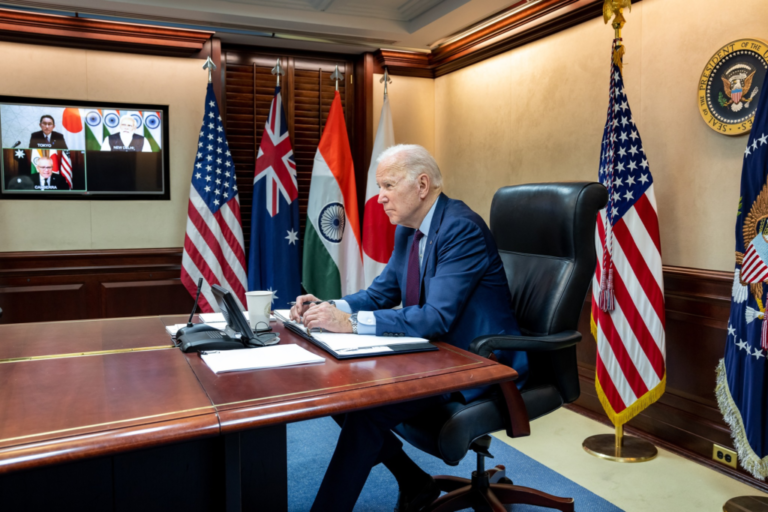
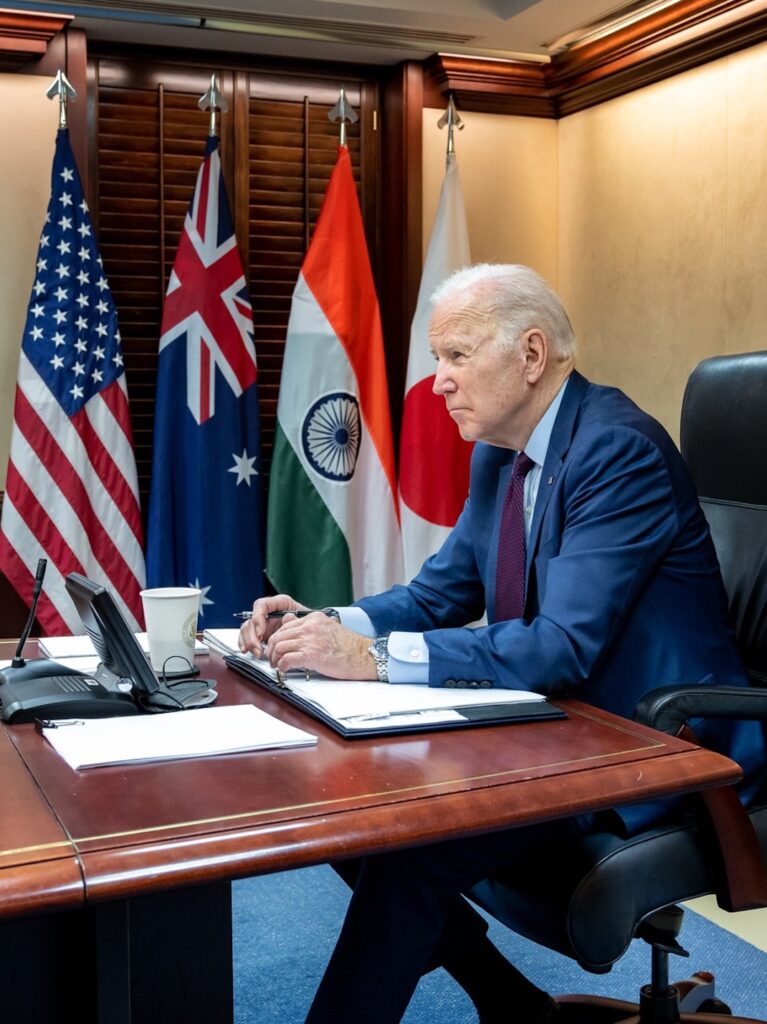
A State of the Union address is always going to be a challenge. It’s like showing up for a party in your honor where half the guests are happy to be there, and the other half want to be there only to criticize everything you have to say. Also, like all parties, there’s always a couple of drunks in attendance. The 98th such address played out to form.

It was President Woodrow Wilson who began the tradition of showing up in person to give what has become an annual rite of passage. The purpose is to report to the Congress and country on the nation’s economic and mili- tary health, past year’s accomplishments and plans and priorities for the upcoming year.

Photo Courtesy: POTUS Facebook

No surprise, President Biden led off the 2022 speech with self-congratulatory words on the nation’s accomplishments with COVID-19, the virus that has claimed more than 900,000 American lives and last year caused the postponement of the 2021 address. But he quickly pivoted to the crisis now plaguing the world.

“Six days ago,” began the President, “Russia’s Vladimir Putin sought to shake the very foundations of the free world,” with his unprovoked attack on Ukraine, Russia’s neighbor to the west. “He thought he could roll into Ukraine and the world would roll over.” Instead, said Biden, Putin met a wall of strength. “He met the Ukrainian people.” Introducing Ukraine’s ambassador, sitting as a guest of First Lady Jill Biden, the President asked for a Congressional round of applause. It was one of the few times the entire body rose in agreement.

While the President was upbeat on the strength of the Eastern European nation, Russia has been unrelenting, bombing residential area, killing innocent civilians, forcing an exodus into neighboring countries—perhaps a million or more—and even targeting a nuclear power plant endanger- ing not only Ukraine but all of Europe.

Like his predecessors, all of whom share the ups and downs that come with the job, the last year for President Biden has been no different. Inflation has made his policies easy targets for Republicans, but job creation has provided a degree of economic balance. Gas prices have risen, but unemployment is near record lows.

Democrats cheered the President’s announcement that “this year we will start fixing over 65,000 miles of highway and 1,500 bridges in disrepair,” an undertaking that will not only address aging infrastructure issues but also put to work thousands of Americans across the country.

To further bolster the economy, the President urged the nation’s industries to focus on “investing in America,” and not relying on China for parts and scores of other things that can be built right here at home. Doing so, he indicated, would address supply chain issues that have resulted in computer chip shortages affecting everything from auto manufacturing to consumer electronics to everyday home appliances.

While well from a full-throated embrace of the Green New Deal, President Biden also urged Americans to invest in more efficient means of heating and cooling homes and businesses. To incentivize this approach, he dangled the promise of investment tax credits. He also urged more research and development of wind and solar energy as a means of making the nation more energy efficient.

One big applause line from the President was his plea “to cut the cost of childcare,” an issue that is both perplexing and unaffordable in communities across the country. “If you live in a major city in America,” he said, “you pay up to $14,000 for childcare per child.” Middle class and others making less, said the President, “should not have to pay more than seven percent of their income to care for the young children.”

Colorado’s congressional delegation, not surprisingly, heard different speeches. Democratic Representative Diana DeGette, the state’s senior member of Congress, thought the President “projected strength we need during this time of international crisis.” She also applauded his call for lower- ing the cost of prescription drugs and capping the price on insulin. Senators Michael Bennet and John Hickenlooper also gave Biden high marks.

Bennet praised the President for the speech’s almost immediate call for Ukraine support and his close, a call for unity. Hickenlooper was effusive in praising the President for the way he’s united European nations, including a tra- ditionally neutral Switzerland, and other nations behind Ukraine.

Boulder Democratic Congressman Joe Neguse, who district experienced one of 2021’s massive gun violence episodes, cheered the President’s call for “universal background checks…to removing the liability protections for gun manufacturers.” Republicans sat silently or offered only tepid applause for any of these things.

But the behavior of one member of Colorado’s congres- sional delegation captured a momentary spotlight that dis- played not only boorishness but a degree of ignorance few in the body have ever put on full display. Third Congressional District freshman Lauren Boebert stood up and aped her displeasure with Biden as he spoke of veterans, including his late son Beau, who’ve contracted a form of cancer whose genesis may have come from burn pits in Afghanistan or Iraq.

As he landed on this point, Boebert interrupted Biden to yell, “You put them in. Thirteen of them.” Her reference was to the soldiers killed when a bomb exploded at the Kabul airport last August as the U.S. was evacuating Afghanistan civilians who aided America during the war. Boebert’s State of the Union outburst was just the latest in a string of atten- tion grabbing moment in her brief career.

Boebert, playing to the crowd, also wore a red dress and black shawl with the words, “Drill, Baby, Drill,” on it. Her district includes areas where fossil fuels have been extracted for years and where her husband earns his living. Republican Congressman Ken Buck also echoed similar sen- timents. “We should be producing natural gas in Colorado,” said Buck.

While Democrats gave the President plaudits for his speech, there was also a subdued reaction from his party for his omission of anything on voting rights, an issue that is being exploited across the country by Republicans. To date, 19 states controlled by Republican legislatures have passed 33 laws that will make it harder, especially for Black and Brown voters, to cast a ballot in November.

Pueblo native sets her sights on County Treasurer’s position

Women in March

Photo courtesy: Kim Archuleta Website

You hear it so often from expats who’ve made the metro area home but whose roots are firmly planted a hundred miles to the south. ‘There’s just something about Pueblo,’ they say. Many an expatriate Puebloan will also say, there’s just no place like it.

Once the industrial capital of Colorado with a steel mill that pumped out everything from rail to wire and employed as many as 15,000, Pueblo today continues to reinvent itself while steadfastly holding on to its special blue collar charm. Reinvention also doesn’t stop there, especially for one of the town’s natives who sees herself in a whole new role in just a matter of months. Her name is Kim Archuletta, and she wants to be Pueblo’s new county treasurer.

The ’Steel City,’ once the name many people used to describe the town, still relies on the mill for bolstering Pueblo’s economic foundation. But the city has evolved. It’s now more Goldilocks than heavy metal. “It’s small,” said Pueblo native and aspiring politician Archuletta, “but not too small.” It’s also a place where extended families aren’t too far extended. Her own family, parents, Mack and Peggy, brother, grandmother and two children all live there. A fifteen minute drive in any direction is all you need for an Archuletta family reunion. “We’re a very close-knit family.”

Archuletta has had an eclectic and circuitous career path. But for the moment, there’s something just down the road that she has her eyes set upon. And for a person with an appetite for new challenges and the energy to pursue them, it’s not a destination she ever imagined she’d be charting. But for those who know her, the next stop is one that should surprise no one. That stop is elected office, more specifically, becoming the county’s new treasurer.

Armed with a degree in business and finance, she’s been a banker, managed budgets for the school district, overseen its facilities and spent a few years in the canna- bis industry, an industry some might look askance at. But Archuletta makes no apologies nor excuses for what some might think about her time in the industry. It, after all, has been legal in Colorado since 2012 and is an important and growing component in the city’s and state’s economy.

Archuletta touts her time in the industry as invaluable. “I can honestly say that it was the best business experience that I could have ever received—and better than any college course could have taught me.” Cannabis, today, is quite liter- ally a growth industry in Pueblo.

Today Archuletta’s a deed preparer in the county trea- surer’s office, an office, coincidentally, she hopes to lead after November. Yes, she’s a candidate seeking to replace the person she reports to every day. “It’s nothing personal,” she said. “It really isn’t.” But she admits that it can be “a little awkward.” Still the neophyte candidate knows to sepa- rate her political goal from her daily duties. At work, it’s all business. Any campaigning is done on her lunch hours or off duty time. The interview for this story was conducted over the weekend.

Whether she wins the June 28th primary and moves on to November, said Archuletta, won’t change her motivation for entering the race. To her, it’s about equity and opportunity. “Everyday, when I get to the office, I walk down the hallway and there is a wall of all the elected officials,” she said. “Every single picture is a man. I take note of it and wonder why are there no females?”

The treasurer’s office is responsible for collecting taxes and dispersing the money that funds “rural fire, water, sanitation and schools,” Archuletta said. It’s also the agency that invests that money. She thinks her finance and private industry background give her the insight to grow Pueblo’s portfolio.

“During COVID,” she said, “interest rates were really low, and our rate of return reflected that. We’re now seeing an increase that will benefit our portfolio.” She believes she has “a good idea for how to use excess funds and make sure we’re taking advantage of short-term interest.”

Archuletta also envisions making the treasurer’s office more people friendly, including using technology that would allow customers to conduct business on-line or provide drive-through options instead of having to park and come into the building. COVID changed a lot of things, she said. The office, said Archuletta, should change to reflect the times. Adding a woman’s photograph to the wall of elected officials at the county courthouse, she said, would be a good a step in the right direction.

While Archuletta speaks with a full-throated confidence today, there was a moment in her late teens that might have derailed what has become a successful career. “I was terrified when I got pregnant,” she recalled. She was nineteen and early into college. “It was scary,” because still a teenager, the responsibility of being a mother, raising a child was infathomable. But with her parents at her side, along with the baby’s father, “we all did it.” The baby, Ashlee, is now 25, married and working as a probation officer.

Archuletta, a surname spelled with two ‘t’s’, is nothing if not confident whether she moves on to the general election in November or not. There are still plenty of things to keep her busy, not the least is being a mom. She still, after all, is raising a pre-teen. She also has a number of other civic obligations, one of which is chairing the board of the city’s retail and medical marijuana licensing authority. Her time in the cannabis industry, she said, was the perfect foundation for the job.

Our hearts and minds on war and peace

David Conde, Senior Consultant for International Programs

The gut-wrenching pictures and sounds of the invader and bully pounding on the innocent people of Ukraine right in front of our eyes makes people around the world want to go to their aid and take the Russians out. The call for a no fly zone and even troops to cancel this animal rises out of the emotional roller coaster caused by innocent families and their children killed and displaced for no credible reason.

After all, NATO sits there, next door, with the power of its vast armada that can take out this monster only a few miles away. The argument encourages the United States to lead, as many fancy it to be, the world policeman, and do the things it has done in other parts of the globe.

The dilemma this time is that we are dealing with the second most powerful nuclear armed nation and one that is erratically trying to reestablish its former relevance in world affairs. A direct military challenge to Russia risks the threatened use of ICBMs on land and sea and the use of armaments left as the principle legacy of the old Soviet Union. That enables the tyrant to temporarily keep humanity at bay while he acts out his criminal behavior.

In my years at Horace Mann in North Denver I frequently was faced with challenges to fight by a gang or an individual egged on by his group. My instincts told me to take them on as they were making my life miserable. My intellect told me to hold on and wait for the right moment when I had the advantage. I did both as children do when their thought processes are immature.

One of the major characteristics of building civilizations is the development of reason as a method of organizing our life. That does not change the fact that we are emotional beings that instinctively react to what we perceive around us and how we are affected by it.

Those are two principle sides of our nature that require some sort of balance that can keep us on the road to our destiny. It is true, however, that sometimes we do get out of balance to such extreme that the only perceived solution is war. That is where we are right now. The drums of war are sounding for the defense of Ukraine. For freedom loving people and for the sake of humanity it also appears to be the right thing to do. Yet, when we step back and think, we realize that we should not solve a problem by creating an even greater one.

We need to achieve balance on the issue that looks to help Ukraine survive short of making war on Russia as well as develop a solution that will eventually defeat a tyrant that leads a diminished country looking to get back in the game.

This is one of the moments when our hearts are saying one thing and our minds another. Both are valid expressions of our culture and our nature. There is no need to draw a line between the two. Rather, we should use everything we know and are learning to protect the weak and punish the aggressor.

A civilized world will find a way and balance to do this. The unity the free world has achieved in dealing with this aggression is essential to an eventual solution.

It is a question of war and peace. It is also a question of our hearts and our minds.

The views expressed by David Conde are not necessarily the views of la Voz bilingüe. Comments and responses may be directed to news@lavozcolorado.com.

En mi corazón para siempre hermano

La Voz Staff Photos

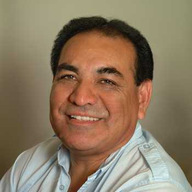
The kindest man I’ve ever known died last Saturday, my oldest brother, Orlando. A hardworking man who only looked for the good in others, never held a grudge, forgave easily, my hero.

My memories of ‘Orlie’ were many. He let me tag along on his dates with my now sis- ter-in-law, Emily. He took me to carnivals, drive-in movies, movies, picnics, later, Disneyland and more. He loved all music, that of his generation from Elvis to Johnny Cash to Motown and New Mexico’s own Al Hurricane. Often, I accompanied him in his red and white ‘54 Chevy as he sped through Costilla’s main roads, with the radio blaring Elvis, the Everly Brothers or Johnny Cash. As I literally stood behind him at age 4 or so, with windows rolled down and my hair blowing in the wind, I knew I had the coolest brother ever.

La Voz Staff Photo

He was 16 years old when I as born and because dad worked out of State, Orlando quickly filled dad’s shoes as the man of the house. He worked alongside mom in planting crops that helped kept his siblings fed. He also worked the northern New Mexico and southern Colorado fields of potatoes and lettuce that earned him money to buy a car. He bought me a beautiful wooden high chair as a toddler, that I still have. He was an honorable man who always paid his way.

I was his shadow and he showered me with atten- tion and because of his love of music, I was exposed to every possible genre of music. When I think of the happiest person I ever knew, he wins that honor, hands down.

He attended business college in the ‘Duke City,’ as he called it, married and moved to California, but we never lost our special connection. To family and to the many friends who knew him, he loved you all. Mama and daddy, you raised an honorable man. He was a special man who was proud of his wife, his sons Gary, Daryl and Nathan and his beloved grandchildren.

My brother Orlando, you were like no other. You were a true man of God in your actions on Earth. You’ve left a lasting impression on so many, along with three of the most respectful sons. Your time on Earth expired on Saturday, but your mark of honesty, kindness and love will never die.

Vaya con Dios Orlie, you were a prime example of what our Creator wants in all of us. En mi corazon para siempre.

Alternative housing available in Pueblo

A recurring theme in Colorado and so much of the country is the skyrocketing cost of housing. As a result, a Pueblo company says that while it won’t solve the problem of expensive home ownership, it may lessen the pain for at least some people in the market.

Photo courtesy: IndieDwell.com

The company is IndieDwell and it says it can put families of different sizes in good quality homes for a price that might make home ownership a bit more affordable. IndieDwell hung its shutter in Pueblo nearly two years ago with the promise of not only good paying manufacturing jobs but as many as 160,000 square feet of new housing a year. Additionally, if nothing unexpected upsets the economy and housing demand remains high, which it should, IndieDwell is confident that jobs will double along with the number of new homes built.

The company’s homes may seem unorthodox at first. They should. They’re built from shipping containers. Of course, IndieDwell reworks the structure from top to bottom with high quality building materials, including steel, before calling it a home. But the finished models resemble cottage homes that would blend into any neighborhood in America. The company says its biggest home is its four-bedroom model.

The company’s first Pueblo home, a 960 square-foot model, was just unpacked—each home comes in prefabricated sections—and now sits on Pueblo’s east side. The model’s selling price is $270,000. It may seem high but it’s actually nearly ten percent cheaper than a similarly sized Pueblo home. In this case, it’s a savings of approximately $15,000.

IndieDwell’s models can be shipped in containers, company General Manager Ron Francis told The Pueblo Chieftain. If a buyer chose a Model 9, they would receive it on their lot in three containers. Francis told The Chieftain that IndieDwell’s concept will dispel any preconceived ideas about modular housing. Each home has concrete siding and is energy efficient. And when the keys are turned over to the prospective owner, the home will blend right into the neighborhood.

IndieDwell said it chose Pueblo for its manufacturing location because of the city’s demand for affordable housing and its available workforce, one that it hopes to keep busy. IndieDwell General Manager Ron Francis said it’s important that the company’s integrity is built into every unit that it builds. And in order to do right by the customer, the company will do right by its workers. “We deliver dignity not only to our customers but to our teammates as well.”

An IndieDwell news release estimates that at full strength, Pueblo will have an additional $16 million in worker salary pumped into the local economy. But the benefits of the operation will flow well beyond Pueblo. With Colorado’s housing supply falling well short of meeting demand, IndieDwell anticipates to construct between 300-1,000 affordable homes each year in the state.

IndieDwell’s had a number of locations to choose from before deciding on Pueblo. The city, like so many across the state and country, also offered the company incentives to relocate. The city, through its half cent fund for economic development, primed the pump for IndieDwell with a city council-approved $1.6 million lure. In return, the company promised a commitment of good paying jobs. “We are committed to a highly diverse, inclusive and equitable workplace,” said Francis. “We strive to hire from the community based on aptitude and desire rather an experience.”

Worker pay will average just over $38,000 annually plus benefits. All tolled, the presence of IndieDwell will translate to a $35 million economic impact to Pueblo. It’s a big win for a city with the highest unemployment rate for any city along the Front Range. Francis said IndieDwell’s plan is to meet market needs with a quality product and that includes the right kind of workforce. “We encourage people to visit our website to learn more about our open positions as well as our mission, vision and values.” Whether it’s a skilled trades person or an entry-level applicant, Francis said that if they meet the company’s standards, they will get consideration.

For more information on the company including how to apply for jobs, visit IndieDwell.com or call 719.716.9112.

Putin wants to turn back the clock

David Conde, Senior Consultant for International Programs

My nephew Joey was part of the First Marine Division that invaded Iraq. Although he did not come back in a body bag, he suffered the aftereffects of an experience that led him to die one morning on I-25.

Joey was part of a 177,194 (130,000 American) coalition force that went to war with Iraq on March 20, 2003. The war was declared a victory on May 1st by President George W. Bush aboard the carrier USS Abraham Lincoln off the coast of California.

Then the real military difficulties began as the relatively small force used for the invasion was not enough to hold the country or stop the violence that followed. An example of this were the house to house battles that began a year later in Fullujah that required a surge in troops just to bring some measure of control of the Sunni city.

After 19 years and 4,431 dead we are still in Iraq trying to figure out how to get out without disestablishing the country and the surrounding regions. President Biden quit Afghanistan with an immediate evacuation of all American presence, but has not done the same with Iraq.

Russia finds itself in the same position militarily as the United States and its partners at the beginning of the Iraqi invasion. A relatively small force of less than 200,000 is attempting to conquer Ukraine with advanced weapons and technology that may very well facilitate the invasion, but the aftermath is another thing.

Of the 11 countries that border Russia, 6 (Finland, Belarus, Azerbaijan, Kazakhstan, Mongolia and China) have histories that render them somewhat less threatening to the Putin-led country. Three (Estonia, Latvia and Lithuania) are part of NATO and pose a territorial danger that is harder to define because of the alliance. The other 2 (Ukraine and Georgia) are prime targets for Russian imperial ambitions because they are trending away from the Russian line and stand alone in their quest. President Putin in his ambition to recreate the old Soviet Empire has already taken pieces of these countries and expects to take more or at least create regime changes to his liking. He is doing it again in Ukraine. The goal appears to be to take the capital and use it to pro- mote a change of government to his liking.

Both the United States (2001-2021) and the Soviet Union (1979-1989) tried to do just that in Afghanistan and failed. The invasion of Ukraine does not offer better prospects for the Russians because the major challenge is in governing a country that has well organized democratic institutions and a world coalition of countries that are supporting its resistance with arms, money and other resources.

There is a question of whether Russia intends to take all of the country or just the parts Putin needs to accomplish his goals. The unexpected defense put up by the Ukrainian army and the subsequent militant citizen guerrilla actions will create a great number of Russian casualties and require a much larger occupation force.

The Ukrainian people will not allow the criminal behavior of the Russian leadership to stand without a challenge. That challenge is costing many lives on both sides as well as the standing of the Russian bear that does not know when to quit. The body bags brought back from the front will bear testimony to the ill-founded adventure of a man that seeks to have things as they were. We in America are well acquainted with the tendency and its price.

The views expressed by David Conde are not necessarily the views of la Voz bilingüe. Comments and responses may be directed to news@lavozcolorado.com.

Russia’s new Cold War begins in Ukraine

0

By: Ernest Gurulé

For weeks Russian President Vladimir Putin reassured the world the military buildup on the Ukrainian border was nothing more than an exercise, that the 100,000 Russian troops, tanks, squadrons of warplanes, missile launchers and live fire were sim- ply self-defense drills in the event Ukraine ever decided to invade Russia.

Then suddenly last week, following a rambling and bellicose speech that included references to both Naziism and genocide occurring inside Ukraine, Putin reversed course and began his war. His speech and his militarism puzzled and mystified both historians and political scientists who argue his incursion into Ukraine is part of grander plan. They’ve also labeled his pre-war speech equal parts fantasy and fiction.

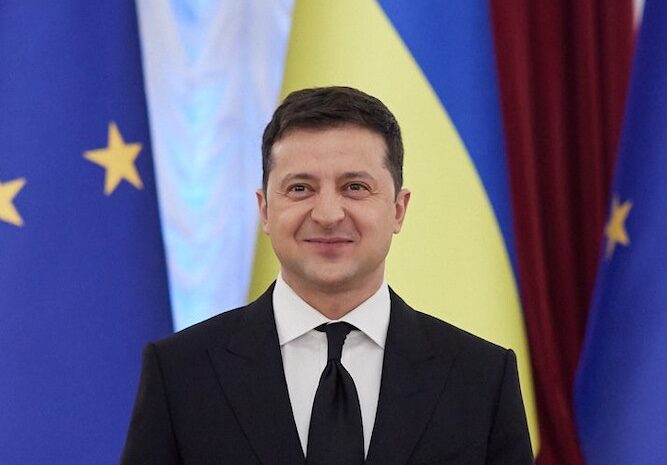
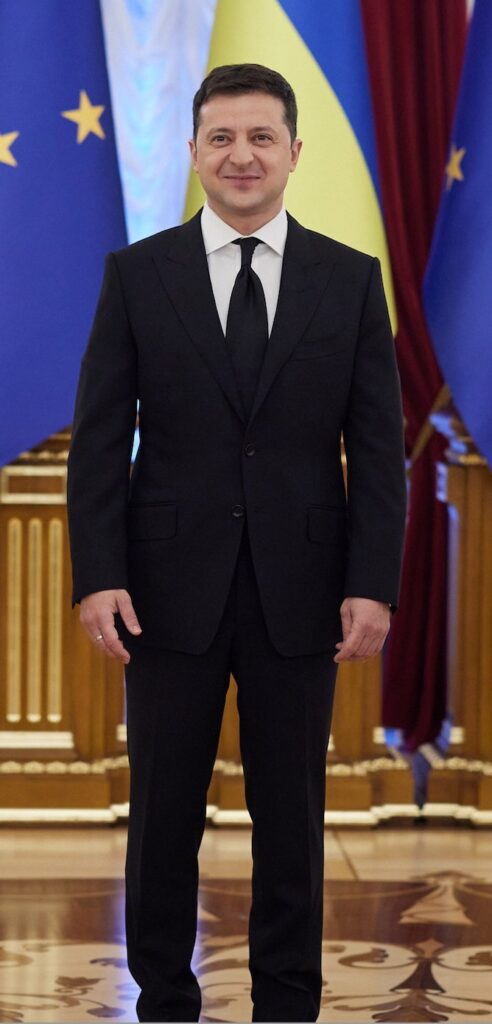
Photo courtesy: Volodymyr Zelenskyy Twitter

It has been a week since Putin’s military forces dropped the pretext of ‘drills’ and began their invasion. Tanks have rolled into several Ukrainian cities, Russian troops have attacked both civilian and military sites and hundreds of deaths, Ukrainian military and innocent victims, continue to mount. So too do those of Russian soldiers.

Six thousand miles from the mayhem, Denver healthcare writer Markian Hawryluk can almost hear the explosions. His family’s roots go back centuries in the region and extended family still lives there. “It’s an attack on our identity,” said Hawryluk. “Basically, what Russia is saying is that Ukraine hasn’t the right to exist.”

But historically speaking, without Ukraine there might not be a Russia. Ukraine in one form, one name or another has existed for more than a thousand years. In the 10th and 11th centuries it was the largest and most powerful state in Europe. Russian culture actually began in Kyiv, Ukraine’s capitol.

Putin’s war on Ukraine constitutes the most aggres- sive military operation in Europe since World War II. For Hawryluk’s family it is also a sad and nightmarish reminder of Europe’s darkest days. “My grandparents and parents fled in WWII,” he said. As Hitler was collecting nations in his march across the continent, Hawryluk’s family, along with countless others, fled leaving their homes seeking refuge wherever it could be found. For his family, the flight ended in Canada. But to Hawryluk and his family, Ukraine is never far away.

He has visited the country numerous times and remains close with family still there. Of course, his latest chats have been darkened by the shadow of war. “They’re showing incredible bravery and saying, ‘we’re not giving up, we’ll stand and fight.’” But they’re also worried about their children. “There’s no safe place to go. People are struggling with what to do next.”

The healthcare writer also laments what Putin’s army may do to scar the country and its centuries-old architec- ture, especially in Kyiv. “You see churches built in the 11th and 12th centuries…they’re things that can’t be replaced.”

While Putin has promised his incursion will be mini- mal and antiseptic, cameras are already recording carnage and images of subway tunnels teeming with people seek- ing safety. It’s also captured graphic imprints of war’s real cost, victims—lifeless bodies of young, old, men, women and the rubble of buildings that only days ago many called home. But video is also showing a resistance and resolve of Ukrainian men and women determined to fight for their country no matter the cost.

The world has also registered its unmistakable disdain for Putin’s actions. President Biden has united an array of countries, from Europe to Asia to Australia and New Zealand in imposing sanctions that have made it difficult for Russia’s government and businesses to conduct business. “The ruble cratered, the stock market froze and the public rushed to withdraw cash on Monday as Western sanctions kicked in and Russia awoke to uncertainty and fear over the rapidly spreading repercussions of President Vladimir V. Putin’s invasion of Ukraine,” The New York Times reported.” Other nations have barred Russian airlines from their air space; Germany suspended the Nord Stream Pipeline bringing Russian natural gas to Germany and also prepared shipment of a thousand anti-tank weapons and 500 Stinger missiles to Ukraine.

World leaders say the initial economic squeeze from the sanctions are far from over. Without the capital to wage his war, replenishing war materials, including basics like fuel for tanks and other vehicles and food for his troops, Putin will have to use every bit of imagination to continue his crusade.

While most world leaders have condemned Putin, America’s former president has gone in another direc- tion, praising him as ‘savvy’ and ‘a genius,’ and blaming President Biden for Putin’s war. Trump’s puffery is reminiscent of similar praise once ladled on other despotic leaders, including Saddam Hussein and North Korea’s Kim Jong Un. Trump’s fascination with dictators was summed up by one conservative columnist who wrote tersely, “Trump’s brain isn’t normal.”

The same point is being made about Putin by intel- ligence experts and scholars. “Historically,” said Denver’s Dr. Sheila Rucki, “he’s been an irrational actor.” The Metro State University Russian expert called the invasion “half-cocked” and “not much of a plan.” She, like others, also wonders about Putin’s state of mind, especially following his rambling preinvasion speech. “There were reports that his behavior had changed,” she said. Photos of a recent meeting between Putin and French President Macron in which each was oddly seated at opposite ends of fifty-foot table to discuss Ukraine also struck watchers as odd.

Rucki (pronounced Rooski) said while Putin has tar- geted Ukraine, its neighbors have taken notice fearing his ultimate goal may mean returning the old Soviet Union to its former sphere. NATO has also recently invoked its mutual defense statute, she said. “It’s something it’s never done before and suggests people are nervous about the end game.” It’s also elevated anxiety based on Putin’s unpredictability and Russia’s immense nuclear arsenal. Not coinci- dentally, Putin recently put Russia’s nuclear forces on alert.

More immediately, Rucki wonders and worries how far Putin will prosecute his war. “It reminds me of Sarajevo when Yugoslavia broke up. It was decimated in the civil war.”