




Home Blog Page 208

When COVID is not a political issue

0
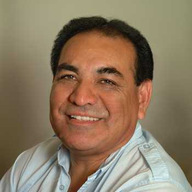
David Conde, Senior Consultant for International Programs

I went to Mexico and got a front row opportunity to compare the everyday responses to vaccination and mask wearing to protect against the contraction of COVID. In the U.S., at home the wearing of a mask is hit and miss depending on federal and state rules and those set by businesses.

People tend to wear a mask properly only when they have to, unless they are persuaded not to wear one as a political statement. There are necessary extreme requirements such as going to a Denver Nuggets game where you have to provide proof of vaccination in addition to taking your temperature, to being outdoors without a mask requirement.

To be sure, Mexico identifies a set of situations caused by COVID that triggers business responses. They use a “streetlight” system made up of four colors: red that signals for only essential services, orange that adds some non-essential businesses, yellow that allows all type of businesses to operate but some at a reduced fashion and green that signals all clear.

I expected to see everybody masked up at the airport in Mexico but did not expect to see everyone wearing a mask everywhere. I thought about the confusion back home caused by changing guidelines and most of all by those that feel that taking the vaccine and that wearing a mask amounts to a loss of freedom as Americans.

There is a feeling among a significant number of people in the U.S. that facing COVID without taking the vaccine nor wearing a mask is the way of a patriot. The overwhelming majority of these types are the ones filling the hospital beds and dying.

This grasping at straws is part of a bigger picture that goes far back to the Declaration of Independence and its language about the grievances against the British crown as the reasons for wanting to separate. Not taking the vaccine and not wearing a mask amounts to a statement of separation. It goes hand in hand with the attacks on constitutional government and the Constitution itself. Patriotism is the stuff of heroes that fight for something bigger than themselves and thus come to represent the very land from where they came. They are there to turn the page to the next segment of the national experience, not to turn back the clock.

I was intrigued by the Mexican response to COVID and decided that instead of taking a flight to Mexico City from where I was, I would drive. I spent time in the beautiful Mayan city of Merida, the countrysides of the States of Yucatan, Campeche, Tabasco and Veracruz before coming to Puebla and Mexico City.

Everywhere I went, the fight against COVID was a special theme that brought people together and wearing a mask was its expression. You could even see people driving by in cars with their masks on.

Just like the United States, Mexico is a land of contrasting ideas and ideals about running a government and managing a society. Just like we do, they have major problems of their own. Yet, like 9/11 in our country, Mexico’s response to COVID is a unifying symbol of national character. There is no political right, center or left when it comes to combating the virus.

Both countries look to accommodate mandates with business, medical and educational needs. However, it is the response of its people where the differences become pronounced.

I did see a few people without masks. They were part of the tourist crowds.

The views expressed by David Conde are not necessarily the views of la Voz bilingüe. Comments and responses may be directed to news@lavozcolorado.com.

Convention Center is ‘Open for Business’

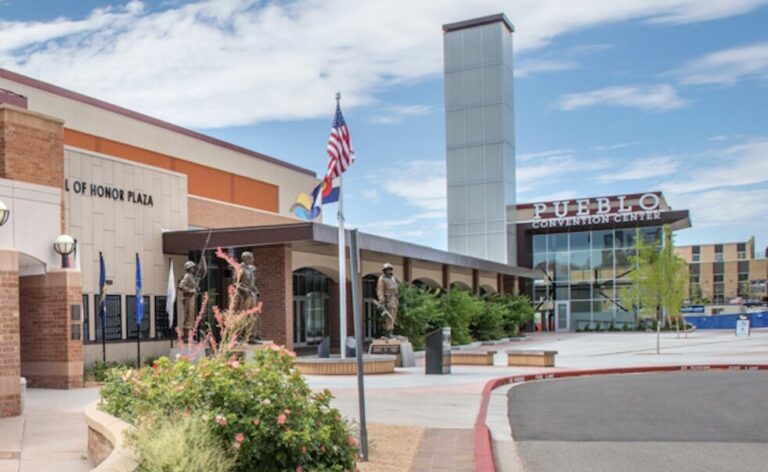
When describing an expert and want the easiest, but most accurate figure of speech to convey the image, a handy metaphor rarely fails. It conjures up a vision that simplifies, yet perfectly describes the person you’re talking about. Such is the case for Kevin Ortiz, General Manager of the Pueblo Convention Center. ‘When you want to know about wood,’ it goes, ‘ask a carpenter.’

Ortiz is that man. When you want to know about Pueblo and everything it has to offer, he’s the ‘go to’ guy. The native Puebloan has been pitching his city to any group, organization or company exploring convention sites whether it’s for reunions, anniversaries or, well, conventions.

But like his counterparts all across the country, the last couple of years have been multiple seasons of discontent. “Obviously, it was a very trying time for the event industry,” Ortiz said in a recent phone interview. “We were in unchartered territory.” The common enemy to ‘business as usual’ was a virus, COVID-19, followed by its progeny variants, Delta and, more recently, Omicron.

In March 2020, just three months after it first appeared, COVID had metastasized almost surrealistically, growing from a regional health issue first discovered in Wuhan, China, and growing into a storm of almost cataclysmic proportion. In just a matter of weeks, the virus had the world in a death grip on a scale comparable only to 1918’s Great Influenza, another virus, one that killed as many as 50 million people worldwide.

Before COVID, Ortiz was counting on a big year for Pueblo and the chance to shine a light on his hometown. But suddenly, the blowtorch year he expected dimmed to an anemic flicker. When the convention center’s phones rang, it was often a cancellation. And while things weren’t totally shut down, said Ortiz, other issues—capacity restrictions and social distancing—turned big paydays into big disappointments or worse, big nothings.

But dark days aren’t anything new to Pueblo, said Ortiz. The city has seen tough times before. Even today, Pueblo has the highest unemployment rate in the state. But this is a town, he said, where truly, the show must go on. And does.

With a combination of imagination and determination, said this son of Pueblo, “We were able to survive.” “One thing about Pueblo, one thing I love so much,” Ortiz boasts, is that “when tough times present themselves, this community really bonds together to make things work, make things happen.” Knowing the stakes and squeezing every possible cent out of state and federal grants, the lights stayed on and, a slow and steady rebound began.

Ortiz said that 2021 was “a fantastic year…events rebooked or rescheduled.” Last summer’s bookings even set convention center records. “July, August and September we had our best financial months in the last six years.”

Everything clicked. “We met our budget…it was a big win.” The ship was righted.

Pueblo, a town that is known as “The Home of Heroes,” for its inordinate number of Congressional Medal of Honor recipients, often gets military groups to convene. It also serves as an ideal landing spot for fraternal gatherings or farm and ranch organizations that dot the southern Colorado landscape.

Still, for outsiders who may not have considered Pueblo for a convention, one might ask: where’s the sizzle in Pueblo? Well, that’s Ortiz’s cue. Without blushing nor hint of vanity, Ortiz clears his throat for the pitch. “We have competitive prices; we have good customer service; we have the life that people are looking for when attending events.” The big finish and without an ounce of conceit, “On top of that, our local cuisine is the best in Colorado.” Mexican and Italian food in Pueblo, he said, can’t be beat. And for good measure, he’ll also tell anyone that Pueblo’s Nature Center, Riverwalk and Lake Pueblo are perfect for visitors and their families.

Additionally, Ortiz said Pueblo’s convention center is located adjacent to the city’s biggest hotel, The Marriott. But there is a cluster of other good places to stay, all within walking distance to both the convention center and the city’s downtown. For good measure, he also says downtown offers both culture and nightlife.

Ortiz said the convention center operates as well as it does with the help of a great sales team “that is constantly looking for local and national business.” The convention center, like so many others, also belongs to a consortium of associations “that help promote our community and facility.” In addition, he said, the city’s Chamber of Commerce and the Latino Chamber of Commerce help tremendously. Its success, he said, is a team effort.

Pueblo, said Ortiz, is open for business. “Once we bring ‘em down, we have a very good chance of bringing them back.”


Student of the Week – Giovanna Martinez 

0

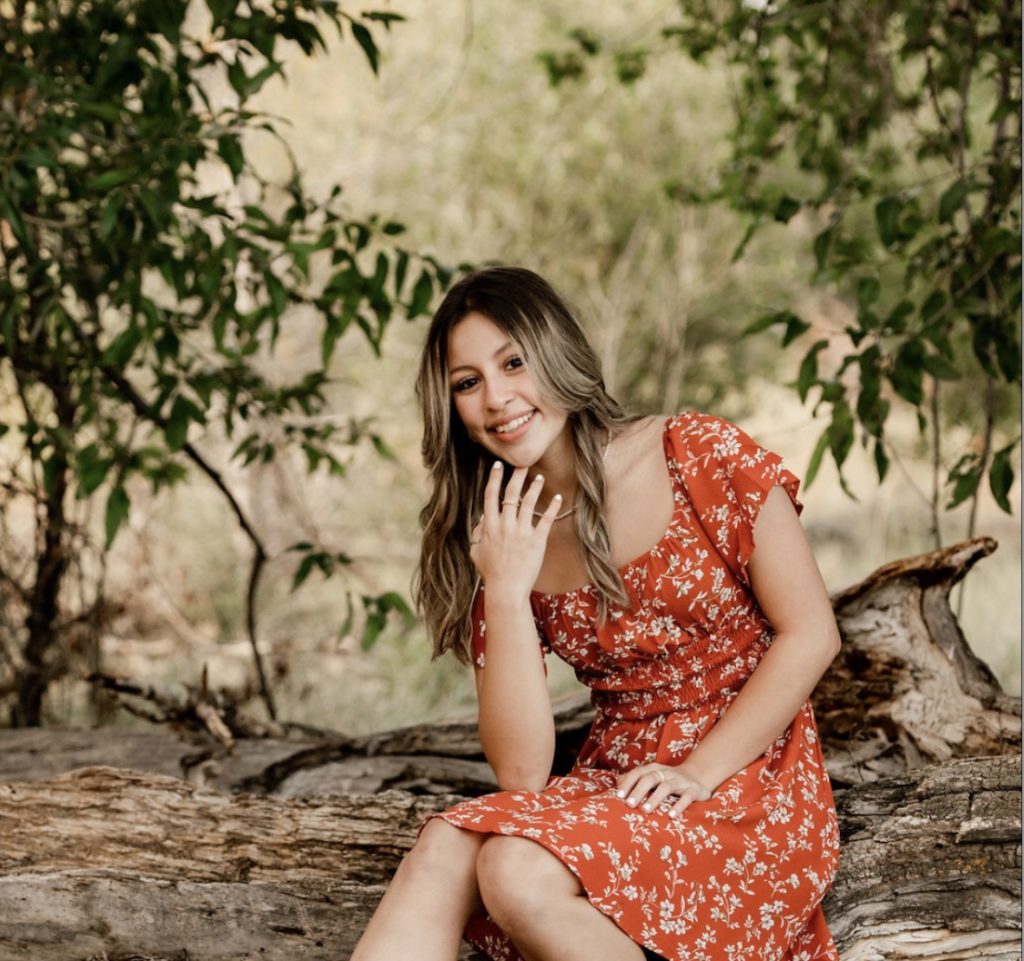
Giovanna Martinez – Centauri High School

Profile

Giovanna Martinez is a high school senior at Centauri High School in La Jara, CO who currently holds a 4.138 GPA. Martinez is the recipient of Women in Engineering National Award and has been recognized by the College Board for hispanic students and rural students. Martinez is part of Health Science Student Organization (HOSA) and is in Studnet Council, the National Honor Society, is part of the Science Club and is on the varsity volleyball team.

Photo courtesy: Giovanna Martinez

Favorite Book: The entire Harry Potter book series by J.K. Rowling

Favorite Movie: The Maze Runner – James Dashner

Favorite Subject: Chemistry

Favorite Music: Zach Bryan

Future Career: Physicians Assistant

Hero: My mom, Nereyda Martinez

Favorite Hobby: Volleyball

Favorite Social Media Follow: TikTok

Words to live by: “The only way to fail is not to fight. So you fight until you can’t fight anymore.” – Amelia Shepherd

Community Involvement: Martinez has organized auctions for fundraisers and helped coordinate dinner for families in need. She has also help coordinate a coat drive for La Puente Soup Kitchen.

Why is Community Involvement important? “Because giving back to others is a part of what makes life special. It is our job to show compassion and help those in need.”

If I could improve the world I would…

“Strive to make healthcare more accessable to others despite their income.”

College of choice: Martinez would like to attend either the University of Colorado at Boulder, the University of Colorado at Denver or the Colorado School of Mines

Pueblo economy rebounding but still with work to do

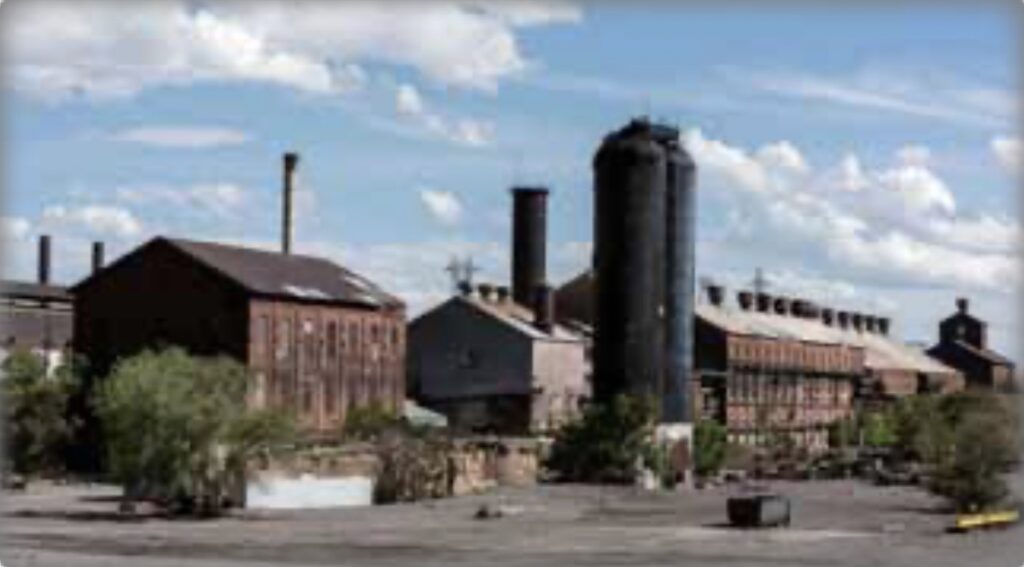
There was a day, and Pueblo and southern Coloradans still talk about it, when the city’s economic climate was sunny almost every day of the year. And why wouldn’t it be? The steel mill, an industry that symbolized Pueblo, was cranking out enough heavy metal to employ as many as 10,000 workers, some of whom traveled from as far away as northern New Mexico and eastern Kansas for the good paying jobs. But that memory is, as they say, ‘so 20th century.’

Photo courtesy: Library of Congress

Pueblo, Colorado’s city with broad shoulders, say its boosters, has everything an employer might want or need to set down roots and make it home. They boast about its great weather—the town is often called ‘the buckle’ of Colorado’s temperate banana belt. It’s also geographically situated next to an interstate highway and with an abundance of rail ready to move just about anything to or through the state and across the country. Yet, it struggles.

The most recent employment data show Pueblo with the state’s highest unemployment rate at 6.4 percent, a figure nearly twice as high as some Denver metro area cities. The only metro area community even close to Pueblo’s jobless number is Adams County whose jobless rate sits at 4.9 percent. Still, at 6.4 percent, the city is a long way from its 2021 high of 9.3 percent. The state average is 4.8 percent.

But Pueblo is not a ‘half-empty’ kind of town, said Jeff Shaw, CEO of the Pueblo Economic Development Corp. Shaw, a Pueblo native, sees opportunity in every direc- tion for the city. “There are still a lot of opportunities for people to be hired and get back into the workforce,” he said in an interview with the Pueblo Chieftain. “Entry level jobs,” for example, “have doubled in pay in the last two to three years.” Some local employers are offering up to $18 an hour plus benefits for entry-level production line and packaging jobs.

Pueblo has found good success in offering economic incentives to companies to move here. Money generated from Pueblo’s half-cent fund for economic development makes it possible to, if not lure them then at least get companies to take the time to learn what it has to offer.

In October, Pueblo and Ecological Materials, announced plans for the company to move its operations from Arizona to Pueblo. The company recycles plastics into materials that can be used in road building. It will employ 17 full time workers with average wages of $44,800 plus benefits.

Also in an October 2021 news release, PEDCO announced that Boreas Campers, a maker of custom, off-road and off-grid camper trailers will soon be calling Pueblo home. In heralding the move, Boreas owner, Matt Reichel, cited Pueblo’s “access to the outdoors, and the bustling downtown” as significant reasons for its move. The company will add 29 full-time workers to Pueblo’s economy at a ‘pre-benefit’ salary of $56,900.

Armstrong Steel also announced in October that it will be relocating from Denver and opening a 200,000 sq. ft manufacturing facility in Pueblo in 2022. In making the announcement, Armstrong CEO, Ethan Chumly, cited Pueblo’s workforce and economic environment as key reasons for the move. “Armstrong’s Pueblo factory is a logical and necessary step toward strengthening the company’s competitive position in the marketplace,” said Chumly.

Armstrong Steel will hire 51 full-time workers at an average salary of $51,400 (pre-benefit). Part of the lure for the steel maker was Pueblo’s $1.2 million dollar economic incentive, money dedicated to business expansion into the city. The money requires approval by the Pueblo City Council.

The steel company manufactures pre-engineered metal buildings and has been in business for fifteen years. Its products include everything from metal sheds, barns, commercial and religious buildings. Its products have been shipped across the United States and to countries around the world. The company said it will be ‘fully operational’ in 2022.

The road to “Civil Rights” for a majority

0
David Conde, Senior Consultant for International Programs

In 1966 a Tucson AZ report at a conference of the National Education Association task force on education in the Southwest described the Latino community as an “invisible minority.” The powerful publication along with the United States Office of Civil Rights reports on teacher expectations of Latino children in the schools helped to spark a national effort to make Bilingual Education a priority.

These activities reinforced the development of the Chicano Movement that sought social, economic and political change in the country. Most of all, the Movement was about forging space in the national landscape so that the community could find place and partnership in the pursuit of our American destiny.

The rebuilding of ethnic pride and the image of uniqueness formed the inner part of the search for a living identity. The challenge was to take a course of action that would wipe away the clutter of a confused world condition and manifest again an image that had been buried by history.

Throughout the process however, the community never saw itself in any way other than as a minority looking for equality within the context of the Constitution. The will of the majority was always the point of departure to advocate adjustment to our social contract.

What happens however, when certain elements of the majority go on a grievance path and seek to reassert the civil rights they already enjoy? We can only characterize something like that as an overkill that creates institutional confusion and instability.

August 15, 2017 saw demonstrations by regimented White groups in Charlottesville, Virginia that sought to violently reverse a decision to remove the statue of General Robert E. Lee. While this type of intervention has been part of our historical reality, it is what happened next that changed the nature of its meaning.

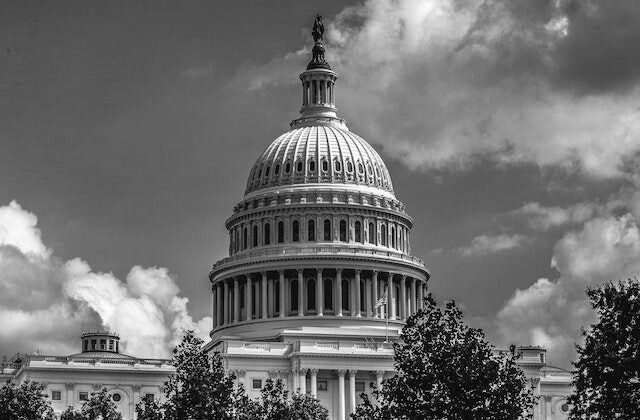
The action found a champion in the President of the United States who expressed sympathy for the actions despite the fact that they were violent and had caused a death. The “some very fine people” comment by President Trump implied that the racist oriented groups he supported were in their right to do what they did. This set the tone for the Trump years in the White House as his rallies featured symbols of the Confederacy and the presence of the guardians of White superiority. The loss of the presidency at the ballot box seemed to accelerate a kind of violent civil rights movement by Trump followers that got as far as invading the Capitol in the fashion of the Boston Tea Party against the British and more in order to overthrow a presidential election.

It appears that the same tone is continuing in the cam- paigns for the midterm elections and the farther away 2024 contest for president. For example, the former President’s last major speech in Arizona doubled down on this very concept. When speaking of COVID he said: “The left is now rationing lifesaving therapeutics based on race, discrimination against and denigrating, just denigrating, white people to determine who lives and who dies. If you’re white you don’t get the vaccine or if you’re white you don’t get therapeutics.”

This says it all. The advocacy for White rights is a clear appeal to a type of civil rights structure that amounts to tyranny because to advocate for something you already have is more a message of exclusivity.

America is changing and the fear of losing something in the process can lead to wrong choices. This is one of them.

The views expressed by David Conde are not necessarily the views of la Voz bilingüe. Comments and responses may be directed to news@lavozcolorado.com.

Colorado economy warming up but still has ways to go

0

By: Ernest Gurulé

With the first month of a new year very nearly over, Colorado, like the rest of the nation, continues to adjust to life in the times of COVID. The virus, a scourge that few imagined could ever land on us, landed on us and in a way few ever could have imagined.

Early reports of a heretofore unknown virus began surfacing in China in late 2019. Since then, it has ravaged the world, killing more than five million people, includ- ing nearly 900,000 in the U.S. But beyond casting this deadly shadow on the lives of men, women and children, it has also threatened entire economies. In his January 13th State of the State speech to the Colorado General Assembly, Governor Jared Polis acknowledged COVID’s economic impact.

“Inflation is accelerating during the pandemic,” he said. “Supply chains globally have been disrupted, spending hab- its have changed, the cost of housing has spiked.” No one, urban or rural, he said, has escaped the impact of the virus. “Farmers and ranchers face unprecedented challenges and many Coloradans have left the workforce.”

While Colorado’s job numbers have been impacted by the pandemic, the state has fared far better than many of its neighbors. In December, Colorado’s unemployment dropped below five percent, the lowest it has been since March 2020. The end of year 4.8 percent unemployment rate is a far cry from April 2020 when COVID was washing over the country. That month, Colorado’s jobless numbers catapulted to a nightmarish 12.1 percent.

According to the Colorado Department of Labor and Employment, an estimated 9,000 people joined the workforce between September and December. The number of unemployed Coloradans also declined by nearly 10,000 to 154,300.

Unemployment rates across Colorado showed the state with some regions sitting atop sharp jagged edges and others, mostly along the Front Range, in the softer landing zones. Adams County registered the highest unemployment in the metro area at 4.9 percent. Douglas County registered the lowest at 3.1 percent. El Paso County came in at 4.3 percent and its neighbor to the south, Pueblo County, 6.4 percent, the highest in the state. Still, despite its dubious standing in the category, Pueblo’s rate of unemployment has dropped steadily from last January’s 9.3 percent.

Still, said Kate Watkins, Chief Economist of Colorado’s Legislative Council, despite COVID, Colorado is showing as much resilience as any state. “When the pandemic reces- sion set in in March and April 2020, state revenue forecast- ers across the U.S. feared that state and local government revenue would fall precipitously,” she said. The forecast caused a number of states, including Colorado, to cut bud- gets as a preemptory hedge. But, added Watkins, federal stimulus money eased the pain. That, along with “consumer and businesses activity kept state revenues afloat across most states.”

While Colorado’s economy continues to regain steam, casting a foreboding shadow on the state and nation is inflation which hit a forty year high at year’s end. The seven percent inflation mark recorded at the end of 2021 was the highest since 1982 when it topped out at 6.8 percent.

Coloradans paid more for gasoline, food, medical care services, new and used vehicles and more. Still, economists are heartened by the fact that inflation rose at a slightly slower pace in December, 0.4 percent, from November’s 0.8 percent. Much of the blame for the trend can be traced to adverse weather, shortages due to supply chain interrup- tions and a shortage of computer chips, a component vital in everything from home computers and appliances to new cars and trucks.

A real time reminder of the impact of far too few computer chips is visible at car dealerships across the metro area where new cars are scarce, back ordered or, otherwise, nowhere to be seen. At the same time, pre-owned cars and trucks are skyrocketing in value. In December used vehicles rose in price by an average of 3.5 percent, which translated into an annual jump of 37 percent.

In many ways, Coloradans have adapted to life with COVID, whose newest variant, Omicron, is mounting the latest challenge and impacting normalcy on a variety of fronts. “The pandemic has had a (sic) immense impact on labor markets, causing many to rethink employment, resulting in elevated levels of job switching, reductions in the number or jobs and hours worked, and many potential workers retiring or staying retired,” said Watkins. Additionally, she added, “many are unable to work due to child or other dependent care needs.” It all adds up to what Watkins calls “multifac- eted trends (that) have resulted in labor shortages across many industries, including the services industries most impacted by the pandemic.”

Still, while Colorado has fared far better than other states and workers have adjusted to labor’s new supply-and- demand job dynamics, it may still be a while before a return to the halcyon days of booming economies, low inflation and well staffed workforces. On the other hand, we may already be witnessing a new economic normal in the workforce where ‘We’re Hiring,’ and ‘Help Wanted’ signs proliferate in storefronts, job sites and across the internet. The key variable in this equation may all hinge on COVID, its new variants or in how competing forces react to it.

A new way of eating comes to a blue collar towns

If there is one thing about Pueblo, it’s a town with a steadfast loyalty to tradition. It’s Red-Blue high school football game, for example—Centennial versus Central— has been played for more than 130 years! It’s the longest high school rivalry west of the Mississippi. But every now and then something comes along that challenges this orthodoxy.

Pueblo native Jocelyn Martinez has introduced the town to a new way of eating. For the better part of the last two years, she’s been slowly, steadily debuting a newer, healthier cuisine—actually a whole new way of thinking about food—to this meat-and-potatoes town. And no more brick and mortar for Martinez. Soon, she’ll swing open the doors to SoulSmile Health & Wellness, a 45-foot mobile food kitchen that will be anchored in the same Hyde Park community where she grew up.

“I lost my brick and mortar (building),” she said. She worked there for two years but the challenges of COVID took her in another direction, one unlike any Pueblo had seen before.

“I knew that I needed something to continue my business and also knew that a commercial kitchen wouldn’t work,” she said. After scouring the internet for weeks, she found the perfect vehicle for pursuing her dream. Amazingly, she found what she was looking for just a few miles from her westside home, in Pueblo West.

SoulSweet Health & Wellness will be one of the most sophisticated mobile food operations in Pueblo or the entire region. Martinez said it will be twice as spacious her previous kitchen, outfitted with two ovens, two flat tops, a grill, four fryers, a stand-up freezer-refrigerator and a three-compartment sink. “It’s really unique for Pueblo,” she said

Martinez, whose telephone voice percolates with both excitement and optimism when discussing her dream, one that will be up and running by the end of January, honed her skills and knowledge of food while living in Denver. For more than a decade she worked in a number of high-end capital city restaurants doing everything from waiting tables to, ultimately, managing entire operations. When not serv- ing or supervising, she was asking questions and learning about everything from food preparation to scheduling food deliveries. Her curiosity paid off.

When she moved back to her hometown, she also worked for Sysco, a statewide food distribution company and oversaw food preparation at the Pueblo Convention Center.

But it was her own health scare that made her rethink what she was putting into her own body. “Mainly I was having inflammatory responses and pain in my body,” she said. Testing didn’t tell her what was wrong. Then a light went on. As she learned new things about diet and nutrition, Martinez took an off-ramp leading her to a whole new way of eating. She eliminated foods with gluten and dairy and almost magically, she swears, her health improved.

Introducing new food offerings to her community and all of Pueblo, she doesn’t believe, will be nearly the challenge some might think. In fact, many of her menu items will just be ‘new and improved’ versions of the ‘old and familiar.’

Her menu won’t be indecipherable, new-age dishes. They will include “Pueblo green chile enchiladas—completely dairy and gluten-free,” she said. There will also be ‘comfort food’ that will include lasagna made with her own ricotta cheese. Again, dairy-free. The cheeses in her food, she said, will be “plant-based.”

Martinez says she knows her base and has no doubt that a new century approach to blue collar diets is a transition that can be made. In fact, she says a little known secret is that “Pueblo has a very big health and wellness community.” In addition, Martinez said she also works with a number of doctors who have encouraged their patients to rethink diet and nutrition. This relationship continues to pay off. “There were needs. Word of mouth just kept getting bigger…people were finding me.” Also, she said “I was the only person doing it.”

While Martinez has big plans for her culinary venture—she wants one day to expand out of Pueblo—one of her great satisfactions is living and working in the community where she grew up.

Hyde Park, a name not nearly as regal as it might sound, is one of Pueblo’s food deserts. The Westside Market, where locals could once get at least a semblance of variety, closed long ago. The community’s food options are limited to a convenience store where people can shop, but the nearest well- stocked grocery store with variety including fresh produce is a fifteen-minute drive away.

Martinez is nothing but confident and determined. Just getting the permits for SoulSmile Health & Wellness required conquering the bureaucratic maze for opening a business. The experience gained in Denver with new restaurant openings was essential for her Pueblo adventure. She called it great preparation for everything from getting the green-light from various commissions to final approval from the Pueblo City Council.

Martinez will mostly be working with a staff of two, her and her 16-year-old son, Kaiden. Martinez said her husband, Stephen, will be a silent partner. There are currently no plans for her nine-year-old daughter, Maya, to put on an apron.

To learn more about SoulSmile Health & Wellness, Martinez invites anyone to visit Jocelyn403@wixsite.com/soulsmile.

The recipe for a perfect storm

0
David Conde, Senior Consultant for International Programs

As the U. S. Department of Justice moves up the indictment ladder, the charges are getting more serious. So far there are 753 participants in the January 6, 2021 attack on the Capitol that have been indicted. It is the last 11 however, with charges that include “Seditious Conspiracy,” that have raised the stakes.

This count that has been alleged against leaders of militant and racist organizations is significant not only because treason is officially on the table, but also because it anticipates potentially and equally serious indictments against the political and intellectual operatives that put these people on the path to the betrayal of the country.

It is clear that the usurpers of democracy are feeling the potential loss of control of political institutions and are set to attack again if they and their leadership do not get their way. One of the significant manifestations of this are the 22 percent of Americans that are confirmed “anti-vaxxers.”

Many of the enemies of vaccinations also follow the “Big Lie” and a number of conspiracy theories that are politicizing our national landscape to the point of creating state laws against voting and controlling the vote count to assure that our institutions obey their wishes. The first test of their new strategy will be conducted under the favorable condi- tions provided by the 2022 state and congressional elections.

It also appears that another test will come in the 2024 national elections where the same groups may plan to complete the takeover of government and create a type of apartheid similar to what South Africa used to have to control their Black majority. That ideology is reminiscent of one held by the nativist Know-Nothing movement that appeared shortly before the American Civil War.

Ironically, these plans are being aided by the failure of the Biden Administration to get a handle on COVID and the current struggle to get the “Build Back Better” legislation passed. The President ran on those things and even his party is making him accountable for the leadership on this difficult road.

It seemed that we were well on our way to resolving the pandemic when the Delta variant hit. Many in the health community thought that a fully vaccinated population could withstand the threat. Then the Omicron variant came and set back the progress on getting through the virus. It did not help that at least a third of the country would or could not take the vaccine.

The plans and effort to overthrow the government came at the same time that saw the rise of COVID and the Trump loss of his reelection. Both of these events have exacerbated the already deep divisions in the country.

The appearance of the Millennial community as the new majority is also contributing to sedition as the generation is displaying a significant tendency to be more inclusive in race, gender and lifestyle. This has made the holdouts from the old guard perhaps accelerate their intentions to reinvent the country to one ruled by a minority through calculated designs that manipulate the vote of the people.

The challenge to America and the American way of life is clear to see. We are at the crossroad of various paths to the future. The pull toward greater democracy and freedom for all is strong. So is the pull of old tendencies of wanting to hold on to power.

The added anxiety of a virus that defies our best efforts, complicates things. It is indeed a recipe for a perfect storm.

The views expressed by David Conde are not necessarily the views of la Voz bilingüe. Comments and responses may be directed to news@lavozcolorado.com.

Unwanted family ‘tradition’ gives New Mexico woman life

0

By: Ernest Gurulé

Photo courtesy: Steven Rivera

The first liver transplant in the United States took place not quite sixty years ago with Denver playing a significant role in the then pioneering procedure. And while no surgery is without some risk or complication, the fact that today there are more than 8,000 liver transplants done annually all across the country makes this pro- cedure not routine, but at least common place.

New Mexican Berlinda Rivera, a 61-year-old finance officer, is one of the 8,000 people who underwent the surgery in 2021. But what makes Rivera’s story more curious, more anomalous than, perhaps, so many of the others is that she has a close connection to a handful of family members who’ve either had the surgery, may one day have it or passed away from a failed liver.

“It’s hereditary,” said Rivera from an Aurora motel room where she and her husband have been staying as she recovers from the operation. The motel also keeps her close to her doctors who she sees during her recovery. She has another appointment this week.

Rivera got her new liver, which has become something of an unwanted but necessary family tradition, in November. “My sister got a liver transplant eight months ago.” A first cousin also received a new liver eight years ago. Luckily, another of Rivera’s sisters who lives in Alamosa, so far, is showing no signs of liver disease. But with the family’s track record, said Rivera, there’s naturally some concern.

Rivera’s first indication that something might be wrong came in a doctor’s visit last year. “They told me I had a fatty liver,” she recalled. The words were eerily identical to those her sister had heard the previous year. Fatty liver; cirrhosis. She would need a new liver.

Cirrhosis is the most common cause of liver failure and need for transplant. Cirrhosis, often caused by alcohol abuse, hepatitis B, chronic hepatitis C or an autoimmune hepatitis, replaces healthy liver tissue with scarred tissue. But Rivera’s condition was genetic, not lifestyle.

Rivera and her husband had suspected something might be wrong even before hearing her doctor’s words. In 2020 she was feeling fatigued. Her husband, Steve, said he also saw some something else, something more concerning. “It was the color in her eyes, her skin, it was changing. She was turning yellow, jaundiced,” he remembered. With no small sense of urgency, he told her, “You’d better get to the doctor.”

At Albuquerque’s University of New Mexico Health Center she was told she would need a new liver. Cirrhosis, a tell tale sign of failure, had set in. “They treated me for a few months,” before her doctors recommended she come to the University of Colorado Anschutz Medical Campus. The UNM doctors told them, “It’s the best in the region.”

CU facility performs an estimated one hundred liver transplants each year. The figure is a quantum leap from 1963 when the first such operation was attempted. On May 5, 1963, Dr. Thomas E. Starzi, a Denver VA transplant surgeon, successfully performed the operation. The patient died, but not because the procedure failed but rather because he contracted pneumonia. It would be another four years before Starzi repeated the procedure. This time the patient survived for more than a year.

A healthy liver is essential to good health. According to the Johns Hopkins website, “all the blood leaving the stom- ach and intestines passes through the liver.” There “it is processed and breaks down, balances and creates the nutrients and also metabolizes drugs into forms that are easier to use for the rest of the body or that are nontoxic.”

Rivera knew that without a new liver, quality of life would plunge or worse. “At first,” she said, “I was a little bit scared. But I prayed.” She said her faith was essential in the process. Her prayers always ended with a single phrase. “Your will be done.”

To get on a waiting list, Rivera had to follow a strict protocol which included getting a list of shots. After her regular visit last November, despite not knowing when the operation would take place, she was ready. But as she and her husband headed back to their home in Amalia, a tiny hamlet near the Colorado-New Mexico border, the call came. “We were just south of Pueblo,” said her husband. The voice on the other line told them to turn around, a donor had been found. They were back at the hospital in less than two hours.

The Riveras will never know their donor. Maintaining confidentiality is strict protocol. The only thing they can say with any certainty is what hospital officials have shared with them. It was “a young lady between 35 and 45.” A stranger from California. “Someone,” she said, “who gave us the gift of life.” In a bittersweet afterthought, she added, “I will never know her, but I will always be grateful.”

After arriving back in Denver and at the hospital, the anxiety that had been building on the quick turnaround peaked. “Oh, my gosh,” she thought. “I had been wanting an answer (about the liver) then here I was, right in surgery.” Her next thought, she said, was simple. “OK, Lord. Give me a hand.”

The surgical team began prepping Rivera for the opera- tion at 10:30 p.m. on November 16th. Eight hours later, the operation was complete, and recovery began. Today, nearly two months later, Rivera estimates her recovery is “probably between 70 and 80 percent.”

“The doctors have told me that they want me to begin walking. They also want me to eat more.” Her husband said she has lost around 25 pounds since the operation. She estimates her current weight at “around 110 pounds.”

Though the Riveras have insurance, it won’t cover everything,” said Rivera’s husband. “We’re going to have to put out a lot of money ourselves,” said the retired U.S. Forest Service heavy equipment operator. It’s a price, he said, they’ll gladly pay.

With the life-saving transplant surgery behind her, Rivera plans to follow her doctor’s advice and work toward full recovery. She said she’ll be allowed to resume her previous diet, with some exceptions, one of which will be ‘no grapefruit.’ Other than that, she’s free to plan her future, part of which is charting a path to retiring.

COVID-19, DELTA and OMICRON update for Pueblo/SOCO

The United States and the world have been in a difficult battle with a nearly invisible enemy for more than two years. It—COVID-19—was first identified in China in late 2019 and quickly spread in all directions causing death and misery on every continent but the most desolate, Antarctica. To date, the world has lost more than five million souls, the United States accounting for nearly one fifth of all deaths.

But in December 2020, the fruits of Operation Warp Speed, the name given to the research project aimed at developing an effective vaccine against Covid was introduced. It remains a modern miracle that it came to market as quickly as it did and has subsequently saved lives wherever the virus has landed.

Colorado’s vaccination rates hover in the middle of the national pack with just 67 percent of the population vaccinated. In Pueblo, there’s a different story altogether. There, vaccination rates fall well below both national and state levels with only 54 percent of county residents fully vaccinated according to data supplied by the Centers for Disease Control and Prevention. The state average for full vaccination is 67 percent.

Still, despite Pueblo County having only 54 percent of its residents fully vaccinated, it still leads neighboring counties. Alamosa County is only marginally behind Pueblo at a 53.8 percent vaccination rate followed by Huerfano, Custer, Fremont and Crowley counties who come in at 51.8, 46.1, 41.6 and 20.8 percent respectfully.

Among Pueblo County’s Hispanic population, vaccination rates fall well below what public health officials would like. The county health department reports that only 35 percent of Pueblo County’s Hispanic residents are fully vaccinated, getting two COVID-19 shots plus a booster. But only 40 percent of the county’s Hispanics have gotten only one shot. All tolled, more than 224,000 shots have been administered countywide, said Joseph.

Though Pueblo hospitals, unlike the northeast United States, are not seeing the crisis situation caused by the COVID-19 or its variants in 2020, concern remains. “Looking at the data,” said Pueblo Department of Public Health and Environment’s Sarah Joseph, “it took months for Delta to be the main variant in Colorado. It took about two weeks for Omicron to be the main variant.”

For the present, hospitals are functioning at normal levels. But, said Randy Evetts, Director of PCDH&E, “We do not know fully what to expect in terms of hospitalizations moving forward.” He made his comments to The Pueblo Chieftain.

The Omicron variant which is marked by scratchy or sore throat symptoms along with a nasal congestion is said to be a milder version of its predecessors. But medical experts also say it spreads two to three times more rapidly as other variants. One theory is that it likely spreads when people infected with it breathe out through their nose releasing the virus.

In late December, the city detected Omicron in its wastewater, said Joseph. With that, it wasted no time going on full alert for the variant. The department immediately issued a public health advisory on December 23rd. “We’re fortunate,” said Joseph, “because the virus is detected in wastewater up to three days prior to detecting in a person though PCR testing.” To date, only one case of the new variant has been identified countywide, said Joseph. It was identified just before Christmas.

Despite being only eighth largest city in the state, Pueblo has experienced its own dramatic spike in Covid cases and deaths. In early fall of 2020, after a summer long flatline in cases, Pueblo went through a dramatic spike.

In September 2020, only 224 cases of COVID-19 were logged. Then things took on a different shade. For the next three months, cases exploded in a nearly exponential manner. In December 2020, the county tabulated more than 6,300 cases and 162 deaths.