Home Blog Page 27

Mexican heritage challenges continue to exist

0
David Conde, Senior Consultant for International Programs

This week marks the beginning of Latino Heritage Month. By design, it begins in the middle of September because that is when Mexican Independence is celebrated.

Beginning Latino Heritage Month basically on Mexican Independence Day represents a rather ironic dichotomy in that it features the Mexican flag in America. It is ironic because, contrary to flags like that if Italy on Columbus Day or Ireland on its holiday, there is a passionate love-hate relationship with the flag of Mexico across America.

Coincidentally, that love-hate relationship extends to the Latino community in general and even to the Americans of Mexican descent trying to find their way in the country. The source of pride in being a successful American of Mexican descent is counterbalanced by the secret reminder that we are orphans in both lands.

Over the years, I have been blessed with the ability to “fit” among many in Mexican communities. There have been times that I have expressed pride in the fact that only my closest friends in Mexico and Central America “know” that I am an American.

The opportunity to successfully fit into the Mexican fabric has taught me that the fundamental ills related to vision of self among Mexicans abroad, Mexicans in the United States and Mexican Americans are very similar. I sensed the commonality of issues of this type since my early years of study when my thoughts included an urgent desire for self-discovery.  

Toward the beginning of graduate school I came face to face with the notion of identity as clinically defined as well as it applied to me in a seminar on the Latin America essay. Among the books we read and researched was The Labyrinth of Solitude (1950) by Octavio Paz, an essay that truly questions the historical basis for Mexican identity.

Later, meeting Paz and reading his other essays and poetry convinced me that his criticism assumes a Spanish and European context to Mexican self-image. This context evidences the sons and daughters of a defeated people that still bare a large and bloody open wound that continues to torment the Mexican as an individual and as a people.

The wound is even greater in the Mexican American as he was conquered twice, once by Spain and the other by Manifest Destiny in America. However, the consequences of land dispossession and the movement of borders pales in comparison with the negative collective psychology that all conquered people suffer and repress.

In the last years, Mexico has been attempting to change the concept of origins away from a European centered cultural value system to that of its indigenous past through a deliberately planned process called the Fourth Transformation. It is in the acceptance of its indigenous past that the country looks to reform its long-held vision associated with origins.

That this is happening at the present time is fortuitous as the Western Civilization cultures are less viable each day. The great things that they created in the last 700 years are gradually coming apart.

When Spain came to America it pushed the indigenous civilization into a dark age. However, for a century, Mexico has had an opportunity for new vision but has been slow to take it because of the indigenous context of that change.

The Chicano Movement sought to revive the notion of an indigenous framework for origins led by the concept of Aztlan. However, it is important to note that Mesoamerican Civilizations are still here manifested by cultures such as the Olmec, Maya, Zapotec and the 60 indigenous languages still spoken.

RTD hosts career fair to hire bus operators, maintenance and other positions

0

Individuals are invited to learn more about available roles across RTD’s teams  

The Regional Transportation District (RTD) is inviting individuals interested in joining the agency’s team to attend its Career Fair 2-5 p.m. on Wednesday, Sept. 24. The event is for a variety of roles across Bus Operations including bus operators and general repair mechanics for full-time opportunities. RTD is hosting the event at its Platte Division, 3333 Ringsby Ct., Denver, CO 80216.  

Benefits and pay 

Candidates who are hired as bus operators or general repair mechanics will receive a $4,000 signing bonus and paid training. Guidance through the permit process is available for bus operator candidates. Bus operator pay starts at $27.65 an hour and qualified candidates need to have a domestic driver’s license valid for at least two years. General repair mechanic roles pay starts at $34.85 an hour.  

Kiosks will be available on site for candidates to apply for open roles and RTD staff will be available to assist with the application process. Based on applications, qualified bus operator candidates will be invited to a pre-hire session.  

RTD has installed live look-in cameras across its bus fleet and is installing the technology on its light rail vehicles to improve safety and security and to support a Welcoming Transit Environment for operators and customers. In addition, the agency’s bus fleet is equipped with upgraded barrier shields for operator safety.  

Bus operations and maintenance roles are a career that people can retire from or start as a second career. It provides a needed service for the community and contributes to the agency’s mission of making lives better through connections. RTD invests in its employees and trains them for future leadership roles within RTD and the transit industry.  Career fair attendees can learn more about RTD’s benefits and opportunities during the event.

What: RTD’s Career Fair

Date: Wednesday, Sept. 24

Time: 2-5 p.m.

Location: RTD Platte Division, 3333 Ringsby Ct., Denver, CO 80216

Source: RTD

CDPHE accepting grant funding applications 

0

The CDPHE Clean Fleet Enterprise is accepting applications for the Clean Fleet Vehicle and Technology Grant Program from Monday, Sept. 15 through Friday, Oct. 24, 2025. Businesses, local governments, non-profits, schools, and other organizations that use vehicles in fleet operations can apply. Selected applicants can use funding to replace fleet vehicles that run on gas or diesel with low-emission and zero-emission options that reduce air pollution.

“Colorado is taking a multi-pronged approach to reduce emissions from transportation to protect the air we breathe. As part of this, I’m excited to continue supporting the grant program,” said CDPHE Senior Director of State Air Quality Programs Michael Ogletree. “Fleet operators who participate will reduce air pollution while saving money. We hope organizations in Colorado will recognize the many benefits of choosing to make the switch.”

Transitioning to low-emission and zero-emission vehicles, such as options that run on electricity, hydrogen, or recovered methane, can help reduce ozone pollution and address climate change. Vehicles that run on gas or diesel emit air pollution that can form ground-level ozone and greenhouse gases that cause climate change. Reducing emissions from the transportation sector is part of the state’s work to meet targets in Colorado’s Greenhouse Gas Pollution Reduction Roadmap. 

Along with air pollution reduction benefits, fleet operators may gain savings on fuel and maintenance costs by transitioning to low-emission or zero-emission vehicles. Updated guidelines and other materials for interested applicants are available on the grant program website. 

This is the third round of applications and funding through the grant program. The enterprise plans to make project selections in December 2025, with contract effective dates anticipated in early 2026. Any vehicle acquisitions made prior to the execution of a contract with the state will be ineligible for funding.

Organizations that the enterprise previously selected for the grant program can apply again if they would like funding for more fleet vehicles. The enterprise intends to continue reopening the grant program for applications at least once a year through 2033, or as long as funding allows.

Applicants for CDPHE’s grant program may also be interested in the Fleet Zero-Emission Resource Opportunity (Fleet-ZERO) Grant Program. This complementary program through the Colorado Energy Office supports funding for charging infrastructure for electric vehicle fleets. The Colorado Energy Office’s grant program is open for standard applications from Monday, Sept. 15 through Friday, Oct. 17, 2025.

Our Government

White House

On its 24th anniversary, President Donald J. Trump and the First Lady commemorated the 2,977 lives lost in the September 11, 2001, terrorist attacks.  President Trump recounted the acts of extraordinary heroism and renewed America’s sacred promise to protect its people, uphold its values, and ensure freedom endures for generations to come. 

Colorado Governor

Colorado is proud to announce the addition of 170 good new jobs by Mytikas Manufacturing in Fremont County. Mytikas delivers cost-efficient, durable, and eco-friendly building solutions. Our Rural Jump-Start initiative helps to stimulate local economies, generate jobs, enhance our quality of life, and address housing needs across the state,” said Governor Jared Polis.

Denver Mayor

Denver Mayor Mike Johnston today joined the Denver Broncos and the State of Colorado in announcing historic Burnham Yard, an abandoned railyard in Central Denver, as the preferred site for a new, privately-funded world-class stadium.  “Today is a remarkable win-win-win for Denver,” said Mayor Mike Johnston. “The Broncos are staying in Denver, we will finally open up the historic Burnham Yard for development, and we get to reimagine the Mile High Stadium site as a thriving community in West Denver.

A Week In Review

0

Africa 

Men sentenced to prison after attempting to kill Zambia president 

Zambian Leonard Phiri and Mozambican Jasten Mabulesse Candunde have been sentenced to two years in prison for trying to use witchcraft to kill Zambia President Hakainde Hichilema. The two men were arrested in December with charms, including a live chameleon. This is the first time anyone was put on trial for attempting to use witchcraft against a president. 

South Sudan Vice President charged with murder 

South Sudan Vice President Riek Machar was charged with murder stemming from a March attack by a militia allegedly linked to him. The attack left 250 soldiers and a general dead. Machar has denied the allegations and called the charge a political witch-hunt. Some in the country fear the charges could reignite its civil war. 

Asia 

Nepal introduces first woman prime minister 

Sushila Karki, Nepal’s former Supreme Court chief justice, has become the country’s first woman prime minister. She is 73 years old and is widely regarded as having a clean image. Among the challenges Karki’s cabinet is set to face includes restoring law and order, reconstructing parliament, and more. 

Japan’s population continues to age 

Japan recently announced that the number of people in Japan age 100 or older has risen to 99,763. Women account for 88 percent of that number. Japan is known for its long-life expectancy, and residents often have healthier diets and lower levels of common diseases. 

Europe 

Conor McGregor steps away from Irish president bid 

Mixed martial arts fighter Conor McGregor announced that he is stepping away from Ireland’s presidential election. He said he made the decision after careful reflection and consulting with his family. Ireland is set to hold its presidential election next month. 

Poland shoots down Russian drones 

Officials in Poland said that the country shot down at least three Russian drones because of an airspace violation. Poland has recorded 19 drone incursions. Some of those drones flew close enough to four airports, causing them to temporarily close. President Donald Trump posted to social media, saying “What’s with Russia violating Poland’s airspace with drones? Here we go!” 

Latin America 

Brazilian composer passes 

Hermeto Pascoal, known as the wizard of Brazilian music, has passed away at the age of 89. He is known for his blend of jazz and traditional music and wrote more than 2,000 instrumental pieces. Pascoal was mainly a pianist and flutist, but he also played the saxophone, guitars, drums, and accordions. 

Former Brazil president sentenced to prison 

Former Brazil President Jair Bolsonaro was sentenced to 27 years in prison for his role in plotting a military coup after he lost a presidential election. Bolsonaro was found guilty of leading a conspiracy aimed at keeping him in power in 2022. His lawyers are expected to request that he remain under house arrest rather than being sent to jail. 

North America 

Human remains found in vehicle belonging to singer 

Police in Los Angeles discovered female human remains in an impounded vehicle that belongs to U.S. singer D4vd. His spokesperson said he was informed about what happened and is fully co-operating with authorities. Officials have yet to identify the victim or a person of interest. 

ICE agent shoots and kills man in Chicago 

A man in Chicago was shot and killed by U.S. Immigration and Customs Enforcement (ICE) after he allegedly drove his car at a group of agents. Officials alleged they were trying to arrest the man, but he resisted and drove the vehicle toward them. The driver of the vehicle, Silverio Villegas-Gonzales, was pronounced dead at a hospital shortly after the incident.  

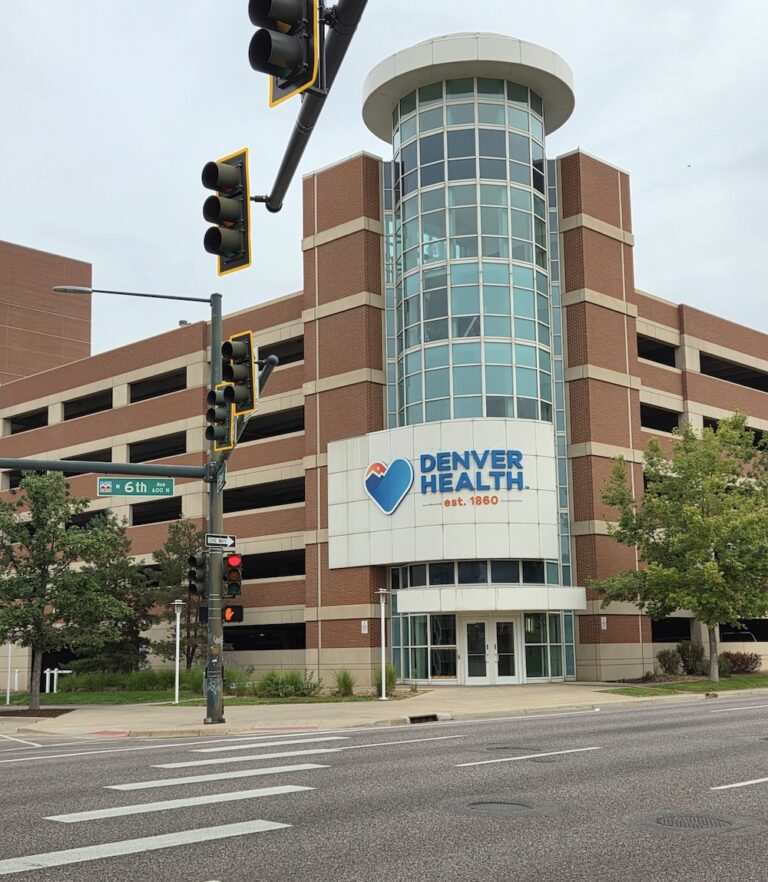
Denver Health: A safety net under pressure

0

It is a typical day on the sprawling grounds of Denver Health and Hospital. Doctors and nurses dressed in the uniform of the day—sky blue scrubs—walk to their next appointment. Countless others, there to drop someone off or see a doctor, share the same passageway. It’s unorganized choreography that takes place all day long. Just another normal day at Denver’s busiest hospital. 

Everyone is going someplace, to a building labeled ‘A’ or ‘B’ or some other letter of the alphabet. Or, maybe, just headed home. 

Navigating the sidewalks, you take a serpentine route, walking around the ‘burrito man,’ dodging the heart surgeon or the nurse, the worried family or the Uber driver who’s just stepped out of the car to stretch. As you do, you hear a cacophony of accents and languages. It’s Monday, but it could be any day at Denver Health.

The hospital has gone through an evolution of names since it began more than 160 years ago. In previous incarnations, it was City Hospital, later the Poor House, County Hospital, Arapahoe County Hospital, Denver General and in 1997 to present, Denver Health and Hospital. But its basic mission has remained constant, “to provide access to the highest quality health care.” 

Its emergency department remains an American gold standard. But it has other specialties that rival any health facility in the country. 

Its open doors also mean treating one in four Denver residents each year. Half of the babies born each year in Denver are ‘Denver Health babies.’ All told, 300,000-plus people are in-patient or out-patients at the hospital each year with a growing number of being non-native born. 

“I’d say it’s 60-40,” a friendly Denver Health concierge answers when asked the percentage of those asking for help or directions are Spanish speakers.’ Today’s concierge is well equipped. He also speaks Spanish. The hospital is its own Tower of Babel. Languages proliferate. 

Despite recent fiscal challenges, the facility has shown amazing resiliency and imagination. While it posted a $35 million loss in 2022 it bounced back the next year reporting a $17 million profit. It finished 2024 $10 million in the red. And while the numbers are steep, in the healthcare world, they’re neither foreign nor unique. They’re part of doing business. 

But, said CEO and former Colorado Lieutenant Governor Donna Lynne, “Our budget is holding steady this year.” That, of course, is thanks to passage of ballot measure 2Q that voters approved last November. 

The measure, a .34 percent sales tax hike, is estimated to raise approximately $70 million per year. Following the vote, District 3 City Council member Jamie Torres and primary co-sponsor of 2Q applauded voters. “You have ensured Denver Health can continue to provide crucial health services” she told The Denver Post. 

Despite the hospital’s red ink challenges, Lynne said it has so far escaped layoffs. But even with passage of 2Q, it cannot relax nor take anything off the table. “We are hoping to avoid staff reductions.” So far, so good.

But money to fund one of Colorado’s and the West’s finest hospitals, even in good times, is no easy task. And because Denver Health serves a Medicare/Medicaid—about 70 percent—and indigent population, it will always be challenged.

“In 2024, Denver Health had $155 million in uncompensated care costs,” Lynne said. Also, added Lynne, “because of H.R.1’s (Trump’s ‘Big Beautiful Bill) Medicaid eligibility changes, we fully anticipate that number to grow exponentially in the years to come. In that regard, Denver Health is not unlike scores of similar regional hospitals.  

“Nearly two thirds of our funding come from the federal government,” Lynne said. In 2024, the hospital took in “$474 million in Medicaid reimbursement.”  Lynne and the hospital will have to wait on the legislation’s impact. But it will have ramifications, both fiscal and in pure health care delivery. The ‘how big’ and ‘when’ variables of this equation remain a mystery. But they’re coming and the hospital is bracing for it.

“If people go without health insurance,” Lynne said, “it’s likely they will delay care and choose to receive it in an emergency room where the cost of care is much higher…as the state’s major safety-net hospital, we will see the greatest number of patients coming to us for care because they simply cannot afford it.” Also, for facilities like Denver Health, no one visiting the ER is turned away. 

Because rural hospitals also receive a large portion of their operating costs from Medicare and Medicaid, they will face the same challenges. Some, it has been predicted, may have to close. If that happens, hospitals like Denver Health may be taxed with an even higher patient load as the migration for care will surely bring them.

Just how the President’s center piece legislation, H.R. 1, ultimately impacts hospitals, both rural and metropolitan facilities like Denver Health, will not be known for months. But the template, with changes in Medicaid eligibility requirements, including a provision calling for all able-bodied male adults over age 18 seeking health care must work. It’s part of the deal. 

Still, knowing that tough times may be coming, Lynne said, the mission at Denver Health will not change. There may be fewer dollars to cover treatments, but healthcare will not be compromised.


Why I chose education—and why it still inspires me every day

0

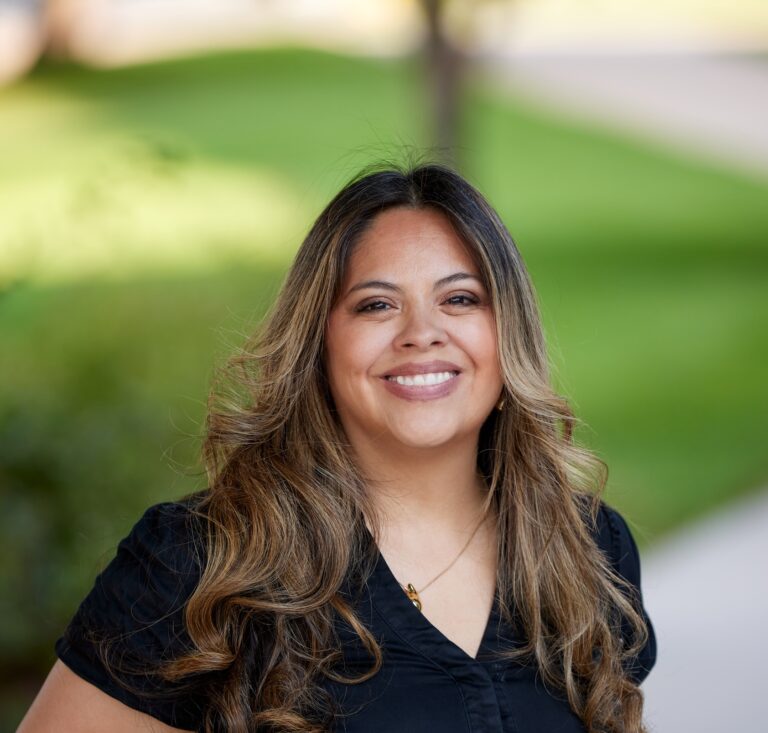
By Dr. Jennifer Abeyta-Cifuentes

I never imagined myself in education, despite being told by teachers that I had a talent for it. But I am so happy that I chose this rewarding path that allows me to work with students who come from the same circumstances that I did and help them forge their own journeys. 

As a first-generation college student from Adams 14 in Commerce City, after graduating high school, I earned a full-ride scholarship to Colorado College and was planning to serve my community through law and government. Yet I was always drawn to helping others through teaching and service.

After college, a call from a principal in Big Sandy 100J opened the door to teaching that I thankfully never closed. After teaching Spanish for four years in Big Sandy, I moved to Sierra High School in Harrison School District 2, where I taught for three years and discovered the joy of watching my students grow.

I knew the power of education and how it could change lives.  Now, I wanted to expand my influence and help support teachers and continue working on shaping the system. 

I pursued a master’s degree and administrator certificate from the University of Colorado–Colorado Springs. With the support of colleagues and my husband, I finished my degree while working full time. Within a year, I became an assistant principal at Falcon High School in District 49. Later, I returned to Denver to focus on students from backgrounds like mine — full of potential but facing barriers.

After 13 years in administrator roles, I pursued a PhD in educational leadership and became a principal to further expand my support for students and staff.

I had long been drawn to Hinkley High School in Aurora Public Schools, passing it often on the way to my children’s gymnastics practice. I always felt I would work there one day. When the opportunity came four years ago, I jumped at the chance to serve a community that reminded me of my own childhood.

Working in education is a family calling. My mother was a school secretary for three decades in Adams 14. Both of my sisters work in higher education, and my husband is the principal of McGlone Academy in Denver Public Schools.

Becoming an educator was the best career move for me and my family. It has given us a life of love, opportunity, and growth, while also allowing us to make a positive impact on the world. If you are interested in this path, I encourage you to explore the Colorado Department of Education’s Educator Career Navigation page for resources and guidance to take your first steps.

Education changes lives — just as it changed mine. I am grateful to work with students who come from the same circumstances I did years ago. I see their challenges, but I also see their hope. That inspires me every day and reminds me why this work matters.

Dr. Jennifer Abeyta-Cifuentes is the principal at Hinkley High School in Aurora Public Schools. 

Broncos defeat the Tennessee Titans in season opener

0

The season opener for the Broncos went just as many expected it to, with a win and a dominating performance by Denver’s defense. The Broncos defense sacked rookie quarterback Cameron Ward six times and holding the Tennessee Titans to just 1-6 attempts on third down in the first half. 

The Broncos led the Titans 10-9 heading into the half with but the score didn’t reflect how much more dominant Denver was. The offense was a different story, with second year quarterback Bo Nix throwing two interceptions and was 25 of 40 for 176 yards and one touchdown to his top receiver Courtland Sutton. 

Sutton caught 6 passes for 61 yards and one touchdown, while Troy Franklin had four receptions for 44 yards and tight end Evan Engram caught 3 passes for 21 yards before he went into the locker room with a calve injury.  

Denver’s rushing attack was pretty non-existent in the first half however things picked up for both R.J. Harvey and J.K. Dobbins in the second half with both backs seeing more touches and gaining more yardage. Dobbins finished the day with 63 yards and one touchdown while Harvey recorded 70 yards on six attempts averaging 11.7 yards a carry. 

Next week the Broncos will be in Indianapolis to face the Colts this Sunday at 2:05 p.m. MST. The Colts beat the Dolphins 33-8 last week with quarterback Daniel Jones throwing for 272 yards with one touchdown, outplaying Tua Tagovailoa who on threw for 114 yards with 1 touchdown and 2 interceptions. 

In other sports we’re less than two weeks away from the start of the NHL preseason. The Colorado Avalanche are scheduled to face the Utah Mammoth on Sunday 21st at 6:30 p.m. while the Nuggets are just under a month away from kicking off their preseason when they host the Minnesota Timberwolves on October 4 at Ball Arena at 7 p.m. MST. 

After getting swept by the San Francisco Giant, the Rockies won game one of three in a three-game series with the San Diego Padres but lost the following two and on Monday they lost game one of a three-game series with the L.A. Dodgers (the results of Tuesday’s game were not available at the time of this writing). 

The Rockies are now 40 games behind the division leading L.A. Dodgers with 104 losses and 40 wins with a .278 winning percentage. The Rockies have won two of their last ten games. 

Pueblo confronts rare viruses and budget strain

In just over a year, Pueblo County’s Department of Public Health and Environment has successfully faced two viruses that no similar agency wants. In June of 2024 and in April this year it dealt with cases of plague and measles. In each case, it immediately sprang into action to alert the public exactly what it was facing and effectively handled a potential crisis with minimal consequences.

On the last day of March of this year, the state health department identified a single case of measles in the county. A single adult male was identified as the exposed individual. While one case does not make an outbreak, the measles virus is a red flag to any public health agency.

The virus, also known as rubella, is considered extremely contagious and exposure can quickly spread through a population. It can, however, be treated with the MMR vaccine. In Pueblo County, once alerted, the virus was contained to a single case.

“Our team has been working internally for quite some,” said Pueblo County Health spokesman Trysten Garcia. Because measles had already been reported in other states, including nearby New Mexico, Garcia said, “our team was ready.” 

As September began, the CDC counted 1,431 confirmed cases of measles spread across 42 states. Of those cases, 92%, said the CDC, were in individuals who had not been vaccinated. Approximately two thirds of those infected were under the age of 20. Three deaths resulted from the outbreak. 

The measles vaccine was first introduced in 1963, and outbreaks had been steadily declining. In fact, in 2000, the CDC stated that because of the effectiveness of the vaccine, it declared the virus eradicated. But since then, a growing skepticism about vaccine effectiveness has caused a decline in immunization. 

In July 2024, state health officials also confirmed a single case of plague in Pueblo County. The county, again, reacted quickly, sharing health information with local and state media, issuing news releases in multiple languages, with information of the virus and ways to keep safe. 

Plague, specifically bubonic plague, is associated with Europe’s most devastating viral outbreak during the 14th century. As many as 50 million people died from the virus. In Pueblo, the virus was contained to a single individual. 

While the Pueblo Health department has been proactive in sharing important health information, particularly to a growing immigrant population, there is concern that the Trump administration’s immigration policies, many of which are included in H.R.1—also known as the ‘big, beautiful bill’—would create a variety of unintended consequences impacting public health. 

“This “Big Beautiful Bill” will impact the most vulnerable low-income Coloradans,” said veteran Pueblo City Councilman Dennis Flores, and burden public health with more responsibilities along with other governmental agencies.

The bill, which includes huge cuts to Medicare and Medicaid, could potentially create disaster for rural health care systems, including causing some to close. If that happens it could create huge burdens, including healthcare challenges on places like Pueblo, where many from outside the region often go for their medical help.

The possibility of rural health care cutting back or shuttering altogether, Flores imagines, could create mounting pressures on the city which is already facing an estimated $9 million budget deficit. The legislation, the Pueblo native said, while touted as an attack on ‘waste, fraud and abuse,’ will instead hurt not only Pueblo but many others. 

“The ‘Big Beautiful Bill’ will impact the most vulnerable (and) low-income Coloradans which is estimated to be about 367,000 individuals, 34,000 children in the CHIP (Colorado Health Insurance Program) and 25,000 kids with disabilities.”

Should healthcare be a right or a privilege

0
David Conde, Senior Consultant for International Programs

I know a family in Mexico that lives on the margins of poverty. Some months ago, the mother woke up with intense pain in her abdomen. 

She went to the local clinic in her small town and after a required test, it was determined that she had gallbladder stones. She was scheduled for an operation in a nearby city and had her gallbladder removed.

I remembered that I had the same medical procedure some years back and also had my gallbladder removed. The difference was that I had insurance and she did not.

In my case, my insurance provider was verified, a diagnosis completed and then the insurance company gave authorization to operate. The operation was done and I was back on the job a few days later.

Since I pay for the medical insurance that guards me against the costs of a medical procedure, it is very evident that I am paying for that privilege. Even Medicare is closely tied to the Social Security safety net that requires a mandatory monetary contribution for most working Americans.

In her case, she presented her official picture identification card that is issued by the National Electoral Institute which allows her to vote as well as verifies that she is eligible for the service. Once her identity was confirmed, the heath service system went to work to schedule her for the medical procedure.

Her positive identification as eligible almost automatically triggered a process that saw the national health service mobilize to her aid because, in her country, healthcare is a right. It is a fundamental right specifically stated in Mexican Constitution.

In its preamble, the Declaration of Independence states three goals for the individual and political future of the country: life, liberty and the pursuit of happiness. The United States Constitution includes a “general welfare” clause in its preamble that has historically been used by Congress to justify the various social programs for the people.

But nowhere in our founding documents or their amendments is there a mention of important concepts such as worker rights, the right to an education or a right to healthcare. For the last 100 years, those issues and others have been the source of ongoing debate leading to incremental gains in such areas as Medicare adopted in 1965. 

The fact is that at the moment, “the debate on whether to treat healthcare as a right or a privilege is a central issue in the US. influencing the country’s system and its high costs.” Those on the side of healthcare as a right point to the international recognition of healthcare as a human right, the ethical obligation of a nation to guarantee the health and safety of its population and the fact it affects other rights that we do enjoy.

Those that advocate healthcare more as a privilege point to its success as a market-based system and as a societal burden successfully taken on by non-profit communities. Most admit however, that this approach also creates unequal access to healthcare services.

Lately, our health system has been almost under constant attack by those in political power that accuse the system of too much spending and too little results. Principle targets are the expensive research that builds medical solutions to very serious deceases and the production of vaccines such as those that saved the country from COVID-19.

An efficient and effective healthcare system at a tolerable price is something every American can support. The question is the level of government participation toward its success.