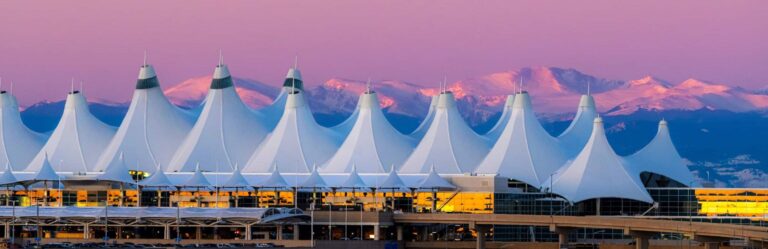
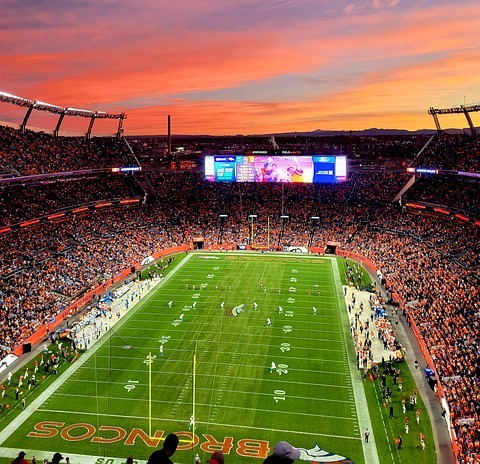
Denver International Airport (DEN) has been awarded the #1 Green Fleet of 2025 by NAFA Fleet Management Association for its outstanding efforts in reducing environmental impacts and promoting sustainability within its fleet operations. DEN competed with 59 agencies nationwide, ranging from government to commercial fleets. This is the first time DEN has been awarded top honors for its green fleet.
“Being named the greenest fleet in North America is a significant accomplishment for DEN, especially as one of the largest airports in the world,” DEN CEO Phil Washington said. “This milestone reflects DEN’s ongoing efforts to reduce emissions, invest in clean technologies and lead the aviation industry toward a more sustainable future. We remain focused on setting new standards for sustainability while maintaining operational excellence.”
For the past 18 years, the NAFA Fleet Management Association has presented the Green Fleet Awards recognizing organizations that execute groundbreaking and inventive programs for their green initiatives. Judges highlighted the airport’s use of alternative fuels and vehicles, efficient use and management of fueling and recharging facilities, and a commitment to workforce development programs in their local community. Key achievements that contributed to DEN’s recognition include:
Expanding its EV fleet by 49% over 2024, within a total fleet of 770 units. The airport continues to order and receive additional EVs, which is expected to result in a total fleet growth of 103%.
Conducting side-by-side comparisons of gas, compressed natural gas and electric vehicles (EV), revealing that EV’s cost 96% less to operate and reduction of 55% in Co2 emissions over CNG per vehicle.
Installing 14 additional Level 2 charging stations and two solar powered Level 2 chargers, increasing DEN’s charging capacity for its fleet by 52% over 2024, with construction underway for a dedicated charging plaza.
President Donald J. Trump signed an Executive Order modifying the scope of the reciprocal tariffs that he first announced on April 2, 2025, and establishing a framework to implement agreements with our trading partners.
Colorado Governor
According to a report of Census data, Colorado has some of the lowest rates of poverty in the country. Colorado’s share of poverty in the population is 8.2% and is among the lowest states. “Colorado has the 5th lowest poverty rate of any state in the nation. Our work to create good-paying jobs, attract businesses, improve access to quality education, and grow an economy that works for everyone is driving down poverty and increasing opportunities for all,” said Governor Jared Polis.
Denver Mayor
Denver Parks and Recreation (DPR) unveiled two new lighted turf street soccer courts and a community classroom/clubhouse at Skyline Park. Mayor Mike Johnston joined community leaders, partner executives, and more than 150 children and families for a ribbon-cutting celebration that featured an inaugural youth match, interactive soccer clinics, local food vendors, and family-friendly programming that reflects the vibrant energy of the new space.
At least 60 people were killed by the jihadist group Boko Haram in Nigeria. The incident occurred last Friday night at the Dural Jamal village, an area home to a military base. Jihadist activity has recently increased in northeast Nigeria.
Tunisia qualifies for World Cup
The Tunisia men’s soccer team clinched a spot in the 2026 World Cup after defeating Equatorial Guinea. With the victory, Tunisia becomes the second African country to clinch a spot in the tournament. Tunisia has now reached Canada, Mexico, and the United States without allowing a goal in their eight qualifiers so far.
Asia
South Korea official set for US visit
South Korea’s foreign minister is preparing for a visit to Georgia where hundreds of South Koreans were detained at last week. The United States detained 475 South Koreans who were illegally working at a car battery plant, allegedly. South Korean officials urged the United States to respect the rights of its citizens.
Deadly protests in Nepal
At least 19 people were killed in Nepal after protesting against political corruption and a government social media ban. Protesters, who described themselves as Generation Z, clashed with security forces. Nepal’s government recently banned various social media platforms like Facebook, X, and YouTube.
Europe
Ukraine soccer star’s home struck by drone
Georgiy Sudakov, a member of Ukraine’s men’s national soccer team, said his apartment was severely damaged by a Russian drone. The incident occurred while his wife and children were at their Kyiv home, Sudakov said. Ukraine’s air force said that Russia recently deployed 805 drones and 13 missiles overnight.
Google fined by EU
The European Union has fined Google $3.38 billion for abusing power in the ad tech sector. The EU said the company breached competition laws by favoring its own products on display ads. Google plans to appeal the ruling and said there’s nothing anti-competitive in providing services for ad buyers and sellers.
Latin America
Argentine rights activist passes
Rosa Roisinblit, an Argentine human rights activist, has passed away at the age of 106. Roisinblit was a founding member and honorary president of the Grandmothers of Plaza de Mayo, an organization that searched for children stolen during Argentina’s military dictatorship. Around 30,000 people were killed or disappeared in Argentina between 1976 and 1983.
Thousands protest in Mexico on International Day of the Disappeared
Thousands of people across Mexico gathered to protest in an effort to highlight the country’s enforced disappearances. At least 130,000 people have been reported missing in Mexico, and the majority of those disappearances have occurred since 2007. Many of those who have disappeared were forcibly recruited into drug cartels or murdered for resisting.
North America
Immigration raids can continue in California, says Supreme Court
The Supreme Court ruled that immigration raids in Los Angeles can continue for now. The ruling came after a federal judge ordered that agents cannot make stops without reasonable suspicion. Immigration raids in Los Angeles began in June, and law enforcement stopped and arrested people at Home Depot and other workplaces.
Joe Biden undergoes surgery
Former President Joe Biden underwent skin cancer surgery, according to his spokesperson. He was recently spotted with a wound on the right side of his head. Before becoming president, Biden had non-melanoma skin cancers removed. His spokesperson did not provide additional details about his surgery.
Two different men, two different moments. But a singular thread unites. Imagination.
It was the late Carl Sagan who brought the science and wonder of the Universe to the fore. “Imagination,” he said, “will often carry us to worlds that never were. But without it, we go nowhere.”
It is, in fact, imagination, its lure, its possibilities, that brought a self-described ‘kid from south Texas’ to a launchpad called Denver and lit a fuse that changed the city forever.
On July 1, 1983, a 36-year-old bespectacled Federico Peña became Denver’s first Latino mayor and, also, one of the first Latinos to lead a major U.S. city.
While as much as he engineered and is remembered for, the transformation of a city, turning it from a modest Rocky Mountain hub into an international city, it is also four simple but profound words that will forever be linked to the man and Denver’s DNA. ‘Imagine a great city.’ It is the exhortation that inspired a generation.
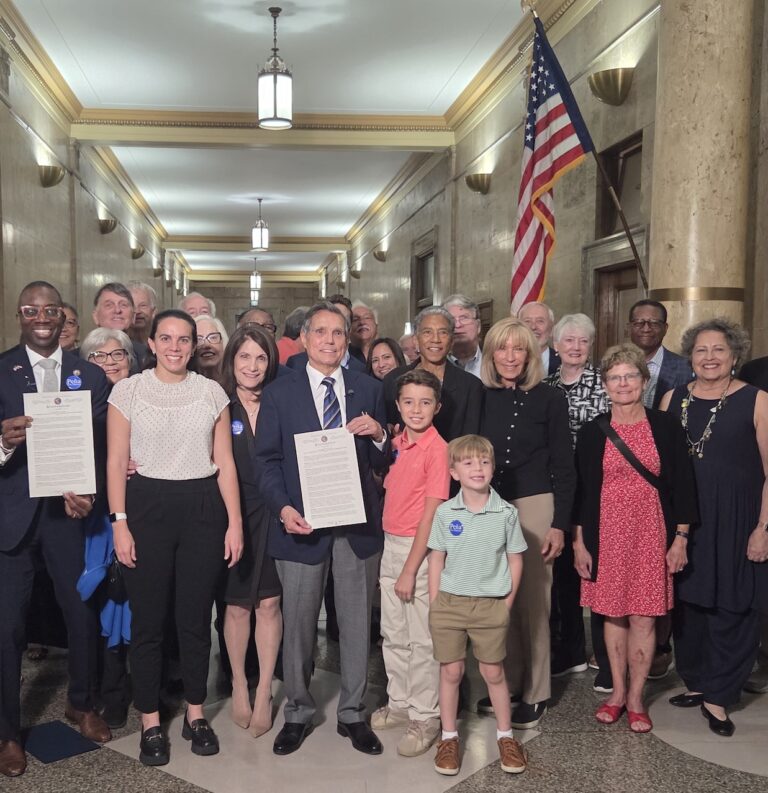
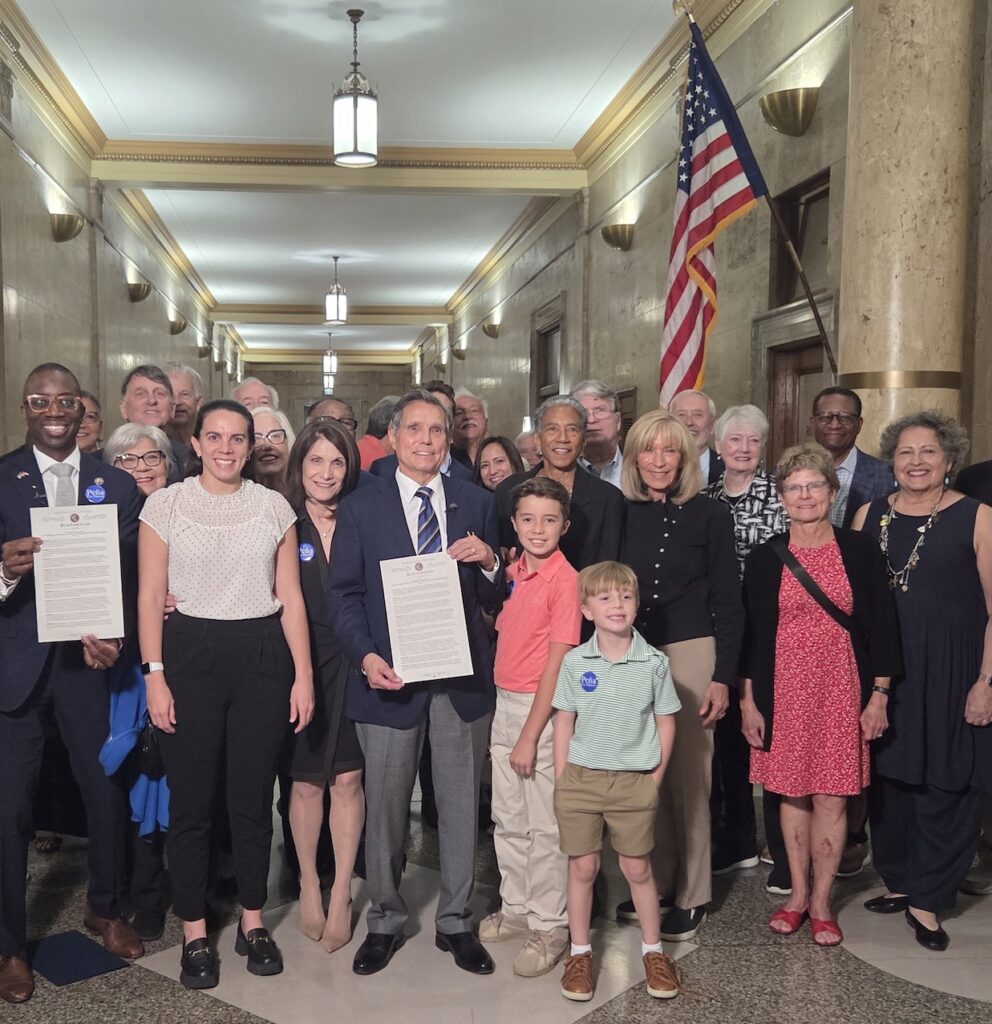
Peña’s accomplishments as a two-term mayor of Denver were officially acknowledged by Denver City Council at its August 25th meeting. 25-1242.pdf. The proclamation was unanimously approved.
From building an airport that has connected Denver to the major capitals of the world to injecting life into a moribund corner of the city now known as LoDo, Peña not only imagined but turned the knobs that redefined the city. It was no accident.
Once given the keys to the city, Peña and his team—a team that for the first time truly reflected the diversity of Denver—got to work. “We clearly had many issues on the table from day one,” he said. Understated as ‘issues,’ were a new airport, Central Platte Valley development, Major League Baseball and neighborhood revitalization. It didn’t stop there.
It would be difficult to find consensus on a ‘greatest accomplishments’ list of the things Peña oversaw and achieved in his two terms. But launching an airport that now ranks as a ‘top five in the world,’ and landing the city’s number one summer tourist attraction, the Colorado Rockies, would certainly be easy choices. Still, it’s an argument that would be both provocative and entertaining.
“Federico Peña was a once in a lifetime mayor,” said one long-time Denver politico who asked his name not to be used. “He was more than just a visionary. He was the right person at the exact right time.”
But Peña recalled he did not come to Denver with the idea of planting roots. The young lawyer’s first visit was exactly that. His brother, Alfredo, also an attorney, had relocated to the city from Texas. Once here, Peña knew it was no longer a visit. He was home.
While practicing law in his new city was what he had trained for, he knew there was something else, perhaps something more fulfilling, more rewarding. And he found it, but perhaps more accurately, it found him. People saw in him that proverbial ‘it’ quality.
“I never pre-planned my political career,” he has often said. In fact, politics were not part of the plan at all. “I was recruited,” and he ran. Twice. And there began his ‘rule of two.’
“Two legislative terms, two Mayoral terms, two Cabinet positions,” he recounts. But that was enough. Once finished serving the city, the president and the country, he returned home. “I always believed in serving to achieve my goals and then passing the torch.”
Peña’s fingerprints on the city and the state are indelible. Former Rocky Mountain News reporter now Denver city councilman, Kevin Flynn, covered city government for Peña’s two terms and more.
Flynn, as rock solid and dogged as any city hall reporter who has ever covered city government, spared neither a mayor nor glorified one. And while stopping well short of canonization, he ranks Peña at or near the top of the city’s chief executives.
“I came to view Peña’s 1983 election as one of those transformational shifts that occur every so often in cities, states and nations.” Flynn, who also voted in favor of the Peña honor, included him “on a par with that of Mayor Quigg Newton and his administration.”
Peña Flynn said, “brought with him a clean sweep in leadership across city agencies, with fresh ideas and young blood.” Denver’s 41st mayor, the current city councilman said, energized Denver in “a way that brought it into the top tier of American cities.”
While Peña’s name will always be connected with the city’s most visible undertakings, he also made major contributions in ways that, perhaps, don’t quite have the same cachet, such as civic projects that might go unnoticed.
Included among these accomplishments are the construction of the Colorado Convention Center, a facility that now attracts major national and international gatherings each year, the downtown library that served as host for the 1997 Summit of the Eight and the establishment of the ‘One Percent for the Arts’ program which helps fund the Scientific and Cultural Facilities District across the six-county metro area.
Though it might be easy to bask in accomplishment, one thing Peña admits to as a singular, haunting failure is not tackling a problem that today remains —and as it did then— in need of fixing.
“I regret that I could not help the very disadvantaged in our city,” he said. But the economy, he said, “was so challenged that I was focused on just resurrecting the broader economy, business generally and improving neighborhoods.” Perhaps, had he served a third term, he said, he could have “focused deeper on the underprivileged and improving DPS (Denver schools).”
Today, Peña and his wife, Cindy, a former Denver television executive, live in the city. They have, between them, four children and three grandchildren.
Chosen applicants will join 17-member panel that advises on various topics affecting the district
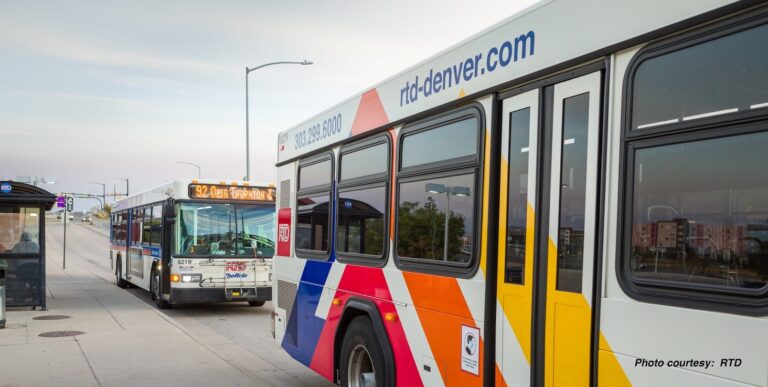
The Regional Transportation District (RTD) is seeking community members who are interested in public transit issues and community engagement to apply for one of four available positions on the Citizens Advisory Committee (CAC). The 17-member group advises the agency on RTD’s strategies, initiatives and transportation programs. CAC members represent a wide variety of backgrounds, interests and professional experiences.
Individuals interested in applying for a position may complete an online application or contact the RTD Board Office at rtd.boardoffice@rtd-denver.com or call 303.299.2307 for an application.
To be considered, applications must be received by 11:59 p.m. Friday, Sept. 5. Applicants are encouraged to review the CAC Charter and CAC webpage for more information on the role and responsibilities of CAC members.
Selection criteria will include, but not be limited to, residence within the RTD district; a demonstrated interest in public transit; previous community service; experience working with local jurisdictions on regional issues; and professional expertise.
The RTD CAC is made up of residents and businesspersons from around the region who volunteer their time to advise RTD leadership on a range of issues impacting the region. The committee meets monthly (except August and December) via Zoom on the second Thursday from 3:30 to 5:30 p.m. and members may complete tasks in support of CAC projects outside of official committee meetings.
RTD employees, their immediate family members, and elected officials are not eligible to serve on the CAC. A nominating committee comprised of current CAC members, RTD Board Directors, and Board Office staff will review applications and make recommendations to the full Board for approval at the October Board of Directors meeting. Members are appointed to serve a three-year term and can be reappointed to a second three-year term. Terms for the selected new members will commence in January of 2026.
Last Tuesday the Broncos slimmed down their roster to 53-men with a number of starters who were on last season’s roster but with an added few new faces from both free-agency and this year’s draft.
Both first and second-string running backs are new to the team with J.K. Dobbins coming from the L.A. Chargers and R.J. Harvey being drafted from the University of Central Florida.
The Broncos will face the Tennessee Titans and their rookie quarterback Cameron Ward whoes first task as an NFL player is to face one of the NFL’s toughest defenses. While many expect Ward to be a commanding presence in the NFL over the next decade, the Broncos will likely keep pressure on the young rookie on Sunday, offering him a warm welcome to the league. Sunday’s game is scheduled for 2:05 p.m. at Empower Field at Mile High.
In other sports Mexico’s U-8 (mostly 8 year-olds) baseball team defeated the U.S. to win the Cal Ripken World Series last week. Mexico scored two runs in the first inning and really didn’t look back from there dominating the U.S. through 9 innings.
Mexican pitcher Milán ‘Búfalo,’ Zazueta struck out 10 batters in four innings holding the U.S. to just 2 runs the whole game. Mexico defeated the U.S. 10-2.
We’re less than three weeks away from the start of the Colorado Avalanche preseason and about a month away from the Denver Nuggets preseason kick-off. The Avs will kick off the preseason in Utah on September 21st at 2:30 while the Nuggets will kick-off their preseason at home against the Minnesota Timberwolves on October 4th at 7 p.m.
The Colorado Rockies are wrapping up a three-game series with the San Francisco Giants in San Francisco after losing game-one 8-2 on Monday (The Rockies are one loss away from 100 losses on the season at the time of this writing).
Colorado is back at home to host the San Diego Padres for a three-game series this weekend at Coors Field. The Rockies are currently 39.5 games behind the division leading L.A. Dodgers.
While not quite as traumatic as being the last two unicorns watching the Arc sail away, these are uncertain times at the Pueblo Zoo. But unlike the aforementioned unicorns, it’s the zoo that finds itself treading water.
Unless the facility, the largest such zoological attraction in all of southern Colorado, gets an economic shot in the arm, it may—in a worst-case scenario—go dark. That doesn’t mean tomorrow. But, on its current trajectory, said zoo Executive Director Abbie Krause, it’s on a three-to-four-year timetable.
The zoo, part of Pueblo’s sprawling City Park, has been a part of the city’s landscape since 1934. It was a Depression era project built by the Public Works Administration, Civilian Conservation Corps and Works Progress Administration. It is included on the National Register of Historic Places.
And like many zoos its evolution has been dramatic, going from a facility that merely warehoused animals into becoming a modern, boutique-like facility that includes a menagerie stretching from antelopes to zebras.
And while the zoo gets a portion of its budget from the city, slightly more than $900,000 or 15 percent, it generates the lion’s share of its operating budget. But Pueblo, like many Colorado cities in 2025, is running in the red.
In her State of the City address, Mayor Heather Graham projected Pueblo’s shortfall at $8.5 million for 2025. Painful cuts will be made, she said. The first term mayor said that cuts that in a normal economy would not be considered are now under the microscope. In fact, Graham shared that non-profits normally getting funding from the city would have to make up the money in some other way.
Current estimates have the city cutting its zoo allocation to $716,655. The slimmed down city contribution, said Krause, “wipes out five years of progress in trying to stabilize funding for the zoo…cutting back would be cutting back areas where we don’t have that wiggle room.”
The zoo, while a ‘kid brother’ to the nearby Cheyenne Mountain Zoo in Colorado Springs and the Denver Zoo, nonetheless provides southern Colorado with both an educational and entertainment option.
Photo courtesy: Pueblo Zoo
It provides southern Coloradans with something they don’t have living in smaller towns. Zoo logs indicate a visitor—half of whom come from outside Pueblo—can as easily be from Lamar or San Luis as Pueblo proper. For someone living in Alamosa, for example, a road trip to the Albuquerque Zoo is shorter than the drive to Denver.
The zoo has become expert in squeezing every penny out of its $3 million annual budget. It generates most of its funding from various events throughout the year and from grants and donor contributions. But from year to year, those figures can be wildly inconsistent.
A study conducted by nearby Colorado State University Pueblo estimated that the zoo pumps around $20 million into the city’s economy—a 666 percent return on investment. Pueblo Mayor Graham calls the zoo “a true amenity for our community and the surrounding area.” But, she said, “While these budget cuts are difficult, they are necessary.”
The zoo’s $3 million-dollar annual budget is complemented by money generated from events, including grants and donor contributions. Still, from year to year, those figures can be wildly unpredictable. Cutting back, Krause predicts, will be both difficult and painful.
“Our payroll from 2018 to present has gone up 50 percent,” she said. But despite the spike, zoo workers are still underpaid. “They don’t have a living wage…they don’t have the ability to have the same wages as a city worker.”
The zoo has been a regular subject of discussion at City Council meetings. And while it hasn’t yet secured the funding it needs to continue on past the critical three- or four-year window, it has found support from at least three council members. Councilmen Joe Latino, Mark Aliff and Dennis Flores all have spoken out on the benefits the zoo represents to the city.
“I look at it as a net giver,” said Flores. “They bring tourists to town, and they spend their money here.” The lifelong Puebloan said of the zoo that it is one of the entities that “enhance the quality of life” in the city. “I have fought not to cut (the budget),” he said. “But I lost. I don’t know how they’re going to make it.” The city and the zoo are in regular dialogue over the level of support that can be provided. But, said Graham, challenging economic times dictate sometimes having to make painful decisions. “If we don’t start looking at revenue sources,” Graham told KRDO13, “come 2026, the city is going to be in significant trouble.”
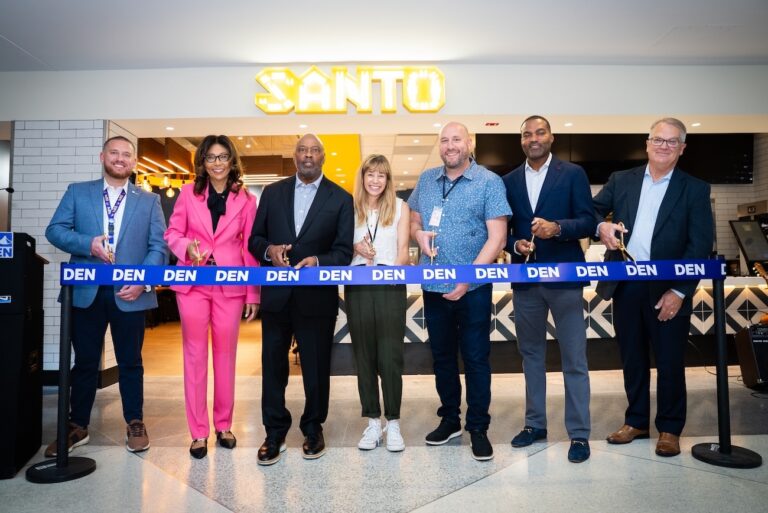
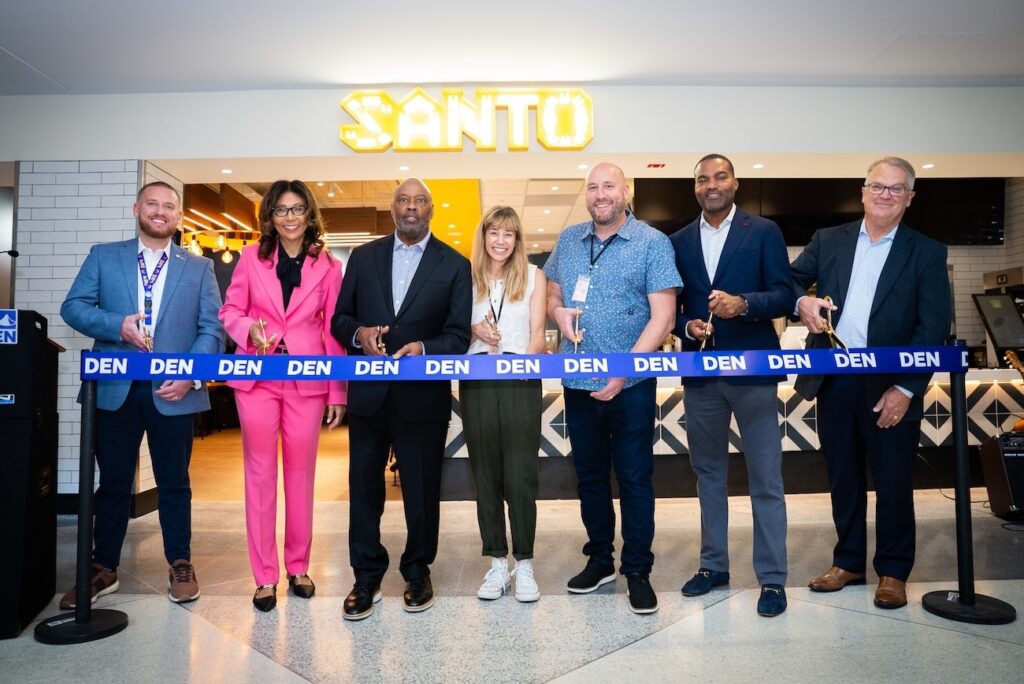
“The opening of Santo is a testament to our commitment to and investment in Vision 100 Guiding Principles of enhancing our customer experience,” DEN CEO Phil Washington said. “Today’s celebration continues the expansion of DEN’s dining options, offering a variety of local favorites and enhancing the travel experience for millions of annual travelers.”
Santo is inspired by chef and owner Hosea Rosenberg’s childhood home in Taos, New Mexico. This restaurant offers a modern twist on Northern New Mexican cuisine, highlighting the vibrant food and drink culture of the region. The menu features classic dishes infused with regional spices, chiles, and cooking techniques, all while focusing on seasonal and locally sourced meats and produce from Colorado.
“Opening Santo at Denver International Airport is an honor for me. Santo is an extension of my childhood growing up in Taos, New Mexico, and a culinary embrace of the flavors that shaped me. To share the soul food, I grew up on and the dishes that bring me the most comfort with international travelers embarking on their journeys is a dream. We are thrilled to partner with High Flying Foods to open this new location of Santo,” Little Piggy Hospitality Chef and Owner, Hosea Rosenberg said.
Photo courtesy: DEN
High Flying Foods stands at the forefront of airport dining and is celebrated for its award-winning and industry-leading practices. Founded by brothers, Glenn and Garrett Meyers, High Flying Foods originated from a deep-seated love and passion for food. Using family recipes handed down for generations, the brothers opened their first nationally celebrated restaurant, Firewood Cafe, in San Francisco in 1997. Recognized for their exceptional execution at Firewood Cafe, they were invited to bring the popular restaurant concept to San Francisco International Airport (SFO) in 2000.
Building on their experience, they began to partner with iconic, chef-driven local brands in each market, bringing those concepts to the airport undiluted, authentic, and uncompromised. Fast forward to today: With 22 locations across five major U.S. airports and 19 more locations set to open in two additional airports over the next two to three years, HFF has established itself as a leading prime concessionaire in the industry.
“We’re incredibly proud to bring Santo to Denver International Airport. Partnering with Chef Hosea Rosenberg is an absolute honor. His culinary talent, deep roots in the region, and commitment to authentic Northern New Mexican cuisine perfectly align with our High Flying Foods mission to deliver exceptional, chef-driven airport dining experiences. We’re thrilled to share Santo with travelers from around the world and proud to showcase a concept that is a true reflection of the local community,” High Flying Foods COO Kevin Westlye said.
Santo has three Airport Concession Disadvantaged Business Enterprise (ACDBE) partners: Hyde Park Hospitality LLC, Procurement Concepts, Inc., and ZANN & Associates, Inc.
Hyde Park Hospitality LLC will manage vendor negotiations, ensure kitchen/operational quality, and analyze fixed costs to optimize operations. Procurement Concepts, Inc., will manage supply procurement and advise on employee scheduling to maximize efficiency and revenue. ZANN will oversee business compliance, manage and report on Minority/Women-Owned Business Enterprise (MWBE) and ACDBE programs, and lead recruitment events to support diversity and operational excellence.
Santo Restaurant is located on Concourse C near gate C49.
David Conde, Senior Consultant for International Programs
In Mexico City a few weeks ago, there was a riot protesting gentrification in the streets of the Polanco and Condesa neighborhoods next to the American Embassy. Things got so bad that, when asked in a press conference, Mexico’s President Sheinbaum indicated that marching and demonstrating on this issue was acceptable, but violence was not a solution.
This reminded me of the issues here being raised by many voices in the first part of the 21st Century. At that time, Denver was becoming the most gentrified city in America.
A very visible image of this was the erection of apartment buildings in place of the homes that had been an integral part of neighborhoods and their history. Developers would buy a couple of properties next to each other and then build a residential building in their place, sometimes with little regard to the parking needs of its new residents.
Another visible sign of the new covenant living was the renaming of the neighborhoods either to old names or new sounding identities. One of the hardest hit in this regard was 5 Points that had its name changed to River North as a better expression for the newcomers.
The Latino North Side also underwent a change back to old pieces of neighborhoods names like Highlands Park. The world had turned upside down as a place with deep sense of cultural identity was being destroyed not only in its infrastructure but also in name.
The 1985 earthquake that destroyed so many building in downtown Mexico City offered redeveloping opportunities for private investors in a time when politics was about the rich. Carlos Slim who, at one time, was the wealthiest man in the world, took on the challenge of rebuilding Mexico City’s central district with great results.
The downside at the time was that the poor people who lived in the urban center were dislocated and had to flee to the outskirts of the city and built informal shelters. The gentrification of the downtown area that had been abandoned in years past by the well-to-do who now lived in wealthy suburban neighborhoods now had another option for their families and businesses.
That is the unspoken tragedy of Denver’s urban living. There was a time when those that could afford it went to live in the suburbs as a way of bettering the lives.
Those that couldn’t stayed in the city. Then, gentrification forced the dislocation of many of them.
The city leadership welcomed the newcomers and the great increase in tax base they represent. The effort to create housing for them represents another tragedy of major proportions.
In the place of old homes with their own kind of beauty, the city approved the building of things that resemble squeezed townhouses. They are like one box over another with a door, no yard and sometimes no place to park a car other than on the street.
I have passed by the many of these buildings filled with young people making their way through their professional lives that may or may not keep them in Denver. I wonder what will happen when they abandon the flimsy housing in favor of a more traditional home someplace else.
I wonder what is going to happen to these places when they get rundown and need repair that no one is willing to take on not even as an investment. In my mind, these buildings represent the makings of a future ghetto that will make Denver something it has never been.
The views expressed by David Conde are not necessarily the views of LaVozColorado. Comments and responses may be directed to News@lavozcolorado.com.
All motorists must understand and respect the lane-jumping law.
Colorado legalized lane filtering in August 2024. While the law continues to spark some controversy, both riders and drivers are now required to learn this law and respect its legality. Any change in road rules takes time to catch up with all motorists. However, vocalizing a “lack of knowledge” of the law won’t help you avoid a ticket, especially if you are caught acting aggressively.
“Aggressive driving will not be tolerated by anyone using the roadway. This includes a driver tailgating, brake-checking or intentionally blocking a motorcycle from re-entering the lane position,” explained Col. Matthew C. Packard, chief of the Colorado State Patrol. “Bad behavior can escalate, creating a dangerous situation on the road. Your responsibility is to not participate in illegal, risky, or uncivil behavior.”
If a driver feels that a rider is doing something illegal or aggressive, they should distance themselves from the rider and call *CSP when in a stopped and safe location. If there is a passenger in the vehicle, they can make this call and even take a photo or video of the rider.
“Motorists need to respect the legality of lane filtering even if they don’t always understand a rider’s decision to use the maneuver,” explained Col. Packard. “There are frequent gaps of empathy and tolerance between roadway users, regardless of vehicle type. It’s not a hierarchy out there; the roads are meant to be shared, and safety is everyone’s responsibility.”
According to Colorado’s new filtering law, five rules riders must follow to filter legally are:
To pass, traffic in the rider’s lane and adjacent lanes going in the same direction must be at a complete stop.
The lane must be wide enough to fit the vehicle and motorcycle while passing.
The motorcycle must go 15 mph or less.
The rider must pass safely and control the motorcycle.
The rider must pass on the left and not enter the oncoming traffic lane.
“Take a minute and put it in perspective,” stated Col. Packard. “Riders are in a much more vulnerable position than a person in a vehicle. A rider holds the responsibility to practice lane filtering safely and legally because they are most at risk. It is also the responsibility of every motorist to share the road.”