






Home Blog Page 30

A Week In Review

0

Africa 

Dozens of jihadists killed in Nigeria

At least 35 jihadists were killed in air strike attacks coordinated by Nigeria’s military. The jihadists were killed near Nigeria’s north-eastern border with Cameroon. Nigeria’s Air Force said it will continue to provide air cover to troops attacking jihadist bases in its north-eastern border. 

Bodies found in Kenya, may be linked to cult 

Authorities in Kenya exhumed nine bodies from graves that are believed to be linked to Kenya’s starvation cult. The victims are believed to have been followers of self-proclaimed pastor Paul Mackenzie. He is accused of encouraging his followers to starve themselves to death. Mackenzie was arrested last year and pleaded not guilty to manslaughter. 

Asia 

North Korea carries out new missile test 

North Korea leader Kim Jong Un oversaw two new air defense missile tests. The country’s media said the weapons have “superior combat capability” and can destroy various aerial targets. Recently, South Korea fired warning shots at North Korean soldiers who briefly crossed the Demilitarized Zone. 

India faces aviation staff shortage 

An Indian parliamentary panel warned that the country’s aviation safety regulator is severely understaffed. The panel said the staff shortage poses an “existential threat” to the integrity of India’s aviation system. India is the world’s third-largest aviation market and has seen a spike in air travel in recent years. 

Europe 

Denmark ends sales tax on books 

Officials in Denmark are planning to end a 25 percent sale tax on books. Jacob Engel-Scmidt, the country’s culture minister, said he hopes ending the tax will lead to more book sales. OECD, an intergovernmental think tank, found that around a quarter of 15-year-old Danish students cannot understand simple text.  

Norway Crown Princess’s son charged with rape 

Marius Borg Hoiby, the 28-year-old son of Norway Crown Princess Mette Marit, has been charged with four counts of rape. He denied the accusations but plans to plead guilty to some lesser charges. Hoiby faces up to 10 years in prison if he is found guilty of the most serious charges. 

Latin America 

Bolsonaro accused of obstructing justice 

Police in Brazil allege former President Jair Bolsonaro was planning to seek asylum in Argentina. Bolsonaro allegedly had a document on his phone that showed his plans to evade criminal proceedings. He is currently on trial for allegedly leading an attempted coup after he lost in the 2022 presidential election. 

Heads found on Mexican road 

Police in central Mexico discovered six severed heads on a road. Authorities did not give a motive for the killings, and it is unknown who carried out the attacks. Local media reported that a message warning rival gangs was left at the scene of the heads. Mexican federal authorities have yet to comment on the crime. 

North America 

FBI agents target former Trump advisor 

FBI agents raided the home and office of former Trump advisor John Bolton. The raid was part of an investigation into the handling of classified information. Bolton, who left the Trump administration in 2019, has been a critic of President Trump. He has not been detained and is not facing criminal charges. 

Evangelical leader dies 

Dr. James Dobson, an influential evangelical leader and a fixture in conservative U.S. politics, has died. He founded Focus on the Family, a ministry in nearly 100 countries. Dobson also served on President Trump’s advisory board for evangelical affairs. He faced several controversies over his career, particularly by being critical on LGBTQ+ issues. 

The 1965 Voting Rights Act remains under attack

0

There are countless stories about inequality in this country. But one thing that gives everyone an equal voice in saying and deciding what is important to them is their vote.

So important is a single vote, that sixty years ago—August 6th, 1965—Congress passed and President Lyndon Johnson signed the Voting Rights Act. It is considered one of the most important pieces of legislation ever enacted. But it did not happen without decades of pain, blood and sorrow, much of it intended to achieve those exact results. 

But perhaps one single act of premeditated, even sadistic violence spurred passage of this long-delayed legislation. It was the killing of three young civil rights workers who had gone to Mississippi to encourage Black people to register and vote. 

During this period, despite making up nearly half of the state’s population, only 7 percent of all Mississippi voters were Black. To right this wrong, something called ‘Freedom Summer’ was launched.  It brought hundreds, even thousands, of mostly college students and others to the South to get Black people and others registered to vote. Among this group were 20-year-old Andrew Goodman, 21-year-old James Chaney—a Mississippi native—and 24-year-old Michael Schwerner. They came with the spirit of Freedom Summer but never returned home.

On June 21, 1964, the three, after examining and leaving the charred ruins of Mount Zion Methodist Church in Philadelphia, Mississippi, were stopped for a traffic violation and jailed. After several hours of detention, they paid their fine and were released.

On their way from the jail, the trio were waylaid by Klansmen. They were executed. A massive hunt by FBI agents ultimately found them—44 days later—buried in an earthen dam. Seven men were tried and convicted, not of murder, but on conspiracy charges. Only one person was ever charged with murder. He was convicted 41 years later, coincidentally, on the anniversary of the signing of the historic bill.

Today, the Voting Rights Act remains under attack. Since its passage, various sections of the VRA have been excised with much of the attack undertaken, both openly and stealthily, by long-time critic and current Chief Justice, John Roberts.

As a young clerk for Supreme Court Chief Justice William Rehnquist, himself an ardent opponent of civil rights legislation, the ever-eager twenty-something Roberts was Rehnquist’s point man writing op-eds in both New York Times and Washington Post opposing the VRA and penning briefing papers for Republican senators and congressmen restating the same principles. His writings regularly included liberal and incendiary references in opposition to the legislation with words like ‘quota,’ dog-whistle alerts to the position they should take.

When Rehnquist died in 2005, Roberts was chosen to replace him as Chief Justice. With new powers, including a conservative majority, Roberts now had the tools he had long dreamed of to continue carving the VRA into more digestible and appealing bites to a similarly leaning audience.

Because of opposition by civil rights groups to his stated positions on the VRA, he was asked during confirmation if he would “fairly apply the Voting Rights Act.” Roberts massaged answer was that he would examine the arguments “with an open mind,” and decide fairly. 

But in 2013, in Shelby County v. Holder, Roberts voted to strike down Section 4, a key provision of the VRA which said states had to receive federal approval for their election law changes. “Things have changed dramatically” since 1965 and that the “blight of racial discrimination in voting” had largely gone away, he said explaining his vote. Essentially, since Black people now held elective office, certain VRA provisions were no longer needed.

Within days, Texas reinstated strict photo ID provisions, previously blocked for targeting Black and Latino voters. Two months later, North Carolina followed with laws cutting early voting by a week, ending same-day registration and imposing stricter ID rules. North Carolina’s new restrictions were later struck down for being almost “surgical” in their intent. 

With the Department of Justice now being pared down and the beefiest parts of the super right’s Project 2025 now being implemented, it may only be a matter of time before the pattern of ‘case-by-case’ evisceration of the VRA continues.

As recent as May 2025, a federal court ruled that only the U.S. Attorney General—not private citizens or civil rights groups—can bring lawsuits aimed at protecting provisions of the VRA. It is now a very real possibility that if the case makes it to the Roberts court, the VRA may once again be slimmed down to a nearly unrecognized version of its once robust and long ago 1965 self.

Should the high court rule as it has in previous VRA cases, said Colorado Attorney General Phil Weiser, it will be a dark day for the country. “The Voting Rights Act,” he said, “is a critical civil rights law that protects all groups from discrimination at the ballot box.” With a move toward more gerrymandering, as is currently in the news as a result of the Texas legislature’s move to reshape a handful of predominately Black and Latino districts, “this law remains a crucial safeguard and way to enforce our constitutional freedom to vote.” 

The two-term state attorney general says the high court’s efforts to undermine the VRA “are wrong and we must continue to fight for the right to vote.”

Broncos’ preseason going as planned with another preseason win

0

One thing is for certain; the Denver Broncos coaching staff has their hands full when it comes down to trimming the roster down to just 53 bodies. 

I know that it’s preseason but we can all appreciate how well prepared the Denver Broncos have been over the past two games in their wins over the San Francisco 49ers and the Arizona Cardinals.

On Saturday the Broncos hosted the Arizona Cardinals at Empower Field at Mile High and backup quarterback Jarrett Stidham was making his case for a starting position, if not with Denver someplace else. Stidham went 16 of 23 for 240 yards and two touchdowns. 

His favorite targets, Pat Bryant and Troy Franklin both had four receptions for 70 and 67 yards but Franklin was credited for both of Stidham’s touchdown catches. 

Three of Denver’s running backs averaged 6 yards or better per carry while 14 different receivers caught passes. 

By the half the Broncos had taken a commanding 17-point lead adding a field goal in the third, with a final score of 27-7. 

This Saturday Denver will head to Coach Payton’s old stomping grounds in Louisiana to face the New Orleans Saints before kicking off the season at home to host the Tennessee Titans on September 7 at 2:05 p.m. MST., 7.5 points favor Denver. 

In other sports the Colorado Rockies are riding a four game winning streak and have won 6 of their last 7. Despite their run it has done little to move them anywhere in the division as they still remain 11.5 games behind the second to last place Arizona Diamondbacks who have won 60 games this season, while the Rockies have won a total of 36 this season with a .288 winning percentage. 

The Rockies close up their series with the L.A. Dodgers this week before heading to the East to face the Pittsburgh Pirates for a three-game series that kicks off on Friday at 4:40 p.m. MST. 

The Colorado Rapids have won their last two games over the Minnesota United FC and Atlanta United. This Saturday the Rapids host the L.A. Galaxy and have a chance to move up to the sixth seed in the Western Conference.

Denver releases information on citywide personnel changes 

0

The City and County of Denver released preliminary information on the total number of positions impacted by budget reductions. 

Due to flattening city revenues driven by national economic uncertainty and rising costs, the city is facing a $200M budget shortfall for 2026. After identifying budget challenges nearly 18 months ago, Denver took the following steps: 

  • Slowed hiring in early 2024  
  • Reduced the size of government in the 2025 budget
  • Froze hiring in 2025

Due to these efforts, the city was able to significantly minimize impact to employees and public services.  

Because of those early adjustments, Denver announced only 171 layoffs, which represents 1.6% of the workforce. The city will eliminate a total of 928 positions from the city’s General Fund. These reductions will solve for $100M of our $200M budget gap for 2026.

The number of eliminated positions include:

 Number of PositionsPercentage of Impacted Workforce** 
Total filled positions eliminated/layoffs 171 1.6% 
Total vacant positions eliminated 665 6% 
Total transfers off the General Fund to other aligned funding sources 92 .8% 
Total  928  8.4% 

* As of Aug. 18, 2025 

** Based on 11,023 positions. Does not include independent agencies, agencies of other elected officials, and agencies that are not funded through the General Fund. 

Throughout this process, Executive Directors, the Department of Finance, and the Mayor’s Office have used the following guiding principles: 

  • Protect core city services
  • Maintain focus on top city priorities
  • Minimize impact to employees

A deficit of this size requires a structural reorganization to prevent this type of budget deficit in the future while continuing to be good stewards of taxpayer dollars. Since nearly 70% of the General Fund budget goes toward personnel costs, eliminating positions was necessary to meet the budget gap.  

Impacted employees are being notified today and tomorrow. Employees will receive:   

  • 30 days of paid administrative leave
  • 2 to 8 weeks of severance 
  • 60 days of healthcare coverage
  • Outplacement services to help employees find jobs

The city will share additional information on personnel changes, including a department-by-department breakdown, later this week once all employees have been notified.  

The Mayor will deliver the full 2026 budget on Sept. 15, 2025.  

Source: Denver Mayor’s Office

Pueblo’s Saint Leander celebrates 100 years

It was the early part of the 20th century when a young novelist, Thomas Wolfe, wrote his epic, “You Can’t Go Home Again.” The novel was his fictionalized account of his hometown. These five simple words say so much. But they also echo differently to nearly everyone who reads them. 

In Pueblo, says city native Gerald Cordova, Chairman of the Saint Leander Finance Council, not only can you go home again, but you’ll always have a home in Pueblo and in this 100-year-old church.

For Cordova, an engineer by training, there has never been a time when the church has not been a part of his life. His parents married there, he was baptized there and even attended pre-school at Saint Leander. He knows its history nearly as well as he knows his own.

Ask just who this obscure saint is, you’ve come to the right guy. “Saint Leander was a Spanish bishop (of Seville). He was commissioned in going forward in helping solidify the faith,” he’ll say before punctuating his telling with, “He’s been good in helping us.” Cordova is never far from Saint Leander and, in his telling, Saint Leander is never far from him.

This past weekend, Cordova was ‘trail boss’ on the church’s centennial celebration. It was a weekend where both eastsiders and non-eastsiders came to pay respects and honor a church that connects so much of the city.

“About 20-30 percent were people I had not seen before,” he said of Friday evening’s dinner and dance and Sunday’s mariachi mass. But nearly all had a connection to the simple eastside church. 

While Saint Leander Church is officially 100, it actually began across the street in the basement of the then Benedictine College. For twenty years, masses were conducted there. But as Pueblo and the eastside grew, the congregation decided it needed its own actual structure and fundraising began. But even before a church, there was already a Saint Leander School.

In 1925, the fund hit its mark—$50,000—and construction, using a blueprint from a Colorado Springs church, began. On Easter Sunday 1926 Saint Leander was blessed.

Inside, the smell of incense fills the air. Parishioners look ahead as the priest looks back. A striking stained-glass Jesus in the Garden of Gethsemane bathes the altar in a cascade of hues. 

While the church was once far more diverse, split between Latino and Anglo eastsiders, it now serves a mostly Latino flock, including a growing immigrant membership. It offers two Sunday masses, including one in Spanish celebrated by Father Albeiro Cirro Hererra. 

In earlier decades, Sunday masses were celebrated nearly hourly. A good portion of 20th century Saint Leander services were also done in Latin.

For Pueblo eastsiders, Saint Leader connects the generations. Marriages, baptisms, First Communions and Confirmations and, of course, funerals are the thread. But there are also other remembrances. One stands out above all the others.

In August 1996, a young man who lived across the street from the church and was a frequent helper with church functions, murdered two parish priests, 65-year-old Father Thomas Scheets and 77-year-old retired Father Louis Stovik. 

Then 20-year-old Douglas Comiskey was found not guilty by reason of insanity and sentenced to one year to life in the Colorado Mental Health Institute. In 2007, the Pueblo Chieftain reported that Comiskey had been released to a halfway house in Arapahoe County. His current whereabouts are unknown. 

Countless changes have occurred over the life of Saint Leander. For one, the school building that once had as many as 400 students remains, though said Cordova, its future remains unknown. To be used again, it would have to be brought up to 21st century code. Costs could be prohibitive.

The gymnasium still serves as a meeting place for parish business or for church potlucks or post-funeral meals. The Benedictine Convent that stood caddy-corner from the church and once housed the nuns who taught at Saint Leader School has become a parking lot for nearby Risley Middle School. And the adjacent baseball field that once served as the eastside ‘Mecca’ for thousands of young boys has been swallowed up by a new Risley. But the church remains.

Saint Leander continues to celebrate the spiritual bookends of life, from baptisms to funerals. On any given day, a veteran’s flag-draped coffin can be seen solemnly entering the deeply, darkened wooden doors. On weekends, joyful wedding guests line the church’s entryway to honor the new couple. 

The church is the port for the soul for Pueblo’s eastside. It lives on and as Cordova says, Saint Leander will always be open for those who choose to ‘come home again.’

The wisdom of a divided government

David Conde, Senior Consultant for International Programs

The three branches of government are currently under the control of one party. The amount of political power that it implies is being played out in a general policy of extremes that go unchecked because there is no effective adversary to challenge it.

The democratic process allows for one party rule if that is the wish of a majority of the voting public. Because of that, we must live with the danger what may be called, the tyranny of the majority.

The founding fathers understood that vulnerability in the democratic system and sought to institute constitutional checks and balances among the three governing sectors that are the legislative, the executive and the courts. The founders also sought to protect individual rights with a set of Amendments in the Constitution that guarantees them.

However, because of the gradual replacement of one generation by another and the demographic shift in the ethnic and racial make up of the nation, a sense of fear has developed in our ruling class to the point that political radicalization has set in that attempts to invent a reality that is not there.

The effort to create an alternate social and political world is transparently clear for all to see in this country and abroad. The country’s image as a beacon of liberty is falling. This can be seen not only in our national civil discourse but also on the world stage. 

I see countries and governments that used to be close friends and allies trying to find ways to do without collaboration with the United States. I see political leaders around the world shifting their gaze away from our country and what it stands for.

Meanwhile back home, the political excesses continue. The latest is that President Trump came to the State of Texas and asked for a special session to redistrict congressional representation before the midterm election.

Gerrymandering by the Republican controlled legislature in Texas promises the probability of securing five new seats for the Party. The Florida Republican leadership is thinking seriously about doing the same thing and the Democrats are also on a similar path.

It appears that the President’s popularity is underwater, and the Republican Party stands to lose control of the House. So, creating safe and winnable congressional districts by both parties and by whatever means, is an important priority for the 2026 midterm elections.

Normally the midterm elections go in favor of the party that is not in power. However, these are not normal times. They are confusing times as the direction of the country lacks a strategy that explains a national interest that conforms with decisions at the highest level. It seems that doing this or doing that depends on a personal whim rather than part of a plan to benefit America.

It is true that the loyal opposition, the Democrats, are not doing well in achieving the support of the people. Yet they represent an important check on the current unfettered power of the President supported by the leadership of the House and Senate.

The ruling party seems to have the money and the voice to effectively make its case to the American people that seem so divided in every way. Yet bringing successful opposition to the excesses of those in power is a must.

In a time when things seem to be falling apart and our national institutions are getting weaker; there is need for political dialogue that can help turn things around. This goes to the wisdom of the notion around divided government.

A Healthy Start to the School Year

0

3 Wellness Appointments to Help Kids Get Ready to Learn

Kids across the country are getting ready to return to the classroom. While many families may be trying to squeeze in the last of summer activities, gather supplies and begin school year routines, it’s also a great time to check in on children’s mental and physical well-being.

A child’s health can influence their growth, development and academic performance. To help set children and teens up for success this school year, it’s important to stay up to date with wellness appointments, including annual physicals, dental checkups, comprehensive eye exams and mental health assessments.

Here are a few things parents can consider to help support their children’s well-being:

It’s ok to talk about mental health

Mental health challenges are on the rise among young people, driven by factors like academic pressures, relationships, social media, and broader social and economic inequalities. Age, race, and gender also shape how these issues manifest and affect young people. 

While it’s beneficial for parents to discuss health matters with their children throughout the year, an opportune time arises during the annual back-to-school exam, also known as a well-child visit. This scheduled check-up can serve as a timely platform for addressing various health concerns, including mental health, ensuring that kids are supported holistically as they prepare to return to school.

Data from UnitedHealthcare found that 60% of college students reported encountering behavioral or mental health concerns in the past year. So, even as children grow older and head off to college, be sure to check in on them emotionally, encourage open conversations, and remind your student that help is available.

No matter the age, checking in on your child’s mental health before the school year begins and throughout can help lay the foundation for a more successful and balanced year ahead.

Brush up on dental care for healthy smiles

Cavities are preventable, yet they are the most common chronic disease among children and teens in the U.S. If left untreated, cavities can cause pain that leads to problems learning and speaking, as well as contribute to other long-term health issues. Cavities can also make eating uncomfortable and can affect nutrition and development.

Children, teens and adults should visit a dentist every six months for routine preventive dental care. Dental plans usually cover preventive care, which means you may pay $0 out of pocket for certain covered preventive services if you go to a network provider.

It’s important to know that about 1 in 3 people in the United States have a fear of dental treatment. If you believe your child may experience dental fear or anxiety, speak with their dentist or primary care doctor for support.

Comprehensive eye exams can help kids see better

More than 1 in 3 school-age kids in the U.S. are nearsighted. Also known as myopia, nearsightedness can cause issues seeing things in the distance, like the front of the classroom, which may contribute to problems learning. Possible signs of vision issues in kids include frequent eye rubbing or blinking, headaches, or struggling to remember what they have read.

It’s recommended kids get annual comprehensive eye exams throughout their school years. Yet, only 42% of Colorado children have recently seen an eye doctor. School-based vision screenings are valuable, but they’re not a replacement for comprehensive eye exams that can detect more complex issues.

Vision plans also usually cover preventive care, including comprehensive eye exams. A vision plan may also provide an allowance to purchase glasses or contacts.

Consider talking with your children’s doctor and scheduling any care visits before school starts. Check with your health plan to see what benefits are available to your family. For more information, visit uhc.com.

Source:  UnitedHealthcare, Colorado

Our Government

White House

President Donald J. Trump signed an Executive Order to streamline regulations and foster a competitive commercial space industry, ensuring the United States maintains its leading role in the commercial use of space.

Colorado Governor

The U.S faces a shortage of 4 million to 7 million homes, a result of restrictive zoning ordinances. Governor Polis has signed landmark laws passed by the legislature to break down barriers to housing, allow more housing options near transit, and cut through government red tape to reduce the cost of housing. Major steps forward include laws around transit-oriented communities, accessory dwelling units, eliminating discriminatory occupancy limits, costly parking requirements, legalizing smart-stair apartments, and jump-starting starter home condo construction.

Denver Mayor

Mayor Mike Johnston today nominated Miko Brown as the next City Attorney for the City and County of Denver, pending City Council approval.  “Miko is a transformational leader whose career reflects a deep commitment to justice, equity, and public service,” said Mayor Mike Johnston. Miko Brown is a nationally recognized attorney with more than two decades of experience in litigation, crisis management, civil rights, and legal operations.

A Week In Review

0

Africa 

Sudan Army accused of torture 

The Emergency Lawyers group, a prominent Sudanese human rights organization, accused Sudan’s army of torturing people to death. The organization said it has documented hundreds of arrests, and some captives were later found dead with evidence of torture. Sudan’s army is also accused of operating “execution chambers.” 

Suspected French spy arrested in Mali 

Officials in Mali have arrested a French national accused of spying for his country. The alleged spy, Yann Vezilier, is accused of working on behalf of the French intelligence service. He was also accused of attempting to destabilize Mali. As of Monday, France had yet to comment on Vezilier’s arrest. 

Asia 

Hundreds missing in Pakistan from flooding 

At least 200 people are still missing in Pakistan because of monsoon flooding and landslides. Meanwhile, 300 others have been killed, and officials fear the number of missing people could rise. Monsoon rains produce around three quarters of South Asia’s annual rainfall between June and September. 

Hundreds ill from Indonesia free school lunches 

Free school meals in an Indonesian town have been temporarily suspended after around 365 people fell ill from eating the food. The meals are part of President Prabowo Subianto’s $28 billion program to combat impaired growth and development in children caused by poor nutrition. Officials are testing the meals for contamination. 

Europe 

Europe wildfires 

Several European countries are battling wildfires, including Spain, Portugal, Greece, France, Turkey, and the Balkans. In Spain, officials have sent more than 500 troops to battle the wildfires. So far, four people have died in the country from the fires. Extreme events like wildfires are becoming more common because of human-induced climate change, meteorologists say. 

Serbia ruling party offices set on fire 

Protests throughout Serbia took a turn on the fifth night when the offices of the ruling Serbian Progressive Party were set on fire. Protests initially started last November when a railway station collapsed and killed 16 people. Anti-corruption demonstrations have been mainly peaceful until this past week when pro-government loyalists held counterdemonstrations. 

Latin America 

Factory blast in Brazil kills five people 

A blast at an explosive factory in Curitiba, a Brazilian city, left six men and three women dead. Enaex, the company that owns the factory, is investigating the incident. The company produces explosives for civilian purposes used in construction and mining. The incident occurred when several employees were on shift. 

Peru president grants amnesty for soldiers, police, and others 

Peru President Dina Boluarte has signed a new law that pardons soldiers, police, and civilian militias on trial for their role in the country’s 20-year conflict against Maoist rebels. The law originally received pushback from the Inter-American Court of Human Rights group. Those who will be pardoned are accused of crimes committed between 1980 and 2000. An estimated 70,000 people were killed, and more than 20,000 others disappeared during the conflict. 

North America 

Rapper sentenced for fraud scheme 

Sean Kingston, a Jamaican American rapper, has been sentenced to three and a half years in federal prison. He and his mother were found guilty in a wire fraud scheme and stole items like watches, a 232-inch LED TV, a bulletproof Cadillac Escalade, and furniture. The items were worth more than $1 million. 

Legionnaires’ disease leaves four dead in New York City 

At least four people in New York City have died from Legionnaires’ disease, a potentially deadly form of pneumonia. The outbreak occurred in the Harlem neighborhood, and New York City has seen 99 confirmed cases of the disease. New York City Mayor Eric Adams assured residents that the “situation is under control.” 

The Denver Scholarship Foundation is a beacon for Colorado students

0

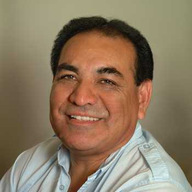
Once a Lancer, always a Lancer. And no one embodies the spirit of his high school alma mater, Denver Lincoln High School, like Denver native Tim Marquez, Class of ’76. But despite his ‘Lancer Pride,’ Marquez is equally proud of the Denver Public School system that gave him the tools to climb the ladder, one that allowed him to reach heights that a young Marquez didn’t even imagine. 

“I honestly don’t know if the word ‘college’ was ever even uttered here,” Marquez says in the Denver Scholarship Foundation video that helps explain the work of the Foundation. Sitting beside his wife, Bernadette, or ‘Bernie,’ as the DSF foundation calls her, the pair take a walk through his old haunts.

Whether ‘college’ was mentioned at Lincoln or not, his first stop after graduation was the academic challenging Colorado School of Mines. Mines is a place where just being smart is common. You’ve got to be a lot more than that!

Photo courtesy: Denver Scholarship Foundation

Marquez survived the rigors of Mines and took his hard-earned engineering degree on a journey of stratospheric heights. Engineering, it’s said, is a field where you can make a mistake, but usually just one.

Learning the oil business from the ground up, he went on to found his own company, a company that went through a number of incarnations including a short tryst with Enron—yes, that Enron—and even getting sued by Erin Brokovich. Again, that Erin Brockovich. 

Thankfully, those days, like Enron, are over. The Brockovich thing was dismissed. WHis company? Finding the right superlative would take too much time. Suffice to say, it’s successful—a word that sells it well short.

Marquez is a fellow whose reality outran his dreams…by a lot. But he’s also a man who’s married to a woman who, like him, likes the idea of ‘paying it forward.’ And the Denver Scholarship Fund embodies that virtue.

In 2006, Marquez and his wife, a native Michigander and Michigan State Spartan, along with the support of then Denver Mayor, now Senator John Hickenlooper and then DPS Superintendent, now Senator Michael Bennet, anted up a matching gift of $50 million to start the DSF.

As DSF grew, money for the DSF fund flowed in from various donors in Denver, Colorado and elsewhere. To say its growth has been anything but amazing would not be truthful! “I will tell you every day,” said DSF CEO Lorii Rabinowitz, “there are forty-million things I love about DFS. I’m awestruck!” Every student who has received a DSF scholarship—from community college to trade school to university—said Rabinowitz, has a remarkable story.

By Rabinowitz’ best estimate, the number of awarded scholarships is today approaching eleven thousand. But in addition to the grants, wherever the student goes, there is someone there to support them. There is also a person “embedded in DPS, “letting them know about DSF. Basically, if they’re interested in college or a tech school, DSF is interested in them.

While DSF is eager to provide a financial assist to its recipients—$3,600 each year up to five years—it does ask that students choose an in-state school. A good portion of DSF scholars, said Rabinowitz, enroll at Metropolitan State University-Denver. 

Not surprising, said Rabinowitz, a number of awards are given to students who are “the first in their families” to attend college. Also, a number of awardees are from immigrant families.

But today, the specter of an unforgiving immigration system for many of the DSF winners is now an omnipresent reality. “There are external factors that we don’t control,” she said. Still, “we want to make sure our young people are safe and doing well.” 

But new realities aside, Rabinowitz says there are so many amazing stories that she has witnessed, stories of ambition, perseverance and accomplishment. Stories of pure grit.

She tells the story of one young girl who never imagined herself as college material. “She was even nervous just to complete her application,” she remembered. Another factor, the young woman’s father was not sold on the idea of his daughter in college. But she not only enrolled and graduated from MSU-Denver, but she also fulfilled her dream of becoming a working pilot. 

“When she graduated,” Rabinowitz said, the aviation grad told her how her father beamed with pride. “I’d never seen him cry,” she told Rabinowitz. He sobbed. “‘Mi hita,” he told her, “I am so proud of you.” Her accomplishment also broke the shackles on a father’s long held belief about a young woman attending college, said Rabinowitz.

When it was time for a younger daughter to graduate high school, Rabinowitz chuckled, the newly ‘awakened’ father insisted the young girls complete her college application. 

Students receiving scholarship are all required to sign a Memorandum of Understanding that they maintain a good academic standing. Also, beyond the DSF money, they can also apply for additional assistance.

While Marquez and his wife have achieved a remarkable level of success, the money race holds no interest for them. They have enough, they say. Enough to give away. 

Despite an early ambivalence about his college alma mater, time mellowed Marquez out. It took a few years, but he realized that his Mines education was the key that opened doors he might never even have knocked on. Today, if you find yourself strolling the grounds of Golden’s Colorado School of Mines, you’ll no doubt run into Marquez Hall. It’s a gift from Marquez and his wife. You might also see a student or two—maybe more—who are enrolled there thanks to some good grades and a generous gift from the couple and the Denver Scholarship Foundation.