






Home Blog Page 87

If you’re tired of the heat, be aware, it’s not going anywhere

We have just moved into July, what is often called our ‘hottest month.’ But really, July has to real- ly do something to make us forget the month we just exited. June was no ‘day at the beach.’ Last month’s heatwave was uncomfortable enough to make us pine for January, our coldest month and when overnight lows average 15 degrees.

“I think it’s been an interesting June,” said Keah Schuenemann, professor of Meteorology at Metropolitan State University-Denver. “We got really hot really fast.” In fact, when Denver recently reached triple digits—June 22nd—it was the earliest date for 100-plus temperatures in nearly 700 days.

June’s heatwave, of course, was preceded by a similar weather pattern that blanketed the nation in May, the MSU-D professor said. “May was the warmest (May) ever on earth…we should be alarmed.” But May was not unique. Monthly record-breaking temperatures have occurred for the last 14 consecutive months worldwide.

Data from NOAA, the National Oceanic and Atmospheric Administration, indicated May’s average global temperature was “2.12 degrees F above the 20th-century average.”

The last two months for record heat, said NOAA meteorologist Greg Heavener, “are more reserved” for late July and early August. “We’re 25-30 days early.” But it’s not just discomfort from the heat, he said, that we should be concerned about.

The trend of consistently warming temperatures, said Heavener, also contributes to the flooding that has already struck in a number of states across the Midwest and South; the deadly hurricanes that have hopscotched across a good portion of the country; the wildfires that have scorched the West, including California, New Mexico and, now Colorado.

Another negative residual of warming temperatures is something campers, amateur gardeners or everyday people wanting to spend more time outside need to be aware of.

The Colorado Department of Public Health and Environment recently identified 2024’s first case of West Nile Virus, something that has also arrived prematurely. West Nile is transmitted by the Culex mosquito.

While West Nile virus is usually treatable, it can have major health complications for others. Health officials say about one in 150 can be severely affected. In the most serious cases, West Nile can cause coma, tremors, muscle weakness and, in the most serious cases, paralysis. Last year, more than 600 cases of West Nile were reported in Colorado. The virus struck in nearly half of Colorado’s counties.

State health officials advise people to protect themselves against West Nile by using insect repellent that clearly states DEET in the ingredients. Also, it suggests, wearing long sleeve clothing and to be especially vigilant in the early morning hours and in the evenings, when the mosquitos are usually out.

One possibility for the early start for the virus is traced to warming winters. Temperatures that used to kill off insects like the Culex mosquito, the vector for West Nile, and the pine beetle, the insect responsible for the defores- tation wrecking U.S. forests all across the West, Alaska and Canada, are not falling far enough to do the job they once did. The insects are surviving.

The cascading effect of rising global temperatures is also manifesting itself in every time zone. “There’s a lot of vulnerable populations globally who are seeing extreme record-breaking heat,” said Schuenemann.

In the Middle East and India, temperatures are regu- larly exceeding 120 degrees. Without the infrastructure, including air conditioning, people are suffering and dying. Temperatures are keeping people from working and the nights are offering no relief; crops and water sources are also drying up. But locally, there is also similar concerns.

In the University of Colorado’s, Colorado’s Arts and Science Magazine, researchers predicted that rising global temperatures very well could have a devasting impact on not just our state’s agriculture but global agriculture. “Heat waves,” CU researchers say, “are projected to become more and more frequent and intense as the century progresses, could cause as much as 10 times more crop damage than is now projected.”

The global climate trends we are now experiencing have been building for the last thirty years, say scientists. Heatwaves, growing insect populations, patterns of extreme drought and precipitation, they say, are the evidence.

Oceans are warming to what science calls a tipping point and the water evaporating from them is a serious factor in the newer intensity levels of tropical storms and hurricans.

In agriculture, growing numbers of farmers and ranchers, have already begun adapting to these emerging patterns.

In a U.S. Department of Agriculture report co-authored by Colorado State University professor Peter Backlund, said climate changes are real. “(It) is making the environment for weeds, pathogens and insects much friendlier, and their range is expanding as the climate warms.”

Despite signs that a change of direction could result in a slowdown if not reversal of the current path the planet is on, there remains a distinct population that refuses to accept science. People like Schuenemann, who believe and teach the data, try and not force it on her students.

“I try to keep politics out of the classroom,” she said. “I present a lot of the evidence and by the middle of the class, we can accept a little more.”


Where to see fireworks this 4th of July

0

The Fourth of July is nearly here, and in Colorado, the fireworks scene is nothing short of extraordinary

Whether you’re seeking a family-friendly event or bustling celebrations, Colorado has something to ignite everyone’s passion for Fourth of July celebrations.

From the heart of Denver to other communities outside of the city, this year’s Fourth of July celebrations promise to be unforgettable. We’ve scoured the state to curate a list of the most spectacular and diverse firework displays, ensuring you can find the perfect spot to celebrate the holiday.

Here are some ways you and your family can celebrate the Fourth of July in style this year.

Adams County Stars & Stripes event

  • Where: Riverdale Regional Park, 9755 Henderson Rd., Brighton.
  • When: Wednesday, July 3, 4-10 p.m.
  • What: Offered for free to the community, AdamsCounty’s Stars & Stripes event will include food, beverages, live entertainment, and fireworks. Food and beer vendors are scheduled to begin serving at 4 p.m. on July 3 while live entertainment with country singer Thomas Mac begins at 7:30 p.m. Musical fireworks will start at 9:30 p.m. For more information, visit https://adcogov.org/stars-stripes.

Big Belmar Bash

• Where: Belmar Shopping District, 7337 West Alaska Drive, Lakewood
•When: Wednesday, July 3, 5-10 p.m.
• What: The City of Lakewood’s Big Belmar Bash will offer entertainment for everyone. Located in the heart of downtown Lakewood, this event will offer children activities, local vendors showcasing unique goods, and food and drinks. Dogs are welcome, and live music is scheduled to kick off at 5 p.m. at a stage on South Teller Street.

At around 9:15 p.m., a drone light show will take place, and event organizers said this show promises to be bigger and better than before. The drone light show is scheduled to be extended this year while MIX 100 will provide the soundtrack for the show.

Northglenn July 4th Festival & Fireworks

• Where: EB Rains Jr. Memorial Park, 11800 Community Center Drive, Northglenn
• When: Thursday, July 4, noon to 9:30 p.m.
• What: Seen by some as the city’s largest family picnic, Northglenn’s July 4th Festival is set to take place rain or shine.

The day will kick off with a car show and will also include inflatable bouncy houses and an obstacle course, community booths, food vendors, a beer garden, live music, and fireworks. The Rotary Duck Derby will also commence at 3 p.m. with fireworks scheduled between 9-9:30 p.m.

Englewood Independence Day Celebration

• When: July 4, 5-10 p.m.
• Where: Cornerstone and Belleview Parks
• What: This event will bring together communities from Englewood, Littleton, Sheridan, Arapahoe County, and the South Suburban Parks & Recreation. There will be fireworks, food trucks, local vendors, and more. No personal fireworks are allowed at this event, and pets should be left at home unless they are a service animal.

Colorado Rockies Fireworks

• When: July 4 and July 5
• Where: Coors Field
• What: The Colorado Rockies will host the

Milwaukee Brewers on July 4 and the Kansas City Royals on July 5. Both games are scheduled to start at 6:10 p.m., and fireworks will start shortly after. For tickets and more information, visit https://www.mlb.com/rockies/tickets/specials/fireworks.

The NBA and NHL postseason moves

0

Now that the Boston Celtics and the Florida Panthers are world champions the race to build next seasons championship team for both leagues is in full swing. Over the weekend both the NBA and NHL kicked off their 2024 draft with the NBA’s Atlanta Hawks securing Frenchman Zaccharie Risacher at number one overall, and the NHL’s San Jose Sharks securing Macklin Celebrini from Boston University.

The Utah Jazz drafted the University of Colorado’s (CU) forward, Cody Williams at number 10 and the Orlando Magic picked up Colorado forward, Tristan Da Silva at number 18. The Minnesota Wild (NHL) drafted Zee Buium of the Denver Pioneers at number 12.

A trade with the Phoenix Suns brought Dayton Flyers center DaRon Holmes II to the Denver Nuggets and sent Ryan Dunn from Virginia to the Phoenix. Holmes II was drafted at number 22 while Dunn was drafted at number 28. In the second round, the Charlotte Hornets drafted CU guard, KJ Simpson.

The Colorado Avalanche had no first rounders, but rounds 2-7 hauled in nine picks after Colorado traded back several times to add more picks. Colorado added several goalies including Ilya Nabokov who had a great year in Russia with the Metallurg Magnitogorsk.

One of the biggest draft stories coming out of Colorado included a young man by the name of Dalton Knecht. Knecht, a guard who started at the University of Northern Colorado made his way to Tennessee to become a Vol and was drafted at number 17 by the Los Angles Lakers. Knecht was born in Fargo, North Dakota but moved to Colorado at a young age, growing up in Thornton. Knecht attended Prairie View High School in Brighton where he averaged 21 points, 6.5 rebounds as a senior. Because Knecht was only 6’1” he received no offers from Division I but later became the SEC conference player of the year.

In other sports the Colorado Rockies lost both of their games in the two-game series they had with the Houston Astros last week. On Sunday the Rockies prevented a three-game sweep by the White Sox with a 5-4 win.

This week the Rockies are at home to host the Milwaukee Brewers (four-game series) and the Kansas City Royals this weekend.

The Rockies are last in the Division and are 12 games behind the number four San Francisco Giants.

The Broncos training camp is completely sold out for the first three camps but tickets for the remainder 13 sessions are still available for purchase. Saturday camps appear to be the hot ticket so if you want to go, purchasing tickets for other days might be easier to find.

Broncos training camp begins July 26 and their last camp will be a joint practice with the Green Bay Packers on August 16th.

The heat is on in southern Colorado

The biggest population center in southern Colorado is Pueblo and, like the rest of the state, Pueblo is burning. Of course, not literally, but there is a nearby fire burning just south of the city.

Pueblo temperatures already have topped the century mark a few different times. Thankfully, not at a consistent heat level, but still, the city’stemperatures are hanging near triple digits, where they will probably remain for weeks to come. The city, though, is managing and taking care of its own.

“We issued two heat emergency temporary housing declarations,” said Pueblo’s Director of Public Affairs, Haley Sue Robinson. Concurrently, the city’s fire department announced it is standing by to address any heat related incidents.

“We’re seeing higher temperatures earlier,” said Pueblo Fire’s public information officer, Tim Trujillo. “We’re trying to get the message out to stay hydrated and stay out of the sun” as best as possible. Trujillo also said city hall has also asked for private sector help, including from local churches. So far, the city has not experienced a spike in emergency heat-related calls.

The city’s parks and recreation department is encouraging people use its six public pools. Pueblo’s City Park pool, the city says, is the most popular, attracting more than 23,000 people each summer. There is also nearby Lake Pueblo in the northwestern section of the county where thousands of people go each summer for their escape from the heat and water recreation.

The weather, while scorching, has not come close to Pueblo’s all-time record high—109 degrees on July 13, 2003. Still, the fire department is on high alert for weather-related calls, including those of children left unattended in cars.

It may seem difficult to even think about these kinds of incidents, but since 1990 there have been nearly 1,100 deaths nationwide of children left unattended in hot vehicles, according to the nonprofit advocacy group, “Kids and Car Safety.” Just last week a six-year-old Florida girl died in such an incident. In the years 2018 and 2019, there were 54 and 53 deaths respectively recorded in these type of calls across the U.S.

Summertime temperatures inside a car whose windows are rolled up can quickly reach temperatures of 108 degrees in as little as 30-45 minutes. Organ failure can happen in as little as 30 minutes in young infants.

“You have heat shining in the windows and temperatures rise quickly,” Trujillo said. “But we have the tools,” he said, to get in and retrieve the child or pet. Colorado has a law that protects people who break a car window to rescue a child or animal. But Trujillo suggests first calling police or fire.

Trujillo said the department has not received any calls of children left alone in cars, but because it is a call that can happen anywhere, the Pueblo Fire Department is prepared.

With the heatwave enveloping southern Colorado, fire crews battling the Oak Ridge Fire are also at risk of not only injury from the fire but heat from the equipment they must wear.

Trujillo said in summer fires, including ones like Oak Ridge, firefighters are monitored for safety. “We want them to be in shape,” he said. The heat, the heat from the fire and the individual energy expended can quickly overcome an individual. “We want to make sure they’re hydrated…we also have inflatable tents” to provide a spot for them to cool down. In the week that the fire has burned and consumed more 1,100 acres, there have been no reports of injuries to fire crews.

Just south of Pueblo, the U.S. Forest Service is battling the first big fire of the season, the Oak Ridge Fire. The fire which is being fought by more than 200 firefighters is located in the San Isabel National Forest and is near the town of Beulah.

Fire officials say that there are approximately 20 homes near Middle Creek Canyon Road that have been evacuated and pre-evacuation orders may also be declared for Vine Mesa, Cascade and Pine Avenues along with Beulah Highlands Road.

Five tips to help stay safe this summer

With the summer season in full swing, it may be tempting to focus on having fun with friends and family. But it’s important to not overlook some commonsense safety strategies that may help reduce the risk of injury or illness, while promoting well-being during the coming months.

Summertime poses some different health risks compared to other seasons, including hotter temperatures, increased time outside and the potential to engage in high-risk sports or activities. In fact, workplace injuries generally increase during the summer months, while the use of health care services tends to increase on very hot days, including among children.

To help safely make the most of summer, here are five tips to consider:

Sun & heat protection. With searing temps causing a spike in ER visits for heat-related issues in some states, it is key to watch for potential signs of overheating, including headaches, nausea, or dizziness. It’s also important to recognize factors that may put you at greater risk of heatstroke, such as being age 65 or older, prolonged physical exertion in the heat and certain medications & chronic conditions. When spending time outdoors, use sun-protective clothing, sunscreen, and sunglasses. Sunscreen should be reapplied throughout the day, at least every two hours, and after immediately after swimming, toweling off, or excessive sweating.

Get outside & away from screens. While too much sun may be an issue, recent research confirms the health benefits of getting outside early in the day, which may help enhance mood, improve sleep patterns, and even spur greater productivity. For kids, getting outside and away from screens is especially important, including for their eye health. In fact, children who spend most of their time on both a smartphone and a computer have an 80 percent higher risk of developing nearsightedness.

Bike safety. Bicycle riding is an effective and fun form of exercise, but it is also one of the leading causes of sports-related head injuries, resulting in thousands of injuries each year. Despite these statistics, previous studies have shown that helmet use among children is not consistent, with nearly one-third reporting never wearing a helmet. Make sure to always wear an appropriate and correctly fitting helmet and watch out for damaged equipment that should be replaced. Parents can encourage kids to choose their helmet and decorate it, with the goal to encourage consistent use.

Water safety. The summer is synonymous with time in the water, including pools, lakes, or rivers. Children should always wear life jackets when on boats or near bodies of water but remember that these floatation devices are not a substitute for adult supervision. Sadly, drowning is a leading cause of death in young children, especially toddlers between the ages of 1 and 4. Enrolling your kids in swimming classes is a good start, as well as becoming CPR-certified in case you encounter an unresponsive swimmer.

Hydration. Drinking plenty of water is key during the summer, especially for children because their inter- nal cooling system isn’t fully developed yet. For every 15 minutes of outdoor activity, people should drink about four ounces of water, which is approximately four gulps. That’s around 16 oz. of water per hour – or more – depending on activity level. Consider skipping soda and sports drinks. Instead opt for homemade popsicles and gelato with real fruit, a fresh fruit smoothie made with coconut water, milk or milk substitute, or yogurt after some time outside.

The summer can provide an opportune time for fun, family, and seasonal celebrations. By considering these tips, it’s possible to enjoy all that comes with the summer as safely as possible.
Source: Dr. Nordstrom, Chief Medical Officer for Rocky Mountain Health Plans, a United Health Care Company

The Declaration of Independence

David Conde, Senior Consultant for International Programs

Thinking about the 4th of July takes me to one of my favorite subjects which is what I consider important moments in American history. I have always had the notion that to cement those instances in my mind I need to memorize words, phrases or dates that keep the subjects alive.

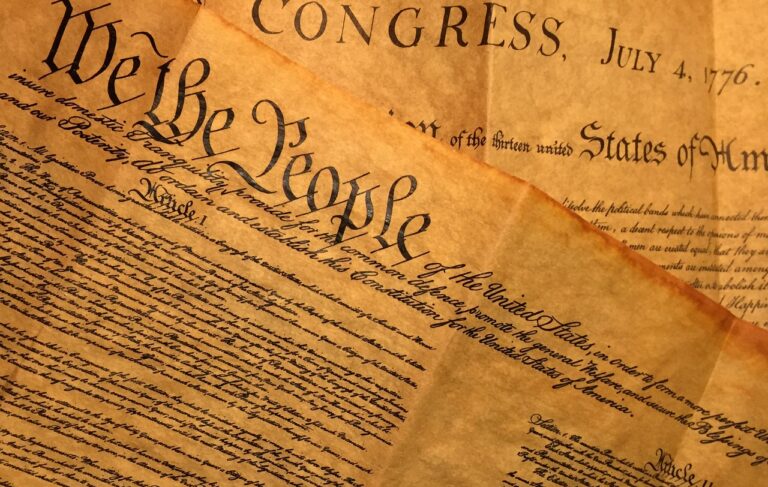
I did this with the Declaration of Independence whose words together with those of the Constitution gave great meaning to my understanding of American exceptionalism. The 1,320 words of the Declaration of Independence, not counting the title and the names of the signatories, is a fast read that can be divided into three parts with excerpts which I memorized.

The first part is a sort of poetic preamble that delineates the philosophy behind the desire to separate from Great Britain. This has two beautiful sentences that I committed to memory. In the first, Thomas Jefferson, the principle author of the document wrote: “When in the course of human events, it becomes necessary for one people to dissolve the political bands which have connected them with another, and to assume among the powers of the earth, the separate and equal station to which the Laws of Nature and of Nature’s God entitle them, a decent respect to the opinions of mankind requires that they should declare the cause which impel them to the separation.”

This excerpt is followed by the strongest statement in the Declaration document. It says: “We hold these truths to be self-evident, that all men are created equal, that they are endowed by their Creator with certain unalienable Rights, that among these are Life, Liberty and the pursuit of Happiness.”

That sentence is part of a larger statement about the right of the people to abolish a government that becomes destructive of its original intent. What follows is a rationale for Independence in the form of a litany of complaints that includes the lack of political representation, taxes, the intrusiveness of the British Army, blocking of self-governance, interference on the free flow of immigrants, and crown barriers to moving West.

The third sentence from the Declaration of Independence that I memorized is the very last one in the document. It is a statement of commitment to the cause that states: “And for the support of this Declaration, with a firm reliance on the protection of divine Providence, we mutually pledge to each other our Lives, our Fortunes and our Sacred Honor.”

Those beautiful words that end the Declaration of Independence encompasses the poetry of excellence that has been a special gift from our founders to the American people of every generation. I have seen, for example, the rationale for separation from the Union provided by the Southern States that constituted the basis for the Civil War and discovered their declarations fail as stylistic and inspirational pieces.

I have also had the opportunity to compare and contrast these documents to the words of the Declaration of Independence and find the special nature of the Declaration worthy as a creator of our great country. An instance of substance comparison is found in the Declaration’s notion about the rights of a free people versus the overwhelming and stated reason for the Southern States leaving the Union which was to protect slavery.

July 4th is a time of celebration that features outdoor activities and fireworks that dramatize our heritage. It also spotlights the image of our flag and its red, white and blue colors.

The words of the Declaration tend not to be noticed. Yet they are powerful.

Hail Caesar, our beautiful lesson in love

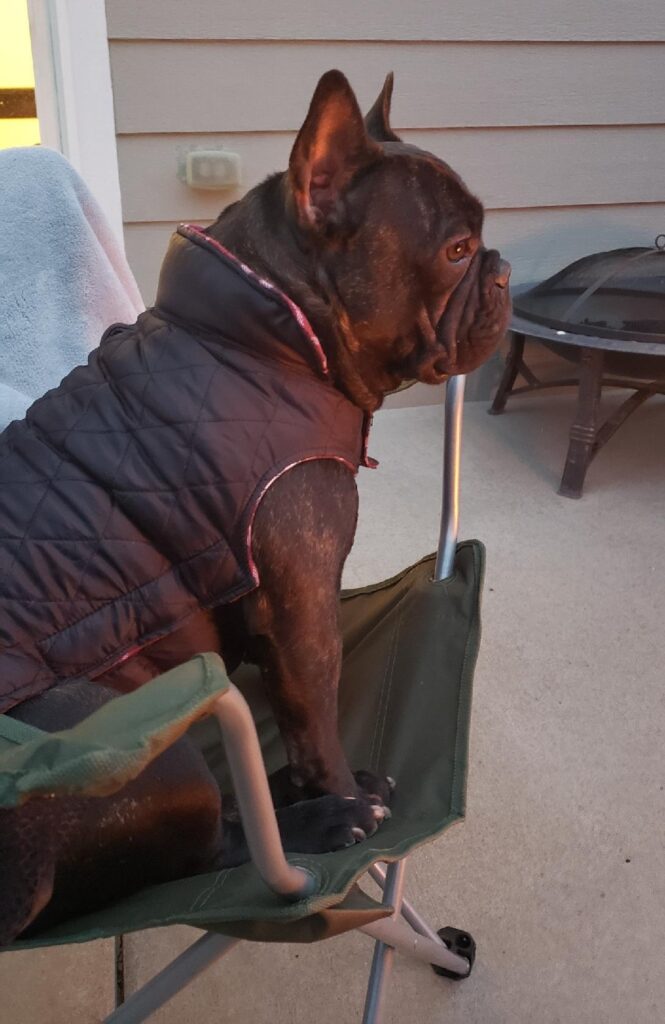
Caesar was as noble and regal as his name. He reminded me of the debonair, classy gentleman that the old time actor, Cary Grant played in movies. He had the ultimate powerhouse muscular body by virtue of the French bulldog breed and was bigger than most French bulldogs. Caesar always thought he was a person instead of a dog, as did we.

Caesar became ill recently and within two days we had to let go of the family pet who gave us years of happiness. He belonged to our son Brandon, but the entire family claimed him as their own. Caesar celebrated every holiday, every birthday and special day with us, at both our homes in Colorado and in New Mexico.

It is my opinion that dogs are placed on earth to help you cope with life when you face the bad times and to also enhance all the good in your life. Our Caesar really was a human inside a dog’s body. He had a swag about him and he filled in the many voids for all of us as a family.

Photo courtesy: Brandon Rivera

As an example, during backyard barbecues, he preferred to sit on a lawn chair and listen to our conversations, than to play with other pets. As we spoke he carefully listened and looked at each family member as if he understood the discussion. His favorite spot in the winter was in front of the fireplace mesmerized and relaxed by a single flame. He loved and had a special connection with everyone in the family and we acknowledged the uniqueness of this incredible dog. Ironically he had a sneaky side to him when he manipulated situations to get his co-dog, Jax in trouble. I saw those smartly planned situations play out as Jax remained clueless.

As a young child, through the teen years and into adulthood. I have owned a dog. From my first mixed look alike ‘Lassie’ collie to three cocker spaniels named Frisco, to the incomparable Caesar, they all hold a special place in my heart.

Caesar was kind, gentle, classy, smart and in tune with each of us. He was my son’s dog for several years. I’m a strong believer that Caesar was placed in my son’s path at a time when he so needed a friend and I forever will be grateful . In his own way he served as therapy for all of us.

And so my noble man’s best friend, thank you for everything. You were and are on a journey to better this world. You shattered our hearts and our world by leaving us so soon yesterday, but you taught us a lesson in loyalty, love and all that is good with the world.

Hail Caesar! Vaya con Dios!

Adams County students awarded over $1 million in scholarships

Fifty-seven Adams County high school students were awarded scholarships totaling more than $1 million on Wednesday, June 26, through the Adams County Scholarship Fund. Adams County Commissioners introduced the Scholarship Fund in 2016, in partnership with the Colorado Department of Higher Education’s Colorado Opportunity Scholarship Initiative.

“These students have all earned this honor through sheer hard work, dedication, and overcoming challenges,” said Emma Pinter, Board of County Commissioners Chair. “Now their mission is clear: Go to college, study hard, and then pay it forward by giving back to their community and ensuring this scholarship continues to be available for future students.”

The scholarships were funded with the voter-approved three percent sales tax on retail marijuana sales in the county. In addition, the Colorado Opportunity Scholarship Initiative matched the sales tax funds to increase the scholarship pool. First-generation and low-income high school seniors were among those eligible to apply for one of the scholarships.

The Board of Commissioners identified Adams County Education Consortium (ACEC) as the fiscal agent for the Adams County Scholarship Fund. ACEC works directly with county school districts or school district foundations. Those include Adams 12 Five Star Schools, Adams 14 Education Foundation, School District 27J Education Foundation, Mapleton District 1 Education Foundation, Westminster District 50 Education Foundation, Strasburg School District 31J, and Bennett School District 29J.

Adams 12 Five Star Schools – 22 scholarships of $22,422.13 each

Bibi Naeima Ahmadi, Samim Akbari, Farid Amami, Brayan Arias, Jaren Barco, Peniel Ditu, Kaya Duran, Olivia Gallagher, Meline Guizar Jimenez, Chasity Hagerman, Samiullah Hamidi, Angel Hendricks, Khudija Khamosh, Mateo Martinez, Mya Mascarenas, Melissa Mijares Sanchez, Alyssa Moulin, Asma Noor Zai, Ashley Rodriguez Castillo, Paulina Ruiz Palma, Isaac Sotelo, Abdul Wajid

Adams County School District 14 – eight scholarships of $14,375 each

Leonela Arreola Ramirez, Ricardo Hernandez, Arianna Hernandez-Soria, Justice Malia Martinez, Eduardo Quintana Rodriguez, Josue Rascon Felix, Jaqueline Rojas Rivera, Mimi Yen Noraseng

Mapleton Public Schools – ten scholarships of $12,000.20 each

Denise Arroyo Rojas, Milton Samuel Cortez Morales, Kacey Culley, Alliton Flores Sanchez, Nichols Garcia, Jashinna Lamas, Jace Lamorie, Layla Lopez, Ruby Trejo, Braulio Uribe 

27J Schools – eight scholarships of $18,935 each

Abraham Ambriz, Linda Briggite Chacon Montes, Katherine Egarton, Eden Kartchner, Michael Lee Medina, Ricky Enrique Pinedo, Julio Prieto, Arina Sadeq

Strasburg School District 31J – one scholarship of $20,838

Colton Hall

Westminster Public Schools – eight scholarships of $17,776 each

Ashley Gardea Ochoa, Hunter Goll, Jesse Hernandez Mendoza, Stacey Lor, Anahi Luna, Alondra Mendoza Hinojos, Jaiden Miller, Mariana Patino

Source: Adams County News and Information

Denver clerk applauds passage of campaign finance bill

Denver Clerk and Recorder Paul López applauds Denver City Council for approving campaign finance bill 24-0718 to improve transparency and oversight of spending in local elections. The measure includes technical improvements and adds safeguards to protect taxpayer dollars disbursed by the Fair Elections Fund. The bill passed City Council Monday and was signed by Mayor Johnston on Wednesday, June 26, 2024.

The measure streamlines the Office of the Clerk and Recorder’s citizen complaint process and increases the Office’s authority to levy penalties against candidates and committees who fail to report required information, including candidates who receive Fair Elections Fund dollars.

Independent expenditure (IE) filers are subject to new disclosure rules, including designating a filing agent responsible for compliance with Denver campaign finance regulations. Organizations that make IE filers expenditures must now report their principal owner and tax status.

The bill also strengthens the voter-approved Fair Elections Fund by standardizing the process to return unspent taxpayer funds. Unspent taxpayer money must be paid back no later than 60 days after a candidate wins an office, loses an election, fails to make the ballot, or is in an uncontested race after ballot certification.

“Denver residents deserve transparency when it comes to campaign spending in our local elections,” Clerk López said. “This bill reflects my commitment to transparent and fair elections, as well as supporting the continued success of the voter-approved Fair Elections Fund to empower small donors in Denver elections.”

The bill contains other technical changes and improvements to campaign finance oversight, such as clarifying that an incumbent running for re-election must follow the same filing processes as a new candidate. A candidate may now only keep their committee open for four years after leaving office, instead of the previous window of nine years.

The changes went into effect on Thursday, June 27, 2024.

Our Government

White House

President Joseph R. Biden, Jr. declared that a major disaster exists in the State of Minnesota and ordered Federal aid to supplement State, tribal, and local recovery efforts in the areas affected by severe storms and flooding beginning on June 16, 2024, and continuing.

Colorado Governor

Governor Polis released the following statement applauding the Biden Administration’s pardons for certain service members who were discharged based on sexual orientation. “Members of the American military who risk their lives to keep us safe should never need to worry about who they love or who they are impacting their ability to serve our country. Today, President Biden corrected years of harmful and misguided policy that punished honorable members of our military for simply for being who they are while serving our nation,” said Colorado Governor Polis.

Denver Mayor

Denver Mayor Mike Johnston, joined by Amy Ford, Executive Director of Denver’s Department of Transportation and Infrastructure (DOTI) and partner organizations, announced a new pilot program to increase safety in Denver by addressing speeding on high-risk streets to reduce traffic fatalities. The city will focus on corridors that make up the city’s high injury network – the streets where most serious and fatal injury crashes are occurring – with targeted actions aimed at reducing fatalities as Denver moves toward its goal of zero fatalities by 2030. “Building a safe and vibrant Denver means improving traffic safety by reducing speeds on Denver roads,” said Mayor Mike Johnston.