






Home Blog Page 94

Latinos lag behind health care coverage, but the gap is closing

0

There are millions of people across America with a health condition they would like to get checked out. Yet because they lack health insurance they don’t go to the doctor. More often than not, these health issues only worsen and by the time they do seek medical attention, a health problem that might have been treated with a simple doctor’s visit becomes an expensive emergency room visit or even extended hospital stay.

The lack of health insurance is a challenge that crosses all ethnic lines, but according to a report by the Center for Migration Studies nearly one in five of those uninsured is Hispanic American. The number represents almost three times that of White Americans.

Uninsured Latinos make up nearly half of the uninsured population with as many as one third of the country’s estimated 65 million Latinos having no health coverage.

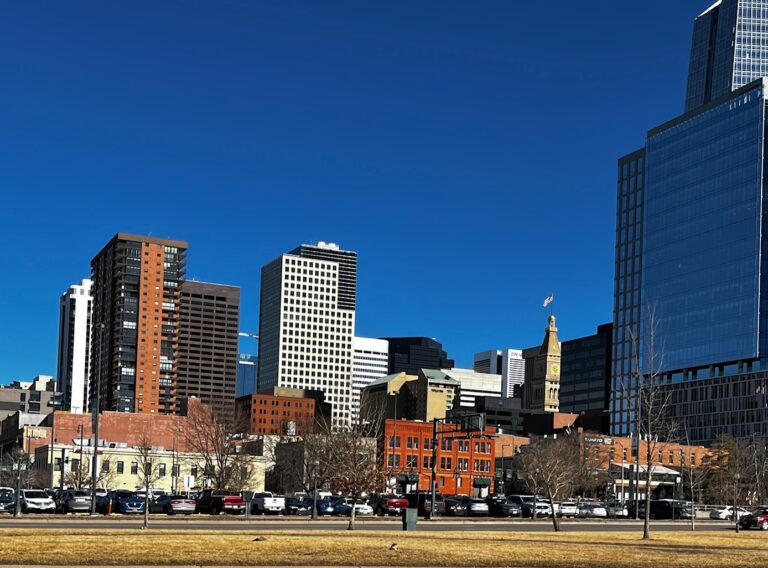
The result is that hospitals, especially city operated ones like Denver Health & Hospitals, must absorb the costs of treating the uninsured.

Just because a person is employed, though, does not automatically confer health care coverage. Latino immigrants, said the study, often work disproportionally in jobs that regularly do not include insurance benefits. These jobs are in construction, landscaping, food service, personal care and truck driving, jobs oftentimes in more dangerous environments.

Additionally, employers with fewer than 50 employees are not required to provide health insurance. It is estimated that close to half of all jobs fall into these categories.

To suggest that the nation’s healthcare system is complicated, vastly understates the reality. As an example, Denver Health and Hospitals CEO Donna Lynn said not everyone without health insurance pays nothing for their health care. But what they pay usually does not come close to the actual costs of their treatments. “A little over eight percent actually pays some small percentage of the bill,” said Lynn. There are, she said, five sources for payment of treatments including Medicaid, Medicare and commercial insurance. Still, despite the reimbursement, there remains a shortfall of the total costs and hospitals like DH&H show a deepening shade of red on its books.

While its name may seem to imply a clear-cut relationship with the city, Denver Health serves a clientele that reaches well beyond the city’s borders. Patients from all across the metro area are seen on a daily basis and patients from all across the state are also not unusual. No one is turned away.

“A little less than a third of our population,” said Lynn, is coming from Denver. “If you’re coming to the emergency room, by law we have to take them…we can’t say you can’t come here” from any metro suburb or anywhere else. DH&H also operates ten satellite clinics across the city and has “19 school-based clinics.” All told, DH&H doctors see more than 280,000 patients annually.

Though costs for a medical issue are lower if seen sooner rather than later, Lynn said it may be a matter of human nature that keeps patients from simply coming in when they should. “Patients who are uninsured are more likely to wait.” When that happens, “They end up in the emergency room.” The uninsured also often delay visits for their children.

One cost that has not bruised the books of Denver Health is the cost for delivering babies. “Last year,” Lynn said, “we delivered 3,800 babies” with very few of the deliveries not covered by insurance. “The state has emergency Medicaid.”

Another thing many might think is driving up Denver Health costs is the influx of immigrants that have landed in Denver over the past 18 months or so. “It has some impact,” Lynn said. But costs would be even higher if the new arrivals did not get treatments, including immunizations. “We want to make sure everyone is immunized.” Just one outbreak of measles could impact an entire community. “Migrants,” she said, are only a small percentage of Denver Health costs.

Still, said the Center for Migration Studies, the nearly 20 percent of Latinos with inadequate health insurance or none at all, is an improvement. The study says that in 2010 the rate was a staggering 33 percent without coverage. The improvement, said CMS, “rates began to improve in 2014 when implementation of the Affordable Care Act— Obamacare—provided new options” for lower or moderate-income earners. Medicaid expansion also aided in the lowest income brackets to get coverage.

The ACA Medicaid expansion opened things up to those with incomes up to 138 percent of the poverty level or slightly above $20,000. There still remain ten states, including Florida, Georgia and Texas that have not opted in. Each has a growing number Latino population, including new immigrants.

Not unlike the costs of everything from gasoline to groceries, hospital costs rise as well. And the red ink gets redder, too. In 2023, Lynn said, the DH&H deficit was $140 million, an increase of $80 million since 2020. “It has really been increasing at a pretty steady rate.”

While the federal, state and city governments make significant contributions to the costs of Denver Health, it is never enough, said Lynn. “This year we’re going to get a two percent increase in Medicaid,” she said. “That’s not enough for our costs, payroll and the cost of drugs.”

The costs of the underinsured or totally uninsured, realistically, are not going away. But Lynn said there are affordable insurance plans that are available. Connect for Care Colorado,” she said, is one option. You can get it “if you work for a small employer…you can go as a small group.” Denver Health also has its own health plan that can be purchased by small employers. “We try and get as many people involved.”

Places to vacation in Colorado this summer

0

One of the best lifestyle aspects of living in the Denver metro area is being only a short trip away from several staycation destinations.

Whether you’re looking to escape into the Rocky Mountains and enjoy the abundant outdoor recreational activities Colorado has to offer or relax and unwind, Colorado has something for everyone.

With the summer quickly approaching and Memorial Day Weekend only days away, now is a great time to start planning a trip in the state. Pack your bags, hit the road, and let Colorado enchant you with its endless possibilities. Here are a few of our recommendations for unforgettable experiences in Colorado.

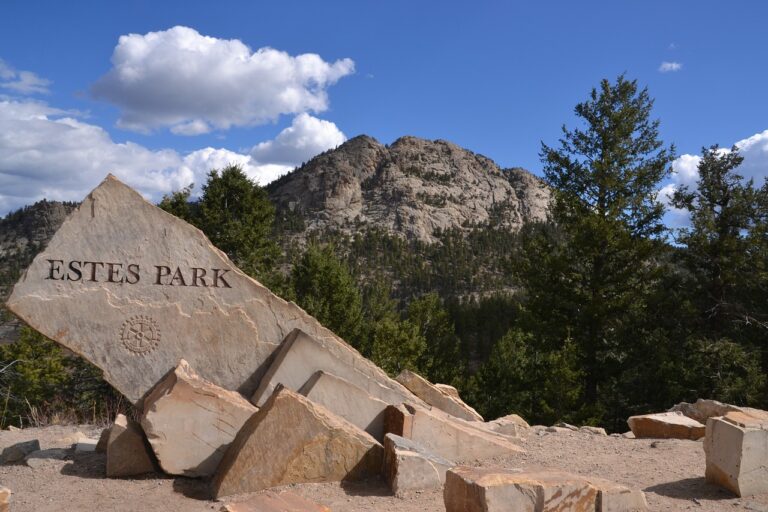
Estes Park

Estes Park has an abundance of activities to make for a perfect getaway.

Among its most popular offerings include Rocky Mountain National Park, which offers 415 square miles of beautiful mountain views and hiking trails. The area is also home to the iconic Stanley Hotel which famously served as the inspiration for the Overlook Hotel in Stephen King’s novel “The Shining.” The hotel includes a bar, tours, and stays.

Other places to explore in Estes Park include the area’s downtown that features local stores, restaurants, and much more.

Keystone

While we are at the end for ski season, there are plenty of fun activities for the whole family in Keystone.

The area is perfect for mountain biking during the summer, horseback riding on Soda Ridge, and scenic gondola rides to the top of Keystone Mountain for views. Golfers can also find joy in Keystone at Keystone Resort, one of the country’s most respected golf destinations.

In general, Keystone Resort is a fun place to stay for families with children and is a short drive from Lake Dillon, a perfect place for kayaking, sailing, and other water activities.

Manitou Springs

Manitou Springs is a great destination for those who love the outdoors. Known for the Manitou Incline, which offers 2,744 steps of elevation, Manitou Springs is a charming small town.

Manitou Springs offers cold-water mineral springs all throughout the town, giving visitors the chance to enjoy fresh mountain water. You can also enjoy time at the Manitou Cliff Dwellings and two museums that showcase cultural displays overlooking the town of Manitou Springs.

The area is nestled between Garden of the Gods and Pikes Peak and offers dozens of locally owned restaurants and cabins for a mountain getaway.

Breckenridge

Breckenridge is more than just a ski town. It’s a place where families can make memorable summer memories in an area of Colorado where the temperature is just right.

There are several family friendly hiking trails in the area like at Trollstigen Trail, Sallie Barber Mine Trail, Spruce Creek Loop, and other options. Breckenridge also offers hundreds of miles of mountain biking trails and Epic Discovery, a mountain top fun park that hosts families all summer.

Outside of food and breweries, Breckenridge also offers indoor fun at escape rooms, Breckenridge Creative Arts, which offers classes, and more to residents, and Eclipse Theater, the area’s only movie theater.

Alamosa and the Great Sand Dunes National Park and Preserve

Located near Alamosa, the Great Sand Dunes National Park and Preserve offers the highest mountains of sand in the country. While offering worthwhile views, the Great Sand Dunes National Park and Preserve is nestled in between the San Juan Mountains and the Sangre de Cristo Mountains, offering picnicking, hiking and camping opportunities.

Alamosa’s downtown area is home to 35 different restaurants that offer diverse types of food, including authentic Mexican, Thai and classic American dishes. For those who love history, the Fort Garland Museum & Cultural Center showcase the town’s original adobe buildings.

Alamosa is also home to hot springs like the Splashland Hot Springs, Sand Dunes Recreation, Joyful Journey Hot Springs, and Valley View Hot Springs.

The Denver Nuggets fight back to even the series

0

The Denver Nuggets needed a second win on the road to even up their series with the Minnesota Timberwolves on Sunday night at Target Center in Minneapolis. They did just that, behind Nikola Jokic, Aaron Gordon and Jamal Murray.

The Nuggets did something they hadn’t done in their first three games with the Timberwolves and that was shoot well in the first half, outscoring Minnesota 29-24 in the first quarter and 35-25 in the second and while Denver was seemingly in control of the first half, the Timberwolves started to claw their way back into the game pulling to within 7, cutting Denver’s double digit lead.

Fortunately for the Nuggets, Minnesota coughed up a couple of costly turnovers in the last thirty seconds of the game that the Nuggets took advantage of by hitting two threes and layup from Michael Porter Jr. (MPJ).

The last three came from Jamal Murray immediately after MPJ’s layup when Minnesota guard, Nickeil Alexander-Walker tried to quickly inbound the ball with just under two seconds left in hopes of giving the Timberwolves a last second shot before the half, but his pass went over the head of the intended receiver and into the hands of Jamal Murray who ducked an opponent and tossed up the Hail Mary three with precision. “Nothing crazy. It felt good from the moment it left my hand,” said Murray.

Despite Murray’s excellent play in Sunday’s win, he wasn’t even the top Nugget of the night, and neither was Nikola Jokic. That title goes to none other than Nuggets for- ward, Aaron Gordon. Gordon was on the floor for 41 minutes (leading all Nuggets) and chalked up 27 points (missing only one shot on the night), 6 assists, 7 rebounds and was Nikola’s release valve when he was getting double and triple teamed.

Nikola who lead all Nuggets in points had 35 points, 7 assists and 7 rebounds, playing 39 minutes. Denver’s bench accounted for 30 of Denver’s 115 points and outplayed Minnesota’s bench all night.

With the Nuggets tying up the series the focus now returns to Ball Arena where the Nuggets dropped their first two games to the Timberwolves earlier this month.

NBA fans and talking heads from coast to coast all but counted the Nuggets out after losing their fist two games at home but how quickly the narrative has once again changed. Coach Michael Malone said it beast, “What I found is Rudy T is right, man. ‘Never underestimate the heart of a champion.’”

Denver will face the Timberwolves in Denver at Ball Arena for game five (results of game not available at the time of this writing) before heading out to Minnesota for game six hopefully for the Nuggets to close out the series.

In other sports the Colorado Avalanche lost 5-1 to the Dallas Stars on Monday night at Ball Arena. Denver’s loss was salt to the wound after it was announced early in the day that Colorado Avalanche forward, Valeri Nichushkin was suspended six months for failing a drug test. Valeri will enter the NHL Player Assistance Program for the second time in 2024.

Nichushkin was whisked away from a Seattle hotel by Colorado Avalanche security during the playoffs last season during the Avalanche, Kraken series. The whole incident was kept well under wraps and very little info was released to the press. Nichushkin entered the NHL Players Assistant Program back on January 15th after sev- eral alcohol-related incidents including one at a Las Vegas hotel when Colorado was playing the Golden Knights. Nichushkin was flown back to Denver and entered the program shortly there after.

The Avs are on the brink of elimination and now face the difficult reality of losing their top scorer for the playoffs for the second year in a row. Game 5 is set for 6 p.m. in Dallas on Wednesday.

Southern Colorado universities show increased Hispanic and women graduates

As the years pass, graduation day will certainly become more and more hazy. But for right now, it will be remembered by new graduates as the day they got their tickets to ‘ship out’ and passage to all points of the compass and adventures unknown.

Commencement at Colorado State University-Pueblo took place under an overcast. Perhaps not the ideal weather after years of sometimes grueling effort for the newly minted graduates, but still a day well worth the wait. It was also a day long in coming for the Pueblo school’s new president.

Armando Valdez, who took the reins of the university following the departure of Dr. Timothy Mottet at the end of last year, was equally excited, not only for the school’s nearly 600 graduates, but for himself and his baptism presiding over his first graduating class.

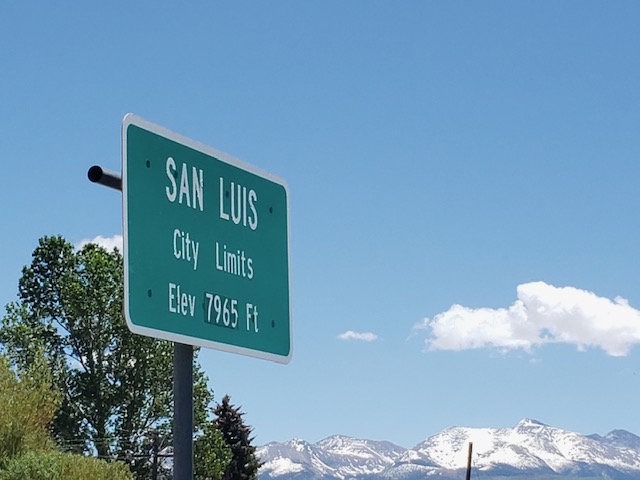
“I’m extremely excited,” Valdez said. “These students have worked hard. Now they go on to transform their futures across so many diverse areas,” said the San Luis Valley native. Their graduation, he said, not only prepares them for what awaits but bodes well for the city of Pueblo where many of them will become future leaders in business and industry.

“The vast majority of them,” said Valdez, “have connections to Pueblo…they will lead, serve” and play vital roles in their city’s future. Some of them, Valdez predicted, may go well beyond Pueblo also take what they learn to serve the nation.

The study of cyber security has become a new degree granting program at the school, a nod to a 21st century necessity in a world of high tech and invisible threats. CSU-Pueblo’s Class of ’24 will provide a smattering of these new graduates or ‘CyberWolves,’ as Valdez calls them. ‘CyberWolf’ is the marriage of the school’s mascot, the Thunderwolf, with the new discipline.

Since 1933, the Pueblo school, in its various incarnations—Pueblo Junior College, Southern Colorado State College, University of Southern Colorado and now, Colorado State University-Pueblo—has produced more than 45,000 graduates. CSU-Pueblo is also designated as a Hispanic Serving Institute, meaning that its enrollment is 25 percent or greater Latino.

Commencement at Alamosa’s Adams State University also took place on Saturday with more than 700 students receiving various degrees, from Associates to Doctorates. Adams State, which serves the vast San Luis Valley, is also designated an HSI school. A total of 22 percent of this year’s graduates are identified as Hispanic.

The San Luis Valley university’s graduating class also reflects a growing trend at colleges and universities across the country in that women students now outnumber men.

Information from Adams State shows that 67 percent of its graduates are women. Women also outnumber men in all categories of earned degrees from Associates to Doctorate. Women in this graduating class, according to school records, earned more than 75 percent of all Masters Degrees.
“There is benefit and burden in achieving any goal.

Both are necessary to thrive,” Dr. Gillian McKnight-Tutein, told the new ASU graduates. McKnight-Tutein is the Colorado Department of Higher Educational Equity Officer.

“Breaking barriers means making decisions with good information, surrounding yourself with the right people, and creating a legacy with your own vibe.”

The culmination of years of hard work where new ways of thinking, while not entirely perfected, along with a college degree, have earned these new graduates a ticket to the future, said CSU-Pueblo’s Valdez. “They don’t even realize the impact they will make.” The adventure awaits.

The politics of Israel-Palestine Conflict

David Conde, Senior Consultant for International Programs

When we talk about Israel in Palestine conflict, we can go a long way back. I had been watching a TV series called Moises y los diez mandamientos (Moses and the Ten Commandments) and now I am watching its sequel, La tierra prometida (The Promised Land).

Both depict the biblical and human version of the Jewish story of slavery in Egypt, the 40 years in the Sinai and now the process of entering the Promise land. Although Canaan was offered to Abraham by God, it was a land already occupied by some of his descendants and others.

Again, when Israel became a country in 1948, the land was already full of diverse people including Jews, Christians and Muslims. In essence, it was a repeat of the biblical story.

Ever since the Jews first arrived to claim the Promise Land and since, in modern times, they achieved independence, there has been constant conflict. Yet, the support for Israel in the last 76 years has been unwavering by the World War II Allies because of Jewish suffering under the Nazis and the fact that it is an oasis in the Middle East of democratic institutions as intended.

For the Arab community, the partition of Palestine was an intractable stumbling block and a deep wound that has not healed. This caused Israel to fight 7 official wars and numerous operations to remain alive as a nation.

During the same period, the Middle East became a hotbed of Islamic fundamentalists that “oppose infiltration of secular and Westernizing influences and seek to institute Islamic law, including strict codes of behavior.” They have employed terrorism as a weapon in the absence of enough military power to change things. America has been a primary victim of that terrorism. It has left an indelible mark on our history, our politics and our national spirit.

Since the founding of Israel, there has been a “natural” desire to go to its aid whenever the country is threatened. October 7, 2023 was no different in this regard.

Once again, the historical “bad actors” in the Middle East surfaced as terrorists and violent adversaries, and not as defenders of justice. It is more of the same terror that has previously brought condemnation.

Having said that, it is noted that there is a new sense, especially on the part of those with little memory of living Middle East history, that we should treat the affected communities differently from the divisive leadership that reigns in the region. That view appears to go directly to the resulting human suffering caused by politics and governments.

That conversation is being played out in the United States and in the world as we approach national elections. Activists in places like college campuses seek to move the political needle their way and yet, the issue is not about which side wins, but about human rights.

The majority of young people from our new generation are looking beyond competing issues and appear to want our leaders to address our sense of humanity in the face of so much death and destruction. They do not want to entertain the radical conservative policies of an Israeli government that seems out of control, nor the Islamic Jihad of Hamas that only kills people.

What they want to see is the protection of the innocent and helpless victims of political agendas and negotiated machinations. They want us to stop the killing and look for ways to live together.

Perhaps this is naive. But it is the growing sentiment in America.

The 2024 Toyota Highlander rules the road

Photo courtesy: Toyota

The 2024 Toyota Highlander Platinum V6 AWD, is a vehicle made for Colorado city or highway driving. It is equipped with a 3.5L V6 engine, 8 speed automatic, 5,000 tow capacity, 295 HP, AWD with dynamic torque vectoring and more.

For your safety and convenience, the 2024 Toyota Highlander is equipped with Toyota Safety Sense, pre-collision system, pedestrian detection, full speed range dynamic, radar cruise control, lane departure alert, steering assist, lane tracing assist, automatic high beams, road sign assist, Star Safety System, blind spot monitor, with rear cross traffic alert, front and back parking assist with auto braking, LATCH, lower anchor and tether for children, and much more.

The 2024 Toyota Highlander’s exterior has LED headlights, adaptive front lights, heated power outside mirror LED fog lamps, hands-free power liftgate, panoramic moon roof, rain-sensing windshield wipers, and more.

Its interior is equipped with 12.3 touchscreen, handsfree bluebooth phone, driver seat with memory settings, digital rearview mirror, heated second row captain seats and much more.

The 2024 Toyota Highlander registered 23-mpg between city and highway driving. Visit your nearest Toyota dealership and test drive one of these top-quality vehicles that you may likely choose as your next vehicle. This year’s Toyota Highlander serves a single driver and offers performance, space and comfort or a serves a family of 5-plus serving all of your everyday driving needs.

DPS and the Denver School Leaders Association agree to a new 3-year contract

0

Following months of negotiations, Denver Public Schools (DPS) and the Denver School Leaders Association (DSLA) have come to a tentative agreement on a new 3-year contract.

Some highlights of the agreement entered into by DPS and DSLA include:

• A 3-year financial agreement
• 4.5 percent COLA plus steps in year 1
• COLA minus steps in years 2 and 3
• Continuation of the Title 1 stipend
• Expanded tiered enrollment stipend to include both Principals and Assistant Principals
• Creation of a single site administrator stipend
• $1,000 retention bonus for all DSLA members
• $1,000 bonus for leaders who have been in their schools for 5 years or longer.
• Collaborative review and revisions for the school leader evaluation fairness guide.
• Establishing a work group on school and leader safety

“I know that Denver Public Schools is a stronger dis- trict when we are united with DSLA in addressing the challenges that school leaders face,” said DPS Superintendent Dr. Alex Marrero. “This strong relationship allows us to be able to provide our scholars a better education. And now, by providing these leaders with the state’s highest salary scale, DPS will be able to recruit and retain highly qualified school leaders.”

“We are truly gratified to have been able to collaborate effectively with the district administration throughout this process,” said Moira Coogan, President of DSLA. “During our discussions, it became evident that school leaders face increasingly complex challenges in their roles. We are pleased that DPS not only recognized these challenges but also took steps to address them, not only through fair compensation but also by ensuring that leader protections and voices are duly acknowledged and upheld.”

The new contract will take effect following the DSLA ratification process and DPS Board of Education approval.

State grant provides $200,416 to reopen historic San Luis market

The San Luis Peoples Market is the only full-service grocery store in San Luis, Colorado, serving the community since 1857, making it the oldest operating business in Colorado. In 2023, a building inspection identified asbestos, lead-based paint, and mold, forcing the store to close its doors. With the help of the Colorado Department of Public Health and Environment’s Brownfields Revolving Loan Fund, the Acequia Institute, which is working on behalf of the market, received a grant for $200,416. The grant will cover the cost of asbestos abatement and lead-based paint and mold removal, making it possible for the market to reopen this summer.

“Access to fresh food is important for healthy and active people. As the only full-service grocery store in San Luis, Colorado, the reopening of San Luis Market will help ensure Coloradans in the valley have access to healthy food in a safe store, and I am glad the state could provide a grant to help reopen this community landmark,” said Gov. Jared Polis.

The Colorado Brownfields Revolving Loan Fund supports Colorado businesses by providing funds to clean up contaminated properties. The fund offers financing with reduced interest rates, flexible loan terms, and flexibility in acceptable forms of collateral. The fund also provides cleanup grants to qualifying local governments and nonprofits. The San Luis Peoples Market is the most recent recipient of a cleanup grant.

“We’re committed to supporting disproportionately impacted and underserved communities in Colorado,” said CDPHE’s Hazardous Materials and Waste Management Division Director Tracie White. “The Colorado Brownfields Revolving Loan Fund transforms properties, and helps small businesses, like the San Luis Peoples Market, keep their community healthy by providing essential services.”

The San Luis Peoples Market provides fresh food and groceries in a community where they are not easily accessible, and the top floor of the market is affordable housing.

“The community the market serves is disproportionately impacted, with EBT purchases (monthly food benefits such as SNAP and WIC that help families and individuals buy the food they need) accounting for over 50 percent of the 25,000 customers served in 2022. While the market was closed, we were forced to furlough employees, and the community noticed less business traffic on Main Street.” says Devon Peña, the president of The Acequia Institute. “The Brownfields grant will help us create a healthy building for healthy food, and restore the market as a vital resource in San Luis. The Acequia Institute has an 181-acre farm producing healthy, traditional crops to donate to the market.”

The institute hopes that the San Luis Peoples Market will continue to serve as a cultural and community health hub in the area, and provide a roadmap for other rural communities as they restore and revitalize their neighborhoods.

Learn about the Brownfields Program and available grants on the CDPHE website (https://cdphe.colorado.gov/hm/brownfields).

Source: Department of Public Health & Environment

Colorado seeks feedback on framework to reduce greenhouse gas emissions

0

The Colorado State Health Department’s Air Pollution Control Division is seeking input on a new proposed framework to reduce greenhouse gas emissions from certain oil and gas operations. The framework outlines recommendations from the Midstream Steering Committee. The report and public feedback will help inform a new proposed state rule. The division will develop the rule proposal for new requirements to protect clean air in Colorado communities and address climate change. The division’s proposal is likely to include groundbreaking requirements that would be the first of its kind in the nation.

“Colorado is already a national leader in enacting innovative requirements to reduce harmful air pollution from oil and gas operations. We continue to demonstrate that leadership with this new planning process,” said Michael Ogletree, the director of the state’s Air Pollution Control Division. “All Coloradans deserve a seat at the table to help protect our clean air. With your input, we can continue developing the strongest proposals possible.”

The Midstream Steering Committee’s report is available for review in English and Spanish. The committee is a technical working group composed of diverse representatives from Colorado communities, industry, local governments, electric utilities, and state agencies. Since 2022, the committee met regularly to develop recommendations to inform the development of a forthcoming statewide rule. The committee was tasked with making suggestions for how to reduce greenhouse gas emissions while prioritizing protections for disproportionately impacted communities. This aligns with requirements in the Colorado Environmental Justice Act.

The report focuses on midstream oil and gas operations. “Midstream” operations include gathering, compressing, and processing natural gas. These types of facilities include compressor stations and gas plants. Midstream facilities exist in 20 counties statewide. The majority of greenhouse gas emissions come from facilities in Weld, Garfield, and Rio Blanco counties.

Midstream facilities are classified as part of the industrial and manufacturing sector. The Colorado Environmental Justice Act requires the state to develop rules that will reduce statewide greenhouse gas emissions from that sector by at least 20 percent by 2030, compared to 2015 levels. This work will also help Colorado advance toward its goal of net-zero greenhouse gas emissions by 2050 as outlined in Colorado’s Greenhouse Gas Pollution Reduction Roadmap.

To achieve these goals, the division will develop a new rule proposal requiring midstream facilities to innovate and reduce emissions. This work will involve reducing emissions from fuel combustion equipment like engines, turbines, and heaters.

The division will accept written feedback on the Midstream Steering Committee’s framework and suggestions until 5 p.m. on June 10, 2024. In addition, the division will hold two online public meetings for Coloradans to provide their comments. The meetings will focus on the report and upcoming rulemaking. Registration is required:

• Tuesday, June 4, 2024, 6-8 p.m.
• Saturday, June 8, 2024, 10 a.m.-12 p.m.

The division will use the committee’s report, public feedback, and its independent judgment to develop a rule proposal. In August 2024, the division will present its initial proposal to the Air Quality Control Commission. The division will request that the commission hold a rulemaking hearing in December 2024.

The upcoming rulemaking is one of many ways Colorado is working to reduce statewide greenhouse gas emissions. Recent actions include:

  • Phase one and phase two of the greenhouse gas emissions and energy management rules, adopted in 2021 and 2023.
  • The Colorado Clean Cars and Advanced Clean Trucks rules, adopted in 2023.
  • The building performance standards rule, adopted in 2023.
  • The greenhouse gas intensity verification rule, adopted in 2023.
  • The recovered methane protocols and credit tracking system, adopted in 2022 and launched in 2023.

Our Government

White House

President Joseph R. Biden, Jr. declared that a major disaster exists in the State of Iowa and ordered Federal assistance to supplement state, tribal, and local recovery efforts in the areas affected by severe storms and tornadoes from April 26 to April 27.

Colorado Governor

Governor Polis signed bills into law that support more housing near transit, and allow Coloradans the freedom to build accessory dwelling units (ADUs, also called mother-in-law flats or casitas) on their property, creating more housing options that are affordable. Governor Polis called for both of these actions in his 2024 State of the State address. “Coloradans have demanded solutions that will reduce the cost of housing and I’m proud that we have worked together to deliver real results. Coloradans are overwhelmingly supportive of ADUs and this legislation gives many Coloradans the freedom to build them on their property if they choose to. I appreciate the work of the bill sponsors and look forward to seeing Coloradans take advantage of this new freedom,” said Governor Polis.

Denver Mayor

Mayor Mike Johnston today announced the establishment of the Office of Neighborhood Safety (ONS), a collaborative effort spearheaded by the Office of Social Equity (OSEI) & Innovation and the Department of Public Safety (DOS). The office will encompass current city agency resources such as Safety Youth Programs, the Office of Community Violence Solutions, The AID Center, and STAR 911 Operations. The strategic reallocation of resources, including approximately 65 full-time employees and $11 million, marks a significant shift from the Department of Public Safety to OSEI. “The Office of Neighborhood Safety marks a significant step forward in Denver’s commitment to creating safer and more equitable neighborhoods,” said Mayor Mike Johnston.