Home Blog Page 82

Poverty and education

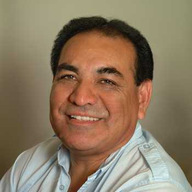
David Conde, Senior Consultant for International Programs

The last weekend in July of this year we celebrated the 18th Conde/ Silva family reunion in Dallas. It was an event everyone looked forward to with great anticipation.

Our last reunion was held in San Diego in 2018 and the participants expected to have the next one in Dallas in 2020. We normally have our family reunions every 2 years, but COVID 19 interrupted our plans and caused a 6-year hiatus.

As we looked at the extended time that went by, it became apparent that major changes in the family have taken place. Among them is the fact that a new generation has come forward to lead us into the future and the socioeconomic condition of the family has risen significantly since its initial reunion in 1985.

Our first reunion took place less than a generation since the family was part of the migrant farmworker community that toiled in the fields of the Midwest and the South. Educational advancement was just beginning to take hold and poverty was still a significant factor in its everyday life.

Thirty-nine years later the family reunion was hosted by our cousin who is also the Dean of the College of Education at Texas Christian University and the participants included doctors, attorneys, teachers, designers, business owners, active and retired military officers among others. The family history has caused me to take a second look at the assumptions featured in a theory called “the culture of poverty” that were so prevalent beginning in my college days.

“The culture of poverty is a social theory that suggests that people in poverty develop certain habits that can trap their families in poverty across generations. The theory was popularized by anthropologist Oscar Lewis in the 1960s after his studies of Mexican and Puerto Rican families.” The Children of Sanchez (1961) publish by Lewis became a favorite of those that saw little hope for the social and economic future especially of minorities that were by definition labeled as poor.

The Chicano Movement had to fight that mindset in order to open the doors of opportunity for political, economic and educational improvement. The Movement also originated a counter theory, that it was the oppressor that owned the mindset and used it to block minority access to these opportunities. It did this as Chicanos targeted the educational establishment in their quest for change.

High School blowouts, college sit-ins and demonstrations in cities around the country became a common occurrence during those turbulent days. Also, federally funded initiatives designed to help minorities, many times, found ways to bypass or co-opt local or state resistance to change. Among the programs founded to meet the needs of children with culturally distinct educational requirements were bilingual education, competency-based instruction, open classroom, performance-based schooling, dual language approaches and individually paced strategies that best relate to a child’s academic learning style. Programs like these and financial support to attend colleges and universities became the vehicles for success.

“Education is the light of world” is the motto of those that saw the monster of academic darkness attacked successfully at times by Chicanos and others for Latinos success. Those efforts have paid off in a big way.

The culture of poverty does not conform to the dynamics of change and opportunity in America. That is, given an environment that expands individual life possibilities, a part of the American character, there is little reason to apply the theory to our world view.

Being poor is not necessarily bad. What is bad is when poverty defines expectations.

A Week In Review

0

Africa

Mali halts diplomatic relations with Ukraine

Officials in Mali say the country has cut diplomatic relations with Ukraine. Recently, a military official suggested Kyiv played a role in deadly fighting near the Algerian border last month. The incident resulted in the death of dozens of Malian soldiers who were killed while clashing with Tuareg separatist rebels and fighters linked to al-Qaeda. Ukraine officials said the rebels had been given the information necessary to conduct the attacks.

Suicide attacker targets Somalia beach

At least 32 people were killed during a suicide attack at a beach in Somalia. The militant group al-Shabab claimed responsibility for the attack. Images showed a large number of dead bodies and wounded people. Al-Shabab holds power over parts of southern and central Somalia. The group is linked to al-Qaeda.

Asia

Bangladesh prime minister leaves country

Bangladeshi Prime Minister Sheikh Hasina has left the country in order to be in a “safer place.” Recently, there have been weeks of deadly anti-government protests, and thousands of people stormed Hasina’s official residence, calling for her to step down. Protesters in Bangladesh originally began demanding to abolish quotas in civil service jobs, but now, protests have escalated into a mass anti-government movement.

Landslide buries hundreds in India

Officials in India are searching for more than 200 people who went missing after landslides. At least 196 people were killed in the Indian state of Kerala because of the landslides. The incident occurred in the middle of night when most people were sleeping, giving them slim chances to escape. Thousands of people were moved to relief camps to avoid disaster areas.

Europe

Ukraine receives fighter jets

Ukraine President Volodymyr Zelensky confirmed that the country has received its first American F-16 fighter jets. NATO countries have pledged 65 F-16 jets to the country to help in its defense against Russia. Gaining the jets marks is an important milestone in improving Ukraine’s air force. The country had been previously using old Soviet-era jets.

Greece works to combat goat plague

Officials in Greece have banned the transportation of sheep and goats to try to contain goat plague. The virus can kill between 80-100 percent of infected animals, but does not affect humans. Since the disease first entered the country in July, at least 7,000 animals have been culled in Greece.

Latin America

Mexican journalist killed

Alejandro Martinez, a Mexican journalist who was under police protection, was killed in the central state of Guanajuato. Martinez was attacked by unknown gunmen and died in a hospital from bullet wounds. He was known as “The son of the Lone Ranger” and ran a popular news outlet on Facebook. Martinez had been under police protection since 2022.

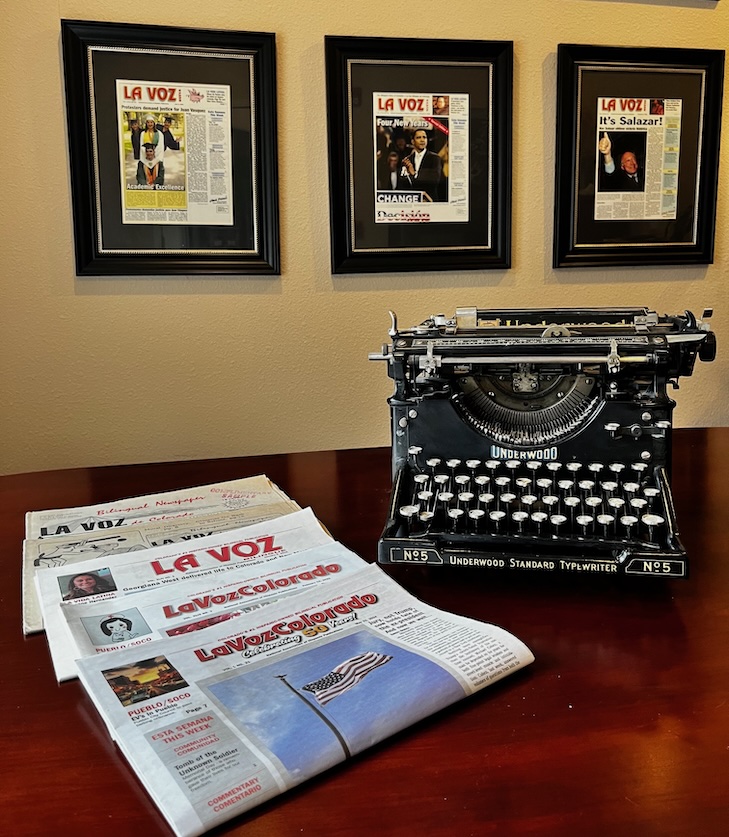
LaVozColorado celebrates 50 incredible years!

0

Because so much of the population and, particularly Colorado’s, is under the age of fifty, many of the stories that have appeared in the pages of LaVozColorado might seem either foreign or more likely ‘ancient history.’ Nonetheless, over that span, like clockwork, each week, LaVozColorado has offered readers stories that are now part of our collective history. Or, perhaps, others right now, are being talked about at water coolers, diners or kitchen tables.

As important, is the fact that LaVozColorado has served as the state’s and region’s preeminent bilingual weekly publication focusing on issues often missed or even ignored by legacy media, but nevertheless remain important to our growing Latino population as well as so many others.

Over the course of the last half century, LaVozColorado has educated its readers on state and local politics, introduced readers to individuals or ideas they might not learn about from other agencies. It has provided news about sports, weather and climate while regularly providing information important to their lives.

When LaVozColorado launched in 1974 there were far, far fewer social, political or Latino or Latina leaders and influencers as well as sources where we could learn about them. But we, like you, have watched this picture, this landscape, change in an amazingly important way.

There is neither enough time nor space to encapsulate all the important people, places and events that have captured our headlines over the last half century. Instead, what we hope to do is simply convey the arc of the news and information LaVozColorado has brought to both its readers and visitors, in the age of the internet where news travels instantaneously, the entire world.

America learned about Denver native Rodolfo ‘Corky’ Gonzales during the turbulent 1960s and 1970s. The Crusade for Justice, Corky Gonzales and his wife Geraldine led the fight for civil rights and equality. The newest public library at the busy intersection of Colfax and Irving bears his name. Dolores Huerta, the ‘right arm’ and farm labor leader Cesar Chavez have appeared on these pages. LaVozColorado readers have read the amazing stories of José Hernandez and Ellen Ochoa. Hernandez grew up in a migrant labor family. Hernandez spent 13 days in space aboard the space shuttle. His story is told in the movie, ‘Million Miles Away.’ Ochoa was America’s first Latina astronaut. Ochoa is also a classical flutist who has performed with the Stanford Symphony Orchestra. She played the flute on her first space mission.

The roll call for amazing stories about amazing Latinos has been and will always be part of the mission of LaVozColorado. Space limitations prevent a comprehensive list. But when a Latino makes a significant contribution to the arts, science and technology or even pop culture, you will read about them here.

LaVozColorado has written about the state’s good, bad and ugly. And politically, nothing may have been uglier than the 1992 passage of Amendment 2. It essentially robbed the LGBQT community of many of its civil rights. The U.S. Supreme Court later ruled it unconstitutional. LaVozColorado has also covered a number of governors, to name a few, Richard Lamm. Roy Romer, Bill Owens, John Hickenlooper including the election of the state’s first openly gay state Chief Executive, Governor Jared Polis.

LaVozColorado has featured stories about a young south Texas lawyer who planted roots in Denver, became a leader in the state legislature and made history in 1983 when he upset the establishment, becoming Denver’s first Latino Mayor. Federico Peña would go on to serve as President Bill Clinton’s Secretary of Transportation and later Secretary of Energy. For newcomers, think ‘Peña Boulevard.’

We covered the candidacy and ascendence of Ken Salazar, ‘el hijo de Valle,’ who was born and raised in the San Luis Valley, became the state’s first Latino to win a statewide political race and become Colorado Attorney General. Salazar went on to the U.S. Senate, became Secretary of the Interior, and, today, serves as U.S. Ambassador to Mexico.

When LaVozColorado began publishing, Denver was a ‘fly-over,’ city. No longer. Today, Denver International Airport, a single element in Mayor Peña’s ‘Imagine a Great City,’ vision is now the world’s third busiest airport. DIA connects Denver to the world with non-stop flights departing and arriving daily. The airport project was begun by Peña and completed by Mayor Wellington Webb, Denver’s first African American mayor. DIA’s first flight landed February 28, 1995. More than a billion passengers have since passed through its gates. Recently LaVozColorado reported on a young Latino attorney and Harvard graduate, Everett Martinez hired as lead counsel for DEN.

Today LaVozColorado goes to the world via the internet, an idea thought inconceivable in 1974. We now live in a city and region crisscrossed by a light rail system; a city whose sports appetite is satisfied by major sports franchises (the Denver Broncos, the Denver Nuggets, the Colorado Avalanche, the Colorado Rockies, and the Colorado Rapids), including several with world champion- ships (still waiting on the Rockies). The city has, indeed, blossomed.

But while Denver and LaVozColorado have grown together over the past 50 years, one event has stood out above all others, and it was covered early on in these pages. It concerned an emerging virus that was appearing first in China and soon finding landing spots in other Pacific Rim nations.

On February 5, 2020, LaVozColorado featured a front-page story on this emerging virus. At the time, thousands—mostly in Asia—had contracted it but only a few hundred had died. Few, at the time—even those who studied viruses—could imagine how COVID19 as it was named, would impact the world. “Most people will get better, some people won’t,” said Denver Health and Hospital’s Dr. Gaby Frank as we entered one of the darkest periods of the last hundred years.

Worldwide, COVID killed more than 15 million people. Across the U.S. it claimed more than a million lives. In Colorado more than 1.7 million people contracted COVID, more than 14,500 died from the virus. It remains an active virus, but its impact has fallen dramatically.

Over its lifetime, LaVozColorado has reported on Colorado’s worst natural disaster ever, a day before Colorado’s Centennial celebration, The Big Thompson Flood took the lives of 144 men, women and children.Beyond human life, damages were estimated at $35 million, nearly $200 million in today’s dollars.

Other tragedies have also regrettably been written about on the pages of LaVozColorado. ‘Columbine,’ a single word that is referenced in all U.S. school shootings occurred April 20, 1999. Two deranged high school students marched methodically through Littleton’s Columbine High School killing twelve students and a single teacher. They would also take their own lives.

Regrettably, Columbine was not the only school mass shooting that captured the country’s and world’s attention., a number of which also occurred in Denver area schools. While the nation is not inured of this horrid crime, it nonetheless is no longer surprised when one occurs.

Twelve years ago, on July 20th, a mentally ill gunman, shot and killed a dozen people in an Aurora movie theater. Another 70 others were wounded, including 58 by gunfire. The killer, judged insane, is serving a multitude of life sentences. Suffice to say, mass shootings have become regular parts of Colorado and American life. LaVozColorado reported the senseless tragedy and regularly pays tribute to the victims.

As Denver and the region grew—it now counts more than 3 million people—so too have its options, cultural and entertainment.

One of the most significant events to occur in Denver in the 21st Century took place in 2008 when the city hosted the Democratic National Convention in which Barack Obama was nominated and later accepted the nomination at Mile High Stadium. Obama was elected as America’s first African American President. (In 2012, LaVozColorado was also the only Hispanic media to have an exclusive one-on-one interview with President Obama as he sought reelection.) LaVozColorado also endorsed its first presidential candidate in Obama.

Denver has played host to Major League Baseball’s All- Star game—not once, but twice. It also hosted the NCAA’s Final Four in 1990. Of course, LaVozColorado wrote about Denver hosting the 1975 ABA basketball game. The format had the Denver Nuggets against a team made up of the rest of the league’s all-stars. The Nuggets had three Hall of Famers on that team, David Thompson, Bobby Jones and Dan Issel. There were also Hall of Famers on the other team including Julius Erving, George Gervin and Artis Gilmore. The game featured the first Slam Dunk contest, won by Erving with an iconic last dunk. Incidentally, the Nuggets won the game.

The game was played at McNichols Arena, named for late Denver Mayor Bill McNichols. It no longer exists. The same holds true for the venue where the Colorado Rockies began play in Denver. McNichols and the original Mile High Stadium have been replaced by Ball Arena and Coors Field. Mile High Stadium is now Empower Field at Mile High.

Over the course of the last fifty years, LaVozColorado has written about the departure of Latinos who have had significant and profound impact on the city and state. Former Colorado Speaker of the House, Ruben Valdez, died in 2019. An interesting fact about Valdez is that he was Colorado’s first Latino Governor. He served for a matter of days in 1976 when both the Governor and Lieutenant Governor were out of state.

Also gone are the Honorable Roger Cisneros and his wife Adelia. The pair died together in 2017 from carbon dioxide poisoning. After serving in the Army during WWII, Cisneros returned to Denver where he earned a law degree. When he joined the bar in 1957, he was only one of five Hispanic attorneys in the state. Cisneros and his wife were both long and strong advocates for Latino civil rights. Cisneros also served in the state legislature and was appointed by late Governor Richard Lamm as district judge.

Other Latino political and social leaders no longer with us include Sal Carpio, Sam Sandos, Paul Sandoval and Val Vigil. Carpio was Denver’s first Latino City Council member. Sandos later served with Carpio.

Today, the names of Latinos and Latinas are common among Denver and Colorado’s political, educational and social power brokers. And many have been written about on these pages. While there are too many to list, here are the names of few: Polly Baca, State Senator, Ramona Martinez, City Council, Christine Arguello, the state’s first Latina federal judge, Monica Marquez, the state’s first Latina and LGBQT to sit on the state Supreme Court, Katherine Archuleta, Director of OPM in the Obama Administration Christine Marquez-Hudson, Vice President of Advancement at Metropolitan State University-Denver, Terry Fox, a Colorado Court of Appeals Judge who grew up ‘following the crops’ as the daughter of a farm worker, Susana Cordova, the state’s first Latina Education Commissioner, Patricia Barela Rivera, former SBA Director, Crisanta Duran, the first Latina Speaker of the House in the state legislature, Don Mares, CEO of the Colorado Trust Foundation, James Mejia, Chief Strategy Officer at MSU-Denver.

The list of Latinos and Latinas making contributions to Denver and Colorado in politics, the arts, science and technology and in fields where just scant years before were missing, will continue to grow and, as those who came before them, they will be written about on the pages of LaVozColorado.

This year LaVozColorado’s 50 years of weekly editions will have a permanent home at the Colorado Historic Newspapers site and will be accessible to the public, thanks to a generous donation from the Colorado Trust Foundation via the Denver Public Library Friends Foundation. Also, later this year LaVozColorado (Publisher Pauline Rivera) will be inducted into the Denver Press Club Hall of Fame.

Nuestra Gente for the past 50 years

Throughout LaVozColorado’s 50 years in existence, we have been right by Colorado’s side, providing Colorado’s Latino community with important news. From profiling community leaders to covering organizations and non-profits, LaVozColorado has aimed to highlight the diverse stories and contributions that enrich Colorado’s cultural tapestry. We have endeavored to be a platform for voices often unheard, and we have documented the growth and evolution of our state, showcasing the everyday heroes who make Colorado their home. Here are just some of the stories that LaVozColorado has documented the past 50 years.

Remembering Latino and Latina community leaders gone before us

We remember the late Paco Sanchez who provided news and music over the airwaves and brought top entertainment to the famous GAO and Mexican cinema to the Holiday Theater. We honor Bernie and Dora Valdez, community activists who helped to establish bylaws for LARASA, formed to improve the life of Latinos, develop research, provide services, and address economic conditions that Latinos faced. The organization later transformed into CLLARO, with the same goals in mind. Valdez was also co-founder of the Latin American Educational Foundation (LAEF). Who can forget the incomparable educator, Lena Archuleta who went from teaching roles to principal and advocating for Latinos, or the spunky but sincere John Ortiz, who was part of the Coors operation In Golden advocating for the Latino community, like the then American GI Forum, Mile High Chapter, the late journalist and on-air talent, Sherri Vasquez, the late Joe Ulibarri whose Ulibarri Construction Company acquired one of the first Hispanic contracts at DIA, or the late Joe Jiron who led the operations of Brothers Redevelopment, Inc. in its early days, then led by MaryAnn Shing and now led by Jeff Martinez. With fond memories we recall the first Hispanic General Manager at KDVR, Channel 31, George Sandoval, or who can forget the talented Leo Cardenas or the gifted educators David Mejia and Frank Lucero.

While there are so many great leaders gone before us, we remember the late Frank Solis, and the civil rights advocates, Rodolfo “Corky” Gonzales, his wife Geraldine Gonzales, Richard Castro and more. Recalling the political saavy of the late Paul Sandoval who advocated for betterment of his community We have covered the political career of the late Val Vigil who served on Thornton’s City Council ad as Mayor pro-tem.

Media contributors

Long remembered are those leaders in media who represented our Gente in front of or behind the camera or told our stories when mainstream media would not. They include, former Denver7 General Manager, Cindy Velasquez Peña, first female general manager at a Denver TV station, long-time news anchor, Anne Trujillo, gifted reporter, Lance Hernandez, and the late and great sportscaster, Gary Cruz. Butch Montoya played a large role in the 9Newsroom as did community affairs pros, Lynn Valencia and Elaine Torres at CBS4. Our hats off to Michelle Griego at CBS4 with her winning media experi- ence and we honor the on-air and master of ceremonies, of Luis Canelas.

Colorado Politics

We continue to cover Denver’s ever-changing political scene to include Denver City Council members, Colorado representatives and state senators, and others who have shaped and contributed to our state over the past 50 years. Through it all LaVozColorado has been there to keep our readers informed.

Notable leaders in Denver and Colorado we have cov- ered include former Denver Mayor Wellington Webb, and his wife Wilma who both tirelessly work for communities of color, the Honorable Christine Arguello, former State Senator Polly Baca, former councilwoman Judy Montero, current City Clerk & Recorder, Paul Lopez, former city councilwoman at large, Deborah Ortega, Councilwoman Romana Martinez, and others like newly appointed Denver City Council President Amanda Sandoval.

Outside of politicians, LaVozColorado has also highlighted others who play an important role in the city. Elena Mendoza, Executive Director at Latinas First Foundation here to take the organization to the next level. The incomparable Rosemary Rodriguez and Romaine Pacheco.

Carlos Martinez who has taken The Latino Community Foundation to a new role, the ever-present Juana Bordas original cofounder of Mi Casa, Juanita Chacon and Mescha Rhoades who both founded the Latinas First Foundation. We honor the work of siblings Pat Cortez, a former Wells Fargo Executive, a leader in support of so many community efforts and recently retired Angela Cortez of AARP communications director distinction. 

Keeping Latinos/Latinas informed about health, education, veterans and other issues

Each year, LaVozColorado makes it a focal point to address health in our communities and inform our readers about resources available through special editions. During the COVID-19 pandemic, LaVozColorado informed readers about the inequities Latinos and Latinas faced. We made sure to cover the importance of vaccinations and inform readers about how the virus was impacting local businesses and others. Outside of the pandemic, LaVozColorado covers other crucial health related topics, including the importance of heart health, and other issues like education, immigration, the economy, veterans and more. Decorated and long-standing veteran George Autobee continues his contributions to community and Latino research and advocates for Veterans. We honor the ever-involved community leader Don Mares, CEO of the Colorado Trust Foundation who continues his work on behalf of community. Another extraordinary champion of community, James Mejia, supported Latino issues throughout his career and is now Chief Strategy Officer at MSU-Denver. Pat Salas’ never-ending work in education continues.

Reporting on the nonprofits and organizations that serve our community

LaVozColorado is proud to cover key nonprofits and other organizations in the state that serve our communi- ties, from Servicios de la Raza led by Rudy Gonzales to LAEF, to NEWSED we’ve partnered with annually with the Cinco de Mayo Festival at Civic Center to covering stories about Su Teatro, El Museo, Mi Casa, the Latinas Initiative, Water World, the Denver Scholarship Foundation, the Denver Dumb Friends League, Volunteers of America, the Better Business Bureau, the Denver Public Library, the Colorado Trust Foundation, the former Hispanic Annual Salute led by Dan Sandos to the incomparable duo Rob and Lola Salazar who head the Salazar Family Foundation, uncluding CLLARO led by Dr. Michael Cortes.

Our apologies if we’ve missed a name or two. Thank you for allowing us to be a part of your lives for 50 years! We look forward to continuing our journey together, amplifying the stories that matter, and serving as a beacon of information and connection for years to come.

Celebrating 50 years as Colorado’s only

0

Celebrating the 50th anniversary of LaVozColorado is more than just a milestone; it’s a testament to the enduring power and necessity of a balanced bilingual voice in our vibrant Colorado Latino communities. As Colorado’s only balanced bilingual (Spanish/English) newspaper, LaVozColorado has not only chronicled the lives and stories of its readers but has also played a pivotal role in bridging cultural divides, fostering understanding, and celebrating the achievements of our communities.

From a sports perspective, LaVozColorado has been there through every triumph and heartbreak, delivering the most memorable moments of Colorado’s most significant sports achievements in both Spanish and English. This inclusive approach ensures that no member of our community misses out on the excitement and pride that comes with our local teams’ victories.

Who could forget the Denver Nuggets’ victorious march to their first NBA championship? LaVozColorado provided comprehensive coverage that captured the heart-pounding moments of Nikola Jokic’s dazzling plays, Jamal Murray’s clutch performances, and the unwavering support of the Mile High City. The paper’s bilingual reporting allowed all fans, regardless of their primary language, to share in the joy of seeing the Nuggets lift the Larry O’Brien Trophy.

Similarly, when the Colorado Avalanche clinched their third Stanley Cup, LaVozColorado was there, reporting on every thrilling goal, save, and celebration. The Avalanche’s victories in 1996, 2001, and 2022 were more than just sports achievements; they were moments that brought our commu- nity together, creating shared memories that transcended language barriers.

The Denver Broncos have given fans plenty of reasons to cheer, and LaVozColorado has been a steadfast companion through the highs and lows. From the back-to-back Super Bowl victories in the late 1990s under John Elway’s leadership to the unforgettable Super Bowl 50 triumph led by Peyton Manning and Von Miller, LaVozColorado’s coverage has ensured that every touchdown, tackle, and victory was shared with the entire community. The newspaper’s dedication to bilingual reporting has made it possible for both Spanish-speaking and English-speaking fans to relive the glory days and stay connected to the team’s legacy.

Even in baseball, LaVozColorado has played a crucial role. The Colorado Rockies’ improbable run to the World Series in 2007 was a magical time for the state. As the Rockies battled their way through the playoffs, LaVozColorado provided in-depth coverage that brought the excitement of each game to life. Though the Rockies ultimately fell short in the World Series, the journey there was unforgettable, and

LaVozColorado’s reporting ensured that the passion and pride of the Latino community were front and center.

LaVozColorado also brought in depth coverage of the Colorado Rapids only MLS Cup win in 2010 in addition to the coverage of the University of Denver’s Men’s Hockey championships in 2017, 2022 and 2024.

In the world of boxing, LaVozColorado’s coverage of the Manny Pacquiao vs. Ricky Hatton match was a standout example of how the newspaper has kept its readers engaged with major sporting events. The fight, which saw Pacquiao deliver a stunning knockout, was a significant moment in sports history. LaVozColorado’s bilingual reporting allowed fans to follow the build-up, the bout, and the aftermath, ensuring that everyone could partake in the excitement, regardless of language. Local boxing star Mike Alvarado was also covered until he ended his career.

As LaVozColorado celebrates its 50th anniversary, it’s clear that its role in our community extends far beyond sports reporting. It is a vital institution that has connected generations of readers, celebrated cultural milestones, and provided a platform for voices that might otherwise go unheard. Here’s to LaVozColorado – may it continue to inform, inspire, and unite us for many more years to come.

LaVozColorado’s commitment to Pueblo and southern Colorado

It is an area that most people, unless they live in Colorado, pay scant attention. But Pueblo, the hub of southern Colorado, plays a vital role in the state in so many ways. And the towns—many unknown to so many state residents—to its east, west and south make their own contributions to the state.

LaVozColorado has worked hard trying to bring some of the stories of this region to light each and every week for more than a decade. It has told stories, certainly of Pueblo, but also of the many things that happen in ‘off-the-beaten-path’ places of this exciting southern Colorado region.

LaVozColorado has written extensively about the social, political and cultural happenings in Alamosa, San Luis—Colorado’s oldest town—the Arkansas Valley, Caῆon City, Florence and towns many have never even heard of. One example is the town of Hooper.

Now Hooper, population 80, is no cultural hotbed. But every spring and summer—weather permitting—thousands of people by design or accident visit Hooper to scan the skies for UAP, unidentified anomalous phenomenon, UFOs. There, Judy Messoline runs what might be the country’s only seasonal land- ing spot for UFO believers, even skeptics, to gather to scan the skies.

Hooper and the San Luis Valley have been known for decades for strange sightings in the sky. The area just east of Alamosa gained fame in the 1960s and 1970‘s when cattle mutilations were reported across the region. The mutilations occurred during a period when locals and others reported strange sightings in local skies. The most famous case was one that involved ‘Snippy’, a young Appaloosa whose remains were found miles from its corral. It had been ‘surgically’ mutilated.

While Hooper might be a curiosity, the San Luis Valley’s Adams State University is anything but. LaVozColorado has featured stories on the treasure ASU is to the region. It is also a Hispanic Serving Institution, a designation given a college with a Hispanic enrollment of 25 percent or higher. Since 1921, ASU has graduated thousands of young men and women, many of whom have remained in the Valley serving as the intellectual, political and cultural leaders of the region.

One of its graduates is Armando Valdez who now serves as president of Colorado State University-Pueblo. Valdez grew up in the Valley. He was appointed Chief Executive of CSU-Pueblo in February 2024. Prior to his appointment Valdez served as a member of Colorado’s university board of governors. CSU-Pueblo is also designated as a Hispanic Serving Institution.

Pueblo, once home to the largest steel manufacturing plant in the American west, has moved away from steel. While steel has a presence in the city it no longer can boast of a 10,000-member workforce as it could up to the mid-70’s. But Pueblo today owns bragging rights to one of the world’s largest manufacturing plants for the wind turbine industry.

Evraz Steel, a Russian-owned company, had filled the void in steel making in Pueblo but late last year announced it was getting out of business in Pueblo. Because of Russia’s invasion of Ukraine, the company had come under the scrutiny of the U.S. government and decided to shift its operations. Last year it laidoff 600 workers.

LaVozColorado has also written about the agricultural contributions made to Colorado and the nation from the Arkansas Valley, the area directly east of Pueblo where towns like Manzanola, Sugar City, Fowler, Rocky Ford and La Junta dot the highway.

Perhaps watermelons and cantaloupe are the most famous crops from the region. From Pueblo, there is an almost direct line to one of the state’s most fertile and productive fields growing everything from alfalfa to zucchini.

Of course, any Coloradan with a taste for chile knows about Pueblo, a spot that, according to its Chamber of Commerce literature, grows the hottest and most flavorful chile in the country (some even say ‘the world’).

Each September, the city celebrates this ubiquitous fruit—yes, it is a fruit—with its annual Pueblo Chile and Frijoles Festival. Last year’s version welcomed more than 150,000 people. This year’s Festival, set for the weekend of September 20-22nd will mark its 29th celebration.

In 2019, Pueblo ditched its city manager form of government and opted for a strong mayor version. Pueblo native Nick Gradisar became the city’s first mayor in more than a century. But even before his term had expired, a petition to return to a city manager fell short. Gradisar also fell short in his bid to win reelection. He was succeeded in office by the first woman to hold the city’s highest elected office when former city council member Heather Graham took the reins.

In the fall of 2023, Pueblo did what other cities can only dream of doing. It opened five new schools, including two new high schools. Pueblo East and Pueblo Centennial opened their doors last fall along with Franklin and Sunset Park Elementary. Also part of the mix was a K-8 Expeditionary School. In 2019, city voters passed a $219 million bond issue to build the new schools, several of which were well over 60 years old and deemed too expensive to upgrade.

Pueblo and southern Colorado continue to be important parts of the state in so many ways. As such, LaVozColorado remains an active bilingual source of news and will continue to feature stories on the people and places that make up one of the most vibrant and growing parts of Colorado.

LaVoz and the birth of the Chicano Renaissance

David Conde, Senior Consultant for International Programs

2024 marks the 26th year of my commentary to LaVozColorado. However, my memory of the excellent weekly goes back to 1973.

I was beginning my higher education career at what is now CSU-Pueblo when I met Jose and Wanda Padilla in one of our Chicano Movement conferences. They were presenting their plans for a newspaper and we were grateful for the addition of another voice for a community living in a very intense political period.

I had already moved to New Mexico Highlands University in Las Vegas, New Mexico (NMHU) when La Voz began publication in 1974. Our research unit at NMHU kept track of publications across the country with particular emphasis on New Mexico and Colorado, a region rich in information.

1974 was also the year that we partnered with Felipe Ortego of the Denver-based La Luz Magazine to organize The First National Symposium on Chicano Literature and Critical Analysis where participants from across the continent established the notion that there was a unique body of knowledge known as Chicano Literature. La Voz was established in the middle of these activities that formed part of what we called the Chicano Renaissance.

By the time I arrived at MSU Denver, La Voz was an established voice in the Colorado community. It was represented in meetings of consequence and its span of distribution made it the largest Latino weekly in the State.

My relationship with La Voz was somewhat informal until one day in 1998 Metro President Sheila Kaplan called me into her office and asked me to meet with the owner and editor of the newspaper. The meeting at Tamayo Restaurant in Lower Downtown resulted in my joining as a commentator.

The 2008 acquisition of La Voz by Richard and Pauline Rivera resulted in a stronger newspaper with all of the technological advantages of the internet age. The publisher/editor, Pauline Rivera, has very few equals in media experience, connections to the community, and knows what it takes to be a leader in the area.

As for myself, writing commentary over the decades had given me the opportunity to interpret major changes in the Latino human condition that began as an oppressed and marginalized community and now has achieved a space as an emerging power in American politics.

The agenda I convey to the reader is that with the assistance of Latino immigrants who helped to restore history, identity and language, the community is poised to become a pluralistic majority, and faces the pressure to help America take the next step.

Latino Millennials have already begun that process by eliminating the dropout rate issue nationally and attending college at a higher rate than anyone else including Whites.

La Voz, (now LaVozColorado), with its bilingual approach is a strong voice for our present and future generations that are poised to lead. At the same time, they can not forget who they are and where they came from.

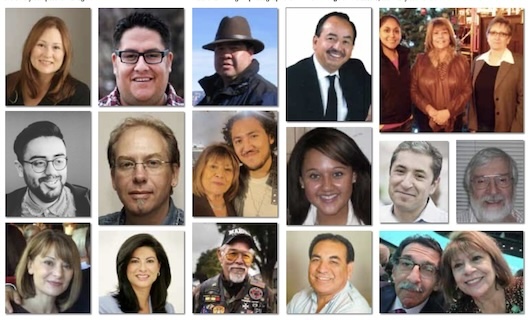
Celebrating 50 years of LaVozColorado’s staff!

0

Our current employees/freelancers include the incomparable Ernest Gurule, freelance lead writer. Gurule who has an extensive communications background (including broadcast) got his start at KLZ Radio. His overall talents have made him an asset to countless outlets, especially LaVozColorado.

Longtime commentary columnist David Conde has been providing thought-provoking commentary for years. We value your talent, David Conde, a true professional and lifetime friend.

Brandon Rivera, weekly sportswriter also leads as production manager providing many other talents weekly. Rivera is a well-rounded manager with endless communications skills.

Newcomer, Diana Russell heads our operations and website with professionalism and ease.

Romelia Ulibarri, who recently retired, was an overall engaged employee who dedicated almost 20 years of her work life to LaVozColorado. Ulibarri was a loyal and extremely competent manager.

George Autobee, for years has supported LaVozColorado as a journalist who is a loyal supporter. His skills include writing, photography, and promoting. We value you as a special veteran and friend.

Joseph Rios lends a youthful approach to weekly content and writes our community stories and El Mundo.

Those who got their start here include employees like the late Sherri Vasquez, a well-known media personality. Angela Cortez, former Communications Director for AARP who retired last month.

James Mejia, on a freelance basis provided our front-page stories for several years. Mejia has held many successful positions in Denver and is now at MSU/Denver as Chief Strategy Officer.

Joe Contreras owner of LatinLifeDenver, once worked at Denver7 and then LaVozColorado and now has a digital presence targeting Latinos. Jaime Rizo a longtime contractor and friend provided our overall translations for years. In previous editions, contributor, Everett Martinez, now DEN lead counsel wrote various articles.

Award-winning photographers like Miguel Castro, Todd Pierson, James Baca, Michael Ornelas, Amber Feese, Daryl Padilla, Roman Rivera and many others have provided high quality photography to LaVozColorado over decades.

Loyal dedication was evident in graphic and design work by Charles Corrales, classifieds manager, Barb Tipton, circulation manager, Jim Koucherik, and administration, Gloria Duran

Many writers and editors include Francisco MiravalDon Bain, Bertha Velasquez, Joshua Pilkington, Emma Lynch. Current reporter, Esteban Hernandez at Axios was once an intern at LaVozColorado.

In management, former owners Jose and Wanda Padilla led that early effort (1974 – 2008) along with B.T. Galloway until ownership changed in 2008.

Since April, 2008, LaVozColorado has been led by Hispanic (woman/veteran) family-owned Richard and Pauline Rivera.

A million thanks to the many listed employees within and to the many sales and marketing freelancers and contractors, too many to mention.

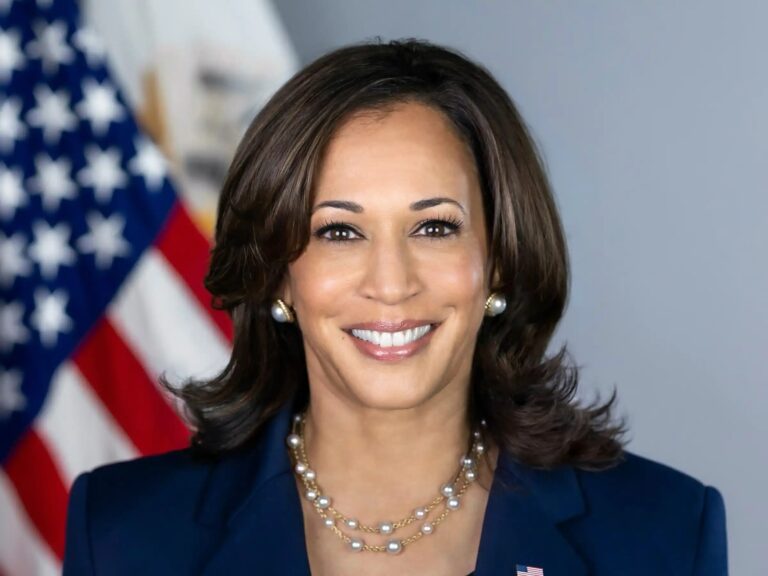
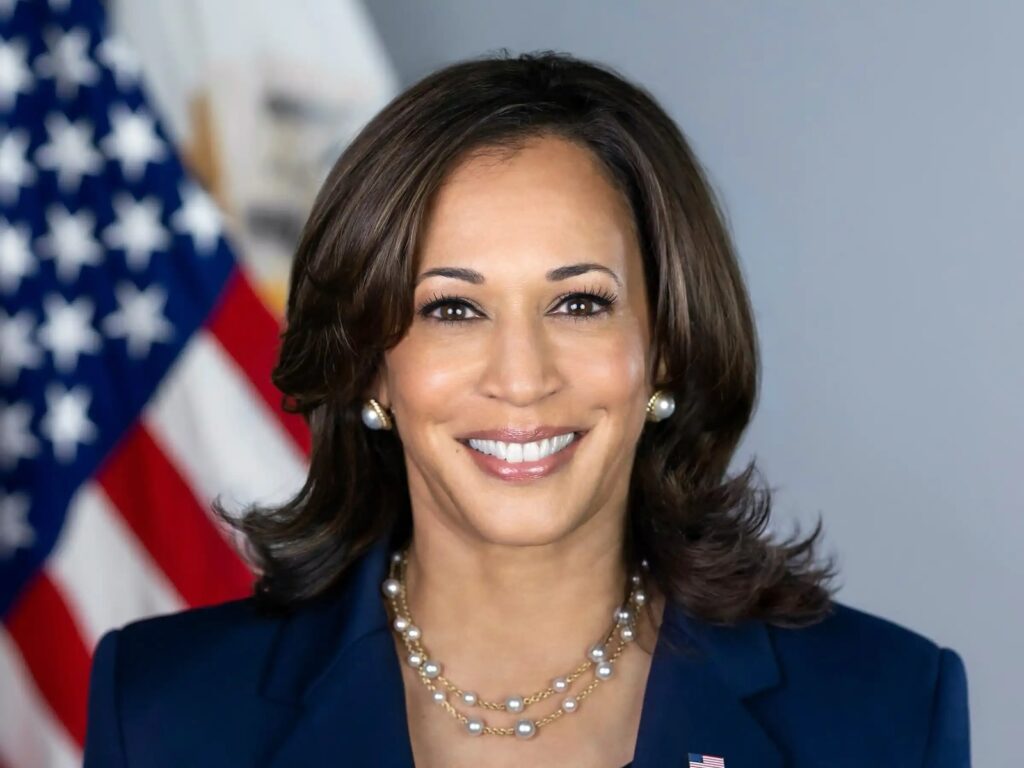
Kamala Harris, presumptive presidential nominee gets a blazing start

For the first time in our history, a Black/Asian woman is competing for the nation’s highest office. In announcing that he would not seek reelection, President Joe Biden also announced that Vice President Kamala Harris is the party’s standard bearer for the high office. But no sooner than the announcement was made, things got ugly.

Photo courtesy: The White House

Personal attacks on Harris’ race and gender by Republicans began almost immediately. Harris is of Indian and Jamaican descent. Her parents were also immigrants.

Tennessee Republican Congressman Tim Burchett, ever eager to get face time, both to please the ex-president and roll out the latest Republican talking point, was first to try out his party’s chief barbed criticism, questioning to even be considered.

Passing a CNN camera, Burchett shared exactly how his party wants Republican voters to view Harris, a former San Francisco District Attorney, California Attorney General, U.S. Senator and Vice President.

Burchett hand-stamped Harris a “a D.E.I. hire” an acronym for diversity, equity and inclusion. D.E.I., a regular conservative cudgel, is more accurately, an organizational framework used in government, academia and business to ensure full participation of all people, especially those who have been historically underrepresented. Other Republicans have also echoed Burchett.

“One hundred percent…she was a ‘D.E.I. hire,” said Wyoming’s Harriet Hageman. Colorado Congresswoman Lauren Boebert, a G.E.D. certified high school dropout, also joined her colleagues in questioning Harris’ legitimacy. One inner circle Trump ally took the Harris attack even deeper in denouncing her.

“She’s a DEI hire, right? She’s a woman, she’s colored. Therefore, she’s got to be good,” said Trump confidant Sebastian Gorka in dismissing Harris. ‘Colored,’ of course, is a once accepted descriptive reserved for Black people but now rightly considered crude and offensive.

But while Harris’ choice as party nominee changed the race—cutting or erasing altogether the ex-president’s lead in key swing states—it also ignited a firestorm of both excitement for Harris and denunciation of Donald Trump and other Republicans using D.E.I. as a lowest common denominator personal attack.

“These vile attacks are deeply offensive,” said Jefferson County Commissioner Lesley Dahlkemper. The Jeffco Commissioner said labeling Harris as a ‘D.E.I.’ hire reduces her and all women to second-class status. Those attacking her because “she’s not White or male,” said Dahlkemper, “underscores what’s at stake this November.” Harris, she said, is perfect contrast to “a felon who foments hate and division.”
Dahlkemper’s take, reflected those of thousands of women across the state and millions of others nationwide. “There is this notion that we are at a place,” said Colorado Board of Education member Rhonda Solis, where “we don’t have racism, women are equal, and we don’t need affirmative action.” It also shows “the true character of some people and the work we still need to do.”

As the first Latina to serve on the state Board of Education, Solis said, diversity is actually woven into our state’s history. “I have to remind people that the Colorado Constitution was written in three languages,” English, Spanish and German.

Janae Passalaqua, a Pueblo high school culinary arts teacher and businesswoman, says she was shocked to hear the Republican messaging and weaponizing D.E.I.

“People who have an open mind learn a lot more, absorb a lot more,” she said. “Every person has something you can learn from,” Passalaqua said. Someone, especially a man “who says that he doesn’t respect women…it just makes my heart hurt, it’s very sad.”

Following Harris selection, fundraisers across the country were held, volunteers were signing up to work for the presumed Democratic nominee and an estimated 40,000 new voters were registering all within the first 48 hours of the Harris selection. The internet and major newspapers were also weighing in positively for the freshly minted presidential candidate. They were also taking aim at the Republicans and their D.E.I. labeling of Harris.

“The Trump campaign is gaslighting DEI efforts that help level the playing field not only for people of color but for White women,” wrote longtime San Antonio-based opinion writer and podcaster, Elaine Ayala. “The attacks on DEI mirror attacks on voting rights, reproductive rights, constitutional rights, every right that benefits all of us.”

While the D.E.I. attack seemed to be backfiring, Trump added his own touch to the Harris attack, defending his purposeful mispronouncing of her name and also calling her a “bum,” a characterization denounced even by Republicans.

But while the Republican firestorm attacking Harris on race and gender was getting mixed reviews, excitement elsewhere over her candidacy was generating buzz.

Within the first 24 hours of President Biden’s announcement that he would not be a candidate and offering his endorsement to the Vice President, the money spigot went from trickle to torrent. The Harris for President campaign announced more than $81 million was raised by days end. In the first three days a grand total of $126 mil- lion was raised. By week’s end it had soared to more than $200 million.

Zoom gatherings among African American, Hispanic and White women, despite internet glitches, raised the bulk of the funds. There were also similar electronic fundraisers held by Black men and “White Dudes for Harris” that raised several million dollars, as well.

When the D.E.I. attacks seemed to have been panned more than praised, Trump moved in a different but still foreboding direction in trying to define his new opponent.

Using Harris’ one-time home, San Francisco, a popu- lar dog whistle used to convey progressive politics, Trump warned a mostly Christian audience that a Harris election would mean a large-scale appointment of “hard-core Marxists” to an expanded Supreme Court. The Constitution, he said, would be shredded and bring an end to religious liberties. It was a remarkable but baseless comment.

Still, despite a vigorous and coordinated attack on Harris by Trump and his people, it seems to not have had the desired effect. Polls show that the lead he once held over Biden—as much as five points nationwide—had essentially disappeared.

A recent Reuters poll showed that at the end of Harris’ first week as a candidate, she had actually pulled ahead of Trump by two points. The Trump camp attributed it to early excitement and predicted once the initial euphoria settles, they expect Trump to regain his lead.

Harris spent her first week speaking to standing-room-only crowds of mostly women in Michigan and Wisconsin, two states that Democrats almost certainly must have to win the election. In both appearances, she used a crowd-pleasing line that not only underscored her experience as a prosecutor but hit just the right note with her audience.

“Predators who abused women, fraudsters who ripped off consumers, cheaters who broke the rules for their own gain,” Harris said before pausing to punctuate what the crowd knew was coming. “So, hear me when I say, I know Donald Trump’s type.”

Active aging: fitness ideas for an aging population

0

Fitness is an important part of all our lives, regardless of age or physical ability. And as demographics continue to shift in the United States, fitness industries are embracing active aging to meet the needs of a changing population.

In 2020, the number of people aged 60 and over passed one billion for the first time ever. Meanwhile, by 2045, one in every five people will be age 60 or older, according to the International Council on Active Aging.

Regular physical activity can reduce the risk of chronic diseases like heart disease, stroke, type 2 diabetes, and some forms of cancer by up to 50 percent in older adults. Additionally, 75 percent of adults aged 65 and older report engaging in some sort of physical activity, but only 23.1percent meet the federal guidelines for aerobic and muscle-strengthening activity. Exercise isn’t just about physical health. It can also improve mood, reduce symptoms of depression and anxiety, and enhance cognitive function in older adults.

While we know the benefits of staying active andhealthy, it can be hard to incorporate active habits into our lives, no matter how old we are. The Mayo Clinic said starting small and being consistent with achievable goals can make a difference, like adding a 10 minute walk to your daily routine or swapping sugary drinks for water. It’s also important to find an activity you enjoy, according to the U.S. Department of Health and Human Services’ “Physical Activity Guidelines for Americans.” And finally, finding a workout buddy, joining a fitness class, or participating in a team sport can make exercise more enjoyable and create a sense of accountability.

As America continues to age, the International Council on Active Aging expects more wellness programs and wellness professionals, rejection of stereotypes of aging, and the growth of green exercise and green communities. So, what are some ways older adults can be active?

Research has found five minutes of exercise in a park or working in a garden can improve self-esteem and mood. Other ways of getting outside could be riding your bike, hiking, or taking a walk as well.

Sports like pickleball have also gained steam in recent years. This paddle ball sport combines elements of tennis, badminton, and ping-pong, and is rapidly growing in popularity among older adults. It’s easy to learn, social, and provides a great workout. Chair yoga, a gentle form of yoga that is modified to be done while seated, makes exercise accessible for older adults with mobility issues. It can improve flexibility, balance, and strength while reducing stress.

Other forms of exercise like water aerobics and tai chi can also have positive benefits. Water aerobics is a low-impact form of exercise that is easy on the joints and provides a full-body workout. It’s a great way to socialize and cool off in the summer months. Tai chi is a low-impact martial art that involves slow, flowing movements and deep breathing. It can improve balance, flexibility, and muscle strength, and may even help reduce the risk of falls.

Remember, it’s always important to consult with your doctor before starting any new exercise program. As we age, it’s crucial to remember that staying active is not just about longevity, but about enjoying a fulfilling and vibrant life.